
Taking the camera out onto the ice
Saturday 24 December 2022, 17:17 by Erik Nevels | 3,281 views | 0 commentsThis article was translated from Dutch with the help of AI. Read the original.
The frost had already disappeared for a few days when I typed the first words of this blog. Last week, the temperature still froze the pools.
Great for skating, but also for taking photos. Taking the camera out onto the ice and looking for structures, frozen leaves and unusual reflections.
Along the water's edge.
On one of the first frosty days, I am already out early at my local patch, the Beegderheide. There is a thin layer of ice on the pools, which already offers plenty of opportunities for unusual photos.
As I search along the water's edge, I look down for unusual shapes and patterns in the ice.
Frozen bits of nature, such as leaves, also work well. At other times, I scan across the ice looking for unusual reflections.
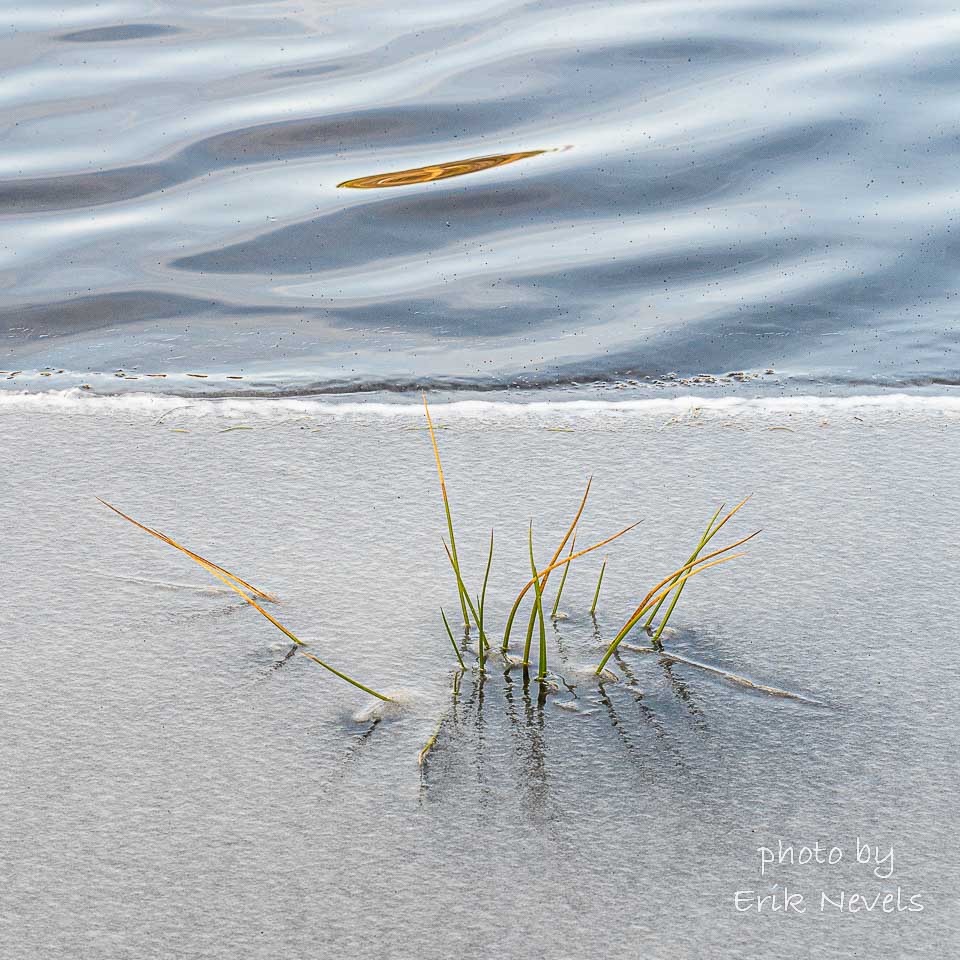
The large pools are only partly covered with ice and my eye is drawn to some blades of grass sticking out of the thin layer of frozen water.
The ice only extends a good decimetre further and the water behind it ripples in the wind. As I wonder whether this is worth a photo, I see the brown and orange reflections in the water sparkling back and forth.
That makes the image more interesting. It takes many more photos before I capture a reflection.
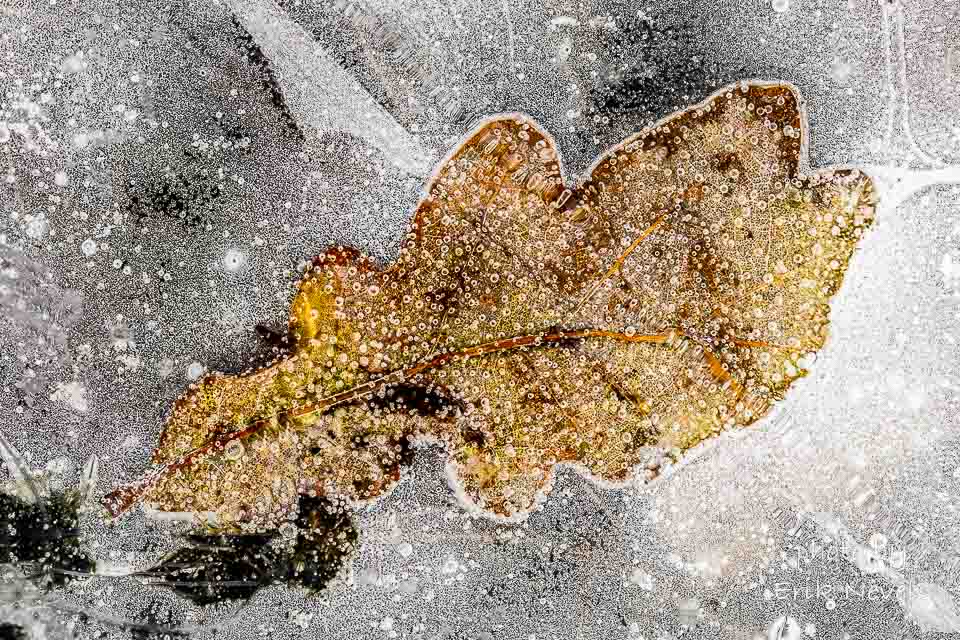
The oak leaf is trapped in the ice together with countless tiny bubbles. As well as being a lovely shape, I like the contrast between grey and brown.
Luckily, the leaf is close to the water's edge, so with the help of my tripod with tilting centre column I can position the camera precisely above the leaf. As I want both the ice and the deeper-lying leaf to be sharp, I choose a small aperture of f/13.
The tripod on the ice.
After several days of moderate frost, I still don't think the ice is really safe. It is strong enough for me to slide my tripod onto it while I remain standing at the edge. This gives me a slightly greater reach, allowing me to take the photo below.
Onto the ice together
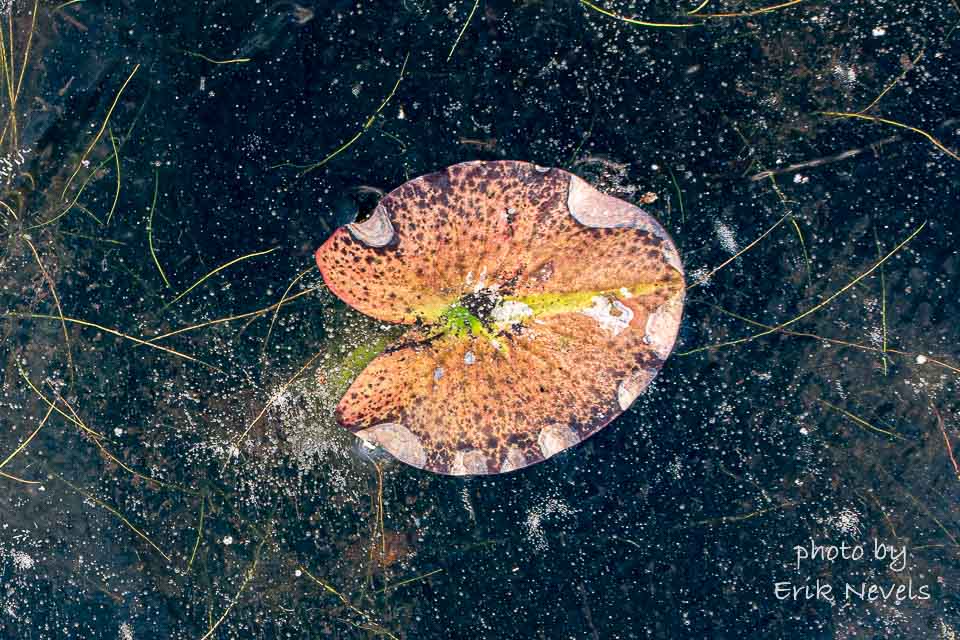
I am sure of it, after a few more frosty nights I can safely go out onto the ice. I can now photograph the lily pad I photographed from the water's edge a few days ago straight from above.
Although, with 'straight from above', the shadow of my camera can be visible on the ice and disrupt the image as a dark patch.
I can still remember the following lily pad photo from last year, when I only noticed that shadow at home behind the computer. I also didn't use a polarising filter then to remove the reflections of the light on the ice.
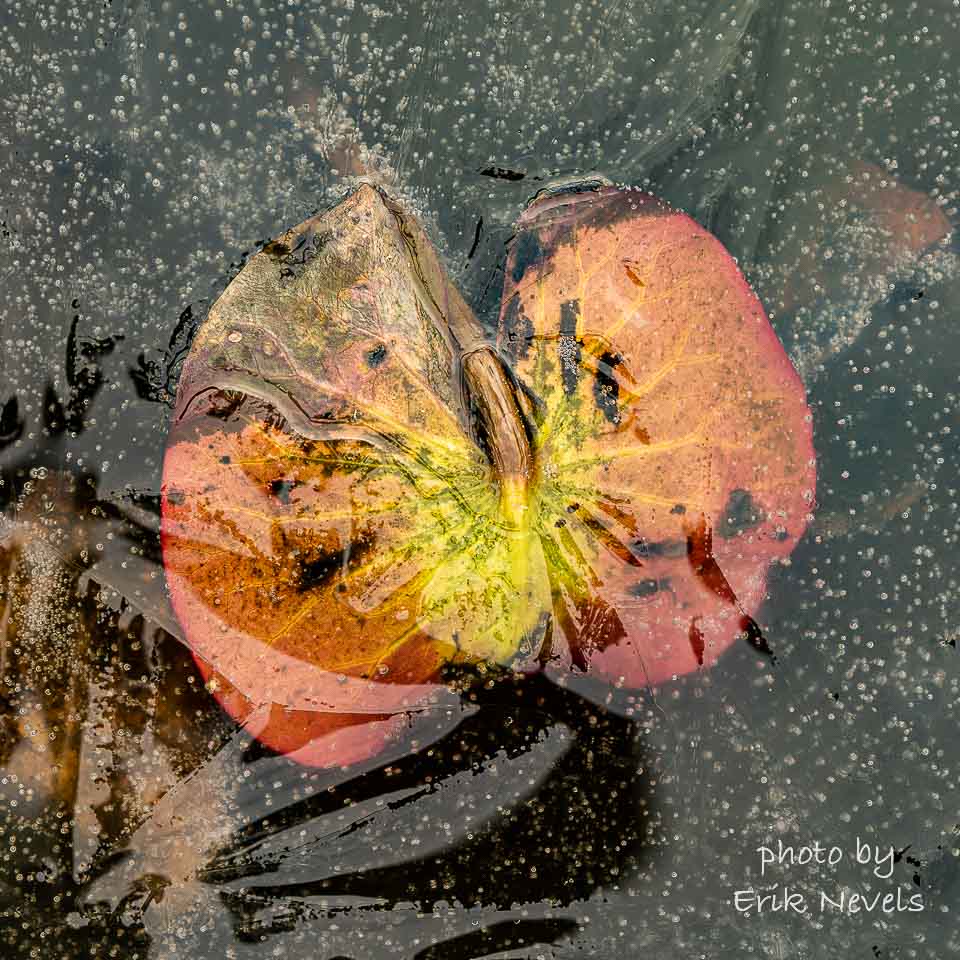
Back in the present, I carefully shuffle across the ice and my tripod with camera glides along willingly. Without a creak, I can determine the composition and sort out the settings. The ice is thick enough.
My suspicion is correct and I still need to photograph slightly from above to keep the shadow of the camera and tripod legs out of the frame. I now use the polarising filter to filter out the brightest glints.
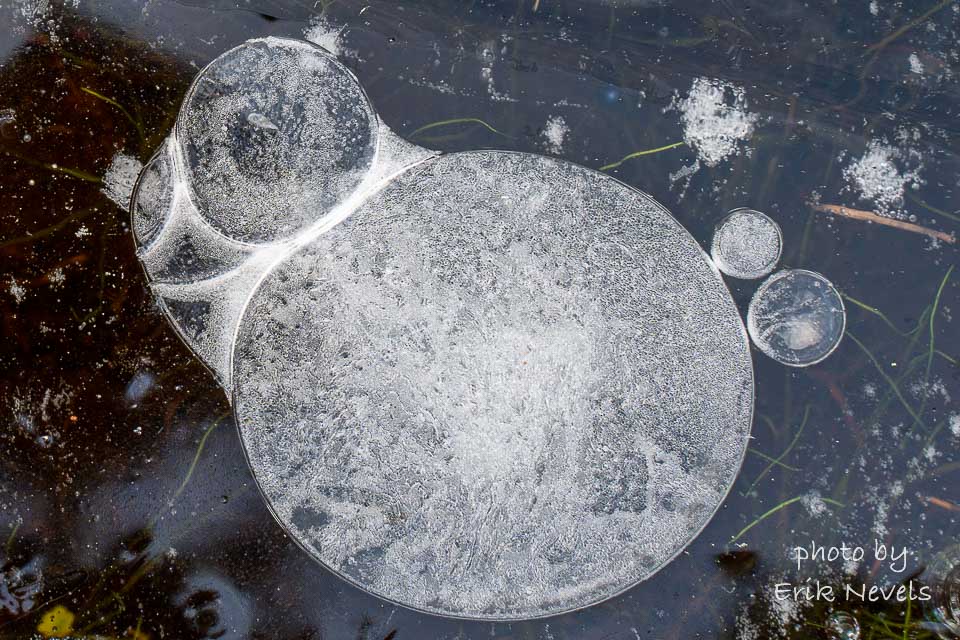
I spy what you can't see.
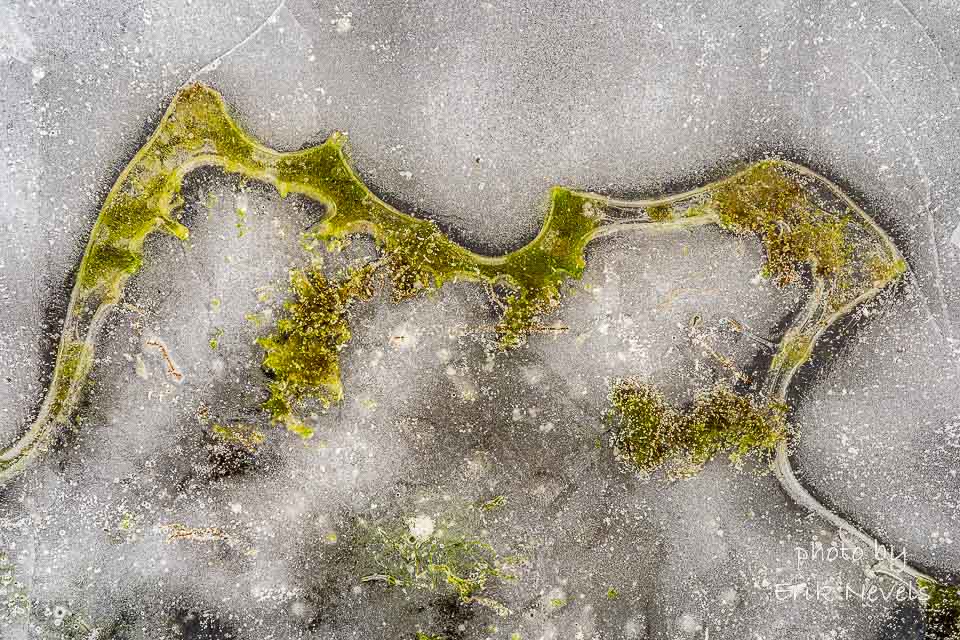
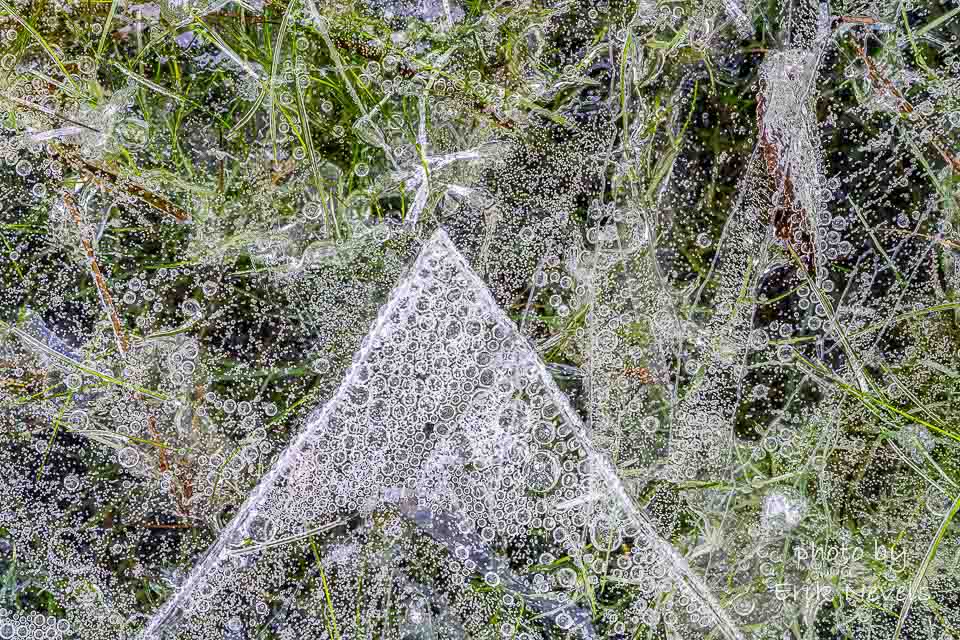
It is fascinating every time to see which colours, shapes and structures the ice reveals. It can be a purely abstract image, but sometimes the shape or structure reminds you of something.
You see a tree, a person or an animal in it. Over the past two years, I have made photos like these. I am curious whether you see something in them and, if so, what. And did you notice the round fish in the previous photo?
Reflections.
As well as looking at details on and in the ice, I also regularly gaze across to the other side of the pool. How do the trees and sky reflect on the ice?
By photographing only the reflection on the ice and then turning the photo around, you get strange images.
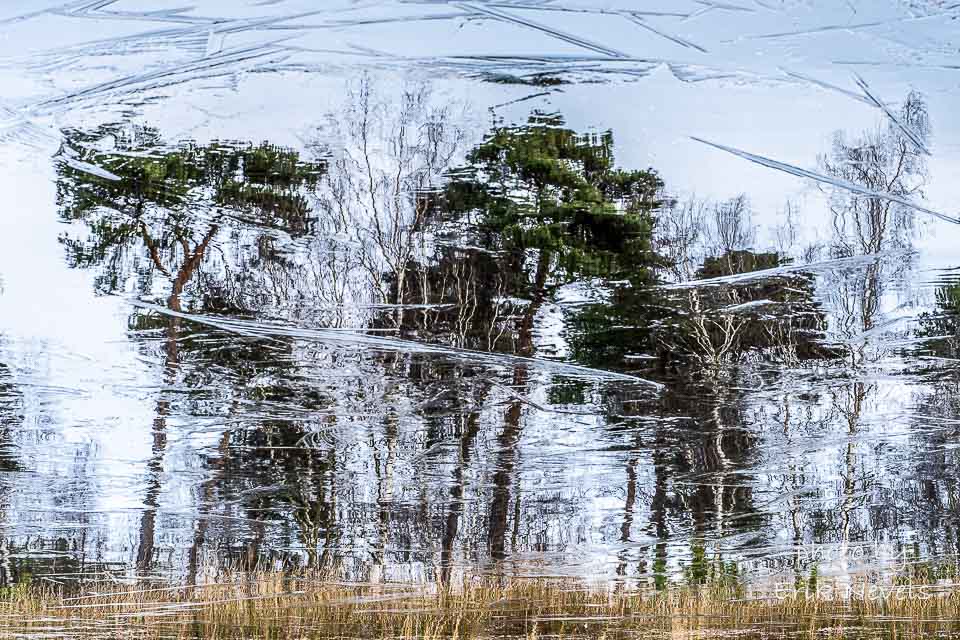
Fun on the ice
Just like skating, photographing frozen pools provides plenty of fun on the ice, although of course you shouldn't go out onto the ice before it is strong enough.
Unlike skating, you can also photograph plenty of interesting things from the water's edge. Hopefully there will be another cold spell this winter!
About the author
Steeds weer boeiend en op zoek naar de essentie! Dat is wat fotograferen in de natuur voor mij is. Gefocust op het landschap of het onderwerp in diens omgeving tracht ik meer dan alleen te registreren. Een continue uitdaging waarvan ik elke keer volop geniet. Meer foto's? Volg mij op Instagram en/of kijk op mijn website
You might also like
-
kopie.jpg "How reading fewer blogs and watching fewer YouTube videos improved my photography") How reading fewer blogs and watching fewer YouTube videos improved my photography
How reading fewer blogs and watching fewer YouTube videos improved my photographyby Frédéric Paulussen
-
 Adventures with the Sony 200-600mm (week 1)
by Erik Nevels
-
 Photographing in Iceland
by Nando Harmsen
-
 Planning a landscape photo down to the last detail, or not?
by Nando Harmsen
-
 Photographing frozen soap bubbles
by Laura van der Burgt
0 comments
Be the first to share what you think!
Have your say
Please note: Articles older than a week can only be commented on by signed-in visitors.Would you still like to comment? sign in or create a free account.
Become a better photographer every week
A practical photography tip in your inbox every week.
39,079 photography enthusiasts already receive the tips! More about the weekly mail. Or keep up to date via  Facebook.

Elja Trum
Photofacts; everything to do with photography!
Would you like to take better photos and keep up with what is happening in photography? Photofacts publishes articles that teach you something about photography — from a product announcement to a practical shooting tip or a look at a website. Photofacts covers photography every day and is a hobby project of Elja Trum's that got out of hand. The articles are written by a team of volunteer authors. If you would enjoy writing one or more articles for Photofacts, do get in touch.More about PhotofactsPhotofacts is made possible in part by
