

The Diagonal Method
Saturday 13 June 2020, 13:31 by Michelle Peeters | 9,029 views | 2 commentsThis article was translated from Dutch with the help of AI. Read the original.
The diagonal method was discovered by chance in 2006. The Rule of Thirds had already been discovered by then. In many photos, important details appeared to lie precisely on imaginary diagonal lines through the image. This discovery turned conventional ideas about compositional technique upside down.
A good photo contains all kinds of details that draw the eye and make the photo interesting. In portrait photography, these are the model's eyes, which applies to both people and animals. In nature photography, they might be flowers, leaves or branches, and so on.
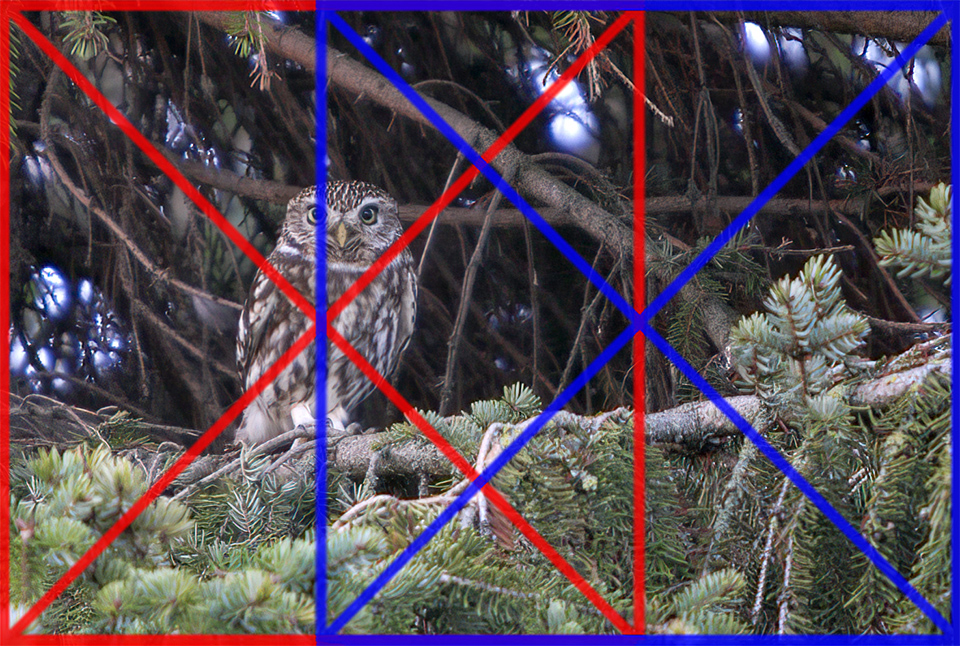
According to the diagonal method, these attention grabbers are often found on four diagonal lines through the image.
Experimental research
Both the Golden Ratio and the Rule of Thirds are rules of thumb based on a particular theory, and they have been widely followed. The diagonal method was discovered through experimental research, in which many photos were compared with each other. Similarities in the placement of important details suddenly became apparent.
Famous painters such as Rembrandt and Leonardo da Vinci turned out to have been using this method for much longer. Many contemporary photographers also use it unconsciously. So the method itself is not really new. The pattern was only discovered recently.
The difference between the Diagonal Method and the Rule of Thirds is that the latter is used consciously to place image elements, which do not have to be the most important ones, on certain lines or intersections in the image, in order to improve the composition.
The Diagonal Method is about details that define the image and that you have placed consciously or unconsciously on the diagonals.
How does it work?
You often use the diagonal method instinctively, but it can do no harm to think about it consciously from time to time. When you look at a painting, your eyes often follow a particular path across the image, namely along the diagonals!
If you take this into account as a photographer, your photo looks more pleasing when the important elements run along the diagonals in your image. These important details are also noticed more quickly when you place them in these strategic positions.
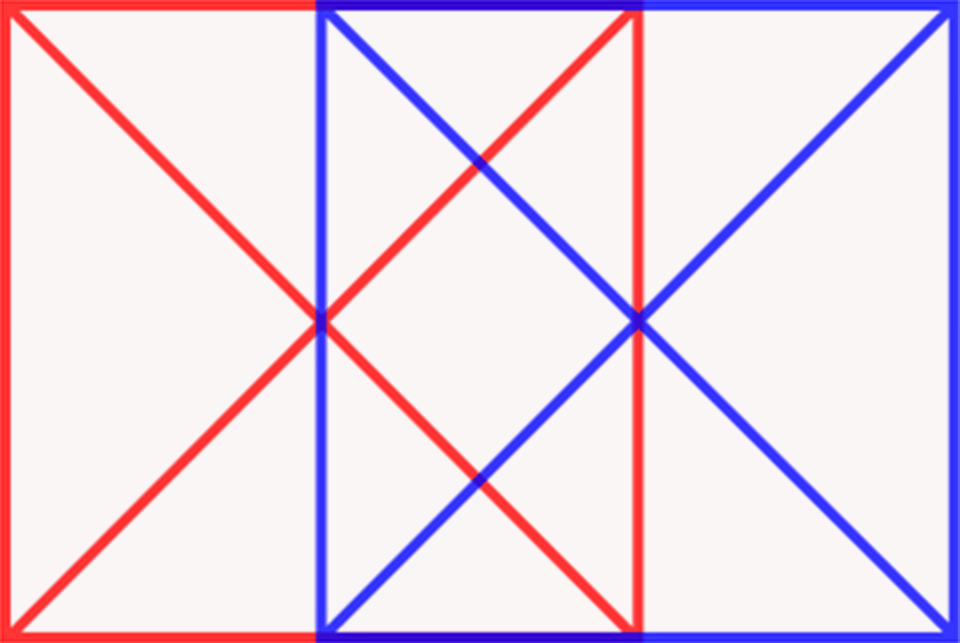
In a square photo, the two diagonals run from the top left to the bottom right and from the top right to the bottom left. With a rectangle, which is the most common photo format, you can draw two squares, one on the left and one on the right.
Or, in portrait format, at the top and bottom. You then draw your diagonals in those squares, giving you four in total.
Now you have your lines on which you can place the attention grabbers in your photo! You do need to do this fairly precisely, as the deviation should not be too large. The intersections of the diagonals are not important. As long as the elements lie on the lines, it is fine and they will draw the eye.
Applying it consciously
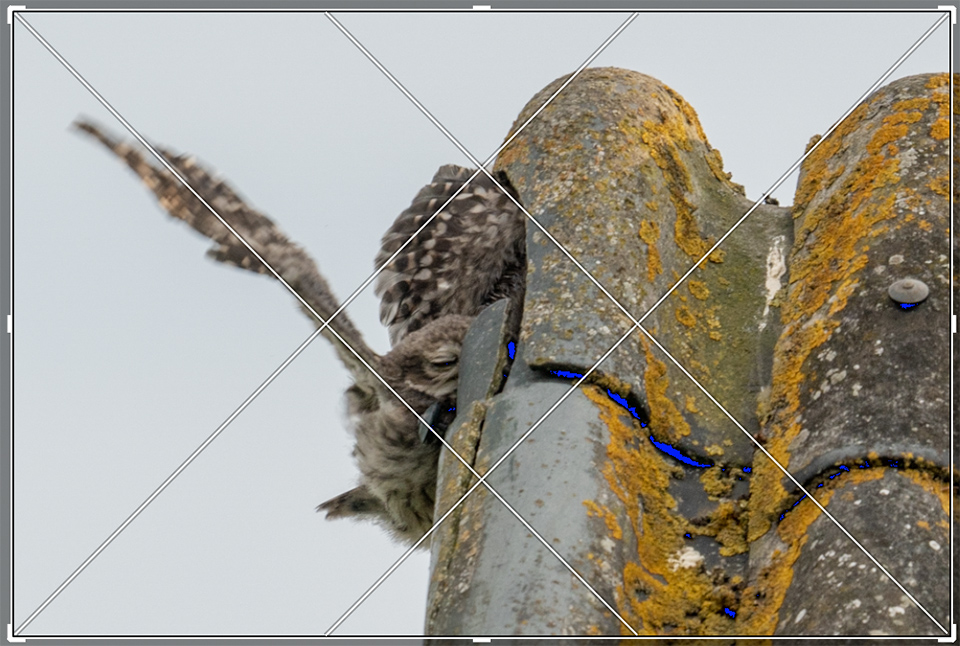
If you want to apply the diagonal method consciously, you can do this on your computer screen. In Adobe Lightroom and Photoshop, the diagonal method is now built in as a tool. When you use the crop tool, you can cycle through the different options by pressing O, for overlay.
If you have a photo in which an important detail, or several details, almost lies or lie on the diagonals, you can crop the image so that the details end up precisely on a diagonal.
You cannot use the diagonal method while taking photos. There are no cameras with diagonal lines in the viewfinder, and consciously placing details on the diagonals comes at the expense of the overall composition.
Determining the composition is a combination of pure observation and projecting your, often unconscious, interests and desires onto the photo. It is a very complex mental and emotional process.
About the author
Michelle Peeters is fotografe en oprichter van DeuxBleus Fotografie. Michelle herkent het bijzondere in het gewone en het gewone in het bijzondere. Ze heeft zich nooit willen specialiseren en is daardoor van alle markten thuis.
You might also like
-
 Rule of thumb: Central composition
by Michelle Peeters
-
 Composition tip: The Diagonal Method
by Elja Trum
-
The Rule of Thirds Rule of Thumb
by Michelle Peeters
-
The Golden Ratio rule of thumb
by Michelle Peeters
-
 Photography rules are not meant to be followed strictly
by Nando Harmsen
-
Depth of field distribution
by Michelle Peeters
2 comments
-
 Kooijman wrote on Tuesday 16 June 2020 at 23:33 | reply
isn't it actually a combination of applying the rule of thirds twice. One horizontal and one vertical?
Translated from Dutch. -

 Michelle Peeters wrote on Tuesday 16 June 2020 at 23:52
| reply
Michelle Peeters wrote on Tuesday 16 June 2020 at 23:52
| reply
@Kooijman: no, the subject only has to lie on one of the diagonal lines and not at an intersection, as with the rule of thirds.
Translated from Dutch.
Have your say
Please note: Articles older than a week can only be commented on by signed-in visitors.Would you still like to comment? sign in or create a free account.
Become a better photographer every week
A practical photography tip in your inbox every week.
39,027 photography enthusiasts already receive the tips! More about the weekly mail. Or keep up to date via  Facebook.

Elja Trum
Photofacts; everything to do with photography!
Would you like to take better photos and keep up with what is happening in photography? Photofacts publishes articles that teach you something about photography — from a product announcement to a practical shooting tip or a look at a website. Photofacts covers photography every day and is a hobby project of Elja Trum's that got out of hand. The articles are written by a team of volunteer authors. If you would enjoy writing one or more articles for Photofacts, do get in touch.More about PhotofactsPhotofacts is made possible in part by
