

Flash photography tip: Create your own warm sunlight
Friday 23 May 2025, 14:07 by Elja Trum | 2,764 views | 2 commentsThis article was translated from Dutch with the help of AI. Read the original.
Even on a dull day, you want to take beautiful, atmospheric photos. Your flash can help you imitate sunlight. You can recreate the warm colour of a rising (or setting) sun by putting an orange colour filter (CTO) on your flash, or by flashing into a gold-coloured reflector.
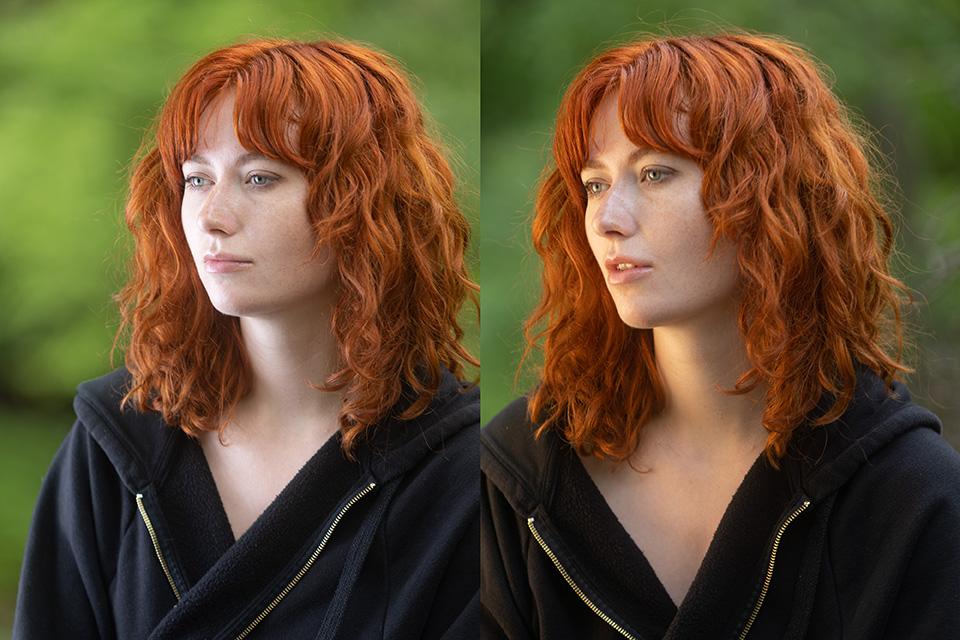
Of course, pay attention to the direction of the light. From the side usually works best, but you also need to consider a logical position for the sun. Especially if there is real sunlight visible in the background too. If the direction differs, your viewer will quickly realise that something is not right.
Make sure your flash fires just a little harder, about 1 stop, than the ambient light, so the effect is still clearly visible, but not exaggerated or causing blown-out areas.
About the author
Elja Trum is the founder of Photofacts and online photography course website Photofacts Academy. He has been writing about photography since 2006. Elja is also the author of (Dutch) books on composition, black-and-white photography, flash photography and portrait photography.
You might also like
-
 10 tips for atmospheric portrait photography
by Laura van der Burgt
-
 Atmospheric images without leaving the house
by Laura van der Burgt
-
 Sunlight and forest photography
by Nando Harmsen
-
 Dull grey weather? Adapt your photography to the conditions
by Nando Harmsen
-
 Flash, Sunlight and Backlight
by Erik van Rosmalen

2 comments
-
 guest wrote on Tuesday 27 May 2025 at 16:31 | reply
Nice article. You indicate that the flash fires just a little brighter (approximately 1 stop) than the ambient light. But how do you determine the amount of ambient light?
Translated from Dutch. -

 Elja Trum
wrote on Tuesday 27 May 2025 at 16:46
| reply
Elja Trum
wrote on Tuesday 27 May 2025 at 16:46
| reply
You can of course measure that with a (flash) light meter. If your flash meter does not measure ambient light, you can use the readings from your camera's light meter.
Translated from Dutch.
But it is also perfectly doable 'by eye' based on your camera's screen and the histogram (if you don't have a flash meter). That will take you a few photos to get the light the way you want it. Make sure (in the histogram) that no blown-out areas appear.
Have your say
Please note: Articles older than a week can only be commented on by signed-in visitors.Would you still like to comment? sign in or create a free account.
Become a better photographer every week
A practical photography tip in your inbox every week.
39,079 photography enthusiasts already receive the tips! More about the weekly mail. Or keep up to date via  Facebook.

Elja Trum
Photofacts; everything to do with photography!
Would you like to take better photos and keep up with what is happening in photography? Photofacts publishes articles that teach you something about photography — from a product announcement to a practical shooting tip or a look at a website. Photofacts covers photography every day and is a hobby project of Elja Trum's that got out of hand. The articles are written by a team of volunteer authors. If you would enjoy writing one or more articles for Photofacts, do get in touch.More about PhotofactsPhotofacts is made possible in part by
