

Photo location: Hill of Crosses in Lithuania
Sunday 6 August 2017, 16:32 by Michelle Peeters | 7,431 views | 4 commentsThis article was translated from Dutch with the help of AI. Read the original.
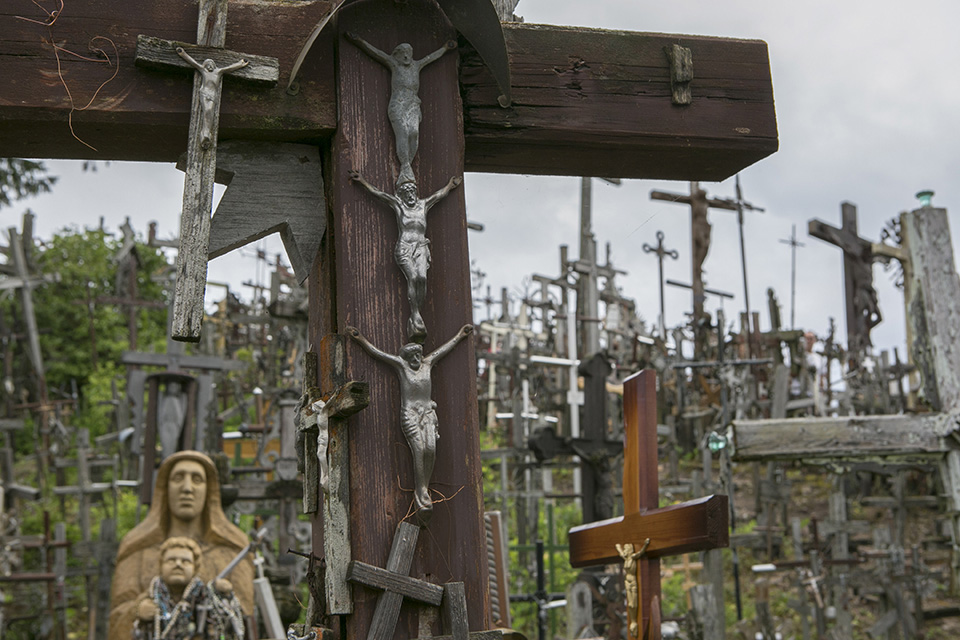
On a hillock north of Šiauliai in Lithuania, hundreds of thousands of crosses and statues are packed together: from large to small, made of metal or wood, sometimes kitsch and sometimes artistic.
They were brought by pilgrims, who, following the Pope's example in 1993, travelled here together in busloads. A wonderful photo location, but how do you make sure you can still see the wood for the trees?
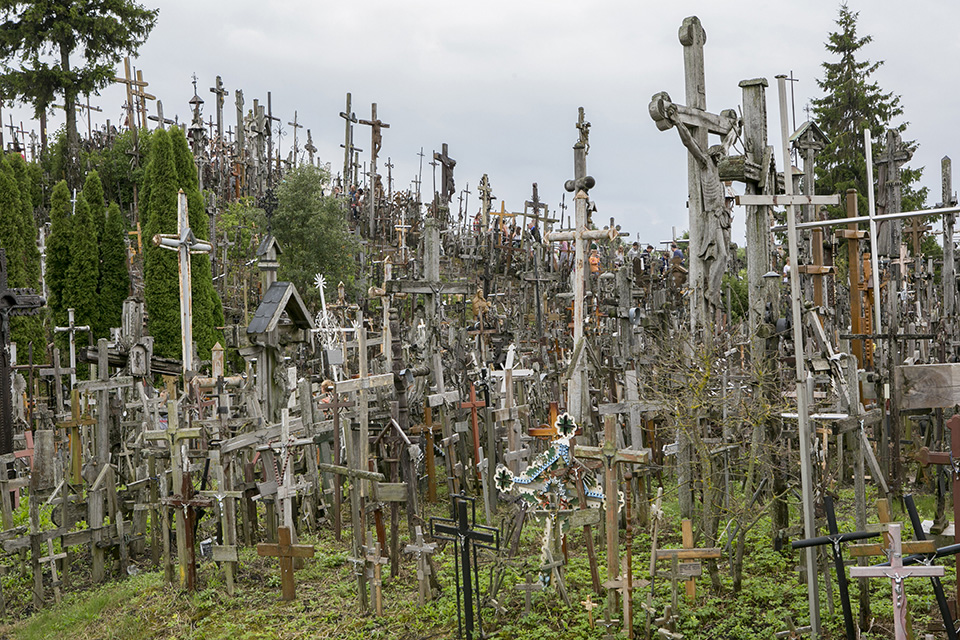
The 'Mecca of Lithuania' is bursting at the seams: large crosses are being buried under hundreds of smaller ones, and the surrounding field is gradually filling up too.
Some people do it for religious reasons, others to commemorate a family member, and still others as a sign of resistance against oppression, as it was originally intended.
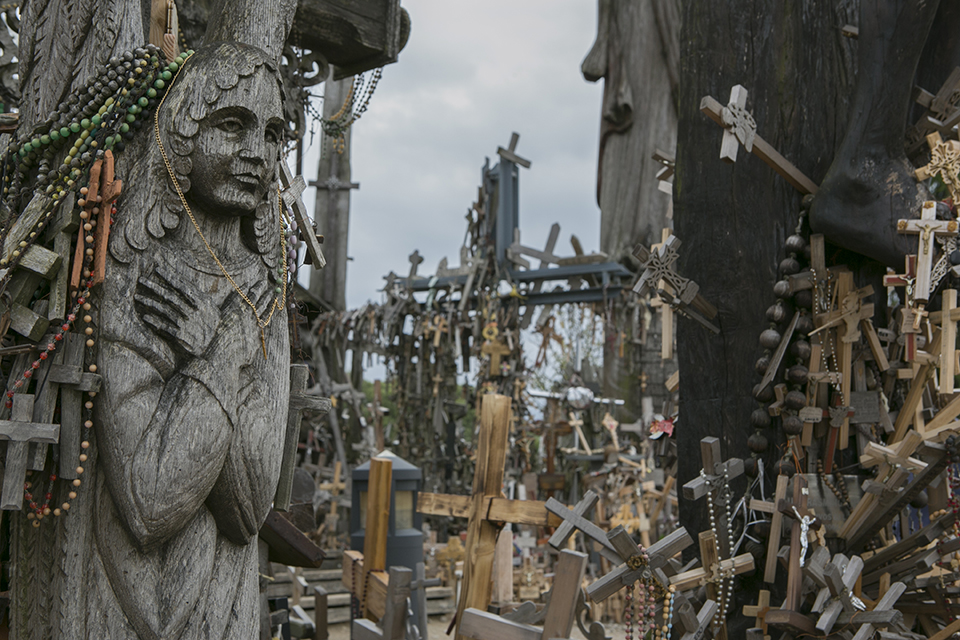
The tradition began in the 14th century. At the place where a Lithuanian fort may first have stood, the local population put up crosses to commemorate the successful struggle against the German knights. In the following centuries, the hill increasingly became a sanctuary for Catholics.
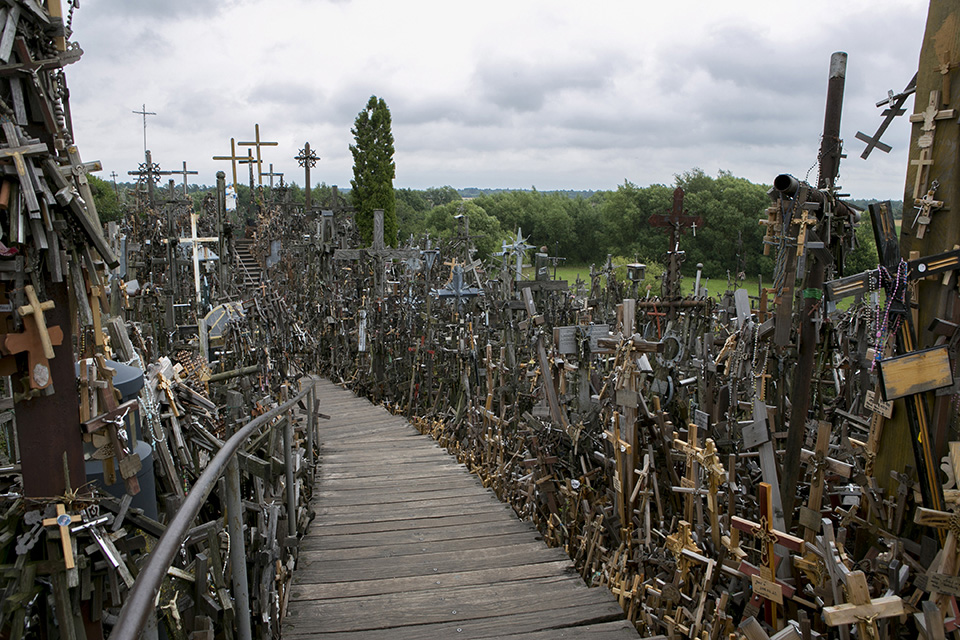
It was only in the 19th century, after the two major uprisings (1831 and 1863), that it grew into a national symbol of resistance. The number of crosses quickly increased, including during the first years of Soviet rule.
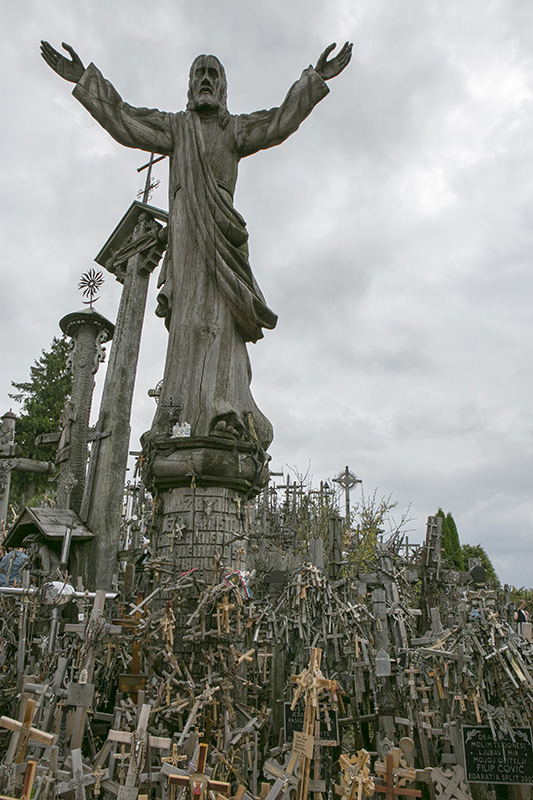
Commemorating those who had been transported to Siberia, combined with the religious background, was naturally a sore point for the communist leaders.
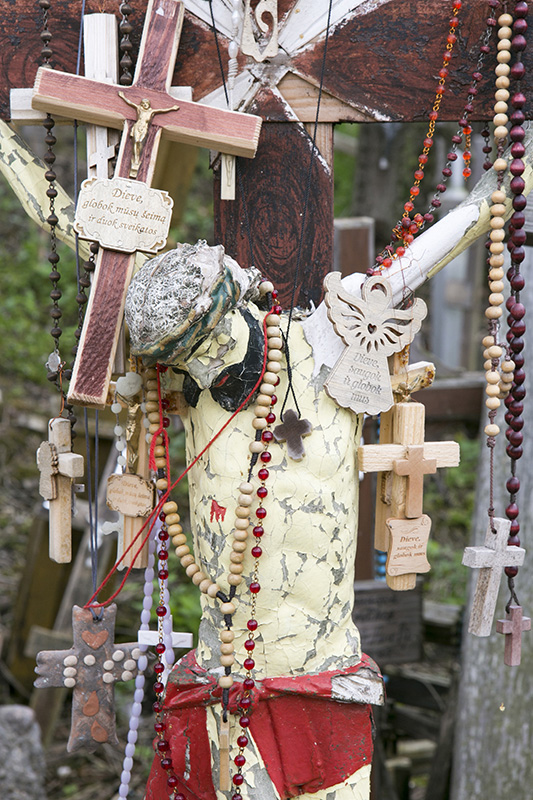
They had the hill flattened three times, but each time new crosses appeared despite the strict ban and close surveillance. These days, there is no stopping it.
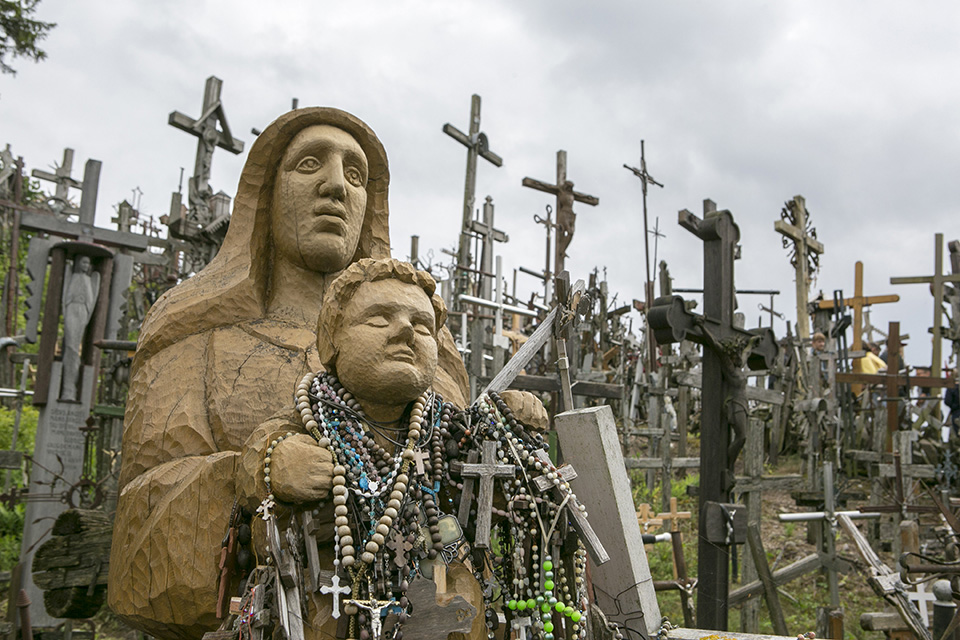
Some are beautifully detailed, while others have just been bought from the souvenir shop. The real eye-catcher is the large wooden figure of Jesus.
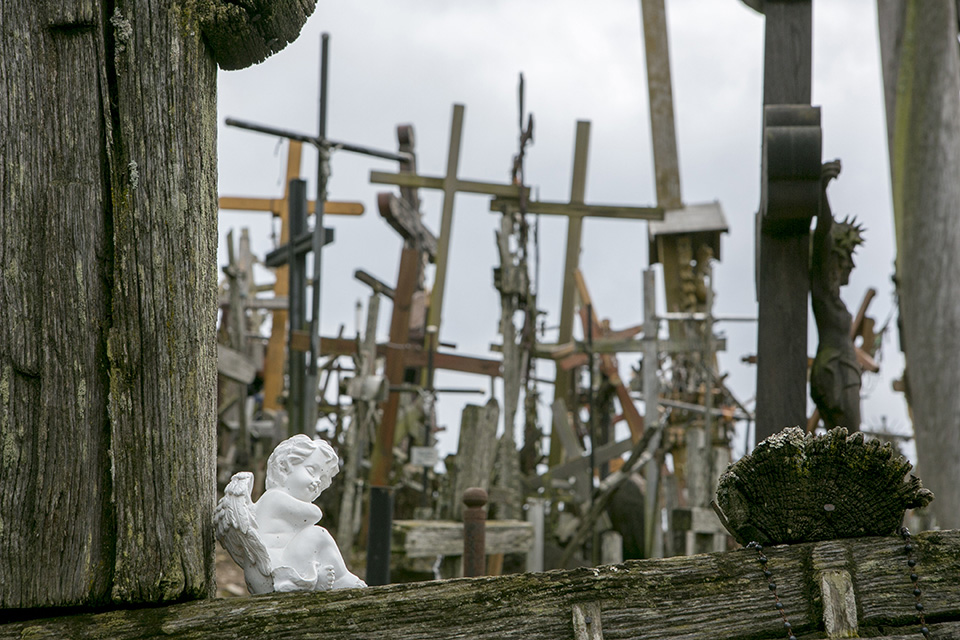
A huge chaos
But how do you get that enormous chaos, piles of crosses, smaller and larger ones, statues and necklaces of beads, into a photo in an appealing way, so that you can still see the wood for the trees?
And how do you avoid the hordes of tourists who always seem to walk exactly where you had planned your composition?
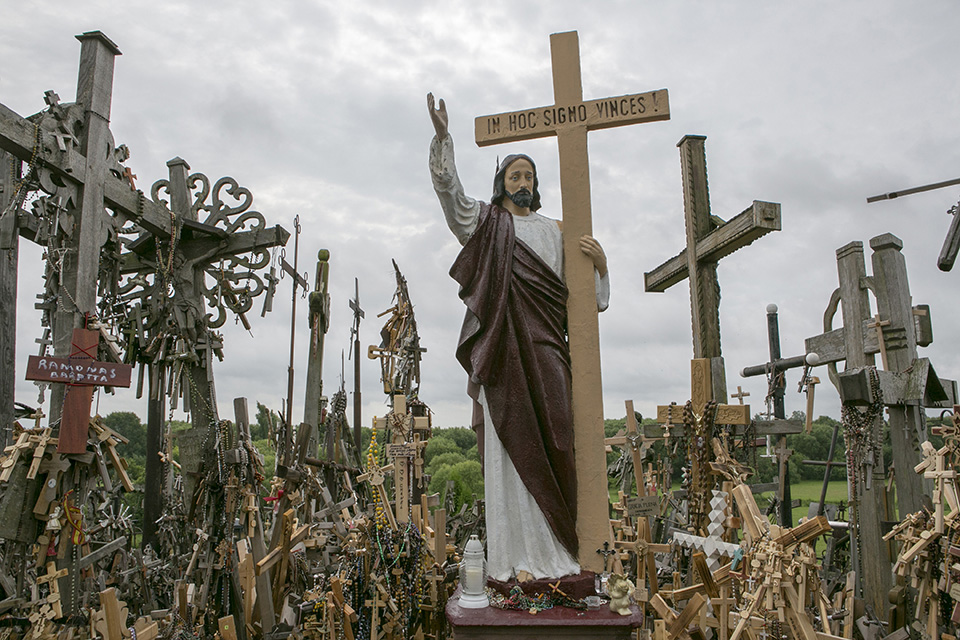
Below are a few tips and tricks that I used myself to create these photos:
- Try playing with depth of field to make interesting objects, such as statues with a distinctive colour or appearance, stand out. If you stand close to your main subject, you will automatically get that shallow depth of field in the background
- Try creating natural frames so that the subject you are focusing on gets a kind of border around it
- Try including human aspects in your photos, such as the facial expressions of saint statues covered in jewellery
- Use all your composition techniques, such as repetition, leading lines, the rule of thirds, filling the frame with the main subject, rhythm, frames, colours, et cetera, to make your subject stand out
- If you cannot keep the hordes of tourists out of your composition, which is often simply a matter of having a lot of patience.., use a tripod and take multiple shots. From the different shots, use Photoshop to create layers and erase the unwanted parts, wherever necessary, such as where a tourist is standing
- Use the human factor to show the scale properly. So let someone pose, or deliberately include a random person in the frame
- I had diffuse light because it was cloudy. So I did not have any (very) large differences in contrast to overcome, which was an advantage. If you do have this problem, for example because you are photographing in bright sunshine in the middle of the day, it helps a lot to shoot in RAW. This allows you to even out excessive differences in contrast afterwards during post-processing.
About the author
Michelle Peeters is fotografe en oprichter van DeuxBleus Fotografie. Michelle herkent het bijzondere in het gewone en het gewone in het bijzondere. Ze heeft zich nooit willen specialiseren en is daardoor van alle markten thuis.
You might also like
-
 The quiet brought by coronavirus, photographic contributions
by Michelle Peeters
-
 Nature photography tip: Discover unknown hilly areas
by Rob Dijkstra
-
 Review of Xpozer 4-pack
by Michelle Peeters
-
 Landscape photography tips from the North Pole
by Elja Trum
-
 Packing a backpack, camera without or with a lens
by Nando Harmsen
-
 33 remarkable historical photos
by Michelle Peeters
4 comments
-

 Paul Oosterlaak wrote on Sunday 6 August 2017 at 23:42
| reply
There are quite a few nice shots among them, but it is indeed very difficult to find a good composition in this chaos. One small point: you didn't really apply tip #1 yourself: everything was shot at f/11. I would have taken a few shots at f/2.8, so that you could isolate a single cross a bit more.
Translated from Dutch. -
 Michelle Peeters wrote on Monday 7 August 2017 at 07:34
| reply
@Paul: good point, I indeed could have done that, in addition to 'standing right on top of your main subject' for a blurrier background! I find the effect of a wide aperture less visible with a wide-angle lens.. Zooming in a lot (with a telephoto lens) would also have been an option!
Translated from Dutch. -
 guest wrote on Tuesday 8 August 2017 at 18:58 | reply
In such an environment you have to work systematically and actually keep "zooming in" further. Start with an overview and then I think you can show the chaos, then take a smaller piece that you find beautiful and then a few crosses that stand out to you. I've been there and you simply can't put everything in the picture, so give an impression, let people form their own image.
Translated from Dutch. -
Michelle Peeters wrote on Tuesday 8 August 2017 at 19:10
| reply
@guest: agree that you’re allowed to show the chaos. Great approach like this, thanks for sharing!
Translated from Dutch.
Have your say
Please note: Articles older than a week can only be commented on by signed-in visitors.Would you still like to comment? sign in or create a free account.
Become a better photographer every week
A practical photography tip in your inbox every week.
38,764 photography enthusiasts already receive the tips! More about the weekly mail. Or keep up to date via  Facebook.

Elja Trum
Photofacts; everything to do with photography!
Would you like to take better photos and keep up with what is happening in photography? Photofacts publishes articles that teach you something about photography — from a product announcement to a practical shooting tip or a look at a website. Photofacts covers photography every day and is a hobby project of Elja Trum's that got out of hand. The articles are written by a team of volunteer authors. If you would enjoy writing one or more articles for Photofacts, do get in touch.More about PhotofactsPhotofacts is made possible in part by
