

How do you find a photography style?
Sunday 6 February 2022, 14:14 by Frank Doorhof | 5,524 views | 4 commentsThis article was translated from Dutch with the help of AI. Read the original.
One of the questions I get asked most often, and probably one of the nicest, is always: 'how do I get a style?' I have to admit that I am probably the last person you should ask, since I would not exactly define my own work as having a style. I just do whatever.
But people often recognise my work straight away, so apparently I do have a style. And apparently I am the right person for this article.
Right, enough nonsense.
What is a style?
To me, a style is a description of something that allows you to put it in a box. If it has four wheels, an engine and a steering wheel, it must be a car.
Still, I think that with photography, and every other art form, things are a little more nuanced.
To me, a style is a kind of invisible signature that means someone can 'instantly' see that something is your creation. But how on earth do you do that?
When I started taking photographs, I was only interested in nature, birds, monkeys (Apenheul) or sport. And model photography? Well, I did not even think about that.
I should point out that I have been interested in painting and drawing from a young age, and I can appreciate art quite well as long as it is not too abstract. So painters such as Rembrandt and Caravaggio have been familiar to me since I was young.
When I was working with nature, I have to admit that I was not immediately thinking of Rembrandt, more: 'Oh, lovely, press the button.' And, to be completely honest, my work was not much more than simply recording something that happened. A day at the zoo, some monkeys on the rocks, and so on.
I did try to capture the nice moments, but I was hardly thinking about anything else.
One evening, we were at my parents' house and there was a documentary on television about a fashion photographer called David Lachapelle. I had not heard of him at the time, but it did catch my attention.
From the first minute, I was glued to the screen. What sets, what hysterical colours, what... I went from one amazement to the next, but above all from one realisation to another. This was brilliant!
Coincidentally, there was a workshop month at the local photography club, which I was a member of at the time, and you were required to do something. The choice was simple for me: go into the woods with someone who only photographed trees, or do model photography.
I have to admit that I really hated model photography. All that fuss about some supposedly pretty girl... not for me.
But thanks to that documentary, I had a completely different goal in mind. Not just photographing pretty girls or boys, but telling a story. Sounds easy, right? Well, I found out otherwise.
At first, I was genuinely looking for a style. David Lachapelle as my great example, so it naturally had to be colourful, crazy, extreme, and and and and... A budget of nearly 100,000 dollars. Right, that was not going to happen.
But a budget Lachapelle was possible, I thought, sometimes.

But I never got much further with this concept than some toilet paper and inflatable lips. Probably for the best.
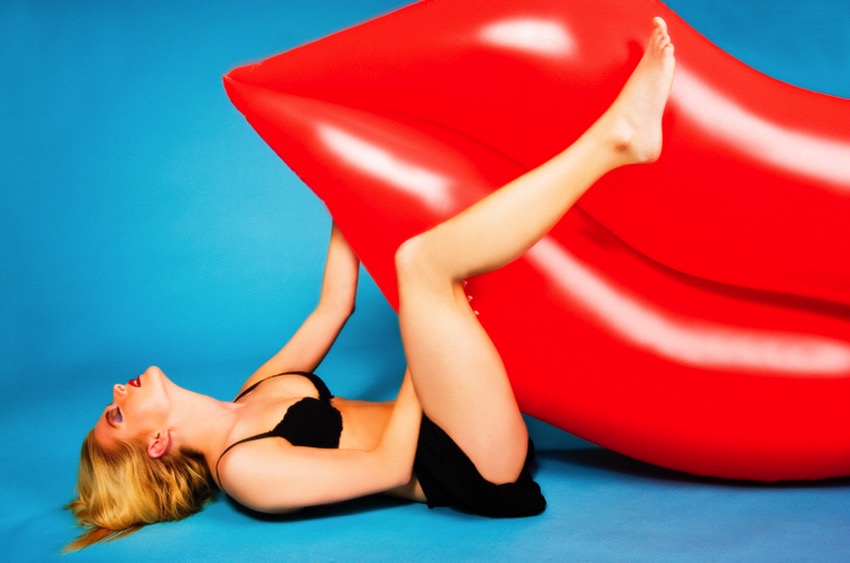
It soon started to lose its appeal. At first it was still going quite well, with a different coloured background now and then. Of course, I needed a ring flash and Frank was going to imitate David Lachapelle.
Well, unfortunately I never even got close. Very soon, my work became boring, repetitive and absolutely recognisable, but not in the way I wanted. It was more: 'Oh look, there he is again with his colours'.
That cannot be the point. So I gave up, style... Whatever.
I also no longer felt like imitating David Lachapelle. Of course, those extreme ideas stayed in the back of my mind, but I had more or less accepted that I would never develop a style. It is simply not possible, so I would just do what I enjoyed.
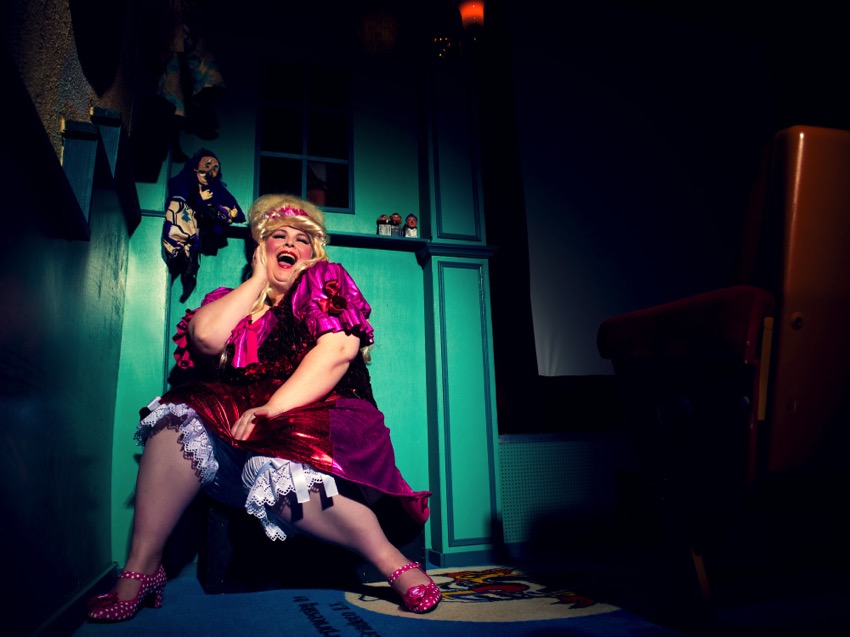
And in this case, that meant going to a circus museum with a hilarious team.
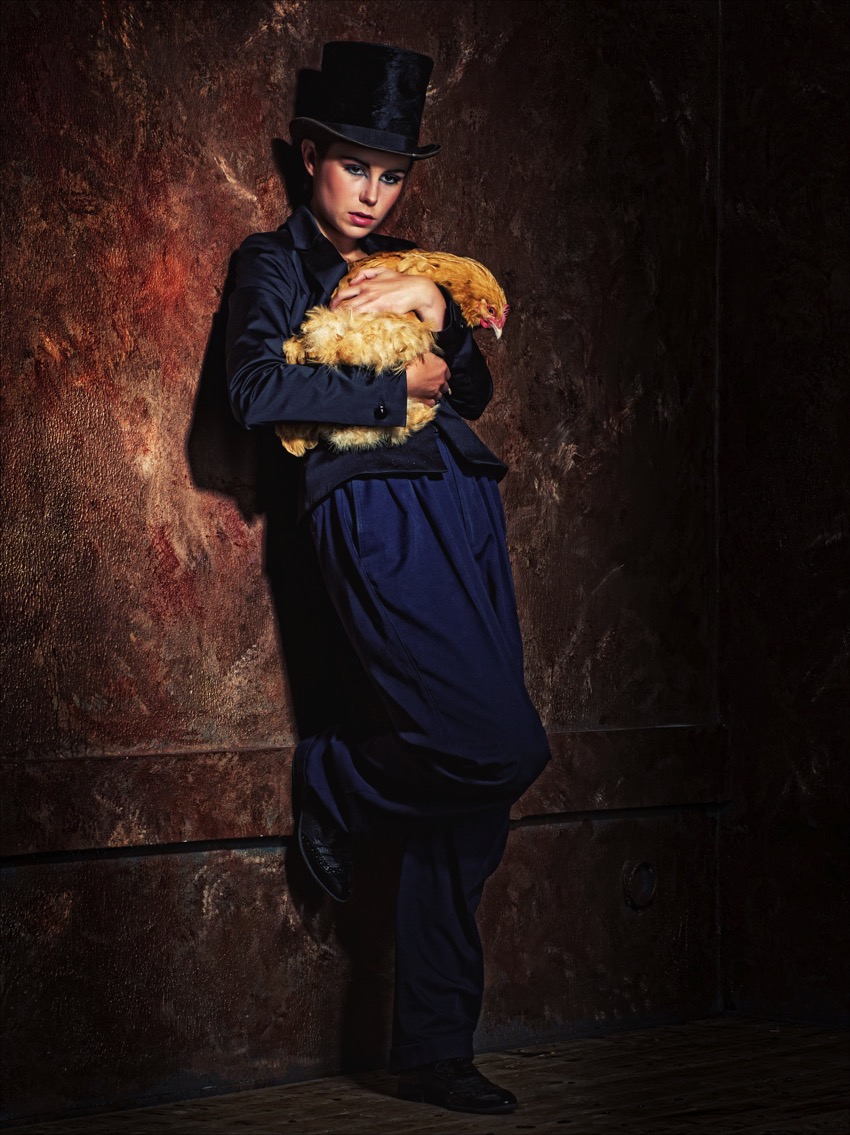
Or having a model bring a pet along.
And I think that is the trick. It was actually rather stupid of me.
When I was young, I gave guitar lessons at home. One of the first things I taught my students was that copying a style will never work.
That you have to take what you like from every musician, not just guitarists, throw it all into a pot, stir it well, understand what you are doing and then glue everything together.
So you can perfectly alternate a beautiful neoclassical run by Malmsteen with some hefty blues notes and double stops by Hendrix, then put the whole thing in a Brian May style. And voilà. If you do it often enough, you no longer hear that they are separate pieces, but... It is you.
And why do I not do that with my photography? Well, apparently it took me a while to realise. 
Little by little, I started enjoying photography again. I stopped desperately trying to copy something I did not have the budget or models for, and simply did what I enjoyed. At that point, I no longer cared what other people thought, fortunately.
At first it was very difficult. There were times when I really wanted to stop taking photographs, or at least stop posting online. Because I find painters such as Rembrandt and Caravaggio incredibly beautiful, my work soon became rather dark.
Add to that a fondness for horror and science fiction, and the picture gradually began to develop. It was not exactly what was being shared on forums at the time. It was clearly much darker, with far more contrast.
More muted colours with one colour, often red, really standing out, Caravaggio, but combined with over-the-top styling, expression and so on.
Long story short, it was definitely different. And many people did not like that. Still, I stubbornly continued doing what I enjoyed. I refined it further and further. Not just in terms of techniques, as at some point you have more or less mastered those, but especially in terms of bringing atmosphere into a photograph.
You never stop learning in that area. Everything from lens flares and smoke to colours, hard contrasts and so on. Always with that storytelling element, or movement, but something has to happen.
_(1).jpeg "Nadine (2021)")
And of course it helped enormously that around that time I met Nadine, who, like me, has a huge fondness for over-the-top styling. That worked well together.
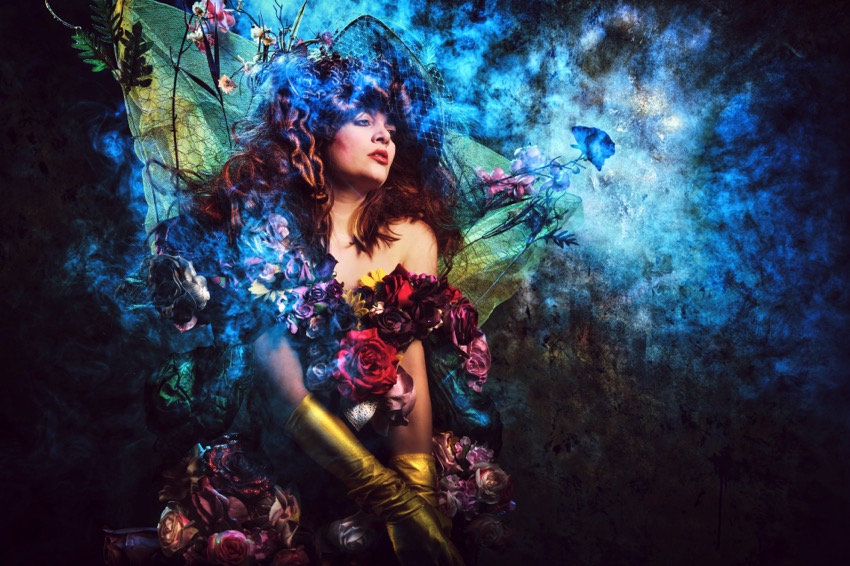
And there you have it. Little by little, people's opinions began to change and I was actually given a style. Well, nice, but that is not what I want. And I think this is the point at which you develop your style. The moment you stop chasing it and work PURELY and ONLY from feeling and passion.
Model photography was going well now, but my street and travel photography was no more than that of a tourist with an expensive camera, taking pictures that he alone thought were worth taking.
I am still not a 'real' street or travel photographer, but thanks to a conversation with Jay Maisel, I started using every aspect of my model photography in my street and travel photography.
Even in my private snapshots. The only thing I really changed was the way I looked. Just as with model photography, I look at HOW I photograph the scene, FROM WHICH viewpoint, AT WHICH moment, with WHAT kind of light, and so on.
And believe me, you can really do that in a fraction of a second more than when you normally press the shutter, but the difference is enormous.
And the 'strange' thing is that although my street and travel photography is completely different from my model photography, in my view, people still see a style in both.
No matter how hard I try to undo it, by finding a matching colour and atmosphere for every trip, visit or series, by experimenting with other techniques, such as black mist filters, people still recognise my photographs as my style...
So I think that at the end of this article, we can say that finding your own style is actually about letting go of all styles and simply doing what your heart tells you to do.
Because just as we know the character of our wives, friends and girlfriends, a piece of the creator's character also appears in the image when art is made.
However hard you try to hide it, your true nature always comes out when you create completely 'freely' without desperately trying to copy something. In photography too, although we call it... Style.
But never forget that besides lighting, colour additions, editing and so on, a real photograph stands or falls by the connection you have with the team you work with. And of course, especially the model.
Nadine has worked with us a lot over the years. Often, it is precisely those moments when you both get on with it, without thinking about whether other people will find it beautiful or enjoyable, that the nicest things come from. But I think it is always the small details that finish it off.
Like the sign showing the direction and the bag here. Remove those and the photograph falls apart for me.
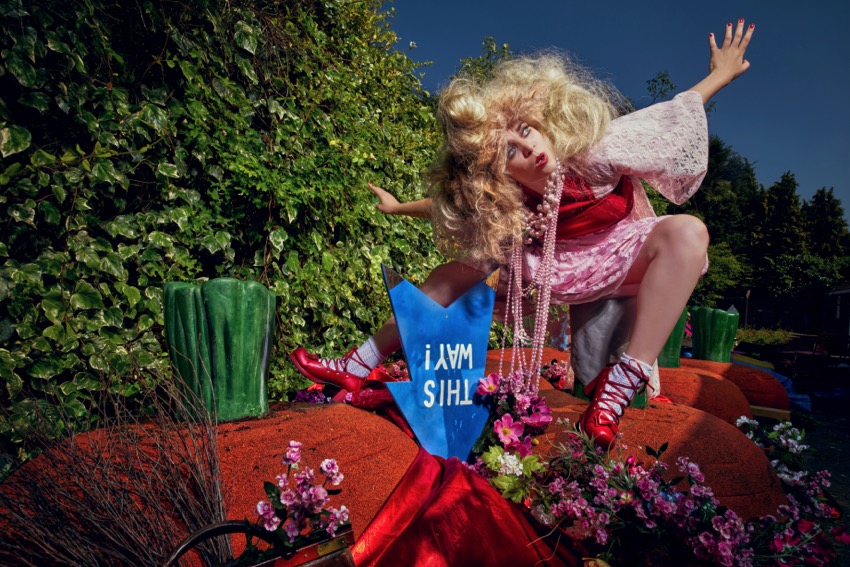
But you can also think of certain 'characters' with which you could effectively build an entire series.
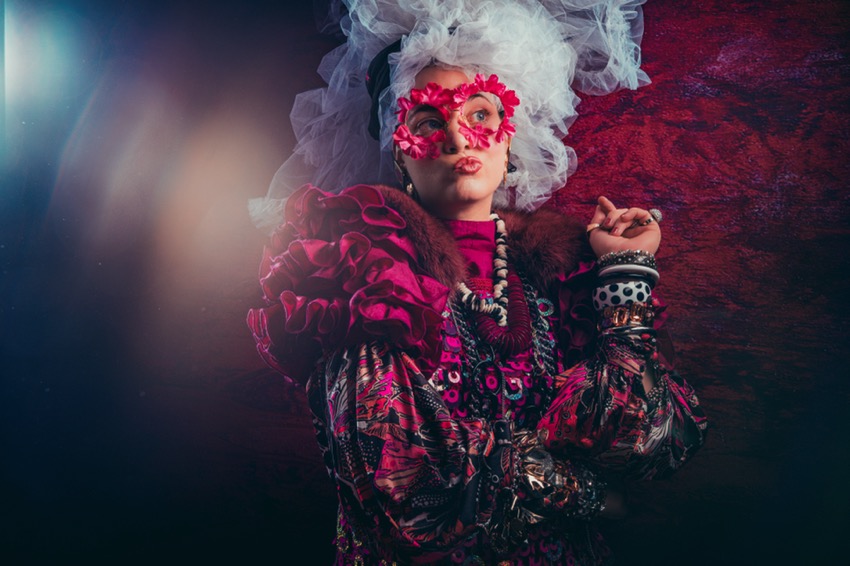
Unfortunately, a style is not one single thing. It cannot be put in a box. It is something from you, and others, that you put into your work time and again, and through which people recognise not just the photograph but also that invisible signature.
And a copy of a signature is never as strong as the original, so find your own. That does not mean that a copy of a photograph cannot be stronger than the original.
About the author
Frank Doorhof blogt dagelijks in het Engels op zijn website en geeft wekelijks workshops model fotografie in zijn studio in Emmeloord, maar ook op locatie in binnen en buitenland. Van beginners tot gevorderde, iedereen kan bij Frank terecht. Ook voor specifieke 1 op 1 workshops, of maatwerk voor groepen.
You might also like
-
 Where do you find your inspiration?
by Nando Harmsen
-
 How to find your photographic style
by Elja Trum
-
 Review: Inspiration by Ap Dijksterhuis
by Erik van Rosmalen
-
 Do you need your own style as a photographer?
by Laura van der Burgt
-
 Inspiration: Portraits in the Studio
by Elja Trum
4 comments
-
 Donald Willemsen wrote on Monday 7 February 2022 at 15:25 | reply
Frank, what I really like about your photos is how you work with light and color. The clothing and props you use in your model photography, such as in the course you provide for Photofacts Academy, I find extravagant, and that suits me less. My heart also lies with model photography, partly because I really enjoy working with people. I took your course and was able to learn a lot from it.
Translated from Dutch.
When I look at your photos, I do think that you have developed your own style. To what extent you need to use post-processing for that is not entirely clear to me. You only really see that when you place the raw image from the camera next to the final result.
In the studio, you always use a light meter. Rightly so, by the way. I do that too. But does it ever happen to you that you adjust the exposure again afterwards during post-processing?
When you adjust the exposure afterwards during post-processing, did you expose incorrectly while taking the photos? -

 frank doorhof
wrote on Monday 7 February 2022 at 16:34
| reply
frank doorhof
wrote on Monday 7 February 2022 at 16:34
| reply
Hi
Translated from Dutch.
Nice to read, thank you.
It absolutely happens that I still make some adjustments later on. I usually say that the light meter gives the perfect exposure, but that this doesn't have to be the perfect exposure for the atmosphere. But you always have a reference point.
It also happens sometimes that you work with presets and then still adjust things in the exposures afterwards. There is no punishment for it (I think)
 -
Donald Willemsen wrote on Monday 7 February 2022 at 18:57 | reply
Frank, thanks for the clarification. I agree with you. There's no penalty 😉
Translated from Dutch. -
 martinphili wrote on Monday 7 February 2022 at 21:06
| reply
martinphili wrote on Monday 7 February 2022 at 21:06
| reply
Quite a funny subject, actually. Your own style will slowly develop, you incorporate your taste into your photos. Makes sense, even the way you dress yourself is already 'your style'
Translated from Dutch.
I happened to take a first little pin-up photo. I liked it, I thought it was fun, the models liked it and visitors on the photography forum and social media liked it too. So you keep doing that. Success is addictive, after all. By consistently continuing along the same path, my pin-ups also became a style, my style.
And now I mainly photograph classic cars and now people once again say that they recognize my photos. Probably here too because I consistently take photos the way I myself enjoy doing it.
Have your say
Please note: Articles older than a week can only be commented on by signed-in visitors.Would you still like to comment? sign in or create a free account.
Become a better photographer every week
A practical photography tip in your inbox every week.
39,024 photography enthusiasts already receive the tips! More about the weekly mail. Or keep up to date via  Facebook.

Elja Trum
Photofacts; everything to do with photography!
Would you like to take better photos and keep up with what is happening in photography? Photofacts publishes articles that teach you something about photography — from a product announcement to a practical shooting tip or a look at a website. Photofacts covers photography every day and is a hobby project of Elja Trum's that got out of hand. The articles are written by a team of volunteer authors. If you would enjoy writing one or more articles for Photofacts, do get in touch.More about PhotofactsPhotofacts is made possible in part by
