

Learn to really see: Photograph in one place for four hours
Sunday 18 February 2018, 13:13 by Elvira Smit | 10,584 views | 11 commentsThis article was translated from Dutch with the help of AI. Read the original.
I often catch myself doing it: taking a photo and moving on. Because surely the decisive moment is happening just around the corner. And when you get there, it turns out not to be the case, so you move on again.
Chasing something that usually happens in a place where you stay put, too. So below is a five-step guide that I have, of course, followed myself.
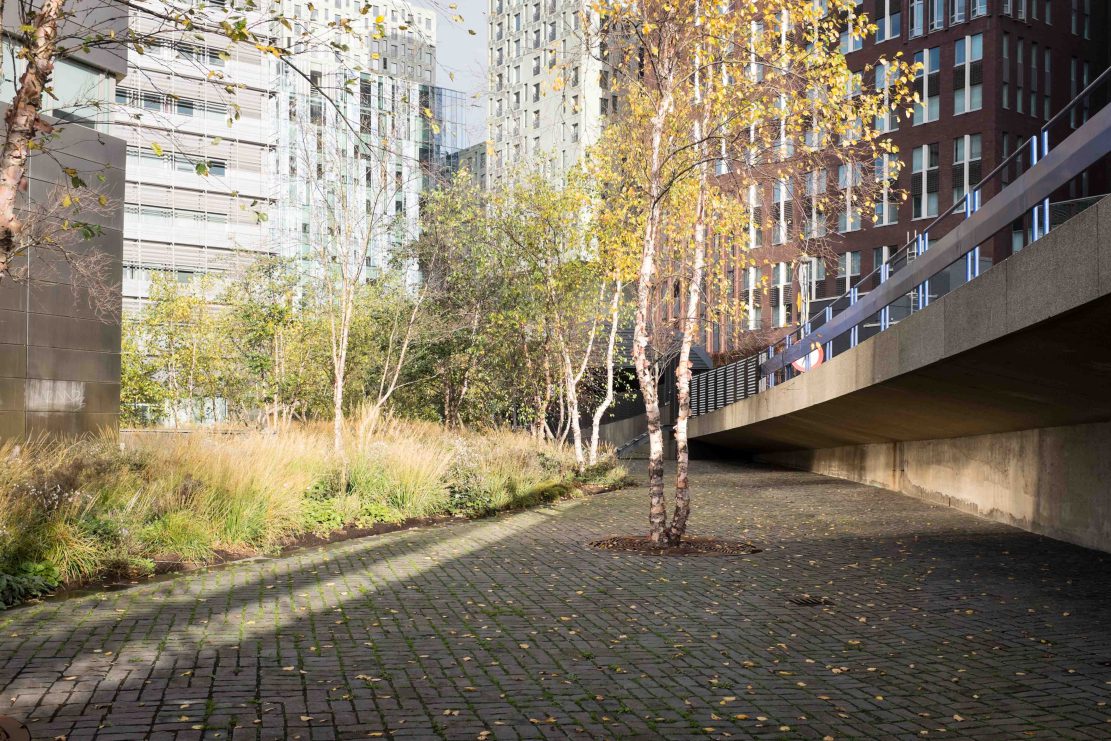
1. Find a location that intrigues you
If you have never spent four hours somewhere with your camera, you would do well to make things a little easier for yourself: hanging around is more fun in a place where you already see something beforehand.
You can even go there with a plan in mind, but you are not allowed to leave once you have carried out that plan within those four hours. Because the point is to see more, so you learn to look differently at the same surroundings.
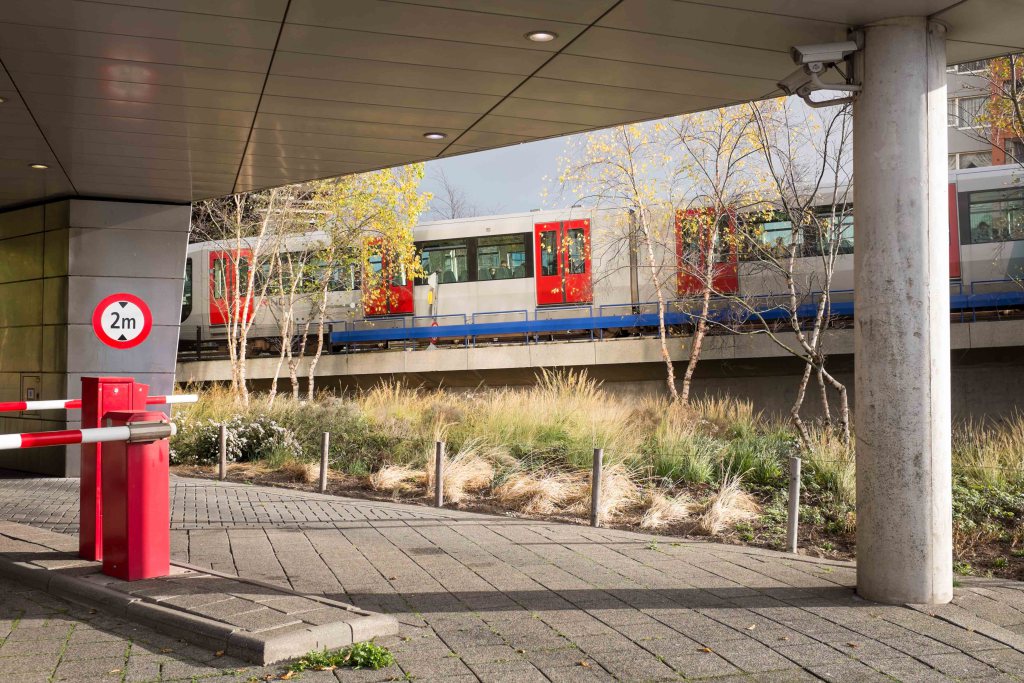
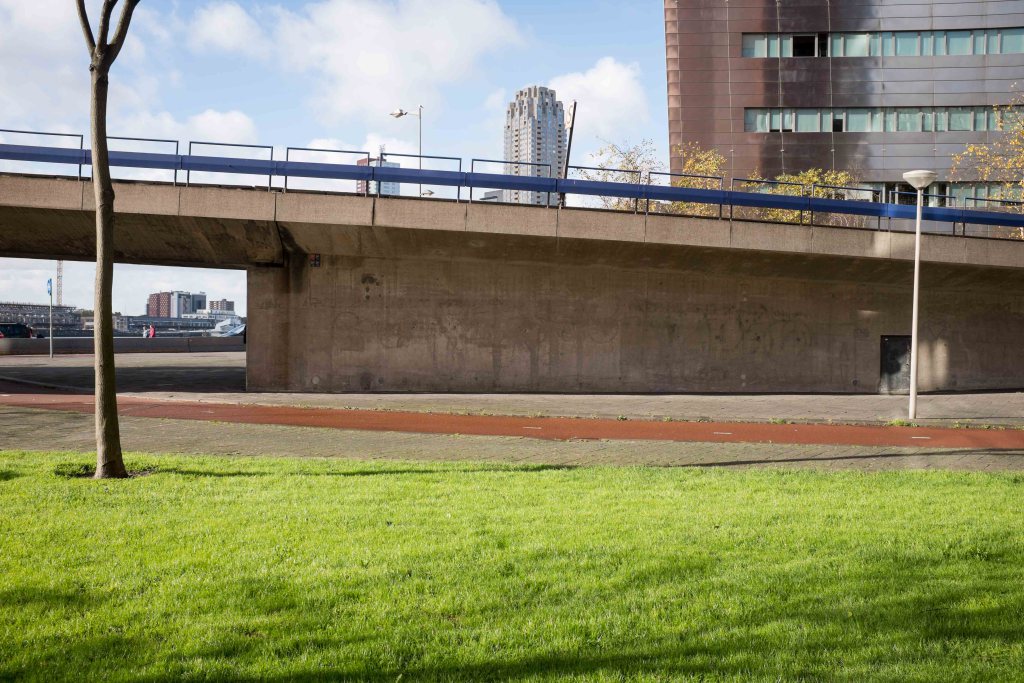
For this exercise, I chose a place in Rotterdam-Zuid. I regularly cycle past the elevated metro line, and every time I am surprised by the contrasts in that part of the city. Despite the built-up landscape, it feels empty. I confined myself to an area measuring 80 by 30 metres for four hours.
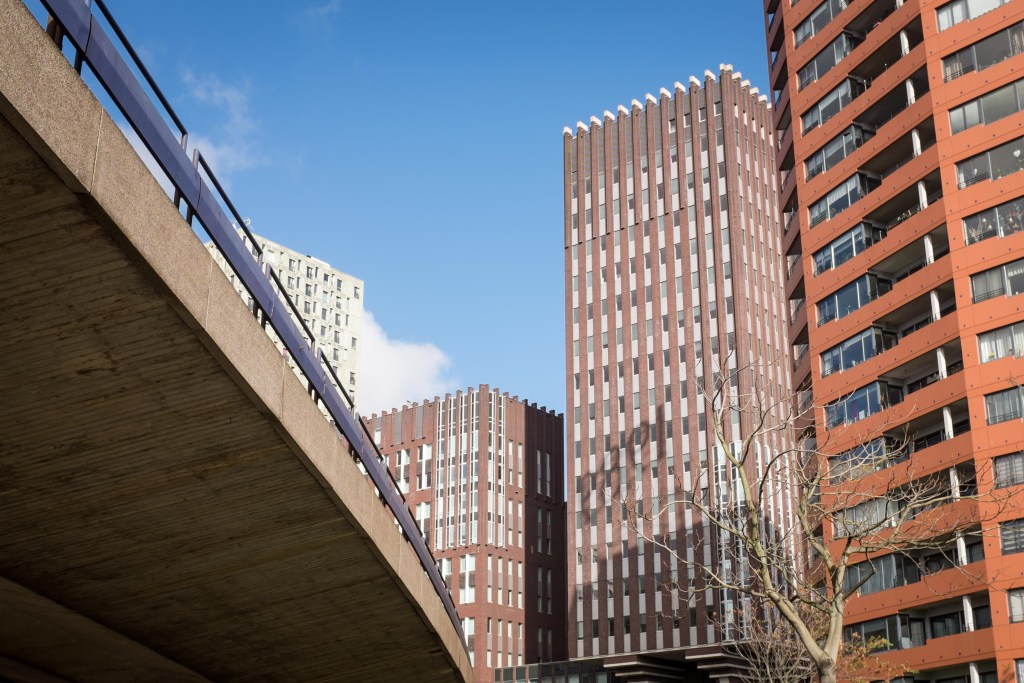
2. Take the obvious photos first
Of course, the aim of this exercise is to discover new angles. But usually you first have to get past the standard viewpoints. That is certainly the case for me.
Only once I have taken the standard shots can I go a layer deeper. I think that also has to do with translating three dimensions into two: by taking photos, you see how the surroundings hold up, or do not, in a flat image. What works in your favour and what does not?
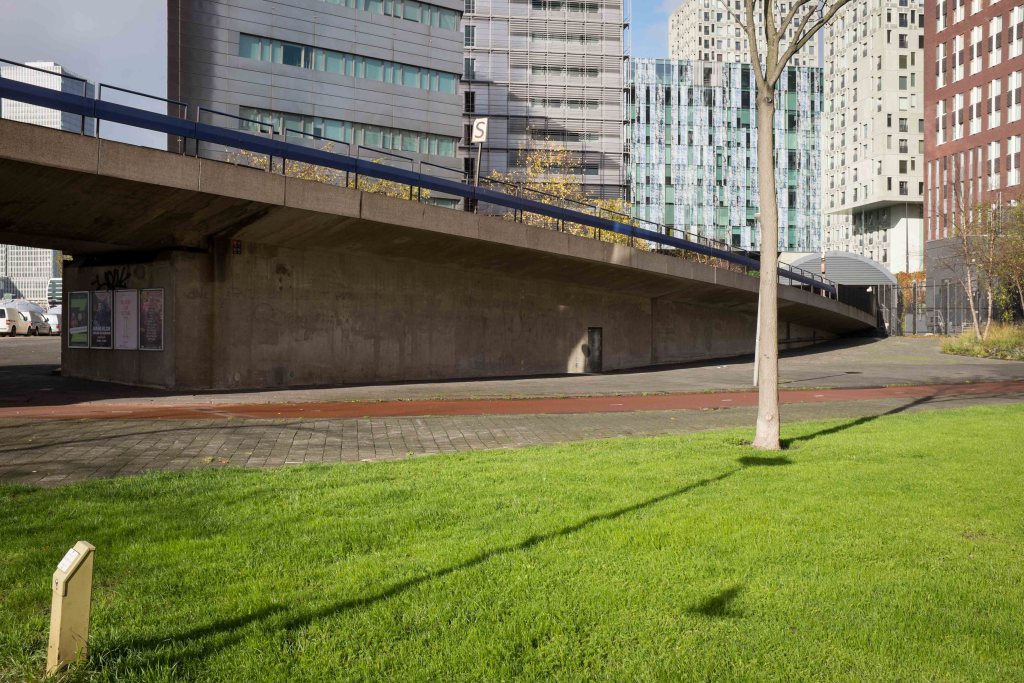
3. Look for unusual elements in the landscape
Right, you have now been hanging around in an area of your choice for a while. What do you notice? What effect does this environment have on you? Try to convey these elements visually in your photo.
If you want to work really carefully, you can write down these impressions and look at them again later, during post-processing. You can then select based on the words you wrote down.
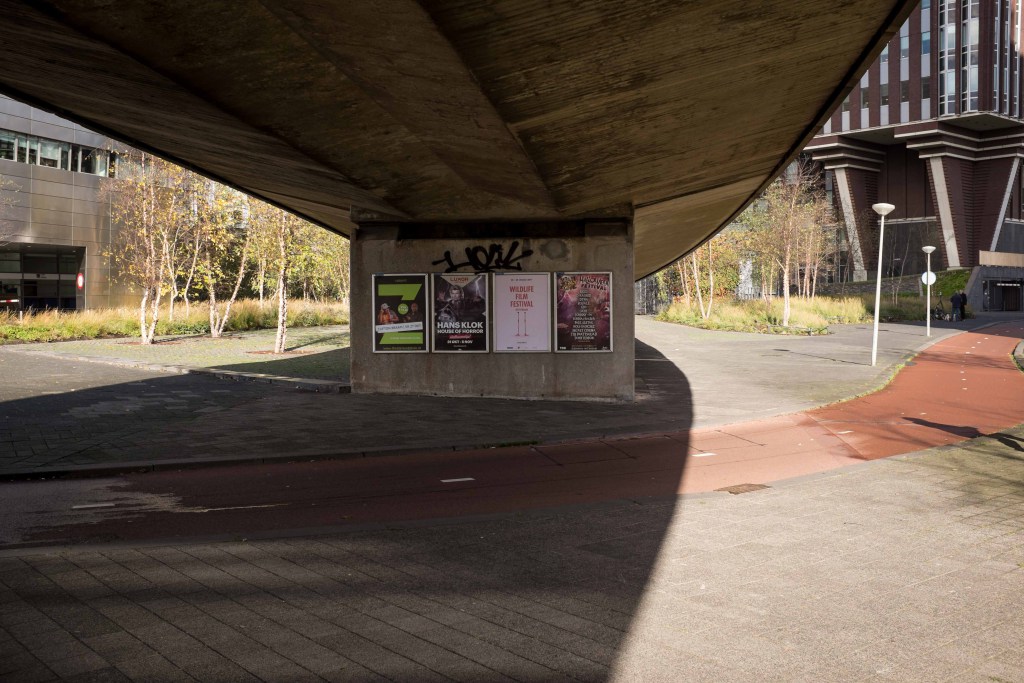
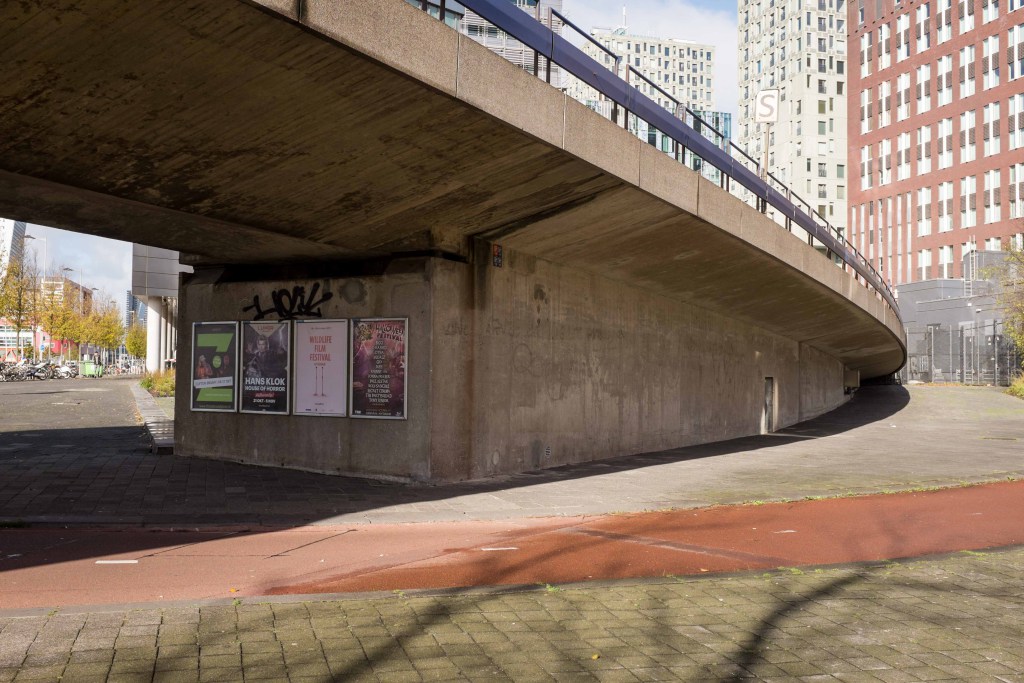
At my location in Rotterdam, I noticed the huge shadow beneath the metro line after a while. The geometric shape felt pleasantly protective. So I looked for an angle that conveyed that feeling. The photo below was one of the last in a series of 30 attempts.
4. Find a theme for your series
After some time, you will hopefully get ideas for a series. Do not make it too difficult for yourself if that does not happen 'naturally'. You can also choose to make a series around one of the words you chose in step 3.
Or choose one element, activity or person in the surroundings and photograph it from different angles.
In my exercise in Rotterdam-Zuid, I was inspired by that shadow: suddenly I saw shapes and colours everywhere. So I tried to build a series around it, leaving people completely out of the picture.
5. Review your progress during post-processing
Once you are back home and look at your photos, it is good to reflect on how you looked at your surroundings during those four hours.
What is different about the first few and the last few photos? Would you have seen the same things without spending so long in one place? Or perhaps you can see something in your photos that you did not consciously register at the location itself?
Would you still like an exercise beforehand?
If you do not like this kind of 'broad' exercise at all, but you would still like to spend four hours somewhere, you can give yourself some boundaries by setting out with an assignment. You can come up with one yourself, or take a look at the other tips on my website.
Have fun photographing!
About the author
Ik heb een eigen fotografieblog, Kronkeling. Daar schrijf ik om de week twee artikelen. Over hoe je je blik kunt scherpen, je creativiteit kunt aanwakkeren, en over fotografen die mij inspireren. Geen technische zaken, wél over hoe je leert kijken. En dat blijkt nog een hele klus. Een mooi startpunt zijn de Kronkeltips, die vind je hier.
You might also like
-
 Street photography tip: Night photography on the streets?
by Michiel Heijmans
-
 One Hour in One Place
by Michiel Heijmans
-
 Street photography tip: Use the city's advantages
by Michiel Heijmans
-
 Street photography tip: Limit yourself to certain colours
by Michiel Heijmans
-
 Increase Your Chances of Taking Successful Street Photos
by Huub Keulers
-
 Street photography tip: Use continuous focus for moving subjects
by Michiel Heijmans
11 comments
-

 jeroendehaan
wrote on Sunday 18 February 2018 at 18:33
| reply
Leuk stuk met (ik-hou-wel-van-die-stijl) foto's!
This comment was written in another language and has not been translated yet. -
 Elvira Smit
wrote on Monday 19 February 2018 at 08:52
| reply
Dank voor je compliment Jeroen de Haan!
This comment was written in another language and has not been translated yet. -
 Arthur Wittendorp
wrote on Tuesday 20 February 2018 at 12:33
| reply
Hoi Elvira,
This comment was written in another language and has not been translated yet.
Ik vind je gedachtegang om langer op één locatie te blijven om beter te leren kijken een interessant gegeven. De uitwerking van je ‘experiment’ vind ik enigszins tegenvallen. Ik had iets meer variatie in je foto’s verwacht. Op alle foto’s zie ik een betonnen kunstwerk (in de civiele bouw worden viaducten, aquaducten exc. kunstwerken genoemd) vanuit verschillende hoeken gefotografeerd. Alle foto lijken op ooghoogte gemaakt te zijn. Om de serie spannend te maken is er mijn inziens onvoldoende met standpunten, perspectief en scherptediepte gespeeld. Wellicht dat met een andere locatie en onderwerp(en) met deze gedachtegang een spannendere serie kan maken. -
Elvira Smit
wrote on Tuesday 20 February 2018 at 13:08
| reply
Dag Arthur, dankjewel voor je opbouwende feedback! Inderdaad zou de serie er totaal anders hebben uitgezien als ik had gespeeld met standpunt, perspectief en scherptediepte. Voor deze serie heb ik gekozen voor een eenduidige aanpak, met als risico dat het wat saai en eentonig overkomt. Alle reden om dus nog eens terug te gaan
This comment was written in another language and has not been translated yet.
-
 Jo Daniels wrote on Tuesday 20 February 2018 at 19:56 | reply
Ik had, en heb nog steeds, de neiging om bij een locatie “te” lang te blijven om de beste compositie vast te leggen.
This comment was written in another language and has not been translated yet.
Als beginnend fotograaf zag ik dit lange tijd als een tekortkoming voor het niet zien van de beste compositie.
Bij zien van alle foto’s zag ik het verloop van de “zoektocht” terug in het resultaat. Hieruit kies ik dan, wat mij betreft, de beste foto.
Regelmatig komt het voor dat de uiteindelijke keuze niet strookt met de gedachte die ik had op het “maak” moment.
Na ruim een jaar merk ik inmiddels dat ik vanuit deze aanpak mijn eigen stijl en interesse aan het ontwikkelen ben.
Met plezier en met een golf van herkenning heb ik dit artikel gelezen!
Dankjewel -
 Liesbeth wrote on Tuesday 20 February 2018 at 20:18 | reply
Dank je wel voor dit stukje, Elvira. Ik ben al een poosje op zoek naar artikelen over "Anders fotograferen" dan alleen maar misschien technisch goede, maar vaak toch een plaatje schieten. Ik heb je gevonden!
This comment was written in another language and has not been translated yet. -
Elvira Smit
wrote on Tuesday 20 February 2018 at 22:49
| reply
@ Jo Daniels: Grappig dat je al spelenderwijs erachter kwam dat lang dralen juist heel goed is om echt te leren kijken (en dus fotograferen)! Goed dat je je richt op het ontwikkelen van je eigen stijl, ik wens je veel succes (en plezier!) in je verdere zoektocht
This comment was written in another language and has not been translated yet.
@ Liesbeth: Graag gedaan! Ik ben net als jij op zoek naar die andere manier van fotograferen en deel die zoektocht graag met anderen middels mijn blog. -
 Fred wrote on Wednesday 21 February 2018 at 00:45 | reply
Dag Elvira, een meesterlijk artikel en een meesterlijke website van jou. Rest mij één vraag...waar en hoe kan ik aan het door jou genoemde boek "The Photographers Playbook" komen.
This comment was written in another language and has not been translated yet. -
Elvira Smit
wrote on Wednesday 21 February 2018 at 13:44
| reply
Dag Fred, dankjewel! Het boek is gewoon te koop via bol.com Even de titel opzoeken via de zoekbalk daar en je vindt hem zo. Ik wens je veel fotografieplezier!
This comment was written in another language and has not been translated yet. -
Fred wrote on Thursday 22 February 2018 at 14:29 | reply
Thx Elvira, het boek heb ik dus onmiddelijk besteld !
This comment was written in another language and has not been translated yet. -
 Jeannet wrote on Saturday 24 February 2018 at 11:01 | reply
Ik wacht altijd een flink aantal dagen voor dat ik mijn foto's uit ga zoeken. Meestal zie ik dan de foto's op een andere manier dan dat de werkelijkheid nog vers in mijn geheugen zit.
This comment was written in another language and has not been translated yet.
Have your say
Please note: Articles older than a week can only be commented on by signed-in visitors.Would you still like to comment? sign in or create a free account.
Become a better photographer every week
A practical photography tip in your inbox every week.
38,883 photography enthusiasts already receive the tips! More about the weekly mail. Or keep up to date via  Facebook.

Elja Trum
Photofacts; everything to do with photography!
Would you like to take better photos and keep up with what is happening in photography? Photofacts publishes articles that teach you something about photography — from a product announcement to a practical shooting tip or a look at a website. Photofacts covers photography every day and is a hobby project of Elja Trum's that got out of hand. The articles are written by a team of volunteer authors. If you would enjoy writing one or more articles for Photofacts, do get in touch.More about PhotofactsPhotofacts is made possible in part by
