

Richard Learoyd - The magic of the camera obscura
Sunday 13 October 2019, 13:31 by Michelle Peeters | 5,057 views | 2 commentsThis article was translated from Dutch with the help of AI. Read the original.
How often do you take a selfie or a snapshot of someone else with your phone? In today's digital age, a portrait can be made in a fraction of a second, and you can keep clicking until you have the perfect photo.
Photographer Richard Learoyd (Nelson, United Kingdom, 1966) uses his homemade camera obscura to create life-size portraits with a long exposure. In deep concentration, he looks for the right composition before allowing the light to enter and conjure the image on the light-sensitive paper.
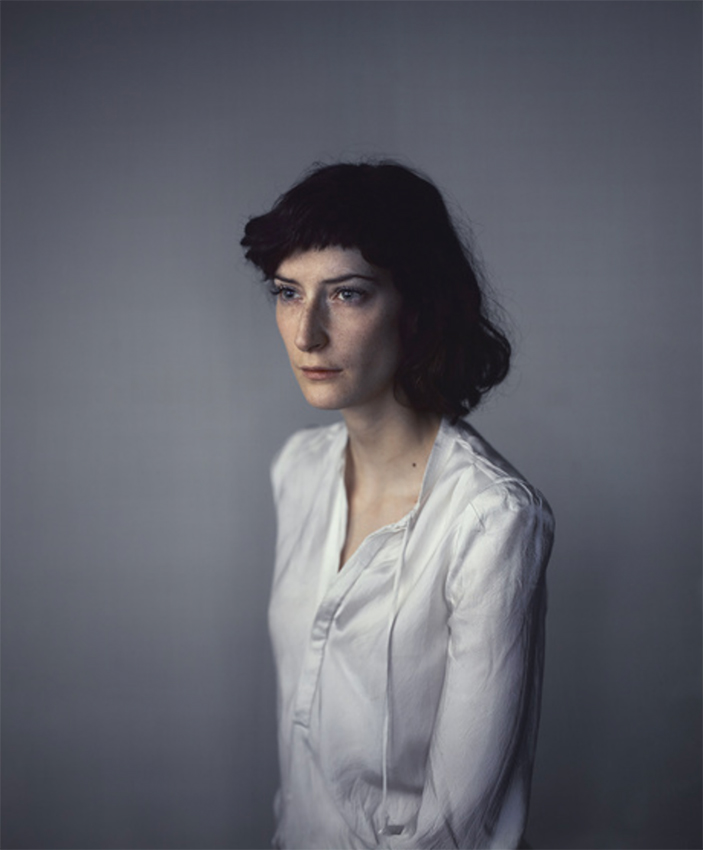
His models remain still for all that time, as was also the case in early photography. There is no negative either. This means that, just as in painting, each photo is a unique work. In collaboration with Fundación MAPFRE, Fotomuseum Den Haag presents Learoyd's portraits, landscapes and still lifes in his first major solo exhibition in the Netherlands.
The magic of the camera obscura
Richard Learoyd uses the original form of photography: the camera obscura. The earliest examples of the camera obscura, literally translated as dark room, date back to classical antiquity.
It is a physical optical phenomenon in which light entering through a small opening in the wall of a completely dark space creates an upside-down projection on the opposite wall of what is happening outside the dark space.
From the sixteenth century onwards, artists presumably used this phenomenon as an aid for translating reality onto canvas. When the pioneers of photography, Niépce, Daguerre and Talbot, managed to fix a projection in a camera onto a light-sensitive plate during successful experiments in the nineteenth century, photography was born.
Slow photography
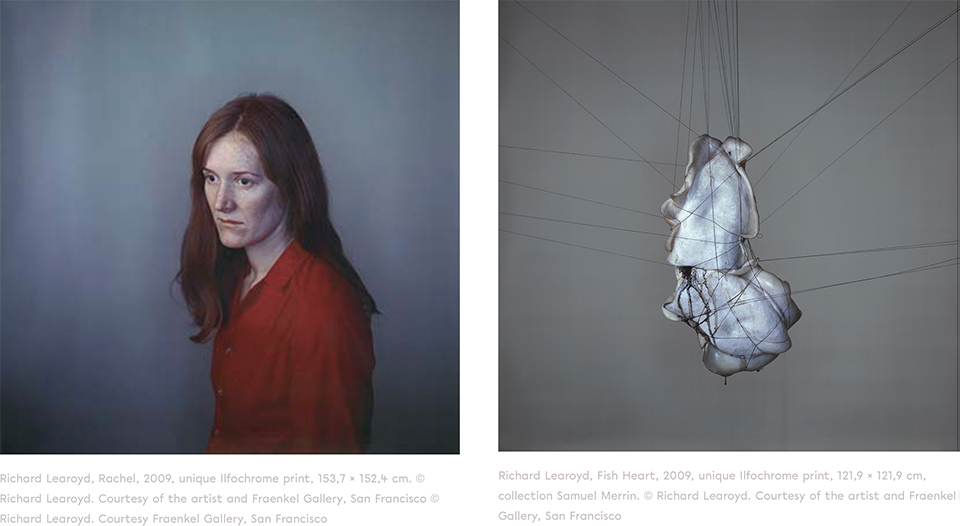
Richard Learoyd built his enormous camera obscura himself. In his London studio, the camera obscura is a room within a room. Because of the size of the paper he can expose in it, the photos are often life-size or even larger.
He uses this method to make not only portraits and still lifes, but also landscape photos. For these, he sets up his camera obscura outdoors, whether in the English countryside, on the Californian coast or in Eastern Europe.
The process is extremely time-consuming, both in terms of the exposure and the preparation. It is therefore not surprising that he makes only around ten photos a year. Despite using such an ancient method, Learoyd's work has nothing to do with nostalgia.
By using a 750 mm lens in the opening of his camera obscura, he enlarges the image so far that it goes beyond what the human eye can see. The result is photos with a high degree of intensity, a shallow depth of field and no grain at all.
Affinity with painting
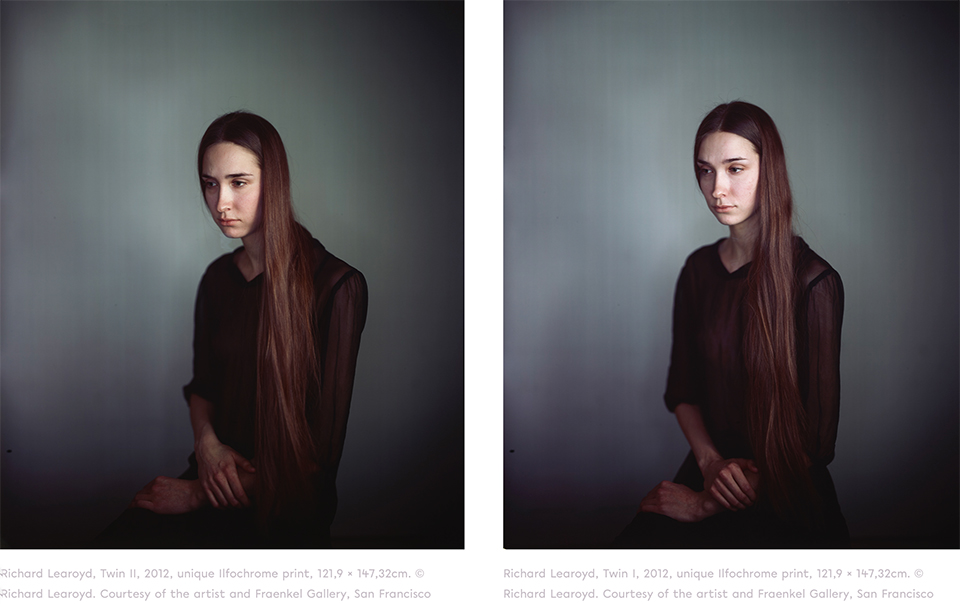
In many respects, Learoyd shows himself to be indebted to painting. Not only because of the uniqueness and size of the work, or the slow working method, but also because of his choice of subjects. It is no coincidence that he focuses on the traditional genres of painting: landscape, portrait and still life.
He also comes close to painting through the way he works with light, depicts human skin and seeks stillness in his images. He does this not only in his portraits, such as Jasmijn, towards the light, in which he portrays Anne Frank as a contemporary adult woman, but also, for example, in his 'portraits' of car wrecks.
Biography
Richard Learoyd studied Fine Art Photography at the Glasgow School of Art. He worked as a photography teacher and a commercial photographer before increasingly focusing on personal work. In 2007, he first showed his personal work made with a camera obscura at the Union Gallery in London.
In 2015, he had his first major solo exhibition, Dark Mirror, at the Victoria & Albert Museum in London. Learoyd's work can now be found in renowned collections. Loans for this exhibition come from, among others, Centre Pompidou, Yale University and MoMA.
The exhibition Richard Learoyd - The magic of the camera obscura comprises around 50 portraits, landscapes and still lifes from the most recent decade of Learoyd's oeuvre. The exhibition can be seen at Fotomuseum Den Haag from 5 October to 5 January 2020.
About the author
Michelle Peeters is fotografe en oprichter van DeuxBleus Fotografie. Michelle herkent het bijzondere in het gewone en het gewone in het bijzondere. Ze heeft zich nooit willen specialiseren en is daardoor van alle markten thuis.
You might also like
-
 The magical moment; the connection between photographer and sitter
by Michelle Peeters
-
 Review of the handy Haida Magic Stick-It Wrapper Cloth
by Nando Harmsen
-
 The Magic of Photography with Multiple Exposures
by Laura van der Burgt
-
 Photograph a Still Life for a Change
by Laura van der Burgt
-
 Bringing Spring to Life in Photos
by Nando Harmsen
2 comments
-
 Jan Harm wrote on Sunday 13 October 2019 at 22:58 | reply
Saw it last Friday afternoon, impressive how sharp the photos are. Better quality than a view camera (4 x 5 inches). Here you can see how he does it.
Translated from Dutch. -
 Alain Nys wrote on Wednesday 16 October 2019 at 22:10 | reply
Dear Michelle,
Translated from Dutch.
Allow me to clarify a few things that could be misinterpreted.
Every camera is a camera obscura, without a lens more specifically a 'pinhole camera'.
The physical phenomenon of image formation through a small hole is improved by placing a lens in the opening, which was already done before one could speak of 'photography'.
Richard Learoyd photographs with a lens, hence the limited depth of field. (a pinhole has an infinite 'depth of blur', since there is no point at which one can focus because there is no lens...)
The long exposure time is simply the result of the low sensitivity of the positive photographic paper.(ISO 6 or something like that)
@Jan, it is logical that an image, registered at actual size on photographic paper without grain, is better than a photo made with a negative (even 4''x5'') that was enlarged. The same paper in your view camera will give the same grain-free result that you saw at the exhibition, except that Richard's camera is much larger.
Just putting some technical details in a row, which certainly does not detract from the value of Richard Learoyd's work.
I definitely want to visit the exhibition.
Thanks for the article.
Have your say
Please note: Articles older than a week can only be commented on by signed-in visitors.Would you still like to comment? sign in or create a free account.
Become a better photographer every week
A practical photography tip in your inbox every week.
38,982 photography enthusiasts already receive the tips! More about the weekly mail. Or keep up to date via  Facebook.

Elja Trum
Photofacts; everything to do with photography!
Would you like to take better photos and keep up with what is happening in photography? Photofacts publishes articles that teach you something about photography — from a product announcement to a practical shooting tip or a look at a website. Photofacts covers photography every day and is a hobby project of Elja Trum's that got out of hand. The articles are written by a team of volunteer authors. If you would enjoy writing one or more articles for Photofacts, do get in touch.More about PhotofactsPhotofacts is made possible in part by
