
Landscapes in Haze and Mist
Monday 2 May 2022, 20:02 by Johan Elzenga | 5,394 views | 5 commentsThis article was translated from Dutch with the help of AI. Read the original.
Haze and mist make perfect weather for photographing landscapes. Especially in the Netherlands, where the horizon is often cluttered with electricity pylons or other less attractive things. A little haze can hide them perfectly.
Haze and mist are types of weather that occur regularly in the Netherlands too, but there is no reason to stay indoors when they do.
On the contrary, this type of weather can be a great help when photographing the Dutch landscape, as it can hide various eyesores.
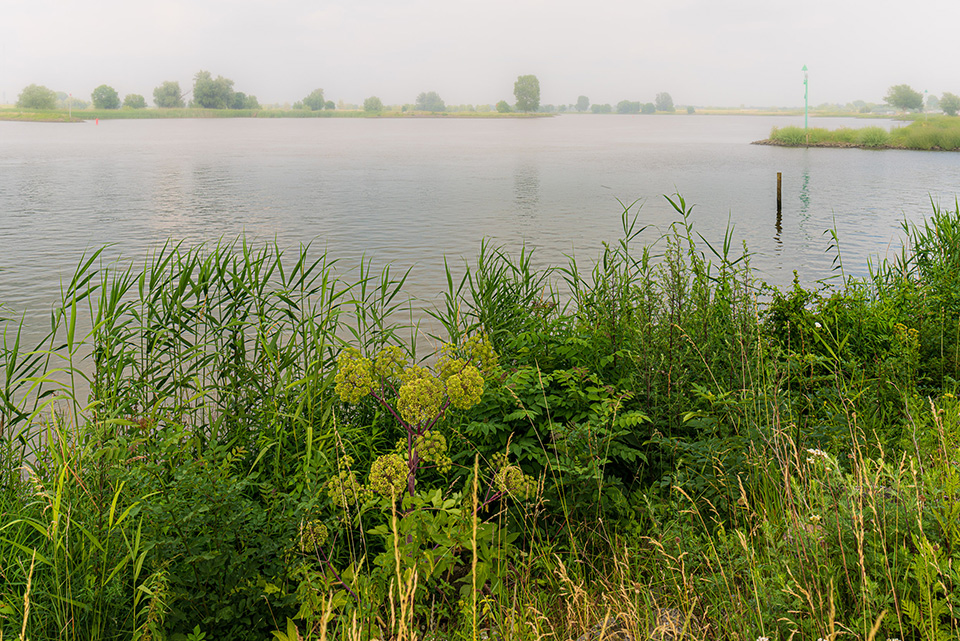
We simply are not blessed with vast, untouched natural landscapes in our little country, so you soon have some 'horizon pollution' in the form of an electricity pylon or tall building in your photo.
And hazy weather is a great solution to this problem, because the horizon is automatically hidden from view.
Haze or mist also creates a nice effect, because it creates a kind of 'natural depth' in your photos. Everything further away becomes blurred, which automatically emphasises the depth.
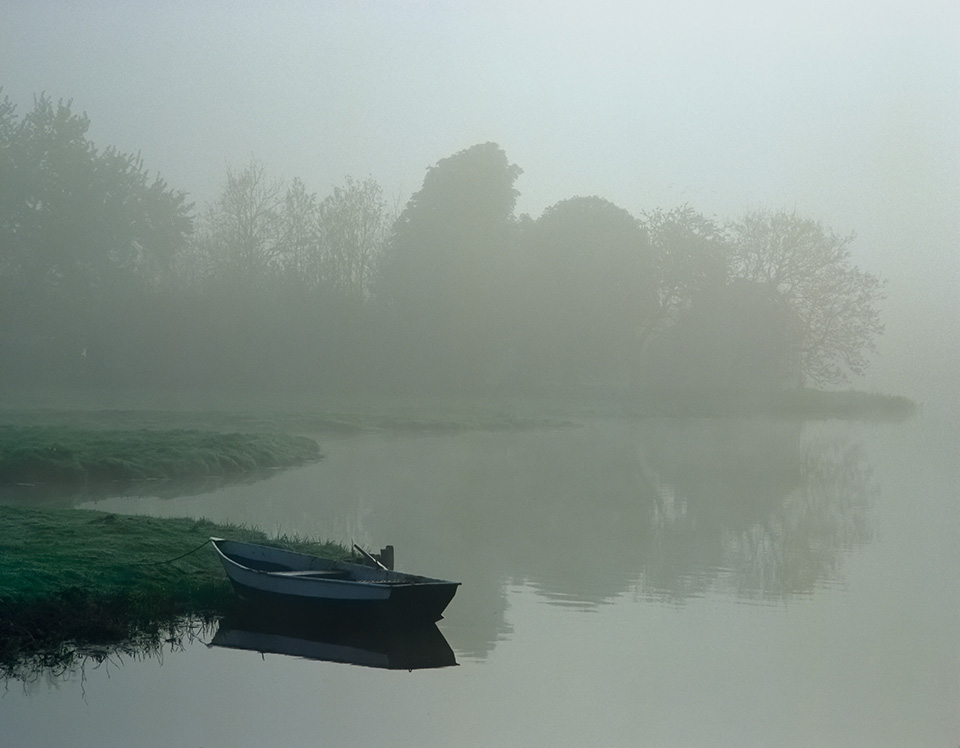
In principle, photographing in hazy weather is not much different from photographing in clear weather, but when it really starts to become misty, you need to keep a few things in mind to avoid disappointment.
First of all, exposure can sometimes become a problem. The mist droplets all reflect a little light, which can fool the camera's light meter.
The camera thinks there is more light than there really is, and the result is that all your photos become too dark. With a digital camera, you will notice this quickly, but it is better to think about it beforehand and set a small amount of exposure compensation, for example +0.5.
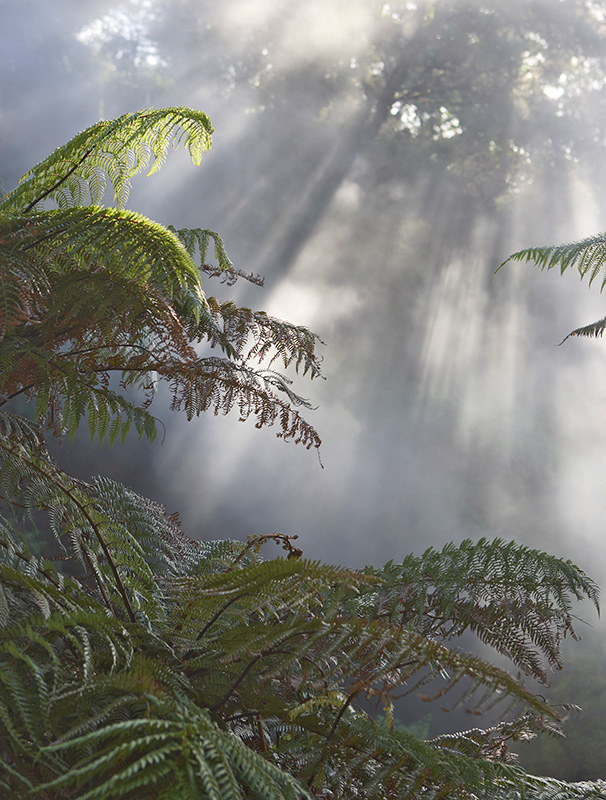
The second effect you need to take into account, especially when photographing in mist, is the focal length you use. It is not really about the focal length itself, but about the distance from which you are photographing.
The longer the lens, the greater that distance usually is, which also means that more mist droplets come between your camera and the subject.
So you could say that you can make the mist look thicker by using a telephoto lens, and less thick by photographing with a wide-angle lens, and that is indeed exactly the effect.
If it is very misty, choose a wide-angle lens, otherwise your photos will become very hazy. If there is only a little haze, try working with a telephoto lens to enhance this effect.
Because haze and mist create an effect of 'depth', it is important to look for subjects when composing your photos that can help you achieve that depth.
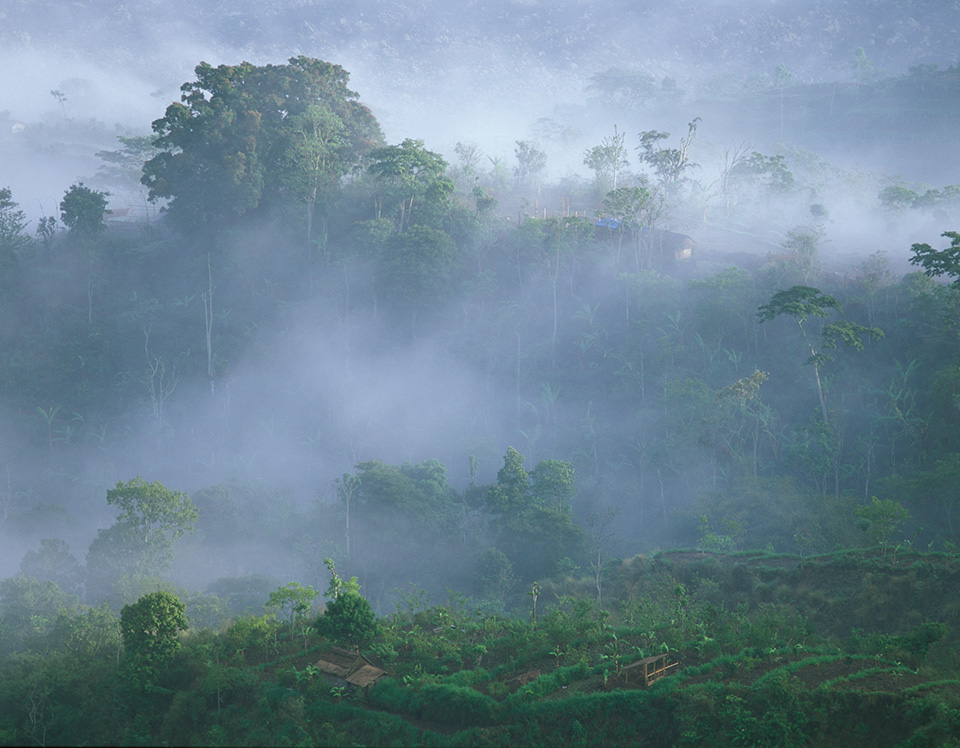
For example, if you photograph a number of trees that are all at the same distance, they will all become slightly hazier to the same degree because of the mist, and no depth will be created in your photo. The effect is then limited to a bit of haziness, and the question is whether that really looks good.
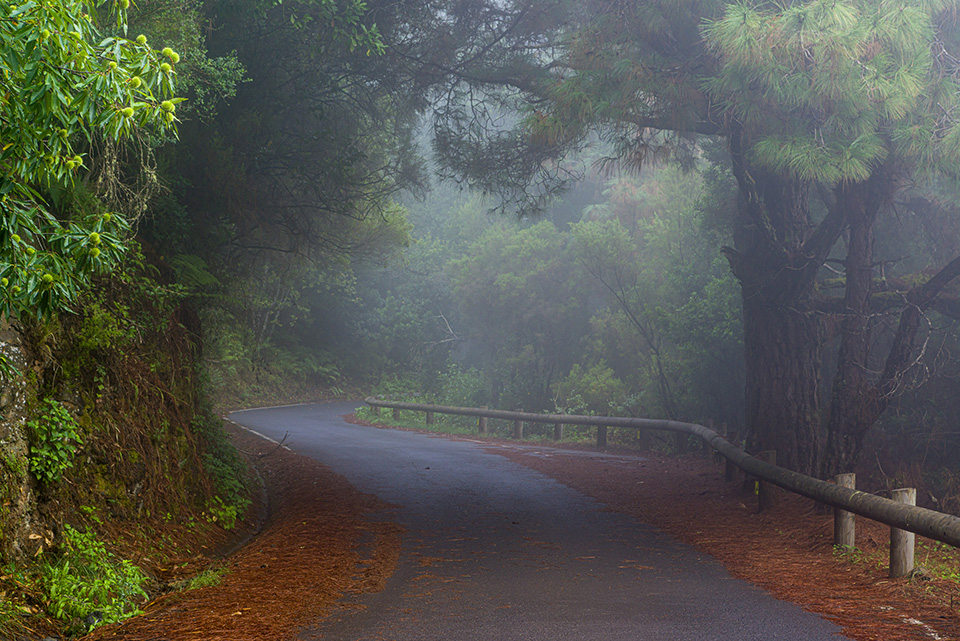
So look for leading lines that run from near to far. They are enhanced as they become increasingly hazy, which strengthens the effect that a leading line already has.
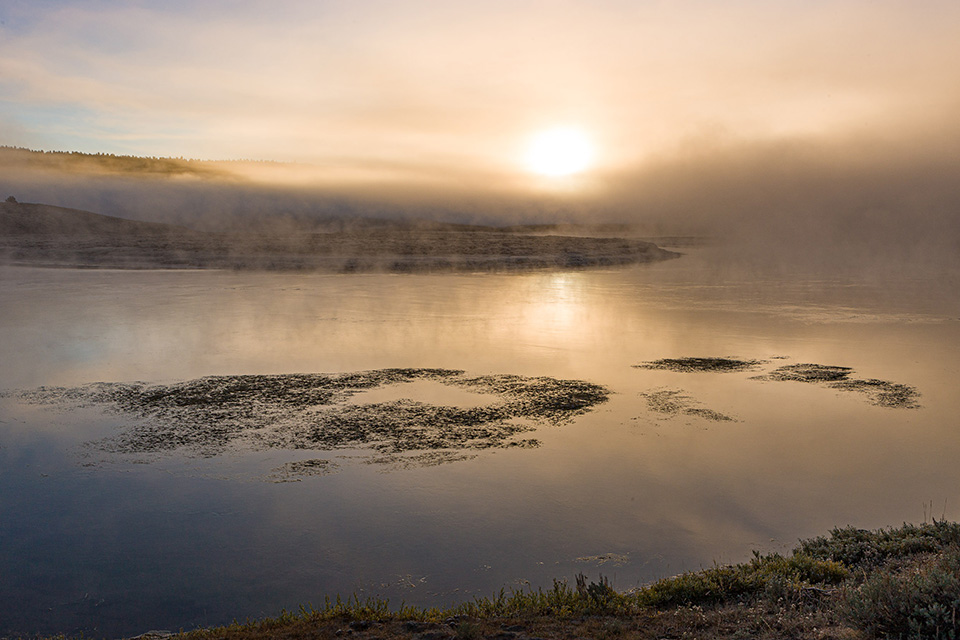
Finally, dense mist has the effect that you can photograph directly into the sun without getting ugly flare effects such as those typical aperture spots in the image. Make use of this when the opportunity arises!
About the author
Johan W. Elzenga is een award-winnende freelance fotograaf en schrijver van boeken over Photoshop en Lightroom Classic. Hij schrijft en fotografeert ook voor een aantal tijdschriften in binnen- en buitenland. Zijn artikel 'Why zebras are striped' is gepubliceerd in vijf talen en zes landen en het lijkt erop dat zelfs de beroemde auteur Desmond Morris werd geïnspireerd door dit verhaal.
You might also like
-
 Don't Let the Weather Influence You Too Much
by Nando Harmsen
-
 Nature photography tip: Make the most of misty mornings
by Rob Dijkstra
-
 Sometimes a black-and-white photo needs to be grey
by Nando Harmsen
-
 Fine weather is boring for landscape photography
by Nando Harmsen
-
 Try photographing in bad weather
by Elvira Smit
-
 Where do you place the horizon in a landscape photo?
by Nando Harmsen
5 comments
-

 ErikvanRosmalen
wrote on Monday 2 May 2022 at 20:51
| reply
ErikvanRosmalen
wrote on Monday 2 May 2022 at 20:51
| reply
Beautiful Johan, fog indeed gives - literally and figuratively - a beautiful extra layer to your photo!
Translated from Dutch. -
 Donald Willemsen
wrote on Tuesday 3 May 2022 at 14:41
| reply
Donald Willemsen
wrote on Tuesday 3 May 2022 at 14:41
| reply
I would only use photographing in haze and fog to create atmosphere with it. Not to tackle horizon pollution. I think that is a negative argument. You can also tackle horizon pollution afterwards by using the retouch tool or the clone tool. What I like about haze and fog is precisely the atmosphere it brings with it. And if you also have the sun breaking through, it makes it even more atmospheric. Horizon pollution is indeed a pious one, but I am not going to sit around waiting for haze and fog to solve that problem. There are good tools for that.
Translated from Dutch. -
Donald Willemsen
wrote on Tuesday 3 May 2022 at 15:48
| reply
Correction: 'vrome' should be 'crime'.
Translated from Dutch. -
 Johan Elzenga wrote on Wednesday 4 May 2022 at 11:42 | reply
Of course you can easily remove horizon pollution with Photoshop, and haze is mainly atmosphere-defining. But it can also be a challenge to take photos that have not been manipulated. I consider that precisely a positive approach, not a negative one.
Translated from Dutch. -
 guest wrote on Wednesday 4 May 2022 at 22:28 | reply
@Johan, you speak of manipulated images when you adjust something in Ps. If you finish a RAW file in Lr or Ps, then that is also manipulation. You cannot avoid post-processing a RAW file. That too is manipulating the image. In the analog era, every photo was manipulated in the darkroom. In your response, you give manipulation a negative connotation by stating: 'But it can also be a challenge to take photos that are not manipulated.', end quote.
Translated from Dutch.
A image may be manipulated as far as I am concerned, except in journalism. Then the photo must reflect reality and the explanation accompanying such a photo must be correct.
But in your case, when you take photographs, it is usually more about an art form and then the image does not always have to reflect exact reality.
If you see it differently, then that is not a problem. I respect your opinion and you as a person and photographer. By looking at your work I learn a lot, and I can then use that in my photography.
Have your say
Please note: Articles older than a week can only be commented on by signed-in visitors.Would you still like to comment? sign in or create a free account.
Become a better photographer every week
A practical photography tip in your inbox every week.
39,024 photography enthusiasts already receive the tips! More about the weekly mail. Or keep up to date via  Facebook.

Elja Trum
Photofacts; everything to do with photography!
Would you like to take better photos and keep up with what is happening in photography? Photofacts publishes articles that teach you something about photography — from a product announcement to a practical shooting tip or a look at a website. Photofacts covers photography every day and is a hobby project of Elja Trum's that got out of hand. The articles are written by a team of volunteer authors. If you would enjoy writing one or more articles for Photofacts, do get in touch.More about PhotofactsPhotofacts is made possible in part by
