

Taking a photo in the surf
Saturday 5 March 2022, 22:22 by Nando Harmsen | 4,790 views | 3 commentsThis article was translated from Dutch with the help of AI. Read the original.
Photographing by the sea is fantastic. Especially when there is good surf, and preferably a beach with stones too. Unfortunately, you won't find that in the Netherlands, but it can be found on some beaches in Lofoten. I explain how I photograph in these conditions.
You don't necessarily have to go to Lofoten to find stones on the beach. You can also see them on the French coast, such as along the Opal Coast. Unfortunately, there are few rocks to be found in the Netherlands. That is why I love photographing on the beaches of Lofoten.
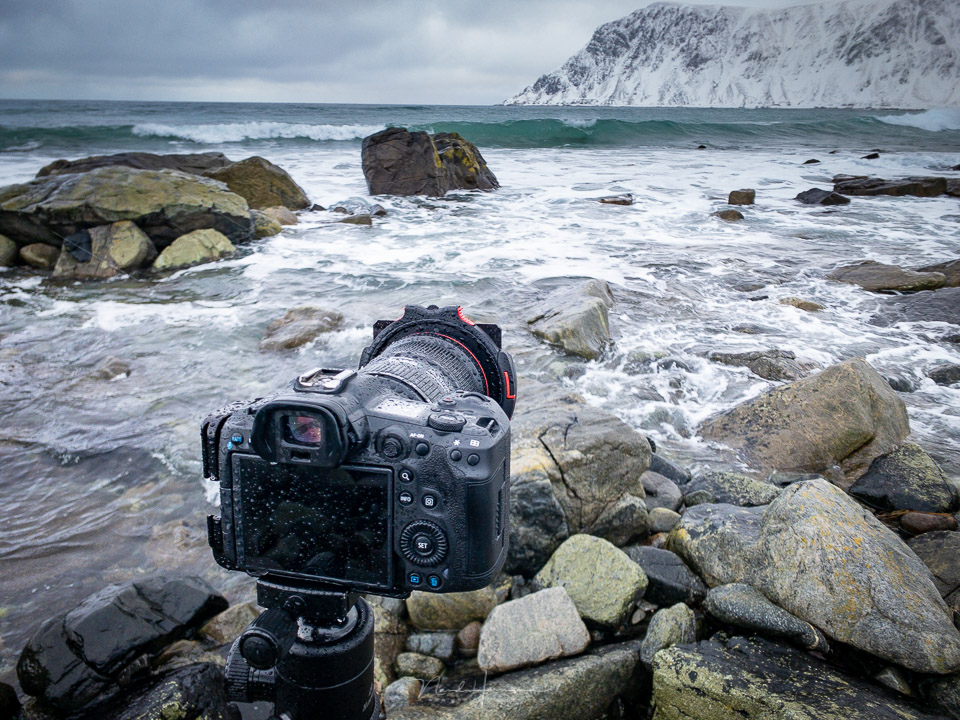
The day on Skagsanden beach was a rainy one. This wasn't too bad, as the rain was coming from behind, so the filter remained largely free of raindrops.
It is a good idea to keep a tea towel at hand. This allows you to cover the camera if necessary or wipe an errant drop from the filter.
Shutter speed is important
When photographing by the sea, people soon think of long shutter speeds. For this reason, many photographers have bought a 10-stop neutral density filter. This produces those beautiful smooth water surfaces. Yet this is not always desirable.
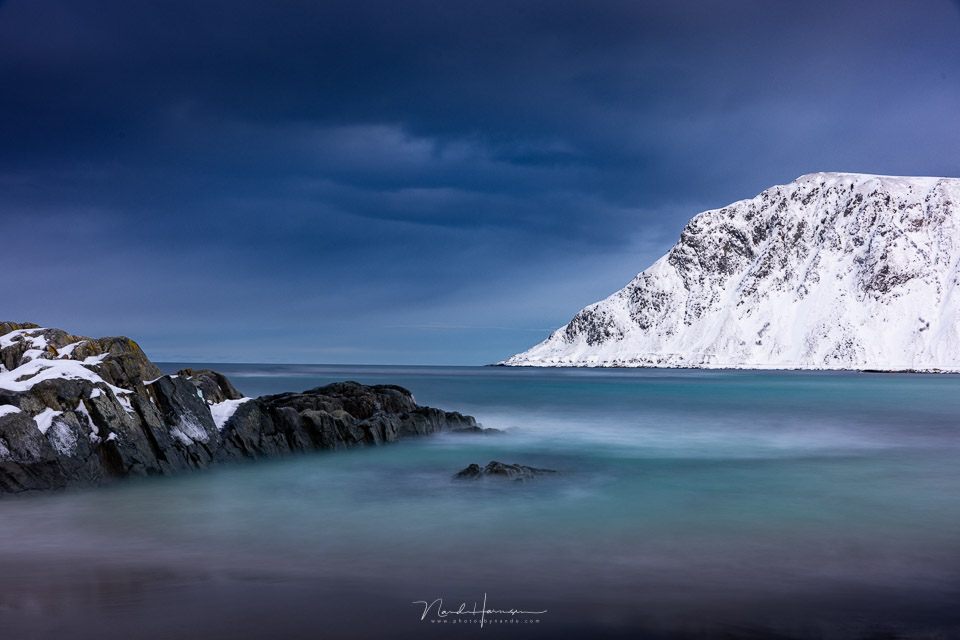
A smooth water surface means that the water is no longer moving. If you want to show the moving water in your photo, you need to avoid making your shutter speed too long. A 10-stop filter is almost always unsuitable in that case.
A shutter speed that is too short is not desirable either. It freezes the movement. This means that the ever-moving sea is no longer visible. In short, you need to choose a shutter speed that does not freeze the movement, but does not make it invisible either.
Incoming water and receding water
To capture good movement in the water in your photo, it is important to look at how quickly the water is moving. Incoming water moves quickly. Receding water is slow. Of course, it also depends on the tide.
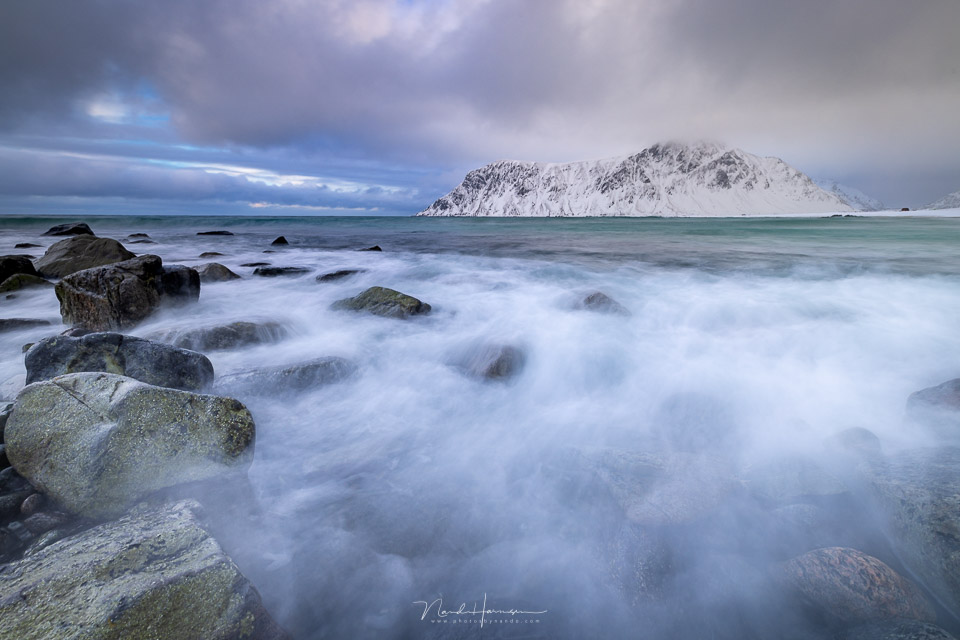
In many cases, photographing the incoming water is not the best moment. The water is fast, rolls over the rocks, and there is a risk that it will become a messy mass without beautiful lines.
When the water moves back after that incoming wave, the most beautiful patterns appear. The foam creates beautiful lines in your photo as it flows between the rocks. That is the right moment to take a photo.
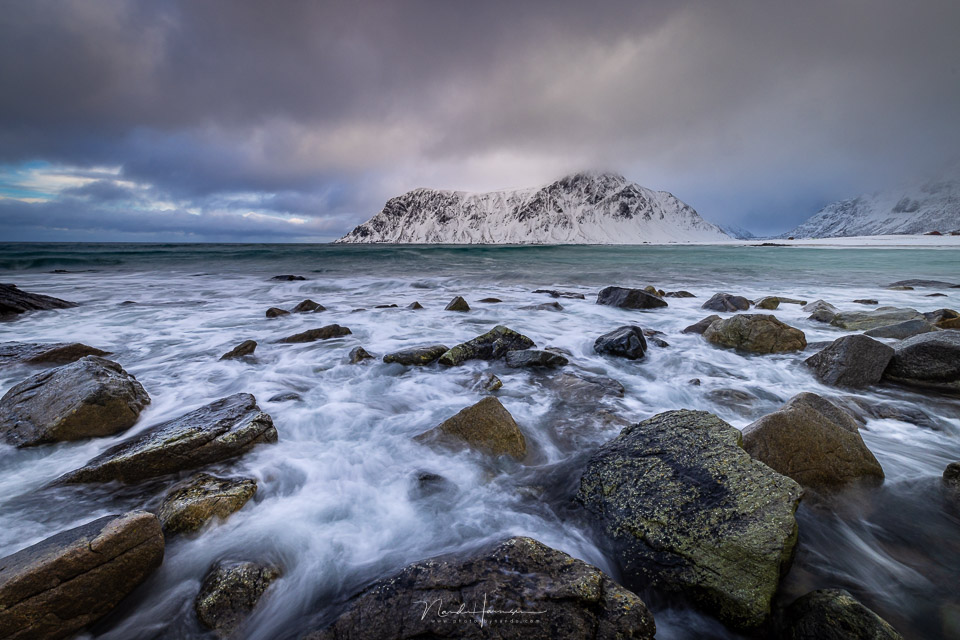
Depending on the speed, receding water is often good to photograph with a shutter speed between 1/2 second and 4 seconds. Finding out which works best is a matter of trying. Also look at the lines that form between the rocks. You can include these in the composition and framing of your photo.
Choose the right neutral density filter to achieve the desired shutter speed
Don't make the mistake of using a neutral density filter just because you have one. Look at your exposure without a filter and decide which shutter speed you want. Choose the neutral density filter that makes this shutter speed possible. For these photos, I used a Haida Red Diamond 4-stop neutral density filter.
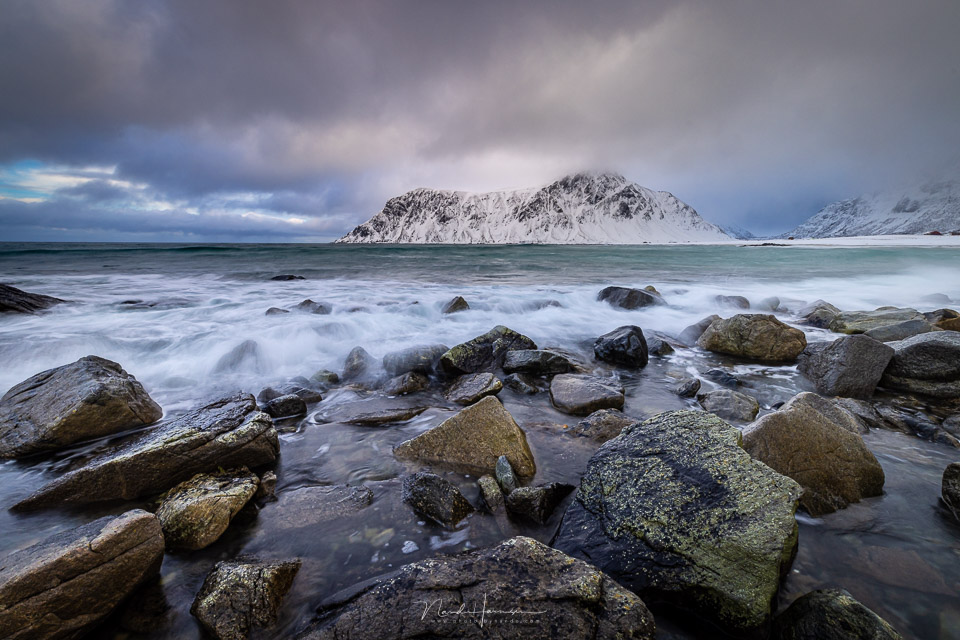
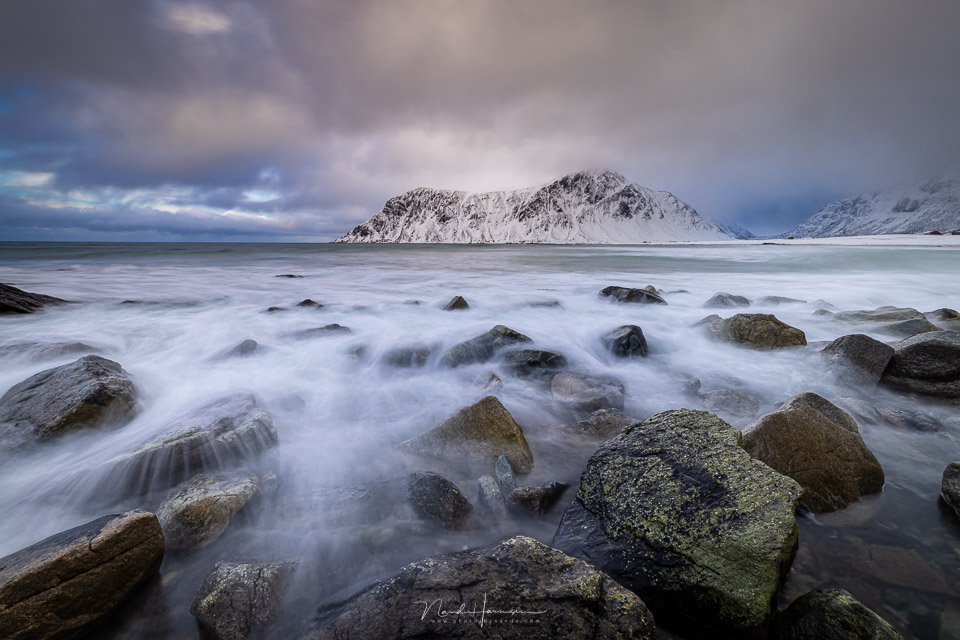
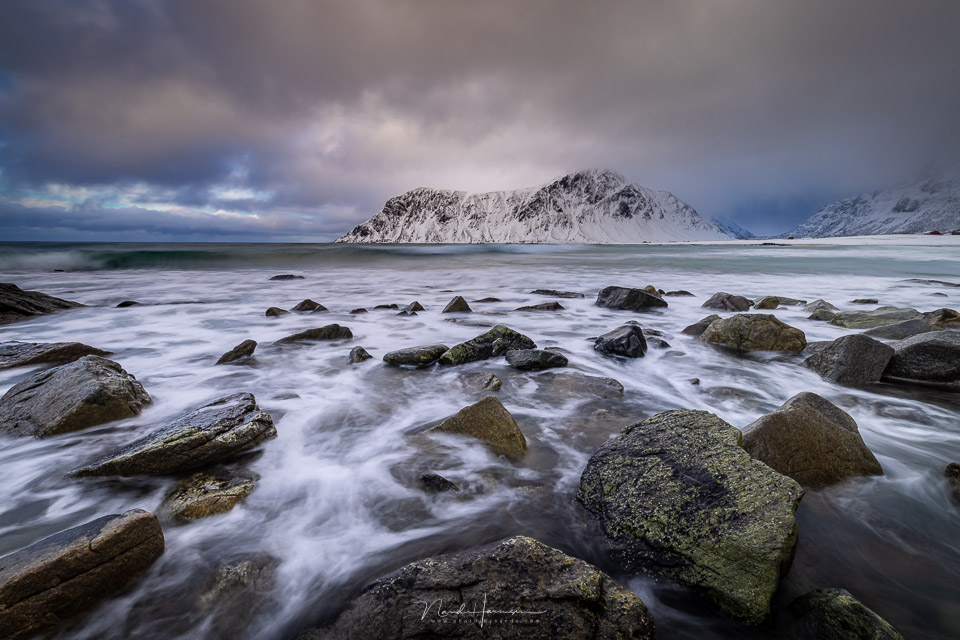
Perhaps the neutral density filter you have is too dark, or not dark enough. In the latter case, you can try stopping down the aperture further. In the former case, you can increase the ISO until you reach the desired shutter speed.
Take lots of photos and be careful
Don't be afraid to take lots of photos. Every wave is different, and the lines are different every time the water retreats. You can also try some variations in shutter speed. You will soon see when you have captured the 'perfect' movement.
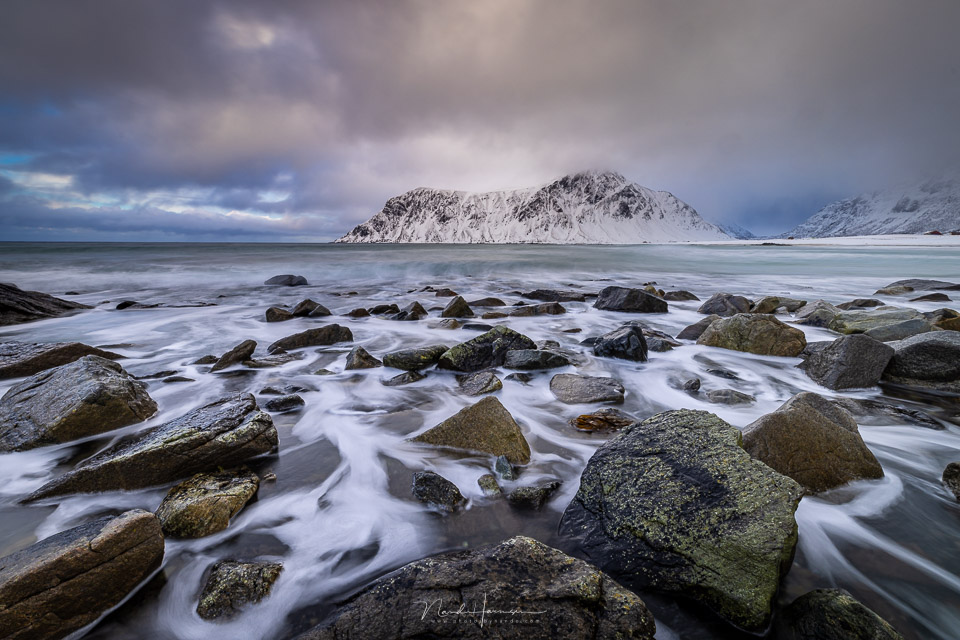
One final word of warning. Never run backwards on a beach with rocks when a wave threatens to roll over your feet. You don't want to fall backwards and hit your head on a rock.
Always keep an eye on the surf too. Avoid being surrounded by the water. Never put your camera bag on a rock or on the beach, but keep it on your back or over your shoulder. If you are not careful, the unpredictability of the sea can give you a nasty surprise.
I visited Lofoten as a tour leader and photography guide for Fotografie-reizen.nl. The filters used during this trip were the Haida M10 II filter system with Red Diamond neutral density filters.
About the author
Nando Harmsen has been photographing for more than 40 years. He specialises in wedding photography and landscape photography. Nando also gives talks, workshops, masterclasses and photo trips, and regularly reviews new and interesting equipment.
You might also like
-
 The Joy of Photographing by the Sea
by Nando Harmsen
-
 Photographing the Surf? Make Plenty of Photos
by Nando Harmsen
-
 Nature photography tip: Play with shutter speed in the surf
by Rob Dijkstra
-
 Finding a composition at the beach
by Nando Harmsen
-
 Watch water and wind when setting up a tripod
by Nando Harmsen
-
 Photographing reflections in water
by Nando Harmsen
3 comments
-
 Mac wrote on Monday 7 March 2022 at 10:09 | reply
You forgot an important detail.
Translated from Dutch.
Every time afterwards, clean your equipment thoroughly. So wipe it down with a damp cloth to make sure no salt remains. A tea towel alone isn't enough, as salt residue may still remain. -

 Nando
wrote on Tuesday 8 March 2022 at 09:41
| reply
Nando
wrote on Tuesday 8 March 2022 at 09:41
| reply
@Mac:
Translated from Dutch.
This article is about photographing the surf, not about treating your equipment. But you're right that you should clean the camera if necessary.
That is especially the case if the spray from the surf blows over your equipment. If the wind is at my back, no salt water gets over my equipment. It blows the other way. -
 johan wrote on Tuesday 8 March 2022 at 12:23 | reply
In Zeeland you don't have rocks, but you can also take beautiful photos of the breakwaters. The shutter speed is simply a matter of taste too, there are no rules for that.
Translated from Dutch.
Have your say
Please note: Articles older than a week can only be commented on by signed-in visitors.Would you still like to comment? sign in or create a free account.
Become a better photographer every week
A practical photography tip in your inbox every week.
39,024 photography enthusiasts already receive the tips! More about the weekly mail. Or keep up to date via  Facebook.

Elja Trum
Photofacts; everything to do with photography!
Would you like to take better photos and keep up with what is happening in photography? Photofacts publishes articles that teach you something about photography — from a product announcement to a practical shooting tip or a look at a website. Photofacts covers photography every day and is a hobby project of Elja Trum's that got out of hand. The articles are written by a team of volunteer authors. If you would enjoy writing one or more articles for Photofacts, do get in touch.More about PhotofactsPhotofacts is made possible in part by
