

Sony Alpha 7RIII and FE 24-105 mm G OSS announced
Wednesday 25 October 2017, 15:15 by Antonette de Groot | 4,812 views | 3 commentsThis article was translated from Dutch with the help of AI. Read the original.
Today, Sony is launching the Alpha 7R mark III, a full-frame mirrorless camera that uses this manufacturer's E-mount lenses. They are also announcing an FE 24-105 mm F4 G OSS lens. Read the specifications of these new products here.
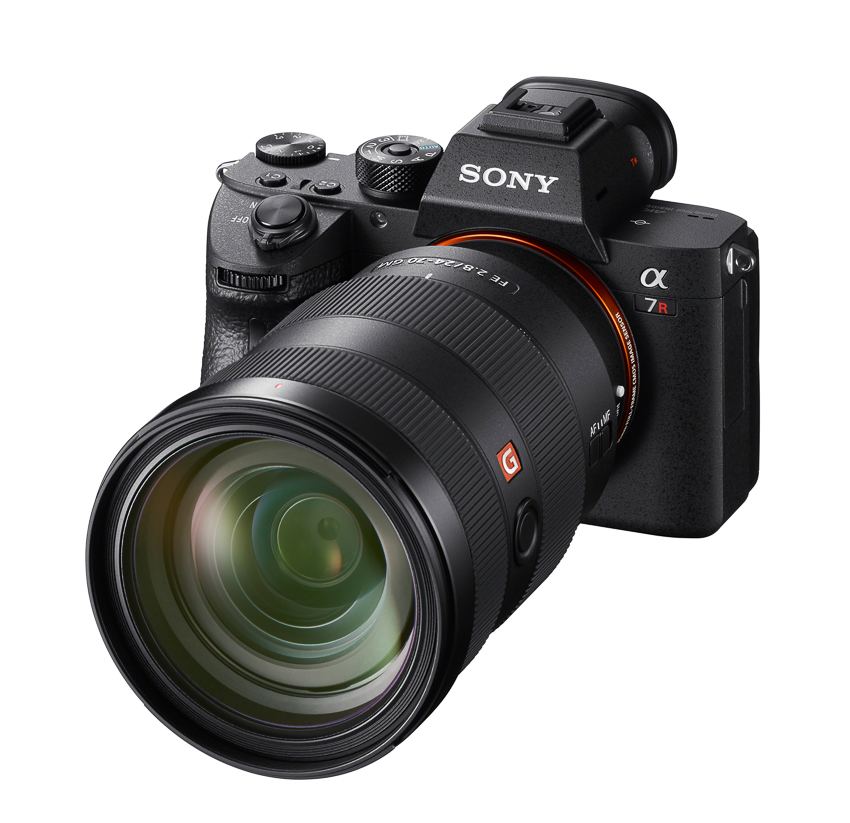
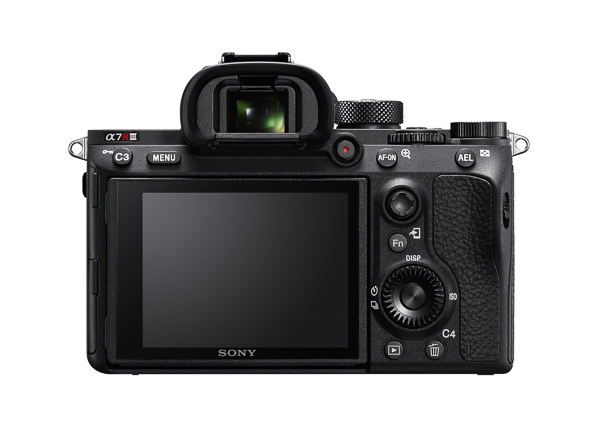
α7R III specifications
Continuous shooting at up to 10 frames per second, with both the electronic and mechanical shutter
399 phase-detection and 425 contrast-detection points
Improved autofocus and Eye autofocus
4K recording without pixel binning
Dual SD card slot
The camera can be powered via USB while shooting
SuperSpeed USB (USB 3.1 Gen 1) and USB Type-C connection
Batteries with more capacity than those in other Alpha 7 models
Body weight: 652 grams
42.4 megapixels without a low-pass filter
Touchscreen
Additional joystick for greater ease of use
Create a combined ultra-high-resolution image with Pixel Shift Multi Shooting
Improvements
At first glance, the specifications of the a7rIII, model name ILCE-7RM3, do not seem particularly groundbreaking compared with the a7rII. Yet there are several improvements that make the camera interesting.
The dual card slot and improved battery stand out to me first. These are frequent complaints, especially among professional users, which have been addressed in this new model.
The added joystick, also seen on the A9, makes moving focus points considerably easier and more user-friendly.
The touchscreen also improves ease of use. Easily placing your focus point and, for example, moving it while filming are very useful features.
The combination of a new front-end LSI and improved readout speed means that the camera processes images 1.8 times faster than its predecessor.
Another important point is the addition of a better anti-flicker function. This should mean that banding occurs rarely, if at all, when shooting under fluorescent lighting, for example. The camera automatically detects the frequency of the artificial light and adjusts the shutter speed.
Autofocus
The A7rIII can also shoot at up to 10 frames per second with AF/AE tracking. This means the camera can capture 76 JPGs or 28 RAW images before the buffer fills up. You can use this with both the silent electronic and the mechanical shutter. In Live View mode, you can shoot at a maximum of 8 frames per second. The delay between the screen and the capture should be minimal here.
The α7R III's redesigned focusing system is equipped with 399 phase-detection AF points covering approximately 68% of the image, both horizontally and vertically. The α7R III also has 425 contrast-detection AF points, an increase of 400 points compared with the α7R II. This allows the new camera to autofocus twice as fast as the α7R II in low-light conditions, with tracking that is also approximately twice as accurate. The Eye AF autofocus system should also work twice as accurately as on the α7R II.
There is also autofocus in magnification mode, support for phase-detection autofocus when using A-mount lenses, and an 'AF On' button, which could be useful for back-button autofocus.
4K video
The Alpha 7 cameras are often used as video cameras, and the α7R III also offers the option to record 4K video. The full width of the sensor is used for this. The camera collects 5K of data and can oversample it.
The A9 lacks a number of features that are particularly important for video. The a7rIII has a new HLG picture profile (Hybrid Log-Gamma), as well as a direct HDR workflow, allowing HDR (HLG)-compatible TVs to play 4K HDR images. S-Log2 and S-Log3 are also available. The camera can also record Full HD at 120 fps with a maximum of 100 Mbps, allowing the footage to be edited into 4x or 5x slow-motion video files in Full HD resolution with AF tracking.
Other
With the new α7R III, files can be transferred via Wi-Fi to a smartphone, tablet, computer or FTP server. I am particularly curious about how the latter works in practice. The speed with these huge files will probably determine whether it is useful or not.
The camera has a sync connection for connecting external flashes and cables. This is a standard feature on many DSLRs, but the first camera in the A7 series to have it.
A SuperSpeed USB (USB 3.1 Gen 1) USB Type-C connection is available for even more flexibility in terms of power and accessories, and for a higher transfer speed when the camera is connected to a PC.
New on the α7R III is the 'Imaging Edge' software package, which expands creative possibilities. 'Imaging Edge' consists of the three PC applications 'Remote', 'Viewer' and 'Edit'. These can be downloaded free of charge and offer support for remote Live View shooting via a PC and RAW processing.
The new Pixel Shift Multi Shooting mode also makes its first appearance on the α7R III. It uses the 5-axis in-body image stabilisation to create composite images with an ultra-high resolution. The camera shifts the sensor by exactly one pixel to take four different photos, producing a total of approximately 169.6 MP of image data. Using the new 'Imaging Edge' software, these images can be combined and processed. This ultimately produces a photo with a very high resolution that should have excellent colour accuracy.
Prices and availability
The new Sony α7R III camera will be available in the Benelux from November for 3,500 euros. This makes the camera considerably cheaper than the a9, and certainly an interesting camera for people who want more megapixels and have no use for that camera's 20 frames per second.
Sony FE 24-105 mm F4 G OSS
Sony is rapidly catching up with the rather sparse lens line-up for E-mount full-frame cameras from a few years ago, and this all-round zoom lens has been on many people's wish lists for quite some time.
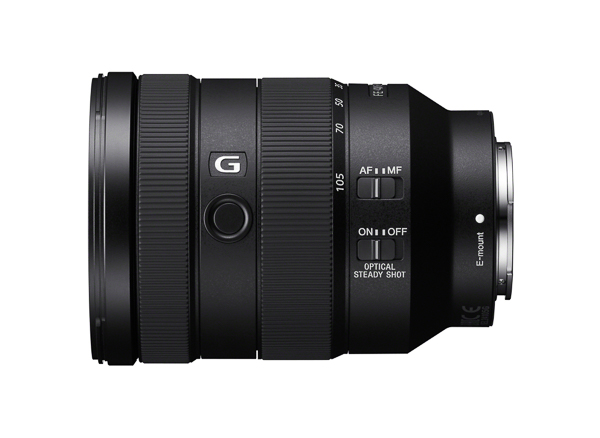
The SEL24105, as its official designation is, will be an interesting lens for people who like to take a lens with them, for example on holiday. The lens weighs 663 grams, making it, according to Sony, the lightest in its class.
With four aspherical lens elements, two of which are AA lenses (advanced aspherical), sharpness should also be good in the corners. Three ED glass elements (extra-low dispersion) are also integrated, which, together with the aspherical lens elements, should limit chromatic aberration. The lens is equipped with Nano AR coating, which should minimise flare and reflections, and has a circular aperture.
The built-in stabilisation works together with the stabilisation in the stabilised bodies.
The Direct Drive SSM should provide quiet and accurate focusing.
The new standard zoom lens has an adjustable focus lock, a dust- and moisture-resistant design, and a fluorine coating that should make dust or grease less likely to stick and easier to remove.
Prices and availability
The FE 24-105 mm F4 G OSS standard zoom lens will be available in the Benelux from November for 1,350 euros.
About the author
Antonette vindt veel facetten van fotografie leuk. In haar eigen studio Amfion fotografie maakt ze vooral portretten en geeft ze ook workshops. Getrouwd met Johan en moeder van Ghislaine. Hier op photofacts schrijft ze graag doe-het-zelf artikelen en productreviews.
You might also like
-
 Preview: Sony Alpha 7R IV
by Aäron Nasarany
-
 Sony announces the 50-megapixel Alpha 1 camera
by Nando Harmsen
-
 Review: Sony Alpha 7S II
by Aäron Nasarany
-
 Sony Alpha 7C compact mirrorless camera announced
by Elja Trum
-
 Sony Alpha 7R IV announced
by Aäron Nasarany
3 comments
-
 Dan Bahrami wrote on Wednesday 25 October 2017 at 17:42 | reply
Nikon and Canon should be ashamed.
Translated from Dutch. -

 Paul Oosterlaak wrote on Thursday 26 October 2017 at 14:17
| reply
@Dan: explain yourself further.
Translated from Dutch. -
 guest wrote on Tuesday 31 October 2017 at 12:44 | reply
I think Nikon will respond strongly because I understood that they took over Samsung's technology. I own the NX1 myself and it's an excellent system camera
Translated from Dutch.
Have your say
Please note: Articles older than a week can only be commented on by signed-in visitors.Would you still like to comment? sign in or create a free account.
Become a better photographer every week
A practical photography tip in your inbox every week.
38,836 photography enthusiasts already receive the tips! More about the weekly mail. Or keep up to date via  Facebook.

Elja Trum
Photofacts; everything to do with photography!
Would you like to take better photos and keep up with what is happening in photography? Photofacts publishes articles that teach you something about photography — from a product announcement to a practical shooting tip or a look at a website. Photofacts covers photography every day and is a hobby project of Elja Trum's that got out of hand. The articles are written by a team of volunteer authors. If you would enjoy writing one or more articles for Photofacts, do get in touch.More about PhotofactsPhotofacts is made possible in part by
