

Review: Sony Alpha 7S II
Friday 4 August 2017, 14:41 by Aäron Nasarany | 9,356 views | 6 commentsThis article was translated from Dutch with the help of AI. Read the original.
A few weeks ago, Sony sent us the famous Sony Alpha 7S II with a full-frame CMOS sensor and a Sony FE Vario-Tessar T* 16-35 millimetre f/4.0 ZA OSS wide-angle lens.
A full-frame mirrorless camera known for its ultra-high light sensitivity, allowing you to capture beautiful images in low light. An impressive piece of technology that calls for a review. Let's start with the specifications.
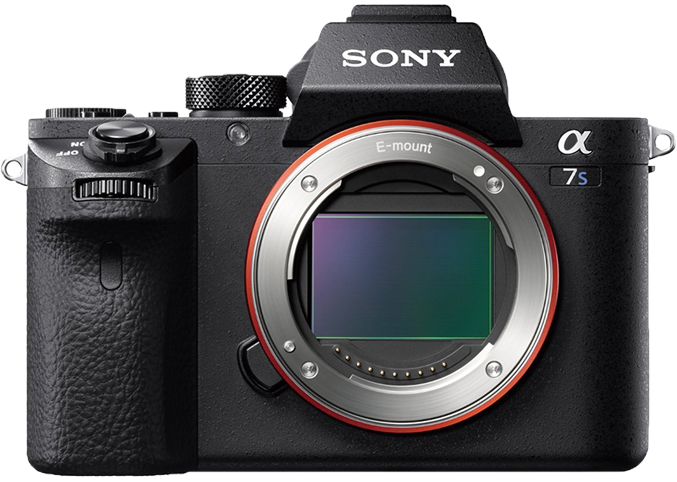
The specifications
- 35 millimetre full-frame CMOS sensor (12.2 megapixels)
- BionZ X image processor
- 4K video recording
- Optical image stabilisation
- Intelligent autofocus
- ISO 100 - 409,600
- XGA OLED electronic viewfinder
- LCD screen with adjustable angle
- Silent shooting
- Dimensions: 126.9 x 95.7 x 60.3 millimetres
- Weight: 627 grams
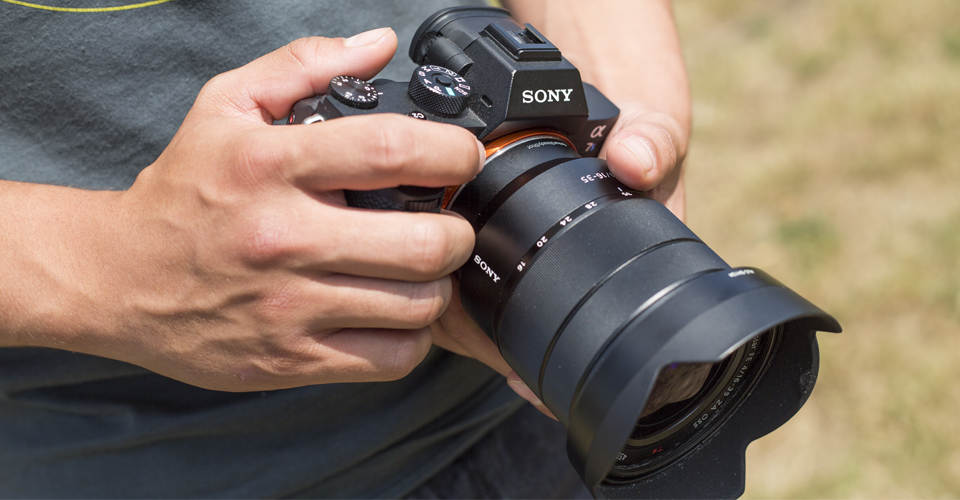
The Sony Alpha 7S II
The Sony Alpha 7S II is the successor to the Sony Alpha 7S and is considered the flagship of the Sony Alpha range.
The Sony Alpha 7S II was announced in October 2015, a year after its predecessor. While its predecessors, such as the A7 and A7R, were more focused on various types of photography, the Sony Alpha 7S II is more focused on video.
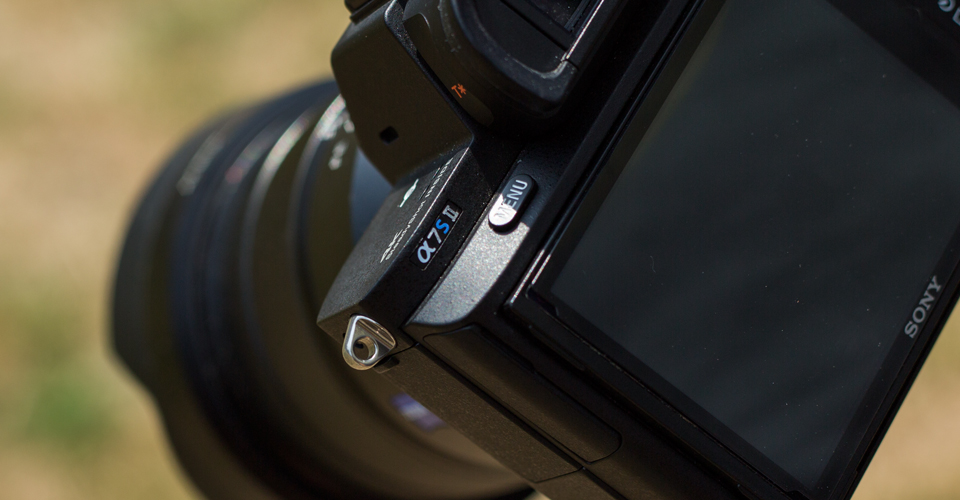
Thanks to its strengths in terms of ISO range, recording video in low-light conditions is now more of a relief than a challenge.
The Sony Alpha 7S II is therefore aimed mainly at professional videographers, and this is clear from its features: the ability to record 4K internally, an exceptionally high ISO range, five-axis optical image stabilisation, an improved Zebra function, Full High Definition filming at 120 frames per second, an increased number of focus points and better autofocus.
Also watch the video from Sony below. The footage speaks for itself.
Light sensitivity
The first thing I noticed was, of course, the enormous ISO range. The Sony Alpha 7S II has an ISO range reaching all the way up to ISO 409,600.
Those are impressive figures, but whether you would ever work at ISO 409,600 is another question. The video below shows how the Sony Alpha 7S II holds up in conditions where only two garden torches are burning.
Its ultra-high light sensitivity is superb. I was also curious to see how the Sony performed in low-light situations. I tested this by filming a flower using a table lamp.
As you can see, the flower only appears at around IS0 5000. Even at ISO 51,200, the footage is noise-free and perfectly usable.
Its ISO range allows you to capture beautiful images in the dark. Think of photographing the night sky filled with countless stars. More information?
» Watch our Star Trail Photography course
Electronic viewfinder
Since my first introduction to photography, I have worked with a Canon DSLR, so this was quite a change for me. First, I had to get used to the electronic viewfinder.
Normally, I saw exactly what I could photograph through my familiar optical viewfinder, but in this case I saw what the sensor registered, so I was looking at an image that did not correspond with what I was actually seeing.
I also found that the colours seemed less 'real' than they did through an optical viewfinder. But that is of course a matter of taste. There are naturally advantages and disadvantages to an electronic viewfinder compared with an optical viewfinder.
With an electronic viewfinder, for example, you can also see an built-in spirit level. Ideal for getting certain subjects, such as buildings, straight in the photo.
A nice addition, but as I mentioned earlier, it is a matter of taste. You could also see exactly what the photo would look like in the viewfinder. This meant that you were, in a way, one step ahead when deciding on the required camera settings.
LCD screen
The LCD screen with its tilting angle is ideal when filming from a low or high viewpoint. In the film world, but certainly in photography too, finding the best composition is always a challenge.
Kneeling down or perhaps even placing the camera on the ground is quite common, and an LCD screen with a tilting LCD screen is a real advantage in those situations.
The LCD screen does not fully rotate like the one on the announced Canon 6D mark II, but it is good enough to still give you a view of what is happening in front of you in the most difficult situations.
In addition, in my opinion the tilt mechanism feels fragile compared with Canon's flip-out LCD screen.
Menu structure
The menu structure of the Sony Alpha 7S II is logically arranged. The icons are easy to understand and, unlike those on the Canon, they are all the same colour.
In the Canon's menu structure, the icons are grouped together and each group of icons has the same colour. With the Sony Alpha 7S II, the focus is on colour consistency.
When you navigate through the menu structure, you see an orange bar behind each function. This matches the colour of the E-mount. A small detail!
Battery life
The battery life is unfortunately very disappointing. On the well-known camera review website dpreview, I compared the battery life of the Sony Alpha 7S II with the Canon 5D mark IV.
The battery life of the Canon 5D Mark IV , tested by the Camera and Imaging Products Association (CIPA), is 900. By comparison, the Sony Alpha 7S II only reaches 370.
The Sony Alpha 7S II is equipped with a 4K function, but this does come at the expense of battery life. So if you want to film in 4K, make sure you switch the camera off after stopping the recording. This saves battery power.
But I would advise you to buy extra batteries. Missing that one unrepeatable moment because your battery is empty would of course be a real shame.
Size
The Sony Alpha 7S II is considerably smaller than Canon's DSLRs. The camera feels comfortable in your hand and is easy to carry.
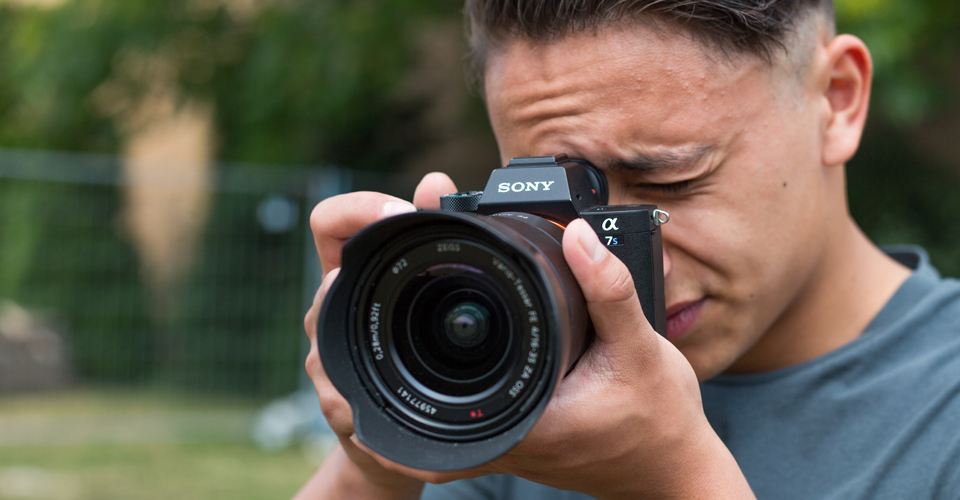
The Sony Alpha 7S II feels solid and robust thanks to its magnesium body. The finish looks good and, in my eyes, the design looks very neat. It is almost unbelievable that such a small body contains such a large amount of technology.
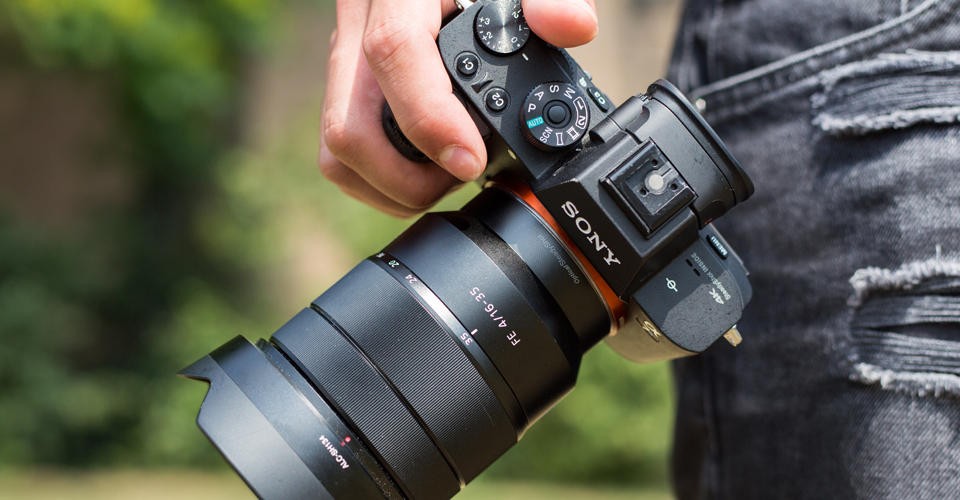
Image quality
The image quality of the Sony Alpha 7S II is truly superb. The camera produces beautiful, colourful, but above all crisp images. You can also film in 4K, which produces razor-sharp footage. With the Sony Alpha 7S II, you can choose from four different file formats.
- XAVC S 4K
- XAVC S HD
- AVCHD
- MP4
The 4K footage looks stunning, especially when we look at the footage below from Sony Europe.
No Asia for me, so here are some shots from the Netherlands.
Within each file format, you can choose from several recording settings, such as 25p with 100M and 25p with 60M in XAVC S 4K, and 1920×1080 50p and 1280×720 25p in MP4.
The Sony Alpha 7S II also has a slow-motion function. Depending on the type of memory card, you can film at up to 120 frames per second in Full High Definition, which slows the footage down five times.
The great thing is that you can watch the slow-motion footage straight away. This means you do not first have to transfer the files to your computer, create a new project in Adobe Première Pro or another video-editing programme, and then slow the footage down manually.
With the Sony Alpha 7S II, you see the final result immediately. Good reason to create some beautiful slow-motion footage. Below is Sony's footage, followed by footage I made myself. In my opinion, the slow-motion footage looks perfectly good.
Although I spent a while looking for the record button, it is half hidden on the side, the quality of the footage is beautiful. You can also choose to shoot using different Picture Profiles. This allows you to go all out with colour correction in post-processing.
Image stabilisation
The Sony Alpha 7S II has five-axis image stabilisation. Shaky footage is a thing of the past. Sony's example video clearly shows how it works and what effect it has.
But whether the image stabilisation also performs well in practice is another question. I took the Sony Alpha 7S II out for a day and decided to test the image stabilisation while walking from A to B.
You can clearly see the difference, but whether you prefer handheld footage or everything smooth is a matter of taste. Handheld footage creates a different atmosphere and looks busier, while stable footage feels calmer. The way you film something depends on the story and how you want to convey that story.
Conclusion
The Sony Alpha 7S II is a professional and good-looking full-frame mirrorless camera with an enormous amount to offer. With its full-frame sensor and an ISO range to be reckoned with, this camera is highly suitable for night photography, such as photographing star trails, and event photography.
The Sony Alpha 7S II is also a real must-have for professional videographers who want to create cinematic footage regardless of the lighting conditions.
The only thing I miss is an option to film in 4K at 50p or perhaps even 120p. Perhaps that function will come in the future. If Sony takes this up, greatly improves the battery life and adds a flip-out screen, I will be first in line.
By bringing this low-light monster to the market, Sony has dealt its competitors a heavy blow. At the time of writing, the Sony Alpha 7S II body is available for 2,999 euros.
The slow-motion footage was made with the Sony FE Vario-Tessar T* 16-35 millimetre f/4.0 ZA OSS wide-angle lens. That lens is available for 1,249 euros.
Have you recently bought a Sony Alpha 7S II, or are you planning to get one? Let us know in the comments. I would like to hear about your experience or why you are planning to buy one. If you have decided not to get the Sony Alpha 7S II, do let us know that too.
About the author
Schiet volop videocontent voor Emrico Productions, Photofacts Academy en maakt ondertussen nog kleurrijke foto's voor op zijn Facebook en Instagram pagina.
You might also like
-
 Review: Sony A7 IV
by Nando Harmsen
-
 Sony Alpha a7s Mark III announced
by Elja Trum
-
 Review: Sony A1 mirrorless camera
by Nando Harmsen
-
 Review: Sony A7R V mirrorless camera
by Nando Harmsen
-
 Sony announces the 50-megapixel Alpha 1 camera
by Nando Harmsen
-
 Sony a7 mark IV announced
by Elja Trum
6 comments
-

 Paul Oosterlaak wrote on Saturday 5 August 2017 at 20:23
| reply
Mooie uiteenzetting. 1 puntje: voor video is de A7SII een uitstekende camera, voor fotografie niet zo. De isoprestaties gelden namelijk enkel voor video. Met fotografie is ie niet beter dan andere fullframe camera's. Daarnaast is de autofocus echt niet vlot genoeg voor een aantal soorten fotografie.
This comment was written in another language and has not been translated yet. -
 guest wrote on Sunday 6 August 2017 at 17:33 | reply
@Paul Oosterlaak: Bedankt voor je compliment! A-ha, ik had al inderdaad al wat verhalen gehoord dat de Sony Alpha 7SII niet echt uitblinkt qua fotografie. Alhoewel, het blijft nog steeds een prachtig toestel. Wat betreft AF, de Sony Alpha 9 schijnt een ideale uitkomst te zijn voor sportfotografen. Daarbij schijnt de AF daar sterk verbeterd te zijn ten opzichte van zijn voorgangers. Maar, de prijs mag er ook wel wezen.
This comment was written in another language and has not been translated yet. -
Paul Oosterlaak wrote on Sunday 6 August 2017 at 23:30
| reply
De A9 is inderdaad erg goed voor sportfotografen. De accu is nu nog wat groter, al is het nog steeds wat beperkt voor een sportfotograaf die veel schiet. De AF is als je eenmaal beet hebt (dat vond ik nog wel even tricky i.v.m. een D5/D500), erg goed in het volgen. De zoeker is wel gaaf dat ie niet donker wordt tussen de shots, maar het blijft lastig met panning, dat er altijd wat vertraging in blijft (niet te verhelpen).
This comment was written in another language and has not been translated yet. -
 Aäron Nasarany
wrote on Monday 7 August 2017 at 09:12
| reply
@Paul Oosterlaak: Bedankt voor je reactie. Terwijl de ene toestel uitblinkt in fotografie is de andere weer ontzettend goed voor film. Voor de gepassioneerde fotograaf en videograaf is daarom twee bodies vaak een musthave. Ook als je je volledig richt op fotografie is het hebben van twee bodies een ideale uitkomst. De zoeker is inderdaad behoorlijk gaaf!
This comment was written in another language and has not been translated yet. -
 geerjanssen
wrote on Tuesday 8 August 2017 at 11:27
| reply
Het gaat veel over filmen, nooit begrepen dat een fotograaf daar waarde aan hecht?
This comment was written in another language and has not been translated yet. -
Aäron Nasarany
wrote on Tuesday 8 August 2017 at 13:22
| reply
@Geer Janssen: Bedankt voor je reactie Geer Janssen! De insteek van dit artikel is om de filmkwaliteit van de Sony Alpha 7S II te toetsen. Daar staat de Sony Alpha 7SII immers om bekend. De gepassioneerde fotograaf kan dit artikel zien als het verbreden van zijn horizon.
This comment was written in another language and has not been translated yet.
Aangezien de modenere spiegelreflexcamera's bijna altijd een videofunctie hebben lijkt het mij duidelijk dat de fotografiewereld en de filmwereld dicht bij elkaar liggen.
Have your say
Please note: Articles older than a week can only be commented on by signed-in visitors.Would you still like to comment? sign in or create a free account.
Become a better photographer every week
A practical photography tip in your inbox every week.
38,836 photography enthusiasts already receive the tips! More about the weekly mail. Or keep up to date via  Facebook.

Elja Trum
Photofacts; everything to do with photography!
Would you like to take better photos and keep up with what is happening in photography? Photofacts publishes articles that teach you something about photography — from a product announcement to a practical shooting tip or a look at a website. Photofacts covers photography every day and is a hobby project of Elja Trum's that got out of hand. The articles are written by a team of volunteer authors. If you would enjoy writing one or more articles for Photofacts, do get in touch.More about PhotofactsPhotofacts is made possible in part by
