

Elinchrom launches the ELB 500 TTL
Tuesday 6 March 2018, 16:48 by Michelle Peeters | 6,071 views | 9 commentsThis article was translated from Dutch with the help of AI. Read the original.
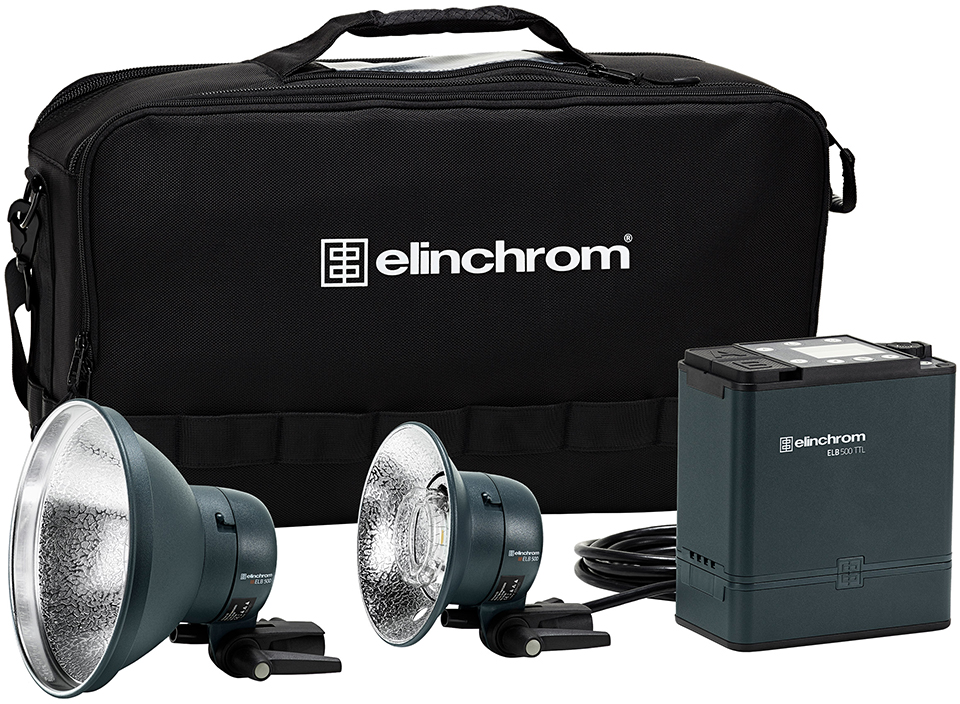
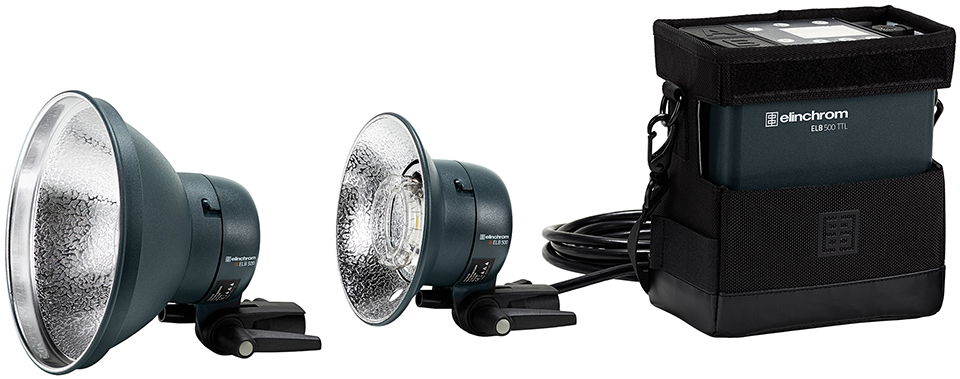
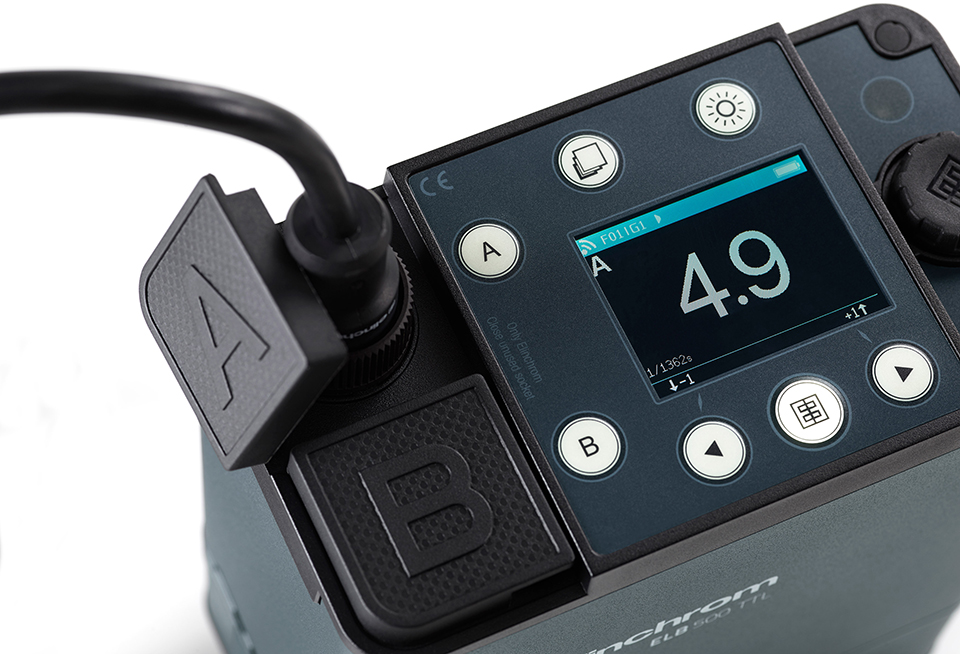
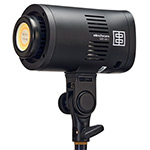
Elinchrom has launched its latest flagship in flash technology: the ELB 500 TTL. This flash is only slightly larger than the well-known ELB 400, but as the name suggests, it is a TTL flash with a power output of 500 watt-seconds.
A small and lightweight flash that is easy to use with the camera as an on-camera flash or next to the camera as a separate studio flash.
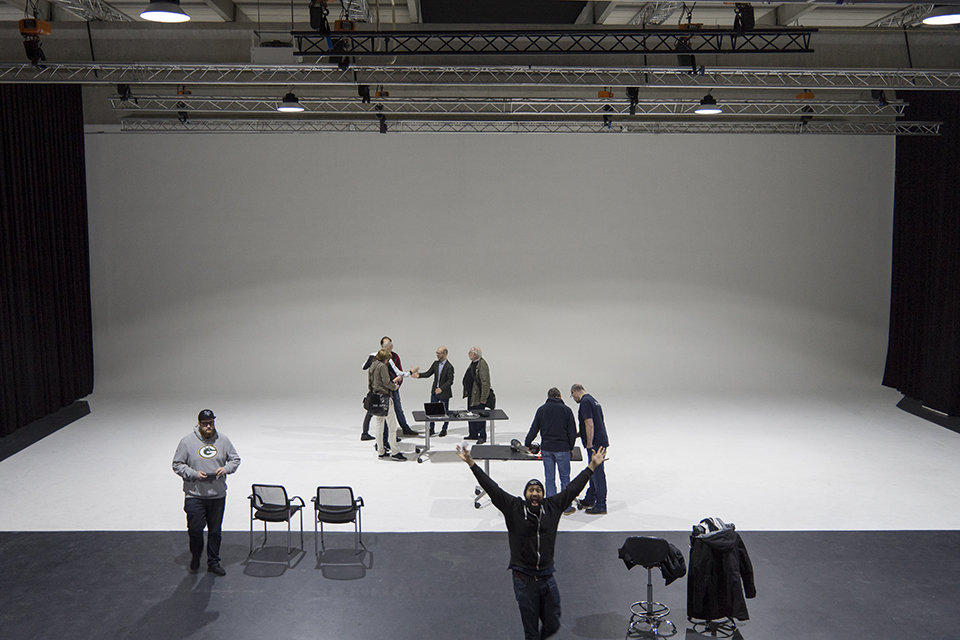
Product presentation on Monday 5 March
FotoFlits gave a presentation about this and other new Elinchrom products on Monday morning, 5 March, at Allard Studio's in Amsterdam. The programme was presented by Brett Florens, Hans van Eijsden, Richard Terborg, and Brian Dragtstra.
The FotoFlits team made it possible for you to try out and test the new products.
Hans van Eijsden
Hans van Eijsden gave a lively presentation about his experiences with the Elinchrom ELB 500 TTL. You can also read his article about it, including his experiences and test results, on his website.
Hans first explains in his article why he uses flash when photographing portraits. A flash allows him to accentuate his model's facial features and create attractive jawlines. He can make the face and body appear larger by adjusting the type and angle of the flash.
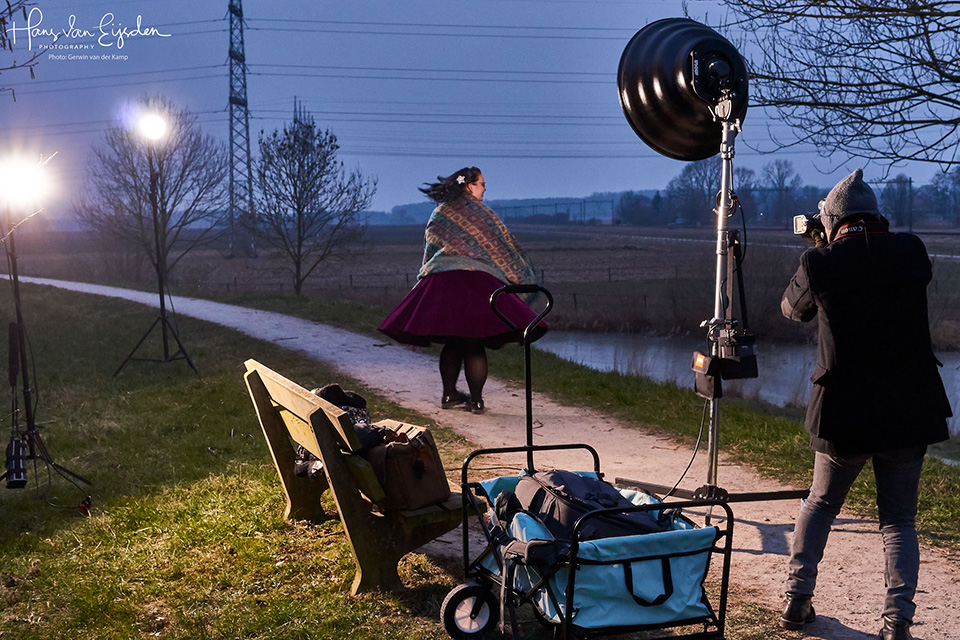
With good-quality flash light, you can get skin tones just right and keep the colours of clothing vivid and natural. Hans gets the colours of the sky perfectly blue when photographing a model outdoors.
He exposes below the camera so that the landscape becomes darker with more saturated colours. This makes the model stand out better and the sky becomes beautifully blue. Even on a cloudy day!
A flash also gives the model a beautiful highlight in the eyes. Hans does not like "dead eyes", he wants them to sparkle.
He tested and measured the light quality of various flashes in terms of the duration of the flash (shorter = sharper photos) and colour accuracy (expressed as a CRI value). The better the spectrum, the better the skin tones.
Elinchrom has done something unique with the quality of its flash light in this ELB 500 TTL. It is something he had not found before and makes this a device that finally meets his expectations.
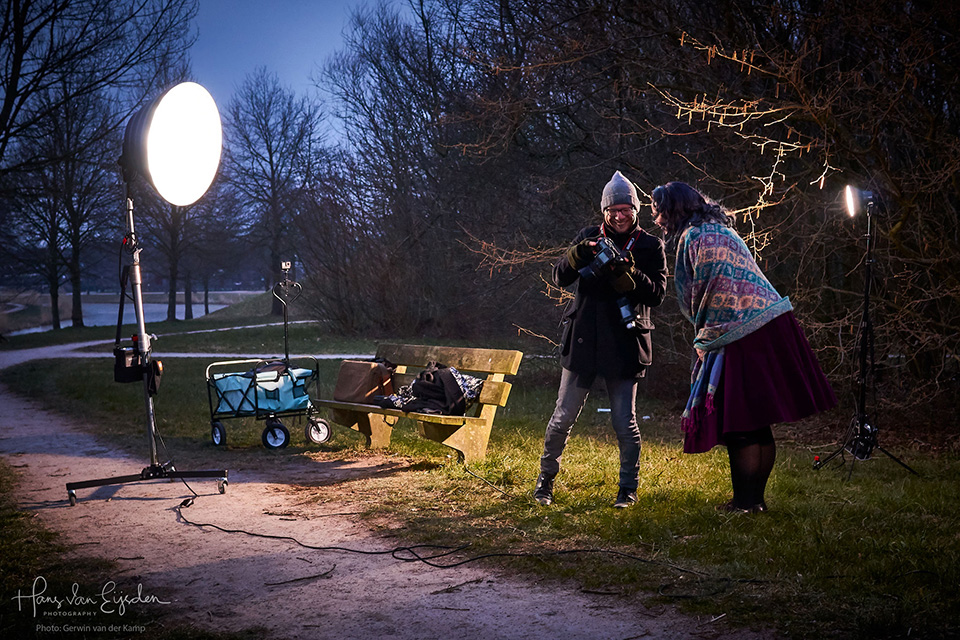
The ELB 500 TTL is a must-have for him because:
- The set provides perfect colours and skin tones, beautiful blurred backgrounds and blue skies;
- It allows you to choose exactly the right moment. You can also freeze a model's movement by choosing either a short flash duration or a very short shutter speed;
- The set can compete with bright sunlight and produce a blue sky, even on a cloudy day;
- At festivals, Hans can shoot in TTL mode using semi-automatic mode (aperture priority) and rely on it without needing an external light meter;
- The unit is light and easy to move. It also has a small, lightweight head and a heavy base. This is useful for preventing it from falling over in gusts of wind;
- HS (Hi-Sync) or HSS (High Speed Sync) is essential for Hans, it really has to be included. This means you can still use flash with very short shutter speeds (up to 1/8000th of a second). You can also use a wide aperture (beautiful blurred backgrounds) without ND filters;
- The set can also be connected to the mains, so you can use it as an extra light in the studio. The units recycle very quickly, allowing Hans to shoot two photos per second;
- It has at least two lamp connections, allowing you to set one lamp as the main light and the other as a hair light (from behind) or fill light. The lamps can be adjusted precisely individually and as a group. The unit is very powerful: 500 watt-seconds, which is 10 times more powerful than a Speedlite;
- The lamps have excellent modelling light, allowing Hans to focus well and work effectively with make-up artists. They can also immediately see how the light falls and adjust their make-up accordingly;
He prefers not to use overly large light shapers, no larger than 100cm, so that the face does not look too wide and the jawline is more accentuated; - The Elinchrom light distribution. The angle of the light works wonders with Elinchrom and Mola light modifiers. The central umbrella mount provides even more symmetry in the light and allows you to use deflectors for extra diffusion or an additional effect to warm up the light.
Colour reproduction
There is a lot of difference in colour quality between different flash brands. And it is not just about white balance: what is not there cannot be reproduced.
Think of orange-coloured street lamps and a person wearing a green jacket. The jacket suddenly looks dark grey, the green can no longer be seen: it simply is not there, because the orange lights only emit light in the orange part of the colour spectrum.
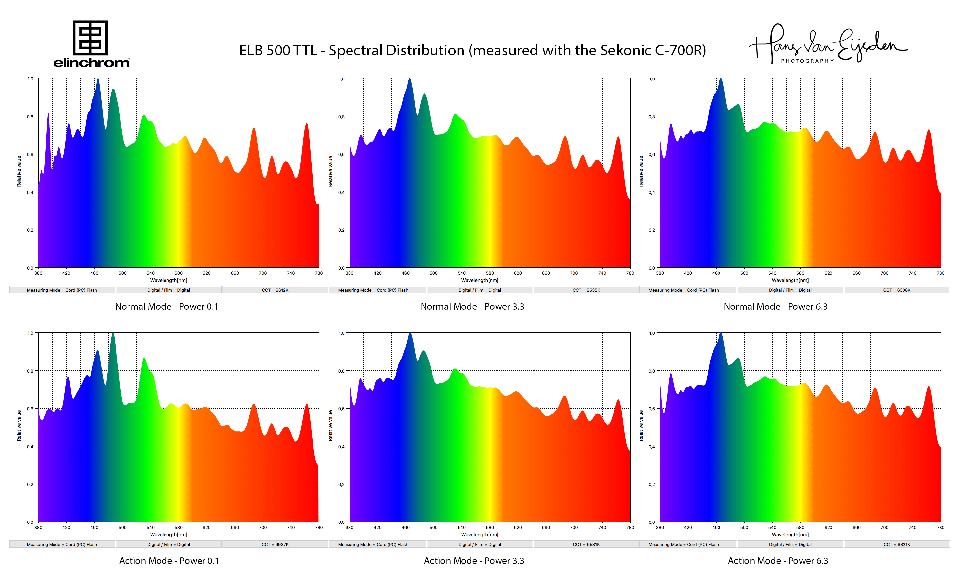
The same applies to flash lamps: some emit more of the blue spectrum, which means they have more difficulty reproducing red colours. Human skin tones can contain many delicate red tones, but some flashes are less capable in that part of the spectrum.
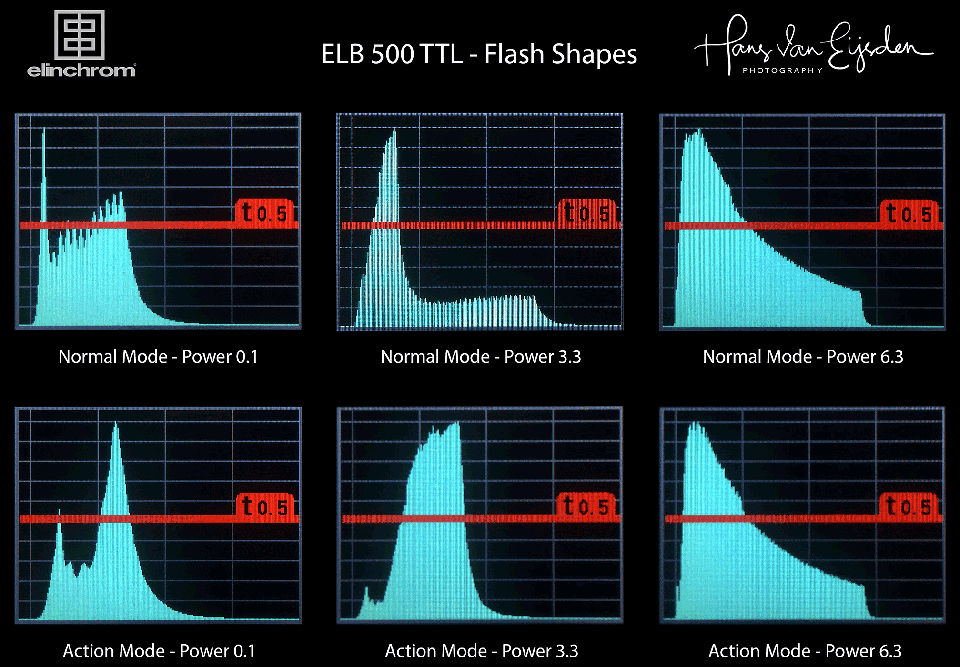
The problem is that you want a short flash for sharp photos. Because the flash is short and the flash starts with blue at the maximum voltage of the flash pulse, the red tones disappear from the colour spectrum as the voltage of the capacitors drops towards the end of the flash.
Elinchrom has used a special gas combination in its Action flash tubes, so that the flash will be short while still emitting the full spectrum of colours.
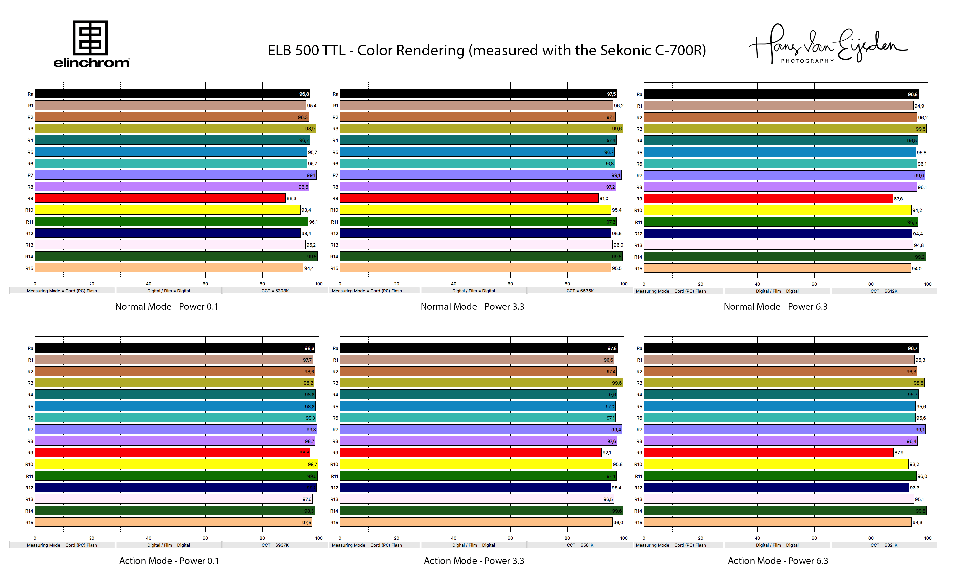
To use TTL, something Hans uses a lot in event photography, the power must be cut off immediately during the flash. This also produces short pulses and sharp results, but red colours disappear from the spectrum here too, resulting in less natural skin tones.
Elinchrom has come up with something new in this lamp by modulating the flash pulse to emit all parts of the colour spectrum as evenly as possible.
This gives you TTL, HSS, short flash pulses and a faithful, high-quality reproduction of all colours. No more compromises.
Product specifications
- Compatible with all Elinchrom light shapers;
- Simple and straightforward: the lighting setup is ready in no time and you create beautiful light from the very first shot. You can also quickly switch to the transmitter's manual mode for full control over your ELB 500 TTL;
- Power with HSS: with 500 Ws of flash power, you can easily photograph against the sun with the ELB 500 TTL, and the Elinchrom Pro transmitter gives you access to High Speed Sync, allowing you to synchronise precisely at speeds of up to 1/8000s;
- Plenty of freedom of movement: the ELB 500 TTL is a lightweight and portable unit that provides up to 400 full-power flashes on a battery. The battery has enough power for an extensive outdoor session, but with the Active Charge option it can also be connected to the mains for studio use;
- Very good light quality: the ELB 500 TTL is 10 times more powerful than a camera flash and, according to Elinchrom, delivers beautiful light quality in combination with Elinchrom accessories and countless settings, wherever you shoot;
- Creative possibilities: with the ELB 500 TTL, you can let your creativity run free in flash photography. In combination with asymmetrical and adjustable flash heads, the unit also offers all kinds of possibilities;
- Precise from head to toe: photography is easy and fast thanks to the TTL and precise HSS options.
All kinds of situations, one solution
Imagine a situation where you want to photograph several dancers performing in a ballet studio. You can light the surroundings with two flashes placed in front of the background, but for the dancers you want a flash with a beautiful large light shaper, such as a Deep Octa 100cm.
One moment you want to photograph a single dancer zoomed in, 4 metres from your lens with a shallow depth of field, and the next moment the entire group from 7 metres away and with a greater depth of field.
A time-consuming job, because you have to change the settings of your main flashes for every photo. Surely this could be faster...
Or perhaps you want to photograph an athlete. On the street, so there is no power socket available. In addition, the distance between the athlete and the camera keeps changing, and the sun occasionally breaks through the clouds.
Here too, you want to use a large Octa Softbox, but you do not have an assistant, so bringing a large, heavy unit is impossible. You need a small flash, the same size and weight as an Elinchrom ELB 400, but with more power, more ability to fill a large Softbox, and still just as intelligent as your speedlight. How do you deal with that...?
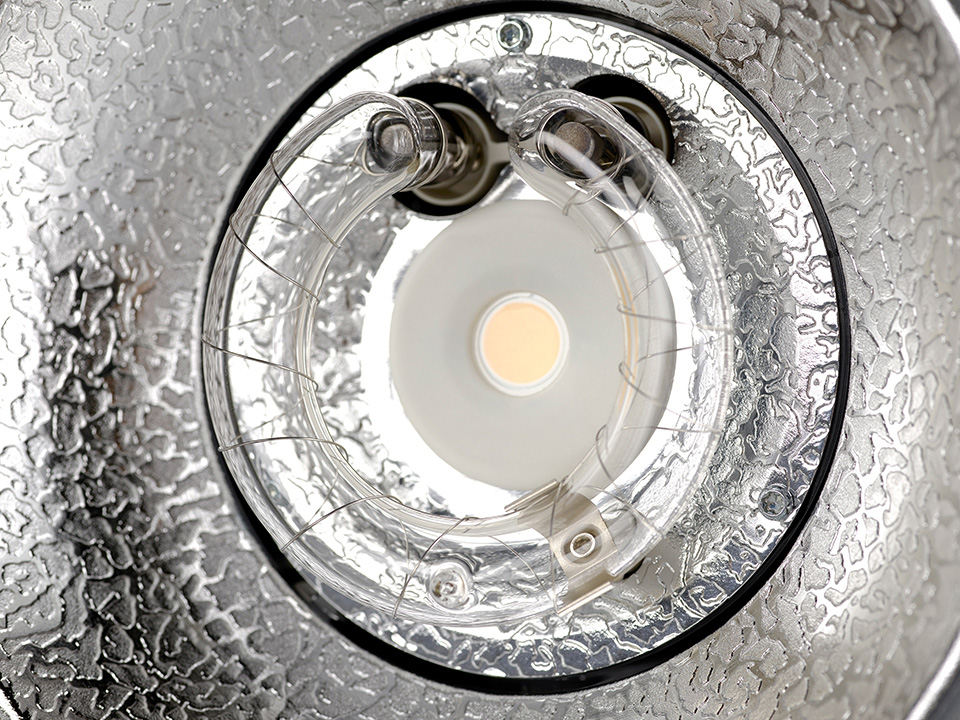
With this ELB 500 TTL, Elinchrom seems to have found a solution for these and many other challenges. Changing distances between you and the models? Plenty of power to fill large light shapers?
The ELB 500 TTL is a small and lightweight product that you can easily take on location, running on a battery. It can do it all.
About the author
Michelle Peeters is fotografe en oprichter van DeuxBleus Fotografie. Michelle herkent het bijzondere in het gewone en het gewone in het bijzondere. Ze heeft zich nooit willen specialiseren en is daardoor van alle markten thuis.
You might also like
-
 Review: Elinchrom ELB 500 TTL
by Michelle Peeters
-
 Elinchrom launches new flash, the FIVE
by Elja Trum
-
 Elinchrom announces LED 100 C continuous light
by Elja Trum
-
 Review: iPhone XS, the latest iPhone camera
by Lars Paymans
-
 Skylum launches Luminar NEO
by Nando Harmsen
-
 Sony announces the A1 Mark II, a new flagship camera
by Nando Harmsen
9 comments
-

 Paul Oosterlaak wrote on Friday 9 March 2018 at 13:19
| reply
Prima artikel, al zijn behoorlijk wat eigenschappen ook bij andere merken te vinden en niet specifiek voor deze Elinchrom.
This comment was written in another language and has not been translated yet.
Het stukje over het spectrum is prima, maar als je er het spectrum van de zon bij zet, dan is de Elinchroom te blauw en te rood. Linkje om zelf te kijken hoe het spectrum eruit ziet bij verschillende kleurtemperaturen van een zwarte straler (zoals de zon, de zon zit op ongeveer 5700K).
Nog even mierenneuken over eenheden. Het is Ws (Wattseconde), dus niet W/s (Watt/seconde) en ook niet Watt. Het is ook geen vermogen maar energie. Het gaat om hoeveel lichtenergie er totaal tijdens de belichting van je foto uit de flitser komt. -
 Michelle Peeters wrote on Friday 9 March 2018 at 13:58
| reply
@Paul: leuk linkje, heb hem net even uitgeprobeerd (je moet er wel Flash Player voor installeren..). De Elinchrom ELB 500 TTL heeft een kleurtemperatuur van 5500K. Niet zo'n groot verschil met de zon op 5700K toch? In het grafiekje zie ik ook niet echt veel verschil tussen beide waardes. De piek wordt wat steiler naarmate de kleurtemperatuur stijgt (dus de kleurintensiteit wordt groter).
This comment was written in another language and has not been translated yet. -
Paul Oosterlaak wrote on Friday 9 March 2018 at 14:13
| reply
@Michelle: verschillen zijn altijd relatief natuurlijk, maar als we de uitspraken over kleuren in dit artikel (waarschijnlijk overgenomen van Elinchroom's marketingafdeling
This comment was written in another language and has not been translated yet. ) in dat zelfde perspectief plaatsen, zien we veel grotere verschillen tussen deze Elinchroom en de zon dan tussen de verschillende standen onderling.
Met andere woorden: het zou mij niet verbazen dat deze Elinchroom nauwelijks verschilt van een andere respectabele (mobiele) studioflitser.
Je moet uiteraard wel de grafieken van je artikel vergelijken met de grafiek van de link en niet 5500K in de link vergelijken met 5700K in de link. Een flitser is namelijk geen zwarte straler zoals de zon. En het gaat bij het hoger maken van de temperatuur niet alleen om de stijlheid, maar voornamelijk ook om de verschuiving van de piek naar links. Dus hoe hoger de temperatuur, hoe koeler de kleuren. Vandaar dat de witbalans van je camera bij een hogere temperatuur meer warmte moet toevoegen om het koelere uit te balanceren. -
Michelle Peeters wrote on Friday 9 March 2018 at 14:51
| reply
@Paul: de grafieken zijn testresultaten van Hans van Eijsden. Hij heeft er zeer intensief mee gewerkt en getest en ik moet zeggen dat ik behoorlijk overtuigd was van zijn resultaten!
This comment was written in another language and has not been translated yet.
Het kleurenspectrum dat doorkomt (ook met zeer snelle sluitertijden) heeft Hans getest met een Sekonic L-858D flitsmeter. Juist die reproductie van rode kleuren (die bij andere flitslampen het eerst wegvallen) vielen hem op bij deze lamp. Kleuren die je overigens wel weer kunt terughalen in de nabewerking, het gaat hier dus ook om tijdsbesparing
Die verschuiving in de grafiek naar links (blauw) bij hogere kleurtemperatuur zie ik nu ook. Thanks! -
Paul Oosterlaak wrote on Friday 9 March 2018 at 15:08
| reply
Het punt is: hoe presteert het t.o.v. andere merken? Zolang daar geen grafieken van getoond worden, zegt dit heel weinig en blijft het een reclamepraatje.
This comment was written in another language and has not been translated yet.
En tijdswinst is prima, maar als ik dan naar foto's van Hans op zijn website kijk, dan zit daar ook nog behoorlijk wat retoucheerwerk bij.
Ik kom nu negatief over, misschien is het een super goed product, maar ik ben allergisch voor marketing praat zonder enige ondersteuning van feiten. Als een fabrikant of fotograaf beweert dat het zoveel betere kleuren oplevert, dan toon het ook en laat de vergelijking met anderen zien. -
Michelle Peeters wrote on Friday 9 March 2018 at 15:11
| reply
@Paul: die vergelijking met andere lampen (waarbij je ook echt kon zien dat er kleuren, zoals rood, compleet wegvielen uit het spectrum) heb ik wel gezien tijdens zijn presentatie. Helaas vind ik ze ook niet op zijn website terug. Ik zal hem er eens naar vragen!
This comment was written in another language and has not been translated yet. -
 Brian
wrote on Thursday 15 March 2018 at 16:40
| reply
Hoi Paul,
This comment was written in another language and has not been translated yet.
Ik deel je mening over het vergelijken, echter ik vind het niet netjes om als distributeur een vergelijking te plaatsen of deze ter beschikking te stellen aan media omdat dit per definitie moet worden gezien als reclame en een bevooroordeelde mening. Het stukje dat Michelle geschreven heeft betrof nog geen test maar een verslag van de bijeenkomst waar ze geweest is ter introductie van de ELB 500 TTL.
We hebben met Michelle inmiddels de afspraak gemaakt dat ze de flitser mag lenen om hem aan de tand te voelen zodat ze zelf een eigen oordeel kan vellen en eventueel deze vergelijkingen wel kan maken.
Het is trouwens grappig dat je schrijft dat je beweringen van de marketing afdeling van Elinchrom (en andere merken) niet echt vertrouwd. Het punt bij ons merk is misschien juist wel dat we hier veel te netjes in zijn. Er zijn zowel op de websites van Elinchrom als op de website van FotoFlits B.V. (de Nederlandse distributeur waar ik werkzaam voor ben), geen uitingen te lezen in de trant van, "Wij zijn beter dan..."
Dit soort uitingen laten wij voor rekening van gebruikers van onze spullen.
Hans van Eijsden, die tijdens de introductie van de ELB 500 TTL een deel van het podium kreeg, is een van de gebruikers die er bekend om staat zeer uitvoerig te testen en niet alleen het visuele, maar vooral ook meetgegevens, in zijn tests mee te nemen. Dit was voor ons ook de reden om hem al voor de introductie van de flitser een unit ter beschikking te stellen. Wij hebben zelf geen invloed gehad in zijn test en ook geen voorinzage gehad in de resultaten.
Wij waarderen het als mensen tests uitvoeren, maar willen op geen enkele manier sturen in de manier van testen. Hoe goed (of slecht) een test uitvalt is dan ook alleen afhankelijk van de kwaliteit van de apparatuur en de persoon die de review uitvoert. Het enige wat wij als distributeur kunnen betekenen is het ter beschikking stellen van de flitser. -
 HansVanEijsden
wrote on Thursday 15 March 2018 at 16:48
| reply
Hoi iedereen,
This comment was written in another language and has not been translated yet.
Mooi om de discussie te zien! Het was een drukke week hier, dus ik ben het nu aan het inhalen allemaal.
Bij het schrijven van mijn artikel heb ik er expres op gelet om geen andere merken te noemen, want ik wilde er geen marketingartikel van maken. Informatie heb ik tevens ook niet gekregen en/of overgenomen van een marketingafdeling van Elinchrom.
Wat ik enkel heb gedaan is uitgelegd waarom de ELB 500 TTL voor mij werkt, door het aangeven van mijn wensen en concrete meetresultaten. Dit met als doel dat iedereen zijn of haar eigen licht kan meten en op die manier de resultaten kan vergelijken.
Binnen mijn marktsegment vind ik het erg belangrijk om geen deuren dicht te gooien. Ik kijk altijd uit met beweringen als dat een merk "slechter is" dan een ander, want wat voor mij geldt als "slechter" geldt voor een ander wellicht als "maakt niet uit".
Ik heb in mijn workflow een aantal specifieke wensen. Na de Raw-omzetting in Capture One dien ik een bepaalde hoeveelheid spectruminformatie in de rode huidtinten te hebben in Photoshop, zodat ik in Apply Image het blauwe kanaal op Multiply over de rest kan neerleggen met een bepaalde verhouding tussen poriën, sproeten en definitie in de overgangsgebieden tussen donker en licht. In mijn artikel heb ik gedeeld waarom de ELB 500 TTL voor mij hier in werkt, onderbouwd met feiten: concrete metingen. Ik heb hierbij dus geen andere merken benadeeld door die specifiek te noemen, en ik ben ook niet betaald voor het schrijven van het artikel.
Vanuit mijn enthousiasme heb ik de presentatie gehouden, omdat ik vind dat ik de mooiste baan van de wereld heb en dat ieder model mooi licht verdient. De wereld slimmer en mooier maken vind ik leuk, en daar zelf weer van leren vind ik geweldig.
Paul, dank ook nog even voor de tip over de eenheden, ik zal dit binnenkort als ik weer bij ben ook zelf corrigeren waar nodig. -
Paul Oosterlaak wrote on Thursday 15 March 2018 at 17:51
| reply
Bedankt heren voor de toelichtingen. Ik zal verder niet ingaan op het originele artikel van Hans. Dat vind ik hier niet op zijn plek.
This comment was written in another language and has not been translated yet.
Have your say
Please note: Articles older than a week can only be commented on by signed-in visitors.Would you still like to comment? sign in or create a free account.
Become a better photographer every week
A practical photography tip in your inbox every week.
38,886 photography enthusiasts already receive the tips! More about the weekly mail. Or keep up to date via  Facebook.

Elja Trum
Photofacts; everything to do with photography!
Would you like to take better photos and keep up with what is happening in photography? Photofacts publishes articles that teach you something about photography — from a product announcement to a practical shooting tip or a look at a website. Photofacts covers photography every day and is a hobby project of Elja Trum's that got out of hand. The articles are written by a team of volunteer authors. If you would enjoy writing one or more articles for Photofacts, do get in touch.More about PhotofactsPhotofacts is made possible in part by
