

Preview: Fujifilm X-H1
Friday 16 February 2018, 23:32 by Elja Trum | 8,121 views | 4 commentsThis article was translated from Dutch with the help of AI. Read the original.
Yesterday, Fujifilm announced a new mirrorless camera for professional photographers: the Fujifilm X-H1. Last Wednesday, I spent a full day using the new camera in Lisbon. In this article, my first experiences with this new camera.
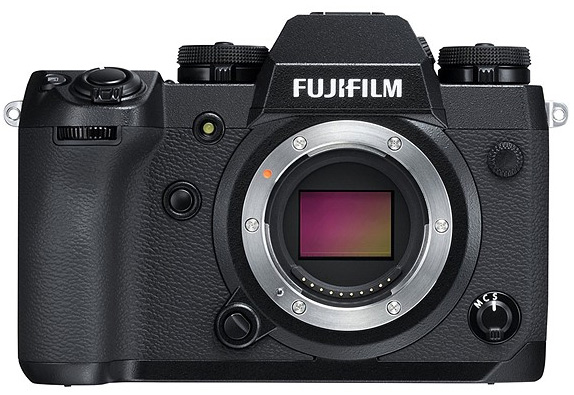
Fujifilm X-H1 specifications
- 24.3-megapixel X-Trans APS-C-format sensor
- 5-axis in-body image stabilisation
- 14 frames per second (electronic), 8 mechanical
- 3.69-megapixel OLED electronic viewfinder
- Tilting and touchscreen display
- 4K video (at 200 Mbps)
- Slow-motion HD video (up to 120 frames per second)
- 2 SD(XC) memory card slots
- Wifi and Bluetooth connectivity
- Weight: 637 grams
Appearance
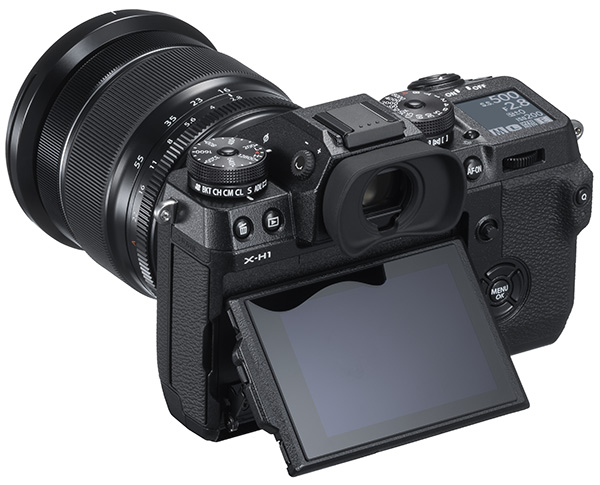
The first thing that stands out about the X-H1 is its size. The camera is clearly larger than its popular sibling, the Fujifilm X-T2. That is a little disappointing, because the compactness of mirrorless cameras is one of their greatest advantages.
On the other hand, this camera will probably feel more comfortable in the hand for people with larger hands.
A lot has been taken from the Fujifilm GFX-50S. You can see that in the grip you hold the camera with, but also in the display on top of the camera.
That display is useful, because it gives you clearly readable information about settings, battery status and the remaining space on your memory cards, even when the camera is switched off.
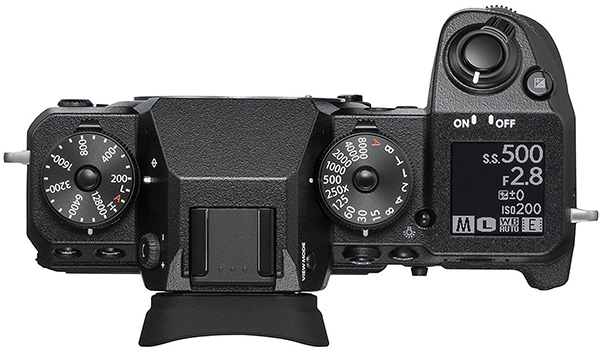
The new display also has an important disadvantage. Adding the display meant that the exposure compensation dial had to make way.
Just like with the Fujifilm GFX-50S, you now have to do this using a button together with a control dial. That works well enough, but it is still much less pleasant than the physical dial on the X-T2 or the X-Pro2.
Image quality
As we have come to expect from Fujifilm, the image quality of the (pre-production) camera is simply very good. The dynamic range in the files is very large, making it easy to recover highlights and brighten dark areas afterwards.
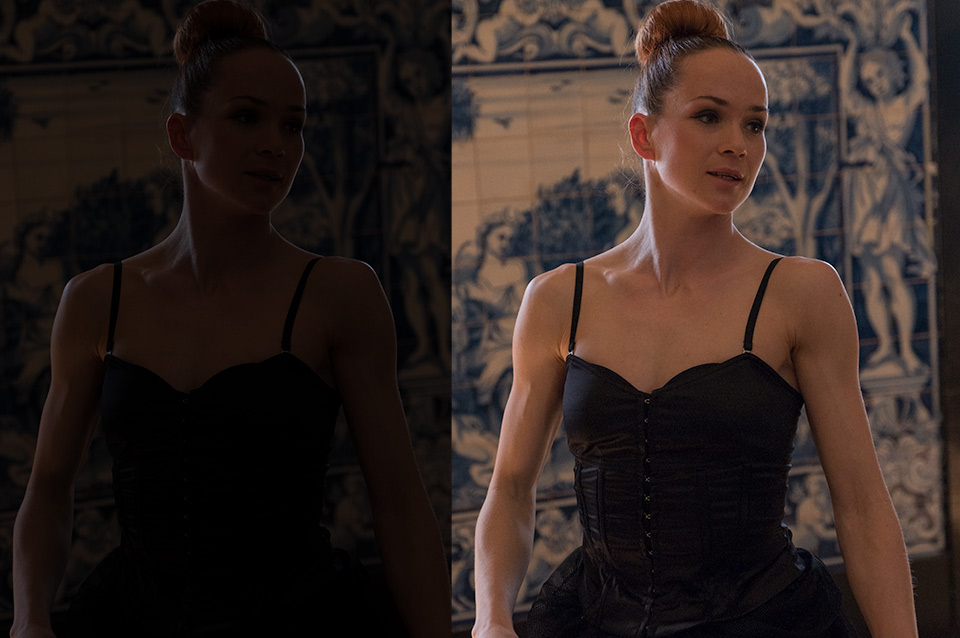
In the photo above, you can see the original on the left as it was shot, and the same photo on the right with the dark areas brightened with virtually no penalty. This makes editing your photos much more enjoyable.
The maximum sensitivity goes (natively) up to ISO 12,800 and can be extended to ISO 51,200. The photo below was shot at ISO 3200 and is very usable. As you can see, there is some noise in the 100% crop, but it is not particularly distracting.

ISO 6400 was also still perfectly usable. Above that, the noise is clearly present.
Image stabilisation
In-body image stabilisation is new for Fujifilm. It is a mature implementation from the start, correcting on 5 axes and supposed to provide an improvement of 5.5 stops. Previously, Fujifilm only had image stabilisation in (a selection of) its lenses.

That image stabilisation makes it possible, for example, to take the photo above in low light. It was shot handheld with a shutter speed of 1/8 of a second.
As you can see, the model's face is sharp, but her dress is blurred. For this, the model had to try to keep her head still while moving her dress with her arms.
The image stabilisation helps you keep a handheld photo sharp while using a shutter speed of 1/8. The slow shutter speed also lets you play with movement at the same time. A nice way to use this kind of image stabilisation.
Video
Fujifilm has paid a great deal of attention to the video capabilities of the X-H1. The first thing that obviously stands out is the option to record 4K video (up to 30 fps).
Video footage can be recorded with a bitrate of 200 Mbps. That is double the rate of most other cameras and produces higher-quality images with more image information.
If you do not use the optional grip, you can record a maximum of 15 minutes of 4K video. With the grip, this increases to 29 minutes and 59 seconds, a limitation built into most cameras because of tax regulations.
When you put the camera in video mode, the available menu options immediately change to video. That is useful, because it keeps video and photo settings separate.
This lets you switch easily between photography and video without running into major problems. You do have to set the shutter speed, aperture and sensitivity correctly again, of course.
You can also easily switch to the slow-motion option in the menu. The camera then switches back to full HD, but when you turn slow motion off, you immediately get your 4K video back.
There are several options for slow motion, with 4x (100 fps) probably being used most often. 5x (120 fps) is also possible. No sound is recorded during slow motion. The video below contains some footage shot in 4x mode.
Videographers will probably also be pleased with the addition of F-Log. This format can now also be written directly to the memory card in the camera. This flat mode gives you more room for corrections during editing.
Battery grip
You can buy Fujifilm's VPB-XH1 grip separately. This grip has 2 extra batteries, allowing your camera to run for much longer without changing batteries.
More interesting is probably that the camera's performance improves with the grip. For example, you can film in 4K for longer at a time, and it also boosts other camera performance when you switch it on.
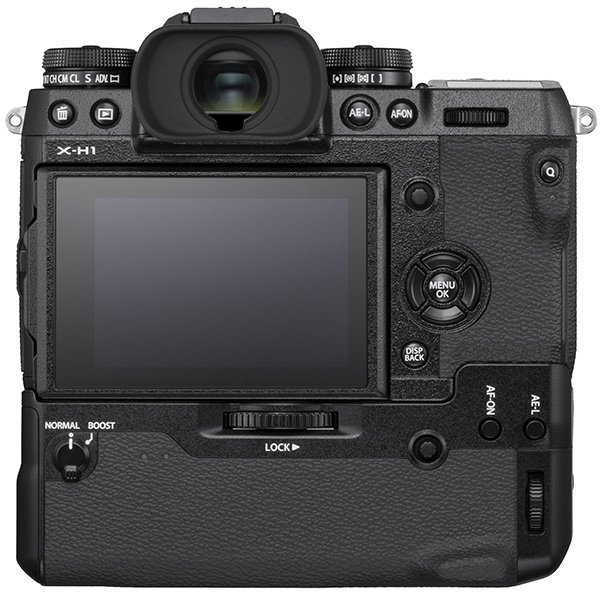
Also useful for videographers: the grip has a headphone socket, so you can listen to the sound recorded by the camera live while filming.
All in all, the grip offers quite a few extras. Unfortunately, it also makes the camera considerably larger straight away.
Initial conclusion
The Fujifilm X-H1 looks like an excellent camera, especially for the relatively modest price they are asking for it. Not everyone will be pleased that the camera has become slightly larger compared with the X-T2.
The X-H1 is particularly suitable for photographers who also like to shoot video with their camera. With 4K video and slow-motion capabilities, the camera could be an interesting choice.
The In Body Image Stabilisation (IBIS) is a welcome addition that, in my opinion, every camera should have. I am talking to you, Canon and Nikon.
Price and availability
The Fujifilm X-H1 is due to be released in March 2018 and will cost 1,899 euros. If you also want the grip, you will have to pay an extra 300 euros.
About the author
Elja Trum is the founder of Photofacts and online photography course website Photofacts Academy. He has been writing about photography since 2006. Elja is also the author of (Dutch) books on composition, black-and-white photography, flash photography and portrait photography.
You might also like
-
 Fujifilm X-H1 mirrorless camera with image stabilisation
by Michelle Peeters
-
 Preview: Fujifilm X-H2s
by Elja Trum
-
 Fujifilm X-T3 announced
by Elja Trum
-
 Preview: Fujifilm X-S20
by Elja Trum
-
 Preview: Fujifilm X-HF1 half-frame mirrorless camera
by Elja Trum
-
 Fujifilm announces X-H2 mirrorless camera
by Elja Trum
4 comments
-
 peter nadort wrote on Tuesday 20 February 2018 at 10:48 | reply
Elja, ik reageer niet zo veel en ben heel ouderwets, maar om nu te zeggen dat Nikon en Canon met hun tijd mee moeten gaan aangaande stabilisatie, ik vind dat boud deze uitspraak. Maar jij hebt dan ook een andere doelgroep.
This comment was written in another language and has not been translated yet.
Groet, ook aan Michael, Peter Nadort -

-
 Chris wrote on Tuesday 20 February 2018 at 11:46 | reply
Tja, die beeldstabilisatie is verleidelijk maar ik heb mijn canon gerief ingeruild voor kleiner, lichter en prima materiaal en nu begint het stillaan weer groter en zwaarder te worden.
This comment was written in another language and has not been translated yet. -
 guest wrote on Tuesday 20 February 2018 at 16:49 | reply
Ook mijn mening, zeker voor mensen die al (ietsje) ouder worden mag het ook allemaal een beetje lichter en kleiner..
This comment was written in another language and has not been translated yet.

Have your say
Please note: Articles older than a week can only be commented on by signed-in visitors.Would you still like to comment? sign in or create a free account.
Become a better photographer every week
A practical photography tip in your inbox every week.
38,885 photography enthusiasts already receive the tips! More about the weekly mail. Or keep up to date via  Facebook.

Elja Trum
Photofacts; everything to do with photography!
Would you like to take better photos and keep up with what is happening in photography? Photofacts publishes articles that teach you something about photography — from a product announcement to a practical shooting tip or a look at a website. Photofacts covers photography every day and is a hobby project of Elja Trum's that got out of hand. The articles are written by a team of volunteer authors. If you would enjoy writing one or more articles for Photofacts, do get in touch.More about PhotofactsPhotofacts is made possible in part by
