

Review: Sirui Bi-Colour LED CS100B lighting
Friday 8 December 2023, 14:07 by Anno Huidekoper | 3,947 views | 4 commentsThis article was translated from Dutch with the help of AI. Read the original.
To light a model in a studio, you need a lot of light. A flash setup is usually used for this. There is now an alternative, namely continuous LED lighting.
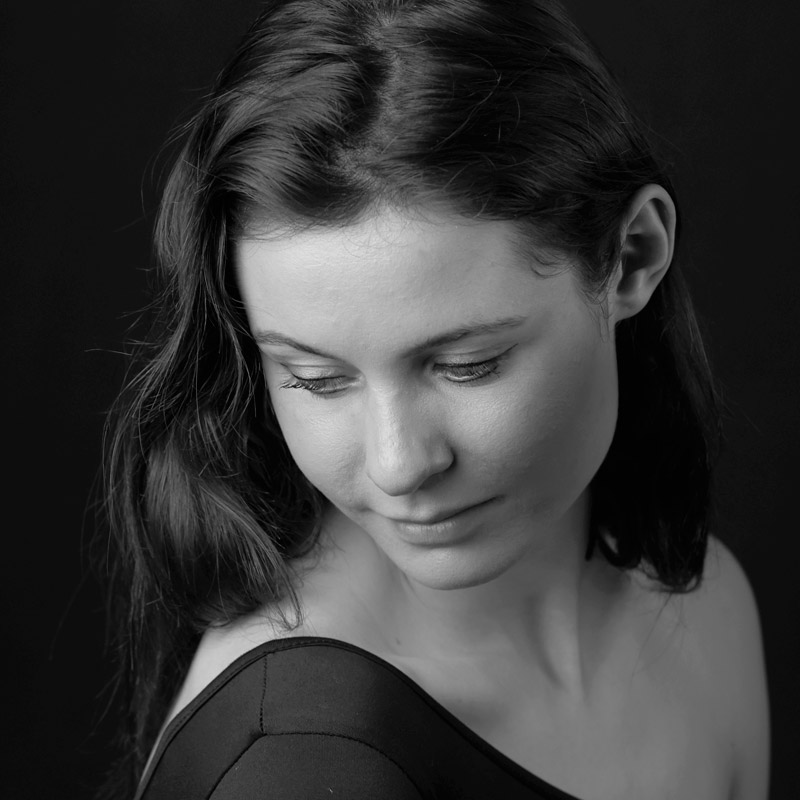
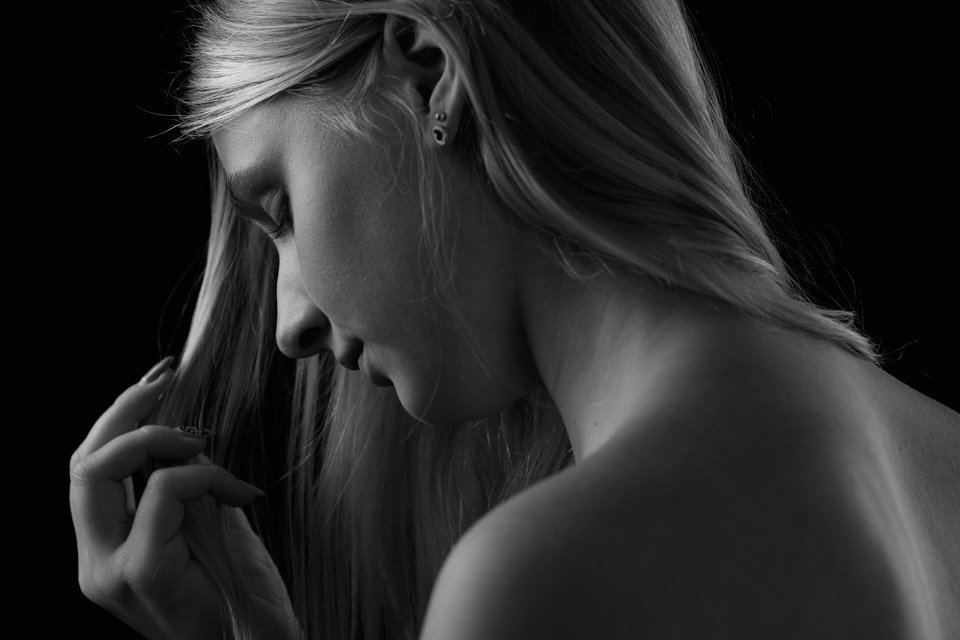
Sirui, known for its tripods, recently brought several LED lighting sets onto the market, including various softboxes. High time for a test! All the photos shown here were taken with a Sirui Bi-Colour LED CS100B lighting set.
The classic studio lighting setup in brief
The studio flash setup we know produces a lot of light and the flash duration is very short. You can therefore work at a low ISO setting and freeze movement. If you use a large softbox, the light is soft.
In the past, in the analogue era, you set the flash exposure using a special flash meter. These days, it is common to take (digital) test shots. The so-called modelling light from the flash head produces relatively little light.
Working very precisely with a reflector is not always easy because of the limited modelling light from the flash heads. The autofocus of some cameras is also less reliable as a result.
With continuous light, such as the Sirui tested here, you always have the set light, so you do not have a separate (weak) modelling light. You can see exactly what you are doing. That is useful when you want to create a Rembrandt triangle, for example.
You use the camera's histogram to check whether the exposure is correct. However, the maximum power is lower than the maximum power of a flash setup.
The Sirui Bi-Colour LED CS100B, remarkably compact
The importer, Benel BV, sent me a Sirui lighting set consisting of two LED lamps and two octaboxes.
I got to work with it myself and also let participants in my workshops use it. Some participants were unfamiliar with studio photography, while others had experience with a flash setup in the photo studio.
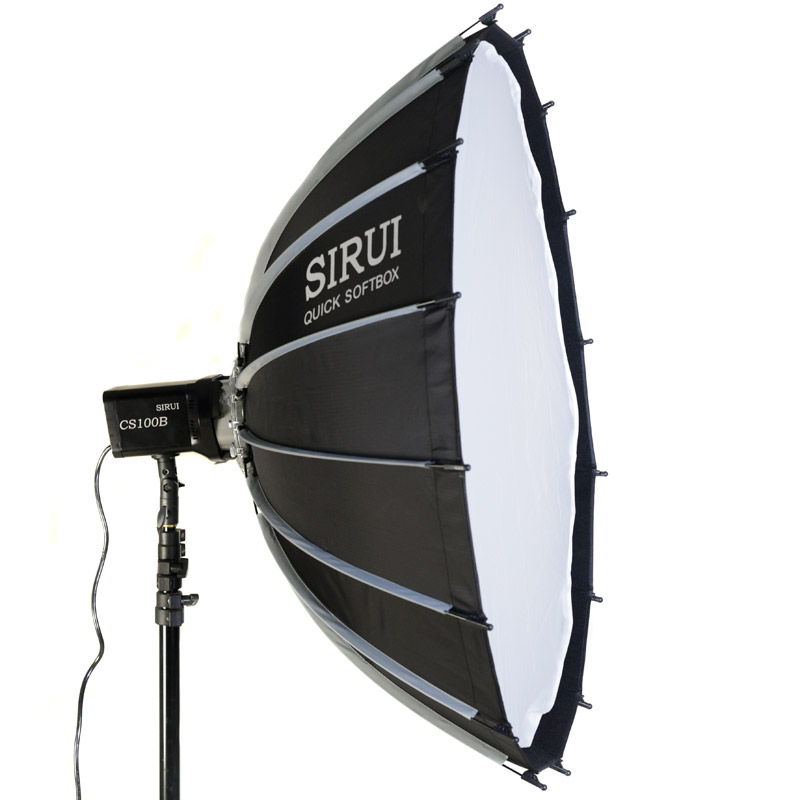
Compared with a Bowens flash head, for example, the Sirui is compact and lightweight. The housing also has the same mount as the one used by Bowens. Softboxes and other accessories are therefore interchangeable, which is very convenient!
The tilt point has not been chosen very cleverly, though. If you want to point the Sirui with softbox further up or further down, you have to support the softbox properly while adjusting it, otherwise the whole thing tips downwards. Tightening the locking knob is very easy, by the way.
The controls, what peace and quiet!
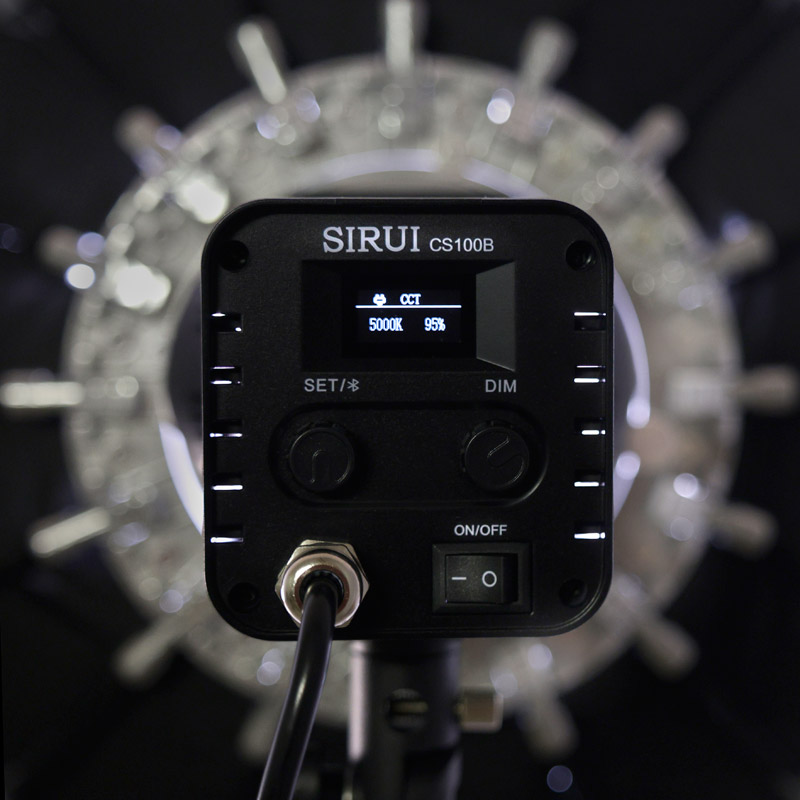
On the back are the on/off switch and two control knobs. One sets the colour temperature and the other the amount of light, from 0 to 100%. The values are shown on a tiny little display. I need reading glasses for it.
With many flash heads, you hear a popping sound when the flash tube fires. You often hear a fan as well. LED produces less heat, and the fan in the Sirui is barely audible. What wonderful silence in your studio!
The Sirui Octabox type RGX105
The larger the softbox and the closer it is to the model, the softer the light. And that is what we want! But the larger the softbox, the heavier it becomes and the more power it needs, which is a downside.
These softboxes, with a diameter of 105 centimetres, are a good compromise. The light is beautifully soft and the difference compared with a 130-centimetre Octabox is negligible. The construction looks solid. Putting it together requires a knack, where you have to apply some force in exactly the right way.
There is no assembly manual, but a YouTube video provides the answer. Once you know how it works, you can quickly assemble and take apart this octabox without needing any tools.
Enough soft light, that is what we need
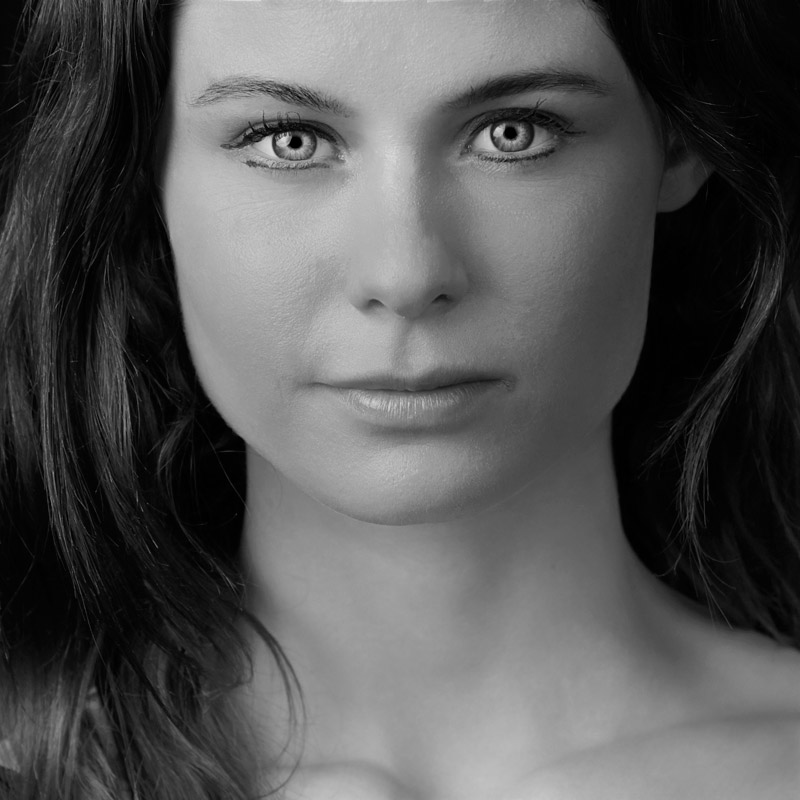
Photographing at a sensitivity of ISO 400, a shutter speed of 1/125 second and an aperture of f/5.6 is perfectly possible with a Sirui set consisting of two lamps. Modern image sensors produce little enough noise at ISO 400, and the dynamic range is still high.
Because a face sometimes moves imperceptibly, it is not advisable to use a much longer shutter speed than 1/125 second. And if you follow the classic rule of 'sharp eyes, sharp nose, blurred ears', f/5.6 is a good value with a full-frame camera. As I mentioned earlier, the light is beautifully soft!
Sirui LED in practice
As a photographer, you work with the model towards a particular photo, characterised by a specific emotion and pose. The light is merely a means to achieve this. It is nice, then, to be able to control that light easily and quickly.
I set the camera to M, with starting values of ISO 400, 1/125 second and f/5.6. The histogram in the viewfinder tells me whether these values need adjusting. There is no more walking back and forth to a flash head to change the power slightly. You immediately see whether the amount of light and the balance between the two LED heads are right.
I often use a reflector to optimise the contrast between the left and right sides of the face. In short, with continuous light, your attention during a shoot is much more focused on the model and much less on the technology of lighting and exposure.
I also like being free from flash tubes that pop when they do their work. What stands out to me is that both experienced and inexperienced participants in my workshops reach the desired end result much faster when using this Sirui LED set than when using a conventional flash setup.
Conclusion
The Sirui LED produces enough light to work well at very acceptable ISO, shutter speed and aperture settings. It does produce less light than a traditional studio flash setup. The amount of light is very easy to adjust and, because it is continuous light, you can see exactly what you are doing. Test shots are actually no longer necessary.
The light, with the Sirui softboxes, is beautifully soft. The display could have been a little larger, and tilting would be easier if a different tilt point had been chosen. All in all, especially considering the retail price, highly recommended!
Availability of Sirui LED lighting
Benel B.V. is the importer, and many shops, both online and physical, have added Sirui LED lamps and accessories to their range. You can find the dealer overview here.
One lamp costs around 130 euros.
Specifications Sirui Bi-Colour LED CS100B
- Power: 100 watts, continuously adjustable
- Dimensions: 21 x 12 x 12 cm
- Colour temperature: continuously adjustable, 2,700K - 6,500K
- CRI: 96Ra (indicates the accuracy of the colour reproduction, and should be close to 100)
- Power supply: mains power, built-in transformer
About the author
Anno Huidekoper fotografeert al bijna een halve eeuw. Hij houdt zich bezig met (klassiek) concertfotografie, straatfotografie en portretfotografie. Hij schrijft veel over zwart-wit en hij bekleedt bestuurlijke functies bij fotoclub Heerenveen en afdeling Friesland van de Fotobond. Geregeld geeft hij workshops portretfotografie.
You might also like
-
 Review: Sirui L324F with KS-G3 geared tripod head
by Nando Harmsen
-
 Review: SmallRig RM 40C mini LED video light
by Nando Harmsen
-
 Review: SmallRig RC 60B COB LED video light
by Nando Harmsen
-
 SmallRig launches the RC 100B COB LED video light
by Nando Harmsen
-
 Review: SmallRig RM-03 Macro Photography LED lights
by Nando Harmsen
-
 Review: Canon EOS R6
by Nando Harmsen
4 comments
-
 Donald Willemsen wrote on Friday 8 December 2023 at 14:50 | reply
I cannot really agree with the reviewer when he dismisses studio flashes as rubbish. I have been working with studio flashes for years and am very satisfied with them. The modeling light is proportional and the flash has a much higher light output than the LED lighting discussed here. Precisely because the modeling light is proportional, you can see exactly the effect on the model. Once properly set up, the modeling light can simply be turned off and you use much less energy, which is also more pleasant for the model because it is less warm. So I do not need to install any additional solar panels on my roof.
Translated from Dutch. -

 anno
wrote on Friday 8 December 2023 at 15:56
| reply
anno
wrote on Friday 8 December 2023 at 15:56
| reply
I certainly don't consign studio flashes to the rubbish bin and I point out that studio flashes provide much more light. I have given workshops with various brands of studio flashes, all these flash heads were equipped with proportional modelling light. Some participants did have experience with studio flash setups, while others did not. I have now given a number of workshops with continuous light. It strikes me how much faster people achieve the desired result. The models also indicate that, compared with other shoots where flash setups are used, with continuous light you achieve the desired result faster.
Translated from Dutch. -
Donald Willemsen
wrote on Friday 8 December 2023 at 23:00
| reply
@Anno, it’s not about getting to a desired result QUICKLY for me. For me, only a good result matters. In addition, I find a 100-watt LED to provide too little light compared to the electricity it consumes. I also think you should use energy sparingly. Moreover, I think it’s good for workshop participants to learn how to work with studio flashes. First and foremost, they need to understand what the light does and how you can direct the light with reflectors, etc. That they learn how to position the light in relation to the model to get a beautiful photo. I had to learn that too and have built up several decades of experience in it by now. Flash units ultimately do provide sufficient light and are also more energy-efficient. Another disadvantage of that LED lighting is precisely that because it provides too little light, you quickly have to increase your ISO or use even more LED lamps. That increases the chance of noise, especially with low-key. People who work with a somewhat older camera will quickly see noise. You can get rid of it quite well nowadays with the right software, but that software also has its limits. Moreover, it means extra work in post-processing. But anyway Anno, everyone should be able to do their own thing and have their own opinion. I appreciate that you paid attention to these LED lamps and took the time to write a review about them. For now, it gives me the idea to remain loyal to my studio flashes. I wish you a nice weekend.
Translated from Dutch. -
 Vbruggeman wrote on Wednesday 13 December 2023 at 09:00
| reply
Vbruggeman wrote on Wednesday 13 December 2023 at 09:00
| reply
Dear Anno, thank you for this review.
Translated from Dutch.
Anyone who nevertheless wants to take beautiful portrait photos with a limited investment (non-professional photographers) certainly has a great guide here.
It is indeed not so easy to get the hang of flash photography (studio).
It seems to go more smoothly with this system.
The possibilities may be more limited than with flash exposure, but the result nevertheless appears to be quite acceptable. The saying: ‘the end justifies the means’ certainly applies here. Kind regards
Have your say
Please note: Articles older than a week can only be commented on by signed-in visitors.Would you still like to comment? sign in or create a free account.
Become a better photographer every week
A practical photography tip in your inbox every week.
39,024 photography enthusiasts already receive the tips! More about the weekly mail. Or keep up to date via  Facebook.

Elja Trum
Photofacts; everything to do with photography!
Would you like to take better photos and keep up with what is happening in photography? Photofacts publishes articles that teach you something about photography — from a product announcement to a practical shooting tip or a look at a website. Photofacts covers photography every day and is a hobby project of Elja Trum's that got out of hand. The articles are written by a team of volunteer authors. If you would enjoy writing one or more articles for Photofacts, do get in touch.More about PhotofactsPhotofacts is made possible in part by
