

Review: Sirui L324F with KS-G3 geared tripod head
Tuesday 10 February 2026, 13:58 by Nando Harmsen | 2,744 views | 0 commentsThis article was translated from Dutch with the help of AI. Read the original.
Are you looking for a good and affordable tripod? Then the Sirui L324F might be for you. We received this tripod together with the Sirui KS-G3 geared tripod head for the tripod course and the PFA promotion. Read more about this tripod in this review.
Most (good) tripods are sold without a tripod head. Sometimes you can buy them combined with a head. Unless it is exactly the head you are looking for, choosing the tripod and head separately may be wiser.
The Sirui L324F Landscape Carbon Fiber Tripod is one such tripod. It is supplied without a tripod head as standard. We received the Sirui KS-G3 separately with it. This geared head is suitable for precise adjustments.
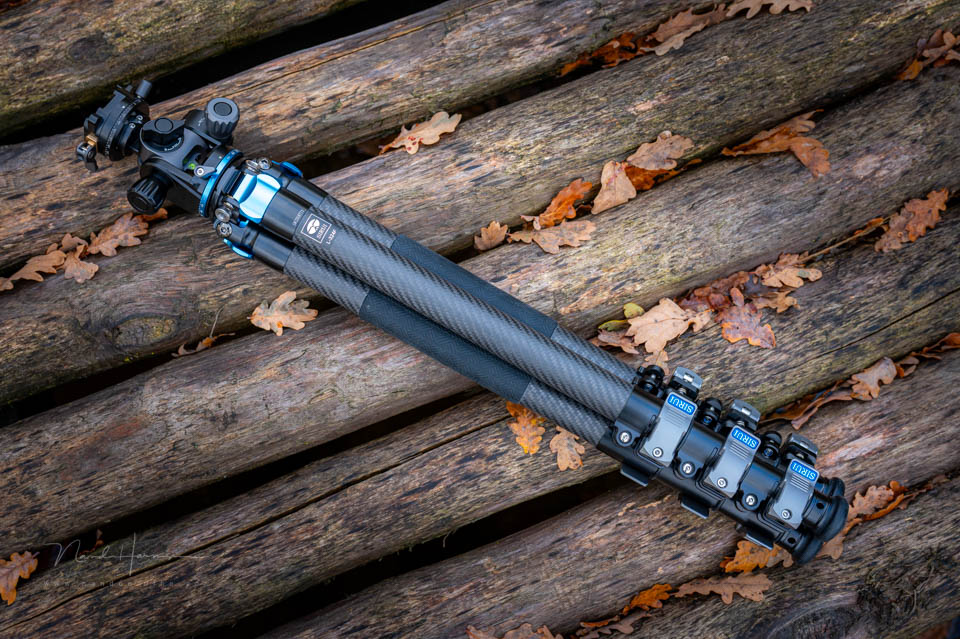
Let's start with a short list of specifications. First, we take a closer look at the L324F tripod. The KS-G3 head follows afterwards.
- L-324F Landscape Carbon Fiber Tripod
- 8 layers of carbon fibre
- Weight without head is 1.75 kilograms
- Folded length without head is 55 centimetres
- Maximum height without head is 1.45 metres
- Minimum height without head is 8 centimetres
- Maximum load is 18 kilograms
- No centre column, but a hook beneath the tripod base
- Legs can be positioned at 22, 55 and 85 degrees with a semi-automatic locking system
- Thickest legs are 32mm with four sections and an aluminium flip-lock system
- Base plate diameter is 45 mm
- Tripod head connection is a combined 1/4:-20 and 3/8:-16
- Rubber anti-slip feet that can be replaced with the supplied metal spikes
- Various connection points via 1/4"-20 and 3/8"-16 screws
- Price is 249 euros
- KS-G3 geared head
- Tilt from -40 to 40 degrees (lateral pan)
- Vertical tilt from -50 to 95 degrees
- Dual panorama control
- Mechanical self-locking gear
- Weight is 0.75 kg
- Maximum load is 2.5 kilograms
- Height 122 mm
- Base diameter 60mm
- Made from lightweight aluminium
- Price is 349 euros
The appearance of the L324F and KS-G3
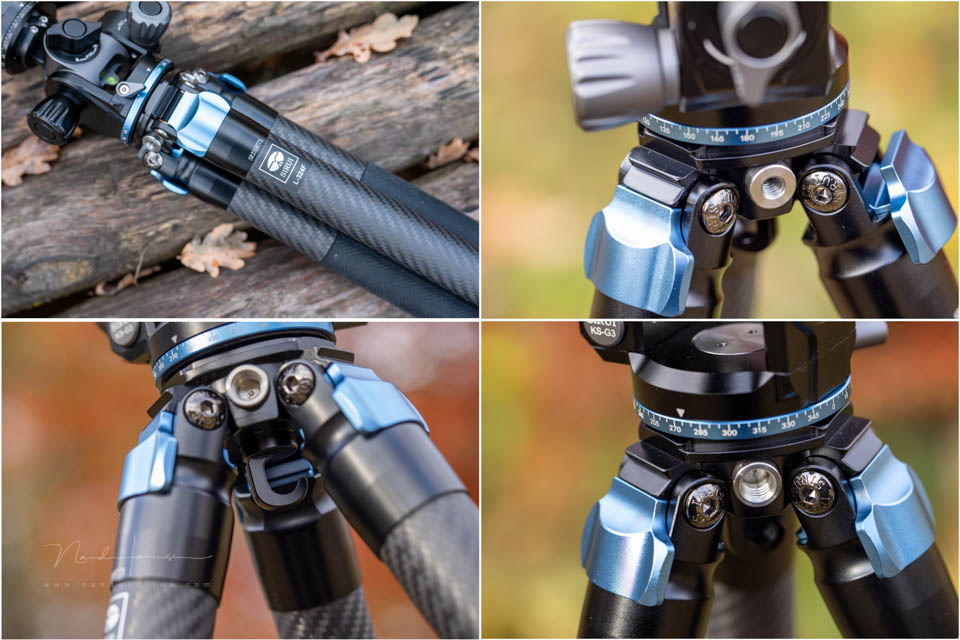
Both the tripod and the head have been designed with attention to appearance. The typical blue accents make them pleasant to look at. The head and tripod therefore go well together.
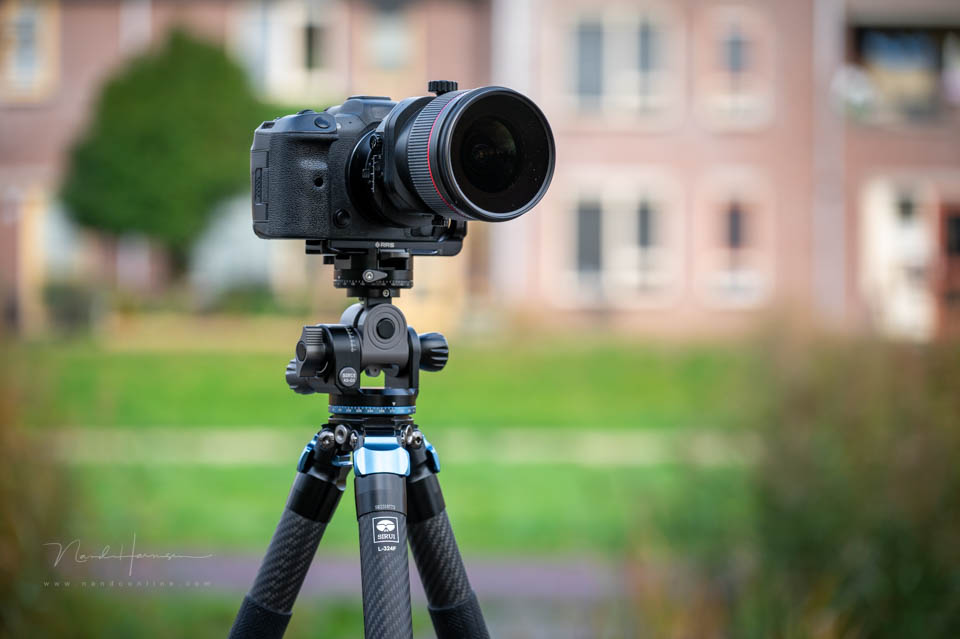
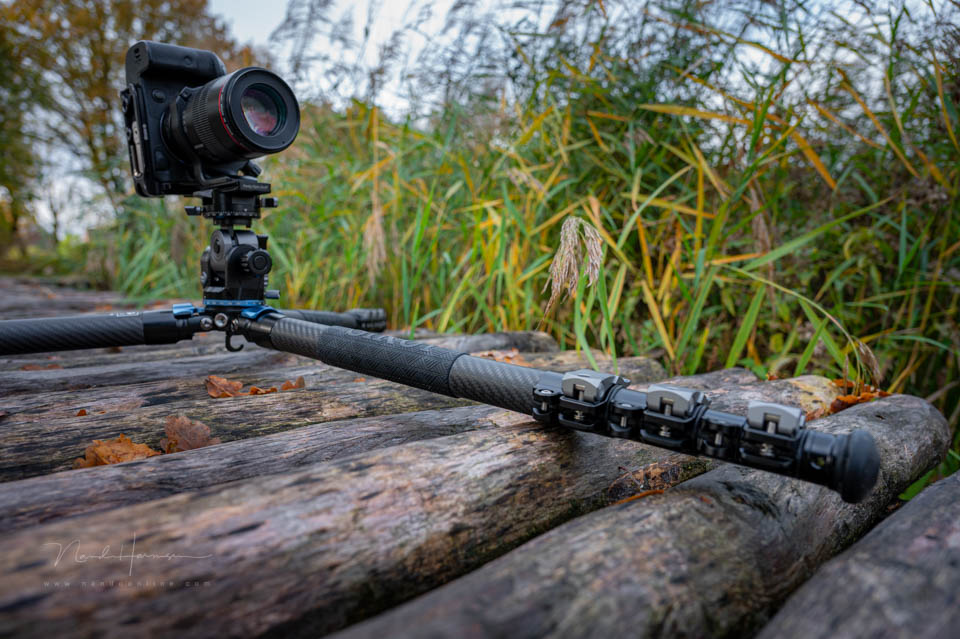
The tripod is compact when folded. Because there is no centre column, the legs fit neatly together. The three clamps for extending the legs are substantial and therefore easy to operate.
The legs extend easily and the clamps hold them securely. This allows the tripod to carry the 18 kilograms it is rated for without difficulty. Two of the legs are partly covered with rubber.
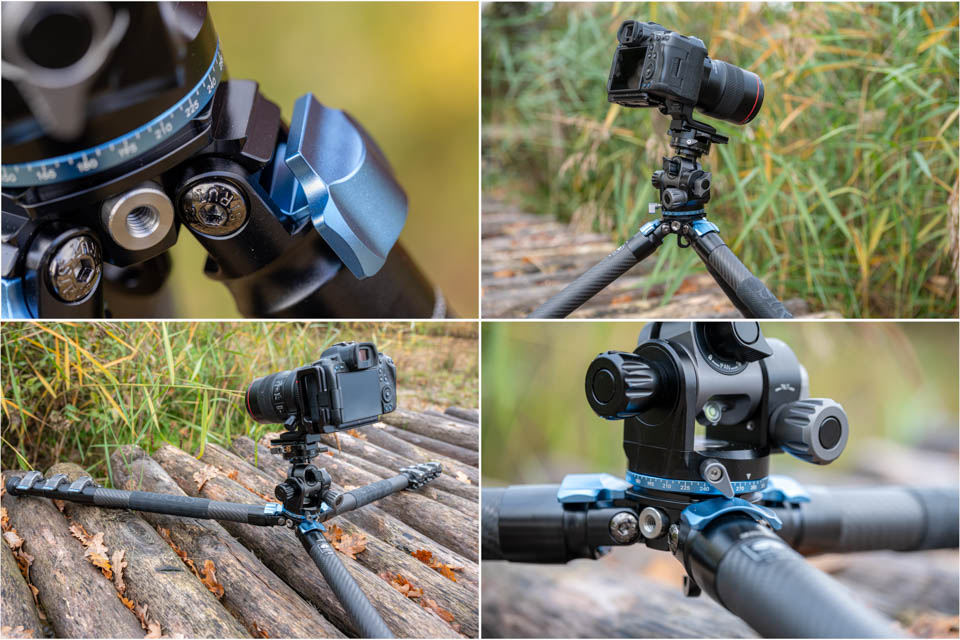
The legs can be set to three positions. The clamp can be pulled out, after which it remains in the open position. Set the legs to the 85-degree position and the clamp will close automatically. This works very well.
The substantial rubber feet can be replaced with the supplied spikes. A silicone seal protects the thread from dirt. The spikes do not have this silicone seal.
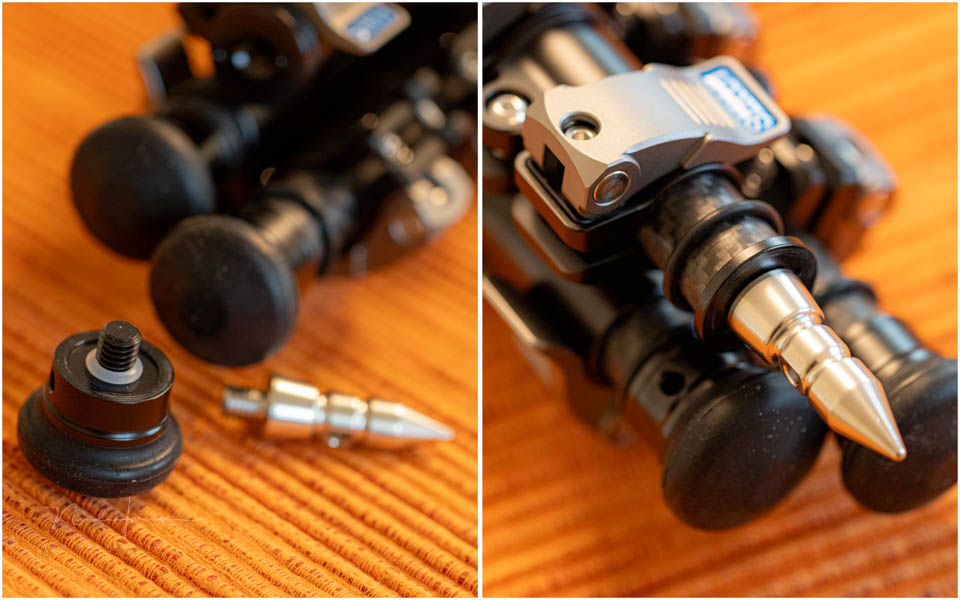
The rubber feet ensure that the leg clamps do not touch the ground when they are positioned below 85 degrees. This assumes the ground is flat. With the spikes, the clamps will touch the ground.
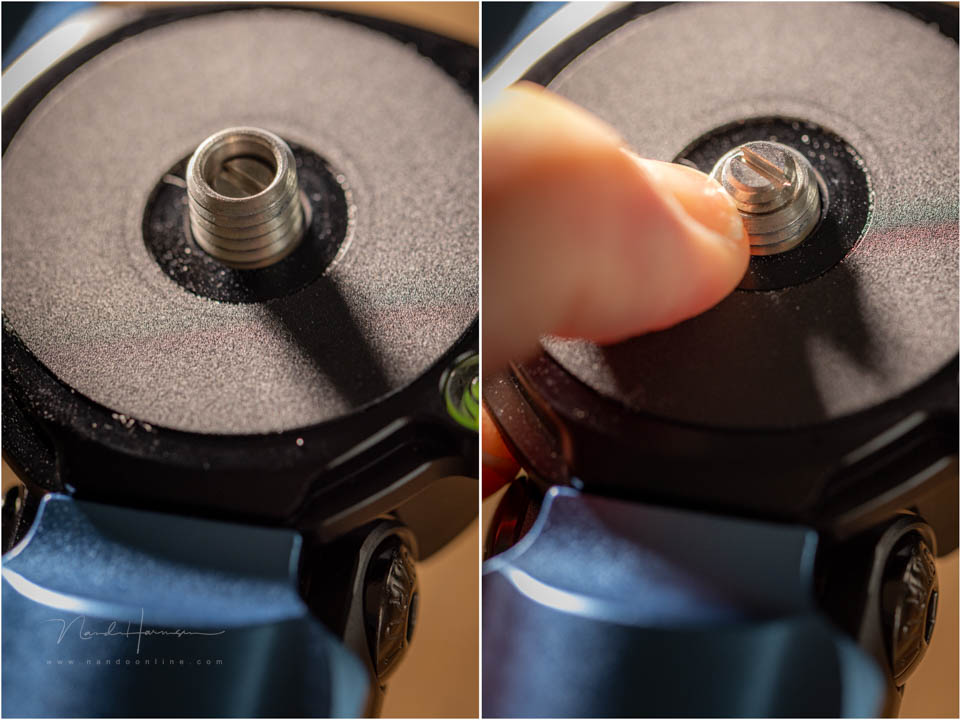
The base plate of the tripod has two screw mounts on the side for accessories. There is a standard 3/8"-16 and 1/4"-20 thread. The base plate measures approximately 45 millimetres and contains the screw for the tripod head.
The 3/8" part of the screw in the base plate is spring-loaded, giving you an immediate 1/4" as well as 3/8" connection. There is a small bubble level next to the base plate.
The KS-G3 has a slightly larger base than the tripod, 60mm compared with 45mm, which means it sticks out slightly. The bubble level is therefore no longer visible. The head otherwise fits well and appears to form a single unit with the tripod.
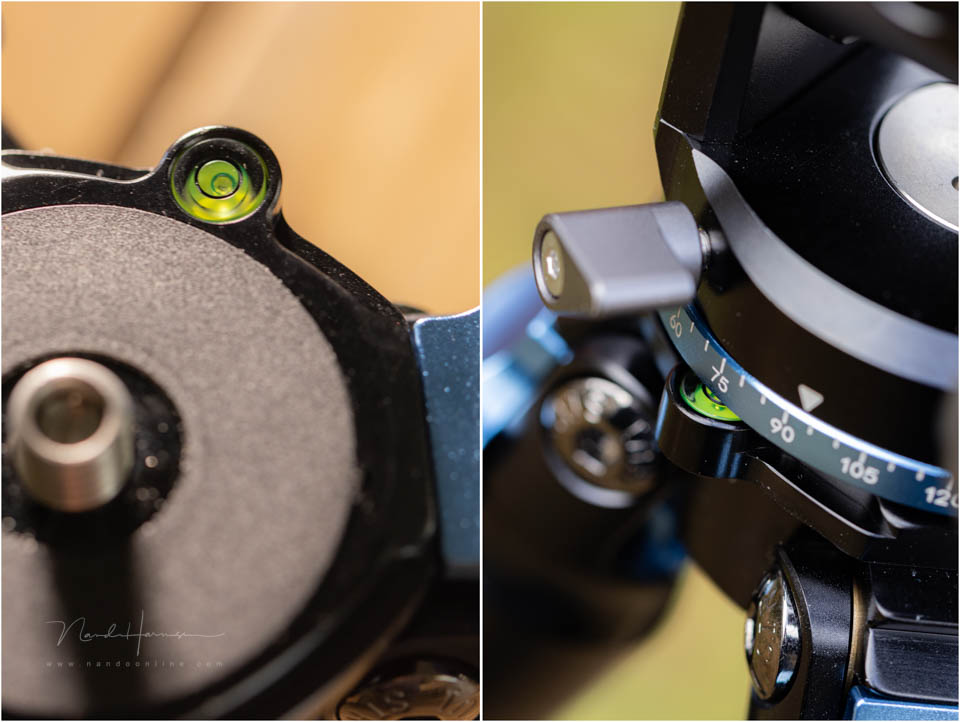
Let's stay with the KS-G3 head. Both the base and the camera mount have a panorama function. A degree scale is engraved in them and a spring-loaded lever provides the locking mechanism.
The tilt in both horizontal and vertical directions is adjusted using the geared control knobs. This is the geared part of the head.
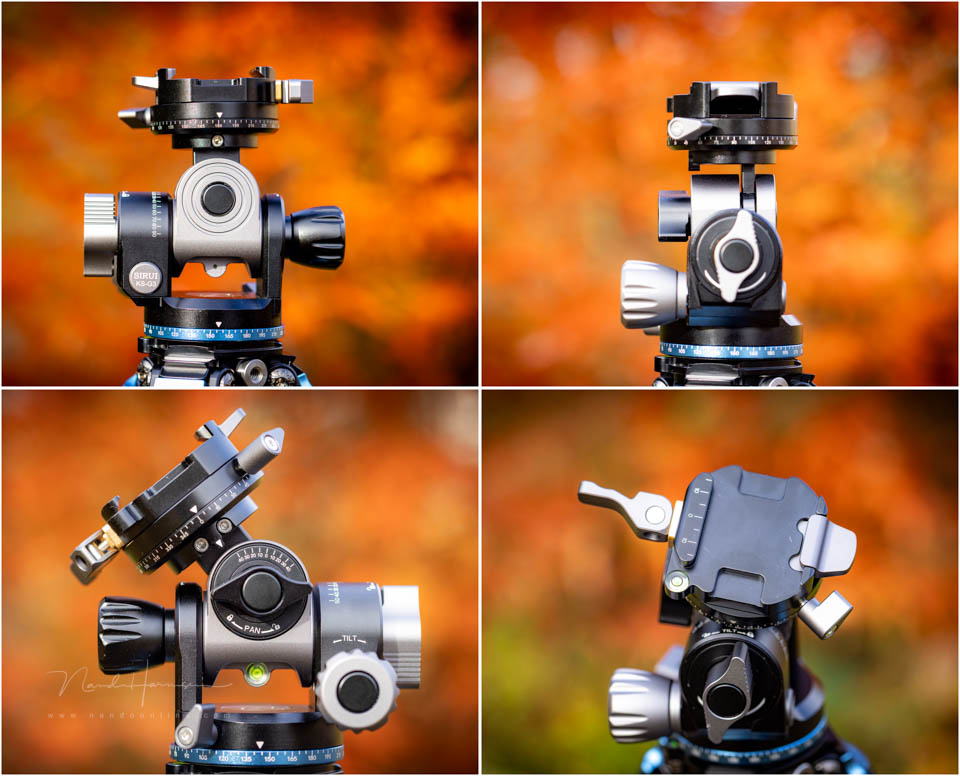
The head is two-way geared. The horizontal movement uses normal free rotation. It has a self-locking gear, so you do not need to lock the position you have set. A turning lever disengages the gears for larger movements.
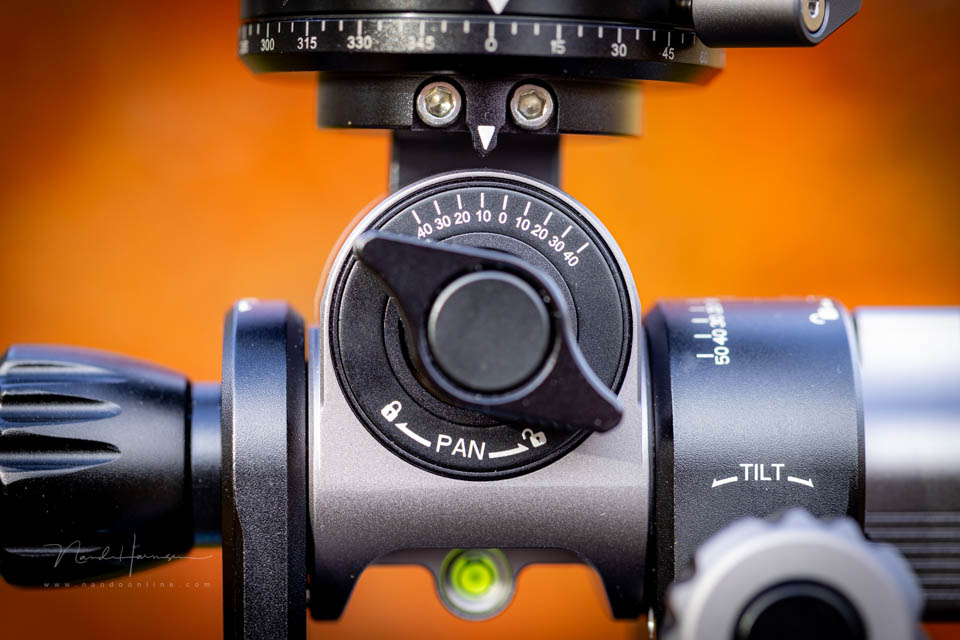
The knobs are compact, just like the head itself. Rough ridges have been milled into them for grip. The knobs turn fairly heavily because of the self-locking system. Both directions of rotation have a degree scale.
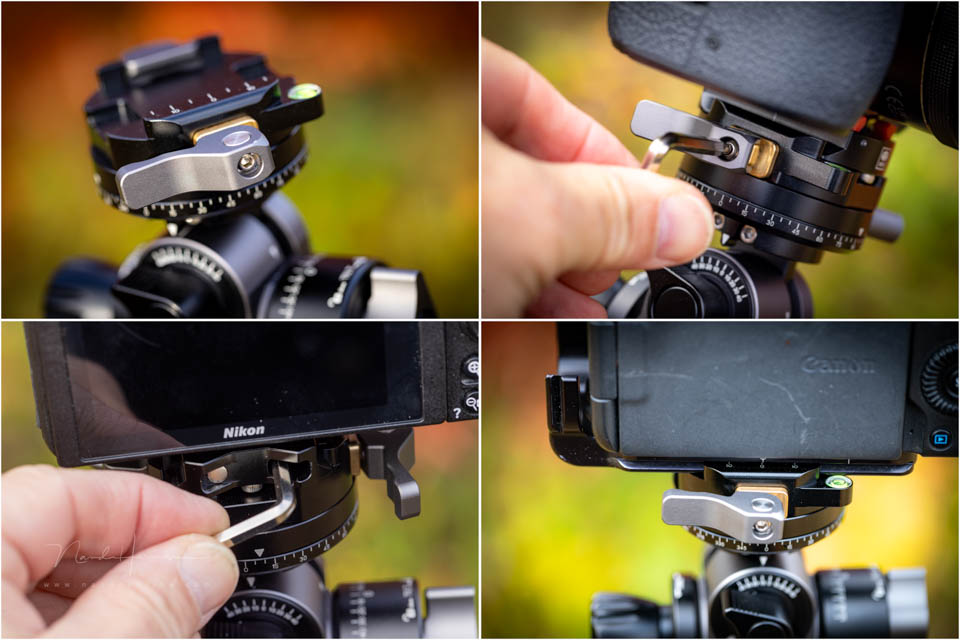
The camera mount is small and Arca-Swiss compatible. The head comes with a small camera plate that is screwed beneath the camera. This camera plate contains a hex key for adjusting the clamp on the camera mount.
Adjusting the tension is necessary to clamp the camera securely enough. Because the camera plate has a slightly different dovetail profile from the standard Arca-Swiss profile, it may sometimes be necessary to adjust this.
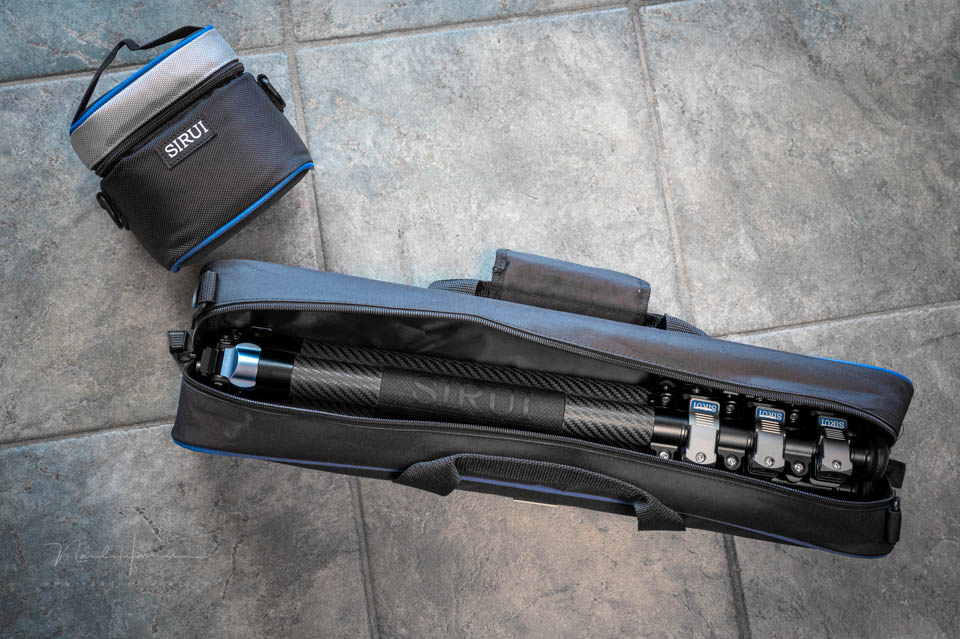
Both the tripod and the head come in a neat bag. The accessories, such as spikes and tools, are also stored in it. The tripod bag is exactly the right size for the tripod... without a head. If you want to use the bag, you will always have to carry the head separately.
Using the tripod in practice
I should make it clear beforehand that I am not a fan of clamp locks. I strongly prefer twist locks. Using the Sirui L324F once again made it clear why I have this preference.
The clamps work well. The tripod legs are locked firmly and remain at the selected length. The large clamps do easily catch on things, though. There is a high risk of getting a finger or skin caught between the clamps when folding or unfolding them.
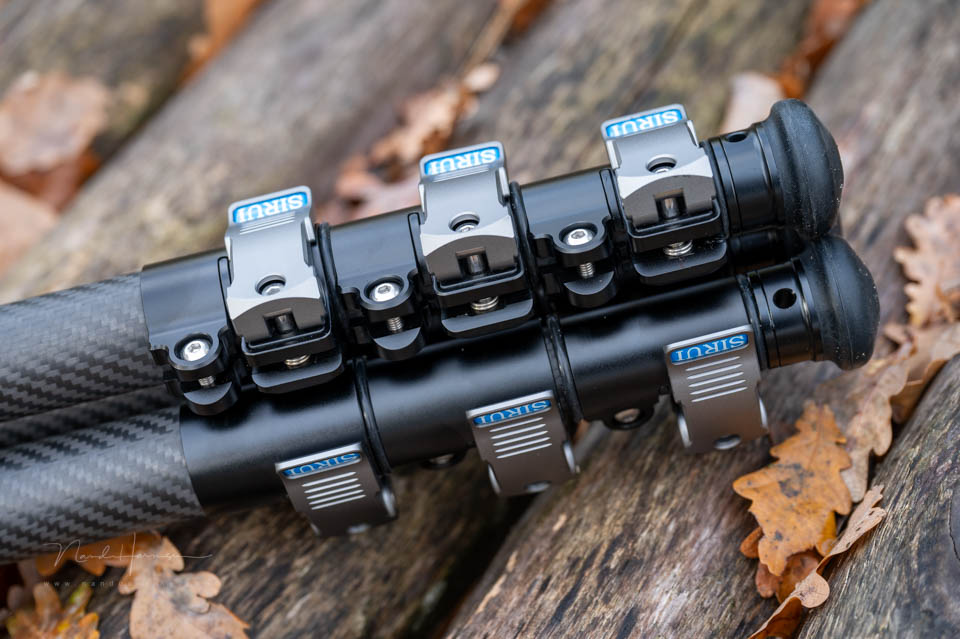
The weight and maximum height of the tripod are perfect for my height, 1.72 metres. The lack of a centre column is not a disadvantage, but rather an advantage. It allows the tripod to be placed close to the ground easily.
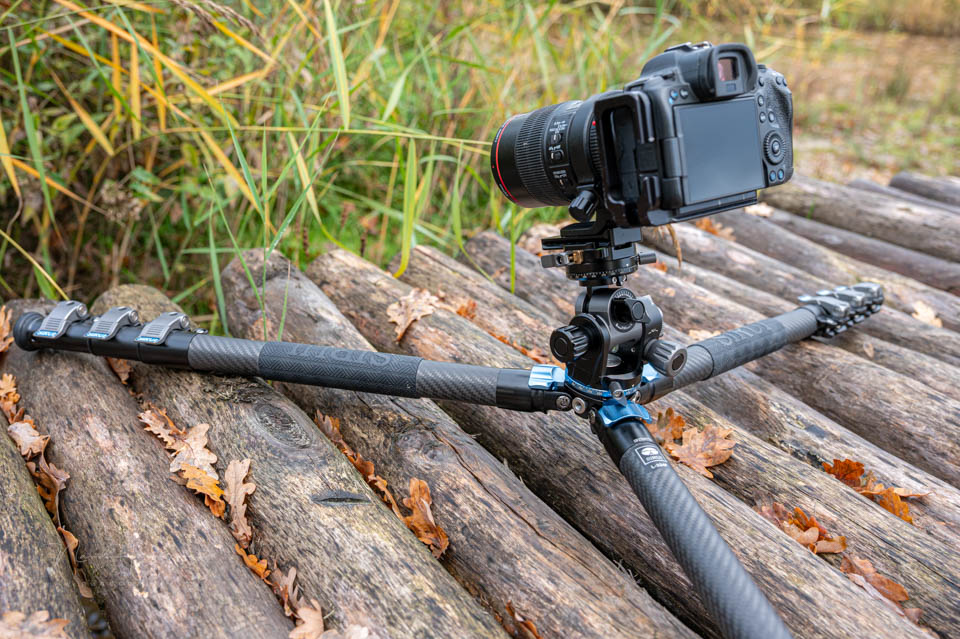
Being close to the ground does mean that the clamps quickly touch the ground. A horizontal surface is no problem with the rubber tripod feet, but with spikes this will certainly happen. Fortunately, you can always extend the legs slightly to prevent this.
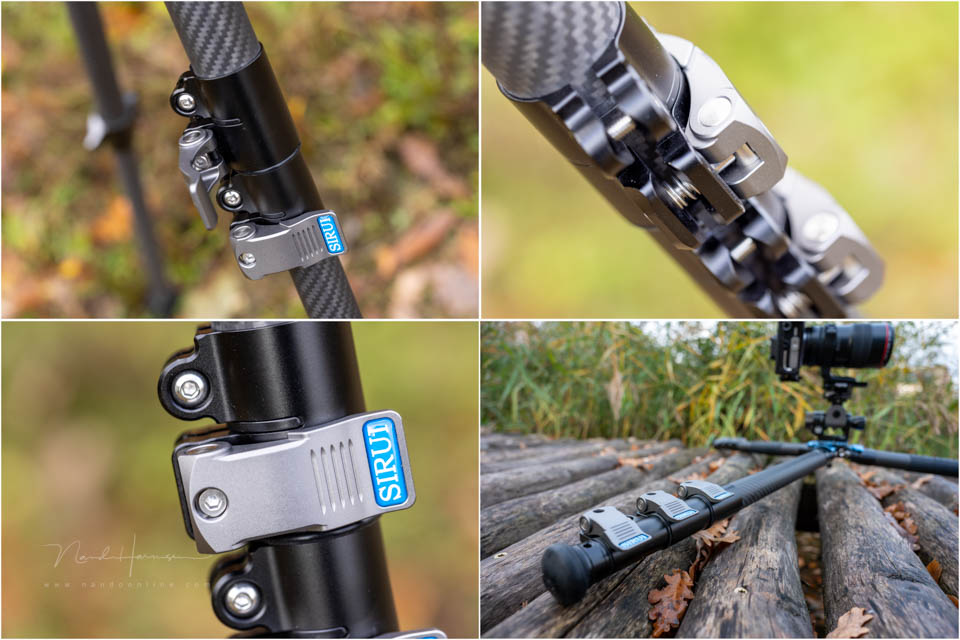
Apart from the risk of trapping your fingers, dirt is a bigger problem for a clamp system. Do you use the tripod by the sea and on the beach, in the woods or near and in water? Then regular cleaning will be necessary.
Using the geared head in practice
It is important to realise that the KS-G3 can carry only 2.5 kilograms. This means that this head is suitable only for small or lightweight camera and lens combinations.
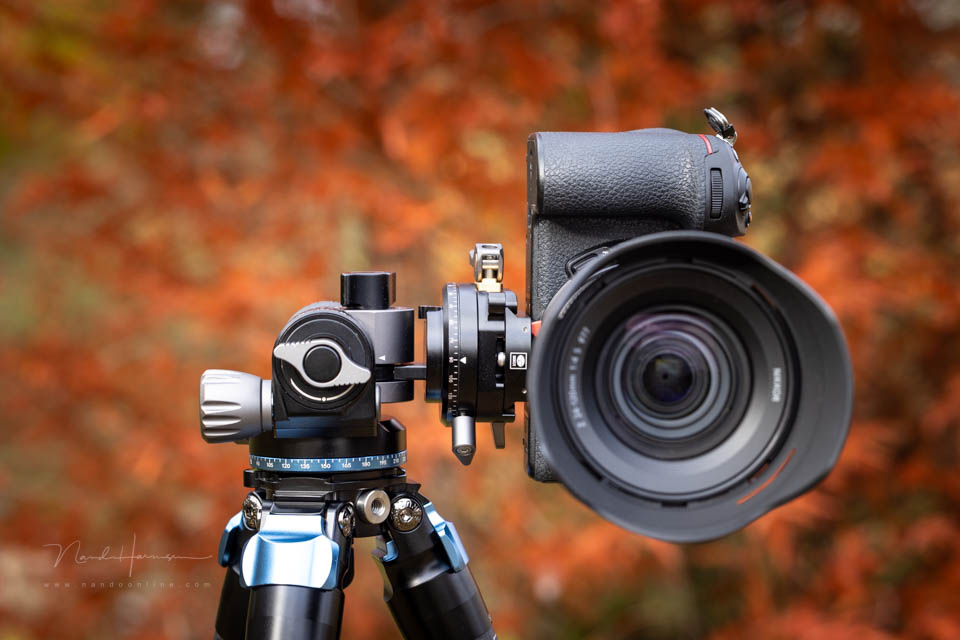
Another important aspect is that this is not a geared three-way head. The position is adjusted with gears only in the lateral and vertical directions. In the horizontal direction, panorama, it is a normal rotation that is secured with a clamp.
The control knobs for the geared movement turn fairly stiffly, which is not a bad thing. The knobs are smooth, despite having a milled profile. Especially in the cold, or when wearing gloves, this provides poor grip.
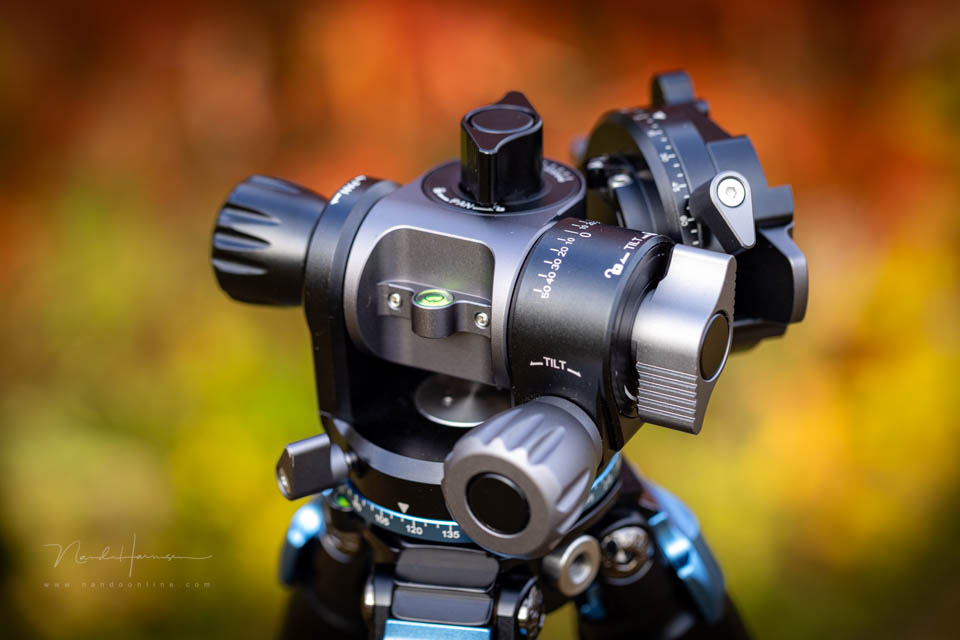
A greater disadvantage is the release levers for these geared movement directions. They are easy to loosen. If you do not hold the camera properly, it flips over violently.
It would have been better if Sirui had added an extra lock. This would make accidental loosening impossible. So you need to pay attention to which knob you use when making adjustments.
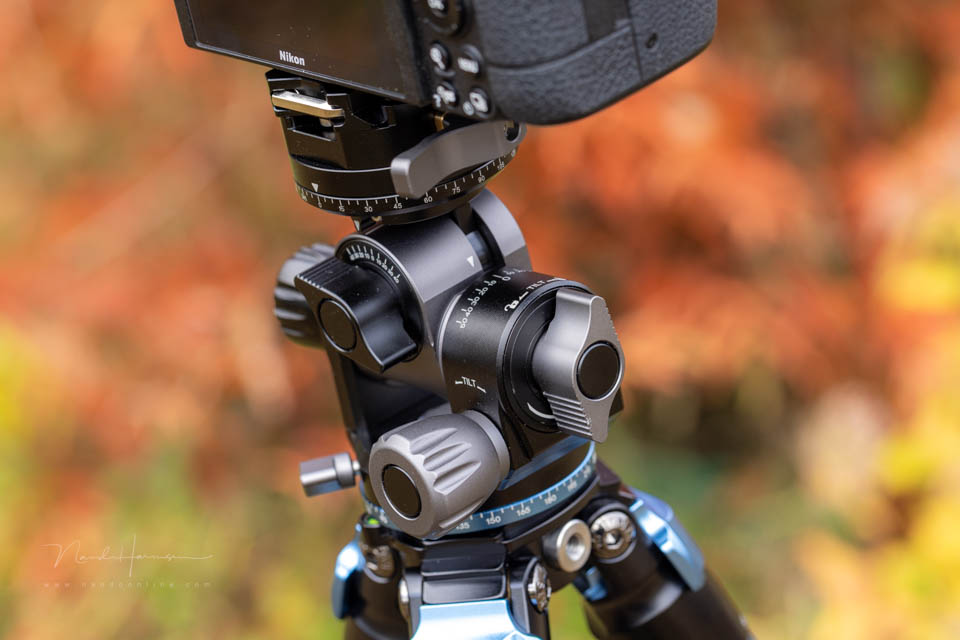
The load capacity of the head is so low that I would not trust a large and heavy lens to it. Only a small prime lens or a standard zoom lens is recommended.
In terms of stability, the head works well as long as the camera and lens are not too heavy or the balance is not off-centre. Allow for some play or flex in the connection between the head and camera mount.
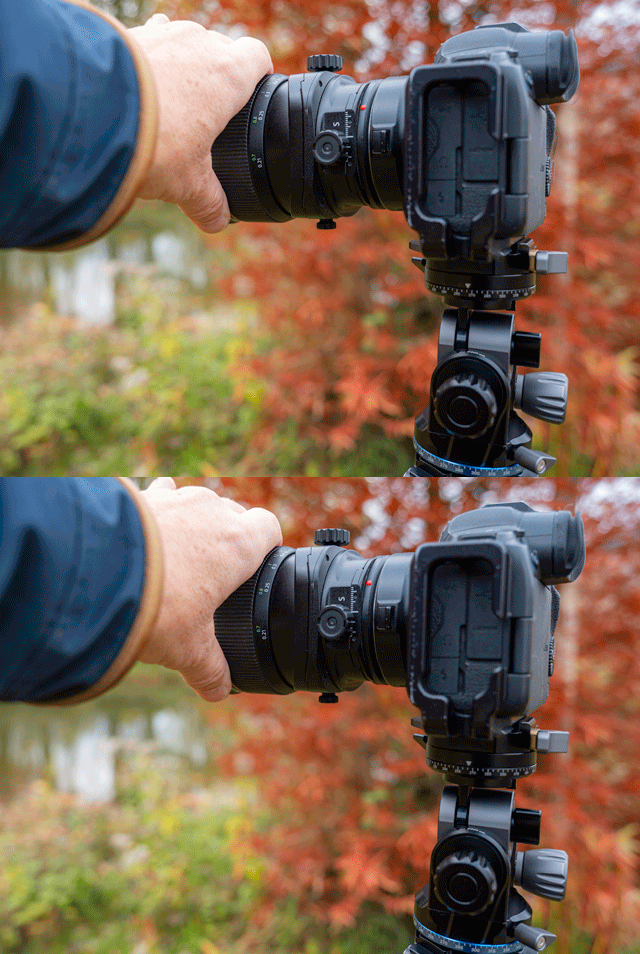
The play will cause few problems with lighter cameras and lenses. The heavier it gets, the more critical it becomes. Longer focal lengths will be affected more quickly and are therefore not recommended.
One point worth praising is the anti-rotation system in the camera plate. This prevents the age-old problem of camera plates rotating. It is a simple but effective solution.
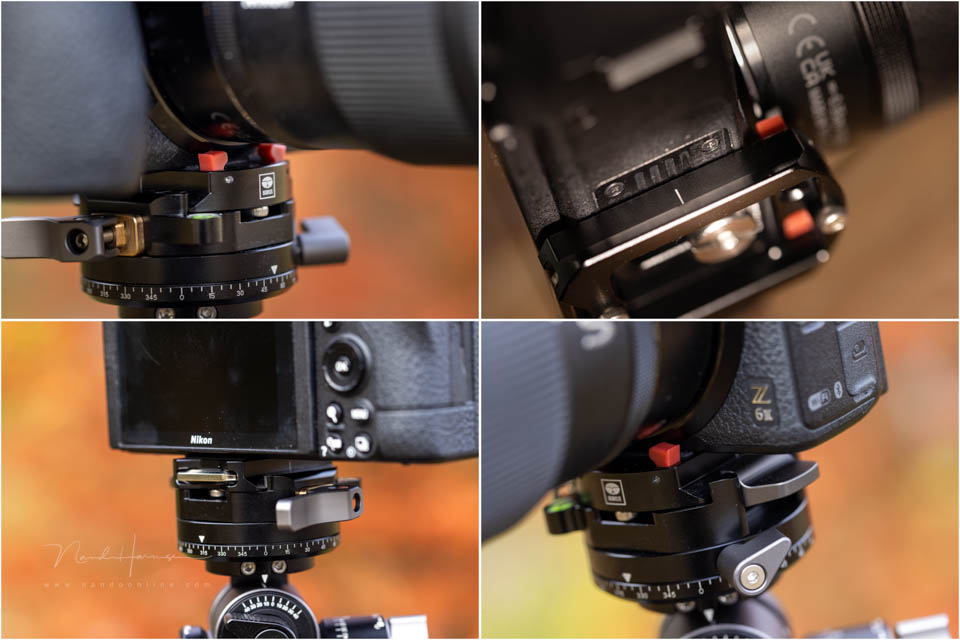
However, this means that the camera plate is mounted at a right angle to the camera body, making the indication of the 'centre of the plate' unusable. In addition, mounting it on the head is difficult because the clamps are beneath the camera.
Conclusion
The tripod is well made and has more than enough load capacity to safely support a camera with a lens. The clamps are not my favourite. I regularly almost got my fingers or skin caught between them.
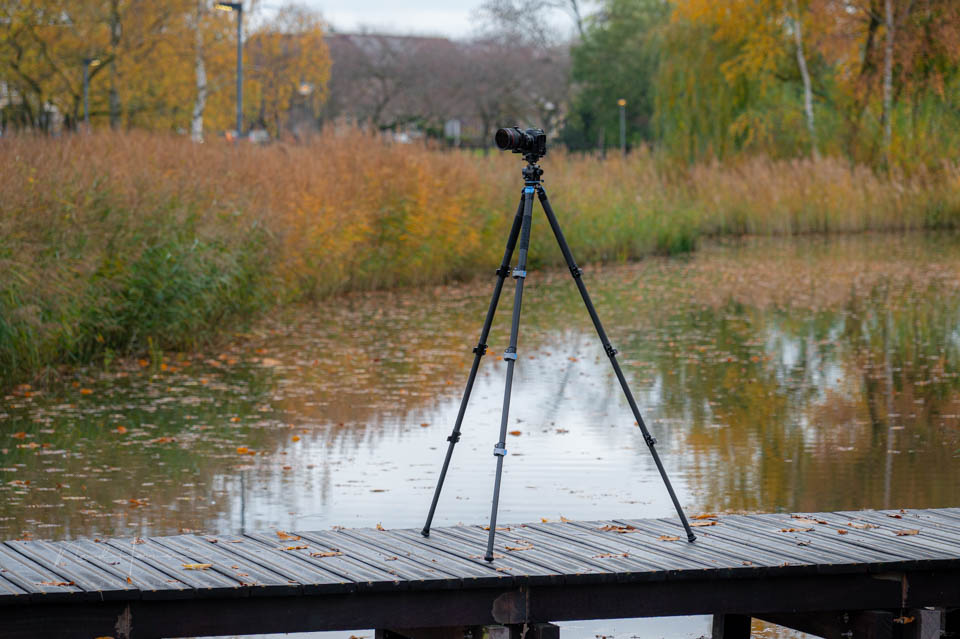
Clamps are not immediately a disadvantage of the tripod. It is a personal preference. However, cleaning can be difficult. There are many loose screws when it needs to be taken apart, if that is possible.
I have little else to say about the tripod. These are only minor points, partly due to personal preference. If you are a fan of leg clamps, I can certainly recommend the Sirui L324F. Just make sure you choose a suitable tripod head for it.
Pros of the Sirui LS 324L tripod
- Good-looking and compact design
- Lightweight
- Accessory connections via 3/8"-16 and 1/4"-20 connection points
- Spring-loaded 3/8"-16 socket for 1/4"-20 tripod head connection
- With 18 kilograms, a generous load capacity
- The lack of a centre column allows the legs to fold together compactly
- Tripod leg spread releases click into place semi-automatically
- The leg clamps can easily be tightened or loosened with a hex key.
- Spikes included
- Attractive price
Cons of the Sirui LS 324L tripod
- Clamps are large and easily catch on things
- Rubber rings for damping extension and retraction sit loose around the legs
- No silicone seal for the thread on the spikes
- When using the 85-degree spread position, the clamps touch the ground fairly quickly
- Clamps are sensitive to dirt, cleaning requires undoing many screws
- Bubble level is very small and cannot be used with a tripod head wider than 45mm
- Supplied bag is too small to carry the tripod with the tripod head attached
Now let's talk about the KS-G3 geared head. I am less enthusiastic about that. Although it looks attractive at first glance, it does have some disadvantages. The maximum load is one of the most important.
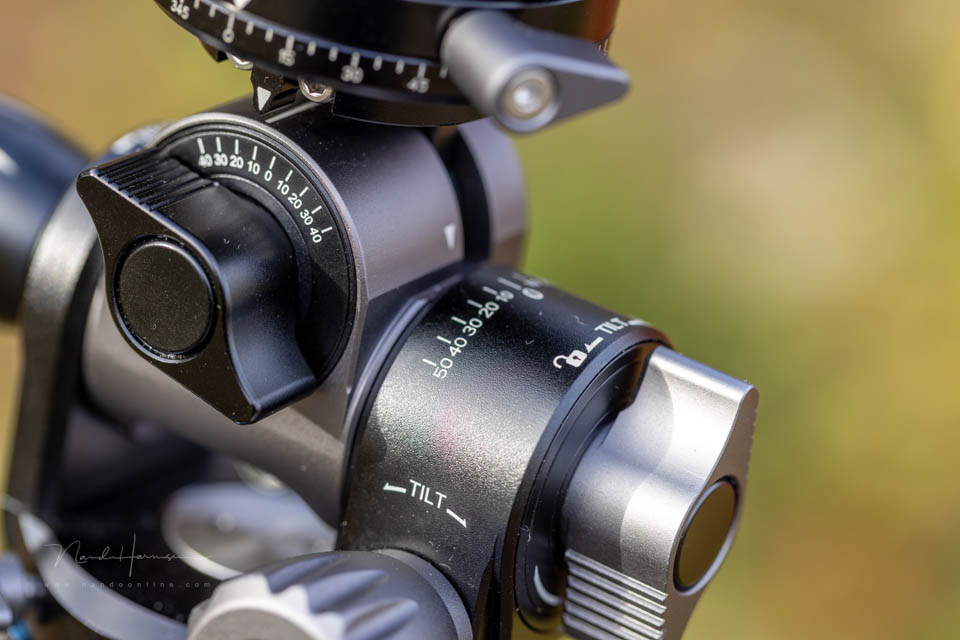
The maximum load of 2.5 kilograms is much less than what I would advise as a minimum. This makes it unsuitable for heavy cameras or use with a telephoto lens. In addition, the construction introduces play, so the camera is not rock solid. That is a shame.
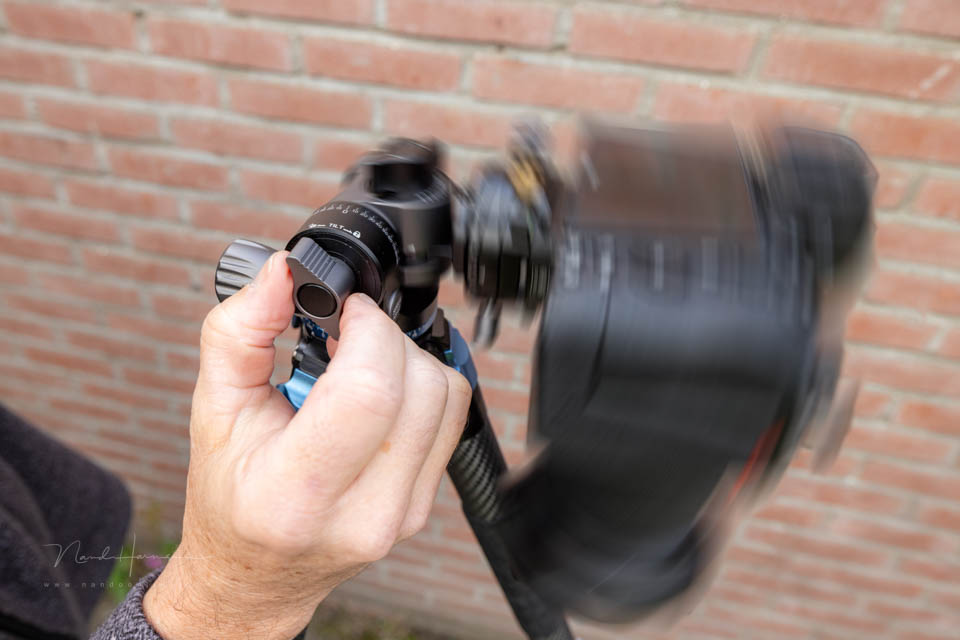
The other disadvantage is the gear release. One moment of inattention and you loosen it unintentionally. This makes the camera jerk unpleasantly to the side or forwards. You have to pay constant attention to prevent this.
The clamp for securing the camera must be adjusted with a hex key. This cannot be done on the fly, which is a shame. I do not find the clamp particularly pleasant to use. Fortunately, an extra action is required to actually release the camera, so you do not have to worry about it coming loose accidentally.
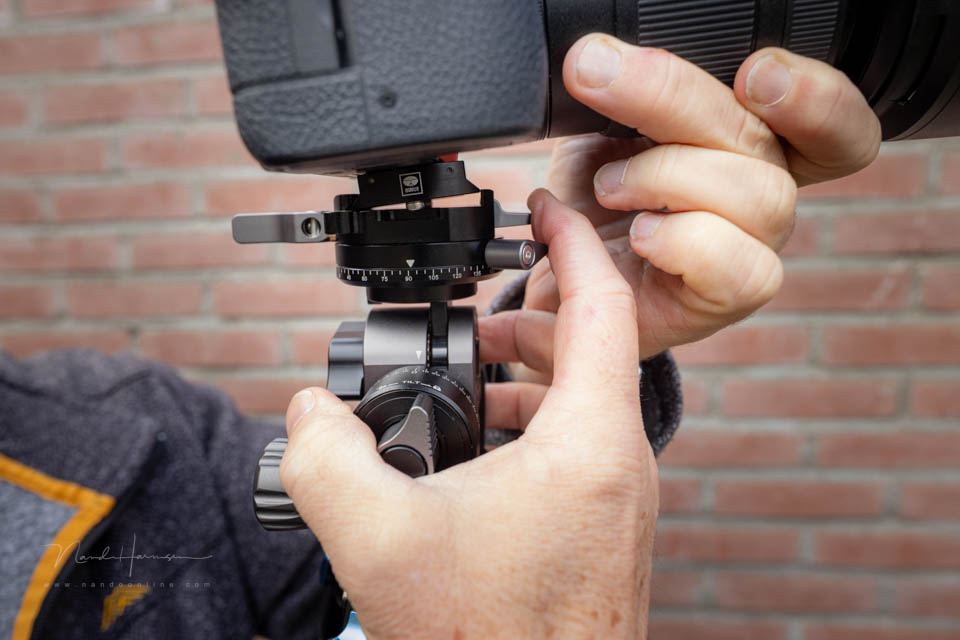
The KS-G3 geared head is clearly not made for large and heavy cameras or for use with a telephoto lens. It is suitable only for lightweight or small cameras. With this in mind, the price of 349 euros is on the steep side.
Pros of the Sirui KS-G3 geared head
- Small and lightweight
- Gears are self-locking
- Levers for disengaging the gears
- Panorama function in the camera mounting plate
- Bubble level for both horizontal and vertical camera use
- Camera plate supplied with a hex key
- Anti-rotation caps in the camera plate
- 3/8"-16 to 1/4"-20 adapter included
- Supplied in a neat case
Cons of the Sirui KS-G3 geared head
- Load capacity of 2.5 kilograms is very low
- Camera mount has too much play
- Not suitable for longer lenses or long focal lengths
- Panorama base is not geared
- Release knobs have no protection against accidental loosening
- Gear knobs offer little grip
- A hex key is needed to adjust the camera plate clamp
- The camera plate clamp can only be adjusted when it is closed
- Releasing the camera requires two actions: unlocking and releasing cannot be done in one go.
- Expensive
I would like to thank Cameranu for making both the tripod and tripod head available.
Dit artikel is voor het laatst bijgewerkt op 10 februari 2026.
De eerste publicatiedatum is zaterdag 15 november 2025, 15:51.
About the author
Nando Harmsen has been photographing for more than 40 years. He specialises in wedding photography and landscape photography. Nando also gives talks, workshops, masterclasses and photo trips, and regularly reviews new and interesting equipment.
You might also like
-
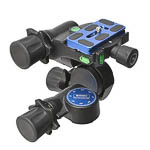 Review: Benro geared head
by Martin van Rooij
-
 Review: Sirui Bi-Colour LED CS100B lighting
by Anno Huidekoper
-
 Review: Sony A7R V mirrorless camera
by Nando Harmsen
-
 A tip for using telephoto lenses on a ball head
by Nando Harmsen
-
 Review: Canon EOS R7
by Nando Harmsen
-
 Review of the Canon EOS M50 mark II
by Nando Harmsen
0 comments
Be the first to share what you think!
Have your say
Please note: Articles older than a week can only be commented on by signed-in visitors.Would you still like to comment? sign in or create a free account.
Become a better photographer every week
A practical photography tip in your inbox every week.
39,079 photography enthusiasts already receive the tips! More about the weekly mail. Or keep up to date via  Facebook.

Elja Trum
Photofacts; everything to do with photography!
Would you like to take better photos and keep up with what is happening in photography? Photofacts publishes articles that teach you something about photography — from a product announcement to a practical shooting tip or a look at a website. Photofacts covers photography every day and is a hobby project of Elja Trum's that got out of hand. The articles are written by a team of volunteer authors. If you would enjoy writing one or more articles for Photofacts, do get in touch.More about PhotofactsPhotofacts is made possible in part by
