

Creating atmosphere in your photo
Thursday 17 August 2017, 12:21 by Elja Trum | 12,135 views | 3 commentsThis article was translated from Dutch with the help of AI. Read the original.
You can photograph an atmospheric situation when you come across it, but you can also deliberately create a particular atmosphere. That takes some effort, but it will give you better photos.
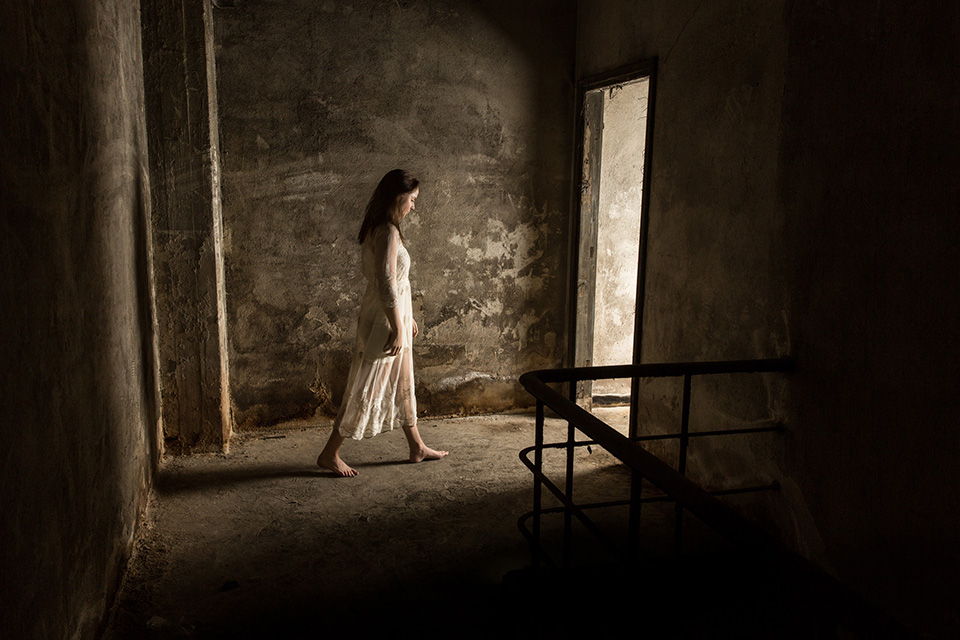
To create a particular atmosphere, you need to think through most of your shoot in advance and take the extra steps to give the photo something special.
Moodboard
It starts with creating a moodboard. I use Pinterest for this. On this site, you can easily place photos from several sources in a 'board'. I use Google Image Search, sites such as 500px and Pinterest itself to find photos that fit the image I have in mind.
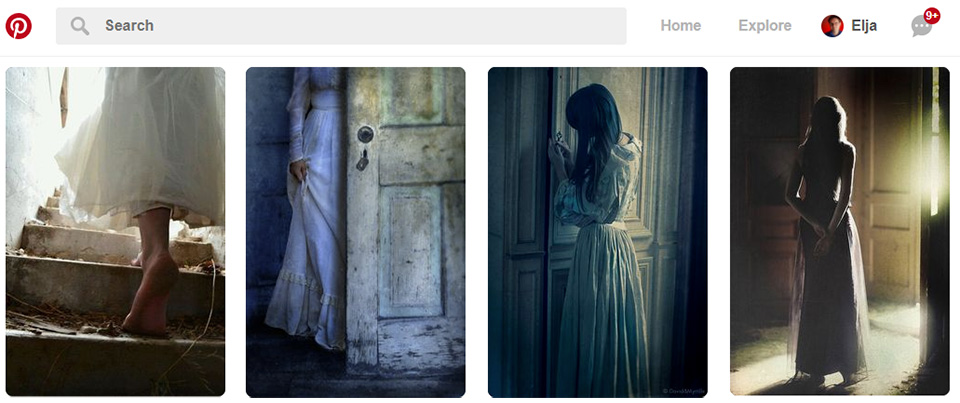
Of course, I also share the moodboard with the model beforehand. Pinterest also allows you to do this in such a way that your model can add photos to the moodboard too. This way, you both already have an idea of what the shoot is supposed to be about.
On the day of the shoot, I also print out the photos, so I can look at them on location and get an idea for a new pose or situation.
For the shoot I had last Monday, I was looking for a kind of horror/mystery atmosphere. A little dark and unsettling.
Model
These days, I find the most convenient way to find a model is to post a call on Facebook. If you are not looking for someone from your own circle of acquaintances, there are useful Facebook groups where models, photographers and make-up artists can find each other.
I had already photographed Danien, the model from this shoot, a few times before. She seemed like a good fit for this concept, so I contacted her to ask whether she fancied doing a shoot like this, and she did.
Styling
You will probably also see a particular clothing style in your moodboard. Clothing and accessories are of course important in a shoot, especially if you want to create a particular atmosphere.
One thing clearly appeared in every photo in my moodboard: a long white dress. Your model may happen to have exactly what you have in mind, but more often that is not the case. So I went looking for a suitable white dress myself.
I use the site United Wardrobe to find clothing. Anyone can sell their clothing and accessories on this site. It is a kind of Marktplaats, but for clothing.
I bought a dress here for 15 euros that matched my moodboard, long and (almost) white with a slightly vintage look. It often takes a few days for something to be sent, so make sure you choose something in good time.
Location
My moodboard also made it clear that I could use an urbex location. I often like using old and weathered locations in my photos. There are quite a few to be found in Belgium, but unfortunately the choice is a little more limited in the Netherlands.
At these kinds of locations, always pay attention to safety, both your own and your model's, and try to work with the owner's permission. This can prevent a lot of problems.
I often work at de Vasim, an old factory in Nijmegen that now houses a cultural venue. You can photograph here for a morning or afternoon in exchange for payment.
In this region, you could also look at the old Honig factory, for example. There are probably similar locations near you too.
Of course, the location also needs to fit your moodboard, so a different type of location may suit you better. For example, a castle, or a nature park, or a location in the middle of a busy city.
Light
Will you work with the existing light on location, or will you take your own lights with you to have more control? The light, and the direction of the light, in your photo is of course very important for the atmosphere.
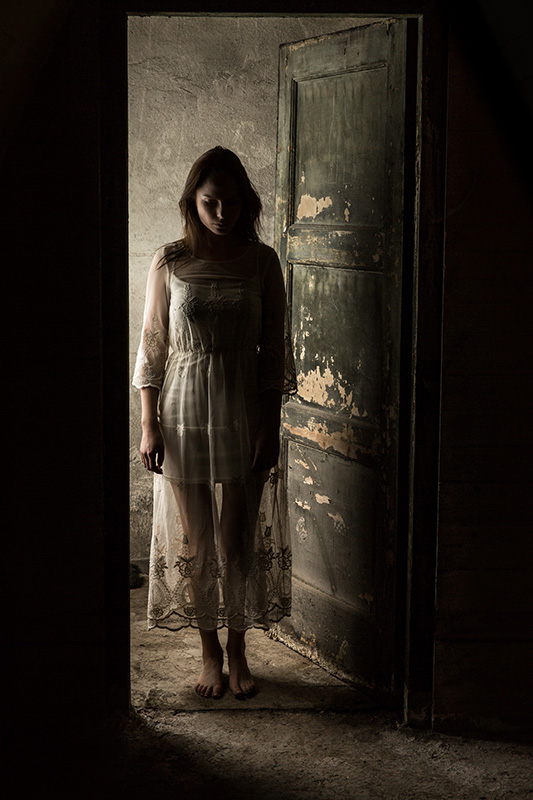
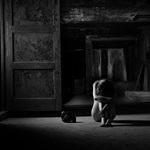
For my shoot, I used off-camera flashes. In the two photos earlier in this article, I used a single flash in a Westcott Apollo Orb softbox.
In both photos, the softbox is out of frame behind a door, and the light coming through the door creates the atmosphere in the photo. Because the light comes from the side, you prevent the image from becoming flat and keep the detail and texture clearly visible.
By using limited light in a dark environment and making sure it clearly comes from a particular direction, you get a nice interplay of light and shadow. The many dark areas of the photo create its dark atmosphere.
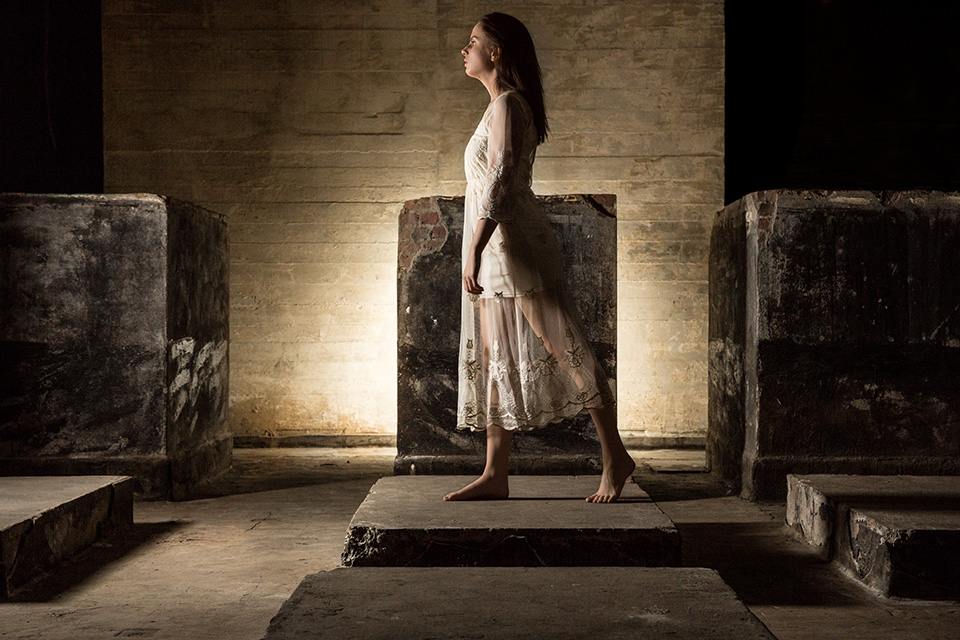
In the photo above, I used two flashes. One from the side to light the model and the foreground, and one behind the block to light the wall, making the blocks stand out nicely from the background.
Post-processing
You want to take the right photo on location, but a little post-processing can give a photo much more impact and turn a good photo into a wow photo.
I only edited the photos in this article using Lightroom. By making the model a little lighter, more attention is drawn to her. I also increased some of the shadows to emphasise the atmosphere.
Using the clarity slider, I emphasised the great textures of the walls and ground. This makes the whole photo stand out much more.
In the video below, I show you the post-processing of one of the photos.
About the author
Elja Trum is the founder of Photofacts and online photography course website Photofacts Academy. He has been writing about photography since 2006. Elja is also the author of (Dutch) books on composition, black-and-white photography, flash photography and portrait photography.
You might also like
-
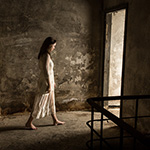 Portrait tip: Use an urbex location
by Elja Trum
-
 My First Urbex Experience
by Kim Schröder
-
 Atmospheric images without leaving the house
by Laura van der Burgt
-
 Urbex exploring: Chateau D'or castle
by Kim Schröder
-
 10 tips for atmospheric portrait photography
by Laura van der Burgt
3 comments
-

 danny mycek wrote on Friday 18 August 2017 at 16:16
| reply
another step further, thanks for this instructive video
Translated from Dutch. -
 Stan wrote on Tuesday 22 August 2017 at 10:16 | reply
It is sometimes very difficult to convey atmosphere, I like photographing snowboarding and hockey. At SnowWorld (indoors) I often have to deal with terrible backlighting, with external flashes it is manageable but without one it is sometimes a disaster do you perhaps have any tips?
Translated from Dutch. -
 Lauran van Schilt wrote on Wednesday 23 August 2017 at 09:50 | reply
Especially nice article
Translated from Dutch.
Have your say
Please note: Articles older than a week can only be commented on by signed-in visitors.Would you still like to comment? sign in or create a free account.
Become a better photographer every week
A practical photography tip in your inbox every week.
38,836 photography enthusiasts already receive the tips! More about the weekly mail. Or keep up to date via  Facebook.

Elja Trum
Photofacts; everything to do with photography!
Would you like to take better photos and keep up with what is happening in photography? Photofacts publishes articles that teach you something about photography — from a product announcement to a practical shooting tip or a look at a website. Photofacts covers photography every day and is a hobby project of Elja Trum's that got out of hand. The articles are written by a team of volunteer authors. If you would enjoy writing one or more articles for Photofacts, do get in touch.More about PhotofactsPhotofacts is made possible in part by
