

Learn the Rule of Thirds So You Don't Have to Use It
Wednesday 4 May 2022, 22:44 by Nando Harmsen | 6,571 views | 3 commentsThis article was translated from Dutch with the help of AI. Read the original.
The rule of thirds is something people approach with mixed feelings. Some curse the rule, while others swear by it. For some, it is the perfect tool. Others make an effort not to follow it.
The first thing you come across when you start exploring composition is the rule of thirds. Dividing your photo into nine equal sections is sometimes seen as the holy grail.
You must place the horizon at 1/3 or 2/3. You must keep your subject at the intersection of the lines. If you don't, it's wrong. Or so many people would have you believe.
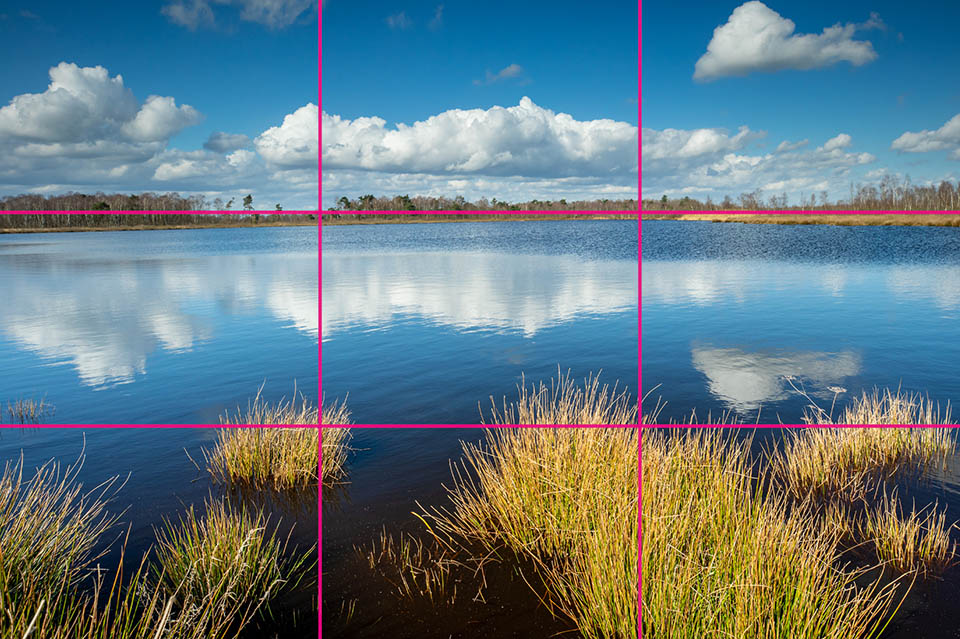
Composition is not the rule of thirds
Composition basically has nothing to do with the rule of thirds. Look up composition in Van Dale or Wikipedia, and you'll read that it is all about the distribution of the frame. A way to create order out of chaos.
That's what it is about, the distribution of the frame. How do you place the elements in your image so that the whole is clear and, above all, pleasant to look at? The way you distribute them can create a certain feeling. Tension or balance. Calm or a certain expectation.
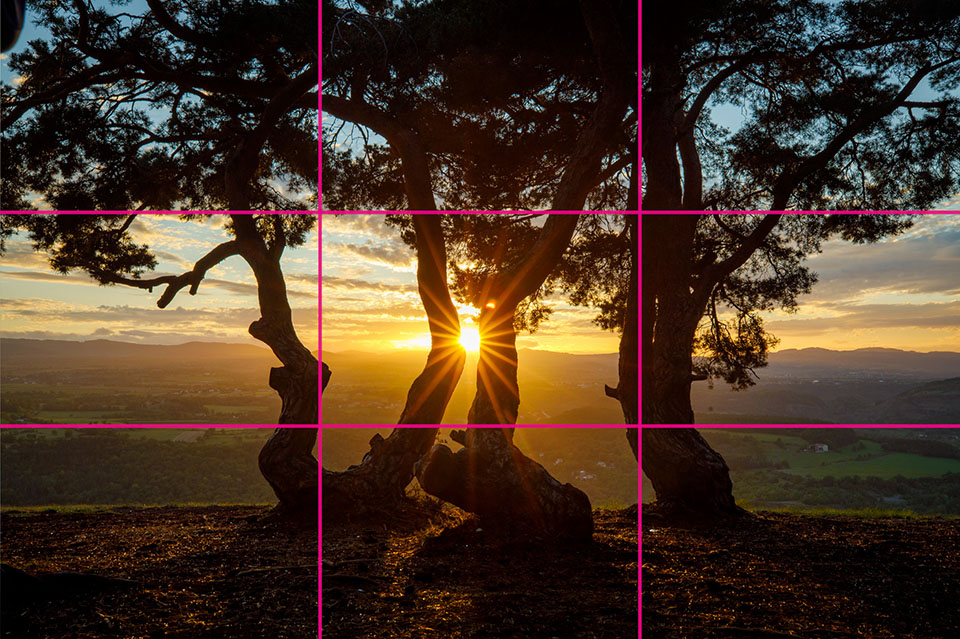
Misinterpreting the rule of thirds
I think the rule of thirds is often used completely incorrectly. Many people are so focused on placing a horizon or a tree on one of the 1/3 or 2/3 lines that they stop looking at everything else. If the photo then disappoints, it isn't clear why. It follows the rule, after all.
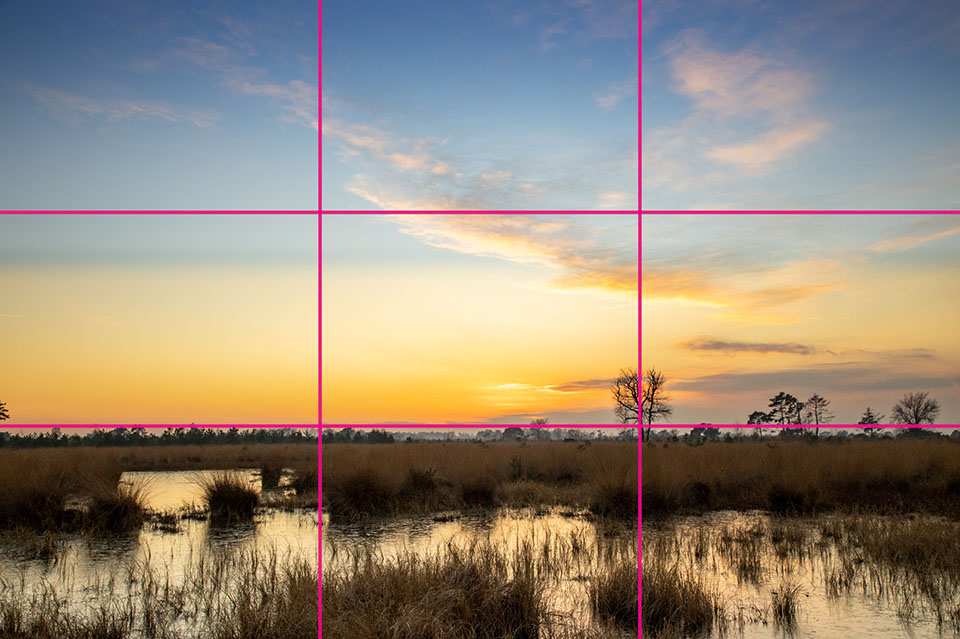
That obsession with using the 1/3 lines actually creates the aversion to this rule. It feels very restrictive and limits your creativity. That's probably because of the self-imposed obligation to place a subject on those lines. A real composition gets lost in the process.
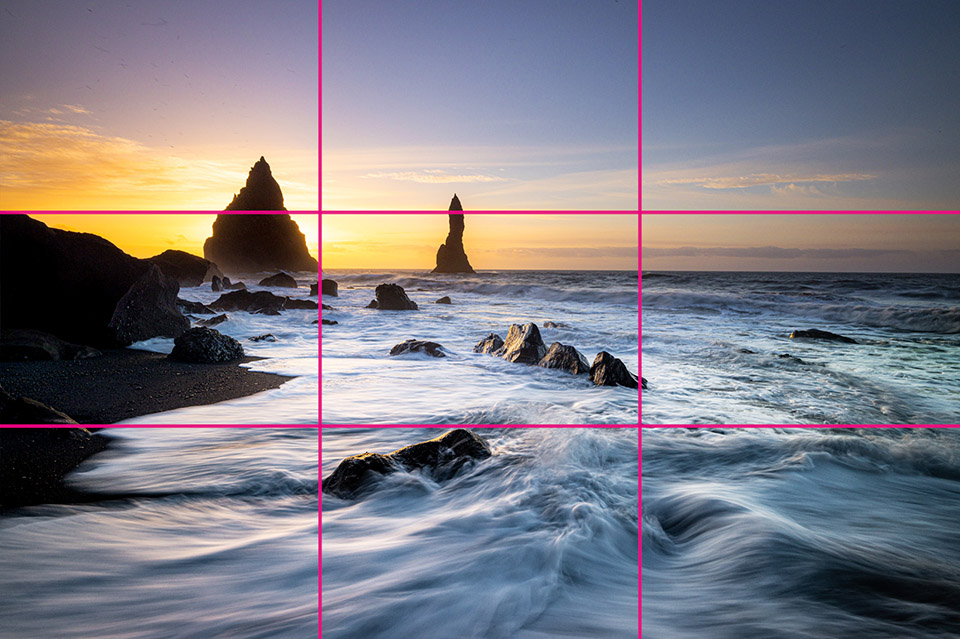
You should see the rule of thirds for what it is. A division of the frame into 9 equal parts that can help you place objects in your image. They don't necessarily have to be right on the 1/3 lines. You use it to create a balanced distribution.
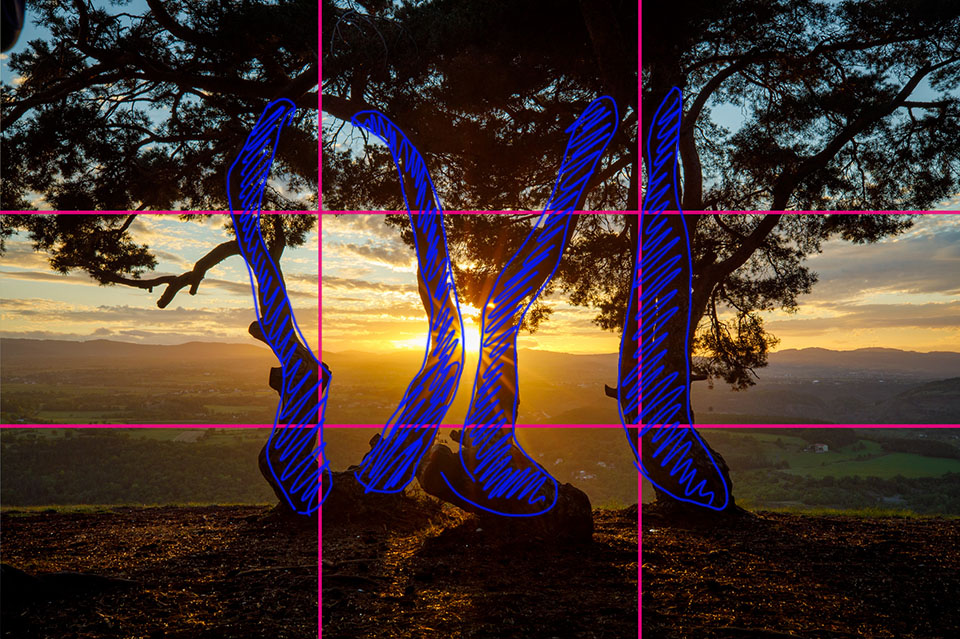
Points of interest in a photo
The intersections of the lines in the rule of thirds are interesting spots in a photo. They are often places where the eye is drawn in a pleasant way. You can therefore use them well in your composition.
That means you can use them when placing objects in your image. Do bear in mind that, in many cases, your eye needs to be led there. Simply placing an object at an intersection is not enough.
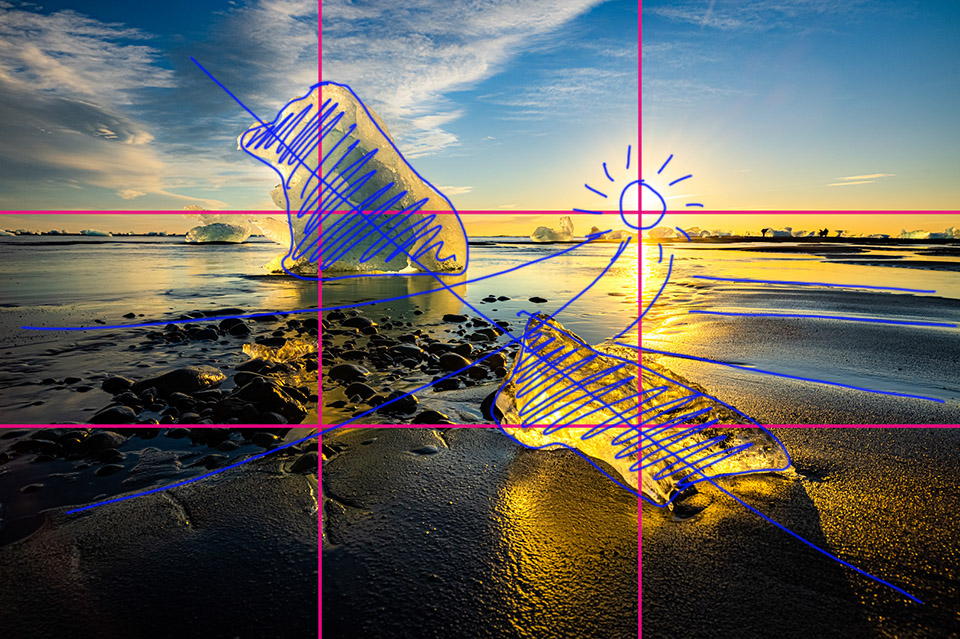
In other words, use lines such as diagonals, curves and other ways to point the viewer's eye in that direction through the photo. The intersections are essentially the end points you reach after following the lines.
The rule of thirds and creativity
I regularly read that following the rule of thirds kills creativity. That's of course nonsense. Creativity has nothing to do with a few guide lines in your photo. In fact, those guide lines can help you do something creative.
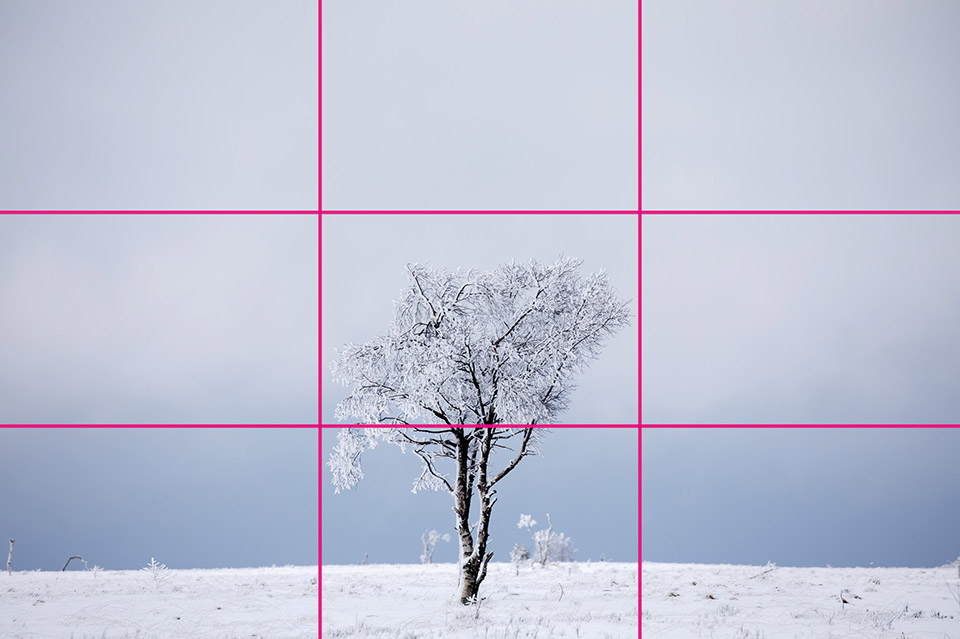
Your images don't automatically become more creative when you reject the rule of thirds. You actually do the opposite, rigidly avoiding 1/3 lines or points of interest. That has nothing to do with creativity.
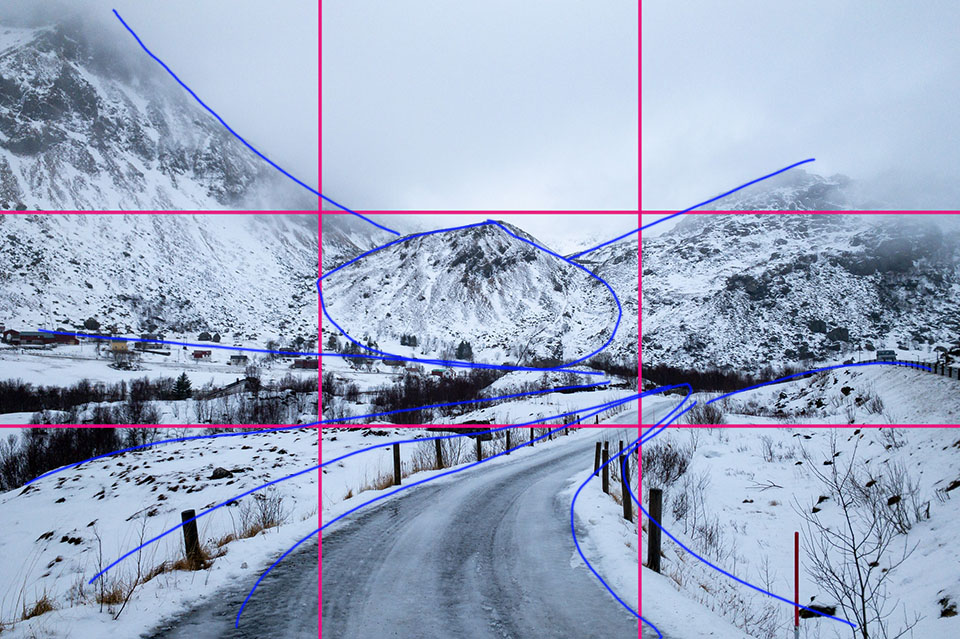
The rule of thirds only works against creativity when you stare at it blindly. A horizon perfectly on the 1/3 line, a tree perfectly at the intersection of the other 1/3 line. By looking only at that, you limit yourself when building an interesting image.
Instead, look at what you want in your image and how you want it. Look at what other elements could be in your photo to create balance in your composition. A counterweight, a natural line of sight or leading lines that catch your eye in the photo.
What about the other rules?
In my view, the rule of thirds is not really a composition rule. You could consider the golden ratio, golden spiral, golden triangle or triangle composition to be composition rules. Or guidelines...
They are all variations on the same principle, and in many cases you can simply swap one for another. The only difficulty is visualising them in the field. The rule of thirds is easy to visualise. You can often even display it on your camera.
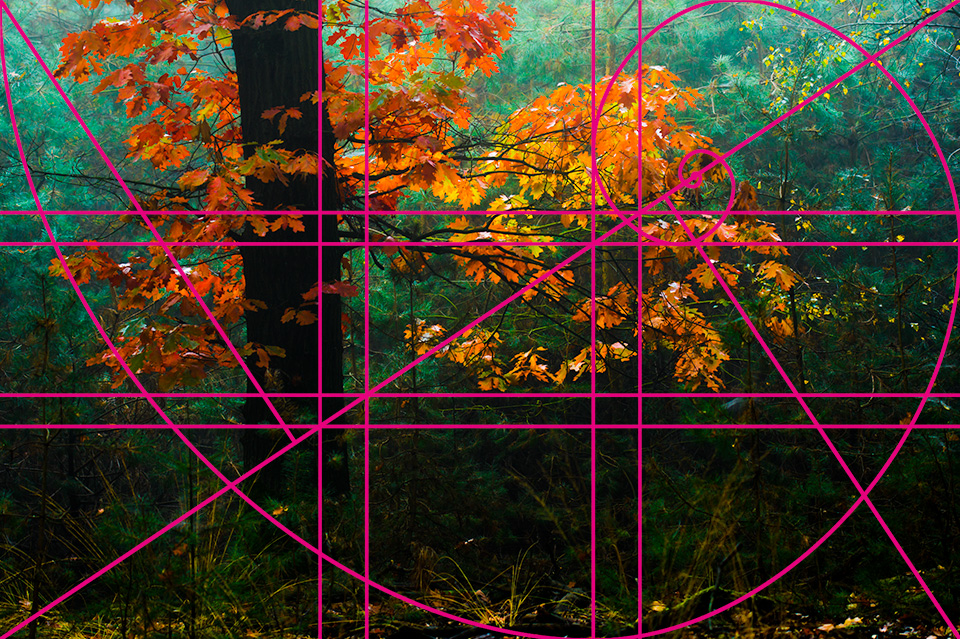
All composition rules basically arose from people's urge to quantify everything. We want to capture something intangible in mathematical rules, which eventually led to all those composition rules.
But photography is not mathematics. It is an art form, just like painting. So don't pay too much attention to all those rules, and make sure the elements in your image are distributed pleasantly. Also use diagonals and curves to lead the eye.
The guide lines known as the rule of thirds are perfect for this. They help you build up the image. If your photo is then a pleasure to look at, your photo is successful.
About the author
Nando Harmsen has been photographing for more than 40 years. He specialises in wedding photography and landscape photography. Nando also gives talks, workshops, masterclasses and photo trips, and regularly reviews new and interesting equipment.
You might also like
-
 The Rule of Thirds Rule of Thumb
by Michelle Peeters
-
 Photography rules are not meant to be followed strictly
by Nando Harmsen
-
 Rules! Good to learn, good to let go
by Erik van Rosmalen
-
The Golden Ratio rule of thumb
by Michelle Peeters
-
Rule of thumb: Central composition
by Michelle Peeters
-
 Use the crop tool to learn about composition
by Nando Harmsen
3 comments
-

 martinphili wrote on Thursday 5 May 2022 at 07:24
| reply
martinphili wrote on Thursday 5 May 2022 at 07:24
| reply
I completely agree with you. Far too much emphasis has been placed on how it should be done according to the rules. And there is no should, there is only what you like.
Translated from Dutch.
Composition is of course very important in a photo, as you already write, it creates order and calm in a photo, sometimes it even helps tell the little story of the photo.
I have to honestly say that while photographing I don't pay any attention at all to the theory behind the arrangement of planes, through my viewfinder I intuitively look for a picture that appeals to me (is that why it's called that?). In most cases, that gut feeling works very well.
The distribution of colors in a photo is at least as important in that respect. -
 Donald Willemsen
wrote on Saturday 7 May 2022 at 00:44
| reply
Donald Willemsen
wrote on Saturday 7 May 2022 at 00:44
| reply
I think you should start from the main subject that you want to put in the photo. Where do you place the main subject in the frame. That basically determines the composition.
Translated from Dutch.
Another thing that strikes me in compositions is that important elements in the image are often on the left side. Does that have to do with how we have learned to look? We often start looking on the left side and then look from right to left. We do that with writing too. We write from left to right. When we read, we do that from left to right as well. I catch myself alsooften looking at a photo from left to right. Is that because it has been taught to us that way? Is that therefore also decisive for putting together a composition? Whoever knows, may say so. -
 Math van de Laar wrote on Tuesday 10 May 2022 at 18:54 | reply
When I took the digital photography course, one of the first things that was explained was the rule of thirds and to deviate from it as often as possible. Work with feeling, and if you can explain why you photographed something in a certain way, the shot is always good.
Translated from Dutch.
Have your say
Please note: Articles older than a week can only be commented on by signed-in visitors.Would you still like to comment? sign in or create a free account.
Become a better photographer every week
A practical photography tip in your inbox every week.
39,027 photography enthusiasts already receive the tips! More about the weekly mail. Or keep up to date via  Facebook.

Elja Trum
Photofacts; everything to do with photography!
Would you like to take better photos and keep up with what is happening in photography? Photofacts publishes articles that teach you something about photography — from a product announcement to a practical shooting tip or a look at a website. Photofacts covers photography every day and is a hobby project of Elja Trum's that got out of hand. The articles are written by a team of volunteer authors. If you would enjoy writing one or more articles for Photofacts, do get in touch.More about PhotofactsPhotofacts is made possible in part by
