
Pinhole, or Slow Photography
Monday 23 August 2021, 22:33 by Laura van der Burgt | 12,854 views | 7 commentsThis article was translated from Dutch with the help of AI. Read the original.
The launch of a new Lensbaby Obscura prompted me to dive into my collection of lensbabies again and dig out the original 50mm pinhole from 2010.
A new lease of life for an old lens and a slower, purer way of taking photographs.
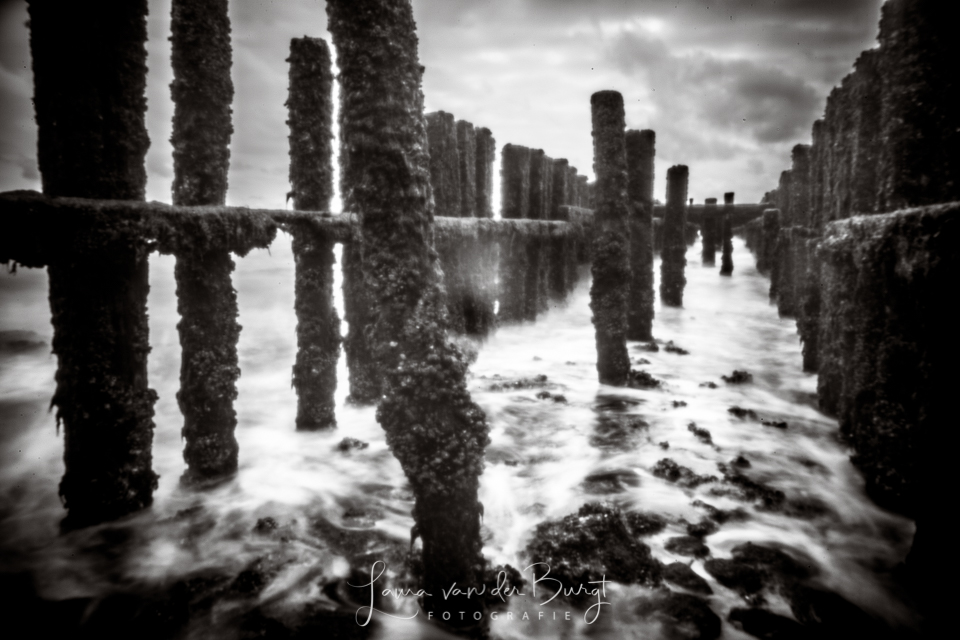
Pinhole photography evokes a nostalgic feeling of old cameras and speckled black and white images. In fact, it is the most basic and simplest way of taking photographs.
It is also the cheapest, because in principle you do not need a lens. A digital camera body, spare body cap and a 'pinprick' are actually all you need.
If you fancy being a little creative, and saving money, I can recommend making one yourself. You can do this very easily by using your camera without a lens.
In this article about pinhole photography on Photofacts, you will find a link to a DIY step-by-step guide. It is important to make the whole thing dustproof. You will find more interesting links at the bottom of this article.
I spent a Sunday afternoon making one from a spare body cap and aluminium foil with a minuscule pinprick in it.
Give it a try. It is simply fun to experiment with surreal images and discover what does and does not work. For example, make two holes for a double image. You can easily replace the aluminium foil.
On a full-frame camera, you create a wide-angle image with infinite depth of field. Do not expect a razor-sharp image, but the smaller the hole, the more recognisable and sharper the subject. The closer the hole is to the sensor, the wider the angle of view.
Because there is no focusing of light, as happens in our eyes or with a camera lens, but rather scattering, the image remains a little blurry. But that is precisely the charm of a pinhole. An unmanipulated and pure image.
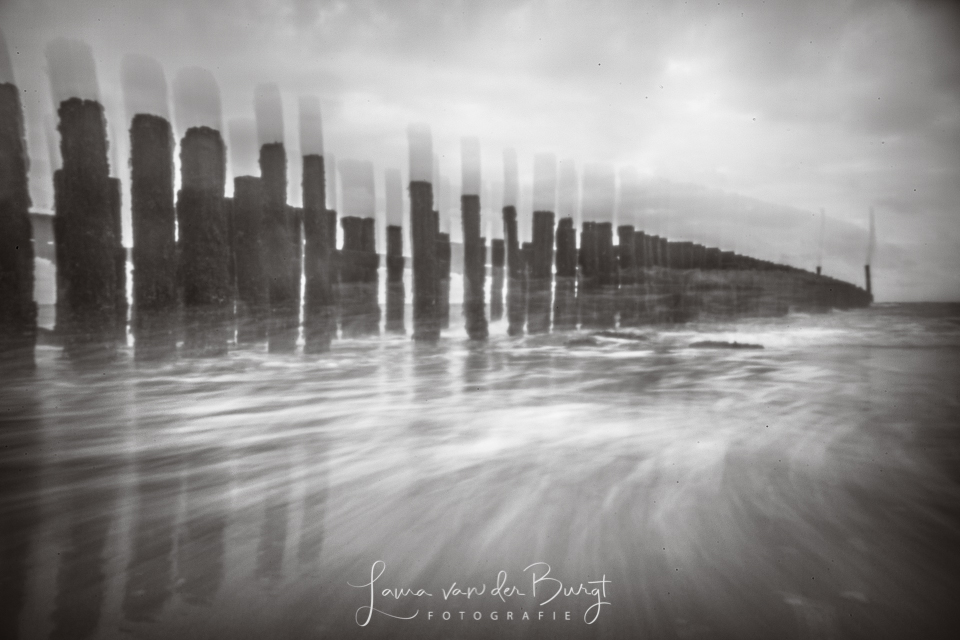
I took my new pinhole to the beach at West-Kapelle and photographed there both with and without a tripod. Shooting handheld allows you to experiment with movement. Something I personally found great fun to do.
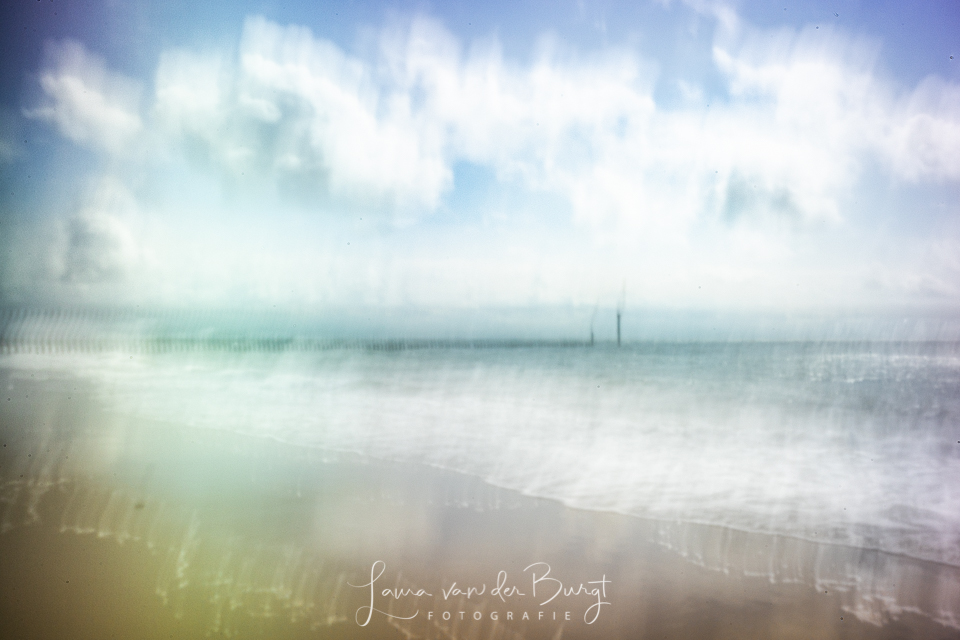
Incidentally, I noticed a considerable magenta colour cast in many of my photographs. You can reduce this in post-processing. When you convert the image to black and white, it disappears.
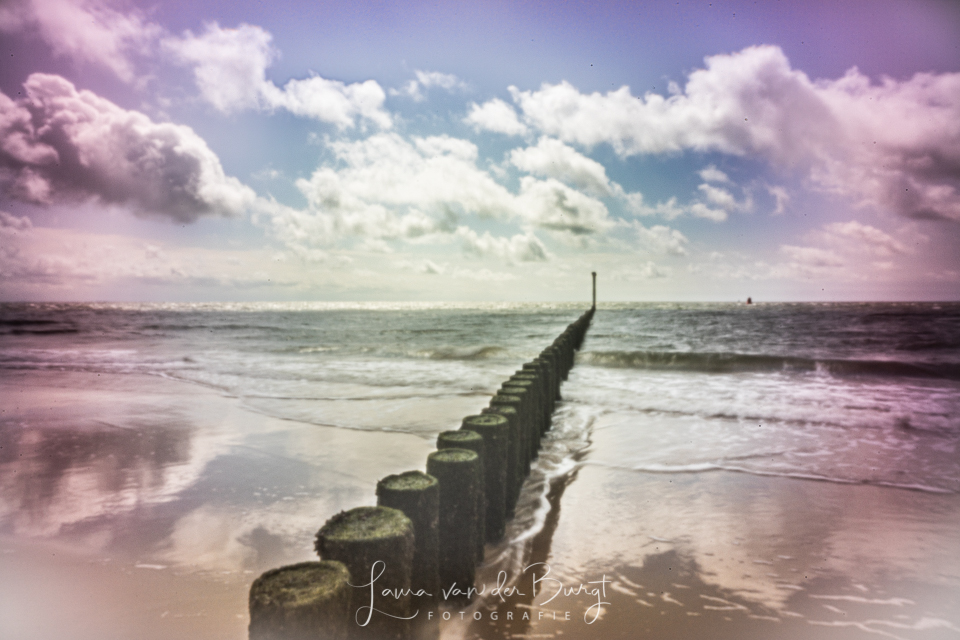
What works well and what works less well when photographing with a pinhole?
It is important to remember that everything in your image is equally "sharp" from front to back, as is the case when you use a very small aperture, with a large number. For comparison, my 50mm pinhole has an aperture of F/177.
You will also have vignetting because the light has to travel a greater distance to the corners than to the centre of the image. I see this as an advantage, because all the attention goes to the subject.
With this in mind, it is best to look for something with plenty of contrast in your image. For example, photograph on a very sunny day, with hard light. Or look for subjects that contrast with each other or with the background. Converting to black and white can also be very interesting.
+ Situations with plenty of contrast.
+ Black and white photography.
+ Architecture
+ Landscapes, sea
+ ICM, deliberately moving your camera
+ Self-portraits and trying to add dynamism through movement.
+ Using flash
The shutter speed is long, longer than with standard photography. On a sunny day, the time you need for a photograph is many times shorter than on a cloudy or dark day. But it is at least several seconds, up to 30 seconds or even longer. So a tripod with a cable release is recommended if you do not want a blurred image.
If you are less patient, you can increase the ISO on your digital camera and considerably shorten the shutter speed. Feel free to use 1600 or higher. You can play around with this depending on the amount of available light.
The little bit of noise this gives you suits pinhole photography, and otherwise you can reduce it afterwards using software.
A matter of trying things out.
And oh yes, if you see lots of spots in the image, your sensor probably needs cleaning!
More inspiration
In my search for pinhole photography, I came across some surprising and intriguing work by these artists:
Pinhole.nl by Bettany de Forest. She builds dioramas, 3D miniature worlds, which she photographs with a pinhole. You can see how she does this in a very entertaining video.
Do have a look under the Diorama Photography heading for the most bizarrely beautiful, surreal creations!
Arianejamesfotografie.nl by Ariane James
Inspiring examples of pinhole cameras and similar photographs, as well as technical details.
Pinhole photographs by Katja Sorbino
Among other things, pinhole selfies in a rugged landscape.
Pinhole introduction by Rob Slooten.
Video of his exhibition at the Vishal in Haarlem, featuring 100 assembled pinhole images that together form a new landscape. One project involved photographing for about a year.
According to van Slooten, pinhole photography is '...a contemplative form of photography. Exposure times are long and the light entering the camera often gives the reality being photographed a mysterious glow. Taking a pinhole photograph is much more than pressing a button, it is an event...'
Taking photographs with a digital pinhole camera by Fotogroep Oisterwijk, with instructions, tips and links.
About the author
Natuurfotografie is voor Laura een samensmelting van het ongelooflijk genieten van in de natuur zijn en haar passie voor fotografie. Het fotograferen met een minimale scherptediepte is favoriet en ook trekt ze er vaak met de lensbaby op uit.
You might also like
-
 Review: Holga HPL-C Pinhole Lens
by Elja Trum
-
 Which is better? DIY or ready-made?
by Nando Harmsen
-
 Taking creative portrait photos
by Elja Trum
-
 Dreamy, creative nature photography with a Lensbaby
by Laura van der Burgt
-
 Creative photography with a Lensbaby
by Laura van der Burgt

7 comments
-
 Karijn wrote on Tuesday 24 August 2021 at 08:03 | reply
Pinhole is definitely a challenge again. Is the color cast caused by using aluminum foil in the homemade pinhole?
Translated from Dutch. -

 Laura van der Burgt
wrote on Tuesday 24 August 2021 at 08:50
| reply
Laura van der Burgt
wrote on Tuesday 24 August 2021 at 08:50
| reply
Hi Karijn, I now have the Lensbaby Obscura on loan and here I see the same color cast.
Translated from Dutch. -
 Lauran wrote on Tuesday 24 August 2021 at 11:50 | reply
Another fun thing is to work with plain Vaseline on a neutral filter.
Translated from Dutch. -
 Jolanda Bosselaar wrote on Tuesday 24 August 2021 at 12:19 | reply
Cool photos Laura from our lovely photo day at the beach 😍
Translated from Dutch. -
guest wrote on Tuesday 24 August 2021 at 12:45 | reply
Hi , nice article. In the article you can click through to the Lensbaby Obscura. It says there that it is not yet available in the Netherlands. But it is already for sale. I already have it. And I absolutely love it. It takes some getting used to and experimenting But then you do get beautiful photos.
Translated from Dutch. -
Mac wrote on Wednesday 25 August 2021 at 07:26 | reply
I have the pinhole lenses from thingyfy myself, really fun to play with (they can be bought at camera.nu nowadays). Even one that can zoom.
Translated from Dutch.
only it doesn't matter how clean your sensor is, after pinhole photography it turns out that your sensor isn't clean after all, every time.
https://thingyfy.com/ -
Laura van der Burgt
wrote on Wednesday 25 August 2021 at 12:09
| reply
@gast, @Mac
Translated from Dutch.
I'm very curious about the results with your pinhole lenses and thanks for the link about Thingyfy. Of course, a lens is easily bought, but I still maintain that it's precisely so much fun and educational to make one yourself and experiment with it .
.
Have your say
Please note: Articles older than a week can only be commented on by signed-in visitors.Would you still like to comment? sign in or create a free account.
Become a better photographer every week
A practical photography tip in your inbox every week.
39,079 photography enthusiasts already receive the tips! More about the weekly mail. Or keep up to date via  Facebook.

Elja Trum
Photofacts; everything to do with photography!
Would you like to take better photos and keep up with what is happening in photography? Photofacts publishes articles that teach you something about photography — from a product announcement to a practical shooting tip or a look at a website. Photofacts covers photography every day and is a hobby project of Elja Trum's that got out of hand. The articles are written by a team of volunteer authors. If you would enjoy writing one or more articles for Photofacts, do get in touch.More about PhotofactsPhotofacts is made possible in part by
