

10 tips for getting the most out of a tripod
Monday 7 September 2020, 20:02 by Nando Harmsen | 11,772 views | 23 commentsThis article was translated from Dutch with the help of AI. Read the original.
Some people curse a tripod because it is so large, heavy and awkward, while others swear by it. Setting it up can be a nightmare if you do not do it properly. Failing to pay attention when setting it up can also lead to unwanted situations.
I often see photographers use a tripod in such a way that it is a guarantee of a failed photo, and in the worst case can lead to accidents. Nobody wants to see their expensive equipment fall and break because a tripod was not set up properly.
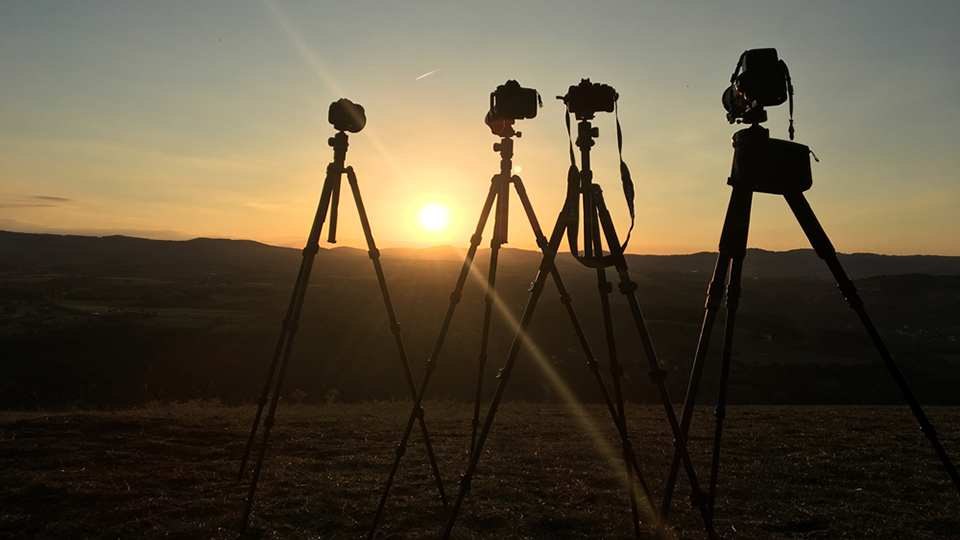
I have 10 tips for you that can help you use a tripod correctly. It is not difficult, it just takes a little discipline to stick to them. It prevents problems and makes using a tripod a much more pleasant experience.
1. Spread the tripod legs out as far as they will go
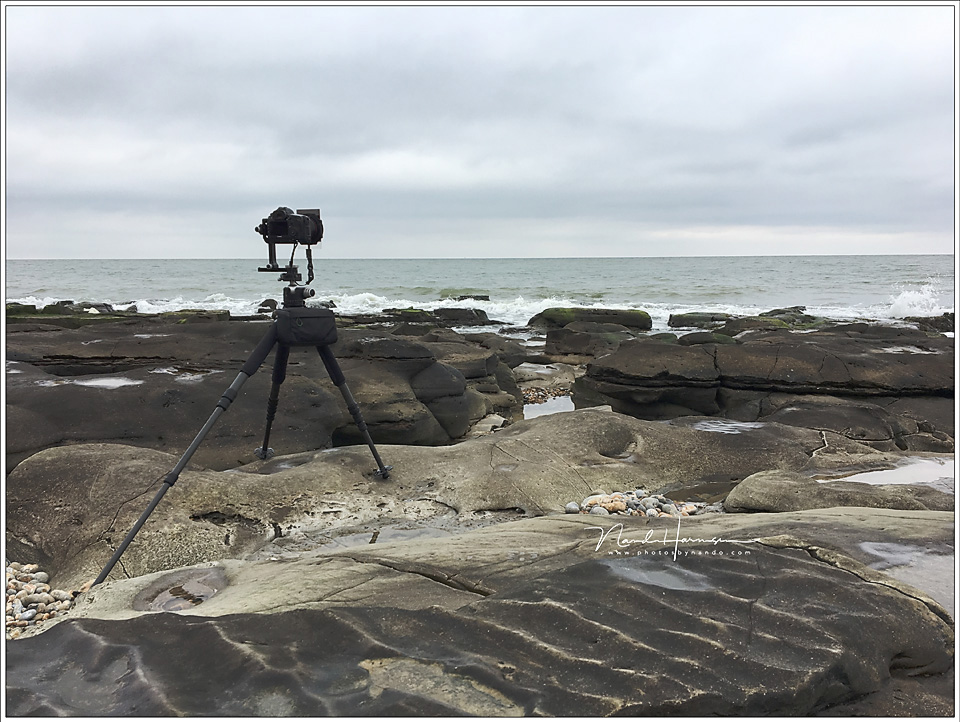
When you spread the tripod legs, do so as far as they will go. Do not stop halfway. If you do not spread the tripod legs far enough, they will not be far enough apart, making the tripod unstable. With a wider spread, the tripod can also sink further under the weight of your camera.
2. Make sure the tripod head is as level as possible
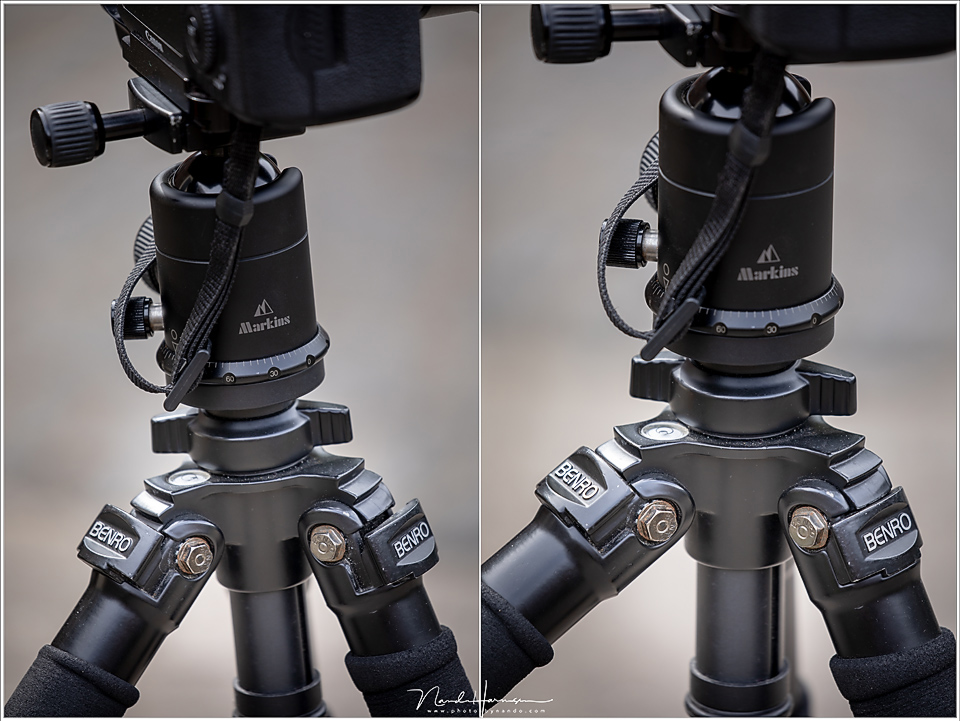
Balance is important. So make sure the tripod head is as level as possible. This distributes the weight perfectly across the three legs. Use the different angles at which the legs can be set, and extend the legs as far as necessary to get the head as horizontal as possible.
3. Keep your camera and lens balanced
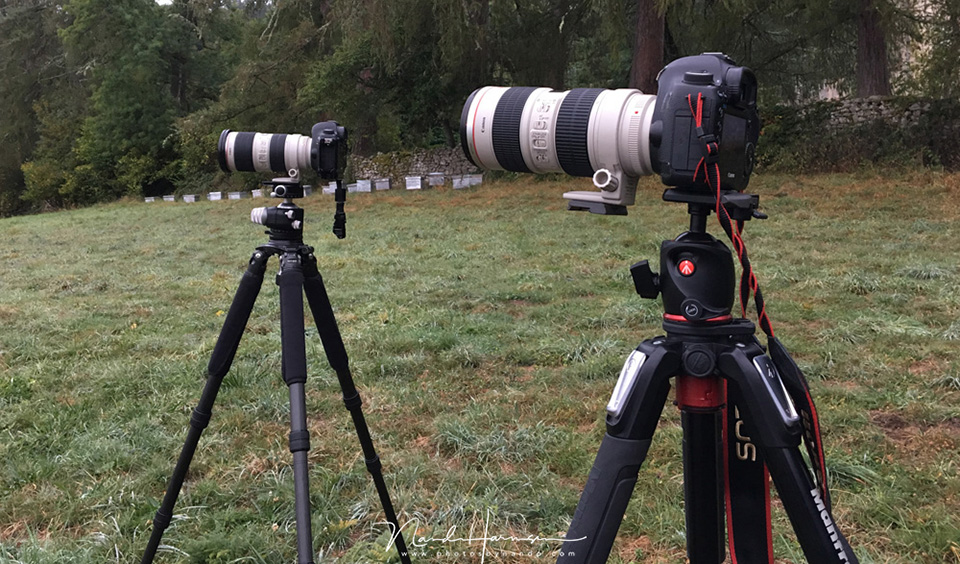
The larger your lens, the further the weight extends from the centre of your tripod. So always use a tripod collar if your lens has one. This gives you the best balance and prevents your camera from sinking down. If the weight extends far enough from the centre of your tripod, a heavy lens can pull the tripod over, especially if you do not take point 2 in this list into account.
4. Be careful when spreading your tripod legs extra wide
A wide spread of the tripod legs makes the tripod less likely to fall over. You can also level the tripod on uneven ground (point 2 again). But do not use it with the legs extended as far as possible. Keep them as short as possible.
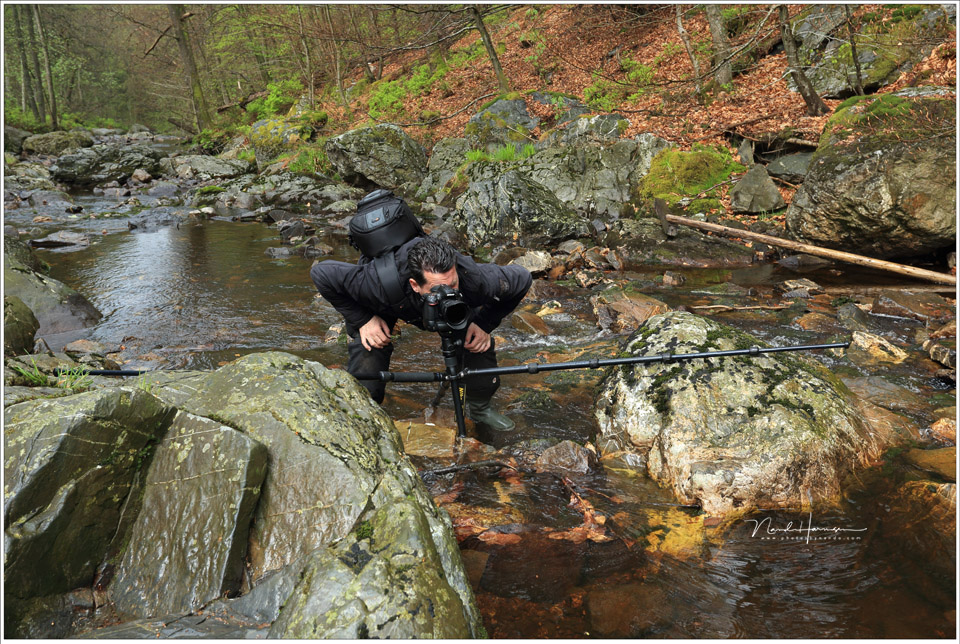
Legs that are extended a long way can cause a bouncing movement. The stability is then gone. If your camera is very heavy, it could even cause a tripod leg to break in the worst case. So pay attention, and do not do it as shown in the example below.
5. Extend the bottom tripod legs first
This goes somewhat against the general rule that you should extend the thickest legs first for better stability. But that would also mean you should never use the bottom legs, which you always do when you set the tripod very high. The stability is then even worse than when you only extend the bottom legs.
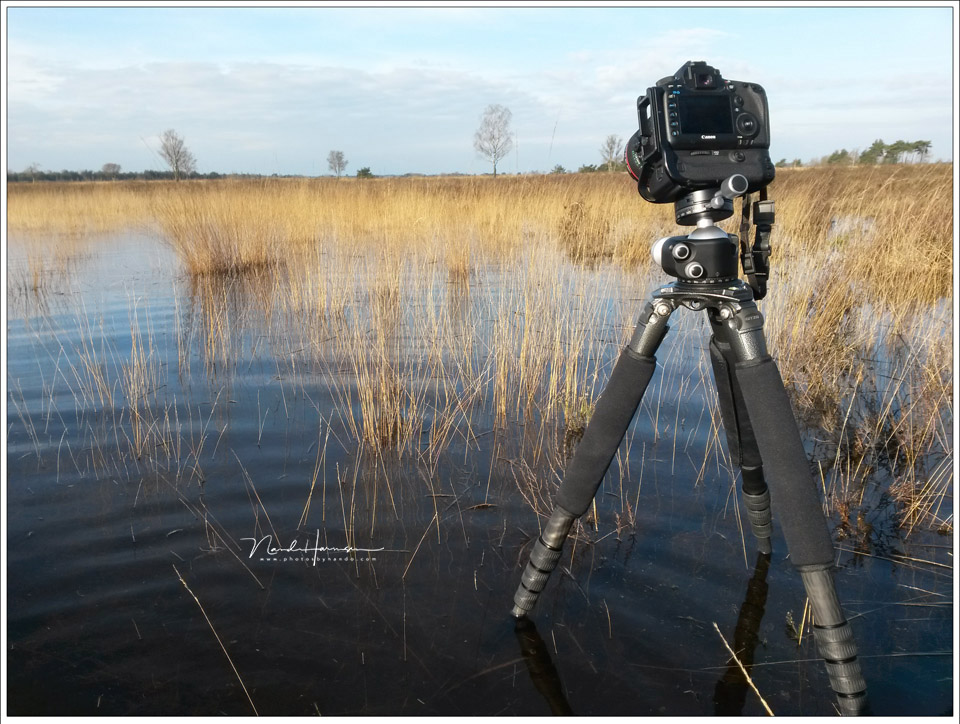
By extending the bottom legs first, you make it easier to level and adjust the tripod, because you do not have to reach down to release the tripod legs. In addition, when using it in water, it is not ideal if the clamps or rings on your tripod disappear under water. You do not want to put your hand under water every time you need to move the tripod.
6. Avoid using the centre column
The centre column gives you extra height. But be careful with it. Using it makes the tripod less stable. The centre column is like a flagpole with your camera on top. Have you ever seen a flagpole in the wind?
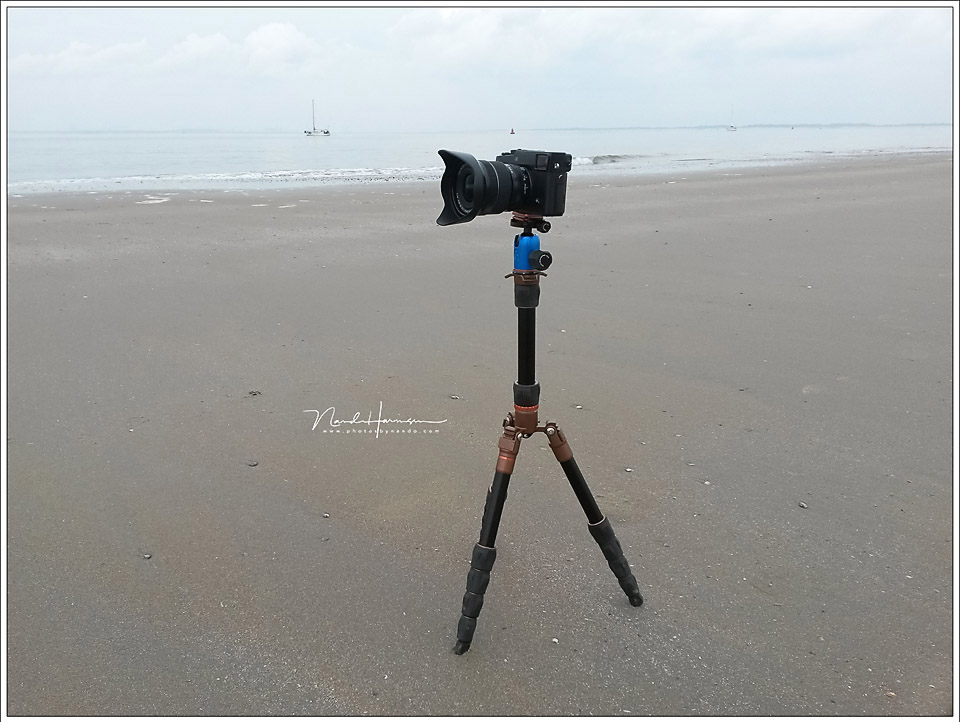
Naturally, the instability is less with light cameras than with heavy ones. But prevention is better than cure. So use the centre column sparingly.
7. Use CDs or coffee cups on loose sand
Do you recognise this, when you are at the seaside or in a muddy environment and your tripod legs keep sinking? You are not the only one. The solution is to increase the surface area of the tripod leg. Sometimes there are special dishes for this that can be mounted underneath your tripod. Do you often photograph in places where sinking occurs? Then see what your tripod brand offers for this.
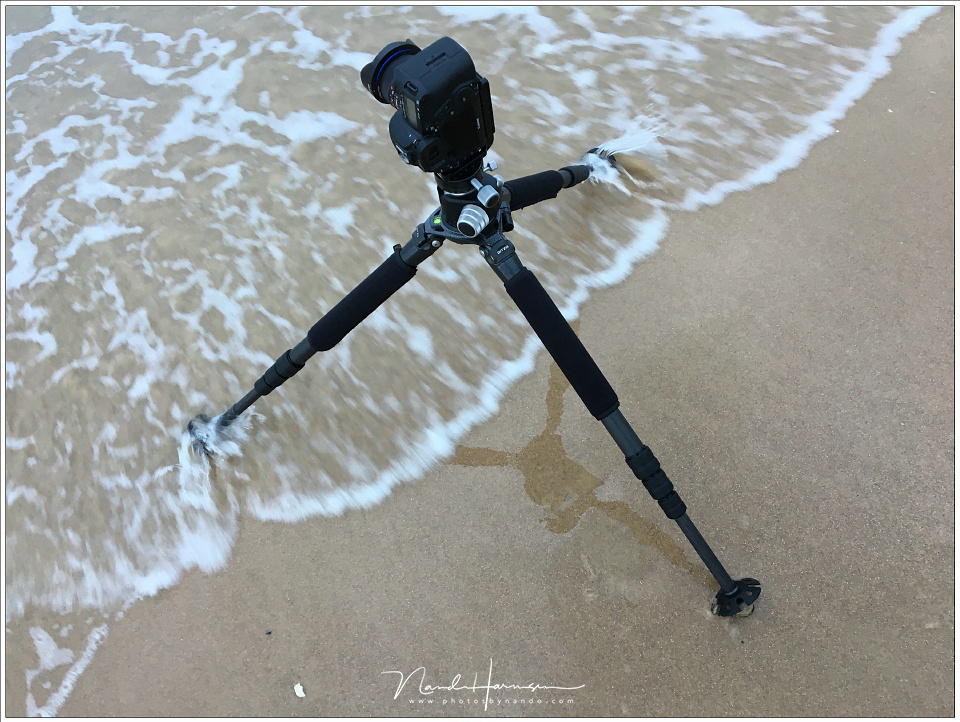
You can also use a household solution. Do you still have CDs by Frans Bauer or Gerard Joling? Use them as coasters. Naturally, you can also use other CDs that you no longer use. You could also put the tripod leg in a disposable cup. Just make sure you do not leave any of this behind.
8. Place two tripod legs against the wind direction or current
In strong winds or flowing water, it is sensible to place two tripod legs against the direction of the wind or current, with the third leg pointing in the direction of the wind or current. If the wind is strong or the current is very powerful, the tripod has to be lifted over that third leg, which takes quite some effort.
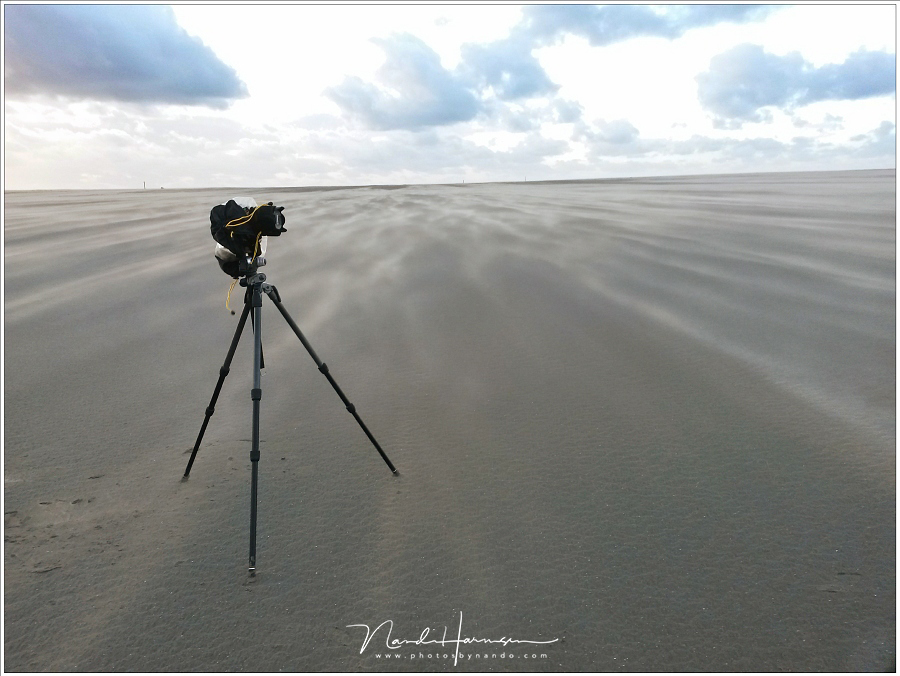
Although this helps with stability, you should never leave the tripod unattended in these conditions. Prevent the tripod from being blown over or pushed over by the current. A single gust of wind or a strong wave can make even the sturdiest tripod fall over.
9. Be careful when using the hook under your tripod
The hook under the tripod can be used to hang your bag from. The weight of your bag pulls the tripod down, making it less likely to fall over. But be careful. A bag can swing in the wind or if you bump into it.
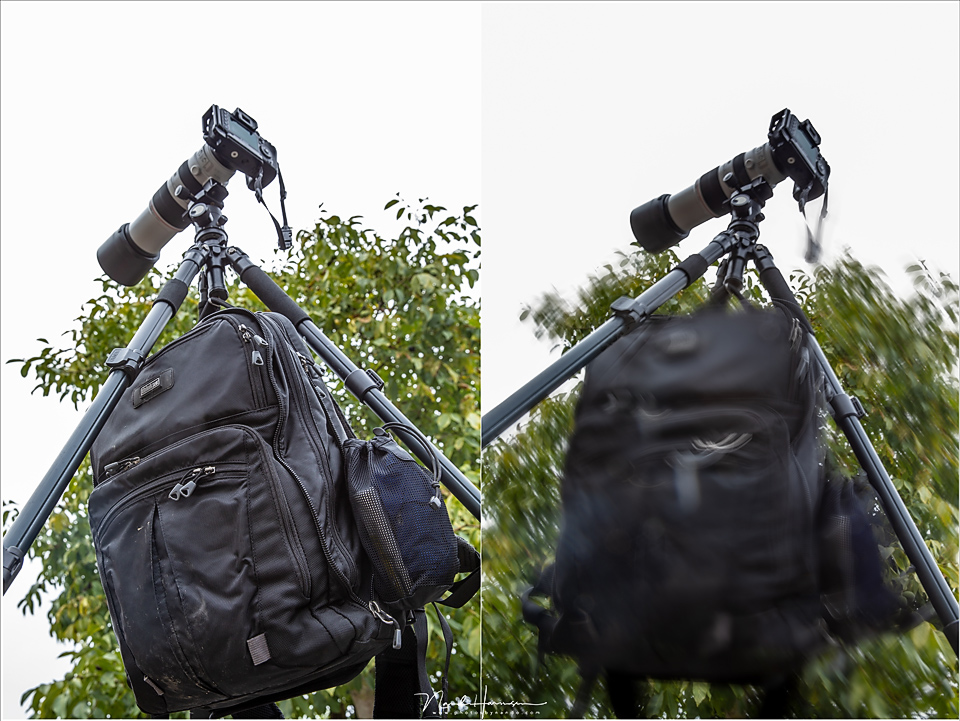
A swinging bag will make the tripod unstable again and, in the worst case, pull it over. It is better to attach a rope with a loop to the hook and stand on the rope while pulling it tight.
10. Do not exceed the maximum weight of your tripod and tripod head
This point partly follows from the previous one. A camera bag is often heavy, and a tripod can only support a certain weight. Usually, a camera on its own is not heavy enough to exceed the limit, but if you hang a bag under the tripod, you can exceed that weight.
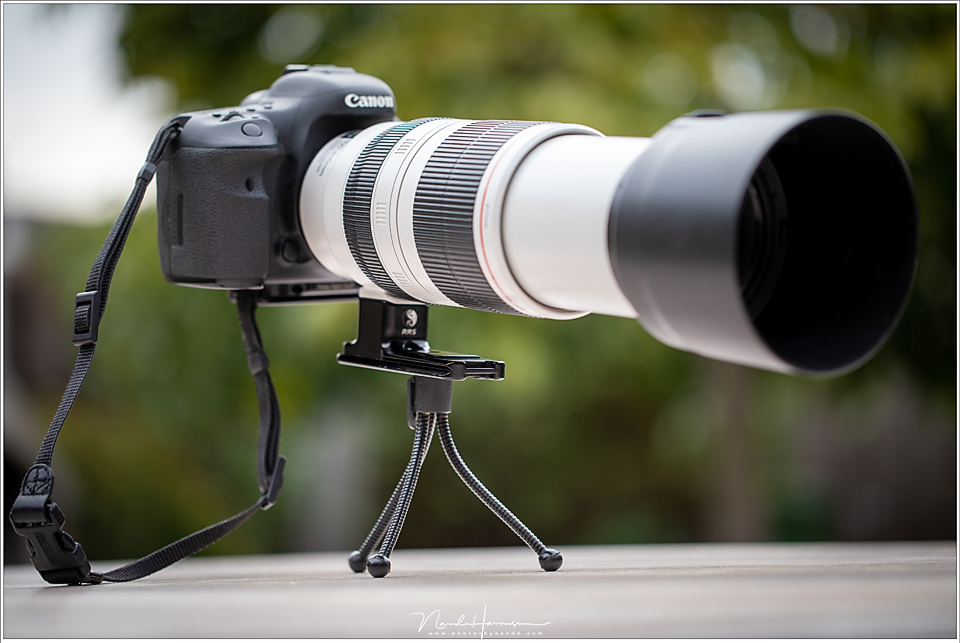
In any case, keep an eye on the maximum permitted weight for the tripod. So do not use a very small, lightweight tripod for a large, heavy camera. Also remember that most tripods can usually support quite a bit of weight, but the tripod head also has a maximum weight.
Bonus tip: Make sure the tripod head is securely attached and everything works properly and smoothly.
As a final point, I want to give you a very important tip. Make sure your tripod is in good order. The clamps or twist rings on your tripod legs must work properly and smoothly. They must clamp the legs securely. Make sure this is the case. The tripod head must be screwed firmly onto the tripod. Check this regularly.
But also pay attention to the tripod plate that you attach to your camera or lens. Make sure it is securely fastened. Only when everything is in order can you be sure of a sharp photo and that your camera is safely mounted on a tripod. The last thing you want is for a tripod to fall over because it is not in good order or because you are not using it properly.
About the author
Nando Harmsen has been photographing for more than 40 years. He specialises in wedding photography and landscape photography. Nando also gives talks, workshops, masterclasses and photo trips, and regularly reviews new and interesting equipment.
You might also like
-
 5 tips for taking your camera on holiday with peace of mind
by Nando Harmsen
-
 Night photography tip: wear a reflective vest for your safety
by Nando Harmsen
-
 Landscape photography tip: Think about your own safety
by Rob IJsselstein
-
 Portrait photography tip: Find a relaxed expression
by Elja Trum
-
 Composition tip: Bring calm to your composition
by Elja Trum

23 comments
-
 Jan Willem wrote on Tuesday 8 September 2020 at 10:55 | reply
Really good tips, but this one is truly brilliant: "if you still have CDs by Frans Bauer or Gerard Joling, use them as coasters"
Translated from Dutch.
-

 Donald Willemsen
wrote on Tuesday 8 September 2020 at 10:56
| reply
Donald Willemsen
wrote on Tuesday 8 September 2020 at 10:56
| reply
Thank you for these tripod tips. I was still able to learn something from them. Just one more question. I use a ball head on my Redged tripod. Every time I have mounted the camera and locked the ball head, the camera still sags a little. I have been told that the ball of the ball head would then be too small and that I therefore need to purchase a ball head with a larger ball. Is that correct?
Translated from Dutch. -
 Nando
wrote on Tuesday 8 September 2020 at 11:15
| reply
Nando
wrote on Tuesday 8 September 2020 at 11:15
| reply
@Donald:
Translated from Dutch.
Not all ball heads are of equal quality. In particular, cheaper ball heads can sometimes show some "creep" (as it's so nicely called in English). This means that they can never be locked perfectly. The larger the ball, the less quickly this happens, but a good quality ball head doesn't have this problem with a small ball either.
I use a ball head with a 5.5 cm ball, and it absolutely doesn't have this problem. Locked is locked. My small Gitzo travel tripod has a ball head of approximately 2.5 centimetres (I guess), and that one doesn't have it either. A cheap ball head I once had, with a 4 cm diameter, always had it.
Also bear in mind that the weight of your camera plays a role, as does how far the weight hangs from the centre. (see point 3). -
Donald Willemsen
wrote on Tuesday 8 September 2020 at 11:40
| reply
@Nando, many thanks for answering my question. I'll have to get a better ball head.
Translated from Dutch. -
 Harry Iwema wrote on Tuesday 8 September 2020 at 12:05 | reply
Good and clear story 🙂👍
Translated from Dutch. -
 W.Oldhoff wrote on Tuesday 8 September 2020 at 13:57 | reply
Hi Donald
Translated from Dutch.
A ball head of 55 cm, isn't that a bit heavy
Frans Bouwer isn't really helping with this -

-
Donald Willemsen
wrote on Tuesday 8 September 2020 at 15:39
| reply
@W.Oldhoff, I think Nando means 5.5 cm. A ball for a ball head with a diameter of more than half a meter can't be what was intended. Nando's answer to my question leaves nothing to be desired in terms of clarity
Translated from Dutch. -
 Clement Coclez wrote on Tuesday 8 September 2020 at 15:56 | reply
Nando, a ball head with a 55 cm ball???
Translated from Dutch. -
 Maurice wrote on Tuesday 8 September 2020 at 16:44 | reply
Great tip, those CDs, put them straight in my camera bag. "A person is smart, ... but he has to live" my late father always used to say
Translated from Dutch.
-
 Paul wrote on Tuesday 8 September 2020 at 16:55 | reply
And then you still have the quick-release plate.
Translated from Dutch.
I have a travel tripod with a Swiss plate, that stupid thing keeps coming loose by itself on the camera/lens side, and it's always a fiddle to get it right.
On my heavy Giottos tripod at home there's a thick diabolo-shaped ring, which you can tighten rock-solid by hand and which then gets clamped even more when mounting it on the tripod because it is pulled towards the tripod (difficult to explain). When that is tight, it stays tight! -
 Dirk Borst wrote on Tuesday 8 September 2020 at 17:13 | reply
Dear Donald, many thanks for all the tips regarding the proper use of a tripod. I assume that your largest ball head is 55 mm and not 55 cm.! و
Translated from Dutch. -
 alfred wrote on Tuesday 8 September 2020 at 17:24 | reply
Good evening everyone,
Translated from Dutch.
Very nice information, but what is, for example, a good stief.
where everything is okay!
art Alfred -
Donald Willemsen
wrote on Tuesday 8 September 2020 at 18:31
| reply
Some people address me about the article to heap praise on me. Unjustifiably, by the way. Nando wrote this excellent article, not me. So, some people should read the comments very carefully once again.
Translated from Dutch. -
 Gert wrote on Tuesday 8 September 2020 at 20:26 | reply
Good article with nice tips. But ... Extending the lower legs first may be convenient, but you get maximum stability by extending all the legs by approximately the same percentage. That way, the legs are at their stiffest.
Translated from Dutch. -
Paul wrote on Tuesday 8 September 2020 at 22:38 | reply
That's true, Gert, but he also gave a reason for it.
Translated from Dutch.
The controls stay within reach...... -
Nando
wrote on Wednesday 9 September 2020 at 10:11
| reply
@Paul;
Translated from Dutch.
That your Arca-Swiss plate comes loose is due to the design of the plate and not that of the tripod connection called Arca-Swiss.
If you are bothered by the rotating, consider an L-bracket.
@Gert;
If you fear that maximum stability with your lower legs, then don't use them either when you set the tripod as high as possible. It is precisely then that the stability is the lowest, not when you only use the lower legs. Just try it out.
@everyone;
I said 55cm ball head, but that may be my own head. Of course I meant 5.5 cm, or 55 mm.
Thank you for all the corrections for that
(I have adjusted it) -
-
 bart wrote on Wednesday 9 September 2020 at 10:19 | reply
And one more very important thing, and not mentioned: turn off your image stabilization!
Translated from Dutch. -
Nando
wrote on Wednesday 9 September 2020 at 10:35
| reply
@Bart;
Translated from Dutch.
Very good. Image stabilization off.
Most image stabilization systems can detect when photos are being taken from a tripod, but a small knock against a tripod, or a gust of wind, and your image stabilization kicks in and your photo is ruined.
Thank you for adding it. -
 Jacqueline wrote on Thursday 10 September 2020 at 15:05 | reply
Thanks for these great tips. Do you also have any tips on how to clean the tripod? Ever since I used it in the storm on the beach, it has become a bit stiff.
Translated from Dutch. -
 Roland wrote on Saturday 12 September 2020 at 11:30 | reply
Very interesting information, presented very clearly.
Translated from Dutch. -
Nando
wrote on Tuesday 29 September 2020 at 09:06
| reply
@Jacqueline:
Translated from Dutch.
It is always a good idea to clean your tripod regularly. It depends a bit on which tripod you use, how easy this is. Basically, you have to take apart the mechanism that locks the legs when extending them, clean it with soapy water, lightly grease where necessary, and put it back together. With a screw connection this is easier than with a clamping system.
Have your say
Please note: Articles older than a week can only be commented on by signed-in visitors.Would you still like to comment? sign in or create a free account.
Become a better photographer every week
A practical photography tip in your inbox every week.
39,078 photography enthusiasts already receive the tips! More about the weekly mail. Or keep up to date via  Facebook.

Elja Trum
Photofacts; everything to do with photography!
Would you like to take better photos and keep up with what is happening in photography? Photofacts publishes articles that teach you something about photography — from a product announcement to a practical shooting tip or a look at a website. Photofacts covers photography every day and is a hobby project of Elja Trum's that got out of hand. The articles are written by a team of volunteer authors. If you would enjoy writing one or more articles for Photofacts, do get in touch.More about PhotofactsPhotofacts is made possible in part by
