

Jan Banning: Red Utopia
Saturday 9 December 2017, 14:42 by Michelle Peeters | 5,446 views | 0 commentsThis article was translated from Dutch with the help of AI. Read the original.
After the fall of the Wall and the disintegration of the Soviet Union, communism seems to have disappeared into the obscurity of history.
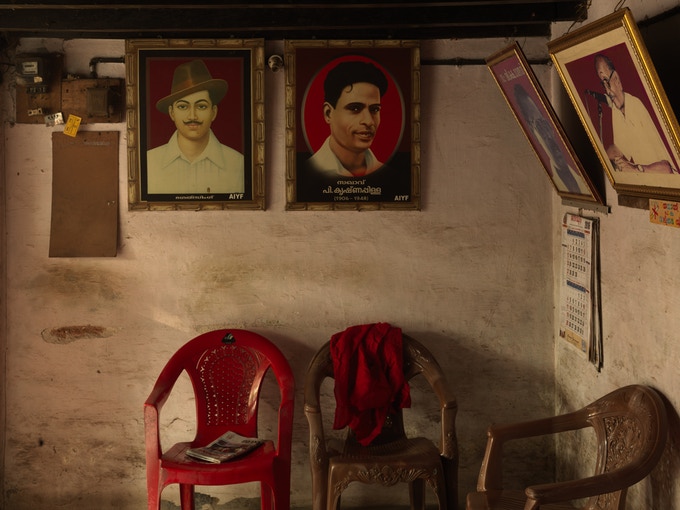
Photographer Jan Banning documents with his Red Utopia series the still-living remnants of this ideology, which had such a major influence on the twentieth century, in various far-flung corners of the world from our perspective.
From 14 October 2017 until 7 January 2018, the photo series can be seen at Museum de Fundatie in Zwolle. A book has also been published under the same title.
Jan Banning (1954) went looking for locations in five countries, India, Italy, Nepal, Portugal and Russia, where the communist spirit still lingers and even still holds sway.
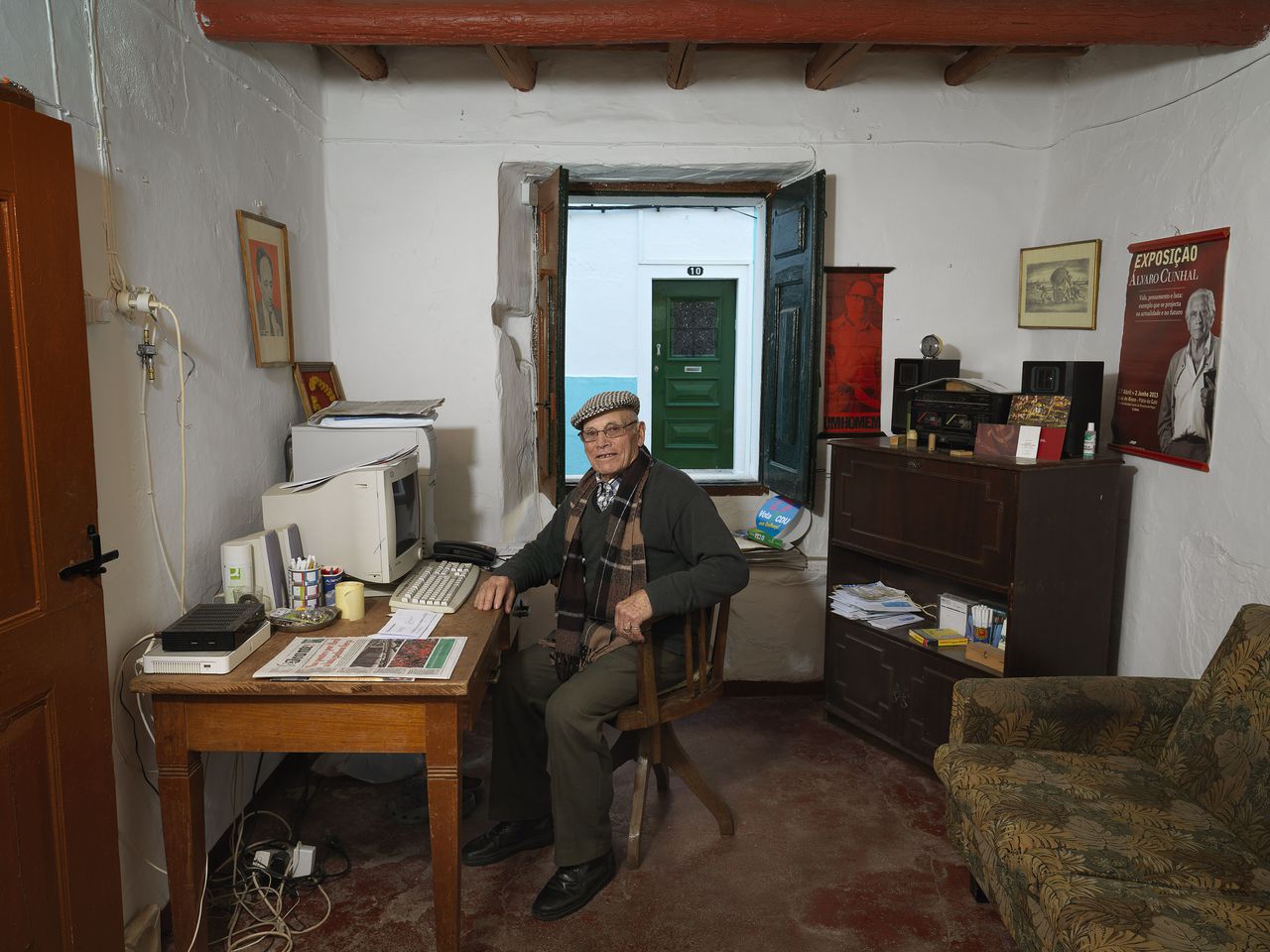
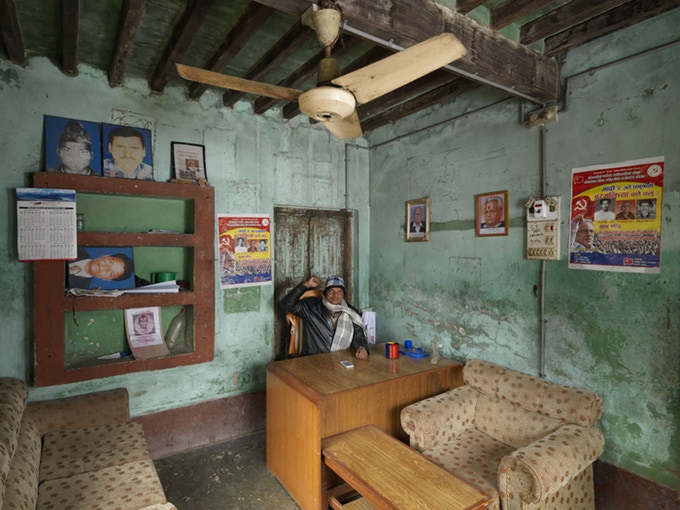
In cities and sometimes remote towns, he used his camera to capture the interiors of communist party offices with their often exuberant iconography: red flags and banners, and portraits of Marx, Engels, Lenin, Stalin and Mao, as well as national party leaders and ideologues.
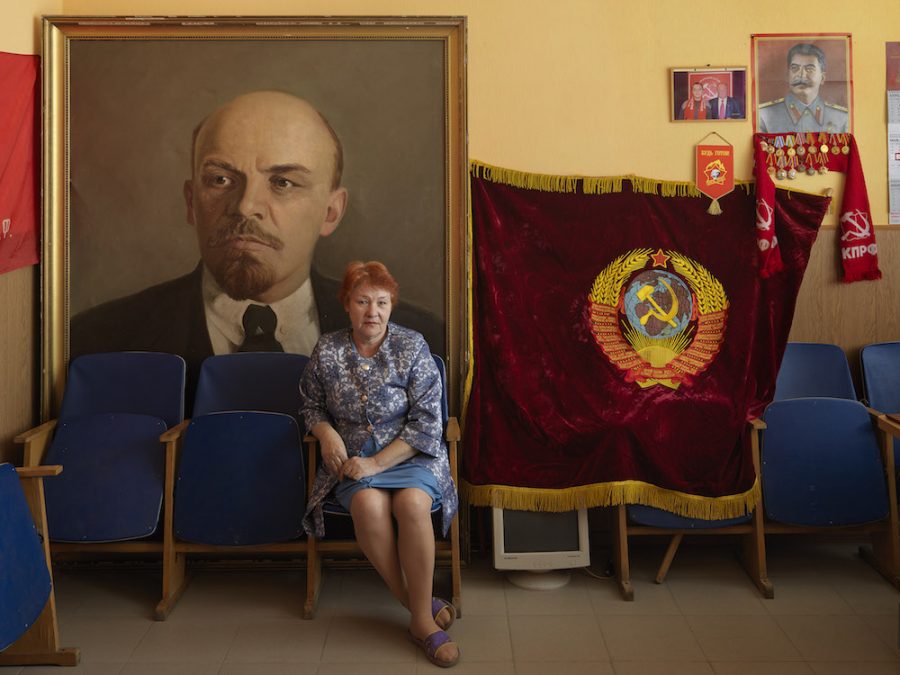
Sometimes local party activists were photographed too. Sitting behind their desks, they look into the lens with concentration. Jan Banning's photographs are characterised by a careful handling of composition and light.
Jan Banning
Jan Banning made an international name for himself with photo series about sensitive subjects from the recent past, such as the so-called comfort women during the Second World War; with Bureaucratics, about the world of bureaucracy; and with the recent Law&Order, about crime and punishment in four countries.
Book: Red Utopia
In his work, Banning manages to turn complex themes such as state power, the consequences of war, and justice and injustice into powerful images. Although his photo series always deal with major political or sociological stories, people always play a prominent role in them.
What about the old ideals of communism, in which property and care for one another are shared? In his latest project, Red Utopia, Jan Banning went looking for the last remnants of the communist ideal.
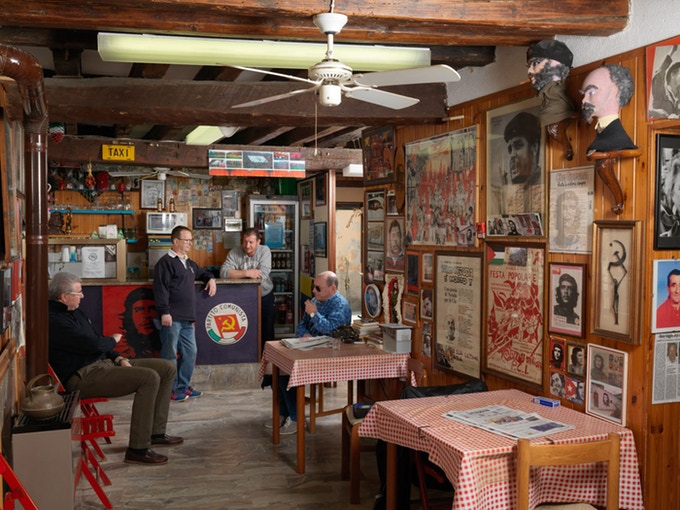
He found heroic images in dilapidated offices. When you see the context in which communist propaganda now stands, it does become rather pitiful. You see a huge discrepancy between what you see on the wall and the dusty surroundings. I found that an interesting tension.
The book can be ordered from Jan Banning's website and costs 49.50 euros.
About the author
Michelle Peeters is fotografe en oprichter van DeuxBleus Fotografie. Michelle herkent het bijzondere in het gewone en het gewone in het bijzondere. Ze heeft zich nooit willen specialiseren en is daardoor van alle markten thuis.
You might also like
-
 Review: Photo book 'Voor altijd Rotterdam'
by Erik van Rosmalen
-
 Review: Before They Pass Away by Jimmy Nelson
by Michelle Peeters
-
 Review: The Photoshop Layers Book - Johan Elzenga
by Michelle Peeters
-
 Book: 'The Time in Colour' brings history to life
by Michelle Peeters
-
 Canon bans Viltrox from selling RF lenses
by Nando Harmsen
-
 Book: Scott Kelby, how do you do that in Photoshop?
by Michelle Peeters
0 comments
Be the first to share what you think!
Have your say
Please note: Articles older than a week can only be commented on by signed-in visitors.Would you still like to comment? sign in or create a free account.
Become a better photographer every week
A practical photography tip in your inbox every week.
38,836 photography enthusiasts already receive the tips! More about the weekly mail. Or keep up to date via  Facebook.

Elja Trum
Photofacts; everything to do with photography!
Would you like to take better photos and keep up with what is happening in photography? Photofacts publishes articles that teach you something about photography — from a product announcement to a practical shooting tip or a look at a website. Photofacts covers photography every day and is a hobby project of Elja Trum's that got out of hand. The articles are written by a team of volunteer authors. If you would enjoy writing one or more articles for Photofacts, do get in touch.More about PhotofactsPhotofacts is made possible in part by
