

What Will a Camera Look Like in Five Years?
Thursday 11 March 2021, 16:16 by Rob IJsselstein | 5,285 views | 2 commentsThis article was translated from Dutch with the help of AI. Read the original.
A few years ago, the system camera entered a market that had until then been dominated by SLR cameras.
Today's system cameras are only the beginning of the rapid development of professional and advanced cameras. A number of trends are already visible.
This allows us to speculate about what cameras might look like in five years.
System cameras
The system camera with a full-frame, APS-C or Micro Four Thirds sensor has now been on the market for about five years. Olympus and Panasonic were the front-runners, while Sony was the first to release a full-frame camera.
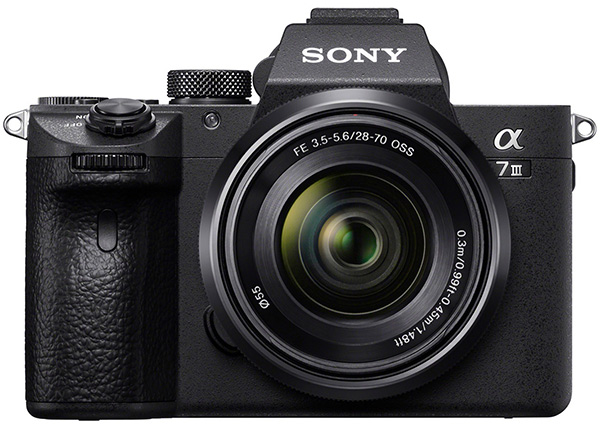
System cameras existed before, but always with a smaller sensor. Today's system cameras are also known as Interchangeable-Lens Cameras, or ILCs. These cameras no longer need a flip-up mirror.
What changes does this bring? First of all, the functions previously performed by the mirror are now handled differently.
The light falling on the mirror of the SLR camera was used for focusing. Now that there is no mirror, the image is projected directly onto the sensor. Focusing is now done through measurements on the sensor.
The light falling on the mirror was also sent to the viewfinder. Since that is no longer possible, the image from the sensor has to be sent there instead. The optical viewfinder has been replaced by an Electronic Viewfinder, or EVF.
With SLR cameras, you could already use live view to see the image from the sensor on the screen on the back of the camera. The mirror was then continuously flipped up. Focusing in that mode was less accurate and slower.
One advantage of the electronic viewfinder is that you can see the exposure. In many situations, you can already see through the viewfinder what the shot will look like.
Because there is no longer a mirror or a prism for the viewfinder, a system camera is lighter than its predecessor. The Nikon D850 weighs 1,050 grams, while the Nikon Z7 weighs 675 grams. That is a reduction of more than 30 per cent.
Intelligent cameras
The continuous exposure of the sensor makes many other things possible. One feature now found in many system cameras is face and eye recognition.
The image falling on the sensor is scanned for the characteristics of a face and the eyes in a face. These characteristics come from artificial intelligence programmes that have analysed millions of images.

Live filters can also be applied, with the results visible in the electronic viewfinder or on the screen before you take the photo. There are, for example, black-and-white filters, so you can see in advance what your photo might look like in black and white. The photos can still be saved as RAW files.
Developments in smartphone cameras can also be used. For example, to simulate long shutter speeds, hundreds of photos can be taken within a few seconds and then combined. You can also do this in Photoshop, but it takes much more work.
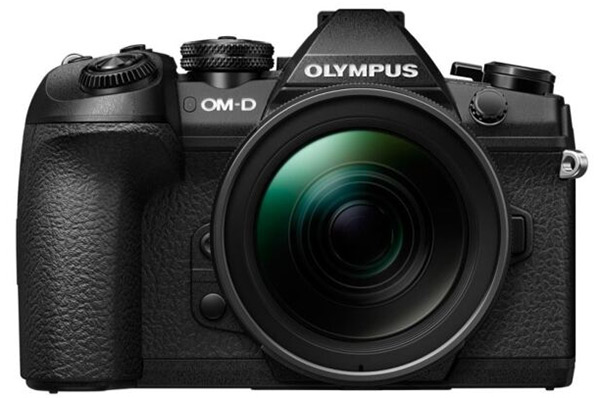
No tripod is needed for this. Olympus has built a feature into its cameras that checks for overexposure at long shutter speeds. If specific pixels are at risk of becoming overexposed, they are no longer read out. This means there is always enough detail in the lighter areas.
Second step
The arrival of these system cameras forms a second step in the transition from mechanical cameras to fully electric and electronic cameras. The first step was the transition from films that had to be wound on to digital cameras.
In the current second step, the mechanism of the flip-up mirror is disappearing. You could compare it with the transition taking place in vehicles at the moment.
A car is changing from a system with many mechanical processes to a platform where only the wheels are driven by an electric motor located close to the wheel.
Which mechanical functions are still found in today's system cameras? The shutter, the aperture and the stabilisation. I expect these will also be replaced by electronic solutions.
In today's system cameras, you can already choose between a mechanical shutter and an electronic shutter. The latter simply works by reading the sensor for the set shutter speed. This allows more images to be taken per second than with a mechanical shutter.
Image stabilisation
The stabilisation of lenses and cameras is a mechanical system that compensates for movement in a very short time. In phone cameras, movement is measured at longer shutter speeds, and the successive images taken during the exposure are corrected for it.
Whether this will actually be introduced in more expensive system cameras remains to be seen. Stabilisation works very well when taking a single photo with a long shutter speed, and it is still uncertain whether processing hundreds of images, each with a short shutter speed, will produce equally good images.
Replacing the aperture
Replacing an adjustable aperture may be somewhat more difficult, but certainly not impossible. Many cameras already offer focus stacking, taking a series of images while shifting the focus point slightly each time.
It is then not such a big step to have the camera do this as standard and select a group of images that together correspond to a set depth of field.
A major advantage of such a process is that you can always photograph with a large aperture opening, so higher ISO values are needed less often. With some phones that have multiple cameras, you can choose the depth of field both before and after taking the photo.
Light-field cameras such as the Lytro already exist too, making it possible to focus afterwards and determine the depth of field afterwards.
Digital grey filters
Other possibilities are also emerging. The use of grey filters can already be simulated by taking many images over a longer period and combining them statistically, similar to what I wrote earlier about stabilisation.
With Olympus cameras, the pixels are read out in such a way at longer shutter speeds that overexposure does not occur. In the same way, you can achieve longer shutter speeds and capture movement. From there, it is only a small step to simulating graduated grey filters.
Photo and video as a mix
Photo and video are still separate functions on the camera. But the number of photos that can be taken per second is approaching video speed. And if you can record 8K video, that is a resolution from which you can also extract a very good photo.
You can then record a video and select the best images from it for your photography. This offers major advantages, particularly for action photography, wildlife, sport and street photography. Artificial intelligence can be a great help with the selection.
Connectivity
The introduction of 5G also brings potentially major benefits. Photos can then be sent to the cloud in real time or after processing.
Perhaps directly from the camera, or via the smartphone. In the latter case, you do not need a second SIM card and subscription, and the photo can be posted straight to social media or sent directly to the client.
With the help of artificial intelligence, each photo can then be pre-processed immediately and given keywords through subject recognition. With automatic geotagging, you will never again have to wonder where you took the photo.
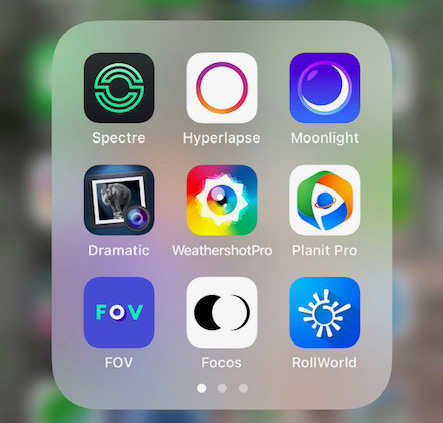
With smartphones, we are used to using all kinds of different apps, each specialising in certain types of photography and particular effects. Will system cameras move towards the same situation? With all kinds of photo apps on the rear screen?
We will see. In any case, the system camera of five years from now will already be fundamentally different from the current generation.
Through the continued development of software for controlling the sensor and processing large numbers of images into the results we are looking for. All of this will be made possible by faster sensors and the use of artificial intelligence.
A fascinating future, in which technical skill becomes less important and creativity takes first place.
Thanks to Johan Elzenga for his review and input.
About the author
Rob IJsselstein is 69 jaar. Hij fotografeert bij voorkeur natuurlijke en stedelijke landschappen. Foto's worden met enige regelmaat gepubliceerd en hij heeft twee fotoboeken over Alphen aan den Rijn op zijn naam staan. Rob begeleidt fotografen als persoonlijke coach. Lid van de fotoclub Alphoto, waar hij vijf jaar voorzitter was.
You might also like
-
 Editing photos with the Apple Vision Pro
by Elja Trum
-
 Is Apple Vision the breakthrough for 3D photography?
by Elja Trum
-
 Groom wears Apple Vision Pro at his wedding
by Elja Trum
-
 Five reasons to stop photography
by Nando Harmsen
-
 The term system camera is being used incorrectly
by Nando Harmsen
-
 Elinchrom launches new flash, the FIVE
by Elja Trum
2 comments
-

 martinphili wrote on Thursday 11 March 2021 at 19:08
| reply
martinphili wrote on Thursday 11 March 2021 at 19:08
| reply
I think that even the system camera will have become an outdated thing in five years and that, all together, we will mainly use the phone.
Translated from Dutch.
Five years ago we still scoffed at the camera function of a phone and thought that such a gadget could neeeeeever match the quality of a DSLR. Just look at it now! And if you extrapolate that to another five years of development...... -
 Rob IJsselstein wrote on Thursday 11 March 2021 at 21:02 | reply
@martinphill. Yes, software development for smartphones is partly ahead of that for system cameras, simply because the market for smartphones is much larger. And instead of a interchangeable lens, smartphones have simply added multiple cameras. That provides, for example, the possibility of depth determination. A major advantage of system cameras remains their larger sensor, which also has a greater dynamic range, meaning photos are less likely to be overexposed. The larger sensor also offers the possibility of a shallow depth of field, which is appealing for many photos.
Translated from Dutch.
Have your say
Please note: Articles older than a week can only be commented on by signed-in visitors.Would you still like to comment? sign in or create a free account.
Become a better photographer every week
A practical photography tip in your inbox every week.
39,079 photography enthusiasts already receive the tips! More about the weekly mail. Or keep up to date via  Facebook.

Elja Trum
Photofacts; everything to do with photography!
Would you like to take better photos and keep up with what is happening in photography? Photofacts publishes articles that teach you something about photography — from a product announcement to a practical shooting tip or a look at a website. Photofacts covers photography every day and is a hobby project of Elja Trum's that got out of hand. The articles are written by a team of volunteer authors. If you would enjoy writing one or more articles for Photofacts, do get in touch.More about PhotofactsPhotofacts is made possible in part by
