

Human Interior - Thijs Wolzak
Wednesday 19 June 2019, 13:31 by Michelle Peeters | 5,705 views | 0 commentsThis article was translated from Dutch with the help of AI. Read the original.
Thijs Wolzak took more than 250 photographs for NRC over six years of what he calls Human Interior: the instinctive human need to see our identity confirmed in our interiors. I saw the exhibition of the most bizarre interiors during the photography festival in Naarden-Vesting and was deeply impressed.
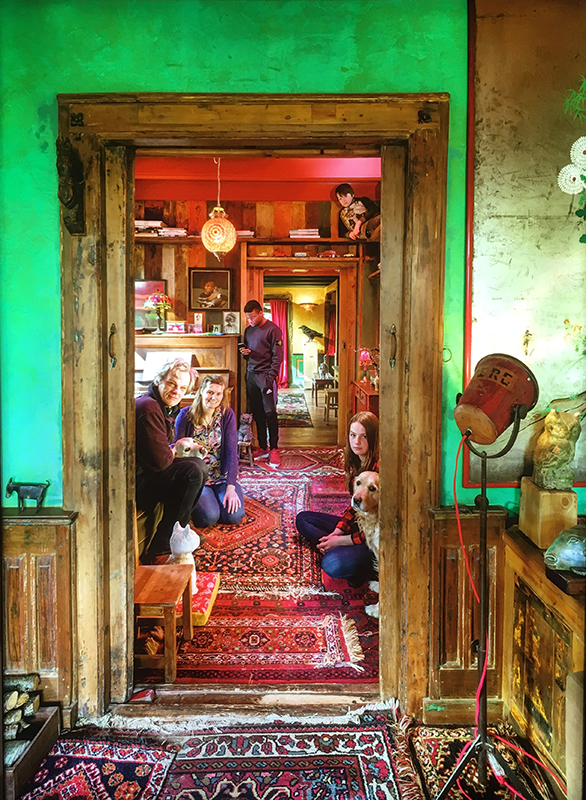
His detailed images show how people try to gain control over the world and their immediate surroundings. We see people in all their bravado, but also with their shortcomings.
By also showing people's uncertainty and inconsistencies in their interiors, Wolzak criticises the idealised world prescribed to us by lifestyle media.
What is completely natural to these residents, and the only logical choice, may seem astonishing or even absurd to you. But don't be mistaken: the resident is you.
You could follow an audio tour with each portrait, made by radio producer Romano Rodriguez. This allowed you to hear the resident talking about each photograph.
High tripod
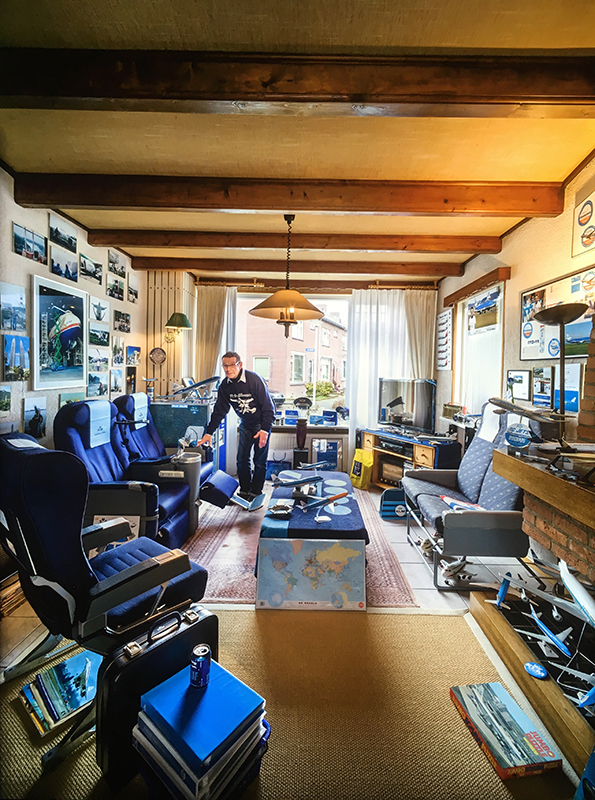
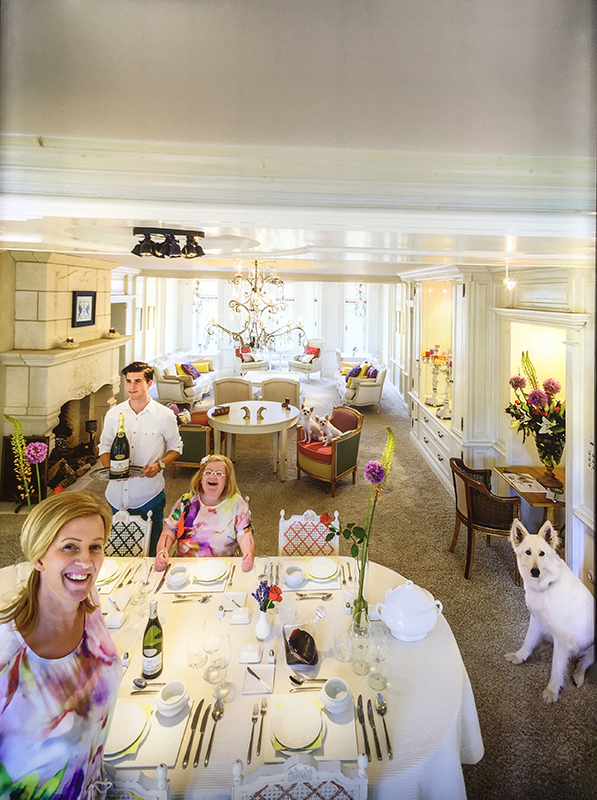
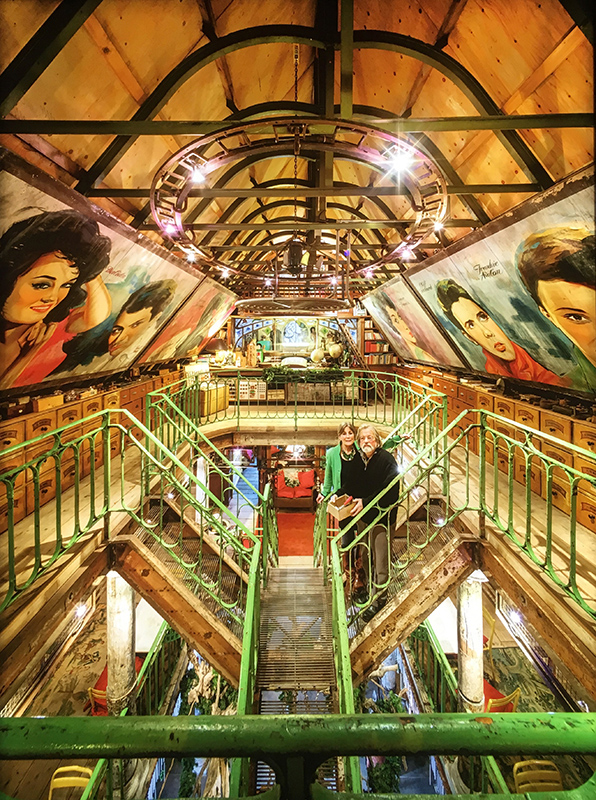
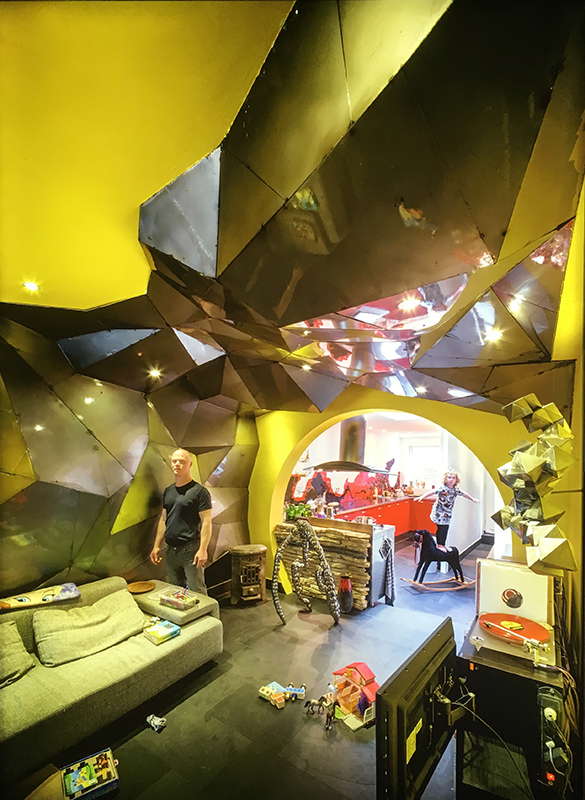
Choosing a viewpoint is the most important part of taking a photograph for Thijs Wolzak. With a high tripod, he can create a panoramic overview of the house and its residents. Things that are close are shown large at the bottom of the image, while things that are further away appear smaller and higher up.
This creates a perspective stack starting at the foot of his tripod. By choosing his viewpoint, he carefully determines what he wants to show and in what order.
During photography, he pays no attention to the ceiling. He finds it exciting to have one element in his highly controlled working process that can go its own way. This makes the ceiling a pleasant counterweight, in the degree of control he has over the elements of the image, but also visually.
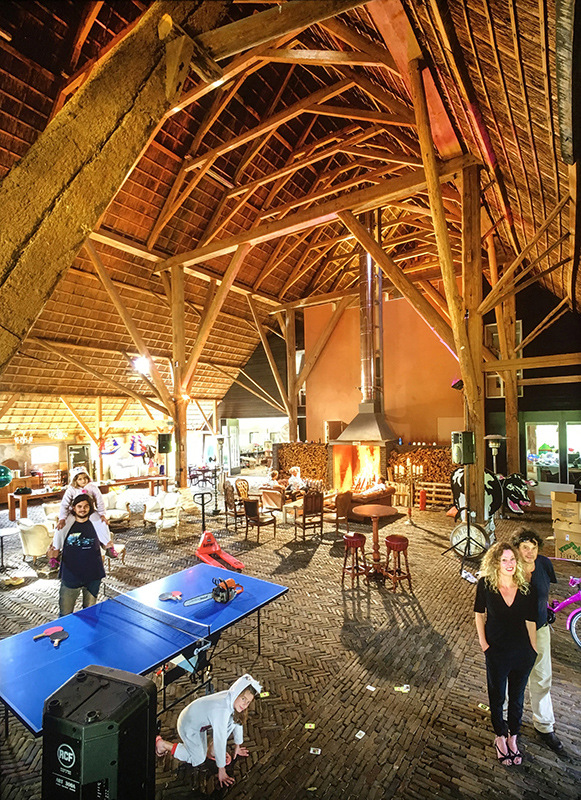
Even while taking the photograph, he looks forward to the unexpected result, to what will be visible in the upper part of his photograph. Just as you might be curious about a photograph you take without looking. Or about what you will see when you wake up in someone else's life.
The plasterwork
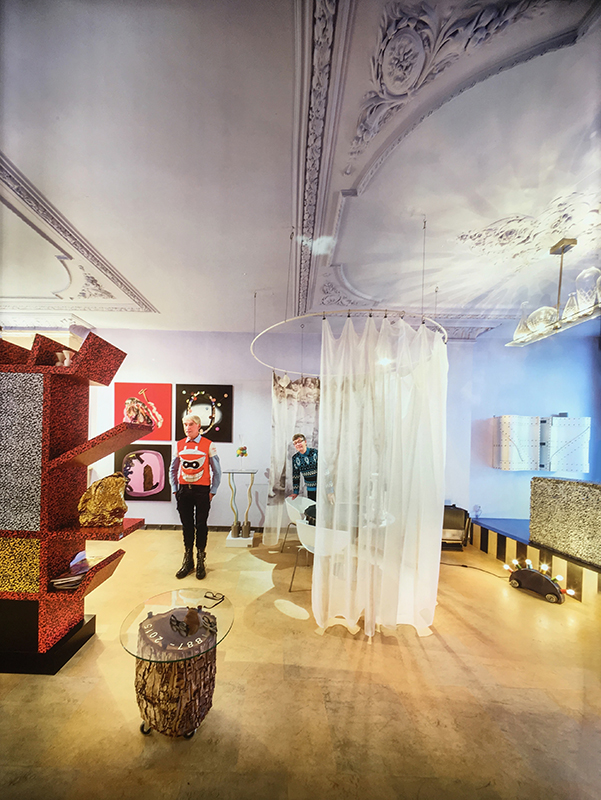
If you find plasterwork above a ceiling light in a new-build house, you often consider it kitsch. Embellishment, imitation. But the baroque plasterwork around the chandeliers in a seventeenth-century chateau has of course also been applied. All plasterwork is embellishment. When moving house, this realisation sometimes suddenly occurs to you.
You look at the white filler marks on the bare walls of an echoing room and you know for sure: people feel most at home in an illusion. You cannot live without water, gas and electricity, but without embellishment you do not feel at home.
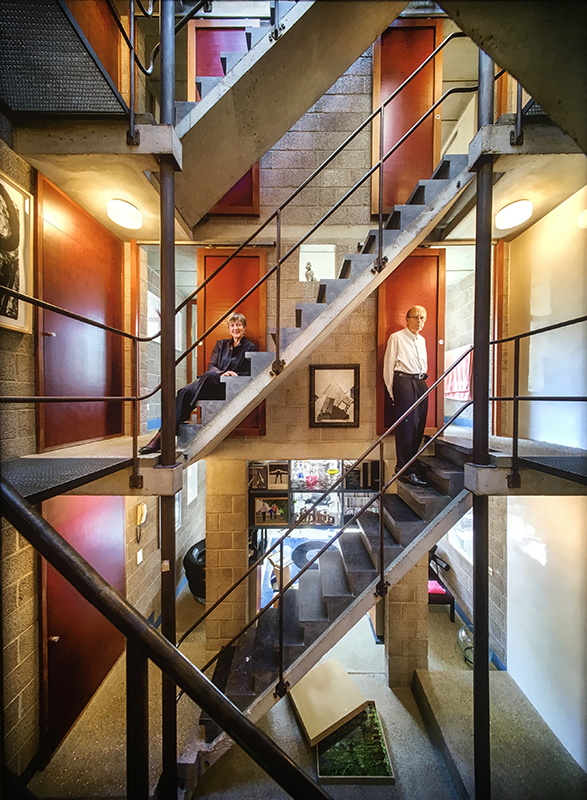
The stairs
Why do children so badly want to sleep in a bunk bed or a loft bed? Or why do they briefly dash off the pavement and up the little steps of a townhouse? Up one side, down the other. The paradox of stairs is that they always invite you to climb them, while stairs make our steps heavy.
Stairs almost always look organic, because they grew naturally towards the next floor. In our imagination, stairs also always go upwards. Even a cellar staircase feels as if we are going down against the direction.
Although stairs physically connect two floors, their presence actually makes us experience the floors as separate spheres. Every staircase is like one by Escher, a mental step in our heads.
The window
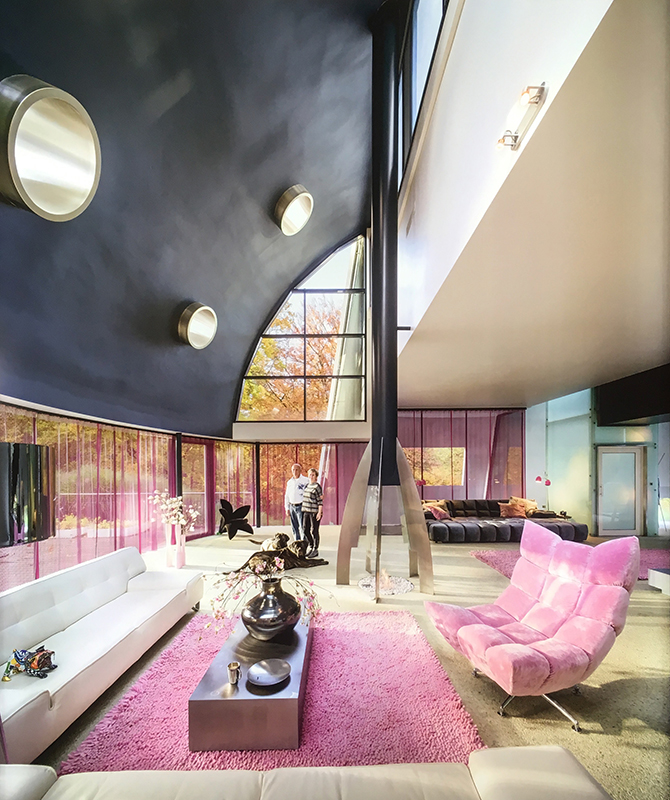
Windows are first and foremost the eyes of the house. For incoming light, the house acts as a box with holes. From inside, the box becomes lighter, but from outside we see only dark holes. That explains the black windows we see when a house is in the sun. We can stare outside unseen until the sun goes down and the house becomes a diorama.
Although the glass in the windows is one of the last parts to be installed when a house is built, this magical material, which keeps out wind, rain and cold while letting in light, determines the mood of a house.
We are used to seeing light, colour, reflections and shadows as incidental side effects, but in reality we would perceive nothing without these ghostly phenomena.
The television
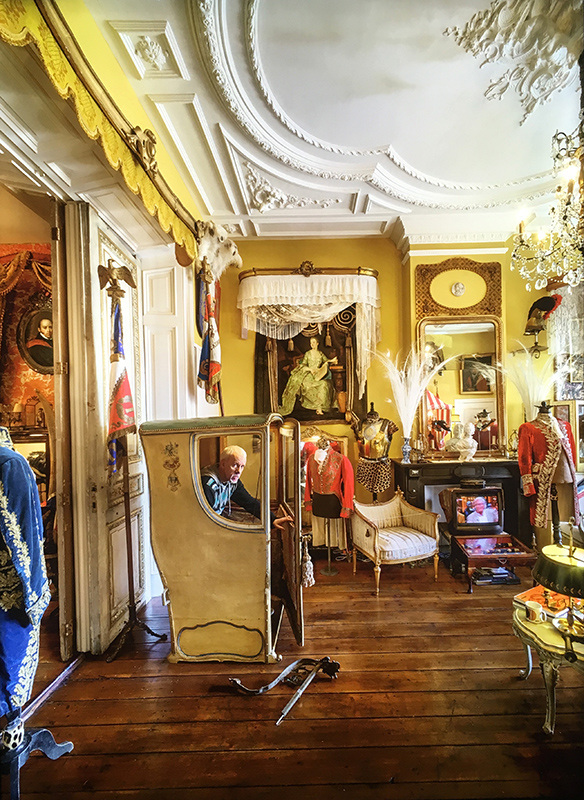
Television was once the window on the world. All families looked out through the box at the same time, convinced they were seeing what was happening in the world. The fact-checking happened the next day at the coffee machine, and everything always turned out to be correct. Only the French sociologist Pierre Bourdieu did not believe it.
He warned against the delusion that television records reality, while television reality exists nowhere other than on television. By now, the boxes have disappeared into flatscreens on the wall, and we do not see the same thing on any screen.
Blogs are read, series are binge-watched, Wii games are played, and so the window has shut itself off from the world. We no longer need Bourdieu to distrust everything.
The table
The Chinese philosopher Confucius was known for attaching great importance to seemingly banal actions. Not because of a neurotic disposition, but because he was convinced that small, superficial interventions in the outside world offer the possibility of reaching another person's inner world.
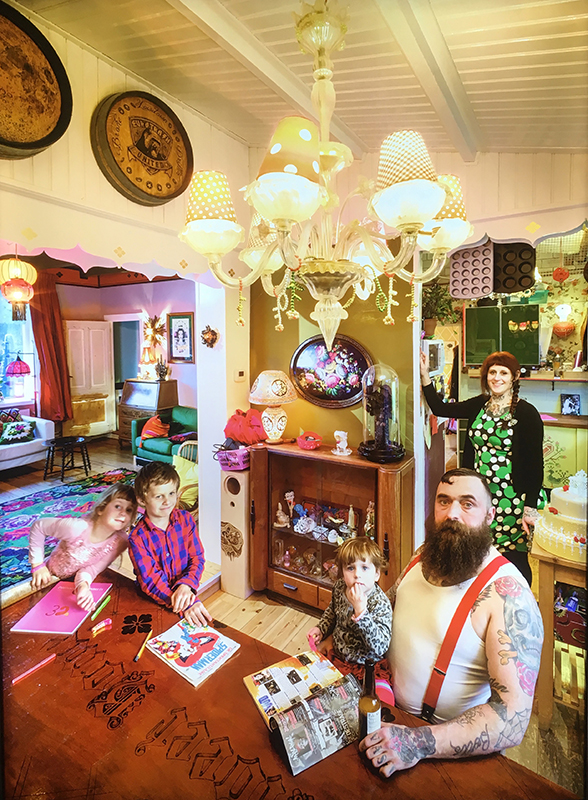
The domestic life of the twenty-first century is certainly not as ritualised as ancient China, yet we should not underestimate the ritual power of our table. The table occupies an important place in many households, not just because it is practical. A table can bring different moods into the same frame of mind.
Simply by bringing housemates together naturally and forcing them into the same position. To the table!
The hall
According to Paul Valéry, architecture is 'a hymn of space to itself'. We usually do not realise that space is not a property of things. Things do appear in space, but they are not made of it. At the same time, it is impossible for us to imagine space without things.
And that is precisely what architecture tries to do with space, according to Valéry. The room in a house where this attempt is most successful is the hall. Apart from a coat rack or two, the hall is a space without a purpose. The hall is the house's hymn to itself.
The door
A door is more than a partition that can open and close. You notice that as soon as you have to temporarily lift a room door off its hinges for painting work. The doorway that is created then affects the space behind it quite differently from the way the door did when it was open.
According to the German philosopher Georg Simmel, the door represents nothing less than 'the boundary at which people are actually constantly standing': the transition from their own bounded living world to the infinity of existence.
That is why we experience an outside door indoors very differently from when we stand in front of it outside. The closed door provides safety and cosiness indoors. Outside, we are lost in an endless existence.
The smell
Seeing is believing, they say. But there is always much more than a photograph shows. You cannot see what a house smells like in a photograph. The other way around, a single smell can make an entire house appear before your mind's eye. A glimpse that brings everything to mind, from the doormat to the contents of a desk drawer. As if the household contents were held together by an invisible synthesis.
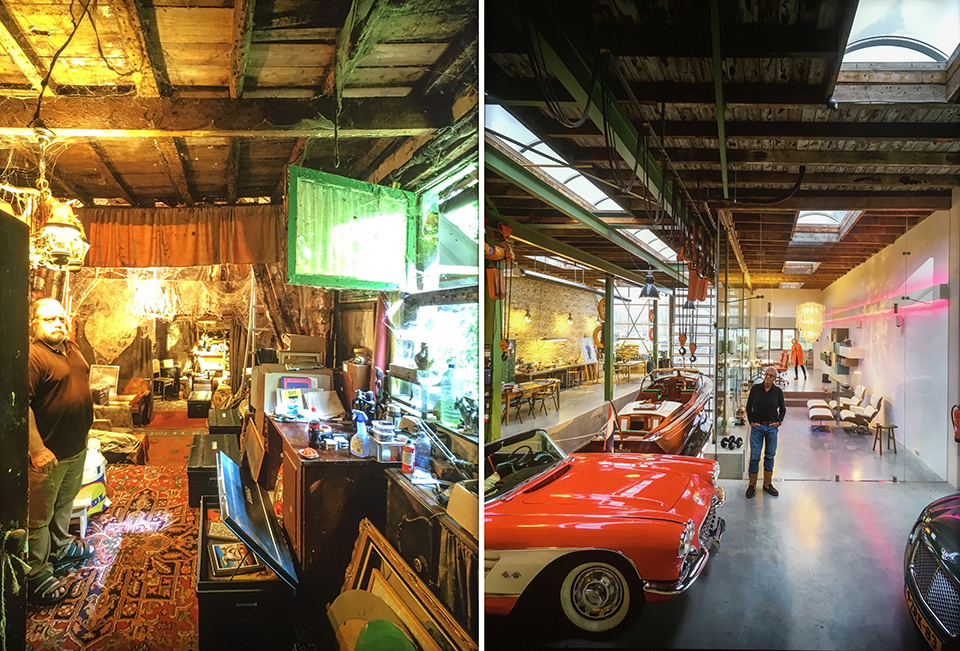
Smell is not only invisible, but if you spend long enough in it, you can no longer smell it either. You need a substantial holiday to notice the smell of the house again when you return. You notice how important the synthetic effect of smell is in making you feel at home when it is disrupted by the smell of a burnt slice of toast.
Fotofestival Naarden
You can admire the photographs by Thijs Wolzak and other photographers, including Koos Breukel and Stephan Vanfleteren, at the Fotofestival Naarden in Naarden-Vesting until 30 June.
About the author
Michelle Peeters is fotografe en oprichter van DeuxBleus Fotografie. Michelle herkent het bijzondere in het gewone en het gewone in het bijzondere. Ze heeft zich nooit willen specialiseren en is daardoor van alle markten thuis.
You might also like
-
 Tips for photographing houses for sale
by Nando Harmsen
-
 How to turn your house into a giant camera
by Michelle Peeters
-
 Human Element in a Landscape, or Not?
by Nando Harmsen
-
 Landscape photography tip: add a human element
by Nando Harmsen
-
 Humane, a new wearable AI camera?
by Elja Trum
-
 The moment photography has become an obsession
by Nando Harmsen
0 comments
Be the first to share what you think!
Have your say
Please note: Articles older than a week can only be commented on by signed-in visitors.Would you still like to comment? sign in or create a free account.
Become a better photographer every week
A practical photography tip in your inbox every week.
38,982 photography enthusiasts already receive the tips! More about the weekly mail. Or keep up to date via  Facebook.

Elja Trum
Photofacts; everything to do with photography!
Would you like to take better photos and keep up with what is happening in photography? Photofacts publishes articles that teach you something about photography — from a product announcement to a practical shooting tip or a look at a website. Photofacts covers photography every day and is a hobby project of Elja Trum's that got out of hand. The articles are written by a team of volunteer authors. If you would enjoy writing one or more articles for Photofacts, do get in touch.More about PhotofactsPhotofacts is made possible in part by
