

Photographer matches visitors with artworks
Sunday 19 November 2017, 15:15 by Michelle Peeters | 7,188 views | 2 commentsThis article was translated from Dutch with the help of AI. Read the original.
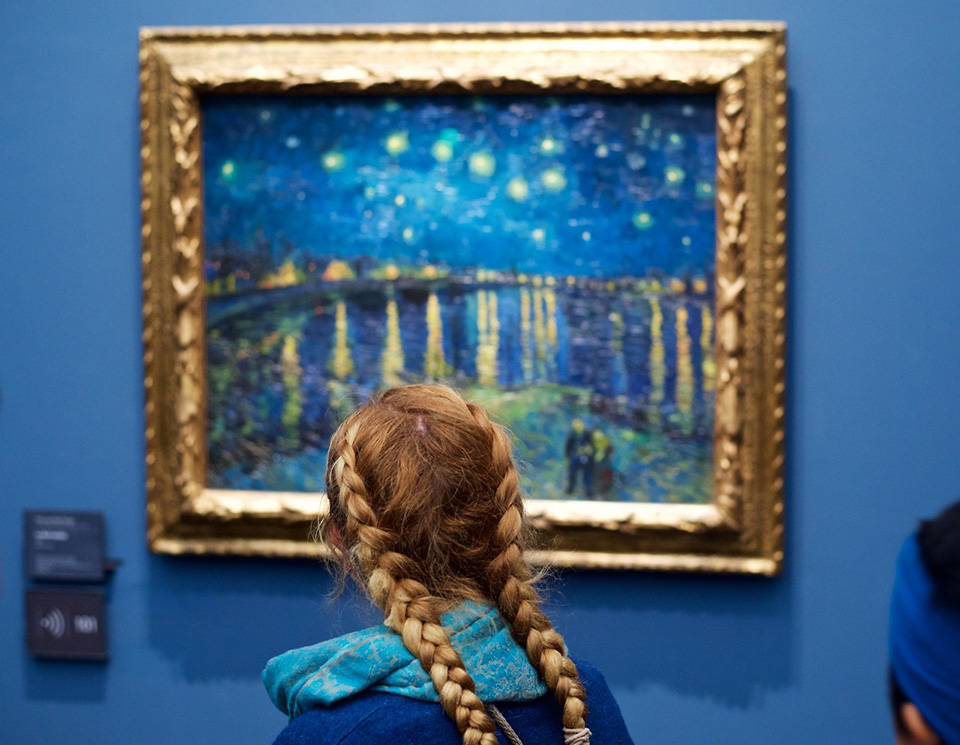
It's a kind of Droste effect, but slightly different. Stefan Draschan photographs people who seem to blend into the art they are looking at like chameleons.
The Austrian photographer Stefan Draschan previously worked as a journalist and DJ, and ran a coffee shop. Until he stopped smoking in 2013 and started taking photographs. That's when he discovered that his real talent was looking. He now photographs people and objects that almost blend into their surroundings.
For some people, a museum is extremely boring and a museum visit reminds them of compulsory school trips from the past. Stefan Draschan sees it differently. He can happily spend hours there.
However, he doesn't spend those hours looking at works of art. He creates his own works of art here.
Exact match
He waits for the exact moment when visitors seem to merge with the paintings or sculptures they are looking at. The moment when the painting forms the perfect background is the moment he wants to capture.
As a street photographer, Stefan had already photographed couples wearing the same clothes, and parked cars whose colour or design formed a striking match with the building behind them.
He also found these accidental similarities in museums, which he was happy to visit as a keen art lover.
Matching Artworks
In the summer of 2014, he noticed a striking resemblance between the torso of a male museum visitor and a Greek vase, and between a woman wearing a black and white hat and a Vermeer painting in the same colour scheme. That's when he knew he had to do something with this.
Since then, he has made more than five hundred photographs for the series People Matching Artworks. He mainly takes his photographs in museums in Paris, Vienna and Berlin.
This is reminiscent of the museum visitors who found their doppelganger in a particular painting. Although some of those photographs were of people who had specifically gone to the museum to take their photograph with the similar portrait, Stefan's photographs are purely coincidental.
Patience is the main ingredient Stefan works with.
Spy, not stalker
Although he stresses that the photographs are not staged, he still leaves nothing to chance. He knows the artworks in the museums where he walks around well, and looks among the visitors for a candidate who might match them.
It could be someone's build, hairstyle or clothing pattern. He follows the person in question until they stand in front of the artwork, then takes photographs very quickly. Secretly, like a spy, not a stalker.
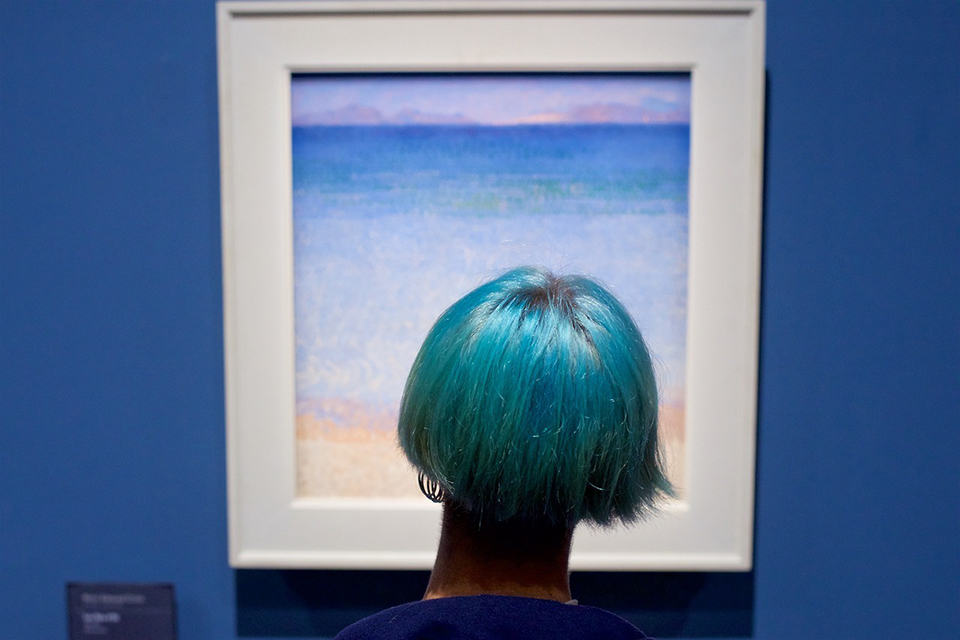
The back of a woman with blue-dyed hair seems to merge like a jellyfish into a seascape by the French painter Henri-Edmond Cross.
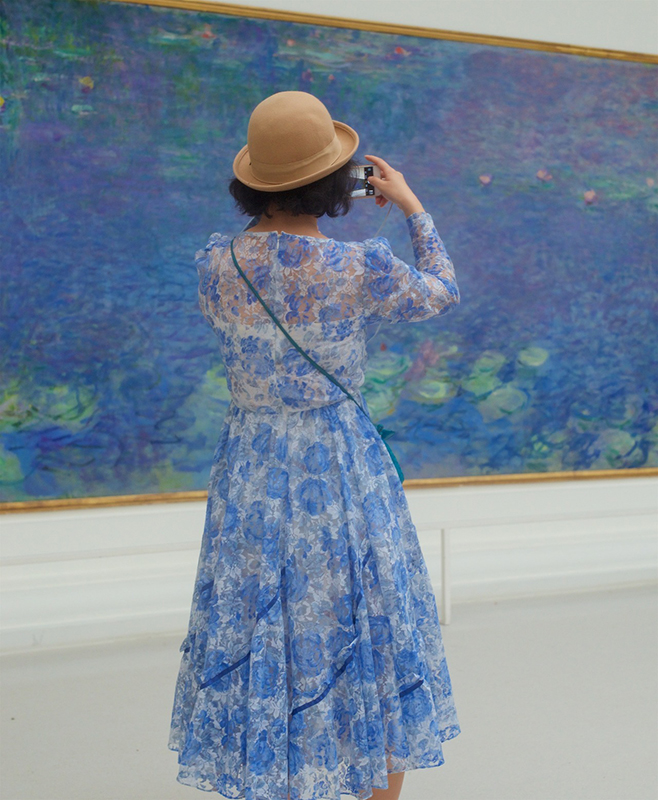
A woman wearing a straw hat and a transparent dress with a floral pattern looks at one of Monet's water lilies. She could have walked straight out of it.
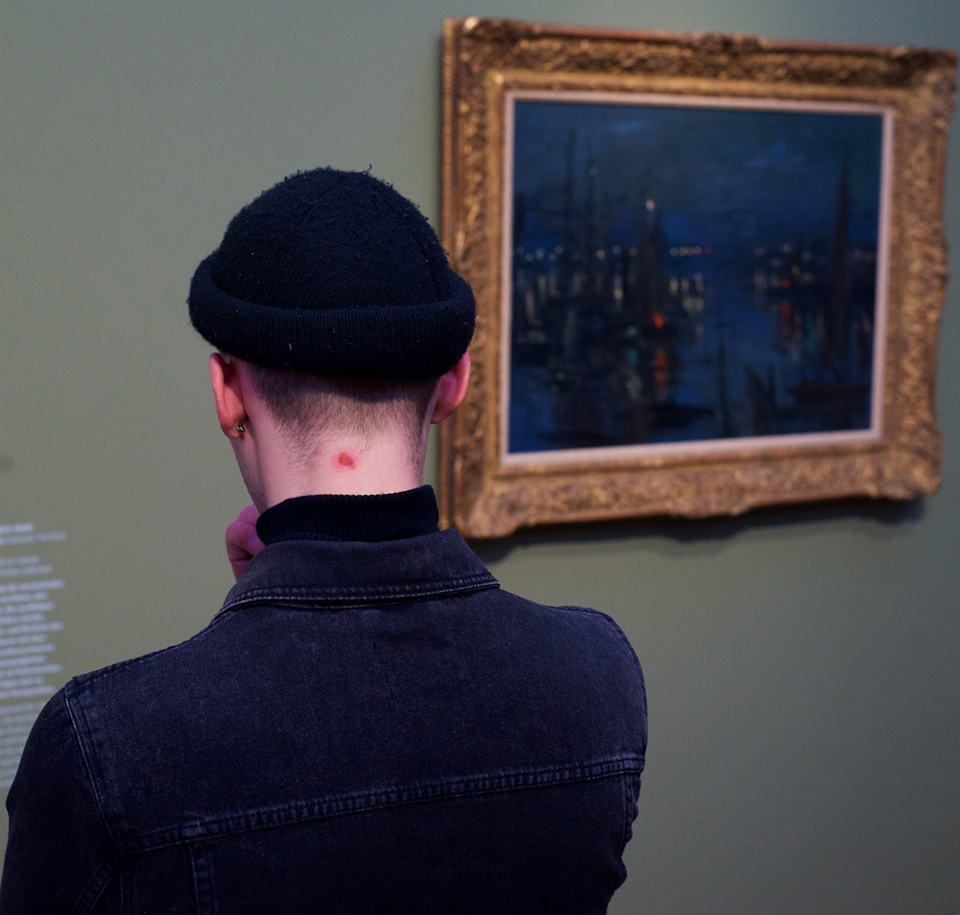
In front of a dark painting of a harbour at night stands a hipster wearing a dark blue turtleneck and hat. The love bite on his neck corresponds perfectly with the red spot of light in the painting.
On average, he spends nine minutes on each photograph. He chooses the image first, then tries to find the candidate and keeps following them. Then he hopes the group around them will leave and the candidate will stay put.
The woman with curly brown hair and a green and white blouse, whose colours and textures recur in a Gauguin painting, didn't notice a thing. On average, someone looks at a painting for eleven seconds, so you have to shoot quickly.
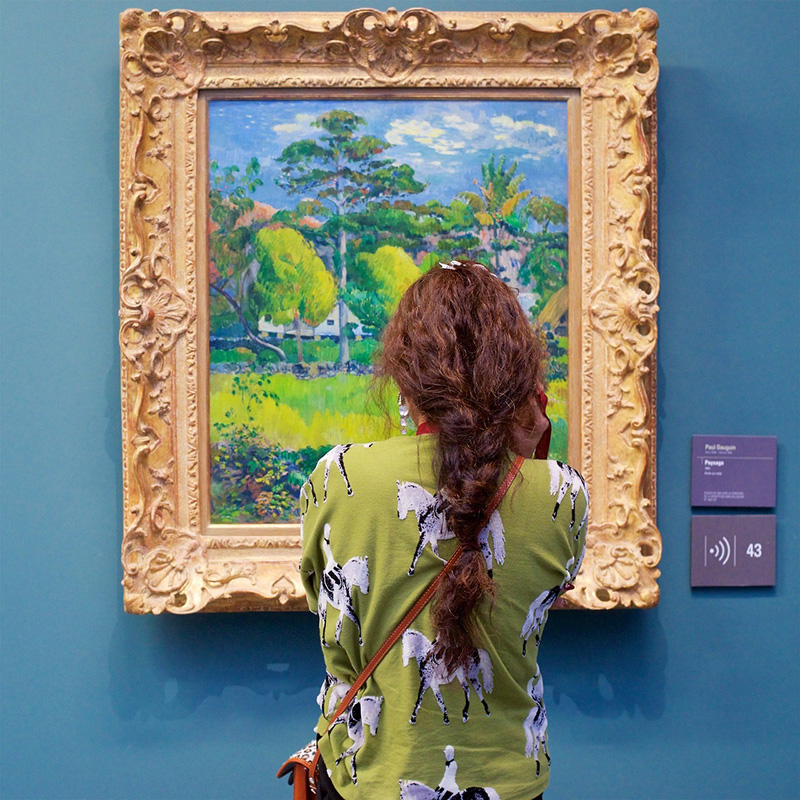
Stefan thinks people are unconsciously attracted to images in which they recognise something of themselves. Someone with red hair is more likely to look at a red-haired person in a painting.
And sometimes it doesn't work. Stefan once waited by Marc Rothko's red and black painting at the Centre Pompidou, where three people dressed in red and black walked past within an hour. But they didn't stop!
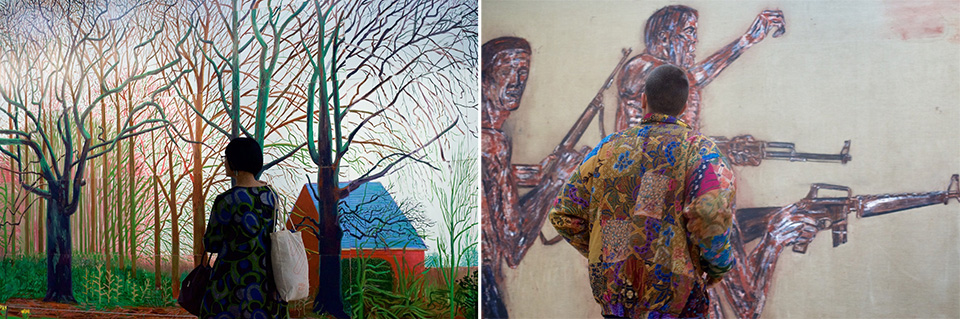
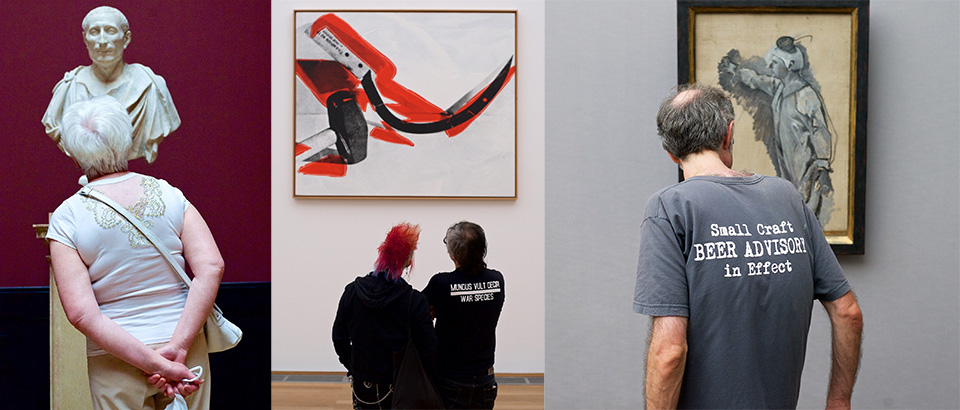
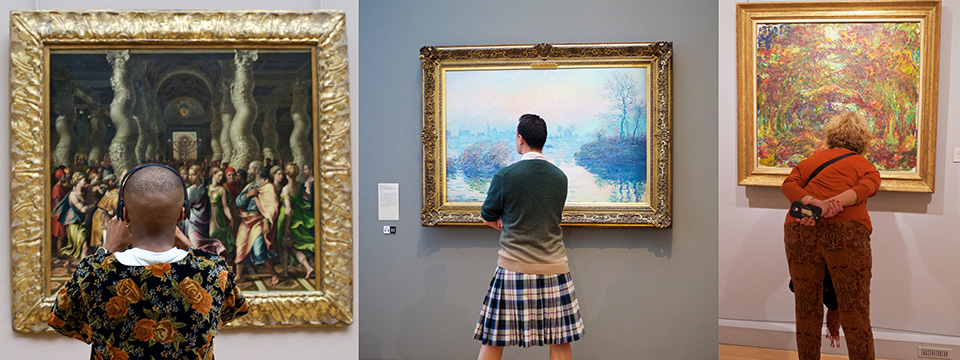
Stefan Draschan's patience and dedication have nevertheless produced some beautiful and surprising images. We selected the best ones for you:
About the author
Michelle Peeters is fotografe en oprichter van DeuxBleus Fotografie. Michelle herkent het bijzondere in het gewone en het gewone in het bijzondere. Ze heeft zich nooit willen specialiseren en is daardoor van alle markten thuis.
You might also like
-
 8 tips for photographing art
by Michelle Peeters
-
 Classic paintings recreated as hilarious quarantine photos
by Michelle Peeters
-
 Photographing classic cars: Louwman Museum
by Michelle Peeters
-
 Paintshoot; playing with paint in the studio
by Elja Trum
-
 Why do you get so tired in a museum?
by Elvira Smit
-
 10 tips for light painting
by Liesbeth van Asselt
2 comments
-
 Ly wrote on Tuesday 21 November 2017 at 17:49 | reply
The question I always have with this kind of photo is: are those people asked for permission afterwards to use it?
Translated from Dutch. -

 Michelle Peeters wrote on Tuesday 21 November 2017 at 18:00
| reply
@Ly: I think, because people were photographed from behind and are therefore unrecognizable, that it will probably be okay..
Translated from Dutch.
Have your say
Please note: Articles older than a week can only be commented on by signed-in visitors.Would you still like to comment? sign in or create a free account.
Become a better photographer every week
A practical photography tip in your inbox every week.
38,764 photography enthusiasts already receive the tips! More about the weekly mail. Or keep up to date via  Facebook.

Elja Trum
Photofacts; everything to do with photography!
Would you like to take better photos and keep up with what is happening in photography? Photofacts publishes articles that teach you something about photography — from a product announcement to a practical shooting tip or a look at a website. Photofacts covers photography every day and is a hobby project of Elja Trum's that got out of hand. The articles are written by a team of volunteer authors. If you would enjoy writing one or more articles for Photofacts, do get in touch.More about PhotofactsPhotofacts is made possible in part by
