

Photo report: chicken challenge
Thursday 31 May 2018, 14:28 by Michelle Peeters | 6,068 views | 5 commentsThis article was translated from Dutch with the help of AI. Read the original.
Studies have shown that chickens have more cognitive and communication skills than we could ever have imagined. They have complex communication with specific meanings.
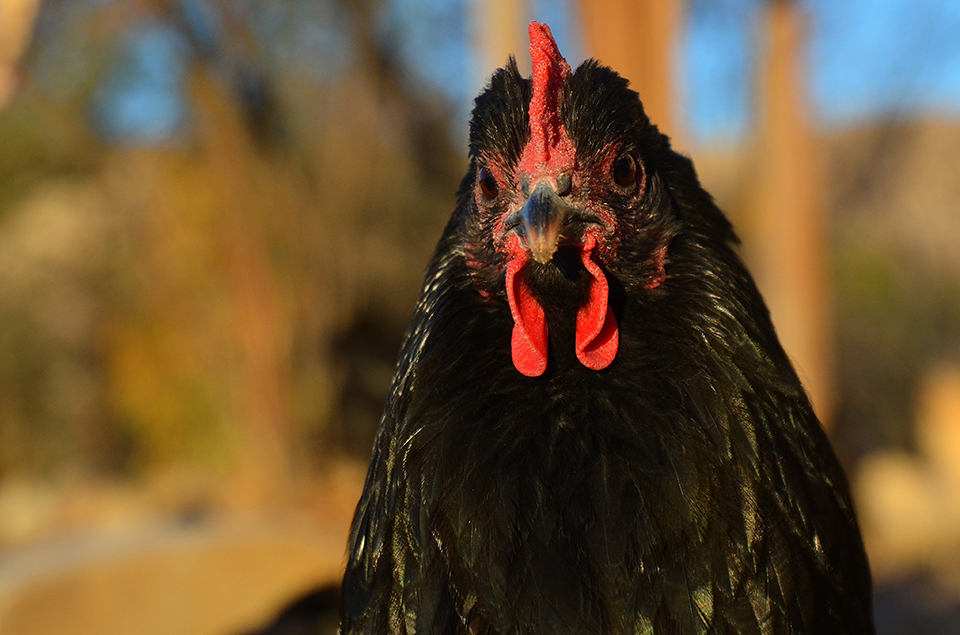
Discarded chickens
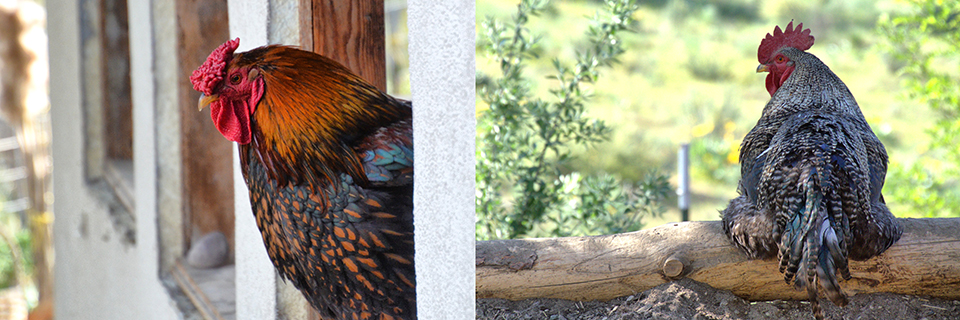
Tanja Thomas (who lives in Methow in the United States) adopted several 'discarded' chickens and has now been able to spend enough time around them to study their behaviour closely. She made an interesting photo series about this.
She noticed that they produce a huge variety of sounds, from clucking to their chicks to warning other chickens where food can be found. And that they are exceptionally fascinating animals, each with their own character and personality.
She decided to study and describe their behaviour, both in text and in photographs. The Huckleberry Press has even published an article about it! This article includes some of her findings, illustrated with her photos.
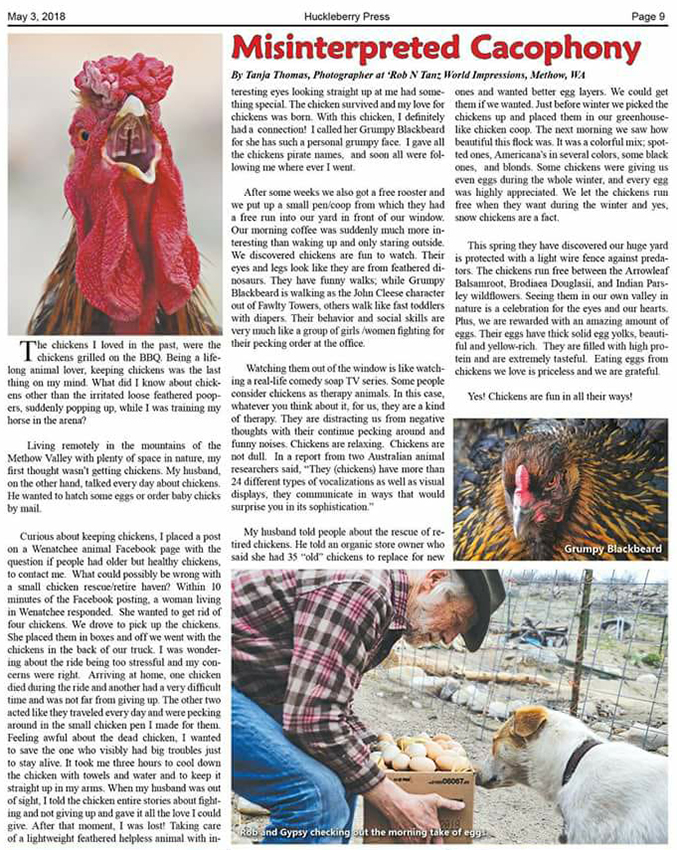
Intelligence
Chickens are much smarter than you think. Recent studies have shown that chickens are intelligent animals with many characteristics similar to those of primates.
They can solve complex problems, understand cause and effect, pass on knowledge, show self-control and even worry about the future. Chickens can also recognise and remember more than 100 individuals, including people.
Most fascinating of all is that they can understand object permanence. Even when an object is taken away from them and hidden, chickens can understand that the object still exists.
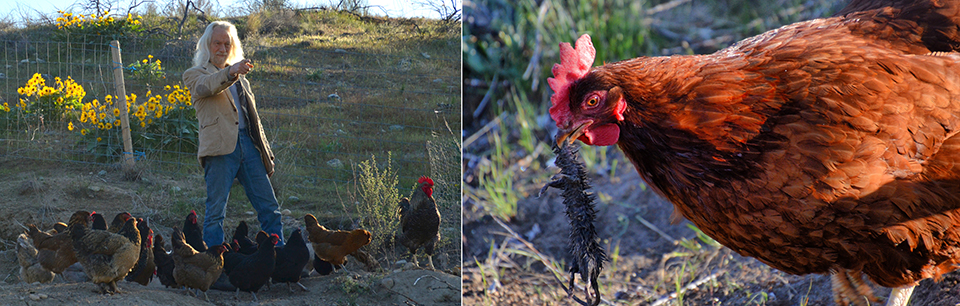
Chickens can remember the path of a ball that is hidden from view for 180 seconds.
This means they perform just as well as most primates in such experiments. Chickens are also capable of deductive reasoning, something people only master at around the age of seven.
Chickens also have self-control. They can refrain from eating something tasty when they know that an even tastier treat will follow if they do nothing. They can also establish their own position in the pecking order. It all suggests that chickens are self-aware.
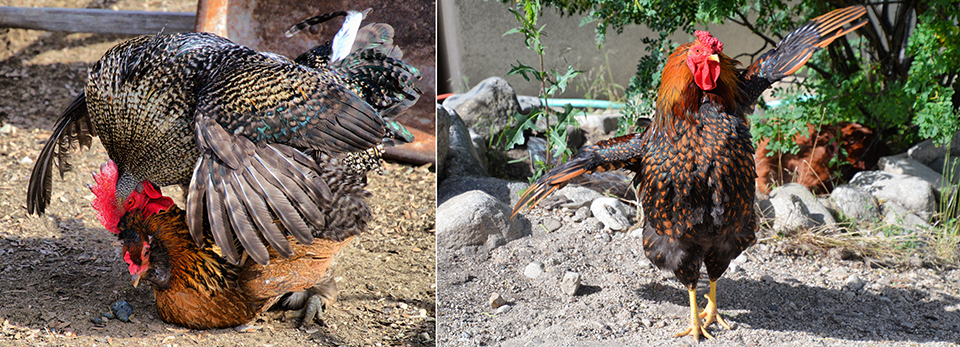
Chicken drumsticks
Collectively, we eat a considerable number of kilos of poultry meat and eggs. Around 500 million chickens are slaughtered in the Netherlands every year, 17 per second, of which 70 per cent goes abroad. We eat the rest ourselves.
Inconceivable quantities, and many people eating chicken drumsticks will not, or do not want to, think about what lovely animals chickens actually are. So credit where credit is due: chickens are intelligent and fascinating animals.
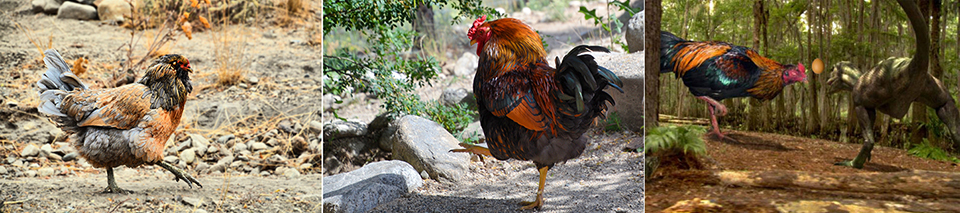
Chickens are actually dinosaurs. Like all birds, chickens are descendants of dinosaurs and therefore closely related to T. Rex. You could say that chickens are, in fact, living dinosaurs.
Communication
Chicken communication is quite complex. Chickens use non-verbal communication and know at least 24 different calls. They can also raise the alarm when danger threatens.
Once again, this suggests that chickens are self-aware and can to some extent put themselves in another animal's place, just as we are used to seeing in highly intelligent and social animals such as primates.
They have a specific sound for danger. This sound consists of three tones. When danger threatens, they tell each other whether the danger is coming over land or through the air, looking upwards at an angle, and which animal is involved.
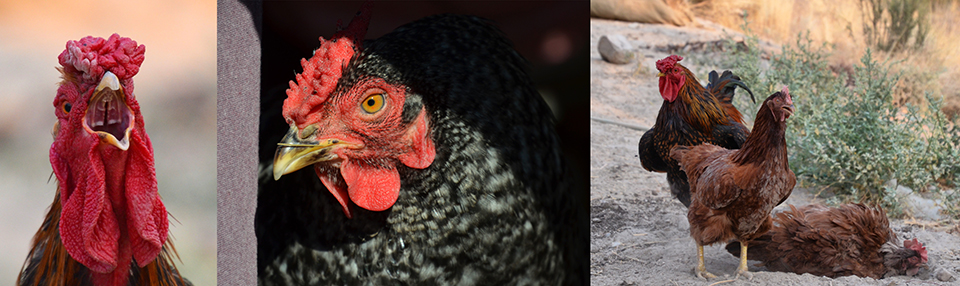
The hen lets the others know when she has laid her egg, but she also tells the group that she has returned. A broody hen has clearly recognisable sounds of her own. She will screech if you take her from her nest, and if other chickens come near, she will clearly let them know that she is broody and wants to be left alone.
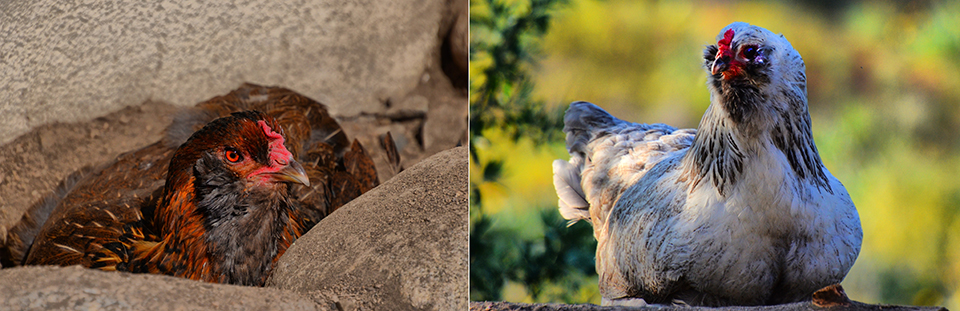
You can hear a mother hen with chicks all day. She communicates constantly with her little ones, keeping the family together. The chicks follow her everywhere. If danger threatens, she calls her children to her.
A rooster does not only crow to announce a new day. It crows several times during the day, and some breeds crow a lot. As soon as the rooster finds something tasty, he calls his hens together and they eat the food they have found.
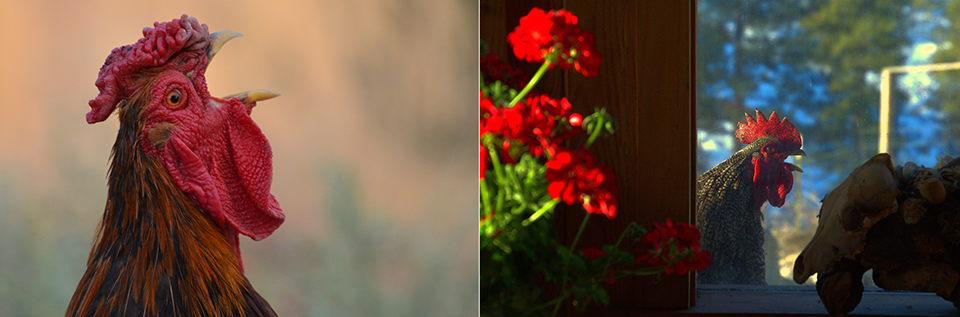
Communication is very important in a group. Chickens build a bond with each other. This bond is important if you want to hold your own in a group.
Tanja says that when she cleans the coop, there are always some hens standing outside watching and discussing whether she is doing it properly. During the cleaning, there is always one hen inside who tells the others when the job is done.
Chickens are creatures of habit. They expect everything in their run to be in the same place. Never simply remove the perches where they sleep at night. Great consternation breaks out when they have to work out where on earth they should sit to sleep!
Emotion
There are also indications that chickens can experience a wide range of emotions. They can be afraid, but also expectant. They also make decisions based on what is best for themselves.
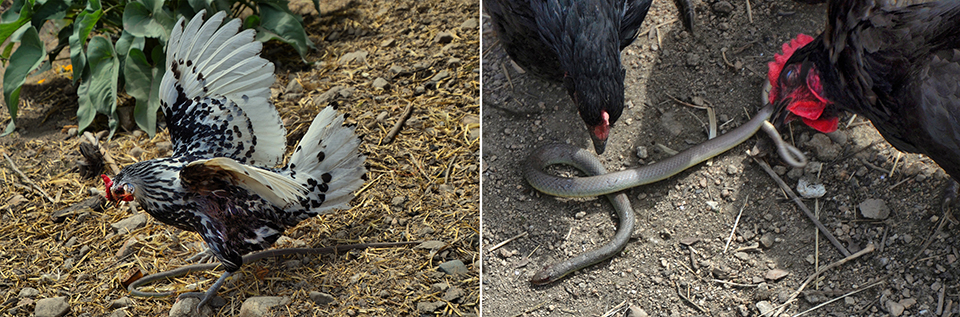
They also have a simple form of empathy. It seems that chickens can learn how to complete a task by watching the others do it.
Tanja's conclusion is that, cognitively, emotionally and socially, chickens are just as complex as most other birds and animals in many respects. She has completely revised her own view, which is also held by many other people, of the 'simple chicken'.
Therapeutic
Chickens are also therapeutic. Caring for chickens has a calming effect. They are already being used in several care homes for the elderly and are a good remedy for loneliness.
They are also very funny and entertaining to watch, and having them scratching around you creates a wonderfully homely atmosphere!
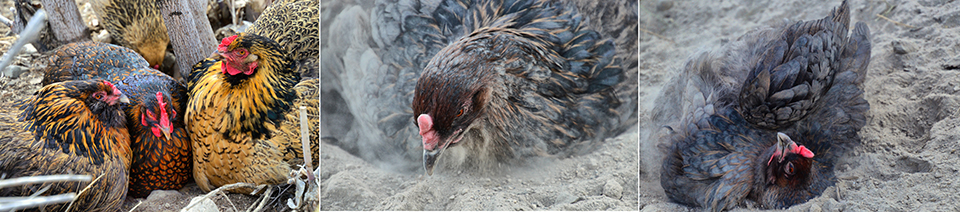
Photo tips and portrait rights
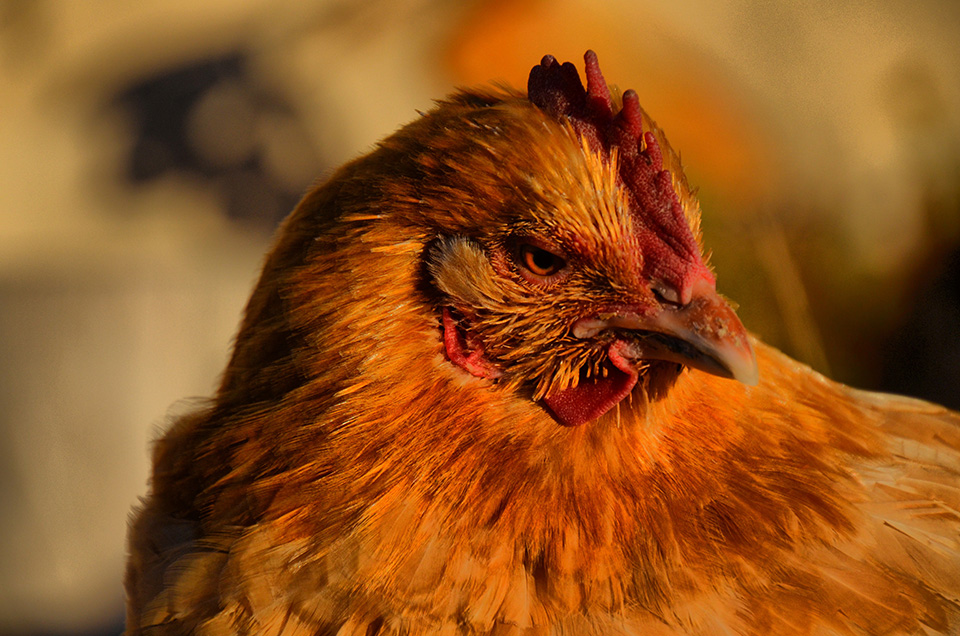
Chickens are fairly easy to photograph, especially if you take the time to build a bond with them first. Turn off your flash in any case. It scares them and produces 'flat' images.
Also use a wide aperture, with a shallow depth of field, focus on the eyes or head and see if you can find a background that is as calm as possible. Photograph from a low angle, not from above, unless there is no other option or the situation is particularly suited to it.
Chickens are unlikely to start claiming portrait rights any time soon, which makes it much easier to photograph and publish them, especially in view of the new Privacy Act AVG.
Unless they are granted the same intelligence as primates. Then it could become a different story, provided they ever manage to produce a selfie...
About the author
Michelle Peeters is fotografe en oprichter van DeuxBleus Fotografie. Michelle herkent het bijzondere in het gewone en het gewone in het bijzondere. Ze heeft zich nooit willen specialiseren en is daardoor van alle markten thuis.
You might also like
-
 Photo report: Ramsgate sailing trip 2018
by Michelle Peeters
-
 Bertha: a gigantic camera taking the largest photo ever
by Michelle Peeters
-
 A photo report using the Life formula
by Michelle Peeters
-
 Oded Balilty takes on the Cheap Camera Challenge
by Michelle Peeters
-
 Ferry's Challenge: natural light versus flash
by Elja Trum
-
 Flash photography tip: Communicate wirelessly
by Elja Trum
5 comments
-
 Rinaldo wrote on Tuesday 5 June 2018 at 09:13 | reply
Nice to read such an extensive article that seems to have been written with great care. Good to read some background information for a change and something other than just gear and technology.
Translated from Dutch. -

-

 Michelle Peeters wrote on Tuesday 5 June 2018 at 16:35
| reply
Nice tip, thanks Alexander!
Translated from Dutch. -
 Eddy van Herk wrote on Tuesday 5 June 2018 at 18:15 | reply
Great that there are still people who want to photograph animals doing their own thing.. my wife and I have been taking photos of animals, insects, etc. for years because we really enjoy it.. and for me as a former photojournalist a welcome distraction which I do with great pleasure.. little creatures... little creatures... big, small, everything is included and they all come to me.. well who doesn't know it but so much fun to do and so rewarding.. no more fun model than an animal... big or super small..
Translated from Dutch. -
 Ina
wrote on Saturday 9 June 2018 at 14:07
| reply
What beautiful photos! I also have chickens and every week I write a little story about them, with photos included. The stories can be found at defamilietok.blogspot.com.
Translated from Dutch.
Have your say
Please note: Articles older than a week can only be commented on by signed-in visitors.Would you still like to comment? sign in or create a free account.
Become a better photographer every week
A practical photography tip in your inbox every week.
38,886 photography enthusiasts already receive the tips! More about the weekly mail. Or keep up to date via  Facebook.

Elja Trum
Photofacts; everything to do with photography!
Would you like to take better photos and keep up with what is happening in photography? Photofacts publishes articles that teach you something about photography — from a product announcement to a practical shooting tip or a look at a website. Photofacts covers photography every day and is a hobby project of Elja Trum's that got out of hand. The articles are written by a team of volunteer authors. If you would enjoy writing one or more articles for Photofacts, do get in touch.More about PhotofactsPhotofacts is made possible in part by
