

Photo report: Ramsgate sailing trip 2018
Tuesday 17 July 2018, 14:28 by Michelle Peeters | 6,637 views | 0 commentsThis article was translated from Dutch with the help of AI. Read the original.
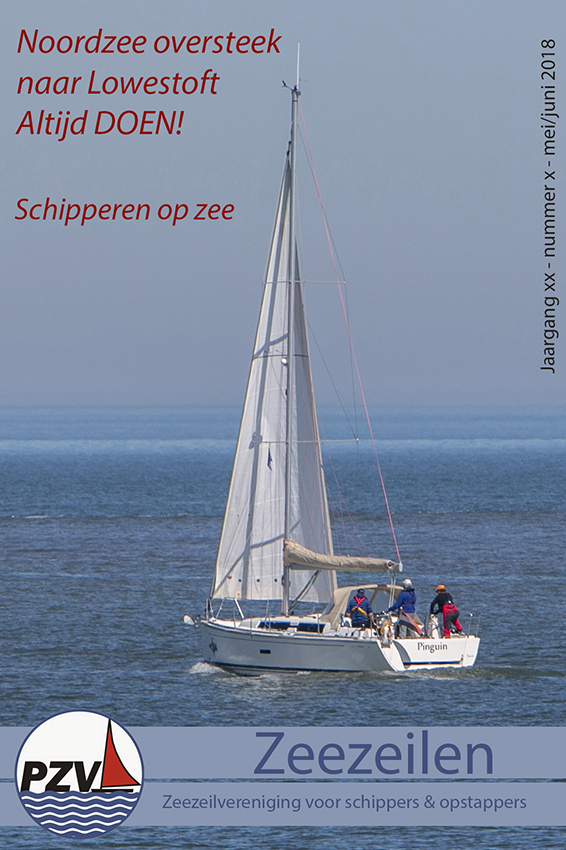
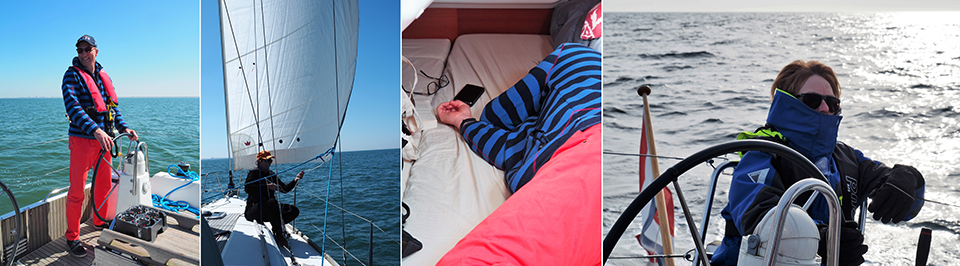
This article is a photo report built using the Life formula. This method was used to create a selection of photos of the 2018 Ramsgate sailing trip to England and back, made by four offshore sailors. Only three offshore sailors can be seen in the cover photo.
Life formula
I previously wrote an article about how you can use the Life formula to create a good and varied selection of photos when making a photo report. I used this formula for this photo report about the crossing to England (Lowestoft) by the offshore sailors.
Here is the formula again in brief. Your photo series or report must contain the eight different types of photos listed below. They should ensure that you create a varied and complete picture:
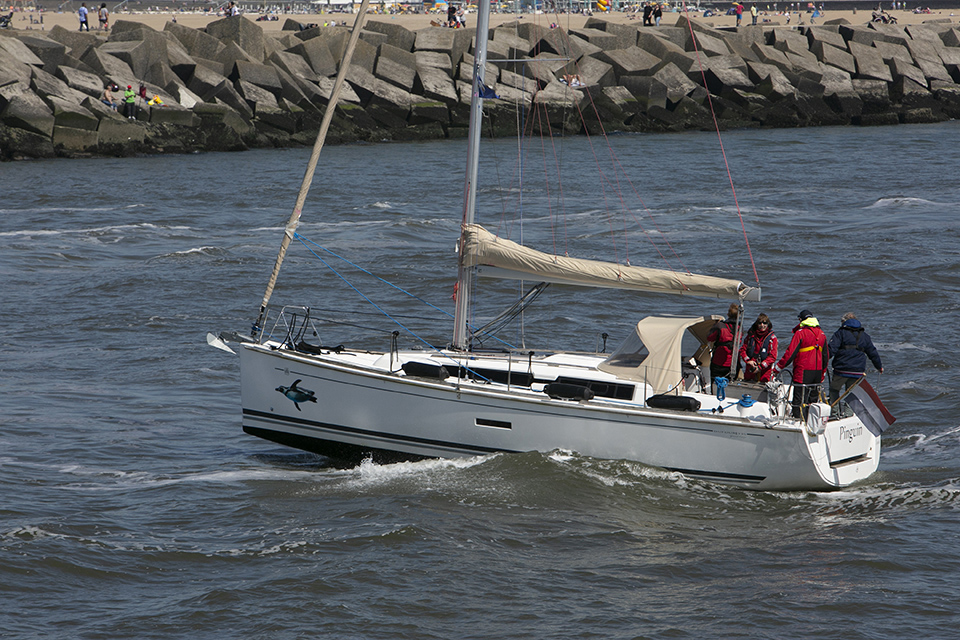
- Introduction or overview photo: a wide image taken with a wide-angle lens, giving an idea of the surroundings where the story takes place;
- Medium photo: slightly more zoomed in, showing part of the surroundings of your main subject;
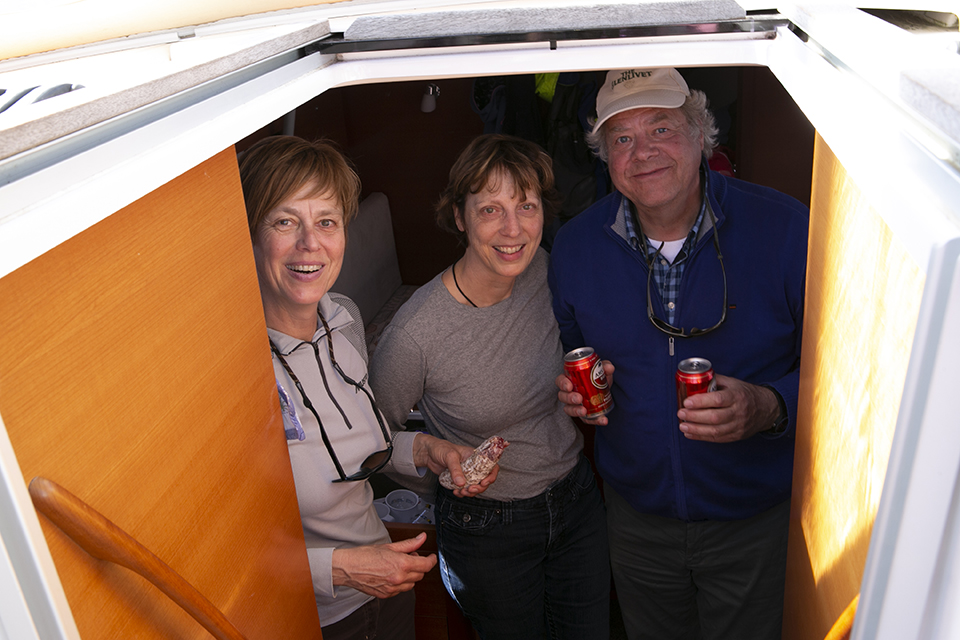
- Interaction photo: moving, dramatic images with emotion, interaction between people or with their surroundings;
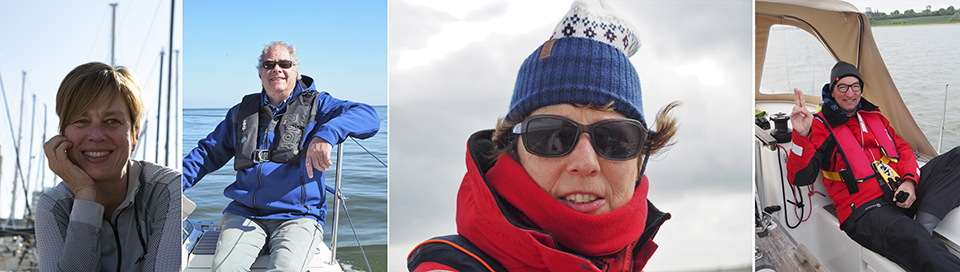
- Portrait photo: photos of the main characters in your report, preferably people with an appealing appearance, an unusual profession or distinctive clothing;
- Close-up/detail photo: minimal details that are often overlooked, abstract images and details that stimulate the imagination;
- Sequence photo: before and after photos or a series of photos with a beginning, middle and end, something that keeps recurring in your report;
- Clincher photo: the 'closing image' of your story or report, in the form of a detail or type photo;
- Signature/cover photo: the iconic and most powerful photo in your series, the photo that shows your whole story in a single image and can be used as a cover photo.
Sailing to England
The English east coast lies just beyond the horizon, which makes it a world journey in miniature to sail there. England is so different, fascinating and yet also so familiar.
For some participants, the crossing is their first real experience at sea. That first time you sail far away from the coast, instead of sailing along it, is an experience many will never forget. Others have done it several times, and every crossing is different.
Why do we want to go to England so much? Because it is, of course, a very interesting country, with rolling coasts, charming rivers, beautiful villages, picturesque cottages, medieval cathedrals and castles, and of course the pubs. And of course the sometimes eccentric English.
But how do you get there, and how do you go about it?
PZV as organiser
Zeezeilvereniging voor Schippers & Opstappers PZV regularly organises crossings that you can sign up for. They put the crews together based on the information provided by the participants, such as their preferred role and sailing CV.
A boat crew consists of a skipper, a co-skipper, an experienced crew member, someone making their first crossing with extensive offshore sailing experience, and one or two crew members with sailing experience.
PZV usually chooses the direct crossing: the shortest route between the port of departure, Scheveningen, and the port of call, Lowestoft in England. For the crossing from the Dutch coast to Ramsgate, this means a night at sea.
PZV has been organising the Ramsgate for many years, a crossing to Lowestoft of around 20 hours, part of which is sailed at night. The total fleet consisted of 16 boats. This year, part of the fleet gathered in the port of Scheveningen to make the crossing together.
They had planned 5 days, leaving enough time to look around on the other side.
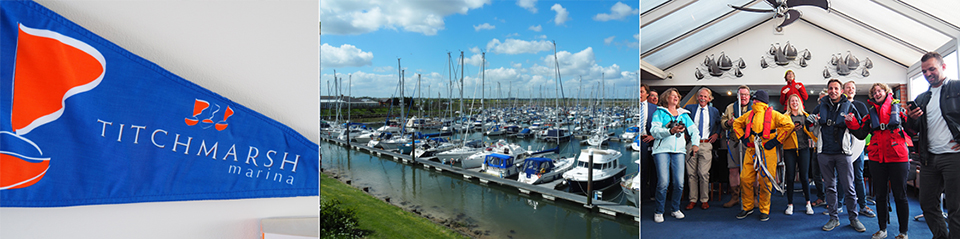
From Lowestoft they sailed south along the English east coast. Relatively short day trips, which also allowed them to see some of the area around Titchmarsh. Then they sailed back to the Dutch coast.
The crew of the Pinguin consisted of Jacqueline Flink, Ton Buijs, Ellen Kok and Piet Schrijver.
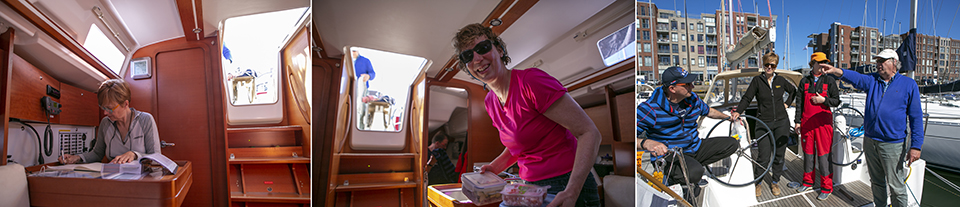
The sailing plan and preparations
- Friday 4 to Sunday 6 May: from the home port, Almere, via IJmuiden to Scheveningen. Around 25 nautical miles from IJmuiden, around 44 nautical miles from Roompotsluis;
- Monday 7 and Tuesday 8 May: from Scheveningen to Lowestoft (RNSYC), around 97 nautical miles;
- Wednesday 9 May: from Lowestoft to Levington (Suffolk Yacht Harbour), around 45 nautical miles;
- Thursday 10 May: from Levington to Titchmarsh, around 10 nautical miles;
- Friday 11 and Saturday 12 May: return journey to the Netherlands, around 100 nautical miles to Roompotsluis, around 130 nautical miles to IJmuiden;
- Sunday 13 May: extra day, reserve day
Not every coastal sailor is also an offshore sailor. England, with its long, varied coastline, sheltered river mouths and beautiful old harbour towns, lures the true coastal sailor as the ultimate cruising playground. But then there is the crossing.
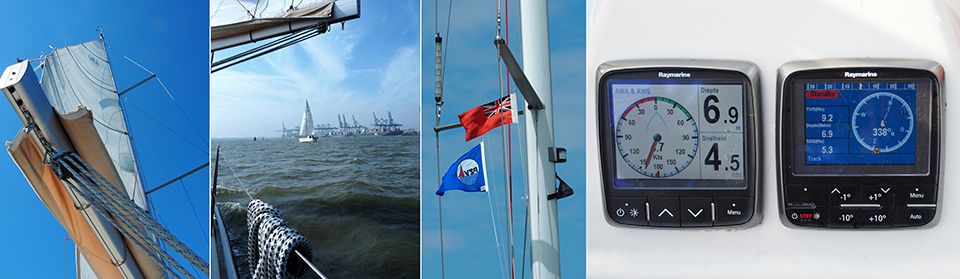
As preparation, it is important to check your equipment carefully. In any case, you need a boat that is suitable for such a trip and can accommodate at least 4 people. The equipment you need includes:
- Navigation & communication equipment: VHF radio, shortwave transmitter, Raymarine plotter (autopilot), WiFi antenna, IPAD with INAVX software, satellite telephone, paper charts, GPS/Plotter as an emergency backup;
- On-board power supplies (generator) for the fridge, autopilot, lighting, navigation lights and other instruments;
- Active radar reflector, liferaft, sea anchor, Man Overboard alarm, emergency kit, safety alarm;
- Food and water supplies for at least a week and a gas bottle for cooking;

IJmuiden-Scheveningen
On Friday 4 May they left IJmuiden for Scheveningen. A distance of 25 miles. If you leave at high water, with a following wind and the ebb current behind you, you can cover that distance within one tide. If the route is not downwind, things are different.
When tacking, however, the sailing distance can increase to twice as much, which can make the journey take as long as ten hours. Along the way, after the turn of the tide, you will then face the flood current. This relatively short section also needs to be planned and assessed carefully.
Do you want the toughest part at the start of the trip, when everyone is still fit but not yet used to the sea, or at the end, so morale stays high because you are making such good progress?
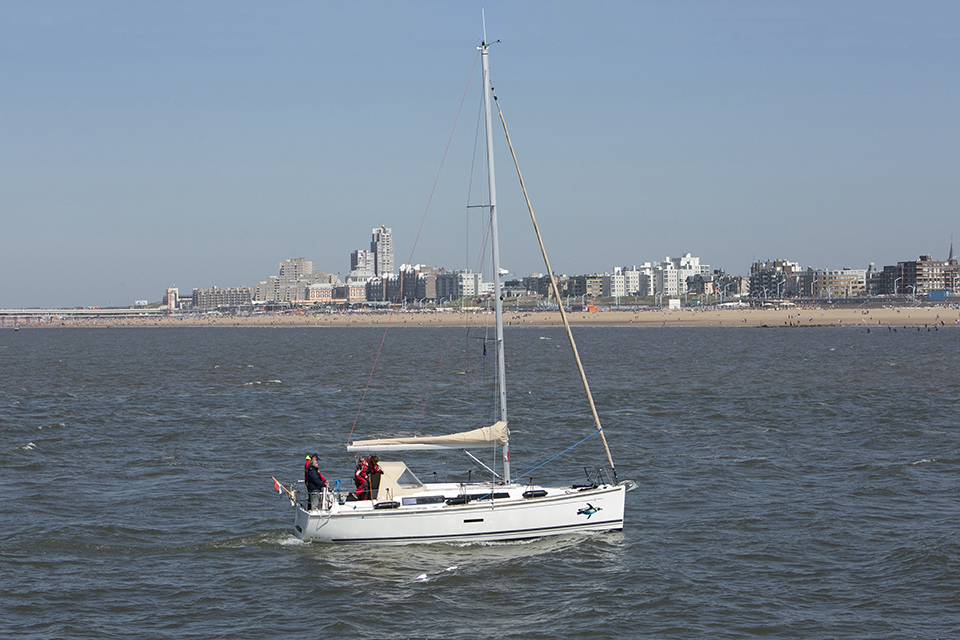
Scheveningen - Lowestoft
This trip is approximately 100 miles. Especially if you are not yet familiar with your destination port, you preferably want to arrive in daylight and with the right tide. This requires careful timing of the trip as part of the preparations beforehand.
First, you determine whether or not to leave based on the weather forecast. If you do leave, it is important to make a realistic estimate of your cruising speed. Based on that and the distance to be sailed, you can easily determine how many hours the crossing will take.
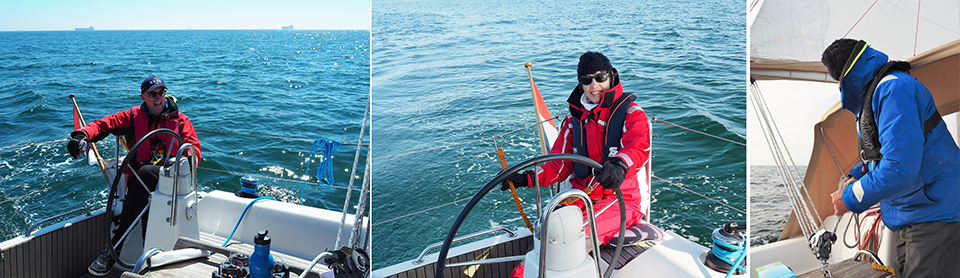
If the wind drops, for example, you should not hesitate to set a spinnaker or start the engine. It may also be that your departure time falls during the night, so that you can arrive in daylight.
But leaving in the dark is less difficult than arriving in the dark. Because of the long days in May, it was possible to leave in daylight and also arrive at dawn.
Heavy shipping traffic
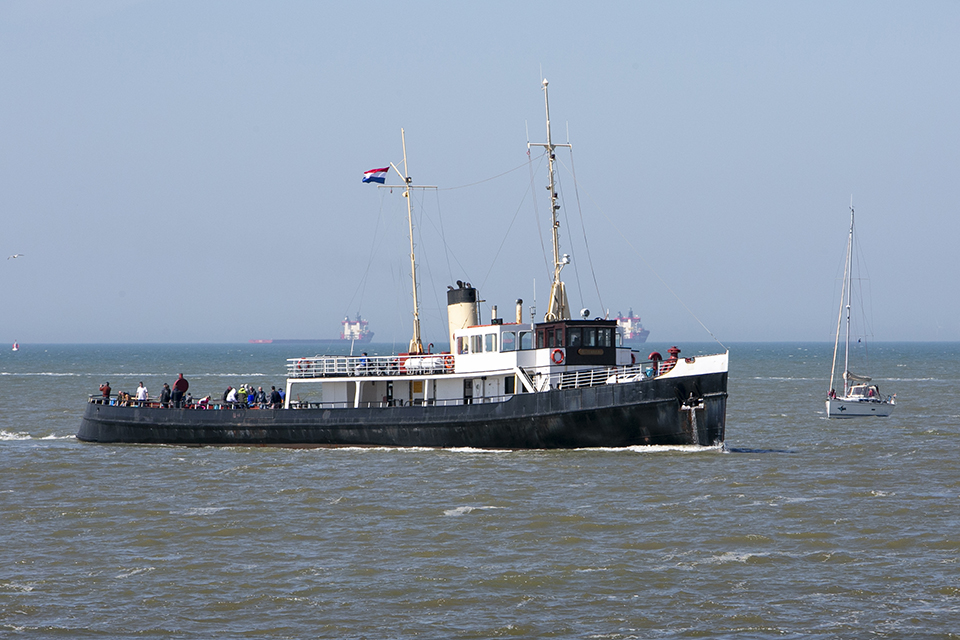
The southern North Sea is very busy, with more than 250,000 ship movements per year. How do you deal with large ships at sea when you are on a yacht?
When you see a container ship speeding past at 25 knots, it seems like a cold and impersonal monster that has set its sights on your little boat. Nothing could be further from the truth, however. The risk of being run over is extremely small. But even a small risk must be taken extremely seriously.
You must always keep watch, systematically gather information and alter course in good time and clearly if necessary.
Wind and currents
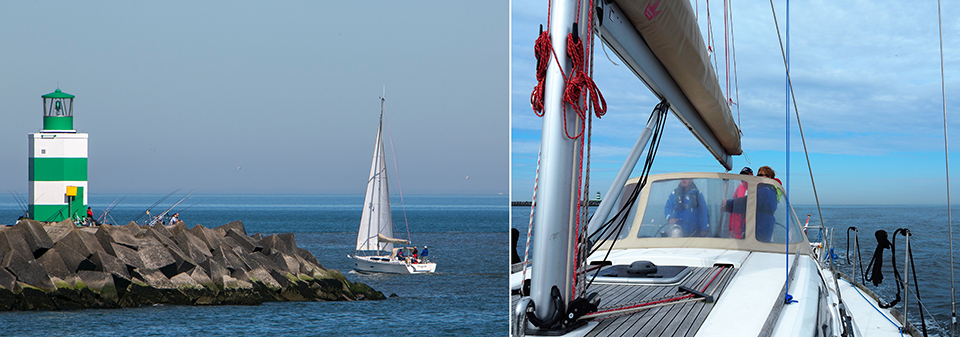
South-westerly winds are most common in the North Sea. Because of the high land along the English coast, you find yourself in shelter. That is why the English east coast is such a pleasant sailing area.
When leaving the sheltered English coast for the North Sea, however, this can be a pitfall.
It is important to read the flat sea and the weather properly. It can also blow hard and persistently from the north-east. As for the currents, the flood current in the North Sea runs southwards and the ebb current towards the north. Throughout the crossing, you have to contend with an average current set.
A night at sea
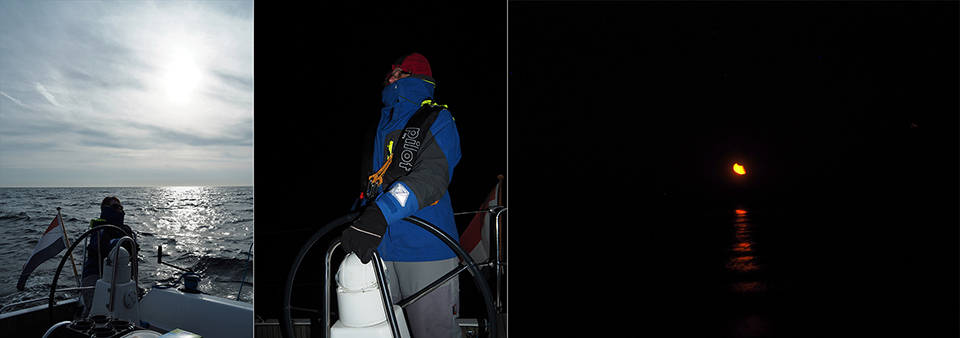
Many offshore sailors making their first crossing independently are apprehensive about spending a night at sea. This is understandable, because it is an impressive, boundary-pushing experience that even seasoned offshore sailors can often still remember clearly.
This is exactly what sailors are often always looking for: excitement, learning and a sense that it is worthwhile.
If you prepare well, however, you can enjoy it in complete peace of mind and it is often not too bad. In May, June and July, the nights at sea are short and it very rarely gets completely pitch-black.
All around you, you see light: the moon, planets, oil rigs, other ships and the sea itself, which sometimes glows pale green.
You have plenty of time to get used to the night and you spend a few hours in a small world of your own. You take turns at the helm, while the rest of the crew sleeps. You sleep for just a few hours before you have to go back on deck.
Land ahoy
A few hours later, it begins to grow light again and, beyond your glowing instrument screens, you can suddenly see other things: colours, the sea, your sails, and the coast of England comes into view! Any bad mood caused by lack of sleep soon disappears.
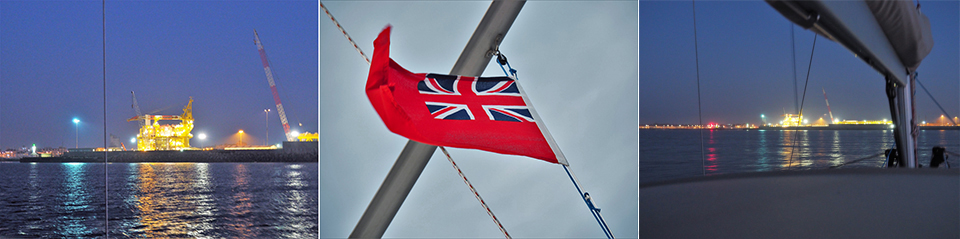
The English east coast consists largely of river mouths, where the tide plays an important role. But when arriving in Lowestoft and Ramsgate, you do not have to take the tide into account.
Lowestoft is an ideal port of call. From there, you can plan your approach to the river mouths perfectly.
Conclusion
I am still very enthusiastic about using the Life formula when making a photo report. It was not easy to arrive at a good selection of photos. There ended up being considerably more than 8 in total.
This is also because I did not make the trip myself. The photos during the crossing were taken by Ellen Kok.
Despite this, it takes little effort to create uniform and varied photos and arrive at a complete picture of your subject. Selecting your photos afterwards also takes much less time now. Highly recommended!
About the author
Michelle Peeters is fotografe en oprichter van DeuxBleus Fotografie. Michelle herkent het bijzondere in het gewone en het gewone in het bijzondere. Ze heeft zich nooit willen specialiseren en is daardoor van alle markten thuis.
You might also like
-
 Report: A Photography Trip to China
by Manon Sas
-
 Locations on holiday and day trips
by Nando Harmsen
-
 Tips for a photography trip. Part 1: The camera bag
by Nando Harmsen
-
 The Diagonal Method
by Michelle Peeters
-
 Tips for a photo trip. Part 4: storing photos safely
by Nando Harmsen
-
 An inspiring trip to Lofoten, Norway
by Nando Harmsen
0 comments
Be the first to share what you think!
Have your say
Please note: Articles older than a week can only be commented on by signed-in visitors.Would you still like to comment? sign in or create a free account.
Become a better photographer every week
A practical photography tip in your inbox every week.
38,900 photography enthusiasts already receive the tips! More about the weekly mail. Or keep up to date via  Facebook.

Elja Trum
Photofacts; everything to do with photography!
Would you like to take better photos and keep up with what is happening in photography? Photofacts publishes articles that teach you something about photography — from a product announcement to a practical shooting tip or a look at a website. Photofacts covers photography every day and is a hobby project of Elja Trum's that got out of hand. The articles are written by a team of volunteer authors. If you would enjoy writing one or more articles for Photofacts, do get in touch.More about PhotofactsPhotofacts is made possible in part by
