

How to create an intense red sky in your landscape photo?
Friday 29 April 2022, 22:44 by Nando Harmsen | 5,703 views | 2 commentsThis article was translated from Dutch with the help of AI. Read the original.
You know those landscape photos with an intensely red sky. The photos give the impression that the entire sky was coloured. Have you ever experienced this in real life? Did you know you can make this intense red sky happen in your landscape photo? I'll tell you how.
As landscape photographers, we are always looking for the best moments of the day. This is often sunrise or sunset, the golden hour. Ideally, we want the entire sky to be coloured by that golden light, just as we often see in other people's photos.
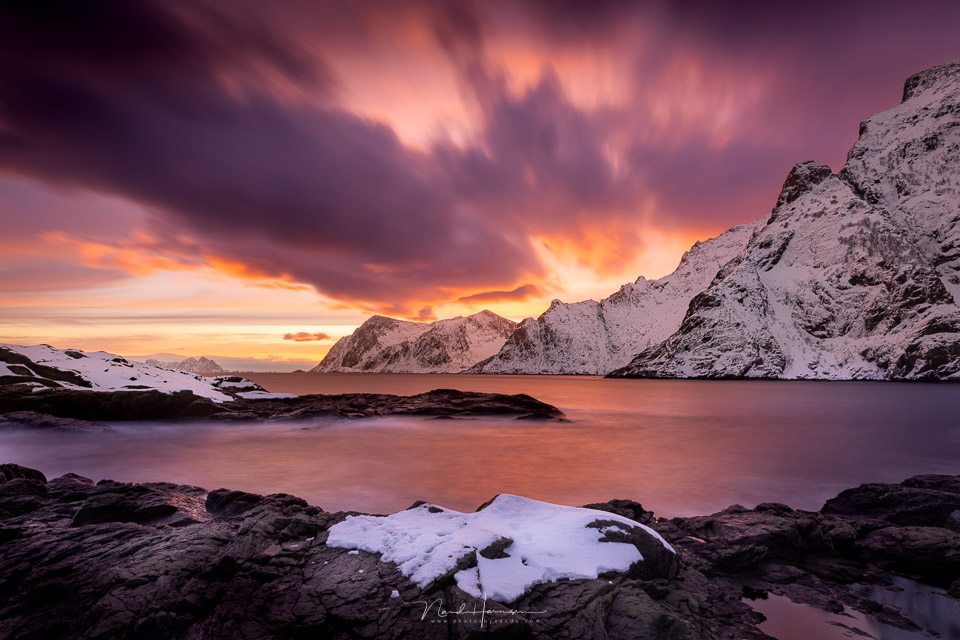
The conditions naturally have to be right for that red sky. We don't want a clear sky, but there shouldn't be too many clouds either. The clouds have to be at the right height, so that the sun gets the chance to cast its light on them.
When we have these conditions, the beautiful red colour often turns out to appear only near the horizon. Above that, the colour quickly changes into the blue of a morning sky. That intensely red sky has not appeared in the photo after all.
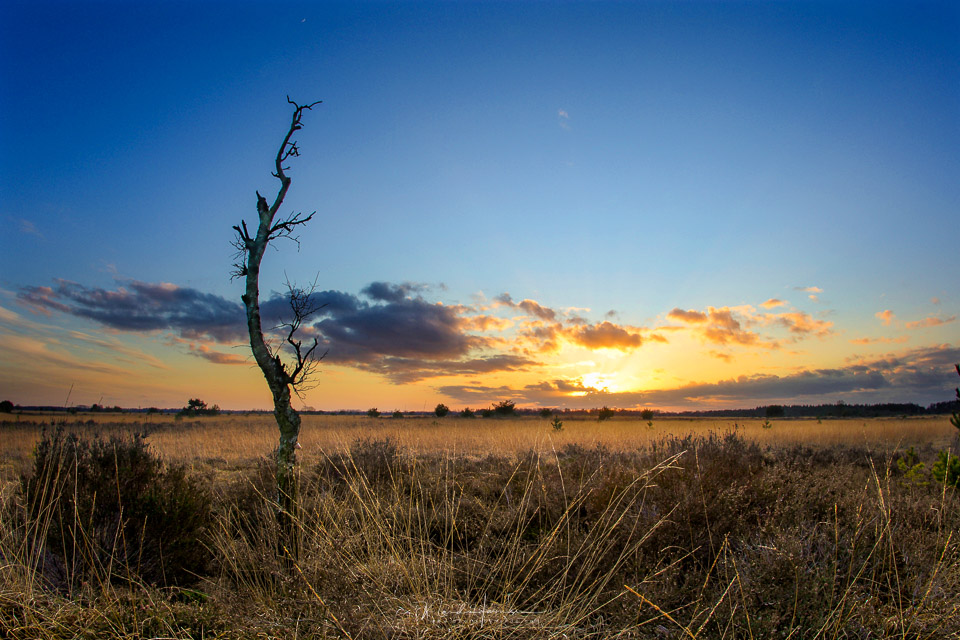
A completely red sky is actually quite rare. Especially when there also have to be beautiful cloud patterns. Your chances of seeing one only become good if you go out very often. Still, it is possible to make this happen.
The problem with a less impressive red sky is often the use of wide-angle and ultra-wide-angle lenses. We want to include as much as possible in the frame, including a foreground to meet the self-imposed requirement of creating depth.
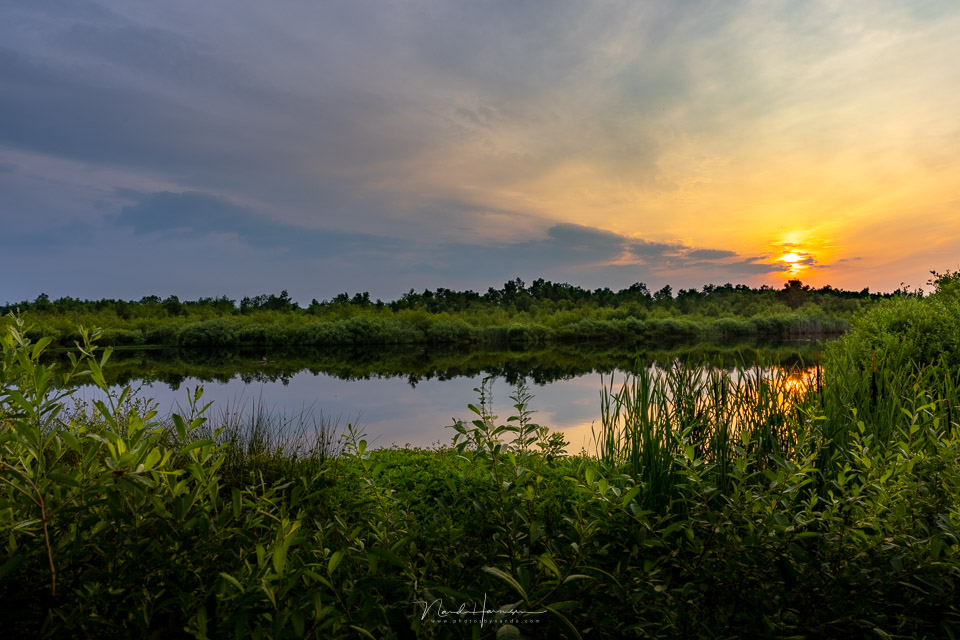
Including a lot in the frame means that everything has to be made smaller. Otherwise, it obviously won't fit within the edges of your frame. Everything becomes small, except perhaps a foreground that you are practically standing on top of. So that band of colours on the horizon is also shown small.
If you have a foreground that is shown large because you are almost on top of it with your lens, that band of red colours looks even smaller. In addition, the wide-angle lens shows a large part of the blue sky above that intensely red sunrise or sunset.
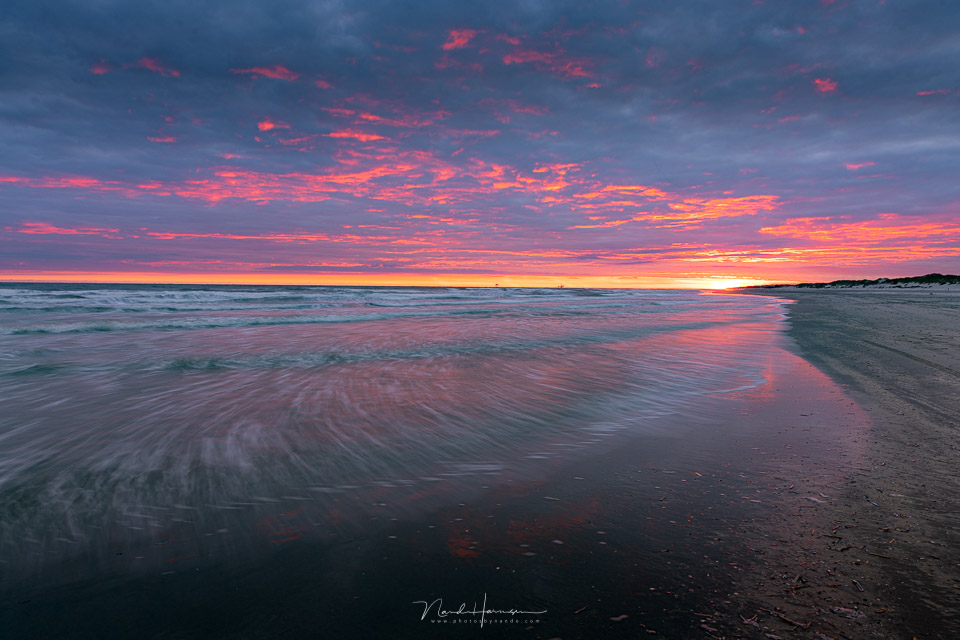
I suspect you've already guessed the solution. Use a longer focal length. Zooming in makes the angle of view narrower, so that narrow band of intense red colours on the horizon appears larger. Zoom in far enough and the entire photo fills with the red colours of the sunrise or sunset.
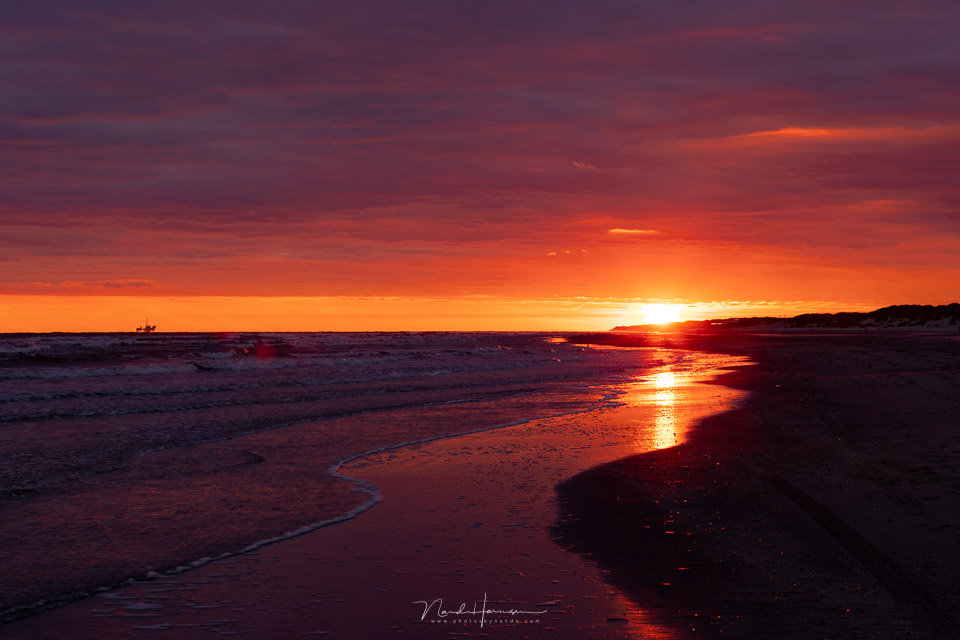
You don't always need a real telephoto lens to achieve this. Sometimes zooming in to a 35mm focal length is enough. At other times, 70mm works well, or something between 35mm and 70mm. But a focal length of 200mm or more can work too. The fun thing about that is that the sun's disc also appears large in the frame.
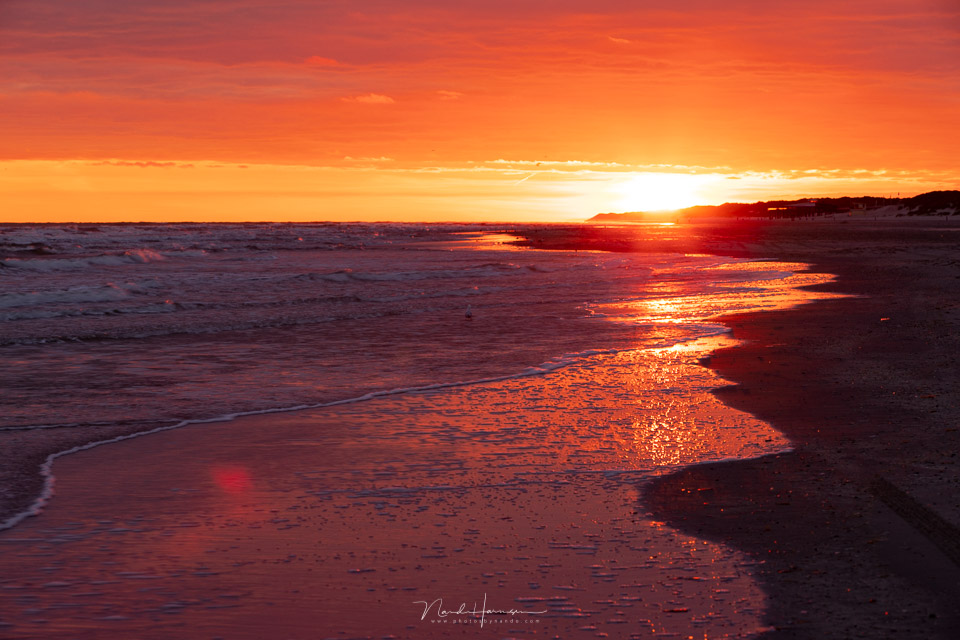
The next time you are out and find a beautiful sun on the horizon, with fantastic colours, forget for once that you 'have to' photograph as wide as possible. You don't have to. Choose the focal length that works best. For an intensely red sky in a landscape photo, that may well be a longer focal length.
About the author
Nando Harmsen has been photographing for more than 40 years. He specialises in wedding photography and landscape photography. Nando also gives talks, workshops, masterclasses and photo trips, and regularly reviews new and interesting equipment.
You might also like
-
 Don't Turn a Sunset into a Night Photo
by Nando Harmsen
-
 Landscape photography tip: stay on after sunset
by Nando Harmsen
-
 Landscape photography with a telephoto lens
by Erik Nevels
-
 A sunrise thanks to Photopills
by Nando Harmsen
-
 Code orange or red? Go out and take photos!
by Nando Harmsen
-
 Nature photography tip: Plan your sunrise photos carefully
by Rob Dijkstra
2 comments
-

 Donald Willemsen
wrote on Friday 29 April 2022 at 23:02
| reply
Donald Willemsen
wrote on Friday 29 April 2022 at 23:02
| reply
Nice article Nando. Here is a photo I took myself in St. Malo on the Breton coast. https://www.facebook.com/photo/?fbid=5351267691583975&set=a.407435989300528
Translated from Dutch. -
 Robert wrote on Tuesday 3 May 2022 at 15:31 | reply
Here at the Gooimeerdijk West nature enchants the most beautiful colours every time, Nando. After 17 years I am still surprised by all the shades. Just like in your photos. Seeing is ....clicking....it's gone just like that.
Translated from Dutch.
With photo-shooting regards Robert
Have your say
Please note: Articles older than a week can only be commented on by signed-in visitors.Would you still like to comment? sign in or create a free account.
Become a better photographer every week
A practical photography tip in your inbox every week.
38,983 photography enthusiasts already receive the tips! More about the weekly mail. Or keep up to date via  Facebook.

Elja Trum
Photofacts; everything to do with photography!
Would you like to take better photos and keep up with what is happening in photography? Photofacts publishes articles that teach you something about photography — from a product announcement to a practical shooting tip or a look at a website. Photofacts covers photography every day and is a hobby project of Elja Trum's that got out of hand. The articles are written by a team of volunteer authors. If you would enjoy writing one or more articles for Photofacts, do get in touch.More about PhotofactsPhotofacts is made possible in part by
