

The magic of landscape photography
Sunday 1 May 2022, 14:28 by Laura van der Burgt | 5,233 views | 1 commentThis article was translated from Dutch with the help of AI. Read the original.
Landscape photography is a class of its own. Within (nature) photography, it is one of the most challenging forms of photography. Even if you are in a beautiful location, with beautiful light as well, it unfortunately does not automatically mean that the photo will work.
Fortunately, many good tips have been shared here on Photofacts over the past week and a half, which can help you come home with a successful photo. I will try to add a few more.
Find your "local patch"
Find one or more nature reserves near you that you can reach quickly. By photographing here often and regularly, you get to know the area and can make use of photographic opportunities in all seasons and weather conditions. This is your training ground.
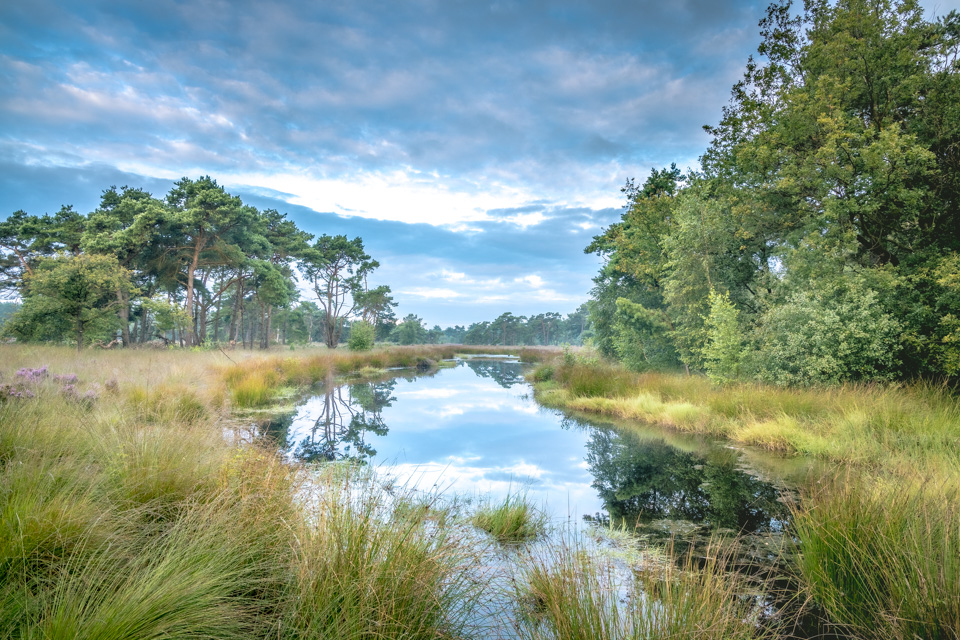
Here you know where and when the sun rises and sets, when to expect mist or a beautiful sky full of clouds, and where to spot special trees, plants or animals.
In my immediate surroundings, there are about four nature reserves that I know reasonably well and like to visit. I often go walking and cycling here to get ideas and take in light situations and compositions.
I also always keep an eye on the weather forecast and usually have a rough idea of what I want to photograph, or learn to photograph. But I also let myself be guided by what comes my way. A ray of light on a bush or tree with fresh green leaves against a dark background, and I am sold.....
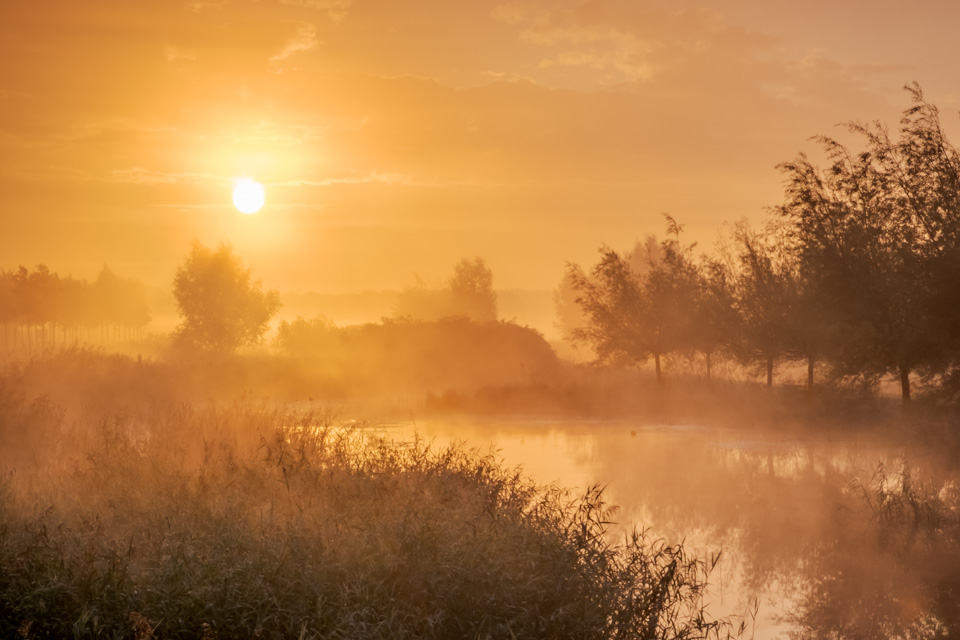
I prefer to photograph early in the morning, for the soft light. First the silence and then nature waking up make me feel connected. And it is a beautiful way to start the day!
Find an interesting composition
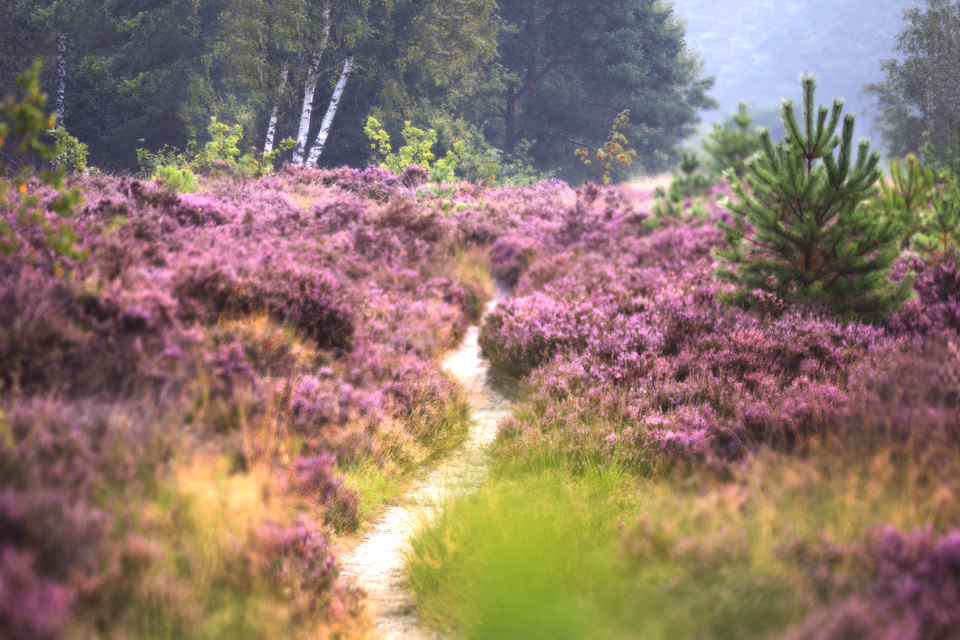
What intrigues you in a landscape? What are you setting out to photograph? Classic landscape photography is fairly documentary. By adding something extra to your image, you make the photo more interesting and engaging for the viewer. You can do this, for example, by paying attention to the lines in a landscape.
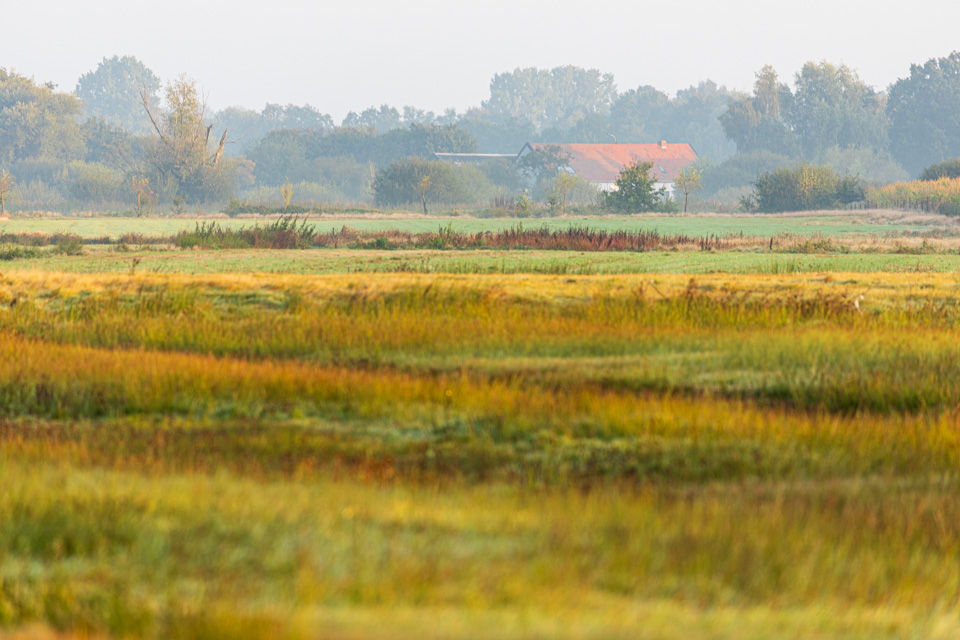
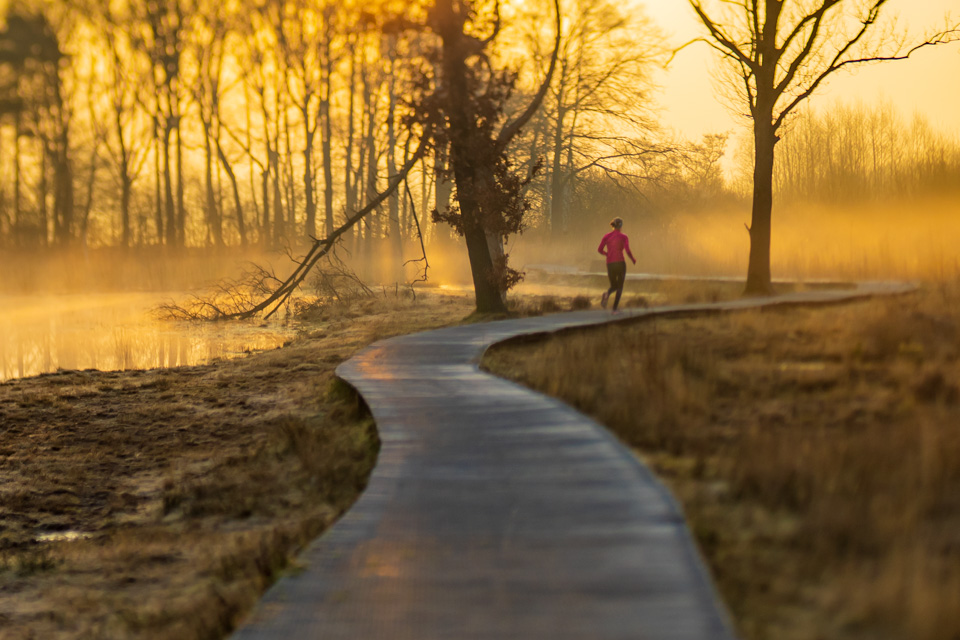
Try to use the lines in the landscape to tell a story and lead the viewer through the image. Balance and harmony will then gradually emerge in your photo. Always take several photos from different viewpoints, and do not too quickly think that you have got the shot.
I am drawn to winding paths, fences, beautiful trees, backlighting and reflections, for example. I am always looking for these things without really realising it.
Follow your feelings
Follow your feelings, not the likes on social media. Recreating photos is educational, but not very creative. Learn to adjust your expectations. Not every photo trip produces a good photo, but it does produce an experience and something to remember.
At least as important: realise that for every good image on the internet, perhaps a hundred or more less successful ones came before it.
Preparation and routine
>Teach yourself the discipline of keeping your camera bag and equipment organised and ready to go. Your lenses should be clean, your filters stored in the filter case without streaks, and an empty, formatted card in your camera. Set up the camera so you can start straight away. Keep your tripod clean and working smoothly.
This also applies to setting up your camera equipment quickly on location. Build up a routine so you can react quickly to changing weather conditions, especially in the morning at sunrise. Learn to operate your camera, lenses and tripod without thinking.
Make choices
At first, I often carried a large, full backpack. Now I like to travel light and consciously choose the equipment I want to photograph with.
Often this is to master a particular technique. For example, working with long shutter speeds, multiple exposures or panoramas. But it can just as easily be a particular lens that I want to get to know better.
I always have a polarising filter, a set of step-up rings, Neutral Density Filters (Little & Big Stopper by Lee) and the Lensbaby OMNI filter set in my bag.
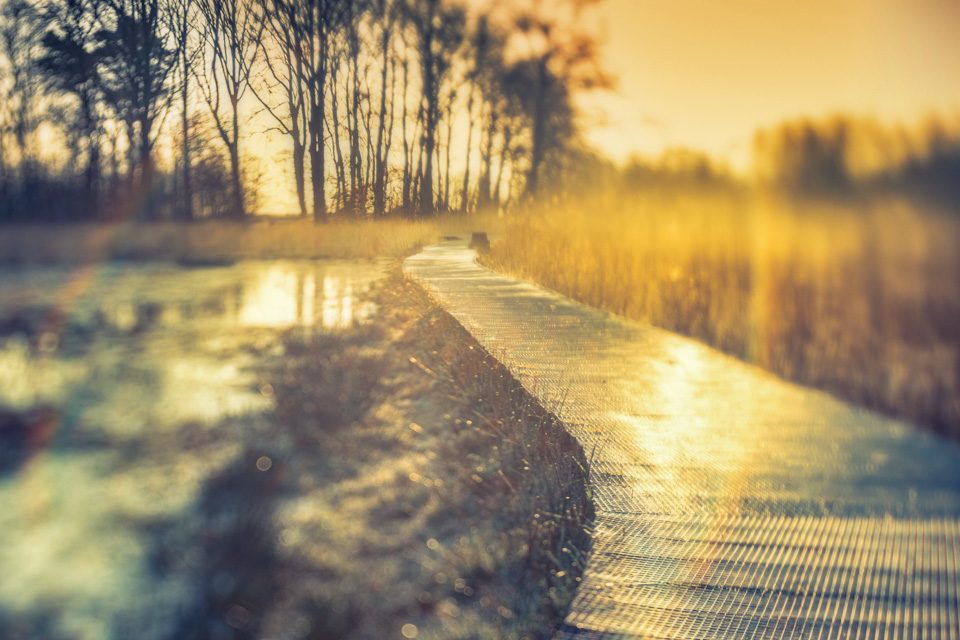
My most recent challenge is landscape photography with a Lensbaby. For this, I use the Lensbaby Edge (35, 50 or 80mm). Normally, landscape photos are sharp from front to back. But because I prefer dreamy and atmospheric images, I like experimenting with blur.
The Edge allows you to choose a strip of sharpness and blur the other parts of the photo.
Detach emotion
These days, I leave photos on my card for a few days before importing and viewing them. This gives me time to detach the emotion and euphoria of the moment, so I can judge the photos more objectively.
For the same reason, I often wait before deleting photos, because I may feel differently about them a week later.
Post-processing
To assess a photo's potential, I first view it as a thumbnail. This makes it easier for me to judge the composition. I take several images of the same subject, but vary the viewpoints and/or focus point. And a few steps to the left or right can make all the difference.
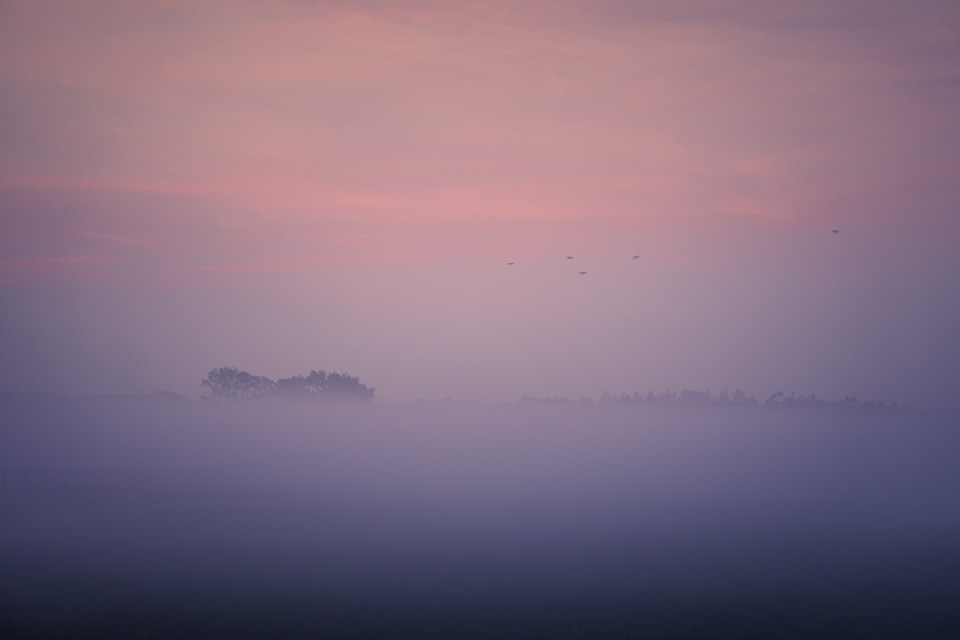
When you photograph in RAW, you cannot avoid post-processing. This can be done on a computer, tablet or phone. Programs I use a lot are Snapseed and Lightroom/Photoshop. Invest in a set of good presets, they will save you a lot of time.
The NIK Collection, formerly owned by Google and now by DxO, is also a great tool with many options and styles to take your photo to a higher level.
About the author
Natuurfotografie is voor Laura een samensmelting van het ongelooflijk genieten van in de natuur zijn en haar passie voor fotografie. Het fotograferen met een minimale scherptediepte is favoriet en ook trekt ze er vaak met de lensbaby op uit.
You might also like
-
 Creative photography with a Lensbaby
by Laura van der Burgt
-
 Lensbaby Double Glass II Optic announced
by Elja Trum
-
 The Magic of Photography with Multiple Exposures
by Laura van der Burgt
-
 Dreamy, creative nature photography with a Lensbaby
by Laura van der Burgt
-
 Review of the handy Haida Magic Stick-It Wrapper Cloth
by Nando Harmsen

1 comment
-

 ErikvanRosmalen
wrote on Monday 2 May 2022 at 20:52
| reply
ErikvanRosmalen
wrote on Monday 2 May 2022 at 20:52
| reply
Nice story Laura. I indeed also have a few 'local patches'. I'm of course not a landscape photographer, but they are a few spots of my own that I know well and where I can therefore also do very varied things!
Translated from Dutch.
Have your say
Please note: Articles older than a week can only be commented on by signed-in visitors.Would you still like to comment? sign in or create a free account.
Become a better photographer every week
A practical photography tip in your inbox every week.
38,982 photography enthusiasts already receive the tips! More about the weekly mail. Or keep up to date via  Facebook.

Elja Trum
Photofacts; everything to do with photography!
Would you like to take better photos and keep up with what is happening in photography? Photofacts publishes articles that teach you something about photography — from a product announcement to a practical shooting tip or a look at a website. Photofacts covers photography every day and is a hobby project of Elja Trum's that got out of hand. The articles are written by a team of volunteer authors. If you would enjoy writing one or more articles for Photofacts, do get in touch.More about PhotofactsPhotofacts is made possible in part by
