

12 tips for atmospheric autumn photography
Monday 25 October 2021, 20:02 by Laura van der Burgt | 8,778 views | 2 commentsThis article was translated from Dutch with the help of AI. Read the original.
Autumn is just around the corner. After a few more cold nights, most trees will start to change colour. The Amelanchier and the American oak are usually the first to get the season underway.
Autumn is one of the most beautiful seasons of the year for photography. Would you like to know how I photograph autumn? Read on for my tips.
The last two weeks of October and the first two weeks of November are the best time for autumn photography.
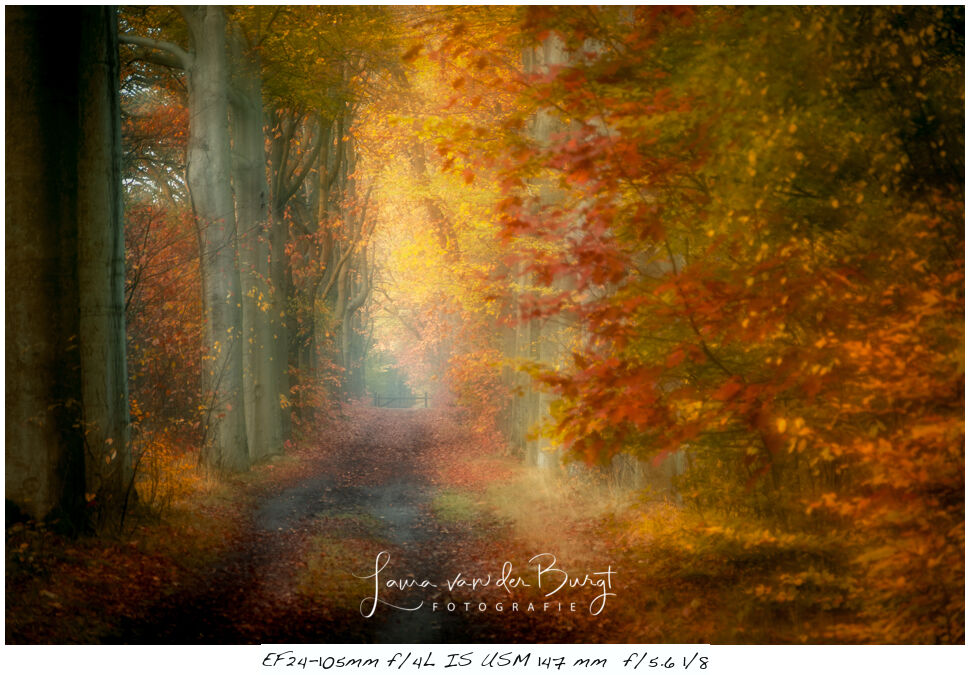
It is not just the colours, but also the beautiful filtered light, which often falls through the trees in a hazy, angled way, that is fantastic to see. The high humidity in autumn creates a mysterious haze and hides messy parts of your photo.
1. Clothing
Although the weather is not always inviting when you want to go out, nothing can stop you with the right clothing and accessories. I always wear waterproofs and waterproof shoes or boots.
Gloves for the cold mornings, if necessary. A mat to lie on, or possibly a bin bag. I also make sure my camera bag stays dry.
If it really starts pouring, I put my camera away for a while. I could continue photographing with a camera rain cover, but somehow that always turns into a struggle for me. I would rather take a short break, have a cup of tea or coffee and take the time to enjoy the forest.
2. What's in my bag
I have been photographing with a Canon R system for two years. I am a fan of the incredibly flexible screen, which allows me to photograph from all kinds of angles. In addition, the 'what you see is what you get' makes photographing much more enjoyable.
I also always take a polarising filter, neutral density filter, such as the little stopper, a small torch and a tripod (!).
.jpg "Laura van der Burgt - autumn photography")
I like experimenting, and if there is still room I take a lensball or LED lights with me. Also useful: a flask of tea or coffee, something to eat and a foldable mat to protect against the cold and damp.
3. Sunbeams
I keep an eye on the weather forecast and pay particular attention to cold nights preceded by a relatively warm day. Little wind and high humidity. This gives you a good chance of dew and mist.
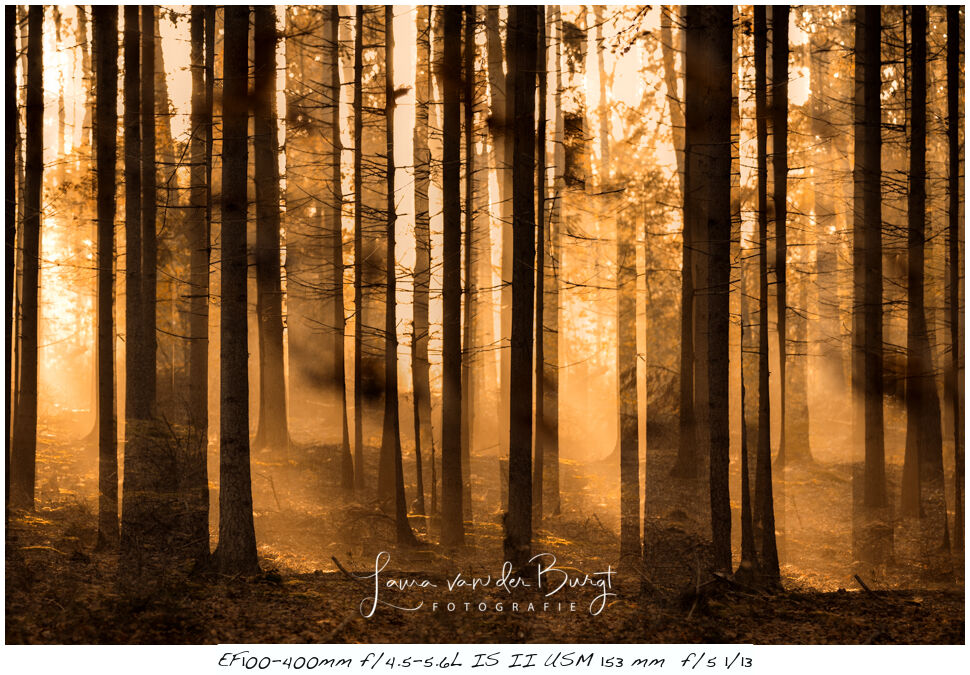
When the sun breaks through at around 9 or 10 o'clock and you are walking towards the sun, into the light, pay particular attention to the appearance of sunbeams. This is a fantastic spectacle to photograph atmospherically!
Lens choice: wide-angle or telephoto lens from a tripod.
4. Reflections
When it has rained and puddles have formed in the forest, try including them in your composition. By keeping your camera low to the ground, just above the water, you can capture reflections and mirror images. This adds something extra to your image, an extra dimension. Do pay attention to the position of the sun, it should be in front of you. Try to keep mud and similar things out of the frame as much as possible.
Lens choice: wide-angle.
Alternative: no puddles in the right place? Try using a sheet of perspex, your phone screen or a prism to create reflections yourself.
5. Polarising filter
This is a standard accessory in my camera bag. The effect cannot be matched by any amount of post-processing. It is usually used to make the clouds in the sky stand out nicely, but in autumn it is especially useful for intensifying the colours and reducing reflections from the leaves.
This filter makes your exposure time longer, so use a tripod or increase the ISO if necessary to prevent unwanted motion blur.
6. People
Find a beautiful avenue of trees and wait for walkers or cyclists to pass by. This adds depth and dynamism to your image. It can work well as a silhouette or with movement.
Visual storytelling is very much in. Using a wide aperture, such as f/4, draws the viewer's eye towards the walker and makes the foreground much softer.
Lens choice: wide-angle or telephoto lens.
7. Sun star
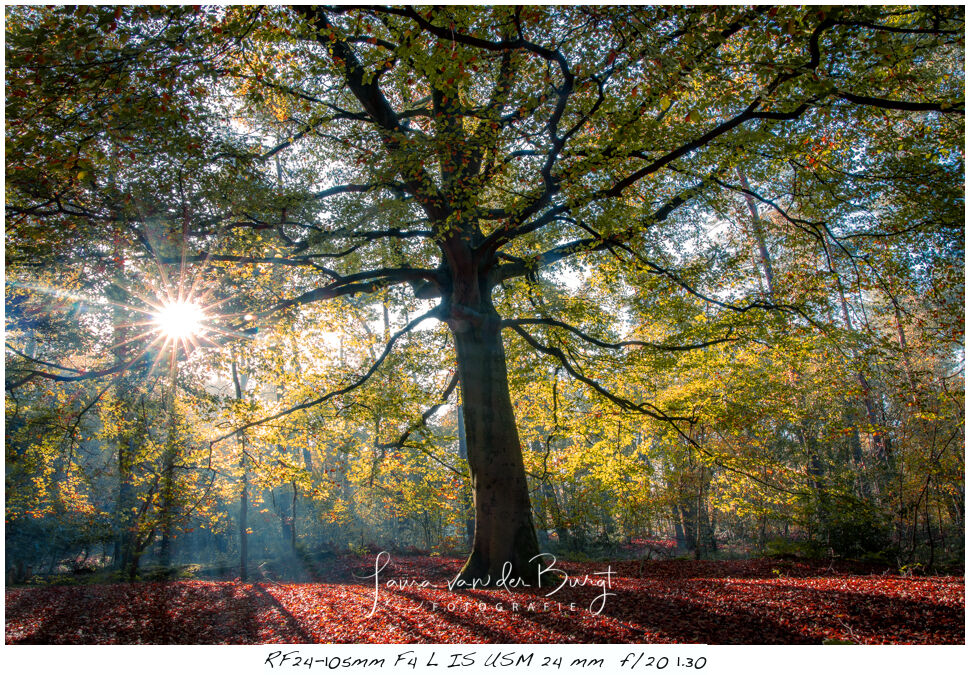
When the sun is half hidden behind a tree, you can capture it as a little star in your photo. Moving your camera slightly to the left or right, so that the rays just peek out from behind the trunk, gives you the best chance.
An aperture of at least f/16 is required. I have a depth-of-field preview button on my camera which, when pressed, shows a preview.
The number of rays depends on the type of lens you use. A wide-angle lens produces a different result from a telephoto lens.
8. Mushrooms
The ideal time for mushrooms has arrived. The combination of sun, cold and moisture makes them spring up from the ground. Search among dead trunks and branches, or on slightly higher moss-covered mounds. But very often they are simply growing beside the path.
Photographing upwards from below, with a tree's canopy in the background, creates beautiful bokeh, giving you those magical round circles in the background.
Play around with this by moving your camera slightly to the left or right so that the circles are arranged nicely around your subject. You can also vary the aperture to make them appear larger, at f/2.8, or smaller, at f/5.6.
If you want more impact, you can work with flash or another light source, and possibly use a plant mister for water droplets.
Lens choice: macro lens, telephoto lens.
9. External flash or light
Using an external flash or another light source can produce unusual photos. Personally, I like a dark, underexposed image where the subject is lit and stands out.
I use an orange Rogue gel to add a warm colour and set my camera's white balance to Kelvin 4800 to make the image cooler. When you photograph in RAW, you can still change this during post-processing.
10. Composition and viewpoint
Less is more, so try to build up your image calmly. Keep paying attention to lines and depth. If you are not sure, try out different viewpoints.
Feel free to take ten photos of the same subject from different positions. Afterwards, you can assess on the computer what worked best.
A lot has been written about composition and it remains a fascinating subject. Follow your own instincts. It is often a matter of trying things out and analysing them afterwards. Ask a fellow photographer for feedback!
11. Creativity
I try to take photos that differ from what I normally photograph. For example, by using multiple exposures in the camera.
The combination of a moving and a still image layered over each other can be interesting. An intentionally moved image, ICM, intentional camera movement, can be very surprising because you cannot see or predict the result beforehand. A longer shutter speed is required.
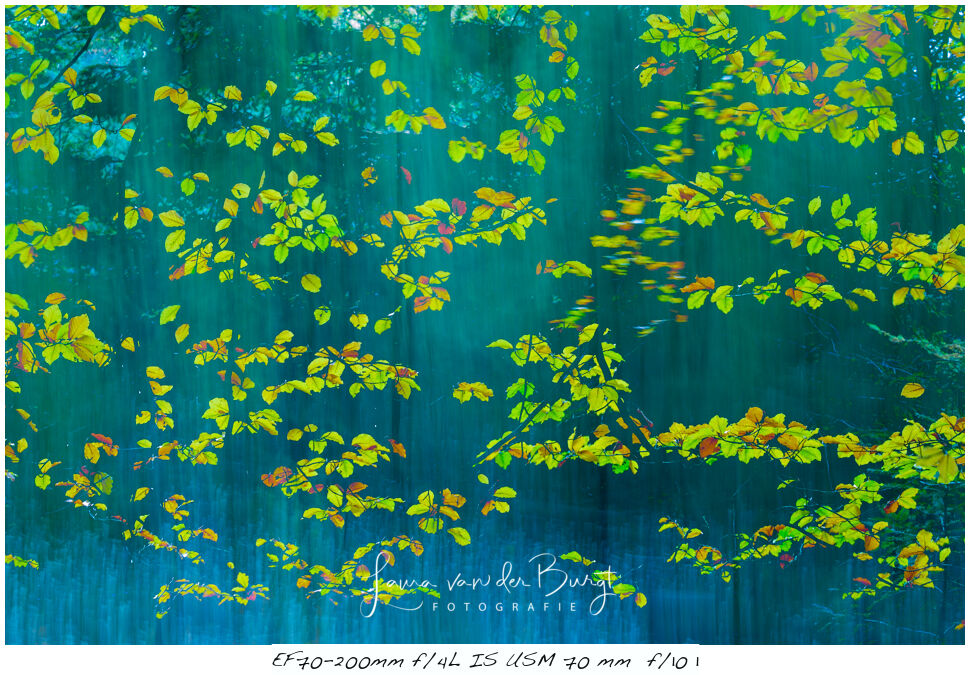
Holding something very close to your lens so that it creates distortion is great fun in macro photography. Or putting your lens between the leaves to photograph a subject further away usually adds a sense of mystery to your photo. Use an aperture of f/2.8 to f/5.6 for this.
12. Outside your comfort zone
Photographing outside your comfort zone from time to time gives you new ideas. Find an intriguing photo and try to analyse and recreate it.
Discover how light and shadow, composition and viewpoint were used. Is everything sharp, or not? Where does your eye go? And what exactly makes you like the photo?
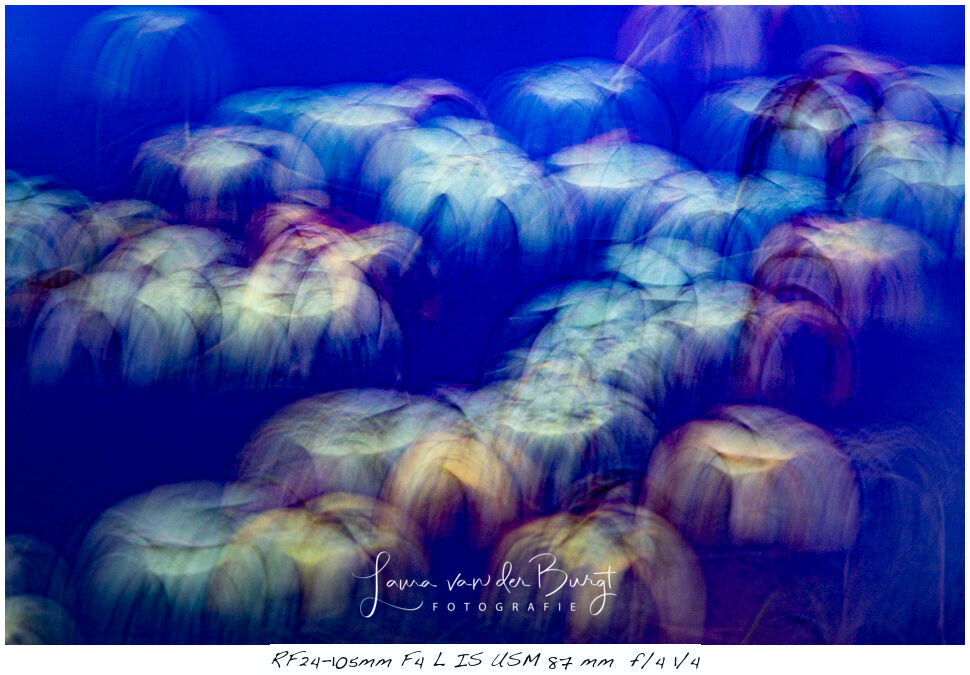
Every photo deserves post-processing. I usually use Lightroom and sometimes Photoshop. I always start with the 'Auto' button and then continue editing the photo.
I like the cinematic teal and orange look and increasingly use the Colour Grading menu in Lightroom for this. Cool blue shadows and highlights towards warm orange. Playing around with this can sometimes produce surprising results.
Give yourself the chance and time to learn something new. When you succeed, it gives you extra satisfaction and a boost to your confidence. Your enjoyment of autumn photography will only increase.
About the author
Natuurfotografie is voor Laura een samensmelting van het ongelooflijk genieten van in de natuur zijn en haar passie voor fotografie. Het fotograferen met een minimale scherptediepte is favoriet en ook trekt ze er vaak met de lensbaby op uit.
You might also like
-
 Photographing beautiful autumn colours in the forest
by Laura van der Burgt
-
 Do you love autumn photography too?
by Laura van der Burgt
-
 Street photography tip: Autumn is the perfect time to photograph umbrellas
by Michiel Heijmans
-
 Autumn is coming again. Five ideas for photographing
by Nando Harmsen
-
 Creative with (Autumn) Leaves
by Laura van der Burgt
-
 Photograph autumn, now is the time
by Elja Trum
2 comments
-
 Marcel Renard wrote on Tuesday 26 October 2021 at 17:27 | reply
Interesting and well-written article with beautiful photos. A pleasure to read.
Translated from Dutch. -
 Dianne wrote on Tuesday 26 October 2021 at 18:22 | reply
Yet another beautiful blog full of clear tips and fantastic photos to develop your creativity. Your patience is admirable when you are taking photographs and result stunning.
Translated from Dutch.
Have your say
Please note: Articles older than a week can only be commented on by signed-in visitors.Would you still like to comment? sign in or create a free account.
Become a better photographer every week
A practical photography tip in your inbox every week.
38,982 photography enthusiasts already receive the tips! More about the weekly mail. Or keep up to date via  Facebook.

Elja Trum
Photofacts; everything to do with photography!
Would you like to take better photos and keep up with what is happening in photography? Photofacts publishes articles that teach you something about photography — from a product announcement to a practical shooting tip or a look at a website. Photofacts covers photography every day and is a hobby project of Elja Trum's that got out of hand. The articles are written by a team of volunteer authors. If you would enjoy writing one or more articles for Photofacts, do get in touch.More about PhotofactsPhotofacts is made possible in part by
