

5 Tips for Photographing Autumn
Monday 22 October 2018, 16:32 by Michelle Peeters | 14,925 views | 3 commentsThis article was translated from Dutch with the help of AI. Read the original.
Autumn is undoubtedly the most photogenic season of the year. Nature is already preparing for winter and beautiful autumn colours appear everywhere. In this article, five tips for capturing all that beauty properly.
The autumn season has everything needed to make the heart of any nature or landscape photographer beat faster.
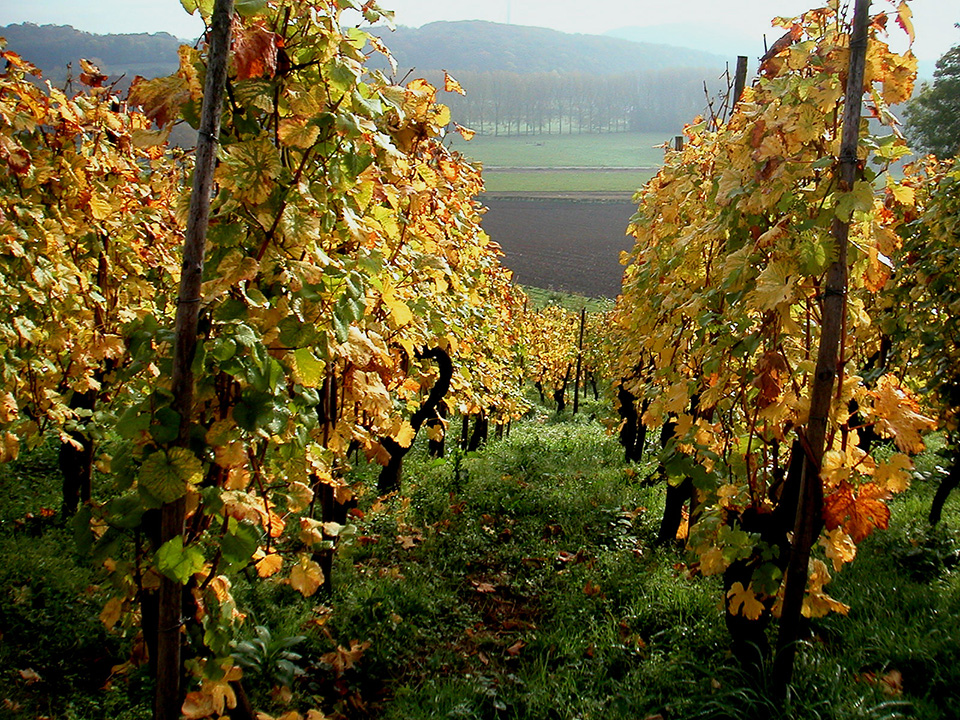
After the first cold nights, and we have already had those despite the extremely warm summer and autumn, you start to see those beautiful yellow, red and brown shades.
If it has also been dry, and you can certainly say that this year, you have a good guarantee of beautiful autumn colours. Until the autumn storms put an end to them for good.
1. Take your telezoom, not your wide-angle lens
When you are overwhelmed by the magnificent colours of the forest, you are often tempted to reach for your wide-angle lens straight away. However, this often produces restless and chaotic images. Unless it is misty, which hides much of the chaos in the forest.
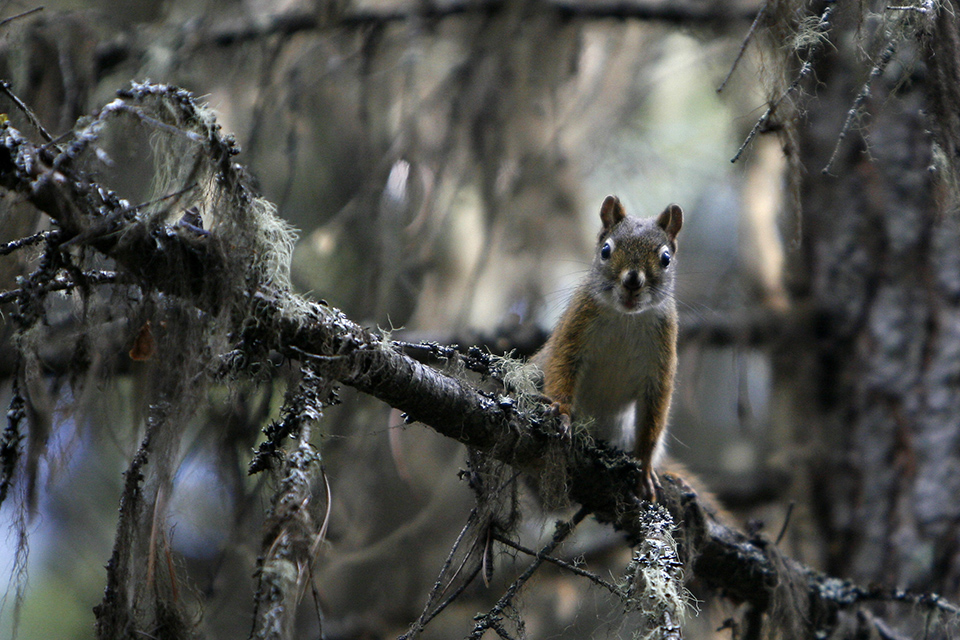
There are too many distracting elements and too much information in the frame. It is better to zoom in a little and try to capture colours, atmospheres and details from all kinds of angles and with different perspectives. A 70-200mm lens is perfectly suitable.
Try working with a shallow depth of field. A wide aperture is immediately useful in low light. Frame a little more tightly as well, so you can avoid large white areas of sky.

2. Viewpoint
Try doing things differently. Nothing is as predictable as a photo taken from eye level. That is how everyone sees the subjects you photograph. Change your position by standing somewhere higher up, or take a photo close to the ground instead.
This way, you often find the right light and the feeling you want to convey while searching. Move yourself around until there are no distracting elements in the frame, and make sure that only what matters for the photo is inside your frame.
Also try lying on your back and photographing the abstract shapes and lines of the tree crowns with a wide-angle lens. You cannot use a tripod now, so you will need to set the ISO a little higher and open up your aperture a bit more.
The sky will probably be blown out because of the high contrast, but you will just have to accept that. Or photograph in RAW so you can recover some detail in the overexposed areas.
3. Tripod
If you take a lot of photos in the forest during autumn, you will notice that there is very little light. Especially if you start early in the morning. Shutter speeds get longer, so you really need a tripod to keep taking photos without coming home with blurred images.
When using a tripod, always switch off image stabilisation and try focusing manually. This is easier from your live view screen. If you do macro photography and want to eliminate all vibration, use a remote control and lock the mirror up.
4. Autumn landscapes and subjects
When you think of an autumn landscape, you may immediately think of a forest. And especially a deciduous forest rather than a coniferous one, because conifers famously retain their beautiful green colour and 'foliage' in winter.
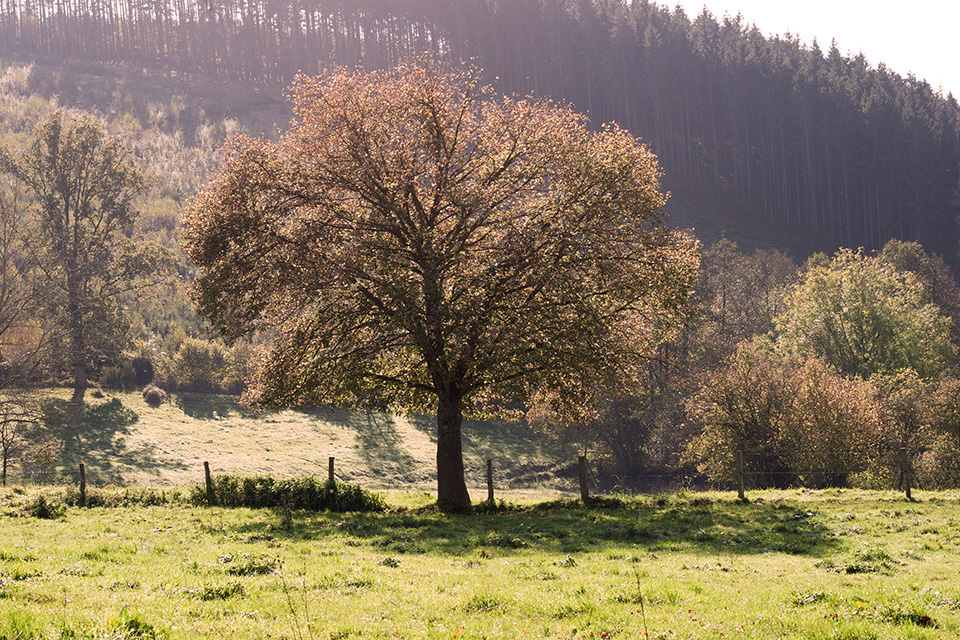
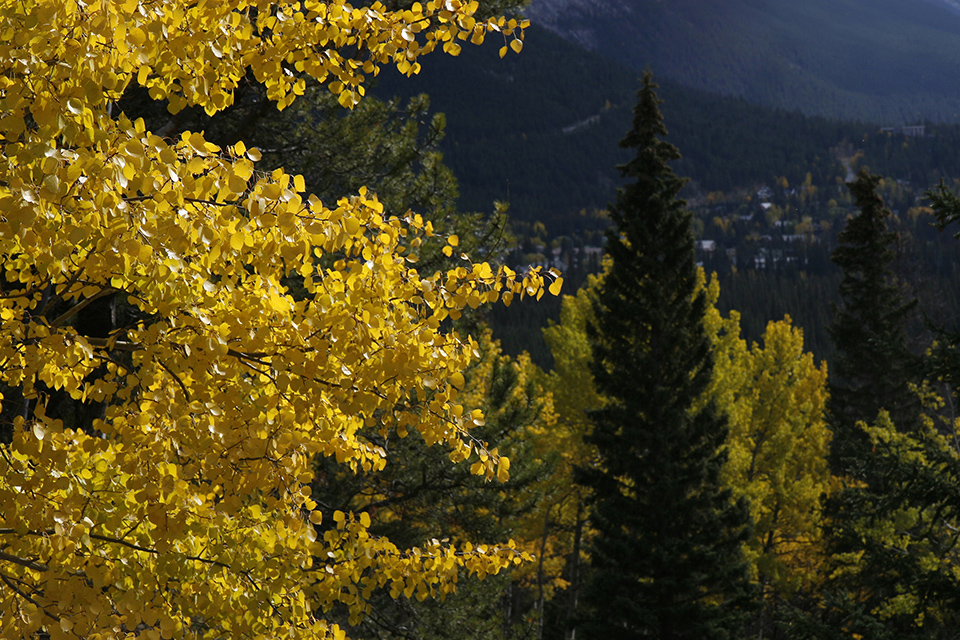
Try to convey the atmosphere and colours of the forest by zooming in on certain corners and details. Look for lines and beautiful slanting light or backlighting between the trees.
But besides forests, hilly landscapes are also well worth visiting, especially during autumn! You often have a beautiful view of the wooded hills below from several locations. South Limburg or the Belgian Ardennes are very suitable places for this.
From above, you have a good view of the colourful tree crowns below you. If you zoom in, you can capture the details of the colourful treetops beautifully. If it is misty, you can photograph a layered landscape.
Sand drifts in the Netherlands are a challenge, especially in autumn. During a storm, you can imagine yourself in the Sahara here. Very beautiful to photograph, but of course disastrous for your camera. The tiny grains of sand get everywhere. Make sure your equipment is well protected.
In autumn, only not this year, there is often more water in streams, rivers and ditches than during the warm, dry summer. After heavy rainfall, the water starts flowing and you can practise with long shutter speeds, turning that fast-flowing water into a beautiful silky blur.
Heathland also changes colour during autumn. It becomes beautifully purple or completely brown. At sunrise and sunset, it often looks golden. Hence the golden hour, of course!
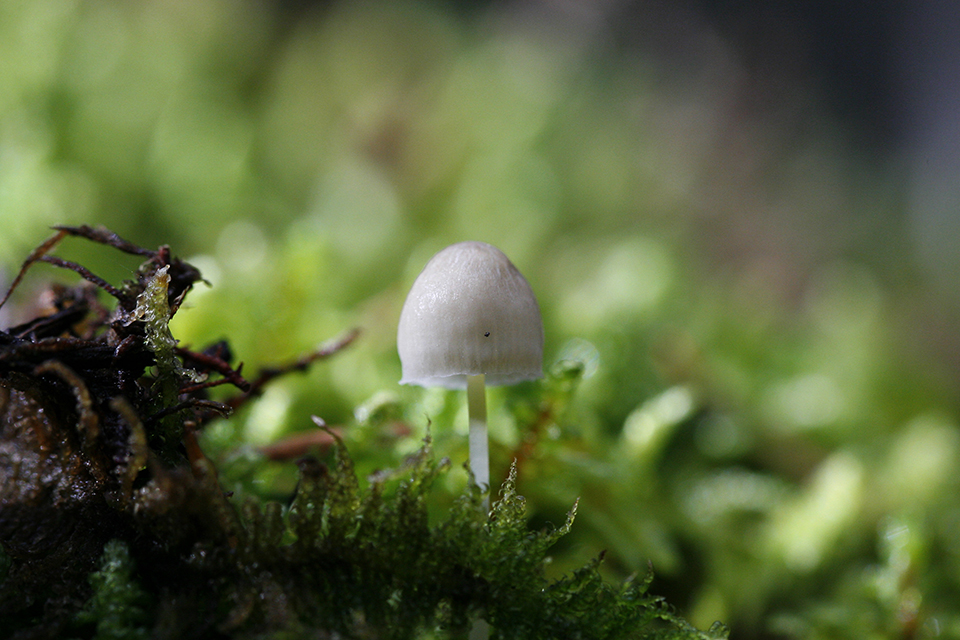
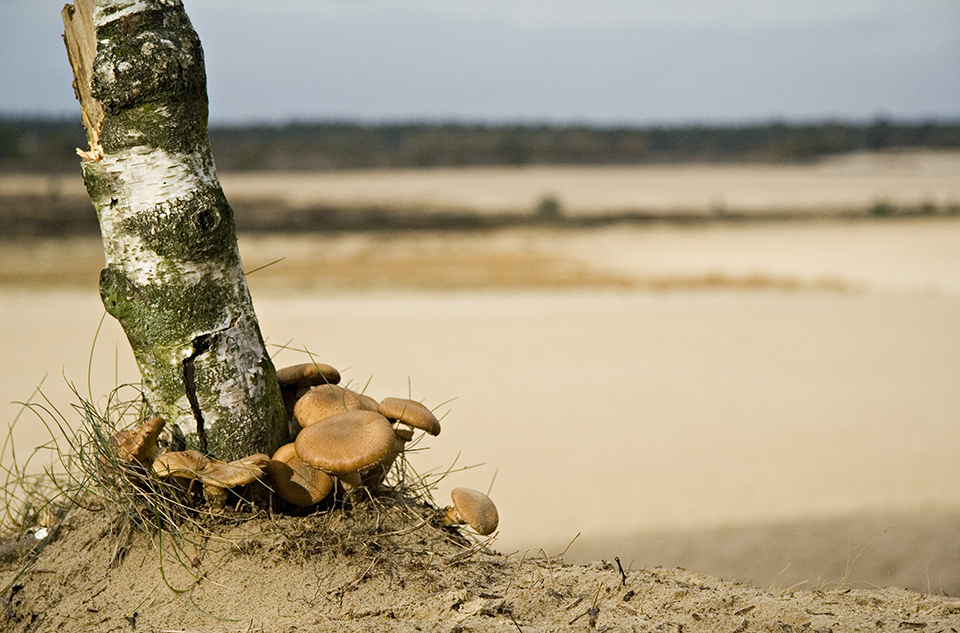
You naturally find many mushrooms during autumn. They live by breaking down dead material, such as leaves. You can best photograph them with a macro lens. That is not as easy as it seems.
The hardest part is finding a mushroom that stands somewhat isolated, without distracting plants or tree roots in front of it. It often helps if a mushroom is slightly higher up, so you can photograph it completely from below.
Photographing with a shallow depth of field also helps to isolate your subject. Although with macro photography, you will not quickly have problems with too much depth of field, of course.
5. Polarising filter
A polarising filter enhances colour tones and colour contrast. This lets you make colours stand out more. It also reduces reflections, such as those from water surfaces or wet, damp leaves.
A filter like this costs you around one and a half stops of light. Otherwise, you could simply screw it onto your lens whenever you went into nature. Your shutter speeds therefore soon become too long for handheld photography.
Find out more
After reading this article, would you like to explore the subject in more depth? Then take a look at our Autumn Photography course on Photofacts Academy. For non-members, this course, like all the others, can be watched free of charge during a two-week trial membership.
About the author
Michelle Peeters is fotografe en oprichter van DeuxBleus Fotografie. Michelle herkent het bijzondere in het gewone en het gewone in het bijzondere. Ze heeft zich nooit willen specialiseren en is daardoor van alle markten thuis.
You might also like
-
 Do you love autumn photography too?
by Laura van der Burgt
-
 Autumn is coming again. Five ideas for photographing
by Nando Harmsen
-
 Creative with (Autumn) Leaves
by Laura van der Burgt
-
 12 tips for atmospheric autumn photography
by Laura van der Burgt
-
 Photograph autumn, now is the time
by Elja Trum
-
 Street photography tip: Autumn is the perfect time to photograph umbrellas
by Michiel Heijmans
3 comments
-
 ac de koning wrote on Tuesday 23 October 2018 at 17:12 | reply
Hi Michelle,
Translated from Dutch.
If you have a small wide-angle lens, e.g. 10-22, you can also take beautiful photos -

-
 Trees van Hoek wrote on Friday 26 October 2018 at 17:16 | reply
Or use your timer so that the photo is taken after pressing the shutter button on your camera or phone.
Translated from Dutch.
Have your say
Please note: Articles older than a week can only be commented on by signed-in visitors.Would you still like to comment? sign in or create a free account.
Become a better photographer every week
A practical photography tip in your inbox every week.
38,937 photography enthusiasts already receive the tips! More about the weekly mail. Or keep up to date via  Facebook.

Elja Trum
Photofacts; everything to do with photography!
Would you like to take better photos and keep up with what is happening in photography? Photofacts publishes articles that teach you something about photography — from a product announcement to a practical shooting tip or a look at a website. Photofacts covers photography every day and is a hobby project of Elja Trum's that got out of hand. The articles are written by a team of volunteer authors. If you would enjoy writing one or more articles for Photofacts, do get in touch.More about PhotofactsPhotofacts is made possible in part by
