

Large-format analogue photography
Wednesday 28 May 2025, 20:10 by Nando Harmsen | 3,516 views | 2 commentsThis article was translated from Dutch with the help of AI. Read the original.
I regularly hear that a photographer has gone back to using an analogue camera. Sometimes 35mm, sometimes medium format. Every now and then, you come across a photographer who shoots large format. I met one at my last masterclass in the French department of Tarn.
It is great to see someone working with an analogue camera. This can be 35mm film, which we now consider full-frame, or larger. Medium format is appealing, as these cameras can often be found second-hand at attractive prices.
During my masterclass in the French department of Tarn, the final edition because it was the last time, I had a participant, Patrick Marquetecken, who photographed exclusively with analogue equipment. In medium format, with a Bronica and a Kalloflex twin-lens reflex (TLR) camera.
It does not stop at medium format. Patrick, who you can find on his own website, also photographs with a Chamonix large format camera. With this, he makes photographs on 4x5 inch (approximately 10 x 12cm) negative plates.
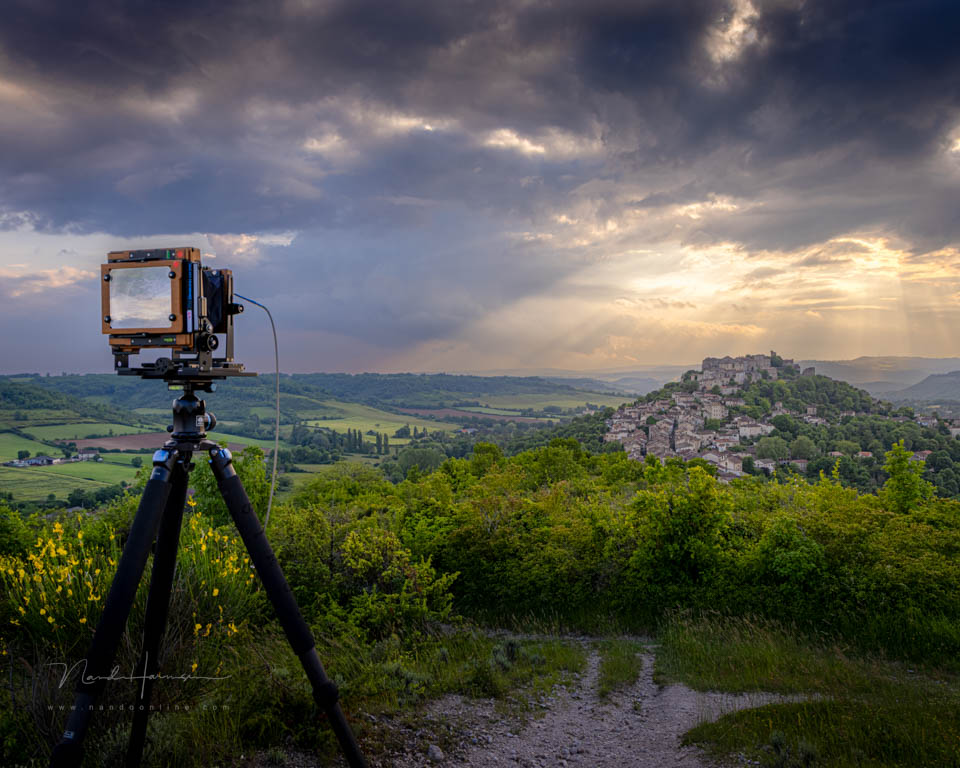
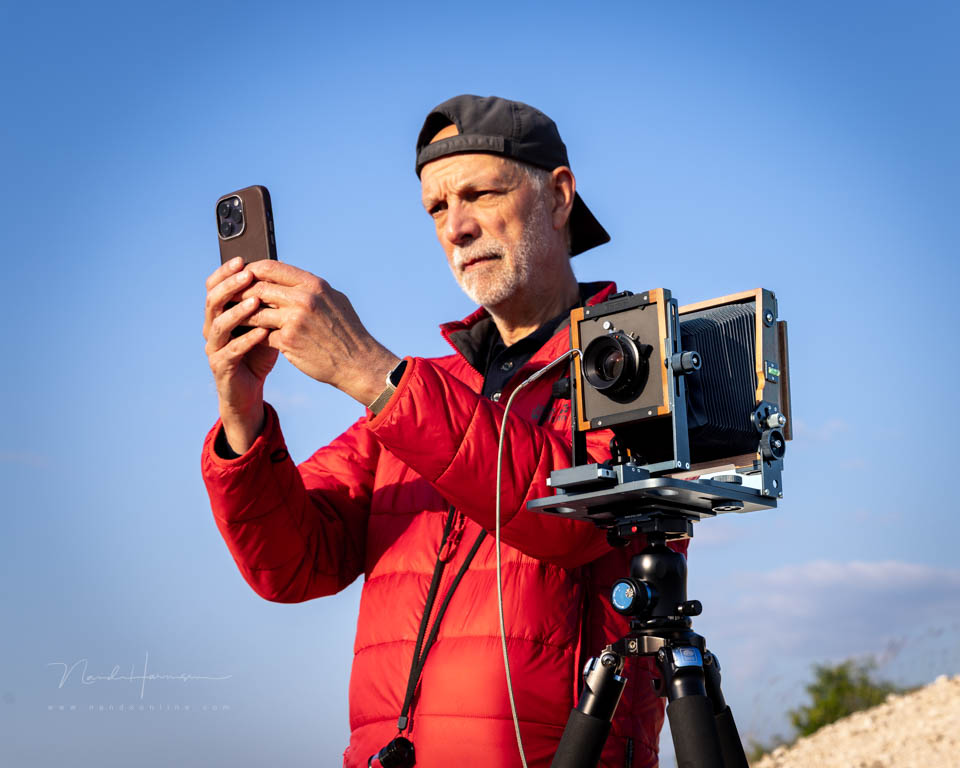
It is impressive to see such a camera in the wild. It is fascinating to follow the photographic process. From looking for a composition with the help of a smartphone, to carefully measuring the light with a separate light meter. And then setting up the camera.
It is not a process that takes a few seconds. Patrick spends half an hour to an hour making a single photograph. Meanwhile, the rest of us using modern digital photography have already taken another 100 photographs.
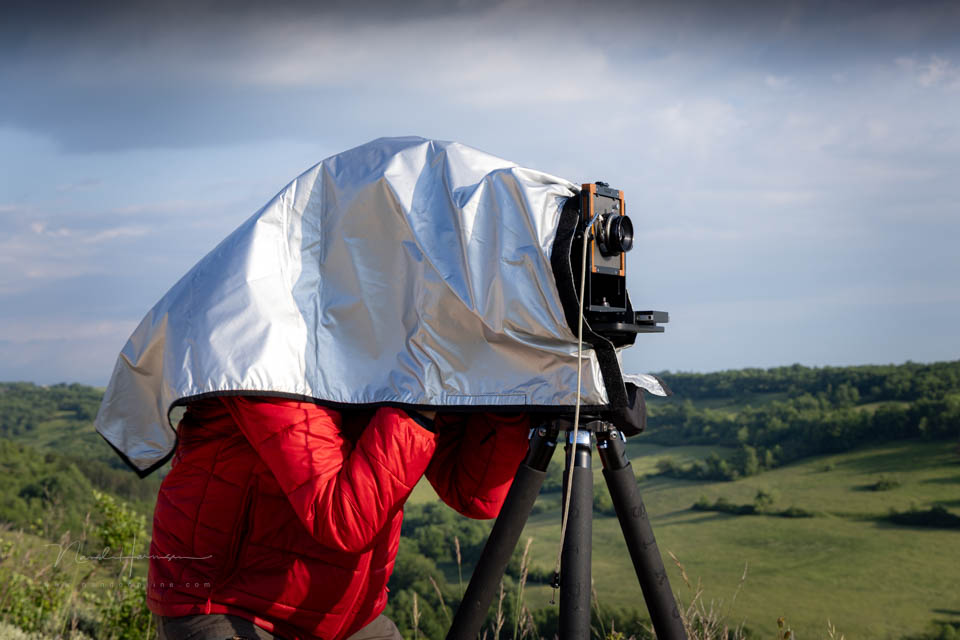
It does not stop once the photograph has been taken. The work continues at a later time. Based on the unique exposure, a carefully considered development process is chosen using the notes on the settings. This is unique for each photograph.
This is also where the major difference lies compared with photography on rolls of film, whether 35mm or 120 film. A single development is carried out for all the photographs on the roll. For the negative plates from the technical camera, the process is unique for each photograph.
This means that the whole process, from composition to exposure and from development to printing, is perfectly tailored to each photograph. This gave me a good idea of how someone like Ansel Adams worked. How everything from exposure to the zone system was used.
It was educational to watch Patrick at work. We will have to wait a little while for the results, as they take a considerable amount of time. In the meantime, I recommend taking a look at his own website.
About the author
Nando Harmsen has been photographing for more than 40 years. He specialises in wedding photography and landscape photography. Nando also gives talks, workshops, masterclasses and photo trips, and regularly reviews new and interesting equipment.
You might also like
-
 Review: Analogue Photography
by Erik van Rosmalen
-
 My Struggle with Analogue Photography
by Michiel Heijmans
-
 Fujifilm introduces the GFX100 II medium format camera
by Nando Harmsen
-
 Fujifilm GFX50S II medium format camera announced
by Nando Harmsen
-
 Review: Fujifilm GFX 100S II medium format camera
by Elja Trum
-
 Making a Brenizer portrait on analogue medium format
by Elja Trum
2 comments
-
 Marquetecken Patrick wrote on Sunday 1 June 2025 at 12:39 | reply
This was a wonderful workshop, and I wanted to clarify my choice of the three cameras a bit.
Translated from Dutch.
My primary camera is always the 4x5, but due to the variety of subjects and lighting conditions this is not always a good choice.
A sunrise is not always possible with the 4x5 or a dark cave. For this, you cannot see enough on the ground glass. so therefore a Bronica 6x6.
The Kalloflex TLR 6x6 is then again a very light camera that is perfectly suitable for city walks. -

 PvRFotografie
wrote on Wednesday 4 June 2025 at 08:46
| reply
PvRFotografie
wrote on Wednesday 4 June 2025 at 08:46
| reply
I love that old-school photography. Spending a nice long time on 1 photo. Thinking carefully about everything, not just about taking the photo but also about the rest of the process afterwards. And above all, don't forget to close the shutter before you take the dark slide out of the cassette
Translated from Dutch.
Have your say
Please note: Articles older than a week can only be commented on by signed-in visitors.Would you still like to comment? sign in or create a free account.
Become a better photographer every week
A practical photography tip in your inbox every week.
39,079 photography enthusiasts already receive the tips! More about the weekly mail. Or keep up to date via  Facebook.

Elja Trum
Photofacts; everything to do with photography!
Would you like to take better photos and keep up with what is happening in photography? Photofacts publishes articles that teach you something about photography — from a product announcement to a practical shooting tip or a look at a website. Photofacts covers photography every day and is a hobby project of Elja Trum's that got out of hand. The articles are written by a team of volunteer authors. If you would enjoy writing one or more articles for Photofacts, do get in touch.More about PhotofactsPhotofacts is made possible in part by
