

Robin de Puy shoots portraits using a Spa water droplet as a lens
Tuesday 13 June 2017, 23:32 by Elja Trum | 9,649 views | 1 commentThis article was translated from Dutch with the help of AI. Read the original.
Robin de Puy, winner of the Zilveren Camera National Portrait Prize 2014 and currently also Photographer Laureate of the Netherlands, shot a series of portraits for a Spa advertising campaign using a droplet of Spa mineral water as a lens.
Director Maarten Groen made a beautiful mini-documentary about it.
Using a water droplet as a lens involved quite a lot. Although taking a photo through a water droplet is not that difficult in itself, it is not so easy to use only a water droplet as a lens.
Liquid lens camera
Spa enlisted the help of Hans Feil and Pieter van der Valk from Etulipa. They spent several weeks developing a camera that could use a water droplet as a lens. The project took half a year in total.
I spoke to Pieter today at Spa's press event and was able to ask him how his camera worked.
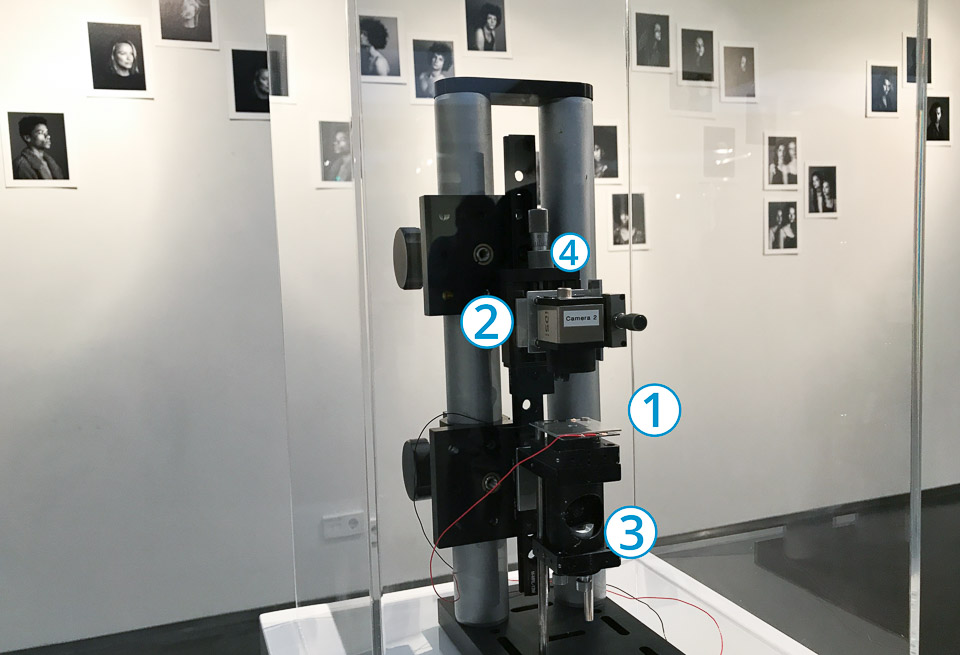
The 'liquid lens camera' uses a fresh Spa water droplet on a glass plate with a Teflon coating (1). This allows a nice little ball to remain in place. Applying an electrical voltage to the plate flattens the droplet, and by varying the voltage by the right amount you can focus the image.
An industrial sensor measuring 4 by 6 millimetres and offering 18 megapixels captured the image (2). The image was in colour, incidentally, but Robin chose to convert the images to black and white for her portraits.
A mirror was used to direct the light from the scene through the water droplet lying flat (3). When taking the photo, the distance between the camera and the water lens was much smaller than shown at the top of the photo. About 12 millimetres.
To prevent stray light, there was a simple but practical solution: the plastic tube (4) was placed over the water droplet, so little or no light from outside could reach it.
Because the water droplet evaporates, the lens gets smaller and smaller during shooting. They could work for about fifteen minutes. After that, the plate had to be cleaned and fitted with a new water droplet.
The result
The technique is of course interesting, but ultimately it is also about the photographer and her models. Robin asked a number of well-known people, including Tess Milne and Manuel Broekman, as well as unknown people, to stand in front of her unusual camera.
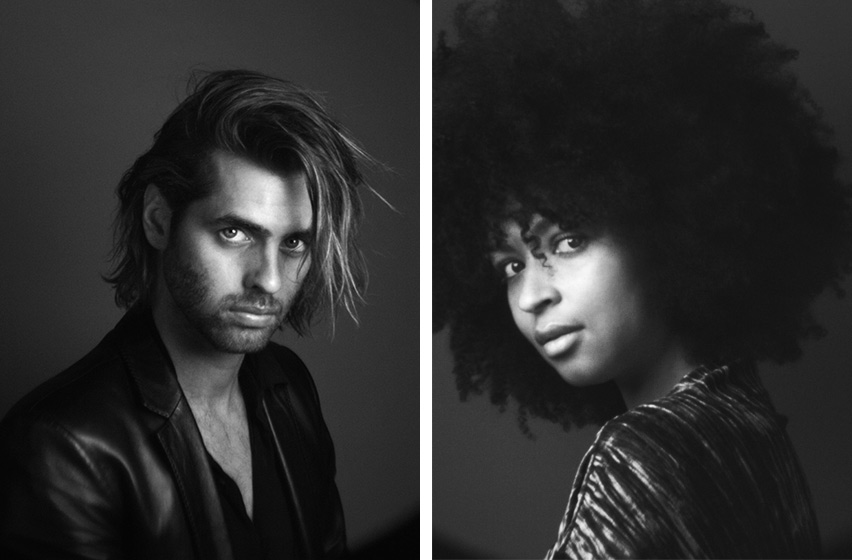
She shot the portraits in a studio in Amsterdam, placing her models in front of a grey background. The camera could not be used with flash, and a very small aperture was used to get a sharp image.
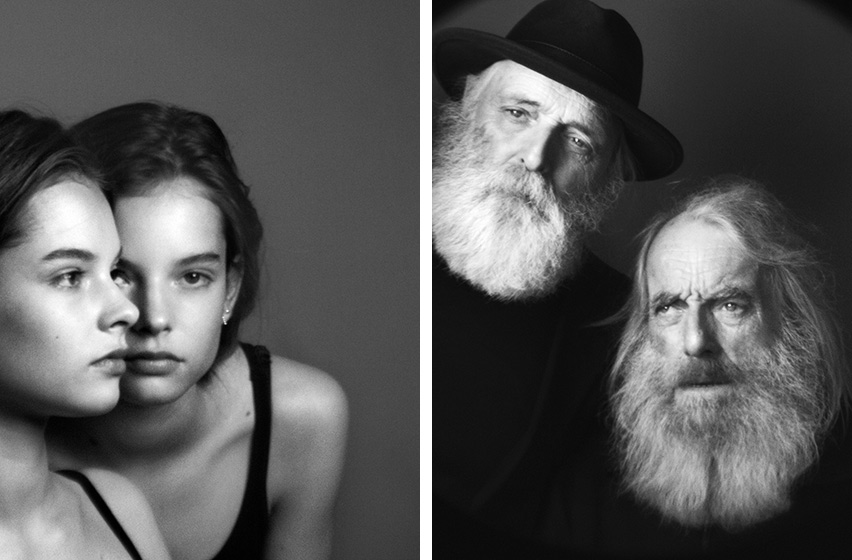
The shutter speeds were therefore around 1/3 of a second. Robin had to make sure her models sat very still, or make creative use of the long shutter speed.
The result is a series of beautiful and expressive portraits with a painterly soft-focus effect.
About the author
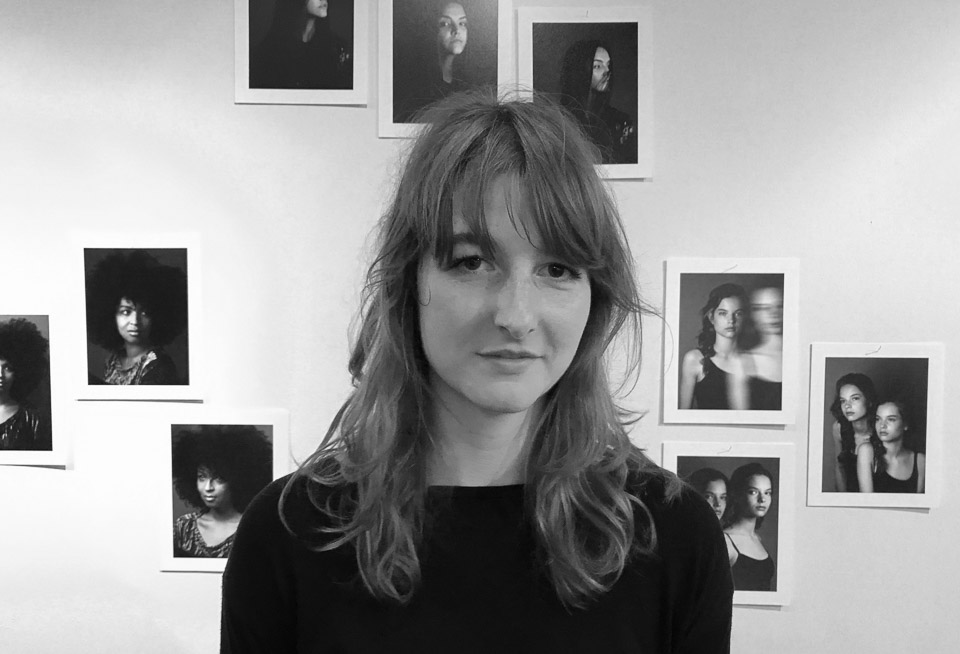
Elja Trum is the founder of Photofacts and online photography course website Photofacts Academy. He has been writing about photography since 2006. Elja is also the author of (Dutch) books on composition, black-and-white photography, flash photography and portrait photography.
You might also like
-
 The winning photos of the Zilveren Camera 2019
by Michelle Peeters
-
 High-speed water droplets photography
by Tromp Willem van Urk
-
 Waterfalls and water droplets
by Nando Harmsen
-
 From drip... to a real water droplet 💧
by Rob Zwart
-
 The magical moment; the connection between photographer and sitter
by Michelle Peeters
-
 15 Favourite Architecture Locations in the Netherlands
by Michelle Peeters
1 comment

Have your say
Please note: Articles older than a week can only be commented on by signed-in visitors.Would you still like to comment? sign in or create a free account.
Become a better photographer every week
A practical photography tip in your inbox every week.
38,833 photography enthusiasts already receive the tips! More about the weekly mail. Or keep up to date via  Facebook.

Elja Trum
Photofacts; everything to do with photography!
Would you like to take better photos and keep up with what is happening in photography? Photofacts publishes articles that teach you something about photography — from a product announcement to a practical shooting tip or a look at a website. Photofacts covers photography every day and is a hobby project of Elja Trum's that got out of hand. The articles are written by a team of volunteer authors. If you would enjoy writing one or more articles for Photofacts, do get in touch.More about PhotofactsPhotofacts is made possible in part by
