

15 Favourite Architecture Locations in the Netherlands
Friday 12 May 2017, 21:42 by Michelle Peeters | 58,101 views | 7 commentsThis article was translated from Dutch with the help of AI. Read the original.
Beautiful photography locations in the Netherlands have become a regular feature. Readers keep sending in great tips and photos. Here is part three, with 15 beautiful, mainly architectural locations in our own little country.
1. Zonnestraal Sanatorium in Hilversum
Sanatorium Zonnestraal was a sanatorium in the Dutch municipality of Hilversum. The complex was originally intended for diamond cutters who had contracted tuberculosis. It was designed by architect Jan Duiker, in collaboration with Bernard Bijvoet and Jan Gerko Wiebenga.
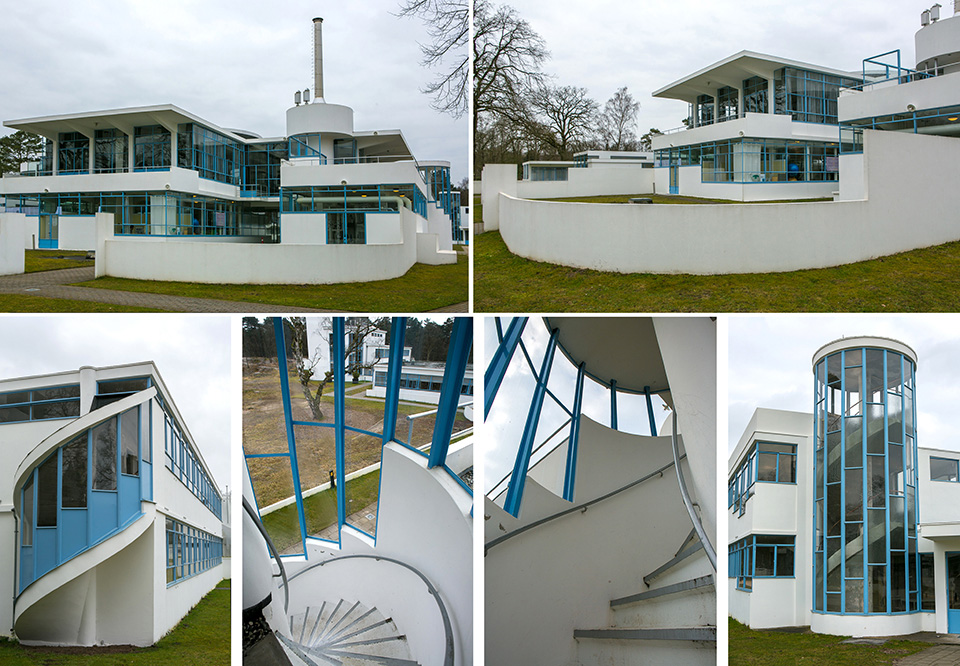
The main building opened on 12 June 1928. The Ter Meulen pavilion opened at the same time as the main building, while the Dresselhuys pavilion followed in 1931. In 1957, Zonnestraal became a hospital and continued as the Zonnestraal General Hospital in Hilversum.
Zonnestraal covers approximately 120 hectares and is located in the Loosdrecht Woods. The complex is an official candidate for the UNESCO World Heritage List. It still has a medical function.
2. Radio Kootwijk Transmitter Station
The former Radio Kootwijk transmitter station is one of the icons of the Veluwe. Unfortunately, the interior is not freely accessible to the public, but you can visit it during an excursion organised by Staatsbosbeheer. During the Open Monument Days, visitors can discover the remarkable story behind this wonderful and glorious building in the Amsterdam School architectural style.
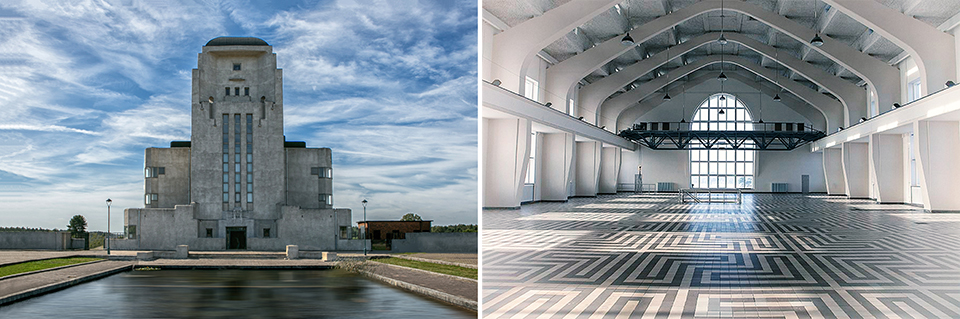
Staatsbosbeheer regularly organises activities related to its glorious broadcasting history, the unique building, nature and the surrounding area.
The Radio Kootwijk nature reserve is accessible all year round. And on the Kootwijkerzand sand drift, you can wander and explore to your heart's content throughout the year. An article has previously been published on Photofacts about this unique, sphinx-shaped building.
3. The Aan de Stegge Building in Goor
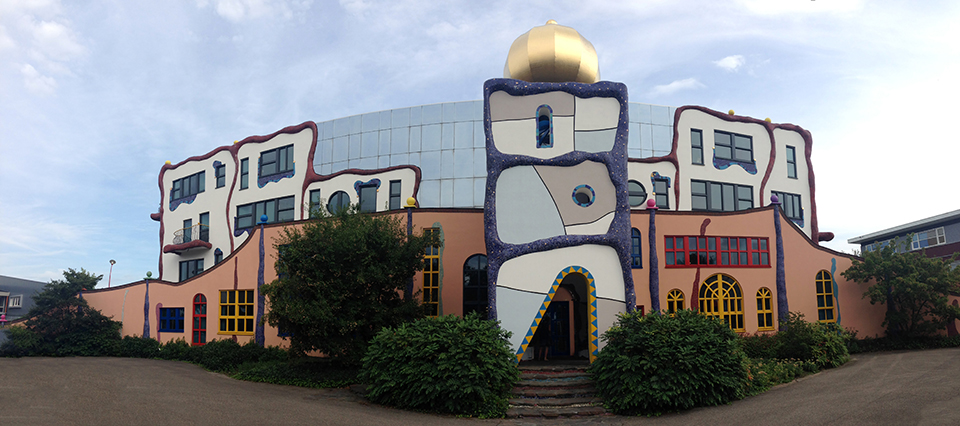
In the town of Goor in the Achterhoek region stands a building in the style of the famous Austrian artist Hundertwasser. Although this building is not a “real” Hundertwasser design, it was designed according to Hundertwasser's philosophy.
The two owners of Aan de Stegge construction company are brothers and admirers of Hundertwasser. This led to the idea of putting up a distinctive building in the Achterhoek, in the town of Goor.
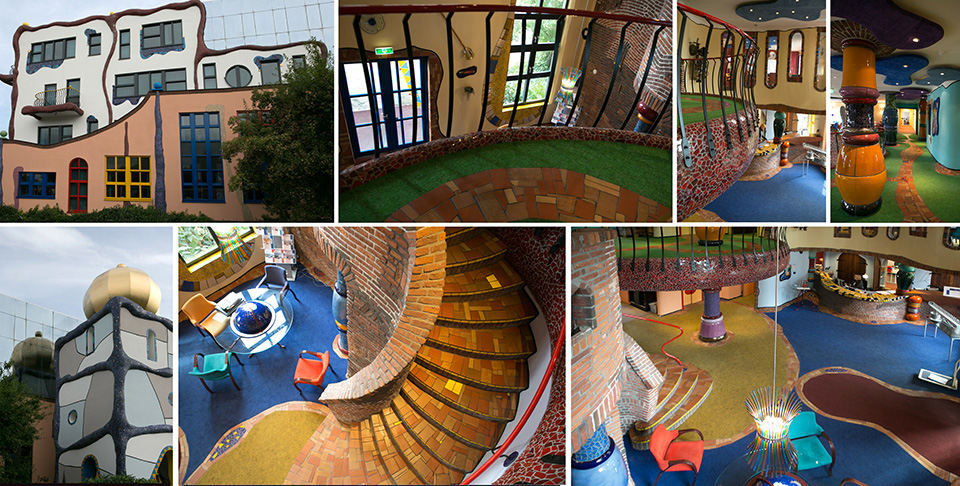
The Aan de Stegge Building, as this Dutch building is officially called, can be visited by appointment. You can also take a guided tour. It is well worth visiting to get a little acquainted with Hundertwasser's style.
The building can be visited during office hours. Guided tours take place on weekdays after 16:30 and on Saturdays.
4. The Groninger Museum Building
The Groninger Museum has had its own building since 1894. Until 1994, this was the neo-Gothic building on the Praediniussingel. After a large donation in 1987, the organisation was able to have a new building constructed.
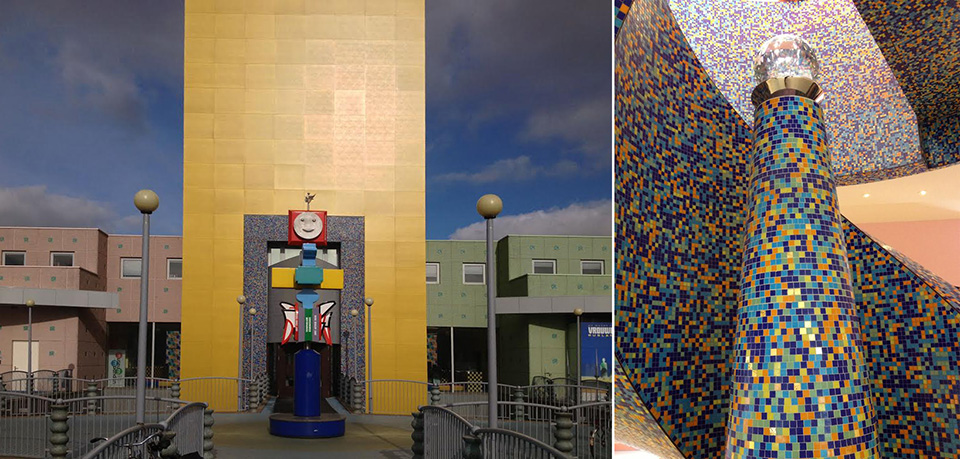
The current Groninger Museum building was opened by Queen Beatrix in 1994. To this day, its design continues to prompt discussion about modern museum architecture. But it is wonderful to photograph!
5. The Maritime Museum Building
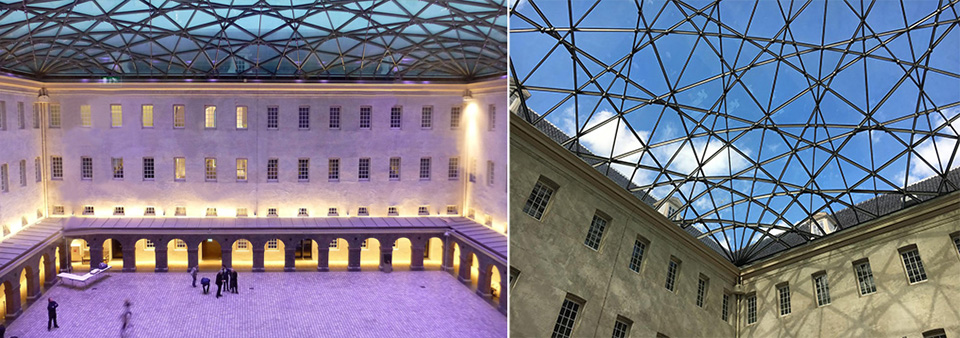
The Maritime Museum (formerly the Netherlands Maritime Museum) is a Dutch museum in Amsterdam about shipping. It is housed in the former 's Lands Zeemagazijn building and contains the second-largest maritime collection in the world.
It specialises in the maritime history of the Netherlands.
6. Tuschinski Theatre
The theatre was commissioned by Abraham Tuschinski and opened on 28 October 1921. The building was designed by architect Hijman Louis de Jong.
Tuschinski Theatre was built in several different styles, including the Amsterdam School, Art Nouveau and Art Deco. Construction costs came to approximately four million guilders.
The richly decorated façade in its distinctive, entirely individual style is completely covered with glazed tiles and ceramic sculptures, decorated here and there with wrought-iron ornaments and lamps made by Barend Jordens.
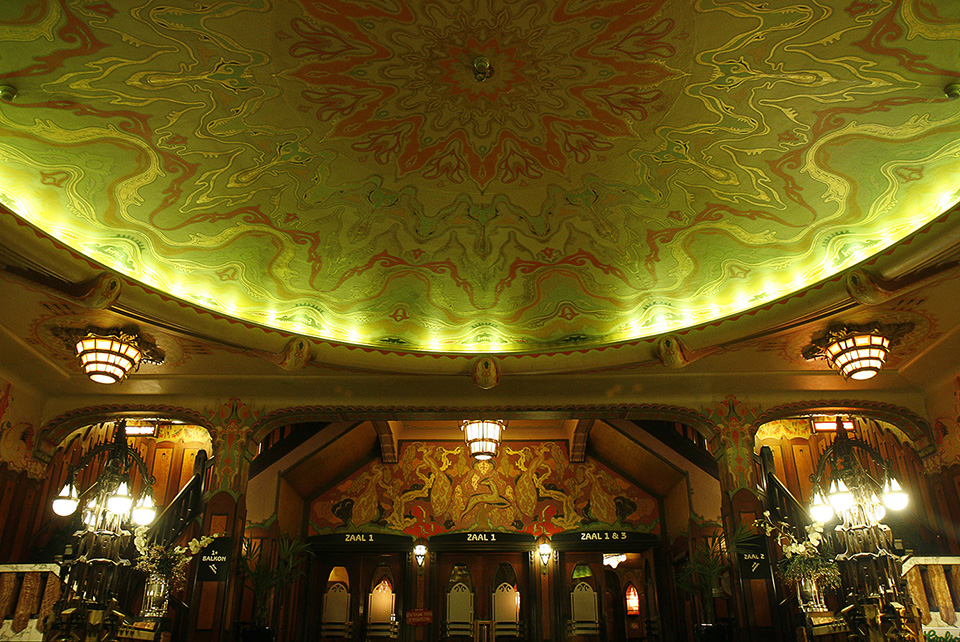
With its striking towers, the oriental-looking architecture of the front façade had an advertising function: it was intended to lead the public inside into an illusory world, where the lavish interior provided a fitting setting for the film images and variety acts about to be shown, accompanied by the cinema organ and theatre orchestra.
7. Cube Houses (Rotterdam)
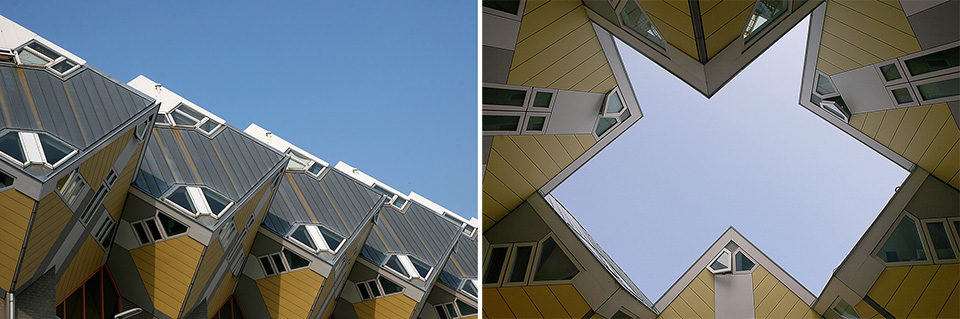
The Cube Houses in Rotterdam consist of 38 cube-shaped pole houses and 13 commercial cubes near the Blaak, close to the Oude Haven. They were built between 1982 and 1984, following an initial presentation of the plans in 1978. The Cube Houses are built in the shape of a tilted cube on a pole, and are also known as pole houses or tree houses.
8. Van Nelle Factory
The former Van Nelle Factory on the Delfshavense Schie in Rotterdam is regarded as the foremost industrial monument in the Netherlands. This was also recognised internationally when it was declared a UNESCO World Heritage Site in June 2014.
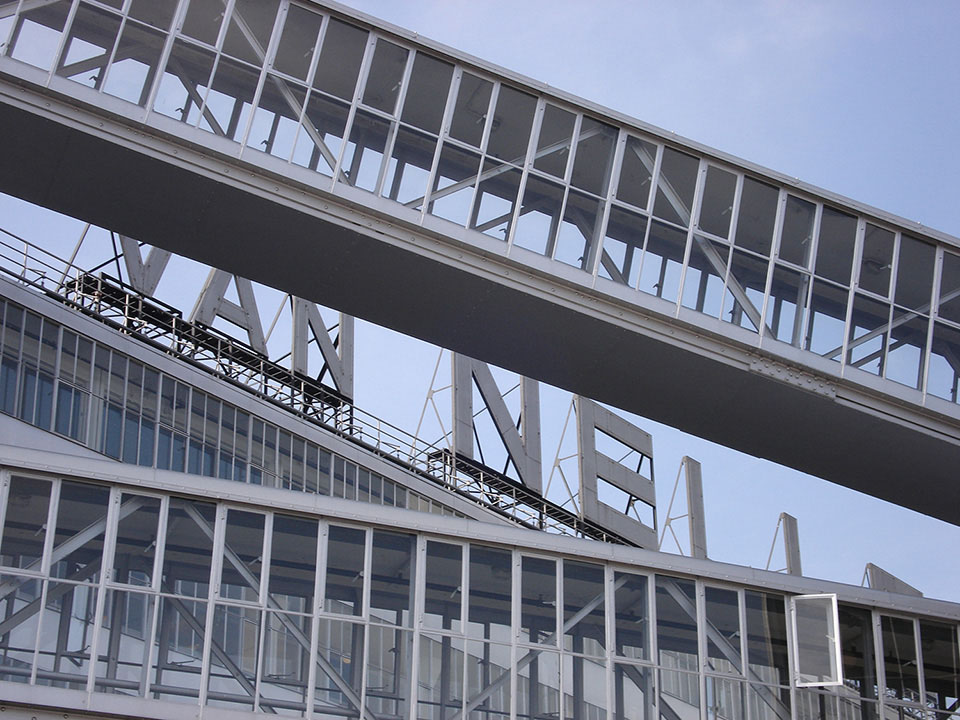
The former factory of the Van Nelle company, designed by Leendert van der Vlugt of the Brinkman & Van der Vlugt architectural firm in collaboration with structural engineer Ir. J.G. Wiebenga, is a textbook example of Nieuwe Bouwen.
9. The Evoluon and the Blob in Eindhoven
The inspiration for the Evoluon Eindhoven began in the late 1950s. Philips had surprised friend and foe with the Philips Pavilion at the first post-war World's Fair in Brussels. 'Le Poeme Electronique' attracted more than 1 million visitors in six months. The costs of a temporary exhibition, however, were quite substantial.
During a dinner between Frits Philips and his 'artistic right-hand man' Louis Kalff, the ambition to create a permanent exhibition space was raised again. According to tradition, Louis Kalff sketched 3 striking buildings, including the futuristic-looking flying saucer.
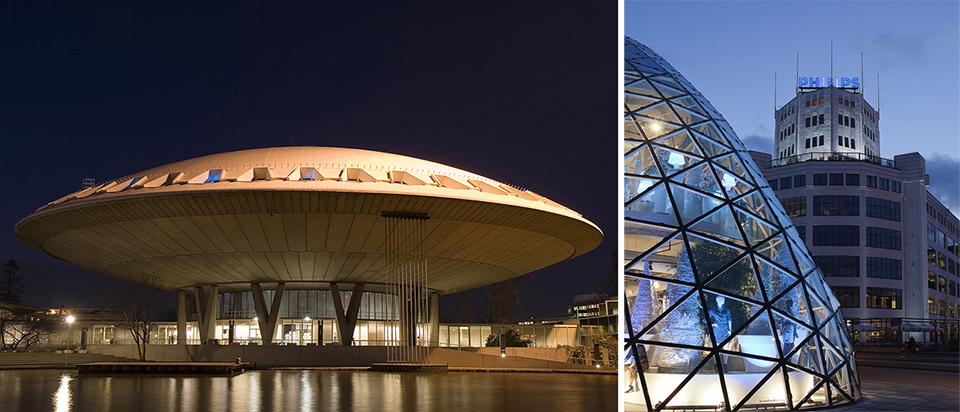
Blob is short for 'Binary Large OBject', which in the computer world refers to a spaghetti-like mass of data. In architecture, Blob refers to an unusual building that can take all kinds of irregular shapes.
The Blob in Eindhoven and the adjacent underground bicycle parking facility were designed by the Italian architect Massimiliano Fuksas. He also designed the adjacent Piazza shopping centre.
The Blob, 1,400 m2 and 25 metres high, is the transparent, drop-shaped entrance building of a new shopping and apartment complex next to the Lichttoren. It took six years to develop this building.
10. Hotel New York, Rotterdam
Hotel New York is housed in the beautiful former headquarters of the Holland America Line. This is where thousands of emigrants once left for North America, full of hope for a better life.
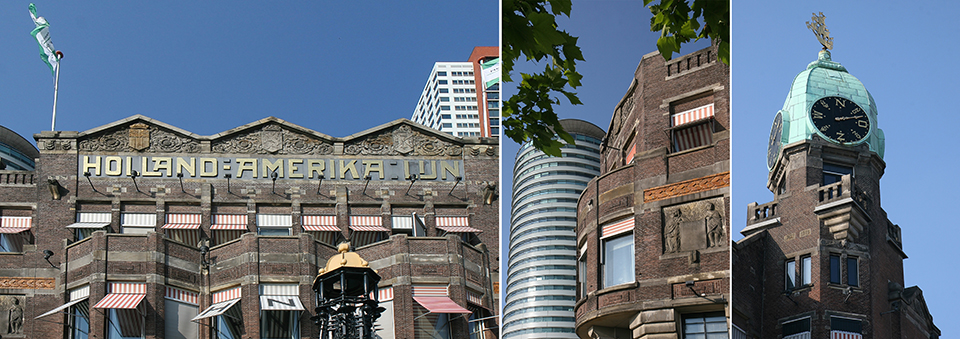
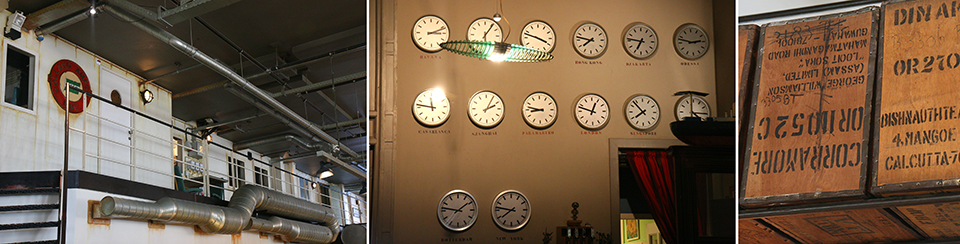
Today, guests come here to stay overnight, eat, drink, celebrate and do business in a special atmosphere. You can feel it as soon as you step inside the building: this is where it happened! The nostalgia is still present everywhere: the wrought-iron hotel staircase, the many suitcases and photographs of emigrants, and the former offices of the directors of that time.
11. Oudegracht (Utrecht)
The Oudegracht is the best-known canal in the Dutch city of Utrecht. The approximately two-kilometre-long canal can be regarded as the link between the Kromme Rijn and the Vecht, and runs through the entire city centre from south to north.
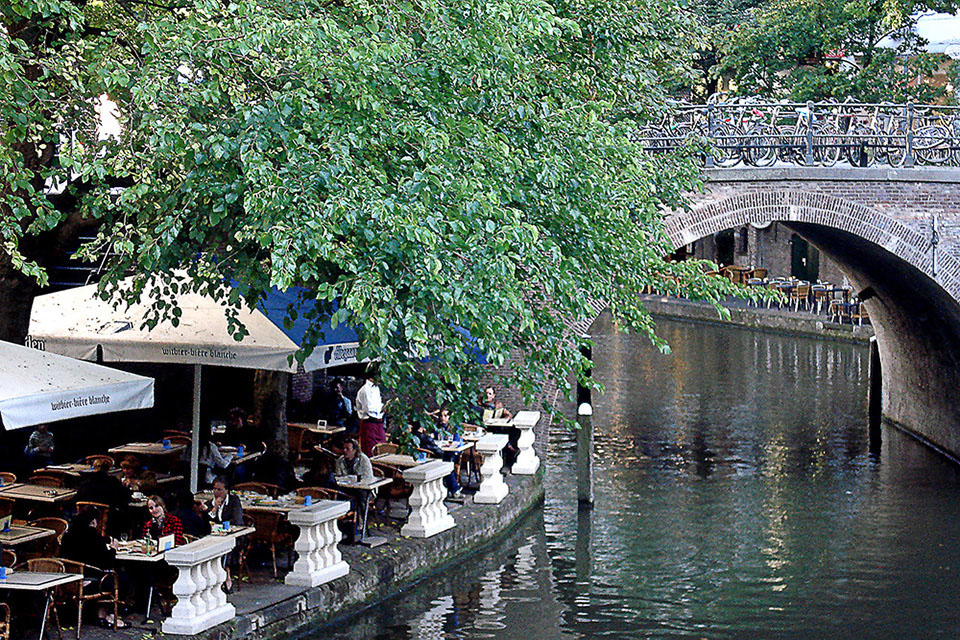
For centuries, it was the main artery of the city. The system of quays and quay cellars along Utrecht's Oude and Nieuwegracht is unique in the world on this scale.
In 2008, there was talk of putting forward the canal, bridge and quay system for the UNESCO World Heritage List, but no such nomination has yet taken place.
12. Moerputten Bridge, 's-Hertogenbosch
In 1890, the Langstraat railway line from 's-Hertogenbosch to Lage Zwaluwe was put into use. The railway ran through the wet peatland of the Moerputten, so two bridges were built: the Moerputten Bridge and the Venkant Bridge.
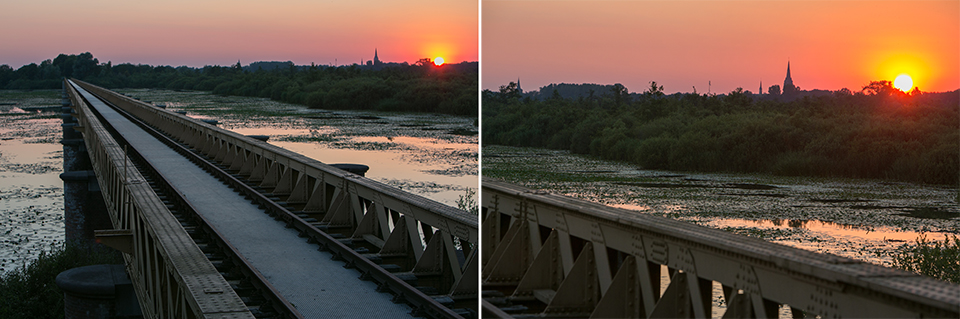
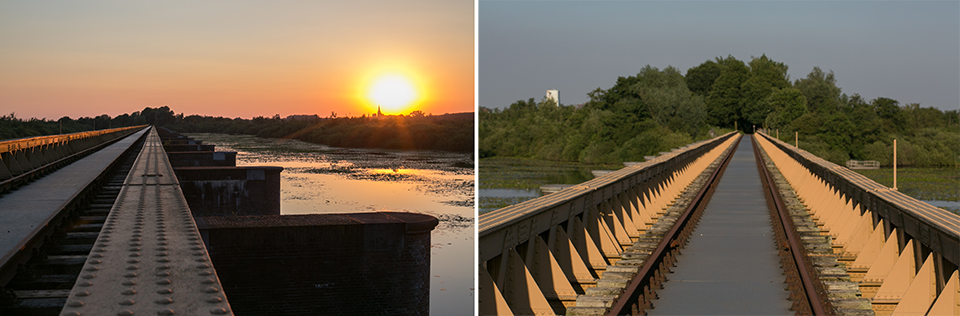
The 600-metre-long railway bridge is a wonderful example of 19th-century industrial heritage. The enormous, stately structure consists of a riveted iron construction resting on 35 brick pillars.
The long-running renovation of the bridge was completed in 2011, and the bridge is now accessible to walkers again. At the foot of the Moerputten Bridge there is a floating pontoon from which you can see the famous side view of the bridge.
13. Soesterberg Air Base
The National Military Museum in Soesterberg is located on the former air base. The hall of the National Military Museum (NMM) houses the information centre for Park Soesterberg Air Base and the Utrechtse Heuvelrug.
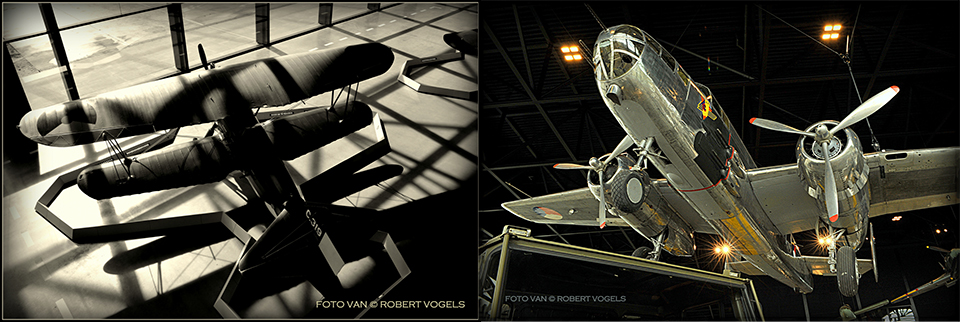
Soesterberg was once known as an air base and has an impressive historical collection, including historic aircraft. Everything is viewed from a distance, especially the suspended aircraft. The view of the aircraft is often somewhat limited by other objects or by backlighting from the enormous glass surfaces.
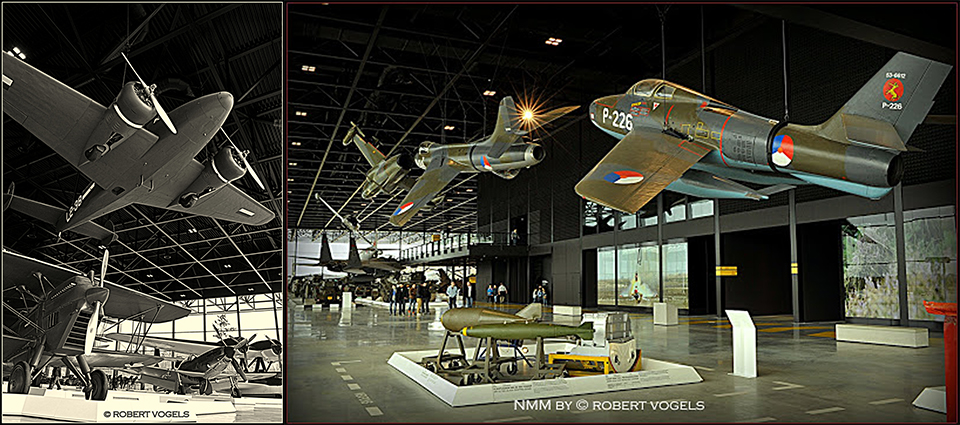
Transparent walkways against the glass wall would have solved this easily and made it possible to see those aircraft at eye level with the light behind you. So photographing them is a challenge, but Robert Vogels managed it very well with the photos above!
14. The ss Rotterdam
Dutch pride since 1959. In Rotterdam forever.
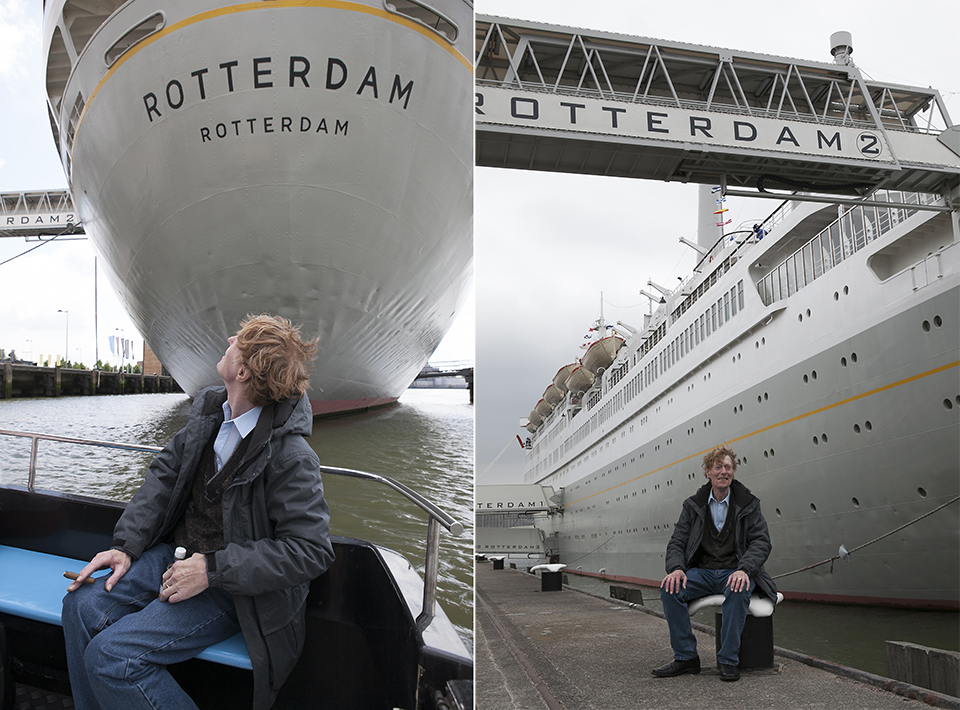
On 3 September 1959, the ss Rotterdam made its maiden voyage to New York. For more than 40 years, the ship sailed the world's oceans. The Stichting behoud stoomschip Rotterdam began a rescue operation in 2001 to preserve the ss Rotterdam.
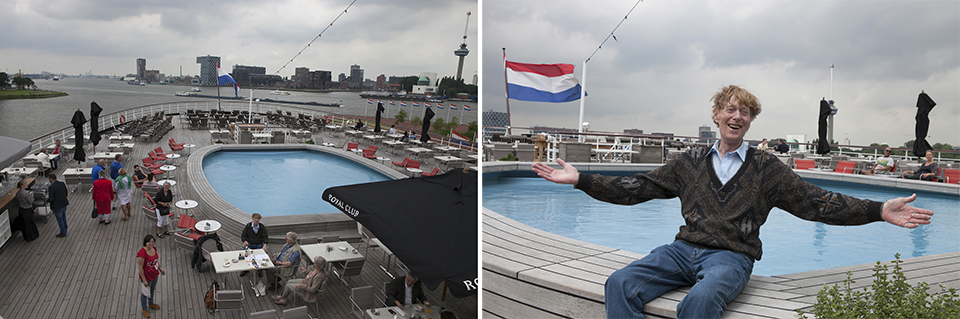
Even now that the ship has been open to the public since 2010, the same organisation, now called Vrienden van stoomschip Rotterdam, continues to work on restoration projects, art, lectures and presentations.
More than 200 volunteers, many of whom sailed on the ship themselves, also work every day on and for the ss Rotterdam. For example, during the tours they tell stories from “back then” or answer questions. You can take a water taxi from Hotel New York to the ship. It is now also used as a hotel.
15. Museum De Fundatie, Zwolle
Museum De Fundatie in Zwolle has been expanded with an elliptical volume on the roof of the neoclassical building. This Art Cloud consists of two exhibition floors with a combined area of 1,000 square metres. The volume is clad in blue and white glazed tiles and is subtly visible from various angles in Zwolle's city centre.
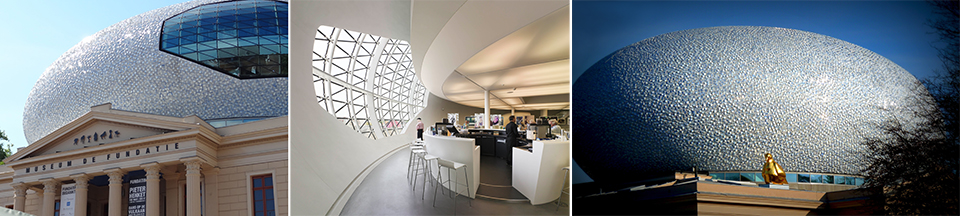
Museum De Fundatie in Zwolle, located on the boundary between the medieval city centre and the open 19th-century park landscape of the canals, has been expanded with a spectacular volume on the roof.
The neoclassical building on the Blijmarkt was designed as a courthouse by architect De Coninck in 1840. It has all-round symmetry, with a monumental entrance on two sides and a central hall.
About the author
Michelle Peeters is fotografe en oprichter van DeuxBleus Fotografie. Michelle herkent het bijzondere in het gewone en het gewone in het bijzondere. Ze heeft zich nooit willen specialiseren en is daardoor van alle markten thuis.
You might also like
-
 Review: Canon RF 15-35mm f/2.8 L IS USM
by Michelle Peeters
-
 Architecture photography: Colour, a chromatic collision
by Frank Toeset - Ohsevensix
-
 17 Lightroom tips for editing architecture photos
by Michelle Peeters
-
 Review: Landscape & Architecture (Bas Meelker & Pieter Dhaeze)
by Michelle Peeters
-
 What is your favourite lens?
by Nando Harmsen
7 comments
-
 Leo Schoonhoven wrote on Tuesday 16 May 2017 at 13:05 | reply
Prachtig foto werk en goed beeld van deze historische onderwerpen.
This comment was written in another language and has not been translated yet. -

 willemjsteen@gmail.com wrote on Tuesday 16 May 2017 at 14:30
| reply
Leuke en mooie tips.
This comment was written in another language and has not been translated yet.
Ik heb zelf nog een tip, Den Haag het HTM tramstation "De Netkous, Prinses Beatrixlaan.
Randstadrail -
 Michelle Peeters wrote on Tuesday 16 May 2017 at 16:13
| reply
@Willemjsteen: dankjewel voor de tip!
This comment was written in another language and has not been translated yet. -
 Sjaak wrote on Thursday 18 May 2017 at 15:06 | reply
Als je toch in Rotterdam bent ga zeker naar de Erasmusbrug en stationsgebouw. Mooie architectuur
This comment was written in another language and has not been translated yet. -
Michelle Peeters wrote on Thursday 18 May 2017 at 15:09
| reply
@Sjaak: goeie tip en leuk voor een volgend artikel hierover! Mocht je leuke/goede foto's hebben dan stuur ze maar naar michelle@photofacts.nl he!
This comment was written in another language and has not been translated yet. -
 Henk Heijnen
wrote on Tuesday 23 May 2017 at 20:35
| reply
There are still a lot of interesting buildings in the Netherlands. Just take a look at www.mimoa.eu (founded by Dutch architects) And another beautiful example is the Eye Film Museum in Amsterdam.
Translated from Dutch. -
Michelle Peeters wrote on Tuesday 23 May 2017 at 21:01
| reply
@Henk: Nice tip, thanks!
Translated from Dutch.
Have your say
Please note: Articles older than a week can only be commented on by signed-in visitors.Would you still like to comment? sign in or create a free account.
Become a better photographer every week
A practical photography tip in your inbox every week.
38,833 photography enthusiasts already receive the tips! More about the weekly mail. Or keep up to date via  Facebook.

Elja Trum
Photofacts; everything to do with photography!
Would you like to take better photos and keep up with what is happening in photography? Photofacts publishes articles that teach you something about photography — from a product announcement to a practical shooting tip or a look at a website. Photofacts covers photography every day and is a hobby project of Elja Trum's that got out of hand. The articles are written by a team of volunteer authors. If you would enjoy writing one or more articles for Photofacts, do get in touch.More about PhotofactsPhotofacts is made possible in part by
