

Do you need the perfect lens for your photography
Friday 1 December 2023, 20:10 by Nando Harmsen | 3,170 views | 7 commentsThis article was translated from Dutch with the help of AI. Read the original.
The latest lenses are still getting better. From the resolution they can render to lens aberrations in the extreme corners. Do you really need to use these better lenses, or does your photo lose its character?
This article was written in response to my question about what the readers of this blog would like to read. This subject, old lenses versus new lenses, was suggested by Jeepee, for which I thank him.
You will no doubt have noticed that the latest top-of-the-range lenses are incredibly expensive. Three thousand euros has long been no exception. Although I do not want to justify the prices, there is a reason for the high amounts.
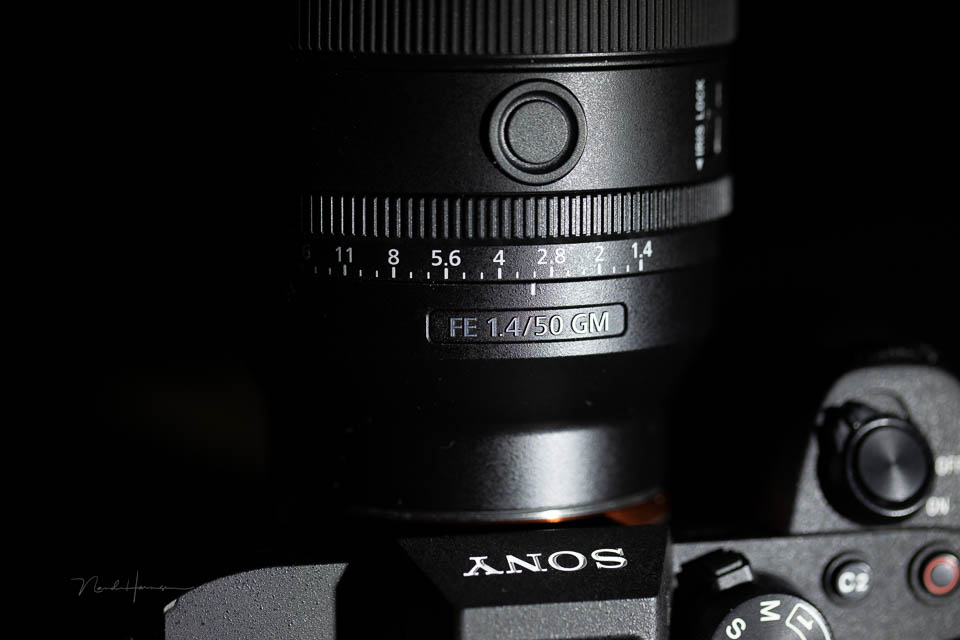
The latest lenses are exceptional examples of development and engineering. Ten or more lens elements work closely together to achieve as little vignetting, chromatic aberration, coma distortion and lens flare as possible.
In addition, resolving power has to keep increasing. Otherwise, what is the point of using high-resolution cameras if the lenses cannot render that resolution? And all of that comes at a price, literally.
Are you looking for perfect sharpness, with barely any lens aberrations, or none at all, of any kind? Then these are the lenses for you. They allow you to view your photo at pixel level and still be amazed by the quality.
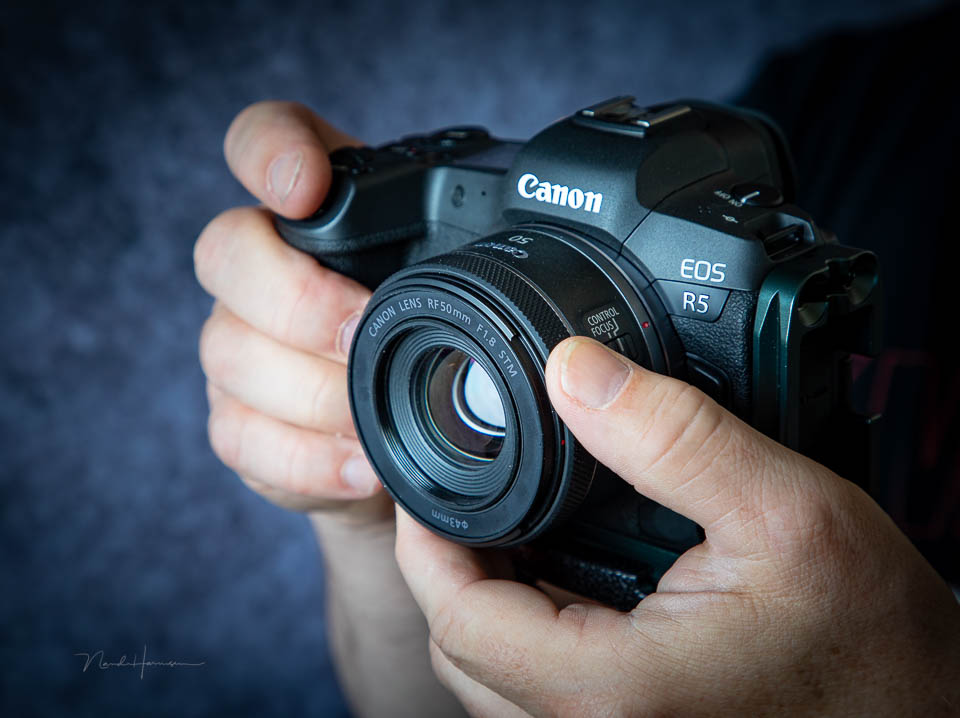
How important is the quality of a lens to your photo? That is a question to which everyone may have a different answer. Still, you should ask yourself what is important for a photo. Technical perfection, or what a photo shows and tells you?
A photo is more than just a reproduction of reality in infinite detail. A photo is a snapshot of an event that has passed and will not return. A good photo shows a memory and evokes feelings and emotion. It is a whole.

A good photo therefore does not need to be a perfect reproduction of reality. You look at the image as a whole and at the story the photo tells. It inspires you, or overwhelms you with what you see. Resolution, light fall-off, softness in the corners or chromatic aberration do not come into it.

It is good to see that many photographers choose old lenses. These are vintage lenses, each with its own unique look. You have to like that, of course. These lenses are not perfect, but it is the photo as a whole that matters, not the tiny details at maximum magnification on the screen.
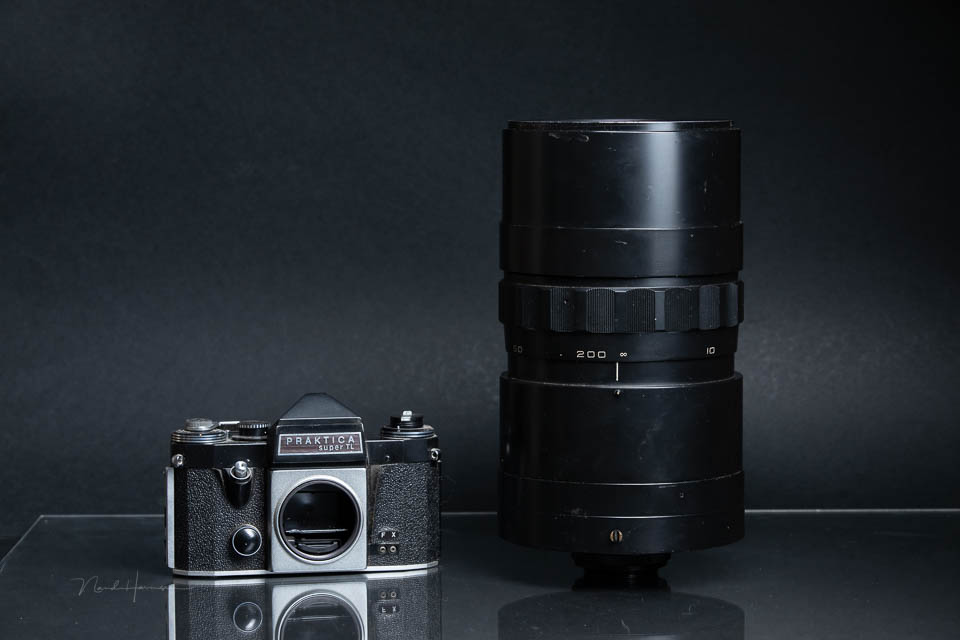
You do not necessarily have to reach for that kind of vintage lens, though. You can also choose somewhat older modern lenses. In other words, you do not necessarily have to choose the latest and greatest just because the quality has improved again.
There is even a risk in searching for the best, most perfect lens. The image, however perfect, can become too clinical. A photo without feeling, where it is all about perfection. In other words, it is precisely a lens's shortcomings that give a photo character.
Of course, there are also situations where the most perfect reproduction possible is needed. But then photography is no longer an artistic expression. It is purely a record, with a different purpose from a photo on the wall.
What do you think about the perfection lenses are expected to have these days? Do you think this makes the photo too clinical, or is it not too bad? Let us know in a comment below this post.
About the author
Nando Harmsen has been photographing for more than 40 years. He specialises in wedding photography and landscape photography. Nando also gives talks, workshops, masterclasses and photo trips, and regularly reviews new and interesting equipment.
You might also like
-
 5 Good Photography Resolutions for 2020
by Michelle Peeters
-
 Corners are great for model photography!
by Frank Doorhof
-
 The new Lightroom update now offers super-resolution
by Nando Harmsen


7 comments
-

 jeepee wrote on Friday 1 December 2023 at 21:52
| reply
jeepee wrote on Friday 1 December 2023 at 21:52
| reply
Great Nando! And with mirrorless cameras and an adapter you can now make a lot of lenses fit. A few months ago I made a shot of the same scene myself with 5 different lenses at 50 mm and the same aperture. I was absolutely amazed that the one that appealed to me the most had been made not with a modern lens but with one that was 60 years old. Maybe a fun little experiment for the reader with a few lenses in the cupboard?
Translated from Dutch. -

-
 MacBigfoot wrote on Friday 1 December 2023 at 22:49
| reply
MacBigfoot wrote on Friday 1 December 2023 at 22:49
| reply
I find it very difficult, I would really like to see some photos side by side.
Translated from Dutch.
Old lenses were used with analogue rolls of film, do you get that feeling back with the same lens on a digital camera? Or does the digital camera already show a more clinical image because of the enormous number of pixels?
There are old lenses that have a very beautiful bokeh, or soft focus.
With a modern fast lens, the subject can be rendered very sharply with a very nice blurry background.
I don’t know if you can compare old and new on a one-to-one basis. -
Nando
wrote on Tuesday 5 December 2023 at 11:10
| reply
A good point: is it due to the resolution.
Translated from Dutch.
You do have to keep in mind that the lens has a certain resolving power. If that resolving power is lower than the resolution of your sensor, then that is the determining factor for the sharpness.
Personally I think you can simply compare them 1:1. -
 Donald Willemsen wrote on Tuesday 5 December 2023 at 10:48 | reply
Reading Nando's story leads me to one conclusion: The best perfection is imperfection.
Translated from Dutch.
I can relate to the story above. -
 Maurice wrote on Tuesday 5 December 2023 at 12:51 | reply
In addition to this discussion; many people complain about the graininess of photos taken with a modern camera such as the Nikon Z8. I then think back to the analogue negatives with ISO 400, pushed by a factor of 4 during development. I find that graininess quite beautiful and sometimes photograph at a maximum ISO to get anomalous grain.
Translated from Dutch. -
 Ynze Braaksma wrote on Friday 8 December 2023 at 21:32
| reply
Ynze Braaksma wrote on Friday 8 December 2023 at 21:32
| reply
Lenses can differ in their resolving power
Translated from Dutch.
Have your say
Please note: Articles older than a week can only be commented on by signed-in visitors.Would you still like to comment? sign in or create a free account.
Become a better photographer every week
A practical photography tip in your inbox every week.
39,024 photography enthusiasts already receive the tips! More about the weekly mail. Or keep up to date via  Facebook.

Elja Trum
Photofacts; everything to do with photography!
Would you like to take better photos and keep up with what is happening in photography? Photofacts publishes articles that teach you something about photography — from a product announcement to a practical shooting tip or a look at a website. Photofacts covers photography every day and is a hobby project of Elja Trum's that got out of hand. The articles are written by a team of volunteer authors. If you would enjoy writing one or more articles for Photofacts, do get in touch.More about PhotofactsPhotofacts is made possible in part by
