

Why Asking for EXIF Data Is Pointless
Saturday 28 December 2024, 14:07 by Nando Harmsen | 3,156 views | 16 commentsThis article was translated from Dutch with the help of AI. Read the original.
You have undoubtedly been asked to share EXIF data at some point. Perhaps you have asked for it yourself. Did you know that it usually tells you very little and is therefore essentially pointless information?
It can of course be interesting to see which settings someone used for a photo. Unfortunately, it tells you very little about the photo or how it was created. In fact, you can often get the necessary information from the photo without the EXIF data.

What has this knowledge taught you about this photo?
If you think that EXIF information will teach you how to choose your own settings, you will be disappointed. Every situation is different. Still, the individual settings do provide some information, but only in general terms. Let me explain.
Shutter speed affects movement in the image. Look at the photo and you will immediately see whether a fast shutter speed was used or not. Sometimes, the exact shutter speed chosen is not important at all.
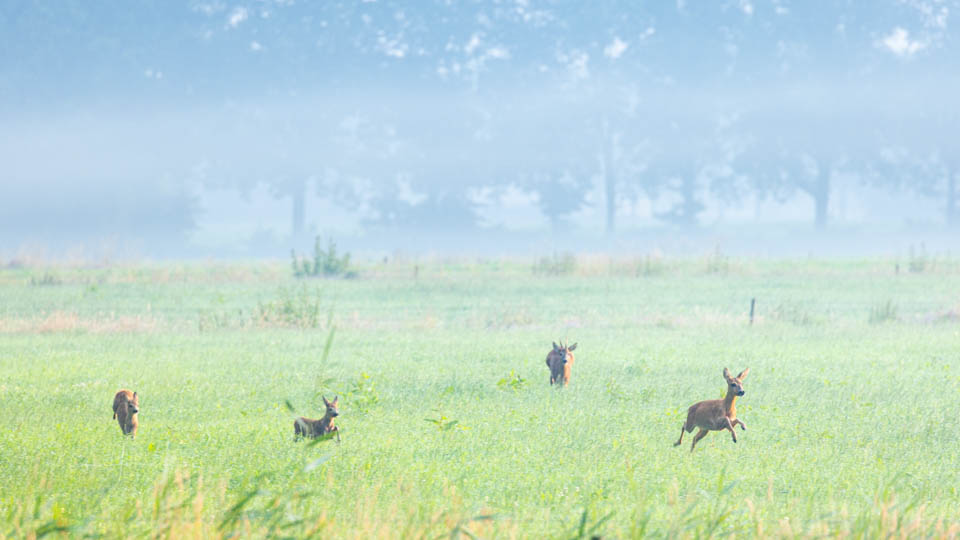
The speed of the shutter offers no added value. Was it 1/2000 second or 1/500 second? The only important thing is that the shutter speed was fast enough to freeze the movement, and the photo already tells you that. The same applies to a slow shutter speed.
Aperture affects the depth of field in the image. Look at the photo and you will immediately see whether there is a large or small depth of field. The exact aperture used makes no difference.
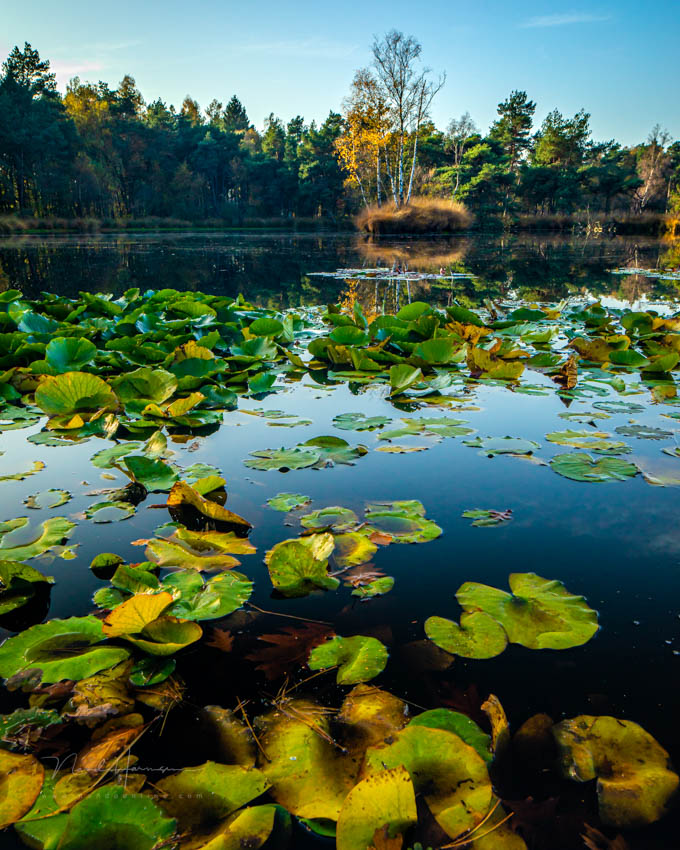
Depth of field is not determined by the aperture alone. The distance to the subject is also important, as are the focal length and the focus point chosen. The aperture value is only an indication. The way the photo looks tells you everything you need to know.
The ISO value has no effect on the appearance of the photo. Although it does affect the amount of noise, a photo reduced in size for internet and screen use will affect how visible that noise is. Of all the EXIF data, the ISO value tells you the least.
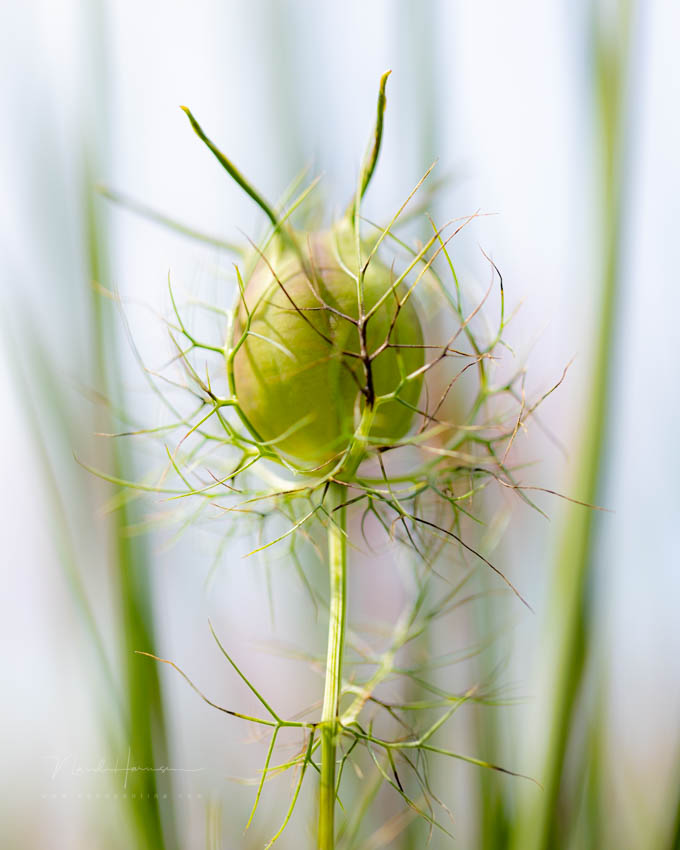
You may then think that all of this information together tells you something about the exposure. But it does not. The photo tells you nothing about what the light was like when it was taken. It may have been underexposed or overexposed.
The appearance of the photo is ultimately determined during post-processing. Was the photo too dark? Then that was corrected in post-processing. And vice versa.
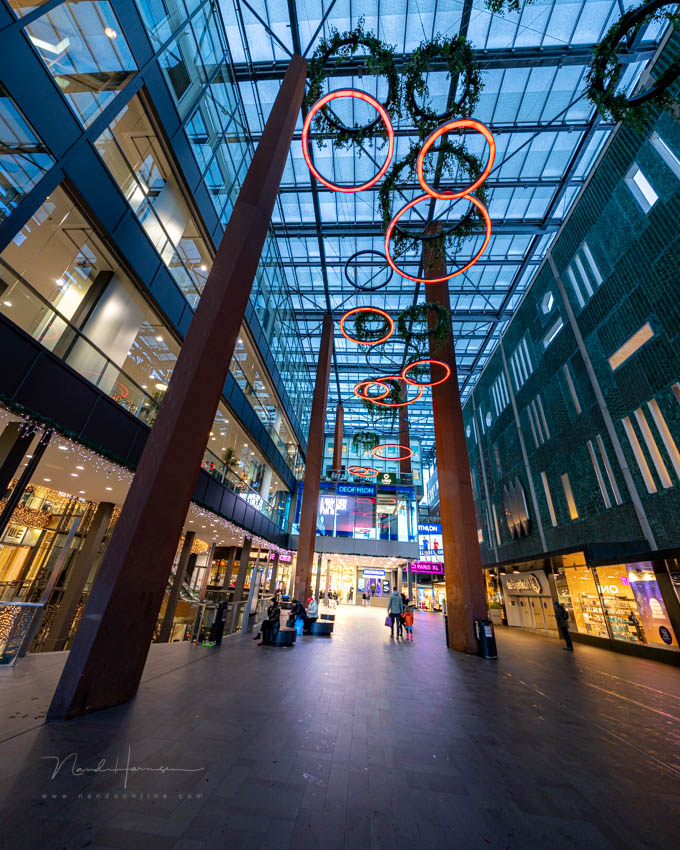
If you ask me for EXIF data next time, I will be happy to provide it. I will continue to include EXIF data with photos, because people appreciate it. It is just of no use to you. Instead, look at the photo and ask yourself the following questions:
Was the photo taken with a wide-angle or more telephoto lens?
Is the depth of field large or small?
Is the shutter speed important? If so, was it fast or short?
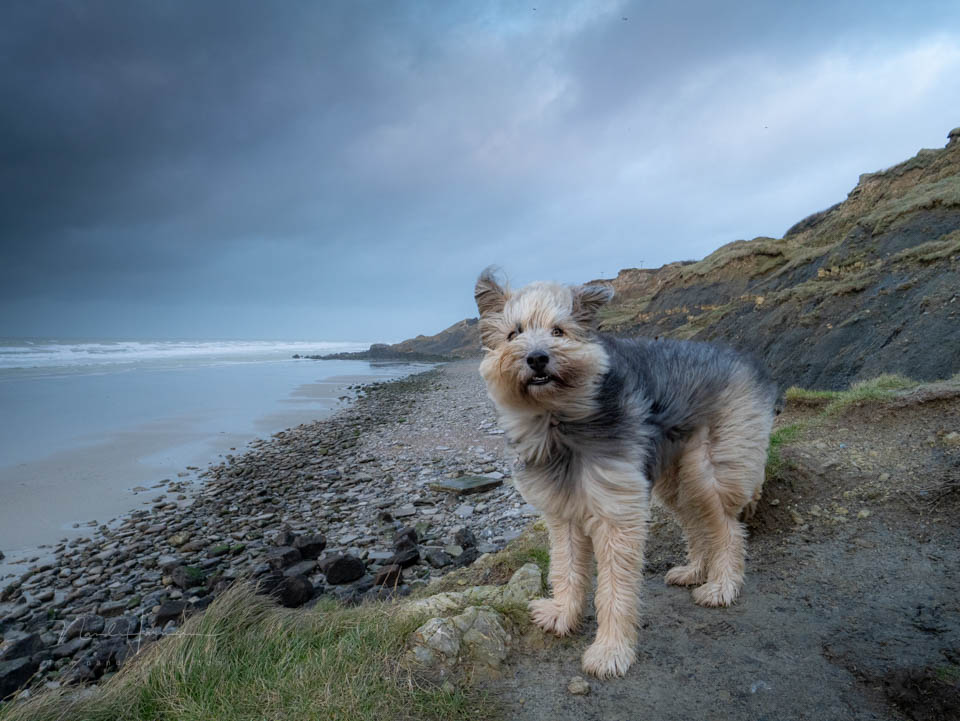
By looking at the photo, you can already answer these three questions yourself. The exact number for the focal length, aperture and shutter speed is not important. Only when there is an exact description of the situation can it tell you more.
About the author
Nando Harmsen has been photographing for more than 40 years. He specialises in wedding photography and landscape photography. Nando also gives talks, workshops, masterclasses and photo trips, and regularly reviews new and interesting equipment.
You might also like
-
 Photo information that makes you think
by Nando Harmsen
-
 The Columbus P10 GPS Logger for Your Photo Trips
by Nando Harmsen
-
 Converting focal length to full-frame is pointless
by Nando Harmsen
-
 Don't buy pointless camera gear
by Nando Harmsen
-
 The sense and nonsense of a low viewpoint in landscape photography
by Nando Harmsen

16 comments
-
 Donald Willemsen wrote on Saturday 28 December 2024 at 15:01 | reply
Nando, you are absolutely right. So much may have changed in post-processing that not much of the original exif data is still correct. People keep asking about it. Sometimes someone publishes a photo which the photographer says has something wrong with it or, for example, is not sharp enough. Then a number of spectators jump in with the question: What are the exif details? So then you can't do anything with it. In the case of blur (except for motion blur), you simply did not focus properly on the subject or used the wrong focusing method.
Translated from Dutch.
You are therefore right to state that by looking carefully at the photo, you can quickly see whether a wide-angle lens, telephoto lens, fast or slow shutter speed and large/small DoF were used. -

 MacBigfoot wrote on Saturday 28 December 2024 at 15:31
| reply
MacBigfoot wrote on Saturday 28 December 2024 at 15:31
| reply
I think you used a wide-angle lens: the background quickly becomes “smaller” and Bruc's head and front legs seem relatively large compared to his body.
Translated from Dutch.
The depth of field is in any case not maximum, stones in the background in the water seem blurrier than those in the foreground (difficult to see with an internet image), and the horizon and surf in the distance seem to confirm that.
The shutter speed will have been short, the long grass and the long hairs of Bruc seem to have been blown flat by the wind. Based on the surf I don't dare claim that, surf can also be present when it is windless on the coast. -
 Chris wrote on Tuesday 31 December 2024 at 10:40 | reply
Sometimes it is nice to know this. I was once at an exhibition where there was a photo of a particular plant with the exif info. I noticed that a very fast shutter speed had been used in combination with a high ISO value. Why, actually? When I asked the photographer in question, the answer was very clear and straightforward: lots of wind.
Translated from Dutch.
Necessary? no
Nice to know? sometimes -
 Nando
wrote on Tuesday 31 December 2024 at 13:07
| reply
Nando
wrote on Tuesday 31 December 2024 at 13:07
| reply
Imagine that you photograph a flower yourself one time, and you notice that there is a lot of wind. What do you do then?
Translated from Dutch.
Then you choose a fast shutter speed and set the ISO as high as necessary to achieve that shutter speed.
Nice that you see this in someone else's photo's Exif, but it's something you also do yourself when you encounter that situation. Right?
The only thing the Exif you read yielded was wondering what the point of it was. So that shows that Exif says nothing about the photo without describing the circumstances. What if the photographer hadn't been there? What information would the Exif have provided then?
That is what I explain in this article. -
 pierre wrote on Tuesday 31 December 2024 at 11:11 | reply
and God created the Pros ....
Translated from Dutch. -
-
 Fons Bitter wrote on Tuesday 31 December 2024 at 12:41 | reply
Still glad to have this data.
Translated from Dutch.
Imagine if they weren't there?
We would find that out immediately.
If only for the shooting date. REALLY.
It is also handy when finding the images again.
It is only becoming more necessary with the rise of AI...
It wasn't made for an experienced photographer who can "read" the photo themselves. But at a photo club with beginner photographers, it is still handy to comment on that.
And; you don't have to look at it if you don't want to..... -
-
 Rien Hoekenga wrote on Tuesday 31 December 2024 at 13:25 | reply
What you also find there is the date and time at the moment you took the photo. Some photo contests only want new material, so that can be checked.
Translated from Dutch. -
-
 Kees Verwaard wrote on Tuesday 31 December 2024 at 15:50 | reply
Read the article carefully. Then looked at the beautiful photos. Without asking myself questions. It is the photographer who chooses the settings and the viewer who hopefully enjoys the result and is inspired to also create beautiful images. If he finds that difficult, he can always take out a subscription to Photofacts to learn it??
Translated from Dutch. -
 Ton wrote on Tuesday 31 December 2024 at 17:22 | reply
I don't really agree. I am actually quite happy with Exif and use it regularly. As an editor of a model railway magazine, I regularly receive photos that are not suitable for publication. Especially the depth of field leaves something to be desired. It needs to be as large as possible in our magazine. Exif then allows me to find out that a lens opening that is too large has often been set. Because with Exif you can find out how the photo (usually not post-processed) was taken, it is possible to point the photographer towards a better camera setting. So as far as I am concerned: great that Exif exists.
Translated from Dutch. -
-
 Hein Nieuweboer wrote on Friday 3 January 2025 at 14:51 | reply
Nando, I basically agree with you. Still, it can be valuable if you want to compare cameras or lenses when purchasing.
Translated from Dutch.
There is a difference in depth of field, noise, etc. between a bridge camera and a full-frame camera. F 4 on a bridge camera gives more depth of field at, for example, 50 mm than on a full-frame camera at 50 mm.
Besides my NIKON D 750, I bought a bridge camera from Sony, the RX10M4 (by the way, a deliberate choice), and compared a photo with the same settings with each other. Then you can clearly see differences in depth of field and noise etc. -
-
Donald Willemsen wrote on Friday 3 January 2025 at 16:06 | reply
Hein, I think you are comparing a DSLR with a mirrorless camera. Although they are both fruit, you are comparing apples and oranges and I don't think that works.
Translated from Dutch.
The Nikon uses a separate focusing sensor, while the Sony does the focusing measurement directly on the sensor. That also means that the lenses of both cameras have a different construction. For example, the back of the lens on the Nikon is farther away from the sensor because there is a mirror in between. With the Sony, that distance is shorter.
So a comparison doesn't really work.
Have your say
Please note: Articles older than a week can only be commented on by signed-in visitors.Would you still like to comment? sign in or create a free account.
Become a better photographer every week
A practical photography tip in your inbox every week.
39,087 photography enthusiasts already receive the tips! More about the weekly mail. Or keep up to date via  Facebook.

Elja Trum
Photofacts; everything to do with photography!
Would you like to take better photos and keep up with what is happening in photography? Photofacts publishes articles that teach you something about photography — from a product announcement to a practical shooting tip or a look at a website. Photofacts covers photography every day and is a hobby project of Elja Trum's that got out of hand. The articles are written by a team of volunteer authors. If you would enjoy writing one or more articles for Photofacts, do get in touch.More about PhotofactsPhotofacts is made possible in part by
