

Interview with photographer Anja Ligtenberg
Saturday 6 April 2019, 13:31 by Michelle Peeters | 8,230 views | 0 commentsThis article was translated from Dutch with the help of AI. Read the original.
Anja Ligtenberg (1967 Culemborg) graduated in 1998 from the International Center of Photography (ICP) in New York, specialising in documentary photography and photojournalism.
After first completing a master's degree in communication science, she discovered that her future lay in visual communication. After graduating from the ICP, she put together her portfolio and approached the Dutch media.
The Volkskrant was the first to commission her, and her network soon expanded. From her home base in New York, she worked as a freelancer for various Dutch media, including De Volkskrant, AD and Elsevier Magazine.
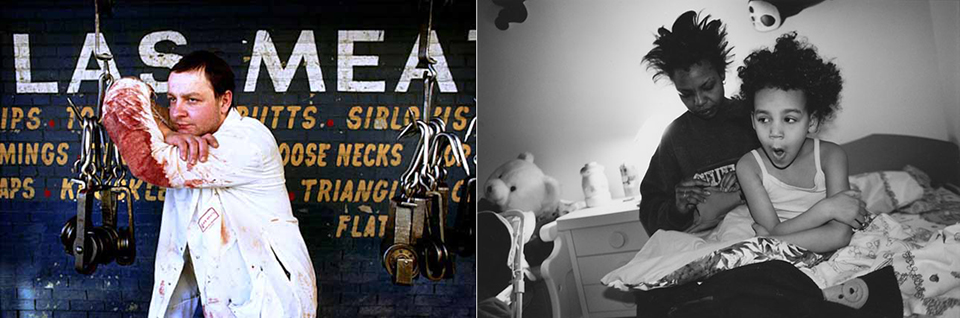
Her own reports, such as one about New York's disappearing Meat Packing District, attracted attention in America. This earned her a place among the 100 most promising young photographers in the USA, selected for the Eddie Adams Barnstorm in 2000.
Back to the Netherlands / press photography
She has lived and worked in Eindhoven since 2003. After returning to the Netherlands, she initially focused on Seeing The Unseen, photography workshops for blind, visually impaired and sighted people, which we will come back to shortly.
After a few years, her journalistic instincts started to return and she began working for Fotopersbureau Van de Meulenhof. This agency does a lot of work for the Eindhovens Dagblad.
She enjoyed the journalistic work both here and in New York. You visit the most interesting places and constantly meet interesting people. You also learn to look carefully and work quickly.
Due to cutbacks in the press, her attention shifted to corporate photography. She still makes photo documentaries, but now with her own stories, where she can follow her own heart and passion.
Her work currently consists of three disciplines: - photography with blind, visually impaired and sighted people (Seeing The Unseen), - corporate photography and - her own reports.
What these different applications of photography have in common, and what characterises her work, is a particular authenticity. This comes from her sharp eye and genuine interest in the people she photographs.
Her motivation comes from exploring emotional depth and respecting people's resilience, combined with curiosity about the world.
1. Seeing the Unseen
The Seeing The Unseen project is based on the 'painting with light' method developed by the Seeing With Photography Collective in New York, a collective of blind, visually impaired and sighted photographers.
It is a specific way of taking photographs that gives blind and visually impaired people the chance to work with a medium that at first sight seems impossible for them.
Anja lived and worked in New York when she discovered the collective. Inspired by the first photograph she made with them, she became a member. She is still in contact with the Americans and considers them her source of inspiration.
In the Netherlands, she developed this working method into a concept of courses and projects called Seeing The Unseen, www.seeingtheunseen.com
In recent years, she has mainly worked with young people at secondary schools and in collaboration with museums, such as Villa Zebra, FOAM and Van Abbe. The young people make photographs together in which they tell their own stories, and these stories and images are exhibited.
Method
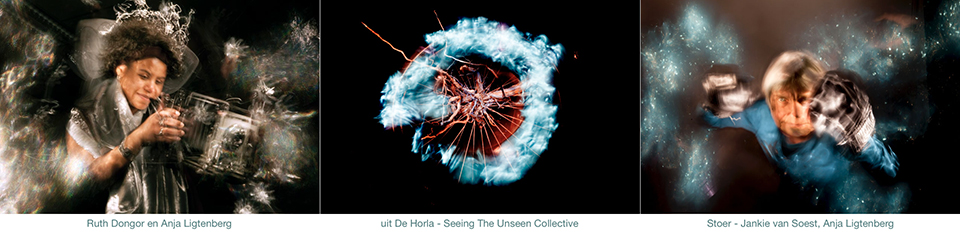
With 'painting with light', you make photographs much more in your head and with your body than with your eyes. First, you imagine the images in your head. Memory, time, dreams, the subconscious, imagination and creativity all play a role.
The (blind) photographer is the director and discusses what they want in the photograph and how they want it, including positioning, lighting and framing, so that everyone in the group has the same image in their head. The group then makes the photograph together.
This is done using torches in complete darkness. Everything illuminated by the torches appears in the photograph. The photograph is built up piece by piece over a long exposure.
Once the photograph has been made, the result is discussed and described in detail together. The director decides whether the work is finished or not. Sighted people work in the same way, and nobody sees what the photograph looks like beforehand, until it is finished.
What is special about the technique is that the method is the same for blind, visually impaired and sighted young people. This creates equal collaboration and exchange. Both groups gain insight into each other's world, which leads to greater understanding and helps remove barriers and prejudices.
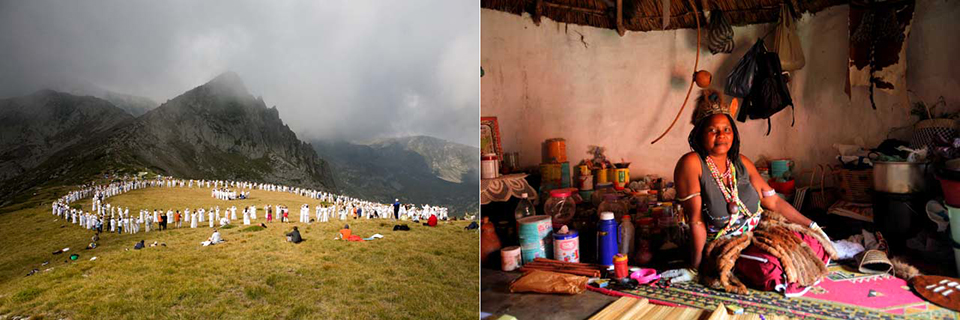
2. Commercial or corporate photography
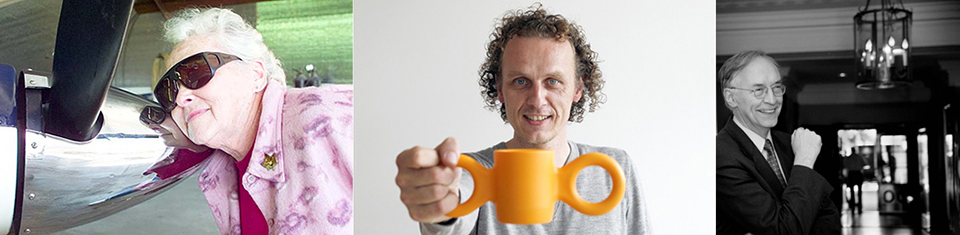
Her corporate photography mainly consists of portraits, reports, series and events. Her clients are companies themselves, but often also an advertising agency. She always works on location. This means she ends up in the most interesting places, which she is always curious about.
She almost always uses natural light. When that does not produce the desired result, she supplements the light with flash. Sometimes she uses one or more flashes on a stand with an umbrella and infrared trigger, or a Gary Fong Lightsphere, depending on the possibilities and the situation.
She uses the flashes as fill light, to lighten the shadows, to put a little more emphasis on someone's face, or to create catchlights in someone's eyes.
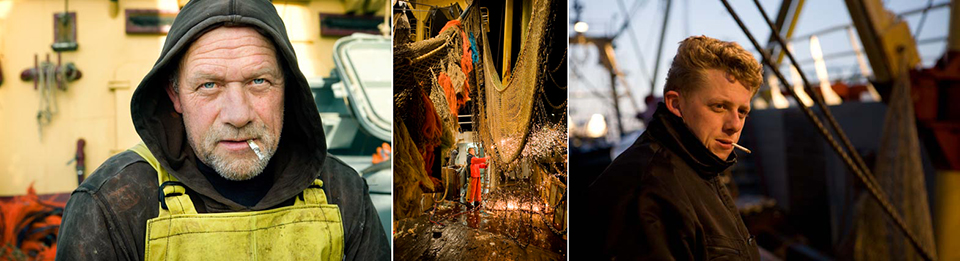
Her equipment consists of a Canon EOS 5d Mark III with three Canon Speedlite 600 flashes and a trigger set. Lenses that are always in the bag: 16-35, 24-70, 70-200.
Taking portraits on location requires some figuring things out on the spot. That is also what she enjoys about it. If possible, she makes sure she is there beforehand so that she can see where she can and wants to position someone and how she can use the light.
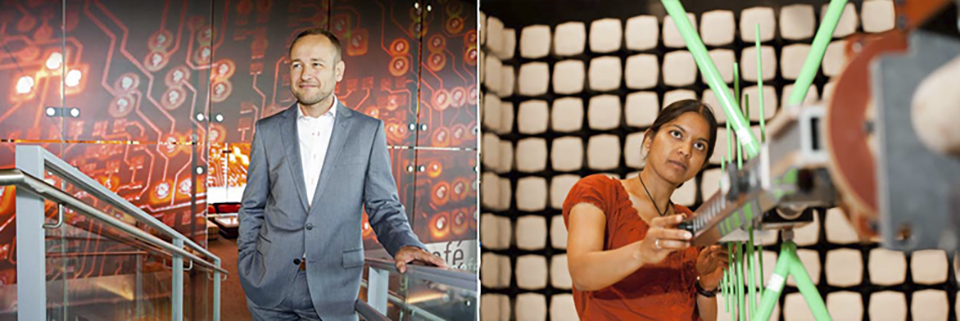
Before taking portraits, she researches the people she has to photograph. You can look at someone's profile on LinkedIn to see who they are and what they do or have done.
This gives you an impression of the person and sometimes provides points of departure for a conversation. During the shoot, she quickly builds a rapport with people, helping them feel at ease and relax.
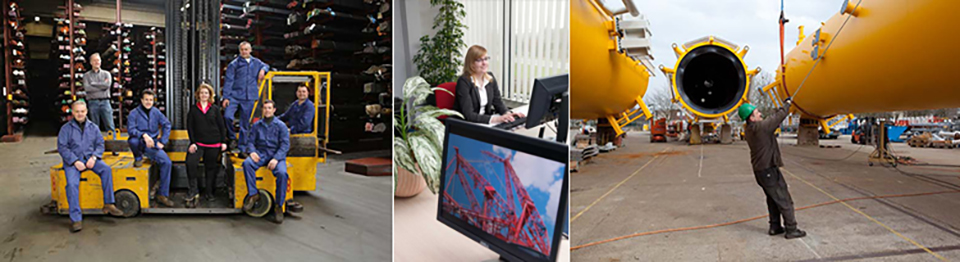
3. Personal reports - Kenya, Masai girls and National Geographic
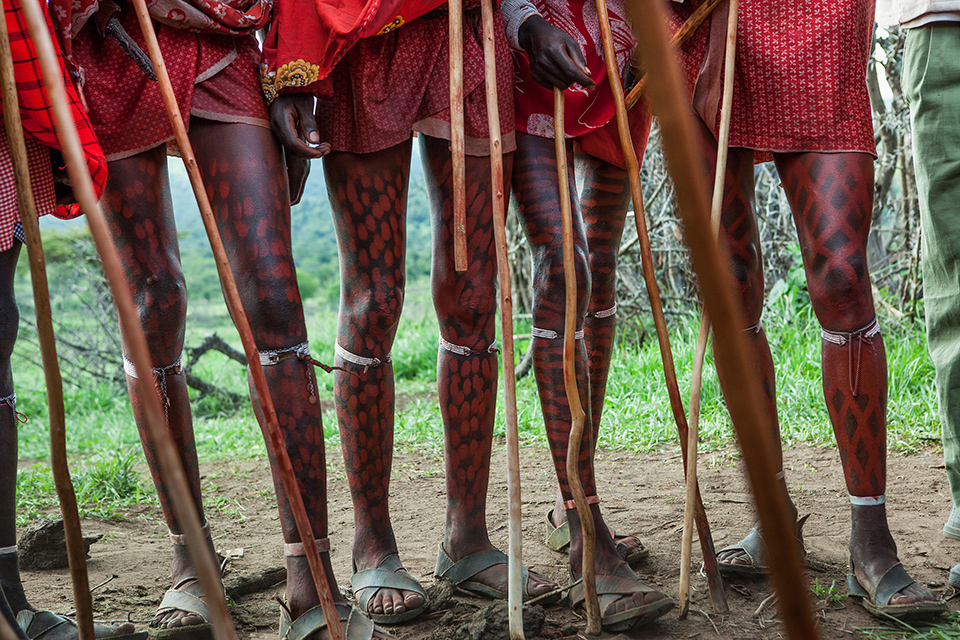
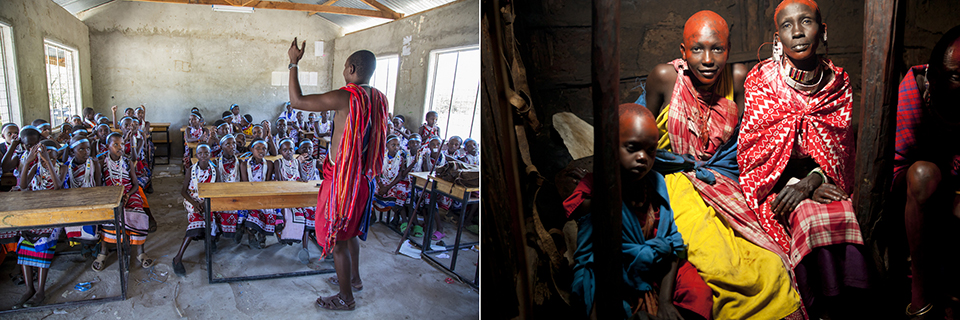
This project was given the title Pongezi. Pongezi means congratulations in Swahili. The congratulations are for the Masai girls who are now becoming women without undergoing circumcision. They are also for the entire community that has managed to break an age-old tradition.
The series is about alternative coming-of-age rituals in which traditional circumcision is replaced by additional education.
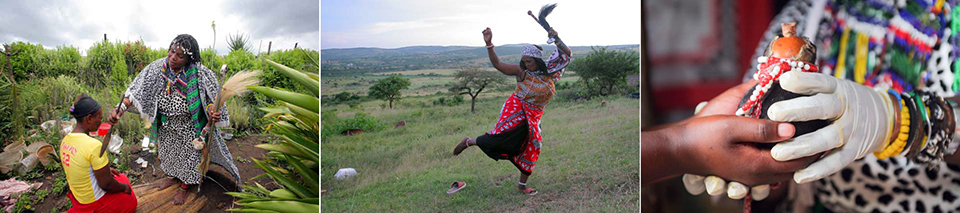
In the new ritual, the girls still take part in all the traditional rituals that symbolise the transition from girl to woman, such as shaving their hair, painting their bald heads, wearing traditional clothing, eating special food and performing special dances, but the girls are no longer circumcised.
Instead, they receive three extra days of education. Their parents also promise that they may finish secondary school.
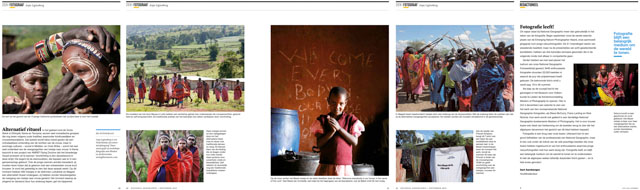
The tribal elders and men are approached first in this process, with respect and information. They are the decision-makers, and if they decide that the girls may take part in an alternative ritual, everyone in the entire community will accept the girls as women.
It is an inspiring example of how a creative solution can be found for an age-old problem. Education, communication and respect for one another and for traditions are central and are the keys to change. This makes it exactly the kind of story Anja likes to work on.
She travelled there five times, each time for several weeks, and visited different tribes in different areas of Kenya, Tanzania (and New York). Sometimes the ritual was celebrated with 1,000 girls at once, and sometimes with one family.
But the structure was always the same, with education replacing cutting. This project began entirely on her own initiative. After some time, she sought collaboration with other organisations. Amref Flying Doctors was interested, and from then on she was able to combine her personal work with assignments and campaigns for them.
When she had a good series, she approached several magazines and newspapers with a selection, taking into account the type of publication, the timing and the reasons why it might be of interest to that particular publication.
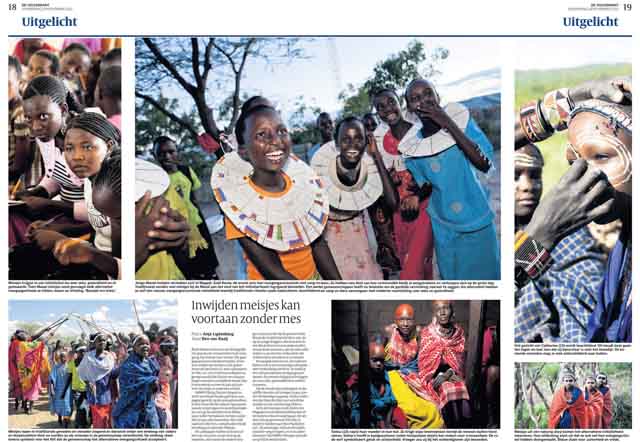
National Geographic was one of the first to publish the story. Many other national newspapers and magazines followed, including the Volkskrant, Trouw, NRC, Opzij, Flair and Goedele.
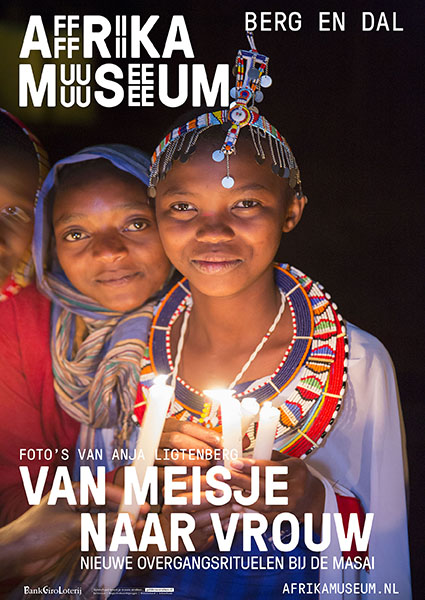
After some time, publisher Lecturis became interested and they worked together on a book. Anja then contacted the chief curator of the Afrika Museum, which resulted in a major solo exhibition of her work at the Afrika Museum.
Six months later, the exhibition travelled to The Hague town hall. On 6 February, the International Day of Zero Tolerance for Female Genital Mutilation, the exhibition was opened by then-minister Ploumen. RTL made a television report about it.
4. Personal reports - King of my Garden
In the Masai girls project, the story of the alternative ritual was the focus. In the King of my Garden project, it was much more about her own story about the allotment garden.
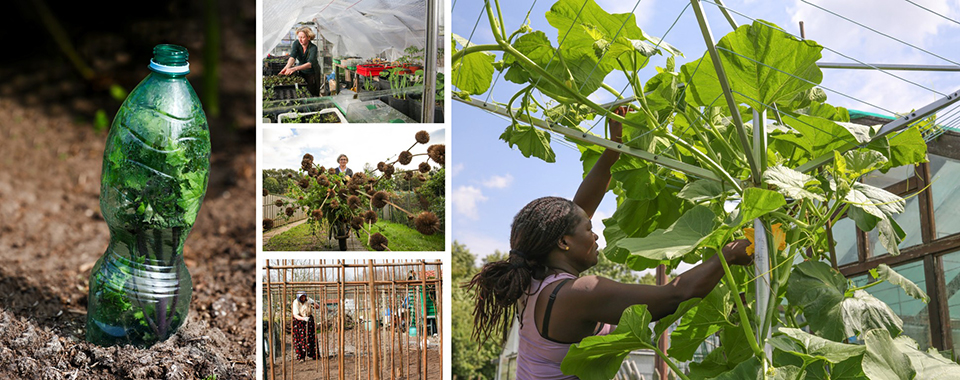
In this photo series, Anja portrays the people of Groen Gennep allotment garden. The allotment garden is a postage-stamp-sized piece of land in the south of Eindhoven, but a world of its own, including its own rules, management, paths and water management.
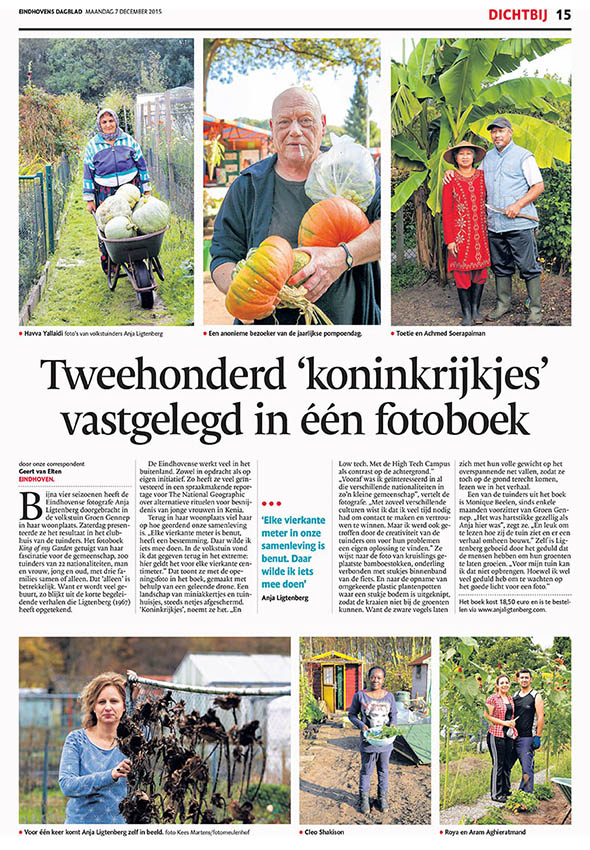
Here, 200 gardeners of all kinds work side by side, representing 22 nationalities and many other differences in age, professions and so on. Society as a whole is represented here and works together in good harmony. They all have their own reasons and their own creative solutions to the challenges of the garden.
Despite all their differences, they have one thing in common: they love their garden and work with passion and dedication, in their own way. At Groen Gennep, everyone is king of their own garden.
Anja photographed everyone in the same way in their own allotment: from the same distance and in the same frame. They look relaxed into the camera and are completely themselves. She never takes the photograph straight away, but always takes the time to meet people and have a chat. For her, the added value of photography lies in this contact with people.
Portraits of the gardeners are alternated with short chapters about the creative solutions people come up with, such as how to keep birds away or how to grow beans best.
The photographs were collected in a self-published book, “King of my garden, de mensen van volkstuin Groen Gennep”. This story was also published in various media, including Volkskrant Magazine and Eindhovens Dagblad.
These publications led to other assignments, such as a series about an allotment garden in Tilburg for its anniversary. Through her own network and on her own initiative, she also carried out assignments at the High Tech Campus Tuin and 'bietje buurten' in collaboration with Vluchtelingenwerk.
Vision
All the different parts of her work are very diverse and sometimes even seem contradictory. But what connects everything is her vision and working method:
In all her projects, she is driven by curiosity about the world around her and especially about the people she meets. The camera gives her the opportunity to meet people and be part of their world. That is where the beautiful stories are, and the stories she wants to tell.
Stories that inspire, about resilience and about people who come up with smart and creative solutions. But also about respect for tradition, each other's opinions and dialogue. It actually reflects how she approaches life.
Think about what you want and why, then get to work. And do not let yourself be held back if you want something and it does not work straight away. Do not give up, but keep looking at what is possible. There is always another option.
Books
If you want to know or see more of Anja, you can visit her two websites or look at her two books:
www.anjaligtenberg.com
www.seeingtheunseen.com
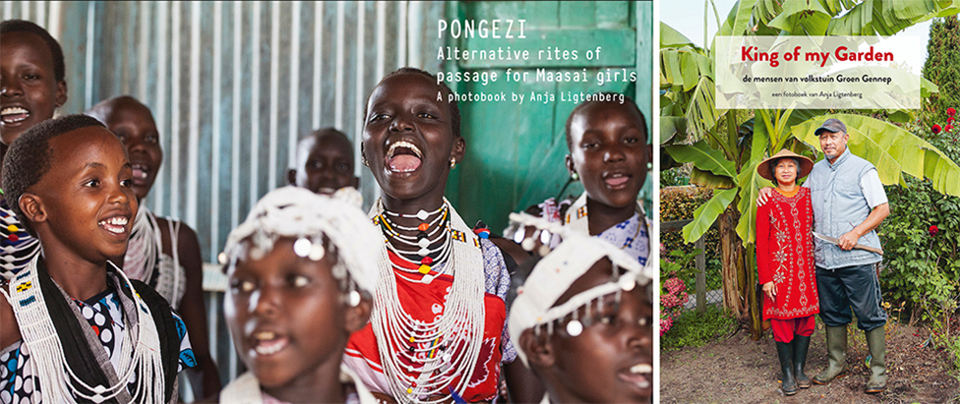
The book Pongezi, about the Masai girls who become women without undergoing circumcision, costs 28.50 euros. The book's profits benefit the Masai girls and their younger sisters through the Maji Mandaleo Afrika foundation and Amref Flying Doctors.
The photographs from King of My Garden have been published in the book of the same name. It costs 18.50 euros and was published independently.
Both books can be ordered directly from Anja. Send an email to anja@anjaligtenberg.com.
You can also approach Anja for a talk or workshop, and of course for photography assignments.
About the author
Michelle Peeters is fotografe en oprichter van DeuxBleus Fotografie. Michelle herkent het bijzondere in het gewone en het gewone in het bijzondere. Ze heeft zich nooit willen specialiseren en is daardoor van alle markten thuis.
You might also like
-
 Interview with photographer Bob van Zalm
by Michelle Peeters
-
 Interview with wedding photographer Matty Maas
by Michelle Peeters
-
 Interview with photographer John Geven
by Michelle Peeters
-
 A central and symmetrical composition matters more than you think
by Nando Harmsen
0 comments
Be the first to share what you think!
Have your say
Please note: Articles older than a week can only be commented on by signed-in visitors.Would you still like to comment? sign in or create a free account.
Become a better photographer every week
A practical photography tip in your inbox every week.
38,938 photography enthusiasts already receive the tips! More about the weekly mail. Or keep up to date via  Facebook.

Elja Trum
Photofacts; everything to do with photography!
Would you like to take better photos and keep up with what is happening in photography? Photofacts publishes articles that teach you something about photography — from a product announcement to a practical shooting tip or a look at a website. Photofacts covers photography every day and is a hobby project of Elja Trum's that got out of hand. The articles are written by a team of volunteer authors. If you would enjoy writing one or more articles for Photofacts, do get in touch.More about PhotofactsPhotofacts is made possible in part by
