
Interview with wedding photographer Matty Maas
Tuesday 25 December 2018, 14:14 by Michelle Peeters | 7,537 views | 1 commentThis article was translated from Dutch with the help of AI. Read the original.
In 2013, Matty Maas photographed her first wedding. Her career took off after that. She is now a member of the Master Photographers Network, where she has already received her first 'Runner up' award.
This article shares her experiences and some very valuable tips for this form of documentary photography.
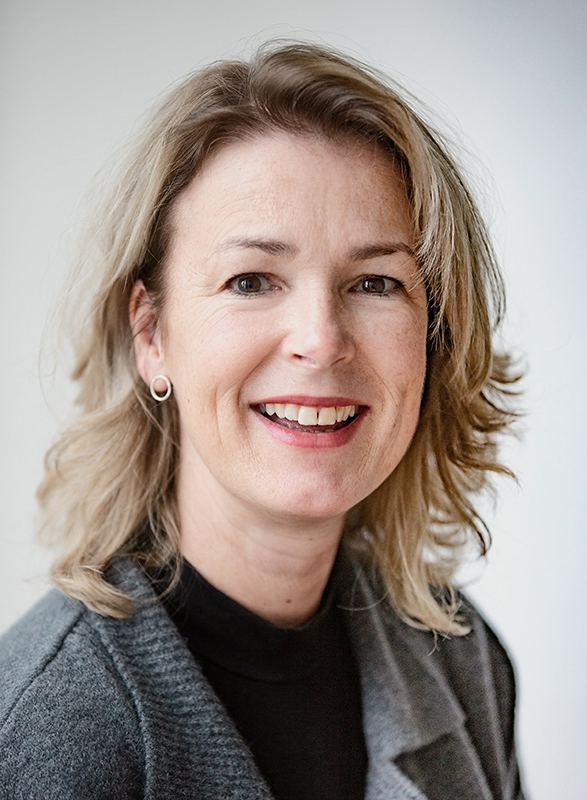
After attending the Fashion Academy, where photography and graphic design were a major part of the course, Matty took lessons at the Fotovakschool in Apeldoorn for a year. This was still in the analogue era.
Once a month, you met up to discuss photographs or use the darkroom. By then, she had already set up her own darkroom at home and photographed with a Minolta.
The course focused mainly on the technical side of photography, which appealed to her less. She missed the creative direction. She built up her knowledge of photography by attending various workshops specifically focused on portrait, wedding and reportage photography.
She began taking children's portraits at the children's playgroup. Photographing them as they are, dreamy, angry, shy, laughing and playing in the location, is definitely her preference. The photographs were always very well received.
After that, she took on a lot of work as a freelance school photographer for Kiddo Foto, and now also works as a school photographer under her own business name, Fotografie Natuurlijk.
Fotografie Natuurlijk
The name 'Fotografie natuurlijk' was chosen very deliberately because photography comes so naturally to her.
Photographing outdoors in a beautiful location, such as woodland or heathland, is her preference. These beautiful places can be found close to her home town of Arnhem. Lightroom is used for photo editing, with Photoshop for the finishing touches. And of course, she always photographs in RAW.
How do you find clients?
A good, up-to-date website is important, and it helps you to be found easily on Google. Networking is also very important. Going to wedding fairs and regularly taking part in the Open Top Trouwlocatie route works really well.
You should also keep your Facebook and Instagram pages up to date and be a member of various Facebook groups. Word-of-mouth recommendations always help too. Matty also sometimes works as a 'second shooter' with a fellow wedding photographer. This allows you to take different photographs from the main photographer.
You then focus more on the guests and what is happening around them, while your colleague is busy capturing other important moments, such as the exchange of the rings, the signing and so on. This gives the couple an even more extensive report photographed from several angles.
It is great to see how colleagues work, and there are always tips you can share..
Working method
It is nice to photograph from the background and capture what is happening. To be a bit of a 'fly on the wall'. The best compliment you can receive is I didn't see you there at all, how lovely that you managed to capture that too!
In fact, only the photo shoot is fully directed, usually before the ceremony. The rest of the events are captured unobtrusively.
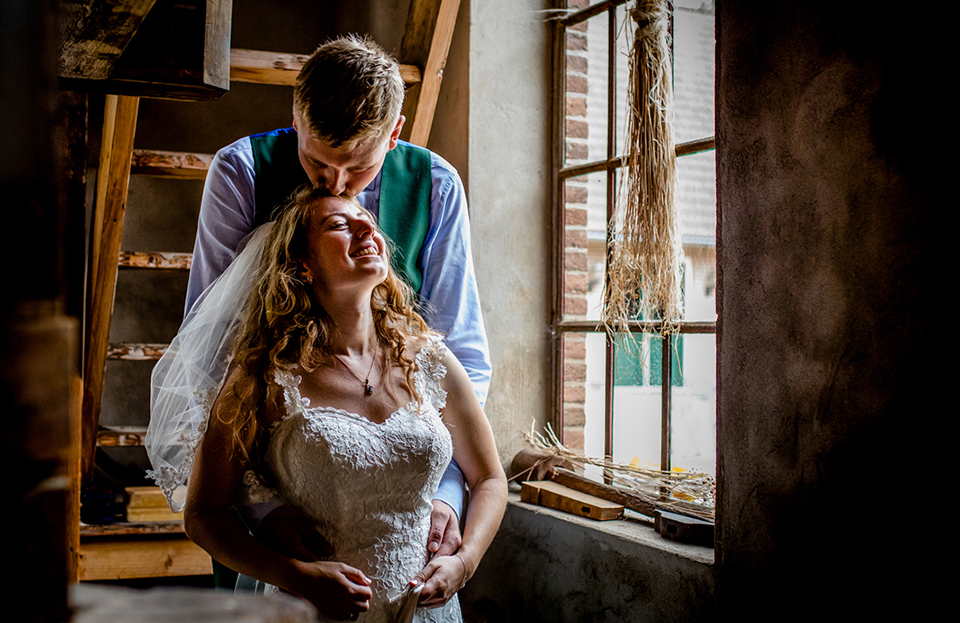
Looking for the light is important. Windows are ideal. People should always be doing or undertaking something to avoid static, posed photographs. Photographs look more spontaneous when people are not looking into the lens.
You cannot manage a wedding with just one camera. You do not have time to change lenses. So two bodies go along, a Canon EOS 5d Mark III and a IV, with a 35mm and a 70-200mm lens, plus a 100 mm, macro 2.8 and a 24-70mm 2.8 in the camera bag. This means you always have a back-up camera to hand if something goes wrong with your lens or body.
A day photographing a wedding is often a long day, sometimes as much as ten hours. It often starts with the bride getting dressed, and sometimes the groom too, followed by the photo shoot, usually in a park or beautiful setting, the ceremony, the meal, the speeches and the first dance at the reception.
Clients are always asked to fill in a schedule and a questionnaire with all the details of the day two weeks in advance: who the witnesses are, the different locations and so on. Agreements are also often made in advance with the videographers present about how they will cover the day.
This is to prevent the videographer from jumping in front of you with their camera at the crucial moment. It is about giving each other the chance to get the images. You need to make agreements about that.
All in all, a wedding takes up around two weeks of your time. The contact beforehand, preparing the quote, the meetings, the engagement shoot beforehand, the photo editing and putting the album together.
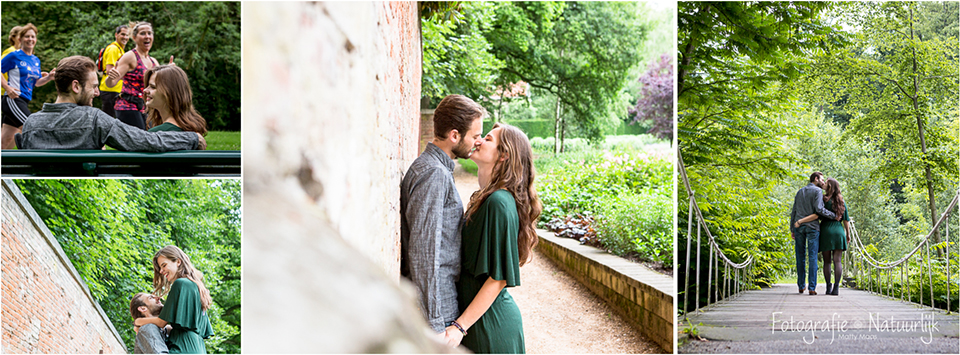
A few months before the wedding, the so-called engagement shoot takes place. It is intended to get to know each other better and to help the future couple get used to being in front of the camera. These photographs are therefore often used for the wedding invitation. The engagement shoot takes place in the area around Arnhem.
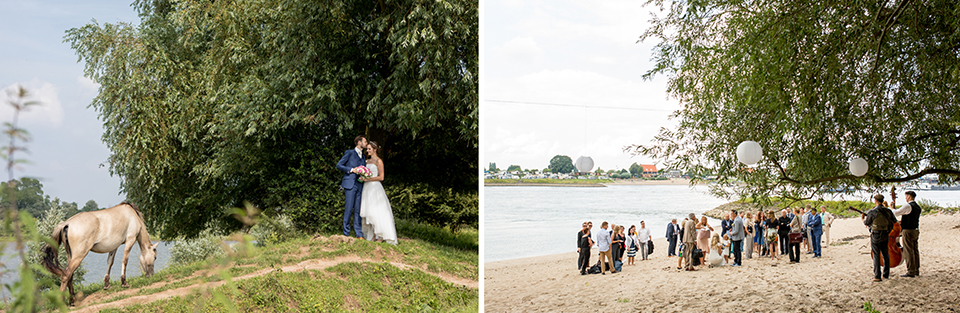
More and more beautiful places are discovered on the job. Sometimes people come up with beautiful locations where they would like to be photographed. The floodplains near Arnhem are an example of such a beautiful location. Combined with the wild Przewalski horses that roam there, this often results in very special images.
But the heath, Mariëndal and Avegoor estate are also great. One couple took the whole party by boat from Nijmegen across the Waal to a tea garden on a small island. Very special, and it resulted in wonderful photographs!
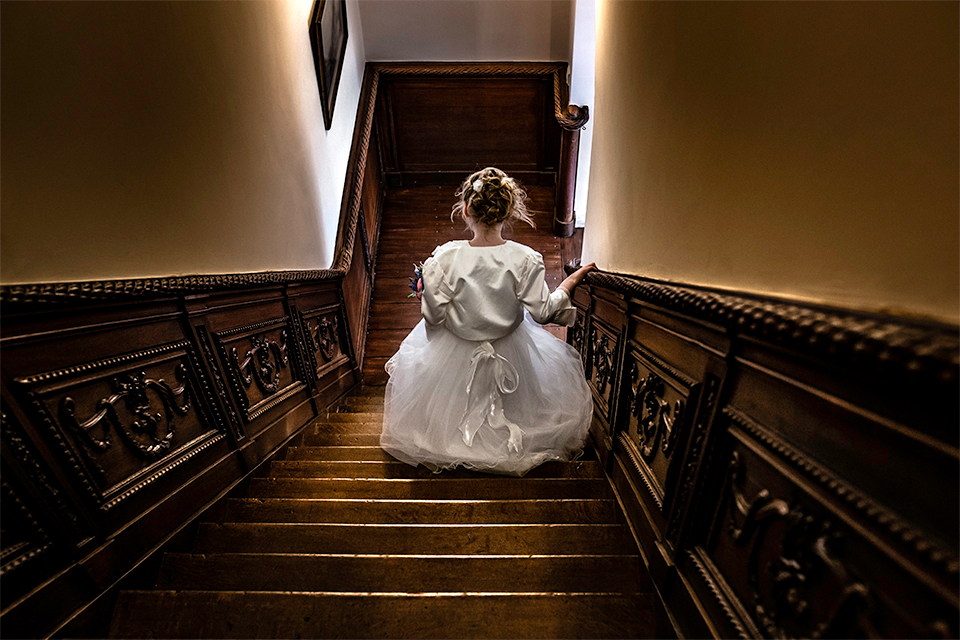
Framing and natural frames work very well to add depth to photographs. The photographs often look very spontaneous, as if you are one of the guests yourself. You have to become completely immersed in the celebrations, crawl behind bushes and lie on the ground.
The wedding album, if requested, is printed by a professional lab. It is a specialist lab that only supplies professional photographers.
Albums are designed using Smartalbums software. It is wonderful to be able to tell a story with your photographs. A visual story that is also about the surroundings, family, where someone lives and where they are getting married.
Flash workshops
Regularly attending workshops is necessary to keep your knowledge up to date or broaden it. They are often one-to-one workshops where you get all the attention you need and can ask all your questions.
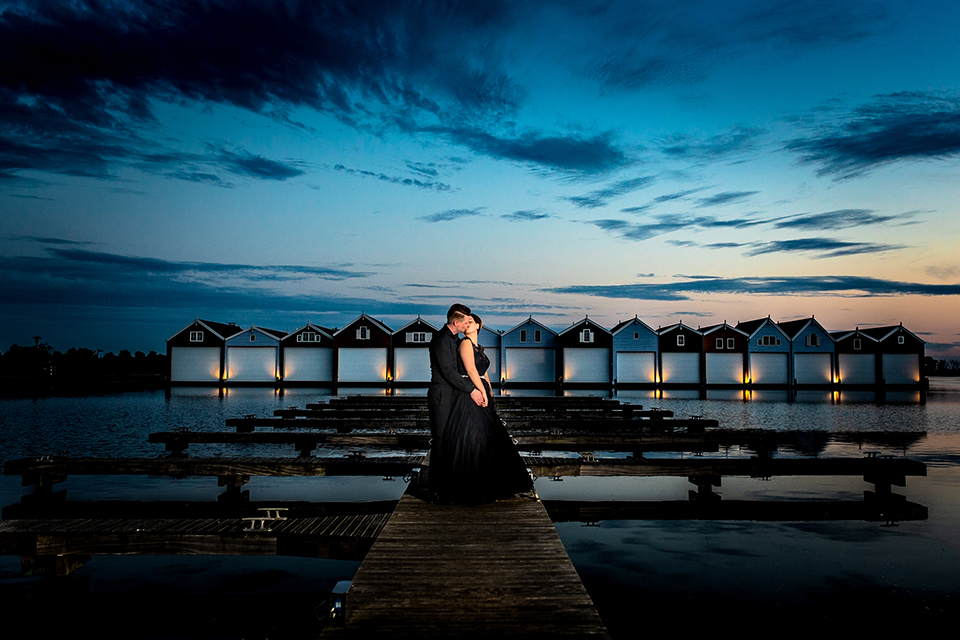
As many as three speedlights are used off-camera. A Magmod system is also used. You attach this magnetic strip to your flashes, allowing you to simply click the Magsphere, a small softbox, or grid into place.
It produces a very natural result. You can hardly see that a flash has been used. You put the three flashes on stands opposite each other and control them via a trigger set. Working with natural light is nicest, but sometimes you cannot avoid using flash, especially with backlighting or indoors.
You measure the light on the highlights that are present, the lamps or the sun in the natural surroundings. This gives you a fairly dark photograph in which the lights are correctly exposed and not blown out. You then adjust the flashes accordingly, which nicely fills in the shadows, brightening them just a little, and gives your subject a good exposure.
You usually end up with a shutter speed of 1/60th of a second, with the subject nicely frozen by the flash. You often work with high ISO values, 1600 and sometimes even 3200. The noise is reduced in the camera, a Canon EOS 5d Mark IV, and if necessary also during post-processing.
But if you expose correctly and do not have to lift the shadows, you will actually have very little trouble with noise. Advice: try it out on the Christmas lights outside, practise beforehand and learn from your mistakes. This applies to all the workshops you attend, of course. You do have to put it into practice yourself.
Corporate photography
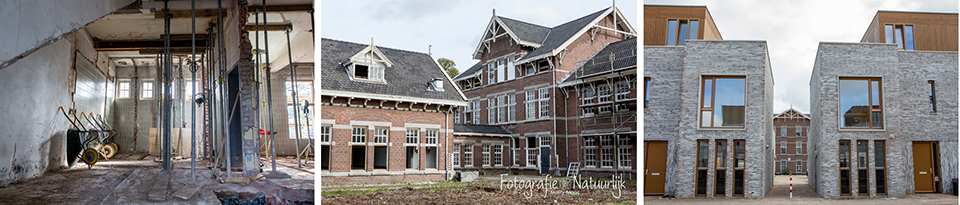
For the municipality of Ede, Matty has been photographing the construction projects of De Veluwse Poort for three years. It is a large project involving several property developers. The barracks grounds from the 1930s are being converted into modern homes.
The construction developments are documented, sometimes with a tour led by a former soldier. This allows you to capture the story, the history of the buildings and the atmosphere in the photographs. Reports of an opening or event are also regularly made for various companies.
Business
Clients sometimes book as much as a year in advance. On average, 15 to 20 wedding shoots are scheduled each year. They usually take place in the summer months, from May to October.
The winter months are quieter, giving you time to update the website and schedule new meetings with future wedding couples.
Every year, you need to take various costs into account, such as separate equipment insurance, depreciation, advertising costs, memberships, workshops and new investments in equipment.
You can follow Matty on Instagram (fotografie_natuurlijk) and Facebook (MattyMaasfotografie).
Want to know more about wedding photography?
Has this interview inspired you to learn more about wedding photography yourself? At Photofacts Academy, our online learning environment for photographers, we have a complete wedding photography course. You can follow these courses for two weeks with a free trial membership.
Award-winning wedding photographer Ashvin Ghisyawan has created a course for Photofacts Academy for all current and future wedding photographers. If you would like to earn money by photographing weddings, this course is for you.
About the author
Michelle Peeters is fotografe en oprichter van DeuxBleus Fotografie. Michelle herkent het bijzondere in het gewone en het gewone in het bijzondere. Ze heeft zich nooit willen specialiseren en is daardoor van alle markten thuis.
You might also like
-
 Points to consider when photographing weddings
by Nando Harmsen
-
 Interview with photographer Bob van Zalm
by Michelle Peeters
-
 Review: Wedding Photography by Werner Pellis
by Elja Trum
-
 Finding the Right Light for Wedding Photography
by Elja Trum
-
 11 Tips for Creating the Most Beautiful Photo Albums
by Hermine Snellink
-
 Sony announces 135mm f/1.8 G Master lens
by Elja Trum
1 comment
-
 Caroline Kortenhorst wrote on Wednesday 26 December 2018 at 19:39 | reply
Wow Matty, besides being super-nice, you also create beautiful work.
Translated from Dutch.
All the success is very well deserved.
Best regards,
Caroline
Have your say
Please note: Articles older than a week can only be commented on by signed-in visitors.Would you still like to comment? sign in or create a free account.
Become a better photographer every week
A practical photography tip in your inbox every week.
38,938 photography enthusiasts already receive the tips! More about the weekly mail. Or keep up to date via  Facebook.

Elja Trum
Photofacts; everything to do with photography!
Would you like to take better photos and keep up with what is happening in photography? Photofacts publishes articles that teach you something about photography — from a product announcement to a practical shooting tip or a look at a website. Photofacts covers photography every day and is a hobby project of Elja Trum's that got out of hand. The articles are written by a team of volunteer authors. If you would enjoy writing one or more articles for Photofacts, do get in touch.More about PhotofactsPhotofacts is made possible in part by
