

Interview with photographer Bob van Zalm
Saturday 17 November 2018, 20:02 by Michelle Peeters | 9,932 views | 2 commentsThis article was translated from Dutch with the help of AI. Read the original.
Bob is an old hand in the profession. He learned the trade from major northern names such as Foto Bouchier, Foto Steenmeijer (the photographer of the north in earlier years), Foto Hofsteenge and press photo agency Folkers.
He then worked for years as a freelance photographer (technical and advertising photography), before ending the final 22 years of his career as a (technical) photography teacher at Minerva Academy of Art in Groningen.
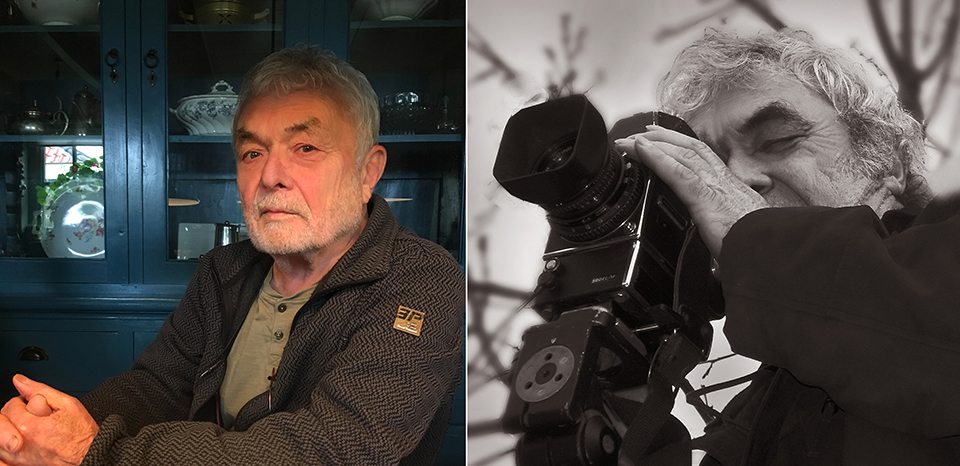
I interviewed him in his home town of Huizinge (Groningen). Huizinge is a tiny terp village in the north of Groningen, with around 140 inhabitants, just a stone's throw from the city of Groningen. Bob has lived here since 1971 with his wife Wilma and their two children, Miranda and Jeroen, who grew up here.
An educational and interesting story about the history of photography, old photographic and darkroom techniques, and funny anecdotes.
Long career
Photography started early for him. At the age of 14, he was already taking fairly good portraits of his mother with his 6x6 Rolleicord camera (the cheaper sister of the Rolleiflex).
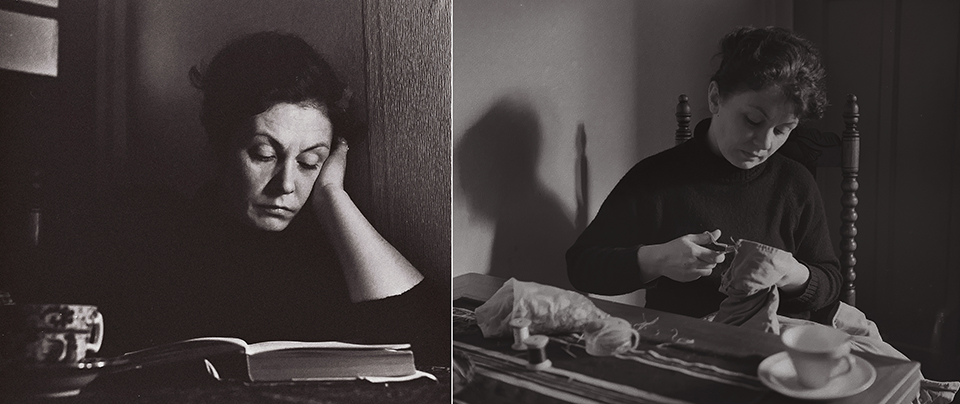
Bob started in 1963, aged 17, as a trainee and volunteer at Foto Bouchier in Groningen. In 2016, Foto Bouchier had existed for 100 years and was the oldest surviving photography shop in Groningen. His duties were very varied. Sweeping the pavement every morning was part of the job too...
But he also made prints in the darkroom and took passport and portrait photos in the studio, wedding reports, school photography, and series of children and other subjects.
I have a nice anecdote about the last of these. I had only just started working there when my boss Piet Bouchier asked whether I would photograph a dead woman in the Catholic hospital. I was dreading having to photograph someone who had died, especially as it would be the first time I had ever seen a dead person.
Two nuns there directed me to a room where I would find the deceased woman. But photographer, they instructed me, make sure the stripes on her pyjamas are not crooked and that her eyes are properly closed. If not, straighten the stripes and close her eyes properly. With my nerves in my throat, I looked for the room number and carefully opened the door.
And sure enough, as soon as I entered the room I saw it. One eye was open and the jacket was crooked. I fled into the corridor and first heard quiet giggling from a recess at the far end, then saw the two nuns laughing uncontrollably.
It turned out that they had staged this especially for me. On the orders of my boss Piet Bouchier, of course, who had given me a memorable baptism of fire...
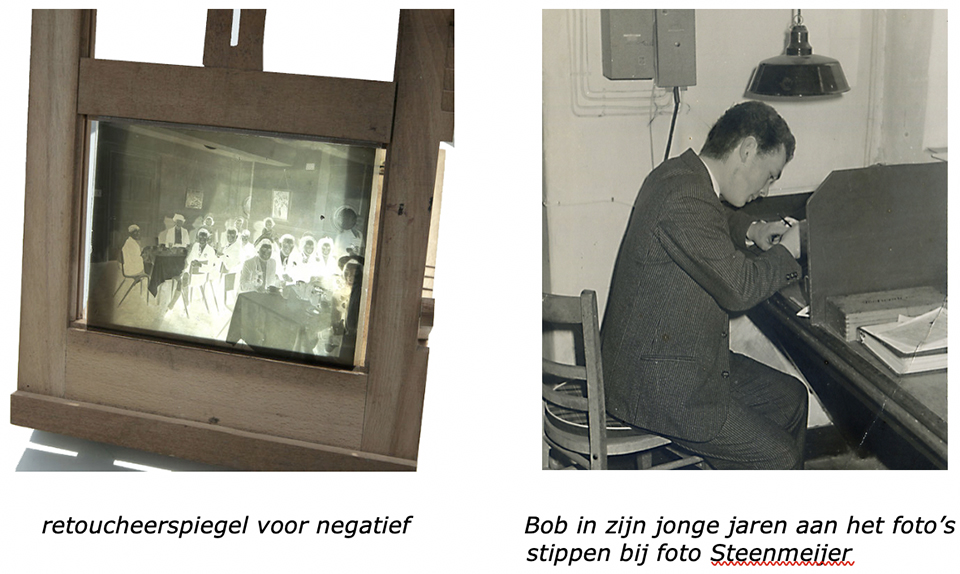
Foto Bouchier
The first Foto Bouchier premises, dating from 1916, were on the attic floor of the building on the filled-in Zuiderdiep in Groningen. It was a daylight studio with plenty of daylight coming in, which was needed at the time to take good photographs. Electronic flashes and large studio lights were not yet in use.
In 1963, the business moved to Oude Ebbingestraat. There was no daylight here, so a narrow cabinet was built along one entire wall of the studio, with frosted glass. Behind it were holders containing magnesium powder (flash powder). The holders were connected to one another.
When the photograph was taken, the shutter opened and the flash wall was ignited. FLASH... The result was beautiful, soft side lighting. The advantage was that you were no longer dependent on daylight, as it could be replaced in this excellent way.
In 1959, Petrus's son, Piet Bouchier, took over his father's business. His father Petrus lived above the studio and remained involved in the business. When Bob started working there around 1963, Piet Bouchier's father was still active. He continued to make his studio photographs with the flash cabinet, which was hardly used anywhere else by then.
This very old-fashioned practice did not make his son happy. Whenever possible, he used the newly purchased studio lights. When his old man died, the first thing he did was dismantle the flash cabinet. But he found it very difficult to recreate the beautiful side lighting.
Photography school
During his first job at Bouchier, Bob took vocational training as a photographer at the photography school in The Hague. This was mainly done on the job. He then learned the trade from well-known photographers around the country while completing the course, mainly by correspondence.
A few times a year, practical lessons were held in The Hague. These included learning to retouch, mastering the view camera and carrying out a portrait assignment. Many assignments had to be completed at home and then sent in. The course was quite technical and not very inspiring.
He also attended the Famous Photographers school, which was much more substantial in terms of content.
Foto Steenmeijer and Foto Hofsteenge
At Steenmeijer he began to learn the real trade. Foto Steenmeijer, located on Herestraat in Groningen, was still the public photographer of the north at that time. It was a sizeable business, with around 30 employees. All portrait and passport photo negatives were still retouched.
Steenmeijer employed three permanent retouchers, who spent a large part of the day behind a retouching mirror, smoothing away all the spots and wrinkles on portrait negatives with a sharp pencil and magnifying glass. The negatives were first coated with matolein, a resin product that helped the pencil adhere.
The retouching mirror was a wooden frame with a lamp behind it that illuminated the negative from behind via a mirror. You sat in a small room where the only light was the lamp behind the mirror.
Besides the permanent retouchers, anyone who could retouch was already sitting behind the mirror at 7.30 am. There were often around eight of them in total. Once you were skilled, you could retouch around three or four portraits an hour.
Three times a week was printing day. You would often be in a large darkroom with eight to ten people, printing the studio work, and in various small darkrooms printing wedding reports. Then the photographs had to be spotted. Spotting is positive retouching, in which dust and scratches were touched up with a sable-hair brush and retouching ink.
Unhealthy
You also had to learn to work with photographic chemicals. Factory-made developers and fixer were still hardly used.
Various developers for negatives and prints were mixed in the chemical room. Nobody thought about how unhealthy the smell and dust from the chemicals were. There was no extraction or ventilation, and no dust masks either!
Someone also spent the whole day drying and glazing photographs in the photographic drying room. It was a room with five large drying and glazing presses. It smelt of formalin all day long. Before the photographs were glazed, formalin was used to harden their gelatin layer. It was not healthy work.
Besides studio reports and children's series, Bob also developed his skills in advertising and industrial photography. Furniture, but also fashion photography. There was quite a lot of textile industry in Groningen at the time. Steenmeijer also often received commissions from Hilversum to supply news footage.
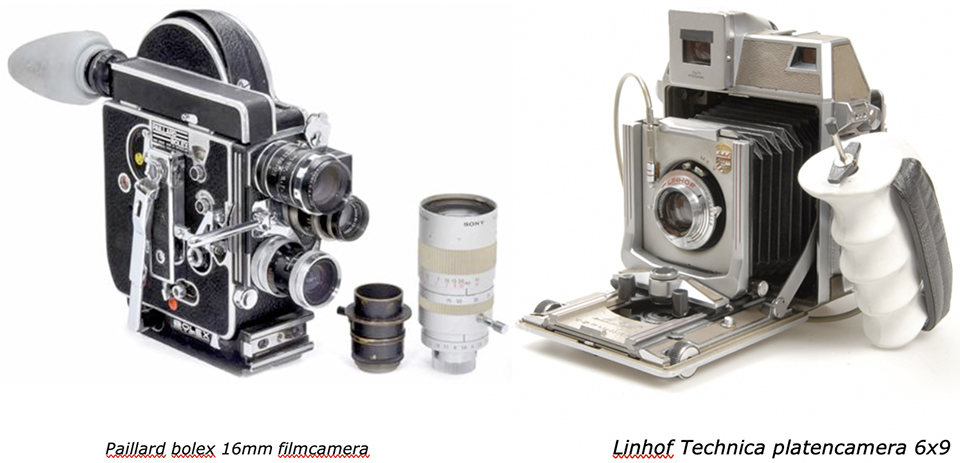
A Paillard bolex 16mm film camera was used, after which the film cassettes were sent to Hilversum by railway post. He worked for several more years as a studio and reportage photographer at photography company Hofsteenge before turning his back on public photography for good.
Press photographer at photo agency Folkers
Bob started as a press photographer at press photo agency Folkers. Among other things, the agency had been working for the “Dagblad van het Noorden” for years. It was an exciting and hectic time. A lot of photography was still done with Linhof Technica 6x9 plate cameras with sheet-film holders (see photo below).
Small-format cameras had of course long been in use, but the advantage of this camera was that you could also use it handheld while retaining all its movements, such as correcting converging lines and photographing an interior sharply from front to back with a wide-open aperture, for example.
Because you worked with sheet-film holders, you could adjust the development time and type of developer for each sheet of film. The film developer was kept ready at 30 degrees, allowing a short development time of around one to two minutes.
The holder then had to go through rapid fixer, be rinsed, passed through a squeegee and put into the enlarger. The enlarger was set to 18x24 centimetres as standard. In a rush job, the print could be ready within five minutes to take to the picture desk.
The subjects ranged from sport (football, horse racing and trotting) to recording all kinds of news events, including fires. The police radio frequency was not coded yet, so you could pick up and follow all the calls.
It was a sport to arrive at a fire before the fire brigade. If you were then standing ready with your camera and said: what took you so long? they often did not appreciate it.
Zone focusing in sports photography
When photographing football matches, you often stood to one side of the goal, armed with a telephoto lens. You had two focusing points. Anything within the circle of sharpness was sharp, and you had to make do with that.
It was really a kind of zone-focusing technique. Autofocus did not exist yet. The area that was sharp in the photograph was very small, no more than around three or four metres. This was also because you had to photograph with a fairly wide aperture due to the often poor light at the location.
Because of all the actions needed to take another photograph, turning the cassette around, removing the dark slide and cocking the shutter, there was often no opportunity for a second attempt. The photograph had to be right first time.
When a good piece of action was photographed during a football match, the ball had often already left the frame. Since a photograph of a good piece of action without a ball was really not done, the ball was sometimes added in the darkroom. There were a number of balls in stock, negatives with a ball on them.
The wrong ball
Sometimes I added the wrong ball to the image. If this was noticed, they would ring up about it. Then you got a red card from the sports desk. So you had to be precise and know what kind of ball was being used.
You also had to know something about football itself. It was always a matter of calculating where the goals would be scored. You cannot keep walking back and forth.
After a while you get a feel for where you should stand. It happened once that, out of the eight goals scored, I was unable to capture a single one. The sports desk gave me a serious dressing-down as a result...
Trotting races
Photographing horse races, or trotting races, also required a lot of knowledge and the ability to stay calm under pressure. You had to take your photographs behind a small barrier, which also gave you somewhere to support your camera. When it grew dark, you sometimes had to pan at 1/60 or even 1/125 to photograph the trotting horse with at least some sharpness.
Another good anecdote! Flash photography was not allowed at trotting races, but I did not know that at first, and nobody had told me. I was sitting behind the barrier at the last bend before the finish. It was fairly dark, so I flashed the leader, and the horse was startled and broke into a gallop.
The result was a disqualification, and I had to run for my life to avoid being lynched by the jockey and the other furious people involved with the horses. A lot of money could be at stake, because people always bet heavily!
Two-man business and then freelance
After three years, the press agency closed and Tonnie Folkers and Bob continued as a two-man business specialising in industrial and advertising photography. They photographed a lot for advertising agencies, in shipbuilding and for architectural firms, as well as taking product photographs for Philips, Gasunie and so on.
Then the recession came and things went downhill. Bob left Folkers to start on his own and fortunately received a lot of photographic equipment from Folkers to help him get started. He invested in a Hasselblad 6x6 and a Linhof Technica 4x5-inch technical camera.
For around ten years, he worked as a small business owner in industrial, technical and advertising photography. Among others, he worked for Lego Nederland, shipbuilders and various advertising agencies.
Darkroom techniques
During the analogue era, Bob spent a large part of his life by the light of the yellow-green and red darkroom lamps. He mastered all kinds of darkroom techniques.
I now use techniques such as dodging, burning and photomontages using templates and masks in Photoshop. In fact, a great deal of what you do in Photoshop now was already possible in the darkroom.
Minerva Academy of Art
One day, a good friend, Louki Ennik, arrived with an advert saying that the Academy of Visual Art and Design, Minerva, had a vacancy in photography education. Thanks to his extensive CV, Bob was hired immediately.
At Minerva, where photography was one of the disciplines, he had to run the photography workshop and teach photography to students of graphic design, teacher training, fashion design, architecture and other creative subjects. Besides teaching, he was also responsible for the darkrooms, studio and so on.
Photographic techniques
Technique obviously has to be learned, but I never wanted to place too much emphasis on the technical aspect. It is all too often the case that some people hide behind technique and neglect content. Mistakes have to be made, and you often learn a lot from them.
Sometimes a technically imperfect image can have more impact or emotion than a boring, technically perfect photograph.
As a foundation, Bob taught his students basic techniques, camera techniques, how to develop negatives, how to print photographs using the associated darkroom techniques, light metering, optics and the use of photographic chemicals.
Advanced students could enrol in studio photography, flash techniques, colour printing and large-format darkroom work. In the large-format darkroom, they could print negatives up to 13x18 cm and make huge fibre-based prints measuring up to 125 cm x 200 cm.
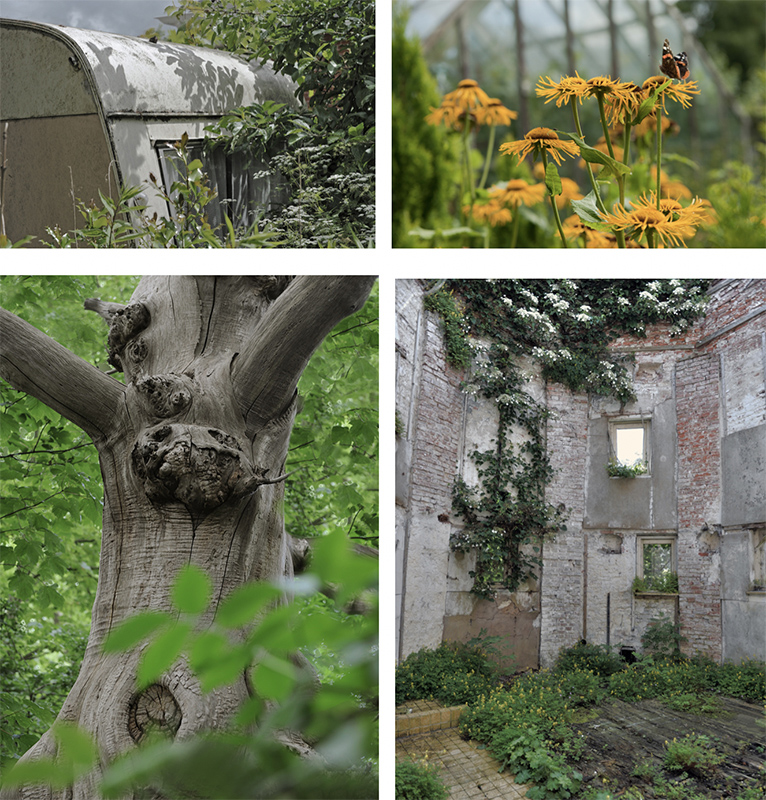
Old techniques
Philippe Moroux, a French photographer, was also a photography teacher at Minerva. Through him, Bob became very interested in the old noble techniques. Teacher Aart Everaats was also highly skilled in, among other things, the gum bichromate process.
I gave workshops in these techniques, such as gum printing. This uses gum arabic, colour pigment and a dichromate. It is an old French noble printing technique that produces beautiful, painterly images.
Cyanotype, or blueprinting, and kallitype, in which paper was made light-sensitive using, among other things, iron oxalate and silver nitrate. We also made gelatin emulsions with which we sensitised beautiful handmade papers. The pinhole photography workshops also really captured the students' imaginations.
Pinhole photography:
Although digital photography has now conquered the world, in the first lessons we often returned to the basics of photography and photographed with the simplest original form of camera, the pinhole camera, or camera obscura.
This is nothing more than a small light-tight box with a tiny hole at the front instead of a lens, a pinprick. A piece of light-sensitive photographic paper or film is mounted inside the black box. When taking a photograph, the outside world is projected through the hole onto the light-sensitive paper or film.
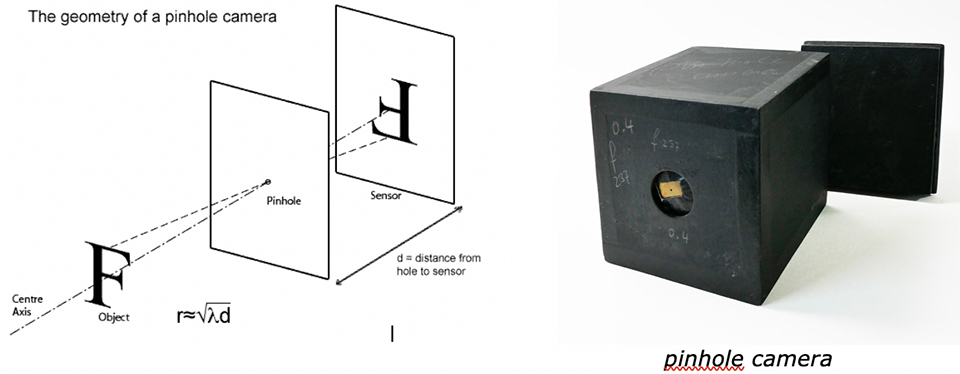
The photography project weeks at the academy were always a great success. The pinhole project in Brittany was particularly successful. For it, they built a pinhole camera measuring 200 cm x 150 cm, which they took with them on a trailer.
They could climb inside the camera to mount the photographic paper, on a roll, on the rear wall. The photograph was also developed and fixed inside the camera. Afterwards, the photographs were rinsed in the sea and hung up to dry on the beach.
It was a wonderful and inspiring time at Minerva Academy, where I worked with great pleasure for 23 years.
Although the digital era had already become established before I left, I continued to focus on analogue techniques for a long time.
If you master those properly, digital photography is so much easier! I also helped ensure that the darkrooms at Minerva were not closed down. They are still being used today! Minerva is now one of the few photography departments in art education where the old techniques are still practised.
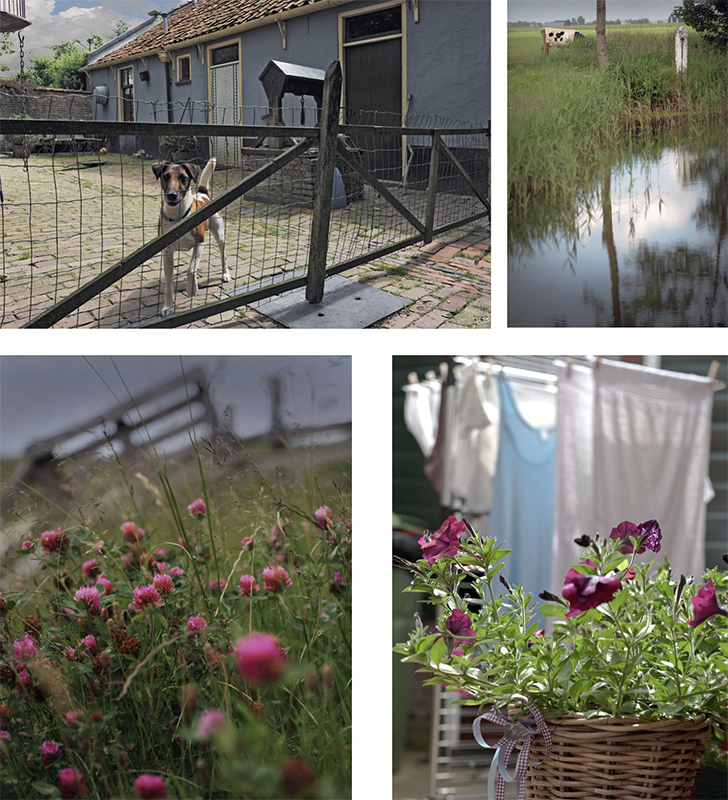
Switched to digital
When digital cameras improved, Bob eventually switched about 14 years ago. He bought a full-frame Nikon DSLR. With a heavy heart, he cleared out his analogue equipment, including the Hasselblad, technical cameras and darkroom supplies.
Because of all the work with chemicals in the darkroom, combined with heavy smoking in poorly ventilated darkrooms, he developed COPD and now has very limited lung function.
Carrying all that heavy equipment became too much for him, so he now usually uses a lightweight Lumix system camera, the DMC-FZ1000, without a mirror but with a viewfinder. It has just one lens with a huge range, from wide angle to powerful zoom. He no longer has to carry an extra bag of lenses.
Letting go of technique
I think the average photography student or amateur should not focus too much on technique, although of course you do need to learn the ins and outs. You must also be able to let go. It is precisely by making mistakes that you can be surprised.
In fact, the camera you photograph with is not the most important thing. An old Agfa Clack can do the job too.
Composition is of course important, but you must also be careful about following all the rules of composition too obediently. The image can quickly become dull and predictable. Do not let technique dominate too much when it becomes more important than the content.
At some point you develop your own style. Although he sometimes wonders whether he has one himself... He is not easily satisfied with his own work. Sometimes it is too static, everything is 'too correct'...
Sometimes he comes across surprising photographs, lucky shots perhaps, taken by people who have never photographed before. They are the most open-minded and are not held back by too much knowledge and technique.
Portraits and landscapes are favourites
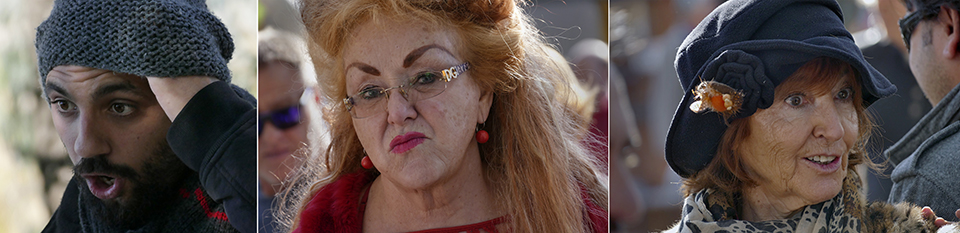
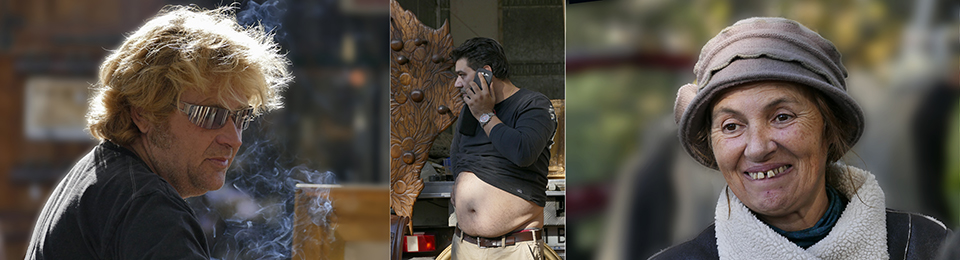
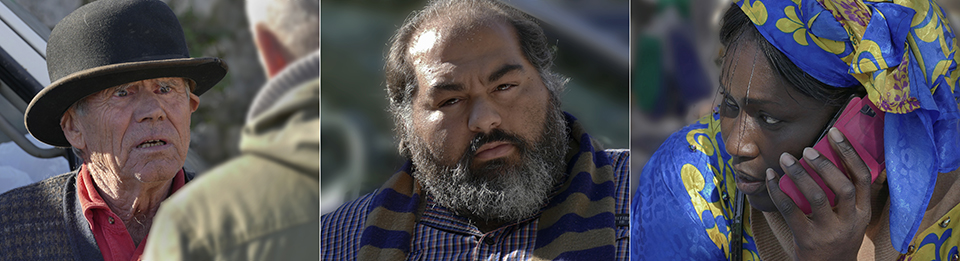
Taking portraits and landscapes is wonderful. Just walk around a market and let yourself be surprised by the diversity of people moving around in a relatively small area. My portraits often hit the mark.
I first look around quietly without immediately having my camera at the ready. I study someone's expression, how they present themselves and what their presence is like. Only when I have worked that out do I pick up my camera.
Without drawing too much attention to myself, I do show that I am there. I do not do anything secretly. I smile at them a little, make eye contact and sometimes try to make contact by having a chat. But I always make myself vulnerable. I think that is why people do not see me as a threat.
If he notices that people do not like him photographing them, he leaves. He has not often experienced people becoming angry with him. The following photographs were taken at a market in Jalon, Spain.
Only in the morning, evening or at night
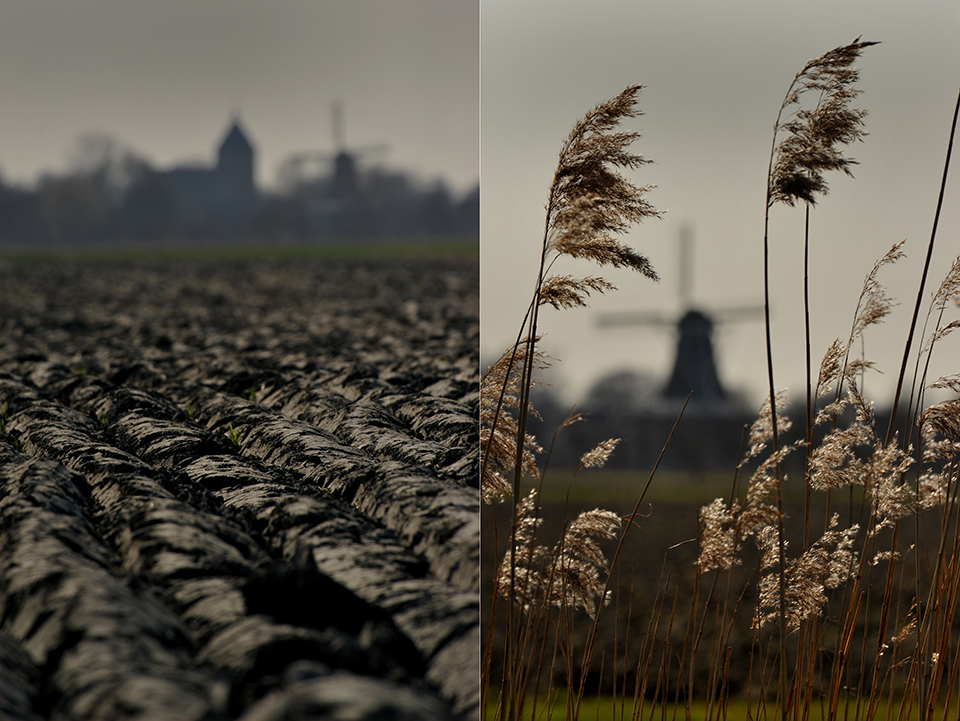
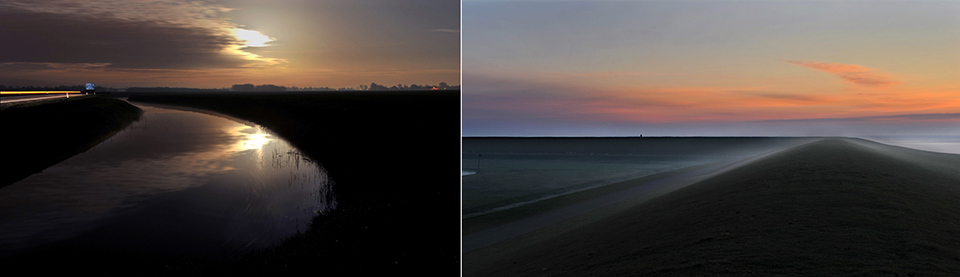
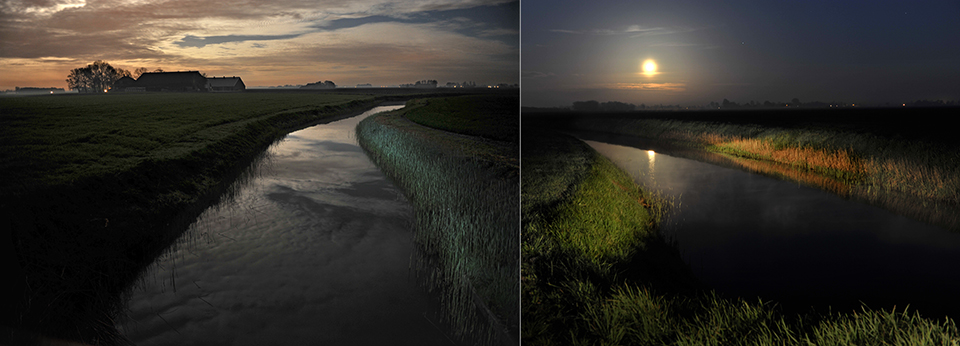
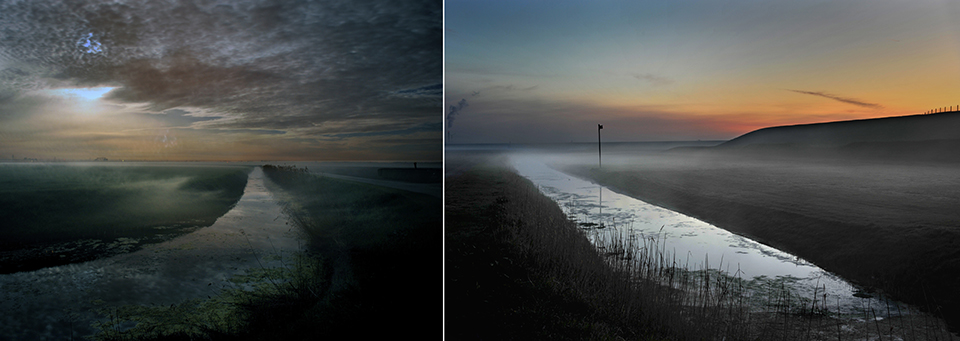
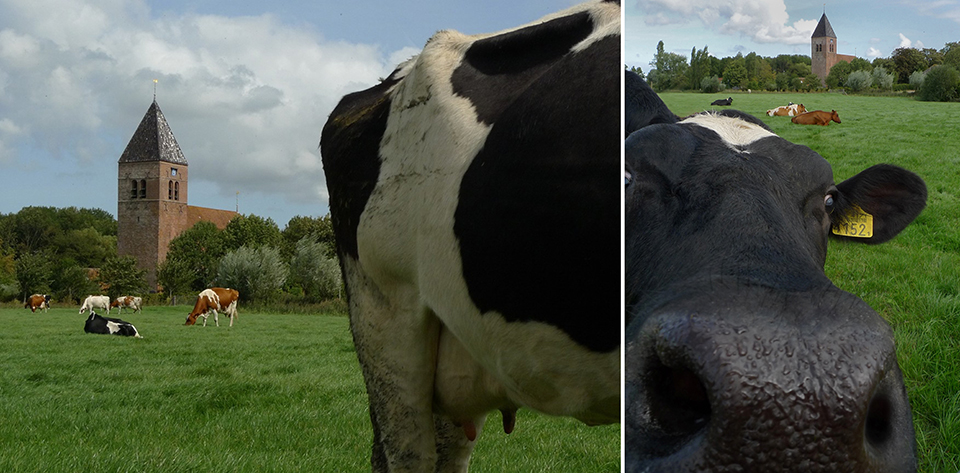
I live in the Groningen countryside and am very attached to it. The Groningen landscapes and the northern coast of Groningen are wonderful to photograph. “Northern Coast” is an upcoming project I want to realise, covering the coastal strip from Lauwersoog to Nieuw Statenzijl.
My intention is to photograph it in all weathers, by day and by night. I often photograph very early in the morning or in the evening, sometimes even at night in moonlight. You rarely encounter particularly interesting light in the middle of the day.
Current or recent projects
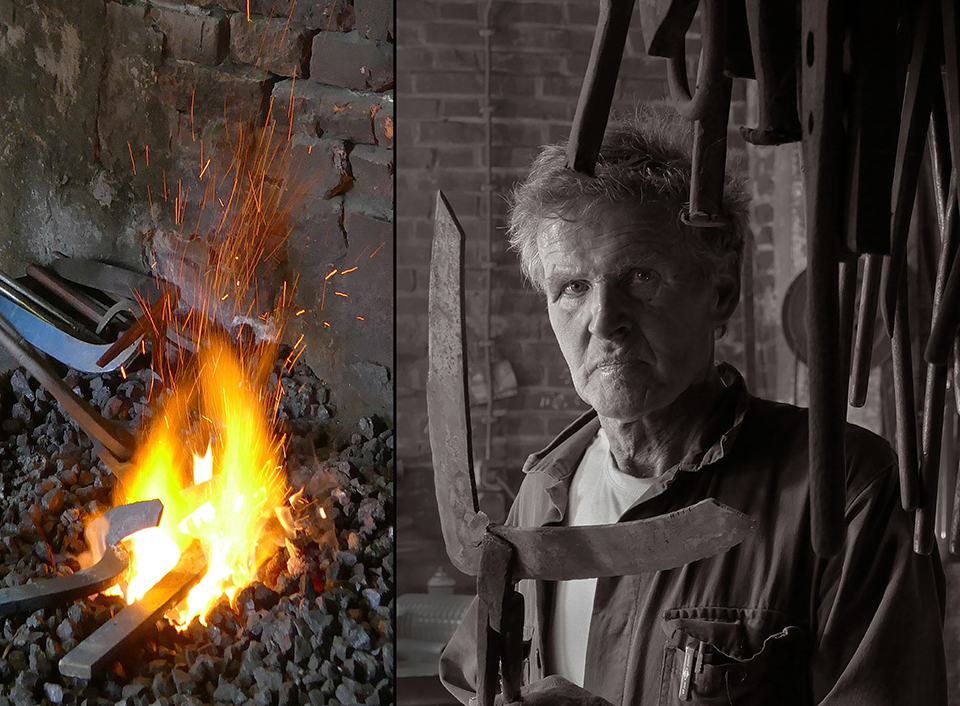
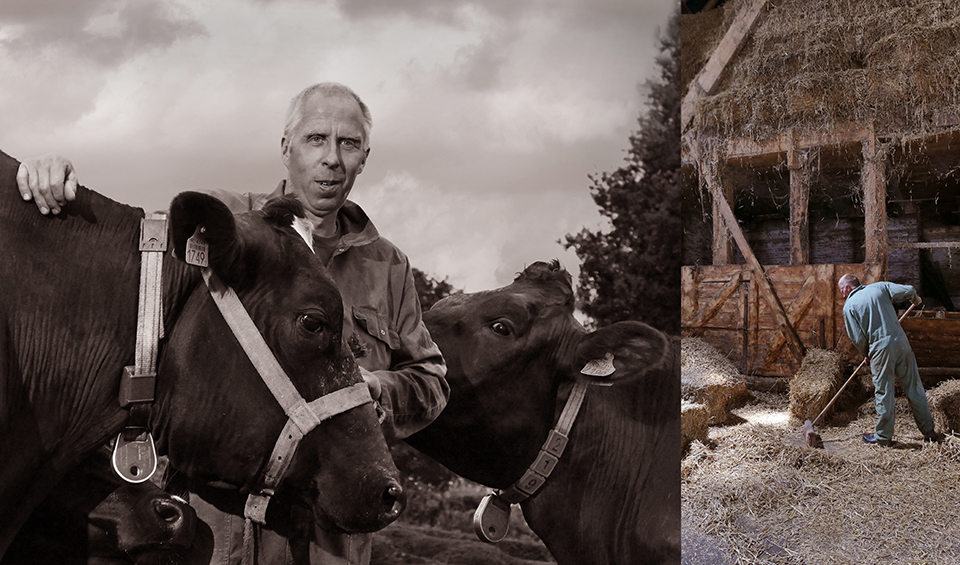
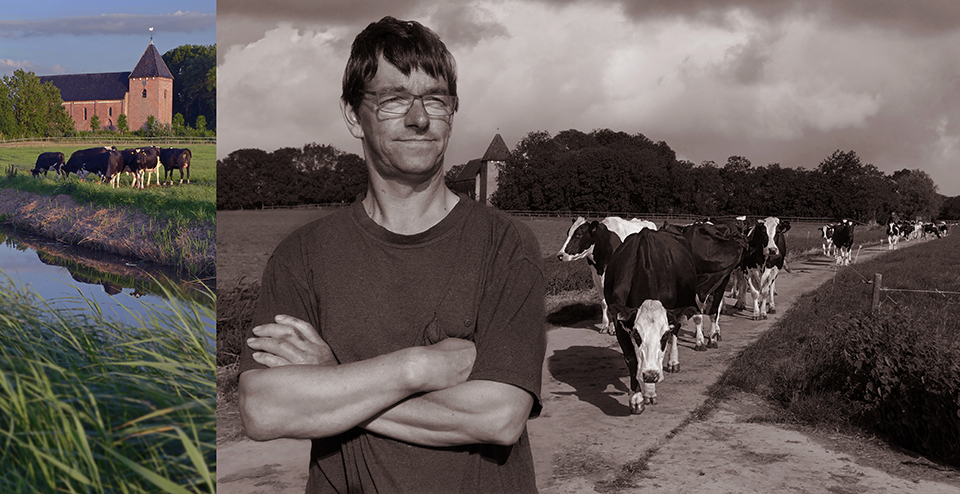
- For “TOENtjeNU”, Bob made a photographic documentary of all the gardens and yards in Huizinge. In spring 2012, he photographed the gardens and yards of all the residents and public places.
Many hidden places offer unexpected views and glimpses of the village, the landscape or the church of Huizinge. The gardens, yards, fields and public spaces of Huizinge surround one church, 59 homes, six farms, one smithy, one catering business, one cemetery and one playground.
The photographs form a special document of a less familiar side of the beautiful village of Huizinge; - The project Farmers, Citizens and Country Folk was created in cooperation with the Emo foundation. It is a series of portraits of farms and related businesses in and around the village of Huizinge;
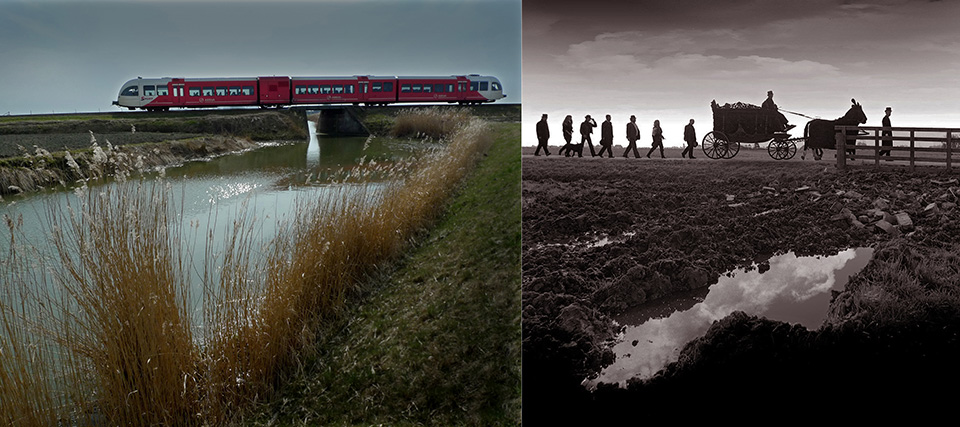
- Fivel: Commissioned by the Middelstum cultural council, Bob was asked to document photographically the origins of part of the Groningen landscape, where the Fivel river once flowed.
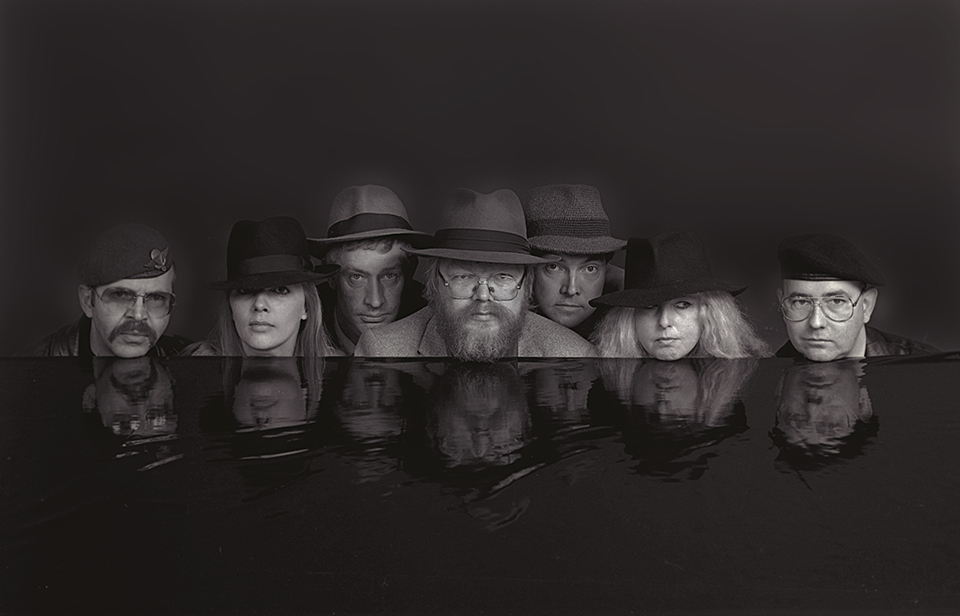
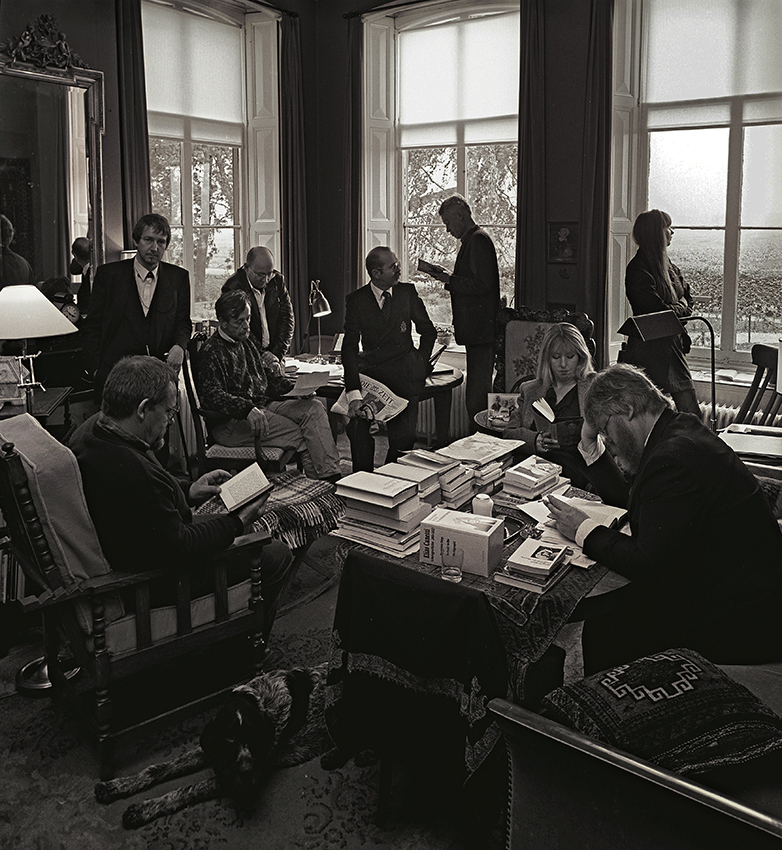
Where the seawater of the Fivel once flowed past and around the terps and settlements at high tide, this can still be seen in many places in the landscape, through the position of villages and higher ground and through the old sea channels, the present-day Groningen maren; - Fuji Art Association: During his time at the academy, he made many portraits of colleagues. This included members of the Fuji Art Association at the time, a group of Groningen painters, poets and draughtsmen. They exhibited in various places around the country and also presented themselves as the Northern Realists.
The Fuji Art Association, 'Fuji' refers to the volcano in Japan, is the name under which the third generation of Groningen painters gathered as kindred spirits of De Groep, Wout Muller, Henk Helmantel and Matthijs Röling.
In their wake came the fourth generation of Groningen painters: Dinie Bogaart, Douwe Elias, Rachel Dieraert, Sam Drukker, Pieter Pander, Noëlla Roos, Clary Mastenbroek, Trudy Kramer, Ger Siks and Aart Schonk.
Impulsive, but taking things more slowly
Last year my health became very poor. I had to rehabilitate at Beatrixoord in Haren, and I am reasonably well again now. I keep fit by swimming, walking and doing physiotherapy exercises.
I also have to take things much more slowly than is normal for me. That is very difficult when you are impulsive and your head is full of ideas and plans!
About the author
Michelle Peeters is fotografe en oprichter van DeuxBleus Fotografie. Michelle herkent het bijzondere in het gewone en het gewone in het bijzondere. Ze heeft zich nooit willen specialiseren en is daardoor van alle markten thuis.
You might also like
-
 Documentary review: Step into the World of Lars van de Goor
by Michelle Peeters
-
 Helena van der Kraan dies on her 80th birthday
by Michelle Peeters
-
 Interview with wedding photographer Matty Maas
by Michelle Peeters
-
 Interview with Photoholic John Wilhelm
by Michelle Peeters
-
 Interview with photographer Anja Ligtenberg
by Michelle Peeters
-
 Light from the Old Masters
by Frank Doorhof
2 comments
-

 Dies Groot wrote on Tuesday 20 November 2018 at 10:53
| reply
Prachtig artikel, zeer herkenbaar.
This comment was written in another language and has not been translated yet.
Weemoed.
Dies Groot Fotografie, Woerden. -
 Oscar Kramer wrote on Tuesday 20 November 2018 at 15:28 | reply
Sluit mij aan bij de opmerking van Dies Groot
This comment was written in another language and has not been translated yet.
Have your say
Please note: Articles older than a week can only be commented on by signed-in visitors.Would you still like to comment? sign in or create a free account.
Become a better photographer every week
A practical photography tip in your inbox every week.
38,938 photography enthusiasts already receive the tips! More about the weekly mail. Or keep up to date via  Facebook.

Elja Trum
Photofacts; everything to do with photography!
Would you like to take better photos and keep up with what is happening in photography? Photofacts publishes articles that teach you something about photography — from a product announcement to a practical shooting tip or a look at a website. Photofacts covers photography every day and is a hobby project of Elja Trum's that got out of hand. The articles are written by a team of volunteer authors. If you would enjoy writing one or more articles for Photofacts, do get in touch.More about PhotofactsPhotofacts is made possible in part by
