

Panasonic Lumix S1R and S1 full-frame cameras
Friday 15 February 2019, 10:20 by Michelle Peeters | 3,902 views | 0 commentsThis article was translated from Dutch with the help of AI. Read the original.
Panasonic has announced two new full-frame cameras. The Lumix S1R has a 47.3-megapixel sensor and costs 3699 euros as a body. The cheaper Lumix S1 has a 24.2-megapixel sensor and costs 2499 euros.
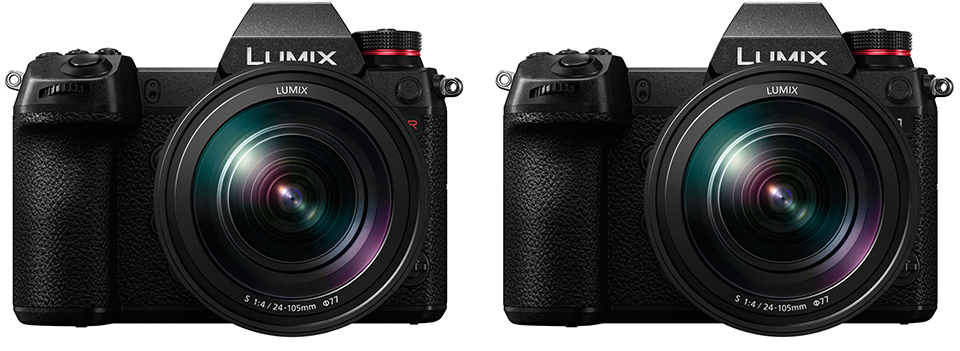
The Panasonic Lumix S1R can produce raw files with a resolution of 187 megapixels. These high resolutions are possible by shifting the sensor by half a pixel eight times, creating multiple images that are then merged in the camera.
You will probably need to use a tripod for this. An ISO value of up to 25,600 can be set, which can be expanded digitally to a maximum of 51,200.
With the cheaper Lumix S1, you can create 96-megapixel raw files. This camera has an ISO range that goes up to 51,200. It can be digitally extended to an equivalent of 204,800.
Sensor resolution
For the S1R, Panasonic has placed aspherical microlenses above every pixel on the sensor, allowing the sensor to capture more light and also resulting in little noise at high ISO values.
The sensors in both the S1R and S1 are stabilised and should provide stabilisation worth 5.5 stops. If you use a lens with built-in stabilisation as well, up to 6 stops can be compensated through the Dual I.S. 2 system.
Video
The S1R is mainly aimed at photographers who shoot landscapes and other photos where every detail matters. The S1 is certainly more suitable for videographers. On the S1R, video is limited to 8-bit colour. The S1 can record internally with 4:2:0 chroma subsampling and 10-bit colour, and via HDMI this is 4:2:2 with 10-bit colour.
The S1 can also record 4K footage at 30fps while reading out the entire sensor. A crop is applied on the S1R. Both the S1R and S1 can record 4K video at 50 or 60fps. On the S1, recording time is limited to thirty minutes, and on the S1 to fifteen minutes.
A software update will be released for the S1 later this year, also enabling 4:2:2 subsampling with 10-bit colour when recording internally, or 4:2:2 with 10-bit colour in a 4K 60fps mode via HDMI. This update, which also adds V-Log, is not free.
Both cameras can also shoot in slow motion, including a 6x slow-motion function in 1080p at 180fps.
Machine-learning-trained autofocus
With both cameras, you can shoot at 6 frames per second with continuous autofocus. With single focus, this is a maximum of 9fps. Like micro four-thirds sensor cameras, the S1 cameras use the DFD system. An autofocus system based on contrast detection.
The autofocus system's algorithms have been trained using machine learning. This means they can track not only human faces and eyes, but also cats, dogs and birds, for example. According to Panasonic, the autofocus also works in the dark down to -6EV.
Tilting OLED screen
Both the S1R and S1 have a viewfinder with an OLED screen with a fairly high resolution of 5.76 million subpixels, a maximum magnification of 0.78x and a refresh rate of 60 or 120Hz.
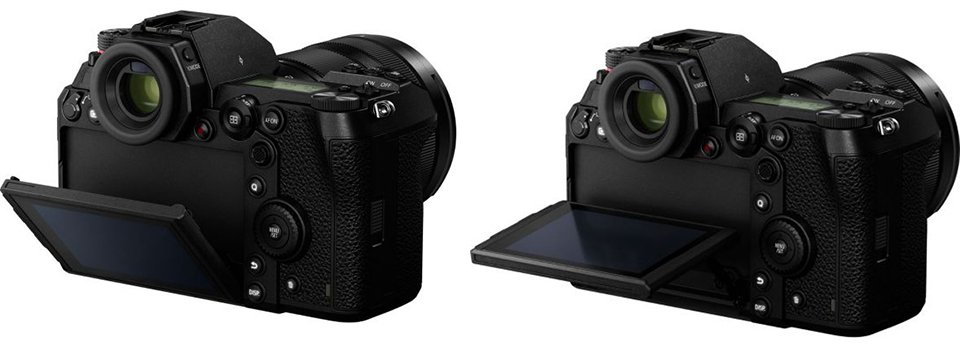
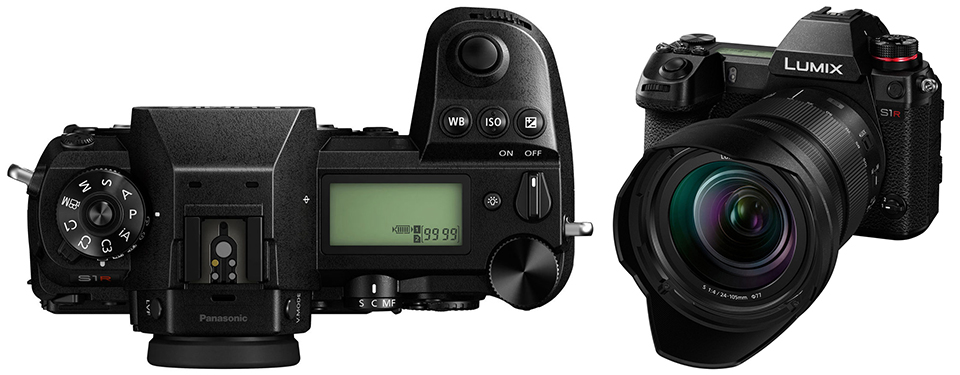
According to Panasonic, there is very little lag. Both also have a small screen on top, like the G9, showing the camera settings. The touch-sensitive 3.2-inch LCD on the back has a resolution of 2.1 million pixels. However, this LCD on the back cannot be tilted forwards.
L-mount and weather sealing
Both cameras use the L-mount. This means you can mount all available Leica lenses on them. For this L-mount, Panasonic is working not only with Leica, but also with Sigma.
Both cameras have two memory card slots, one suitable for XQD cards and the other for SD cards.
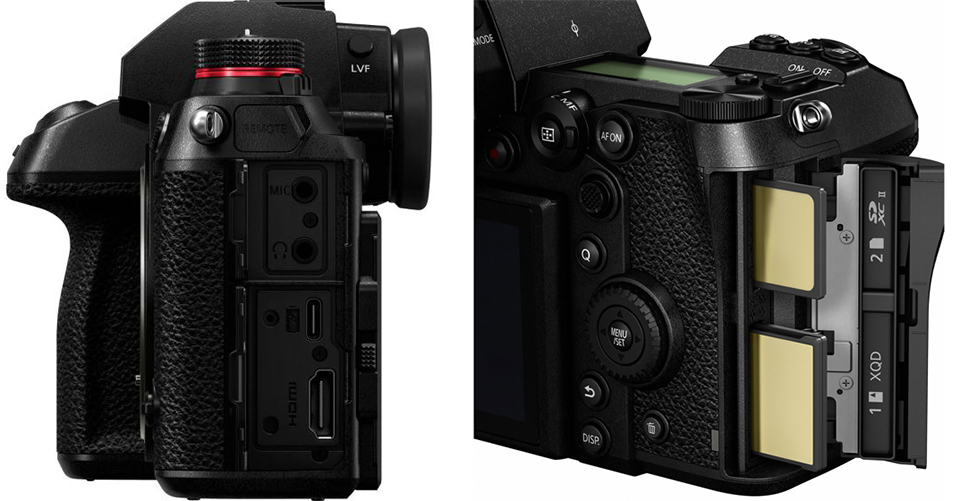
Some buttons on the back of the cameras can be illuminated, and there is a joystick for selecting autofocus points. Both cameras are sealed against dust and water and can be used at temperatures down to -10 degrees Celsius.
Lenses
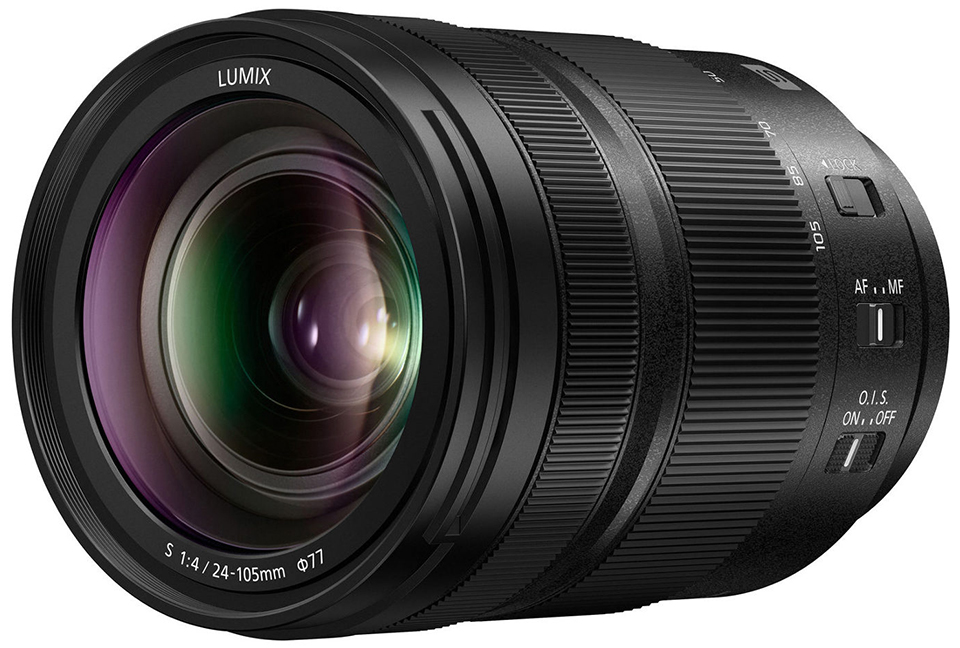
Three new lenses are also being released at the same time. First of all, there is the Lumix S 24-105mm with an aperture of f/4.0 throughout the entire range. This lens is also offered as a kit lens in bundles with the S1R or S1. The minimum focusing distance is 0.3 metres and the price is 1399 euros.
The second and third lenses are the Lumix S Pro 50mm f/1.4 at 2499 euros and the Lumix S Pro 70-200mm f/4.0 at 1899 euros.
About the author
Michelle Peeters is fotografe en oprichter van DeuxBleus Fotografie. Michelle herkent het bijzondere in het gewone en het gewone in het bijzondere. Ze heeft zich nooit willen specialiseren en is daardoor van alle markten thuis.
You might also like
-
 Panasonic announces the LUMIX S1RII
by Nando Harmsen
-
 Panasonic LUMIX S1H announced
by Michelle Peeters
-
 Panasonic Lumix DC-S5 announced
by Elja Trum
-
 Panasonic introduces the LUMIX S9
by Nando Harmsen
-
 Panasonic introduces the LUMIX S5IIx
by Nando Harmsen
-
 Panasonic introduces the Lumix S1II and S1IIE
by Nando Harmsen
0 comments
Be the first to share what you think!
Have your say
Please note: Articles older than a week can only be commented on by signed-in visitors.Would you still like to comment? sign in or create a free account.
Become a better photographer every week
A practical photography tip in your inbox every week.
38,900 photography enthusiasts already receive the tips! More about the weekly mail. Or keep up to date via  Facebook.

Elja Trum
Photofacts; everything to do with photography!
Would you like to take better photos and keep up with what is happening in photography? Photofacts publishes articles that teach you something about photography — from a product announcement to a practical shooting tip or a look at a website. Photofacts covers photography every day and is a hobby project of Elja Trum's that got out of hand. The articles are written by a team of volunteer authors. If you would enjoy writing one or more articles for Photofacts, do get in touch.More about PhotofactsPhotofacts is made possible in part by
