

Godox C100 review: a mediocre camera, but fun
Friday 25 September 2026, 17:17 by Elja Trum | 584 views | 0 commentsThis article was translated from Dutch with the help of AI. Read the original.
We mainly know Godox for its flashes and continuous lighting. With the Godox C100, the company has suddenly come up with a camera. At least, that is what it is called.
Godox C100
After playing around with it for a while, I think 'camera' is actually a rather grand word. The image quality is so poor that it produces practically unusable images, and you definitely should not buy it for serious photography.
And yet the Godox C100 is secretly quite a funny little device. Not so much for taking photos, but for example as a light meter for an analogue camera. Or simply as a tool for working on your composition without wanting to have a camera in front of you.
A camera without a screen
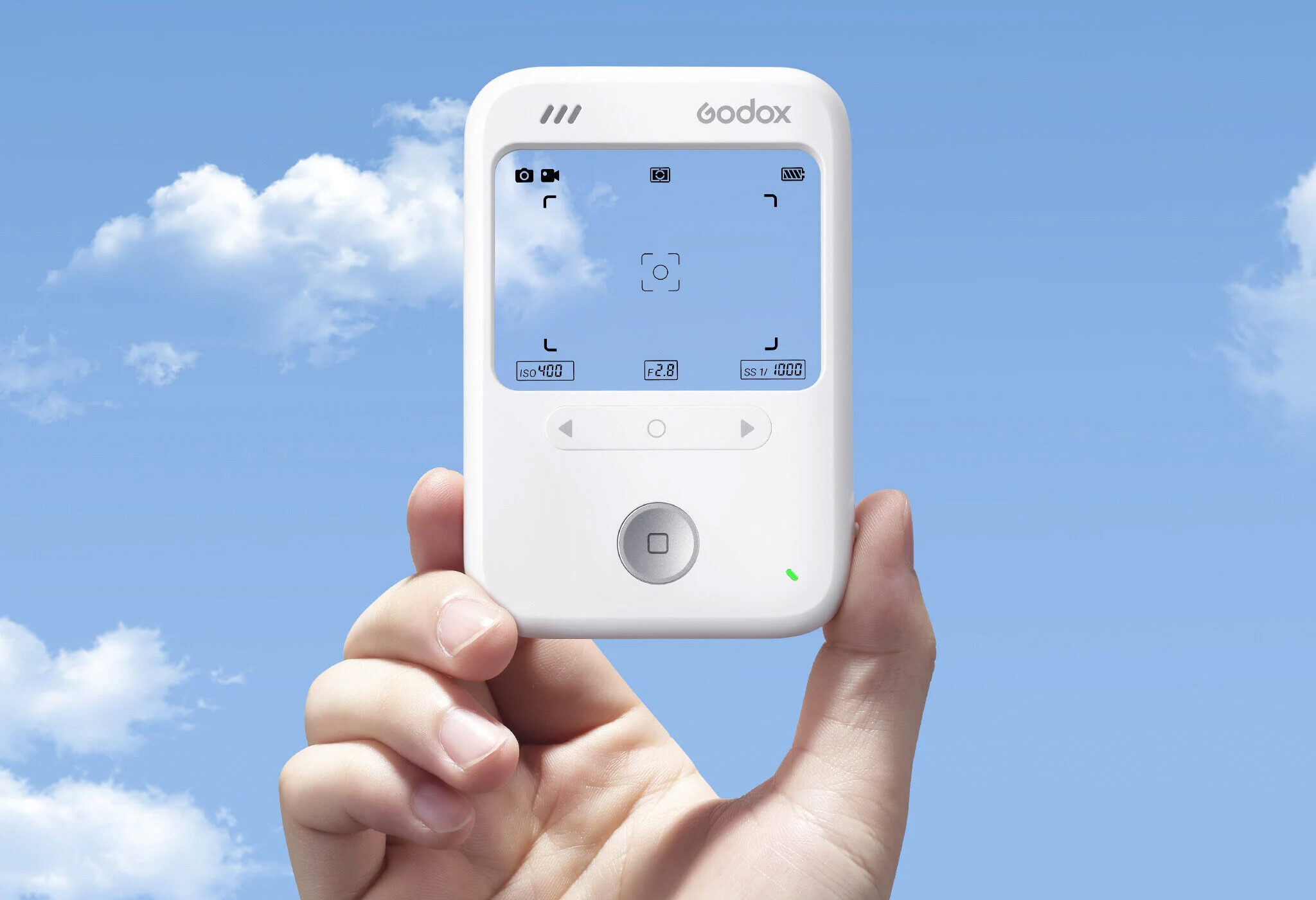
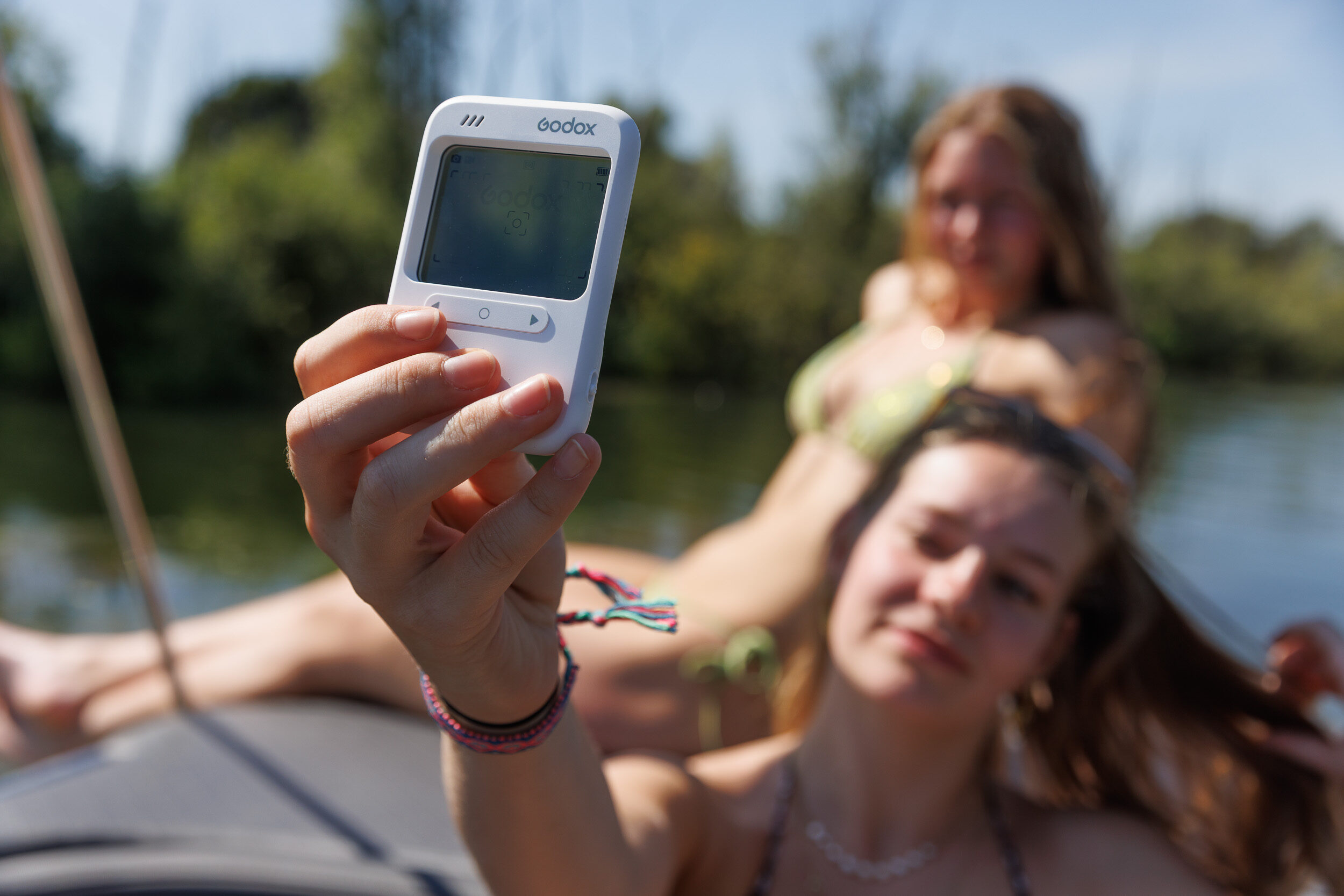
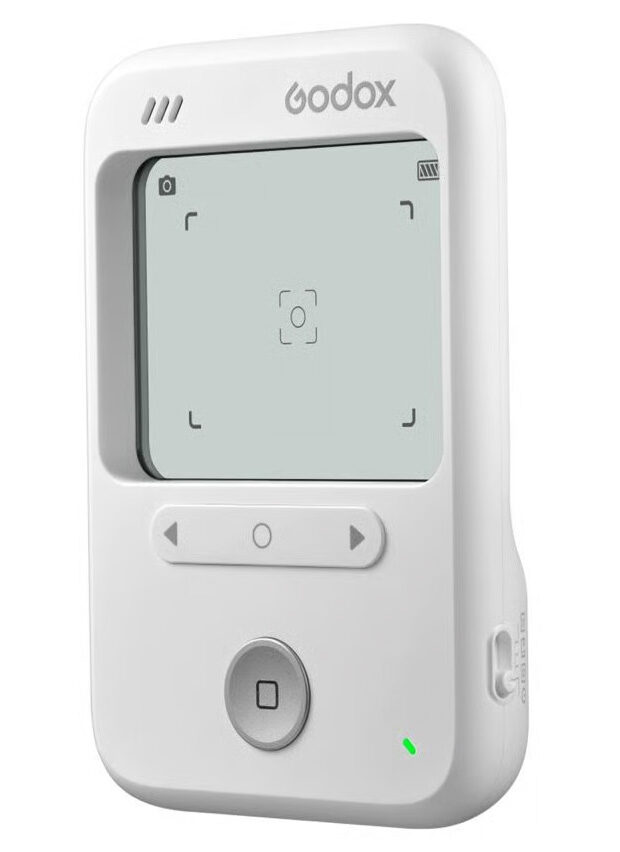
The most striking thing about the Godox C100 is of course the large transparent window. You literally look through it at your subject. Simple information is then projected into the window, such as framing lines, the battery status and, when you use the light meter, the selected settings.
Godox calls this a 'Transparent Viewfinder Camera'.
It certainly looks fun. The C100 is small and light, and that large transparent window gives it something futuristic. At 65 grams, you barely notice it in your trouser pocket. The camera is approximately 10 by 7 centimetres and less than two centimetres thick. It uses a microSD card of up to 128 GB, and charging and transferring files can be done via USB-C.
There is a slider on the side for choosing between photography, video and the light meter. It does not get much more complicated than that.
Godox C100
Not a 'real' camera
Let me start with the most important point: you should not buy the Godox C100 for its image quality.
In fact, almost any phone you still have lying around at the back of a kitchen drawer takes better photos.
The images have little detail, the dynamic range is small and things quickly go wrong with subjects that have a lot of contrast. Bright areas are completely blown out, while dark areas become blocked up.

Photo taken with the Godox C100
The colour and sharpness are not great either.
It is simply a 'toy camera'.
Of course, you could say that this is part of its charm.
After all, there is currently quite a market for cameras that deliberately do not take technically perfect photos. Think of old compact cameras that are suddenly becoming popular with young people again.
But personally, I would not buy the Godox C100 specifically for that. There are more fun bad cameras.
Looking through a little window
The interesting idea behind the C100 is precisely that you do not look at a screen. You look through the transparent window at the real world and use the lines in the display to determine your composition.
That sounds more fun than it works in practice.
The problem is that the image you see through the window does not correspond to what the little camera at the top actually photographs.
The greater the distance between your eye and the window, the greater that discrepancy can be. When you hold the C100 at some distance in front of you like a smartphone, it is mainly a guess as to what exactly will end up in the photo.
To frame with any degree of reliability, you really have to hold the C100 close to your eye. Even then, it remains difficult to predict exactly what you are photographing.
That is of course quite a shortcoming for something designed mainly around that transparent viewfinder.

Photo taken with the Godox C100
But that can also be fun
Still, I can also see a fun use for it. Not when you are trying to create a perfect composition, but when you want to train yourself to look.
With digital photography, we have become used to constantly looking at a screen. You take a photo, look back at it, adjust your position slightly, take another photo and check again.
You cannot do that with the C100.
You have to think beforehand about what you want to photograph, and only afterwards can you see whether it worked. That is actually a little like taking photos on film again.
For someone who wants to practise composition, it can be quite useful. Look at your subject, consciously try to choose a crop, take the photo and check later how close you were to your intention.
You do have to take those inaccurate framing lines into account. You could almost see it more as a kind of composition trainer than as a real camera.
Surprisingly useful as a light meter
In the end, the most enjoyable feature of the Godox C100 for me is not the camera, but the built-in light meter.
Put it in metering mode and you can set ISO, shutter speed and aperture. The C100 then measures the light and calculates the missing value.
For example, you can set ISO 400 and an aperture of f/5.6. The C100 then tells you which shutter speed goes with that.
Or vice versa.
The meter looks at the central part of the image.
For a modern camera, this is of course not much use. It already has an excellent light meter of its own, as well as tools such as a histogram and flashing highlights in your image.
But if you use an older analogue camera without a built-in light meter, the C100 suddenly becomes much more interesting. Perhaps the most logical reason to buy a C100.
Of course, you can do the same thing with an app on your phone. But it is also quite convenient to simply take a small device from your pocket, point it and immediately get a reading without first unlocking your phone and opening an app.
There are limitations, though. The light meter's ISO range, for example, only runs from ISO 100 to 800. Aperture ranges from f/1.0 to f/64, and shutter speeds from 1 second to 1/8000 second. The C100 also cannot measure flash light.
You can film with it too. Technically.
The Godox C100 also has a video mode. Fortunately, we can be brief about that. It records Full HD video, but the quality is about what you would expect after looking at the photos.
There is quite a lot of rolling shutter, little dynamic range and no image stabilisation. Especially in more difficult lighting conditions, the footage is practically unusable.
Godox C100
Taking photos blind
One amusing detail is that you cannot view the photos you have taken on the C100 at all. To do that, you have to remove the microSD card from the camera or connect the Godox C100 via USB-C to, for example, your phone.
You take photos without immediately knowing what the result is. That gives you a little of the feeling of analogue photography, where you only discover later what you have taken.
It is just a shame that with analogue photography you usually get a better result afterwards.
How much does it cost?
The recommended retail price of the Godox C100 in the Netherlands is 49.95 euros. The complete kit costs 59.95 euros. At that price, you should not expect miracles either.
It actually makes my judgement a little milder. You do not buy a serious camera for fifty euros, and I do not think that is really what Godox is trying to deliver either.
You are mainly buying a funny, perhaps trendy, photography gadget.

Taking photos with the Godox C100
Conclusion
The Godox C100 is a remarkable device. As a camera, I find it downright poor. The image quality is mediocre, the dynamic range minimal and the unusual transparent viewfinder turns out to be rather inaccurate in practice.
If you are looking for a camera for fifty euros that can take nice photos, you would be better off looking elsewhere. You probably already have a better camera in your trouser pocket.
As a compact light meter for an analogue camera, it is quite decent. It is small, light and easy to carry. And there is something appealing about looking through the transparent window at your subject while measuring the light.
I can also imagine using it to consciously work on your composition. No live view, no looking back at the photo and no hundred attempts until you are satisfied. Look first, take the photo and only later discover what you have created.
Think of it as a light meter, composition practice tool and photography gadget that Godox also happened to build a tiny camera into for fun.
Pros
- Original and striking design
- Very small and light
- Useful built-in light meter
- Fun to use with an analogue camera
- Interesting for consciously practising composition
- Not expensive at around 50 euros
Cons
- Very poor image quality
- Very limited dynamic range
- Transparent viewfinder is inaccurate
- Hardly any control over the exposure
- Video quality is nothing special
- Light meter only covers ISO 100 to 800
- No flash metering
The Godox C100 was provided by Disnet for this review.
About the author
Elja Trum is the founder of Photofacts and online photography course website Photofacts Academy. He has been writing about photography since 2006. Elja is also the author of (Dutch) books on composition, black-and-white photography, flash photography and portrait photography.
You might also like
-
 Review of the Canon EOS M50 mark II
by Nando Harmsen
-
 Large-format analogue photography
by Nando Harmsen
-
 My Struggle with Analogue Photography
by Michiel Heijmans
-
 Godox X3Pro announced
by Elja Trum
-
 Review: Canon EOS R6
by Nando Harmsen
0 comments
Be the first to share what you think!
Have your say
Please note: Articles older than a week can only be commented on by signed-in visitors.Would you still like to comment? sign in or create a free account.
Become a better photographer every week
A practical photography tip in your inbox every week.
39,023 photography enthusiasts already receive the tips! More about the weekly mail. Or keep up to date via  Facebook.

Elja Trum
Photofacts; everything to do with photography!
Would you like to take better photos and keep up with what is happening in photography? Photofacts publishes articles that teach you something about photography — from a product announcement to a practical shooting tip or a look at a website. Photofacts covers photography every day and is a hobby project of Elja Trum's that got out of hand. The articles are written by a team of volunteer authors. If you would enjoy writing one or more articles for Photofacts, do get in touch.More about PhotofactsPhotofacts is made possible in part by
