

Preview: Sony a7r III
Thursday 26 October 2017, 16:08 by Elja Trum | 7,121 views | 3 commentsThis article was translated from Dutch with the help of AI. Read the original.
Yesterday, Sony announced the a7r III. A full-frame mirrorless camera with a 42-megapixel sensor. We got the chance to try the camera at Sony in London. Here are our first impressions.
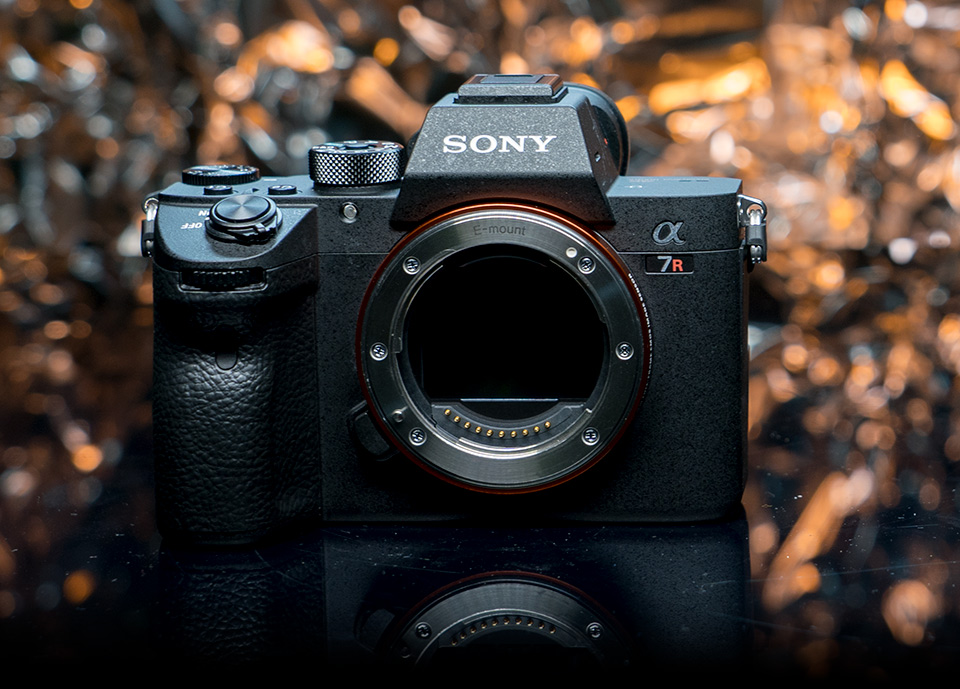
Sony Alpha 7R mark III
- 42.4-megapixel full-frame CMOS sensor
- 10 frames per second
- Sensitivity: up to 102,400 ISO
- 399 phase-detection and 425 contrast-detection points
- Improved autofocus and Eye autofocus
- 4K video
- Two SD card slots
- SuperSpeed USB (USB 3.1 Gen 1) and USB Type-C connection
- Batteries with more capacity than other Alpha 7 models
- Weight: 652 grams
In the hand
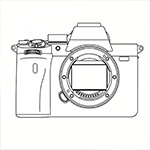
The Sony a7r mark III has virtually the same body as its predecessor. The camera feels great in the hand and is nicely compact compared with an SLR in the same price range.
I still shoot with one of those 'old-fashioned' SLRs myself. There has not been a good reason for that for a long time, though, because these mirrorless cameras really only have advantages over an SLR.
The electronic viewfinder is very pleasant, for example. You see exactly what your photo is going to look like. If you use the electronic shutter, the image does not even go black while taking a photo, and you almost wonder whether you have taken a photo at all, it is that smooth.
Especially when you use silent mode, where you really cannot hear anything at all. Ideal for street photography or when you want to take photos in a church, for example.
During a portrait shoot, you will want to turn the sound back on, so your subject also knows that you are taking photos. But of course, this works perfectly well too.
Controls
Like the Sony a9 announced earlier, the a7r mark III also has an improved user interface in the menu. It does indeed seem better, but I was not immediately very enthusiastic about it.
What is new in any case is the 'my menu', which can also be found on Canon cameras, for example. You put frequently used functions in it. So you do not have to keep searching through the camera's extensive menu. Instead, you set up your camera over time so that everything you use can be found on one screen.
You can also assign functions to buttons on the camera itself. Once set up, the Sony is therefore easy to operate in the way you prefer.
Eye AF tracking
Eye AF tracking has also been improved further. A great feature for portrait photographers, the camera looks for the eye in the photo itself and focuses on it accurately.
I played with it briefly, and my first impression is that it is quite accurate and above all a very pleasant way to take portraits. Definitely something I would use.
You can easily assign the function to a button, including the function button on the lens that was also announced yesterday, and use it very quickly whenever it is practical.
Photos in Jpeg
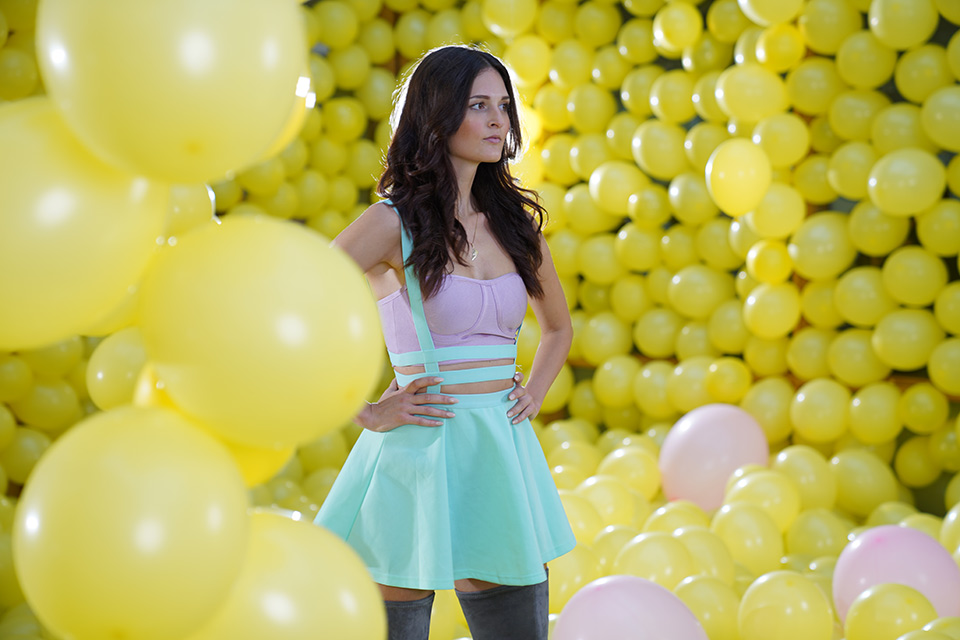
I shot photos with the new a7 in both RAW and Jpeg, but what you see here are unedited Jpeg files. There is currently no RAW converter available for the new camera.
Sony will also supply a new programme with the Sony. You can use this software, Imaging Edge, for tethered shooting, allowing you to set up the camera and view the image on your computer and also take photos from your computer, to browse through your photos and to edit them.
We saw an unfinished version of the programme, and it looked neat. I do expect most photographers will ultimately mainly use their own favourite programme, such as Lightroom.
Pixel Shift Multi Shooting
If you want to use Pixel Shift Multi Shooting on the Sony a7r III, you will need Imaging Edge. Initially, this will at least be the only way to combine the special RAW files into one high-quality photo.
Pixel Shift Multi Shooting is a technique in which the camera takes four photos. The sensor is shifted by one pixel between each photo. This produces four RAW files, in a different RAW format, which you have to combine on the computer. This does not happen in the camera itself.
Thanks to this technique, which is comparable to what Pentax offers, for example, you get better colour information and less noise in your photo. The quality is considerably higher.
The technique is only suitable, however, if you work with an extremely stable tripod and a static setup of your subject, such as with product photography. Even the slightest vibration can result in a failed photo.
We could not try this technique ourselves yesterday, by the way. The available software was not suitable for it, and the floor of the hall where we were, with all the people walking around, was too shaky.
Resolution
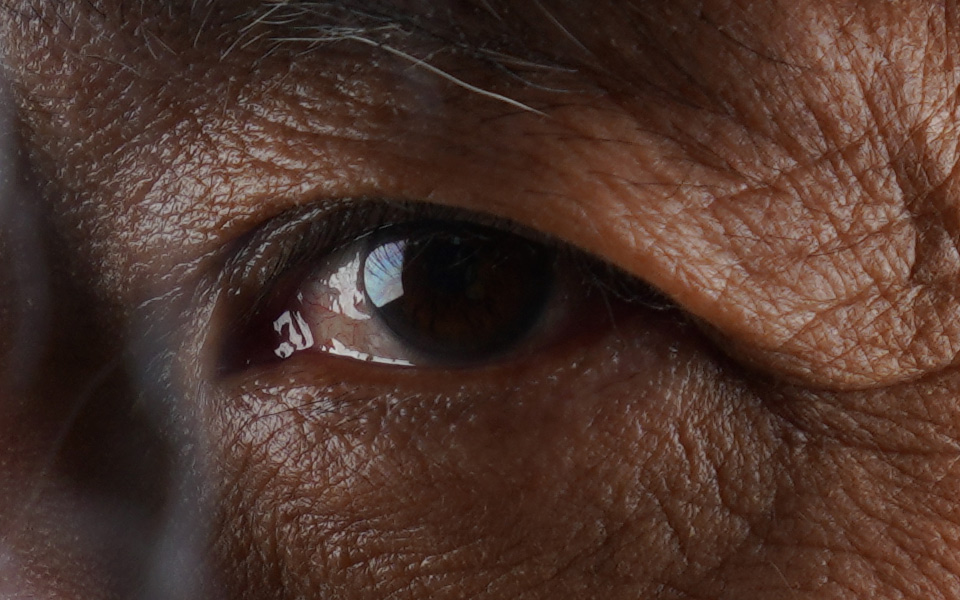
Compared with its predecessor, the resolution has remained unchanged. That is not really a problem, because with 42 megapixels you will not run out of data quickly. The resolution is truly excellent and gives you an enormous amount of detail to work with, as well as more than enough room to crop afterwards.

The photo above was shot in a studio setup using flash. Below, you can see a 100 per cent crop from this photo showing only one of the man's eyes. As a portrait photographer, I am very happy with this kind of resolution.
Provisional conclusion
The Sony Alpha 7r mark III is a very interesting camera for photographers looking for a high-end camera. I would personally also consider this camera as an upgrade from my current Canon 5D mark III.
It also looks like a wonderful camera for videographers. With high-quality 4K HDR video, you are ready for the future.
About the author
Elja Trum is the founder of Photofacts and online photography course website Photofacts Academy. He has been writing about photography since 2006. Elja is also the author of (Dutch) books on composition, black-and-white photography, flash photography and portrait photography.
You might also like
-
 Review: Sony a7r mark III
by Elja Trum
-
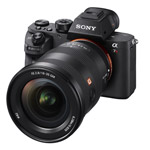
 Sony announces successor to the Sony A7R IV, the camera with AI
by Nando Harmsen
-
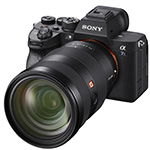
 Preview: Sony Alpha 7R IV
by Aäron Nasarany
-
 Sony Alpha a7s Mark III announced
by Elja Trum
-
 Review: Sony A7R V mirrorless camera
by Nando Harmsen
-
 Sony introduces the Sony A9 III
by Nando Harmsen
3 comments
-
 Mt. Fuji wrote on Thursday 26 October 2017 at 17:53 | reply
That pixel shift thing works better on Olympus, after all. There, 8 photos are combined and the camera itself creates a RAW and/or JPG from them. So you are not tied to proprietary converters. Combining those Sony photos is so specific that existing raw converters will never offer support for it.
Translated from Dutch. -

 Theotje wrote on Tuesday 31 October 2017 at 16:13
| reply
"Only advantages compared to a DSLR"??? The Nikon D850 does 1840 shots with a battery and the Sony 530 shots. The price is approximately the same.
Translated from Dutch. -
 Son wrote on Tuesday 31 October 2017 at 16:57 | reply
But Theotje, aren't you forgetting the rest of what the Nikon D850 doesn't have/can't do ! There are quite a few compared to the A7r m3.Sony is much further ahead in development than the other brands ! More and more people are switching to Sony.Read and see what the professional photographers say!
Translated from Dutch.
Have your say
Please note: Articles older than a week can only be commented on by signed-in visitors.Would you still like to comment? sign in or create a free account.
Become a better photographer every week
A practical photography tip in your inbox every week.
38,764 photography enthusiasts already receive the tips! More about the weekly mail. Or keep up to date via  Facebook.

Elja Trum
Photofacts; everything to do with photography!
Would you like to take better photos and keep up with what is happening in photography? Photofacts publishes articles that teach you something about photography — from a product announcement to a practical shooting tip or a look at a website. Photofacts covers photography every day and is a hobby project of Elja Trum's that got out of hand. The articles are written by a team of volunteer authors. If you would enjoy writing one or more articles for Photofacts, do get in touch.More about PhotofactsPhotofacts is made possible in part by
