

The Sony A9 put through its paces
Friday 4 January 2019, 15:15 by Huub Keulers | 8,964 views | 5 commentsThis article was translated from Dutch with the help of AI. Read the original.
I recently had the opportunity to use the Sony A9 mirrorless system camera. As a sports photographer, I was very curious about this camera, especially because I had heard very good things about it. Could there really be a camera that would outperform my old, trusted Canon 1Dx?
To approach it as objectively as possible, I deliberately did not read any reviews of this Sony A9 beforehand. Of course, it is difficult not to compare. That is human nature, and we always need some sort of reference point, don't we?
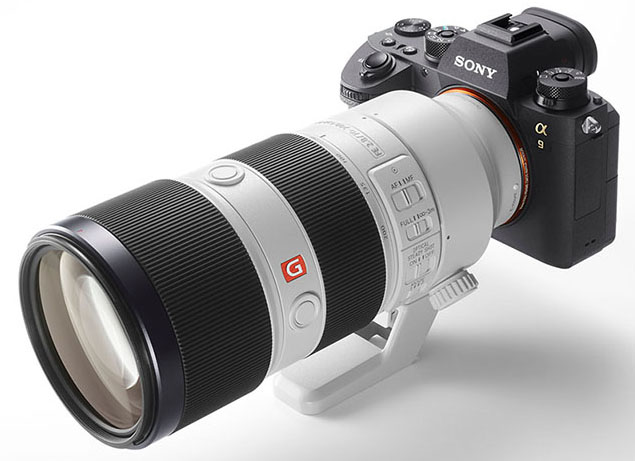
This article is about my findings with the Sony A9 and is definitely not a full review. You can find more than enough of those tests on the internet. My experiences with the A9 have also been written down without any input from a retailer or Sony and, for the avoidance of doubt, I am not being paid for this.
My main reasons for writing blog articles like this are to gain experience with other camera systems, so that we can better support participants on our courses and workshops, but above all because it is fun and challenging to try things out.
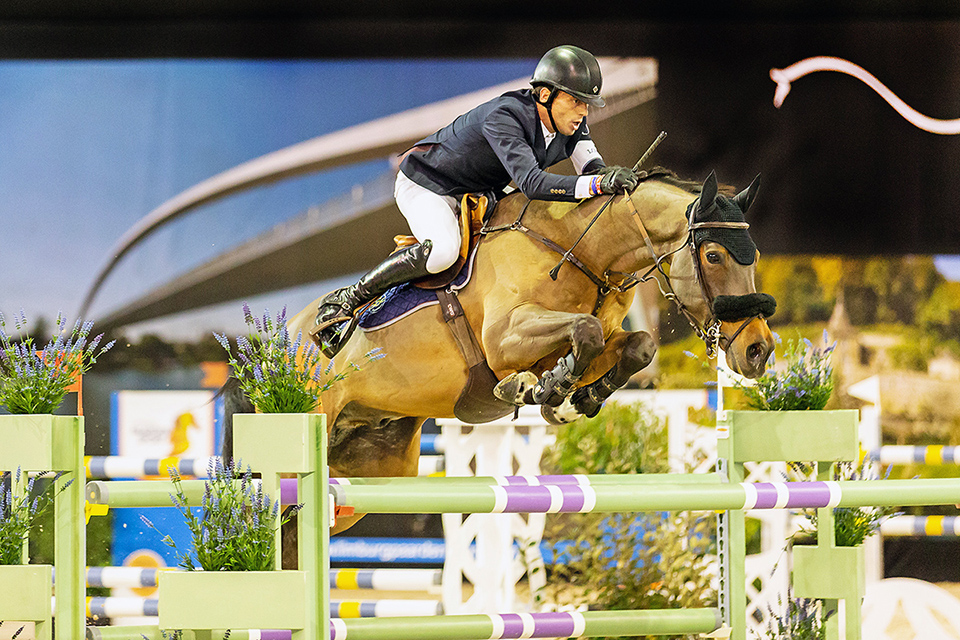
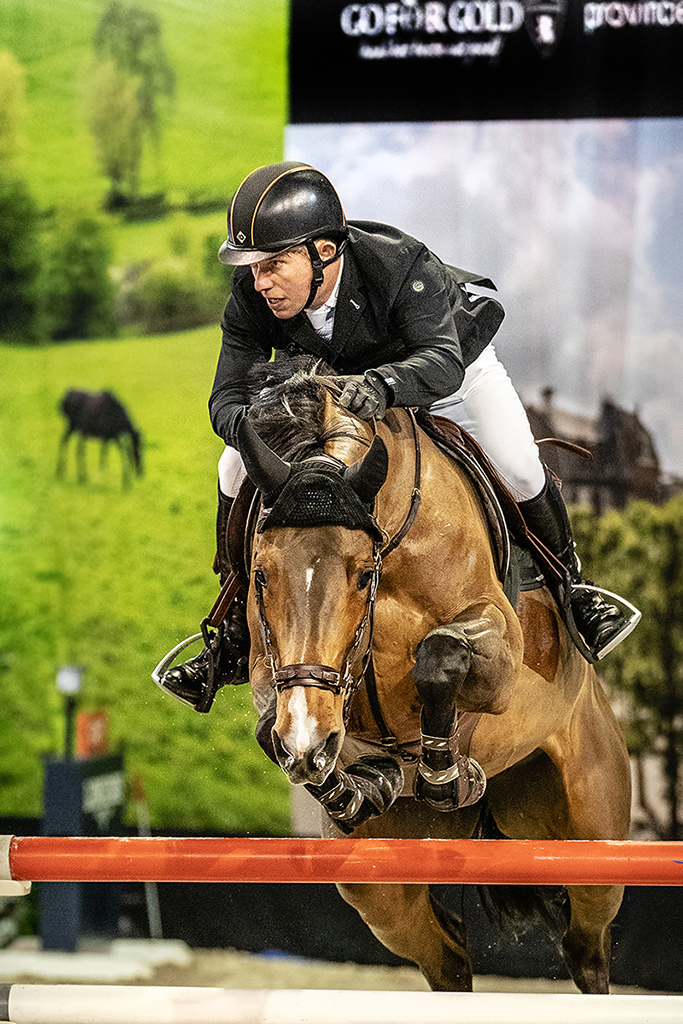
All photos in this article were taken with the Sony Alpha A9 system camera in combination with the Sony 70-200mm f/2.8 GM OSS lens.
How better can you test a camera and lens than under somewhat more extreme conditions? It worked out very well that we, my wife and I, had to photograph at the Jumping Indoor Maastricht show-jumping event. This gave us the chance to put the Sony A9 properly through its paces for an entire weekend. And we did so with great pleasure.
My first impression
The camera was delivered to our home two days before the actual photography. The first thing I noticed about the Sony A9 was its size. Even with a battery grip, it was almost 1.5 times smaller than my Canon 1Dx. The second thing I noticed was its rectangular design.
I am simply used to the great look and feel of a DSLR. Although I realise that this comparison is not entirely fair, as these are two completely different models. What did appeal to me was the large number of setting options on the camera body.
Various control dials give you quick access to the drive mode, AF method and exposure compensation. I like that. During sporting events, you do not want to dive into the camera menu to change settings.
If you have never properly looked through a Sony camera menu, it takes some searching at first. That is what I like about Canon, its menu layout is very intuitive.
In practice
To write about my findings honestly, I did not make many changes to the way I photograph. So I approached this sporting event as if I were photographing with the Canon 1Dx.
That means using the viewfinder rather than photographing through the camera display. I let my wife photograph part of the second day with the A9. She has not been photographing for very long and normally finds it somewhat difficult to suddenly have to use a different camera.
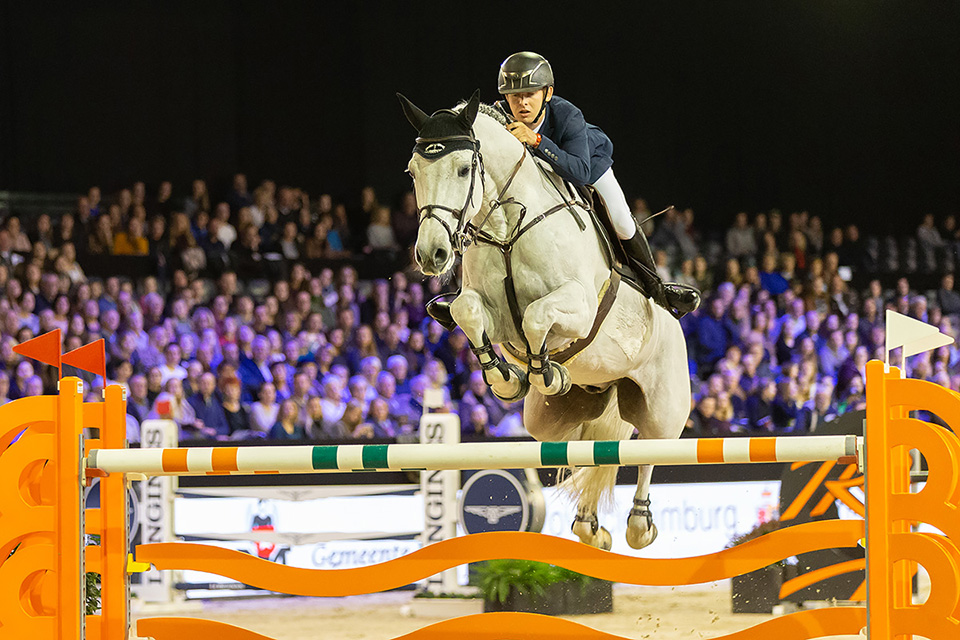
In some cases, her photos lacked a little sharpness, possibly because of the heavier Canon equipment. The image stabilisation and lower weight of the Sony A9 also helped ensure that more photos were sharp this time. I am even a little 'jealous' of some of her photos, but I think it is brilliant. See photos 3 and 7.
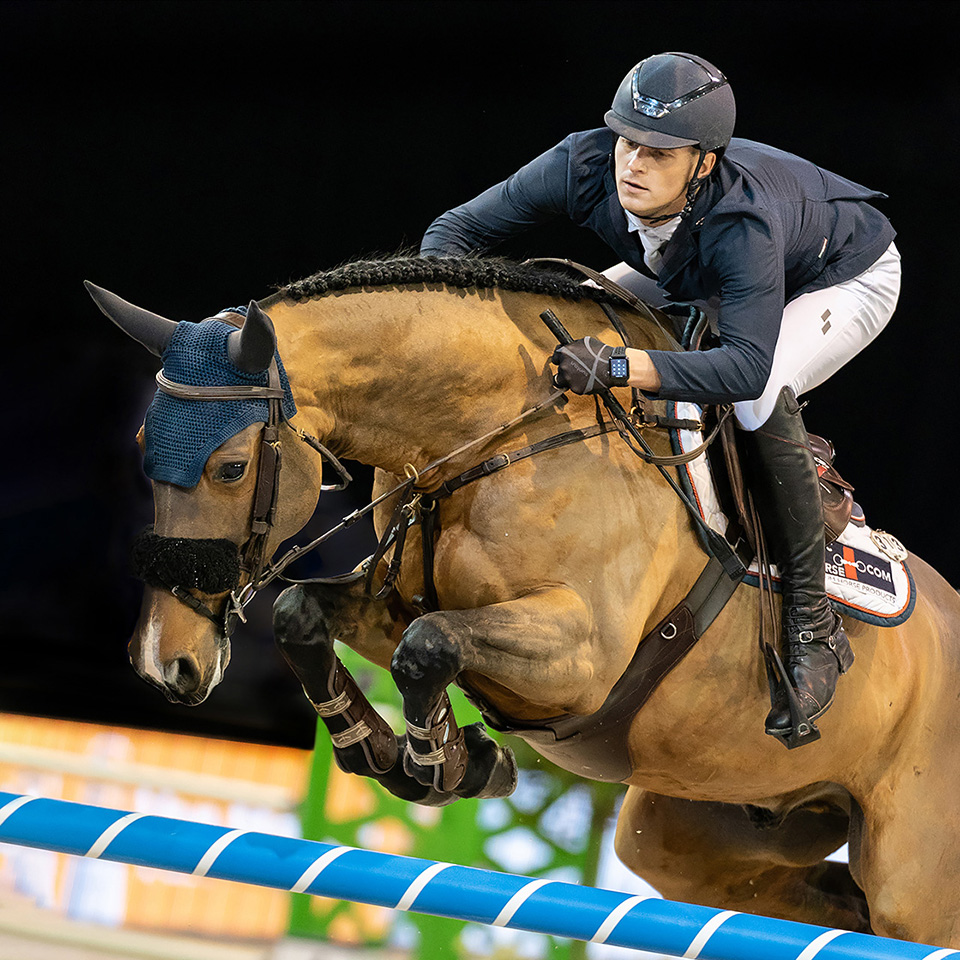
The main settings for the attached photos were as follows:
- Manual exposure;
- Aperture F2.8 with a shutter speed of 1/800 second;
- ISO set to Auto. Occasionally I switched to a fixed ISO value to see whether there would be much difference in exposure, but this was not the case;
- Continuous Autofocus (AF-C);
- AF Area Mode: Flexible Spot. Because I am used to working with just one focus point, I set up the Sony A9 that way too. Slightly higher in portrait orientation, so not in the centre, because the rider is then in the upper part of the viewfinder;
- Burst mode set to Medium (12 frames/sec);
- RAW Compressed. You can also choose RAW Uncompressed, but I thought 50Mb files were a bit excessive. A fellow photographer once told me that there is almost no difference in image quality;
- Auto Track sense set to 3, meaning how quickly and for how long the autofocus 'sticks' to a moving subject. You can choose a value between 1 and 5. The higher the number, the more sensitive the AF, but also the sooner it 'lets go' of your subject;
- I set autofocus to the AF-ON button, separating metering and the shutter button from autofocus. For sports photographers, this increases the chance of taking sharper and better-timed photos;
- Metering: Matrix, metering across the entire image.
Robustness
I really have to say this. If you often photograph with a 'beast' like the Canon 1Dx and then get the Sony A9 in your hands, you are extra careful. Especially with equipment that is not your own. The whole thing feels a little more fragile.
Sports photographers see their camera as a tool. No, not for DIY, but their cameras are often exposed to the harshest conditions. I have seen bodies that look as though they have been put through a tumble dryer, yet they keep working. With the Sony A9, I have to admit that I do have my doubts about this.
Handling
Both my wife and I noticed that, at first, our fingers regularly searched for the AF-ON button, the autofocus back button. Because of the red movie button right next to it, we suddenly found ourselves unintentionally recording a video.
Because the camera body is smaller than we are used to anyway, we sometimes had to search by feel. In the end, it is a matter of getting used to it, but as far as we are concerned Sony could have made this button slightly larger. Another thing we sometimes struggled with was the joystick below the AF-ON button.
We also sometimes pressed that by accident, causing the focus point to shift. If you want to change the focus point deliberately, though, this button is a real blessing.
Sometimes I wondered whether I was actually taking photos. That is how quiet this camera is. It really took some getting used to. To be honest, I still had not got used to it after two days of photographing. Fortunately, Sony offers a solution.
You can set a grey line to appear on the display at the same frequency as your photos are taken. That gave me the confidence that I really was taking photos.
The camera was also lovely to work with in terms of weight. Finally, fewer RSI-like complaints after a whole weekend of photographing. One point that does seem worth noting is the weight distribution between the camera body and lens. Precisely because the body is built smaller, a larger and heavier telephoto lens will not be such a practical combination.
It is still manageable with the 70-200mm, but with a 300mm or 400mm F2.8 on the A9 there will undoubtedly be a strange imbalance. Most sports photographers will probably use a monopod with a 400mm lens.
Something we both found strange, by the way, is that the camera does not automatically switch to the second memory card once the first card is full. I had to put the full card in slot 2 and the empty card in slot 1.
This is almost certainly a menu setting, but we could not find it. On the 1Dx, this is a standard setting, and we expected the same from the A9.
Camera display
A nice, bright screen on which all the information is clearly visible. It did take some getting used to that the display was constantly on. To prevent this, I set the C4 button on the rear so that it could switch off the display.
But as soon as your hand came back in front of the viewfinder, the screen was activated again. This inconvenience may be solved with a menu setting, but I did not come across it.
The A9 also has a touchscreen. I had expected a little more from it, though. This option is intended for moving your focus point and enlarges your photo with a double tap when reviewing it. For me, a touchscreen only adds real value if it can also be used for various settings. Viewing your photos on this display is a pleasure, though.
Viewfinder (EVF)
If you are used to an optical viewfinder, it always feels a little strange looking through an electronic viewfinder (EVF). However, the EVF I remember from the Fuji XT-1 was nowhere near this A9. No image lag at all and a very bright viewfinder image.
I found only the overexposure warning less pleasant. In my view, it is merely distracting. Eventually I discovered in the menu where this function can be switched off.
Autofocus
I can keep this very short. Waaaaauw! The autofocus on this camera is unbelievably good. Its speed and reliability are superb. The AF reacted incredibly quickly to horse and rider suddenly entering the frame and held focus perfectly in 99.99% of situations.
My Canon 1Dx occasionally struggles to focus on a dark or evenly lit subject, but the A9 handles this well. And I had not even taken the trouble to test multiple AF options, which might make it even better.
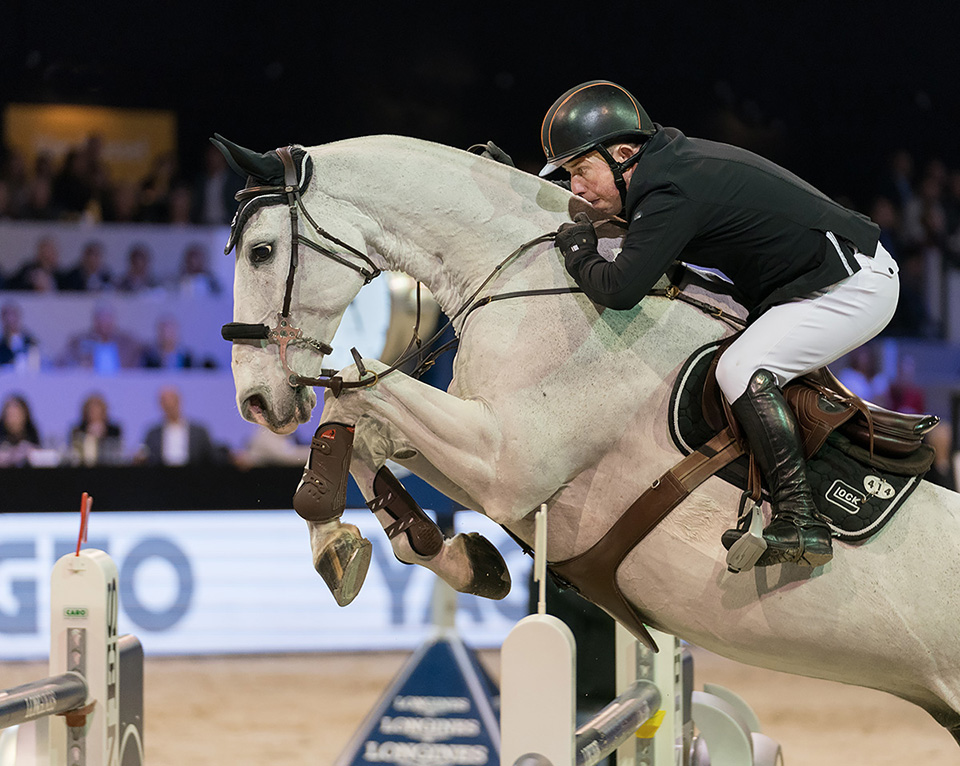
Image quality
One of the great moments for a photographer is looking through the photos properly in the press room or when you get home. That is when you really see how your images have turned out. Of course, that is not only down to the photographer but also the equipment. And honestly, the image quality of the RAW files is very good.
Especially considering the lighting conditions. Most of the photos were taken at ISO 3,200 to 6,400. Since we are comparing, they are even slightly better than the images I take with my 1Dx.
The A9's Auto White Balance does its job well, despite the artificial light regularly changing in intensity and colour. We hardly had to change anything during post-processing.
Positive points
- Lightweight;
- Super-fast autofocus;
- Very good high-ISO performance;
- Clear viewfinder image;
- Photographing for a long time with just one battery. The battery was not yet empty at the end of the day;
- Bright display;
- Menu clearly divided into categories using tabs;
- Large and fast camera buffer.
Points for improvement
- A more robust body with the ergonomics of a DSLR would be an advantage. Especially because sports and wildlife photographers are also among this camera's target audience. It would also solve the problem of accidentally pressing the wrong buttons;
- Better sealing to protect against rain, snow and so on.
Conclusion
Of course, it takes some getting used to when you suddenly have to photograph with a mirrorless system camera, especially one from a different brand. The handling, the buttons and an unfamiliar menu structure and terminology all took some getting used to.
And of course, every camera has points that could be improved, but honestly, it is a fantastic camera. It was a pleasure to photograph with, especially in combination with the Sony 70-200mm f/2.8 GM OSS.
Whether the A9 will appeal to many professional sports and action photographers seems doubtful to me. I suspect most of them will not make the switch just yet.
Would I make the switch myself now? Setting aside this successful test weekend and my satisfaction with this camera, my answer is still NO. There are two reasons. Firstly, my wife and I have already invested a lot of money in our Canon equipment, and secondly, I do not want to give up the robustness and solidity of the 1Dx.
If I did not mainly photograph sports, but purely portraits or weddings, a switch would be worth considering. But ultimately, you always have to earn back an investment, and that is difficult enough in photography, especially sports photography.
My tip for Sony
Put everything you have already implemented in the A9 into a slightly larger and more robust body, with higher-quality seals. You would then create a professional sports photography camera that could compete more effectively with established brands such as Nikon and Canon.
About the author
Huub Keulers is een enthousiasmerende veelzijdige freelance fotograaf woonachtig in Elsloo (Li). Hij is gespecialiseerd in sport-, bedrijfs-, straat-, honden en portretfotografie. Daarnaast is Huub auteur van diverse educatieve fotografieboeken en verzorgt hij allerlei fotoworkshops, masterclasses en lezingen.
You might also like
-
 Sony A9 Mark II announced
by Aäron Nasarany
-
 Sony introduces the Sony A9 III
by Nando Harmsen
-
 Review: Sony a7r mark III
by Elja Trum
-
 Sony introduces the A6400 mid-range APS-C mirrorless camera
by Michelle Peeters
-
 Preview: Sony Alpha 7R IV
by Aäron Nasarany
-
 Sony announces the 50-megapixel Alpha 1 camera
by Nando Harmsen
5 comments
-
 Ivo wrote on Tuesday 8 January 2019 at 11:19 | reply
Hi Huub, I also got to test the A9 myself (also with the new 400mm lens) and I can fully agree with your findings. I also have my doubts about the robustness of the body, as a sports photographer you also regularly work in poor weather conditions. At temperatures around or below freezing, as a photographer you like to use gloves and I found operating the A9 with gloves to be very subpar, the buttons are too small and are too close together. Of course, the result of the compact body. Personally, I also find the distance between the lens and grip on the tight side and regularly get my fingers stuck.
Translated from Dutch. -

 Huub Keulers
wrote on Tuesday 8 January 2019 at 12:53
| reply
Hi Ivo, thanks for your response and confirmation
Translated from Dutch. It's always nice when people acknowledge your experiences. There's nothing wrong with the photo quality of the A9, by the way, it's perfectly fine. See you.
Regards, Huub -
guest wrote on Tuesday 8 January 2019 at 13:53 | reply
Hi Huub,I read your experience with the A9 attentively.What strikes me are the photos. I think they have been heavily edited? I use the Sony A77 mark2 myself.Still, I wouldn't want to trade it for the A9.my opinion.
Translated from Dutch.
Best regards,
Wim. -
Huub Keulers
wrote on Tuesday 8 January 2019 at 15:29
| reply
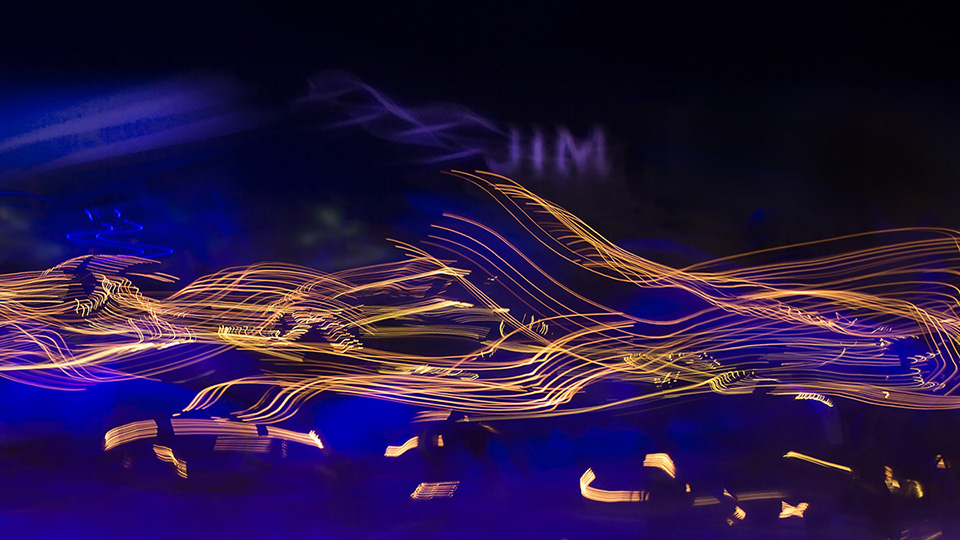
Hi Wim, thanks for your response. The only photo that has been edited a bit more is the first photo with the longer shutter speed. With the other photos, I only cropped something in Lightroom and adjusted the exposure and contrast in the RAW file. I even turned the noise reduction down to zero in Lightroom.
Translated from Dutch.
Best, Huub -
 Nico Noordman wrote on Thursday 10 January 2019 at 19:43 | reply
Hello Huub, I myself am only an amateur photographer, albeit of a somewhat higher level. Due to surgery on my cervical vertebrae, I could no longer carry the weight of my heavy Canon equipment and therefore had to look for more portable equipment. Via a detour with the Olympus OM-D-EM1 mark II (yes, from full frame to mft! - and astonishingly good!!) I eventually ended up with Sony (with a limited amateur budget, the Sony A7 mark III). I have to say that the image quality of both the Olympus OM-D-EM1 II and the Sony A7 III is in no way inferior to my Canon EOS 5DIII, even the noise on the Olympus is perfectly under control!. In terms of speed, Canon and Nikon can take a leaf out of their book here (Olympus OM-D-EM1II ->60 fps in RAW at full resolution!!) and actually also when it comes to image quality. The only downside with Olympus, due to the mft format, is that you lose out when it comes to playing with depth of field and therefore have to buy extremely fast lenses. With the Sony A7 and A9 you obviously do not have this problem, but then you are again dealing with heavier lenses, which means that some of the weight saving from the lighter body is lost.
Translated from Dutch.
-- The menu structure: Sony's menu is useless and I miss some elementary things such as double exposures, for example. You can see that Sony still has work to do here, because your comments with some settings are indeed included, but it is a search.
If you are used to Canon, you will find your way around the Olympus menu more quickly. Where with Canon the tabs are at the top horizontally from left to right, with Olympus they are on the left vertically from top to bottom. Robustness: In terms of sturdiness, Sony does indeed feel somewhat more fragile, the Olympus can perfectly match Canon and Nikon here! But what a weight saving .. lighter pro lenses .. and what a gain in speed .. for almost equivalent image quality .. Keep an eye on the new Olympus OM-D-EM1X!!!!
Have your say
Please note: Articles older than a week can only be commented on by signed-in visitors.Would you still like to comment? sign in or create a free account.
Become a better photographer every week
A practical photography tip in your inbox every week.
38,886 photography enthusiasts already receive the tips! More about the weekly mail. Or keep up to date via  Facebook.

Elja Trum
Photofacts; everything to do with photography!
Would you like to take better photos and keep up with what is happening in photography? Photofacts publishes articles that teach you something about photography — from a product announcement to a practical shooting tip or a look at a website. Photofacts covers photography every day and is a hobby project of Elja Trum's that got out of hand. The articles are written by a team of volunteer authors. If you would enjoy writing one or more articles for Photofacts, do get in touch.More about PhotofactsPhotofacts is made possible in part by
