

The benefits of a monopod
Sunday 14 May 2017, 16:32 by Huub Keulers | 16,894 views | 10 commentsThis article was translated from Dutch with the help of AI. Read the original.
In George Orwell's book 'Animal Farm', some of the animals conclude that having four legs is better than having two. In this article, we'll look at why one leg can sometimes be better than three, and why a monopod can therefore be very useful.
Essential but heavy...
A monopod is an essential piece of equipment that every photographer should own. There are, however, some things you need to consider before buying one. They can sometimes be a bit heavier, not particularly convenient to carry around and they slow you down when taking photos.
But we also know that the more steadily you can hold your camera, the sharper your photos can be. Meet the monopod, or single-leg tripod.
Quality
A good-quality monopod will certainly last you 20 to 30 years, if not a lifetime. Even then, something can break. It is therefore important that you can also buy replacement parts for a long time.
With quality brands such as Manfrotto and Gitzo, for example, these are still available worldwide for a very long time. For your information: Manfrotto and Gitzo have been one company for some time now. My advice: don't economise on a monopod/tripod.
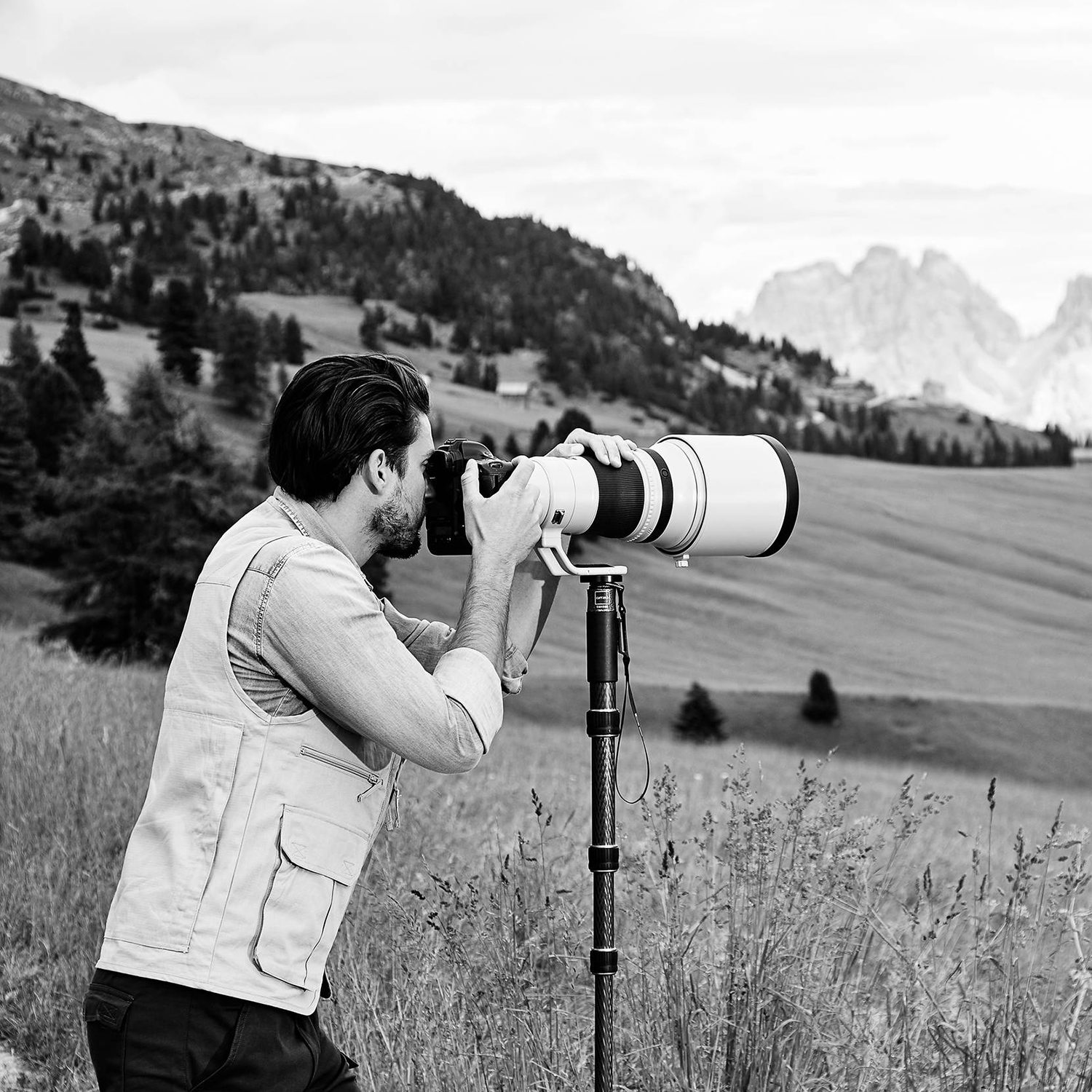
What to look for when buying one
When buying a monopod, you look to a greater or lesser extent at things that are also important with a tripod, such as stability, height, weight and so on.
Ideally, you want the minimum number of leg sections needed for the desired height. Every extended section is a potential source of instability.
Carbon fibre
As with tripods, the best monopods are made of carbon fibre, combining strength, stability and low weight.
When buying a monopod, make sure that the weight of your camera and heaviest lens combination does not exceed the maximum load capacity of your monopod.
Heavy tripod head
I know people who have bought a beautiful lightweight monopod and then attached a heavy tripod head to it. There goes the weight advantage of carbon. When it comes to a monopod, you need to realise that it is not a complete replacement for your tripod.
Situations where a monopod will not help you take a sharper photo include night shots and sequences such as HDR photos. A monopod can make a real difference in:
- Wildlife and sports photography, where you often work with a long telephoto lens
- Travel photography, especially when the light starts to fade
- Macro photography.
How to use a monopod
One of the most important aspects of using a monopod is how to keep it stable. The best way to do this is as follows:
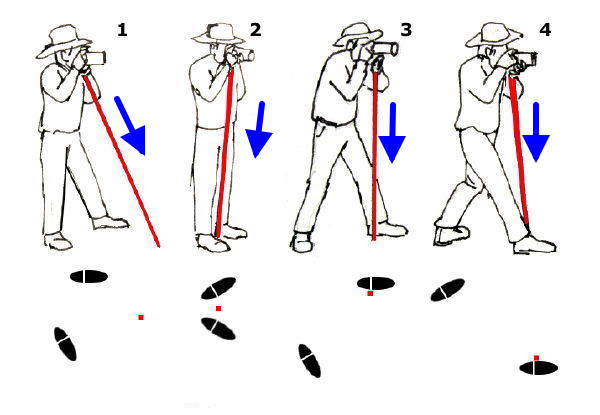
Stand with both legs about 50 centimetres apart, with the monopod in front of you, so that your body and your monopod form a triangle. Hold the top of your monopod firmly, but not too tightly.
The key to stability is, strange as it may sound, not to stand as rigidly as a tree. The tension in your muscles will actually cause vibrations. Now press your monopod lightly downwards to anchor it metaphorically 'in the ground'.
When using a telephoto lens, place your other hand on top of the lens and press it down lightly. You can also stand in a slightly different way or press the monopod against your leg, as shown in the images below, but in any case make sure that you are standing steadily and that it feels comfortable for you.
I mainly use my monopod when photographing with a heavy 300 or 400mm f/2.8 telephoto lens, or when panning, moving the camera along with the fast-moving subject. These are situations where keeping a camera steady is essential.
It is also far from pleasant to carry a 5-kilo telephoto lens and a 1.4-kilo camera body around all day. A monopod can help support that weight.
Try carrying a bag of potatoes weighing more than 5 kilos all day, and by the end of the day you'll be happy to give your arms a rest.
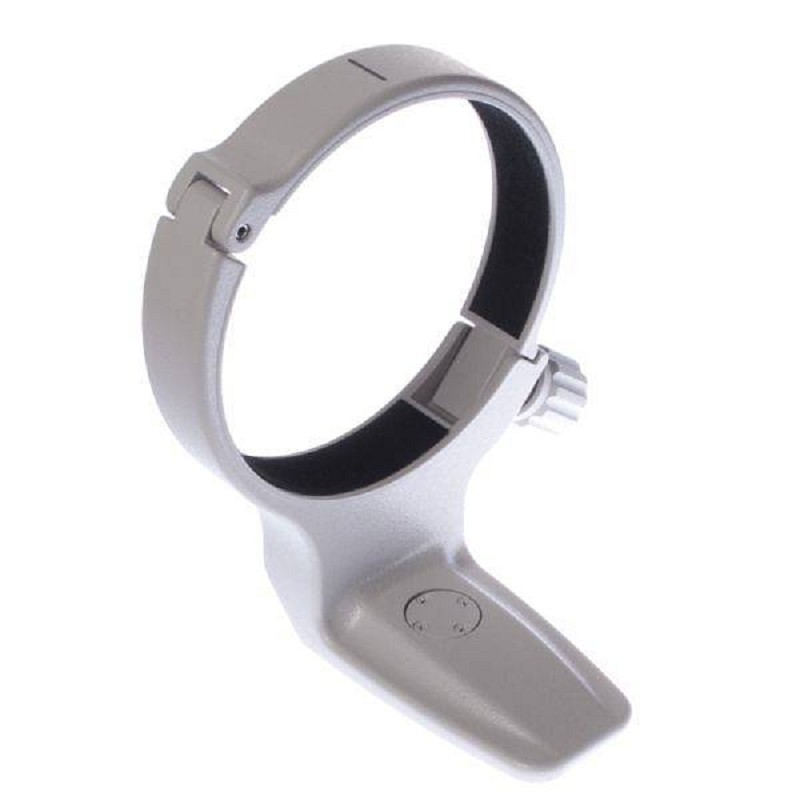
When using a somewhat heavier telephoto lens, a monopod is, incidentally, not attached to the camera body itself, but to a so-called tripod collar on your telephoto lens. With this tripod collar, you can quickly switch from landscape to portrait orientation with your camera.
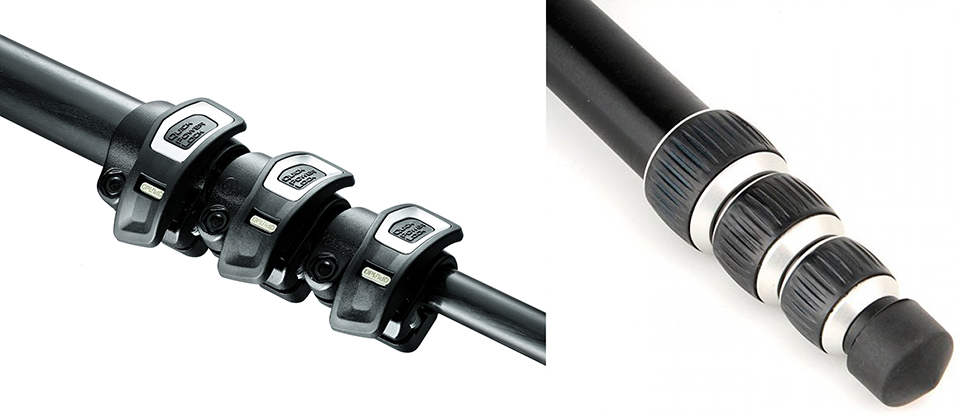
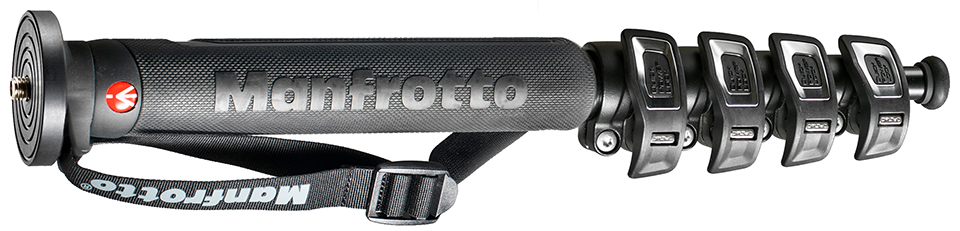
The monopod I regularly use, and which works perfectly for me, is the Manfrotto XPro series with four sections. It has everything I look for in a monopod: light, pleasant to use, stable, strong and short enough when collapsed to fit in my rucksack.
I find Manfrotto and Benro's locking system more convenient to use than the twist-lock system of brands such as Gitzo, Sirui, Induro, MeFoto or Velbon, but that is a matter of personal taste.
Another situation in which a monopod can be useful is for taking photos from a higher viewpoint. Hold your monopod at the bottom and lift it above your head.
With a remote, you can now take photos from a height of easily three metres. Examples include photographing people on the dance floor at a wedding, or during a timeout in a sports match when the coach is addressing the players in a circle.
Important: When taking photos or filming with your monopod, make sure that the Image Stabilisation (IS) or Vibration Reduction (VR) on your lens is not active. If it is active, this system will actually cause your photos to be blurred.
An active IS/VR system expects unwanted movement, even though there is none when using a monopod or tripod.
Let's briefly summarise the advantages and disadvantages of a monopod.
Advantages:
- Easy to transport and low weight
- Stabilisation when using long telephoto lenses, increasing the chance of sharp photos
- Quick to set up
- Also makes filming with your camera easier and more stable
Disadvantages:
- No benefit in low-light conditions
- Somewhat less suitable if you need to change position very quickly and frequently
- Period of getting used to using one
About the author
Huub Keulers is een enthousiasmerende veelzijdige freelance fotograaf woonachtig in Elsloo (Li). Hij is gespecialiseerd in sport-, bedrijfs-, straat-, honden en portretfotografie. Daarnaast is Huub auteur van diverse educatieve fotografieboeken en verzorgt hij allerlei fotoworkshops, masterclasses en lezingen.
You might also like
-
 5 ways to light your model with a single flash
by Nando Harmsen
-
 Book: Scott Kelby, how do you do that in Photoshop?
by Michelle Peeters
-
 Review: Lonely Planet Ultimate Adventures book
by Michelle Peeters
-
 Review: The Camera. My Third Eye
by Michelle Peeters
-
 Combining an action sequence into a single image
by Nando Harmsen

10 comments
-
 Plaatjesmaker wrote on Tuesday 16 May 2017 at 13:59 | reply
Great article. Finally a positive word about monopods. I look around me pretty carefully and in all these years have only seen 2 in the 'wild'. A major drawback is that they are often rather long. Recently I have been working with a Velbon Super 8 (28cm without head). Wonderful thing, you can just stick it in your inside pocket.
Translated from Dutch. -
 Peter Lambrichs wrote on Tuesday 16 May 2017 at 14:56 | reply
Informative article, Huub.
Translated from Dutch.
Despite the fact that I only use a monopod sporadically in 'my' photography, I can fully endorse the advantages you listed. -

 Huub Keulers
wrote on Tuesday 16 May 2017 at 16:38
| reply
Thank you for your response Plaatjesmaker and Peter. Nice that you also appreciate a monopod. Nice comment from you Plaatjesmaker about 'seeing it in the wild'
Translated from Dutch.
-
 Jan wrote on Wednesday 17 May 2017 at 01:12 | reply
I've had one lying unused in the cupboard for years: I think it's one of the most useless and awkward accessories with a false sense of stability that exist. I work with a good tripod with a gimbal head and I lug quite a few kilometres through nature reserves. I usually use a shopping trolley to put my heavy gear in and when I'm out on my bike I use a bicycle trailer. Depending on what I'm working on, I use a different adapted tripod, but never a monopod because that actually makes you less flexible.
Translated from Dutch.
For macro shots I often use a homemade ground tripod or a beanbag. -
 Marco wrote on Wednesday 17 May 2017 at 09:23 | reply
For sports a must-have and what do you mean fake stability?
Translated from Dutch. -
guest wrote on Wednesday 17 May 2017 at 10:45 | reply
Especially on longer hikes and during my hiking holidays, I always have a carbon monopod with me and I also use it with the Fuji 100-400 mm, sufficient stability, easy to carry on the backpack and hardly any extra weight, yet an extra support when needed. Very good and positive article Huub, thanks!
Translated from Dutch. -
 PHilippe wrote on Wednesday 17 May 2017 at 14:22 | reply
Monopod preferred and certainly for sports photography.
Translated from Dutch.
For long shutter speeds, timelapse, group photos (if you want to be in them yourself) the tripod is indispensable.
Mine is 1,80 m and closed approx 50 cm -
 Jelle wrote on Wednesday 17 May 2017 at 15:09 | reply
Whether a monopod is useful of course depends on the situation. I just got back from a tiger photography tour in India and I was very happy that I had brought my monopod. With three other photographers in a jeep, looking for the best spot for their beanbag, I could calmly start taking photos with my monopod. Especially when two cubs started playing behind a fallen tree trunk. I could steadily "go up" while my colleagues had to photograph handheld. That did earn me some admiring looks....
Translated from Dutch. -
 Plaatjesmaker wrote on Wednesday 17 May 2017 at 15:16 | reply
It really is a shame that Jan has never used the monopod. If he had, he wouldn't have reacted like that. I still have a little logistical tip for Jan; a wheelbarrow maneuvers just fine in the city, as well as in nature.
Translated from Dutch. -
Huub Keulers
wrote on Wednesday 17 May 2017 at 19:32
| reply
Thanks for all the comments, opinions and views. It just goes to show that a monopod is a useful aid for some to support the somewhat heavier lenses and yourself, while others experience it more as a 'burden'. All fine as long as they are well-considered choices and alternatives work for people. In sports photography, a monopod is an aid that I am certainly happy with and that has improved the sharpness in my photos.
Translated from Dutch.
Have your say
Please note: Articles older than a week can only be commented on by signed-in visitors.Would you still like to comment? sign in or create a free account.
Become a better photographer every week
A practical photography tip in your inbox every week.
38,764 photography enthusiasts already receive the tips! More about the weekly mail. Or keep up to date via  Facebook.

Elja Trum
Photofacts; everything to do with photography!
Would you like to take better photos and keep up with what is happening in photography? Photofacts publishes articles that teach you something about photography — from a product announcement to a practical shooting tip or a look at a website. Photofacts covers photography every day and is a hobby project of Elja Trum's that got out of hand. The articles are written by a team of volunteer authors. If you would enjoy writing one or more articles for Photofacts, do get in touch.More about PhotofactsPhotofacts is made possible in part by
