

5 photography tips you can do without going outside
Monday 14 January 2019, 17:17 by Michelle Peeters | 16,414 views | 2 commentsThis article was translated from Dutch with the help of AI. Read the original.
We're in the middle of winter, and the weather certainly shows it. It's cold, wet and dark for a long time outside. You spend a lot of your (free) time in the dark and would rather sit by a warm fire than photograph outside in all weathers. That's why this article contains five photography tips you can do without going outside.
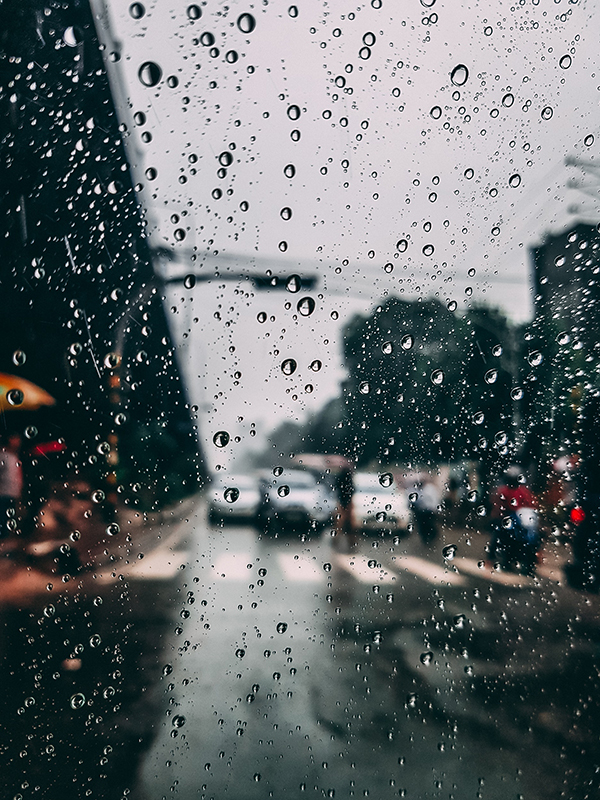
We spend little time outside at this time of year. Even diehard winter and outdoor photographers often decide not to expose their expensive camera equipment to harsh winter weather conditions.
But how do you keep yourself busy throughout the winter? Where do you find inspiration during these dark times? With the following tips and ideas for indoor photography, I hope to help you get through the winter.
1. Multiple exposures
You can practise multiple exposures perfectly well indoors. Many cameras can combine several exposures into one photo. This technique is also called double or multiple exposure.
If your camera doesn't have this option, you can still take several photos and combine them as a multiple exposure during post-processing. It's a little more cumbersome, but post-processing gives you more options than doing it in the camera.
The technique does require some practice, and one camera has more options than another. Sometimes you use a dial on top of the camera, and sometimes the menu settings. Sometimes you can also choose how you want the images to blend together and how many exposures your image is made up of.
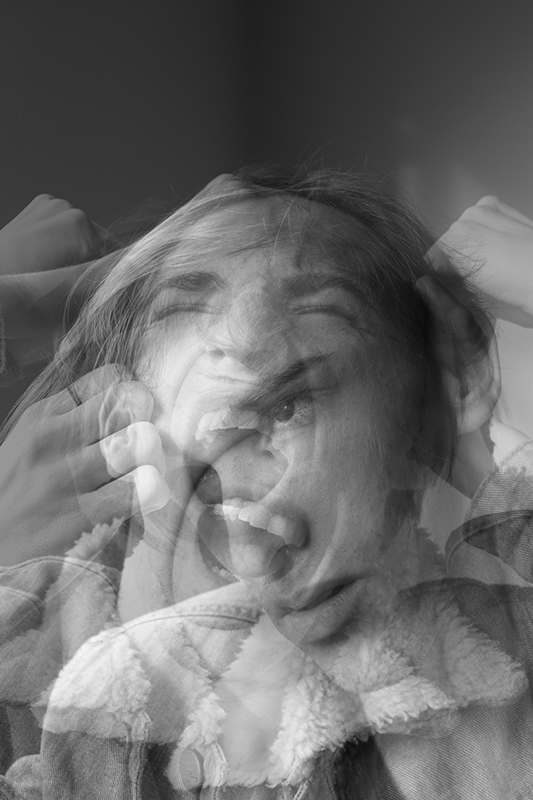
This technique is often used in high-contrast lighting situations. For example, you can now bring out some detail from very dark shadows.
But there are more possibilities. You can also combine a sharp exposure with an out-of-focus one, for example. The result is a kind of soft-focus effect. Or combining a normal exposure with a blurred one can produce an interesting result.
The subject of multiple exposures is covered extensively in Bart Siebelink's Creative Techniques course on Photofacts Academy.
2. Re-edit photos
You can make the most of this dull winter period by really improving your post-processing skills. Take some photos from a while ago and edit them again. Hopefully you kept your 'digital negatives', your RAW files, and can apply everything you've learned recently to them.
Or learn something new by watching Johan Elzenga's Photoshop for Beginners course on Photofacts Academy, for example, and put what you've learned into practice straight away.
3. Recreate a still life
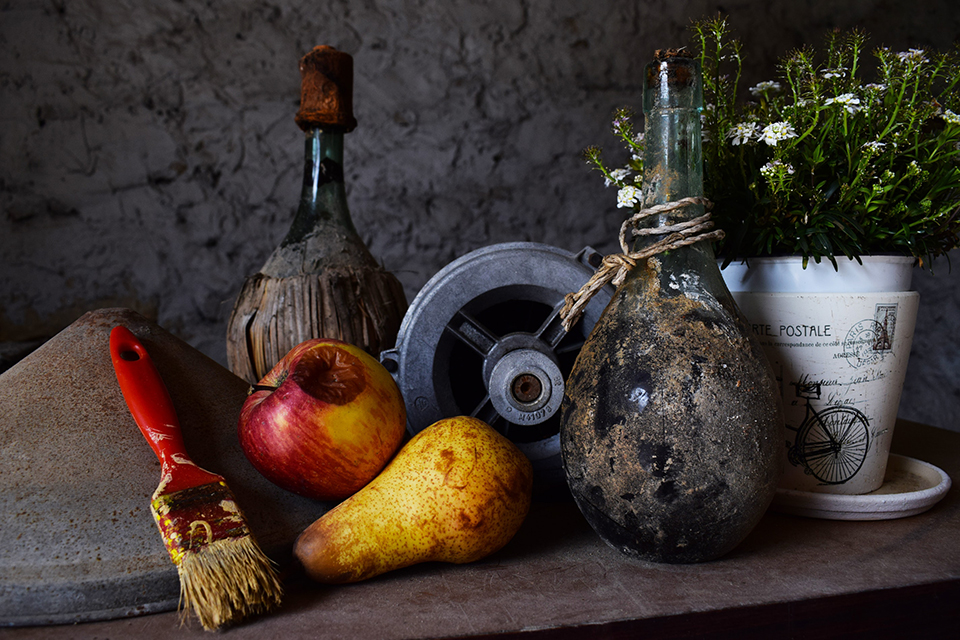
A still life is an artistic composition of a stationary or lifeless object. They are perfect subjects for training your eye, technique and understanding of light, and the great advantage is that they don't run away. That makes them an ideal subject for practising your techniques.
A still life is always beautifully and calmly lit, and the most enjoyable thing is to create something in a style that appeals to you.
And if you have no inspiration, you can try recreating an existing work. The advantage of copying something exactly is that you learn more from it than from creating something yourself. There is no better way to learn to 'look', and no better method for mastering lighting.
Two skills that are very valuable to a photographer: learning to look and learning to read the light.
Another fun thing, which I often do myself, is experimenting with studio lighting. I use a mannequin as a model. Just like with a still life, this patient model stays perfectly still, allowing you to experiment as much as you like and try out or recreate particular lighting setups.
4. Use your macro lens
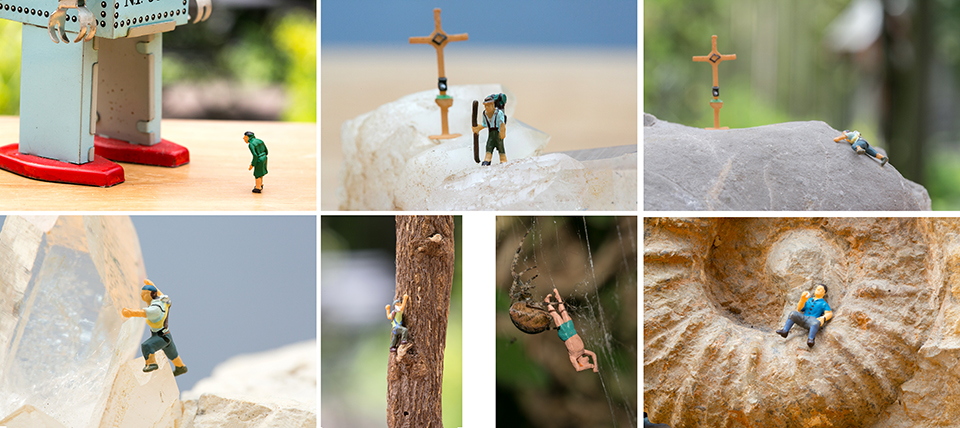
With a macro lens, you'll never be bored, even indoors. You can find subjects everywhere. Walk or crawl around your own home with your camera and you'll find all kinds of subjects.
The beautiful details of a houseplant or the abstract details of a rug. You could also create a series of everyday objects that you photograph in an unusual way, for example.
This type of image works well as a cohesive series. Try to find cohesion in shape, colour, subject, rhythm or repetition, or try turning it into a 'guess what this is' image. You can also point a small lamp at sheets of coloured paper and create all kinds of shadows and shapes.
In the article Create creative stories with your macro lens, you'll find more fun ideas for surprising macro photos, both indoors and outside. With Conrad miniatures, you can create miniature landscapes and creative stories. Great fun to do!
5. Print your best shots
Winter is the perfect time to finish your little works of art, your children and the photos you're really happy with. In this digital age, photos are often only displayed on screens, which is a shame. This means you miss an important aspect of a photo's beauty.
If you ever visit a photography exhibition, you'll know how impressive a large print by a photographer you admire can be. Important elements include the way it is printed, the paper used, the ink, the mount or frame.
Print your best shots from the past few years, for example, or create a photo book. You may still need to make some adjustments to the photos and make them a little lighter. Your screen acts as a huge lightbox, which means your photos often look rather dark when printed. Set your screen brightness to 50% for a realistic view.
The type of paper also has a huge influence on the final result. There are many types of paper, far more than just glossy and matt, with many different variations. You could also look into making mounts, which can ensure that your photo is presented in a very professional way. That extra effort will ultimately do your photos a lot of good!
At Photofacts Academy, we have a course on Business and Printing, among other things, which explains all kinds of printing techniques.
More ideas?
Do you still have time left in winter after trying out the tips above? Perhaps you have some fun ideas of your own for getting through the winter. If so, do let us know in the comments! Before you know it, spring will be here again, or perhaps we'll be able to capture snowy and icy landscapes after all in the near future.
About the author
Michelle Peeters is fotografe en oprichter van DeuxBleus Fotografie. Michelle herkent het bijzondere in het gewone en het gewone in het bijzondere. Ze heeft zich nooit willen specialiseren en is daardoor van alle markten thuis.
You might also like
-
 Winter fun! Photographing in the snow
by Laura van der Burgt
-
 Ideas for the Long Winter Evenings
by Nando Harmsen
-
 Two household objects you really should photograph
by Elvira Smit
-
 Review: 'Photoshop Masters' by Rob de Winter
by Huub Keulers
-
 Try photographing in bad weather
by Elvira Smit
-
 Flash photography tip: Put your flash outside
by Elja Trum
2 comments
-
 els tembuyzer wrote on Wednesday 16 January 2019 at 10:11 | reply
Could there be a demonstration in Photofacts Academy sometime on how to make a mat yourself and how the photo is then framed.
Translated from Dutch. -

 Michelle Peeters wrote on Wednesday 16 January 2019 at 11:37
| reply
@Els: in any case, I’m going to dedicate an article to it!
Translated from Dutch.
Have your say
Please note: Articles older than a week can only be commented on by signed-in visitors.Would you still like to comment? sign in or create a free account.
Become a better photographer every week
A practical photography tip in your inbox every week.
38,938 photography enthusiasts already receive the tips! More about the weekly mail. Or keep up to date via  Facebook.

Elja Trum
Photofacts; everything to do with photography!
Would you like to take better photos and keep up with what is happening in photography? Photofacts publishes articles that teach you something about photography — from a product announcement to a practical shooting tip or a look at a website. Photofacts covers photography every day and is a hobby project of Elja Trum's that got out of hand. The articles are written by a team of volunteer authors. If you would enjoy writing one or more articles for Photofacts, do get in touch.More about PhotofactsPhotofacts is made possible in part by
