

How can you still stand out as a photographer?
Thursday 18 January 2018, 22:11 by Michelle Peeters | 9,933 views | 8 commentsThis article was translated from Dutch with the help of AI. Read the original.
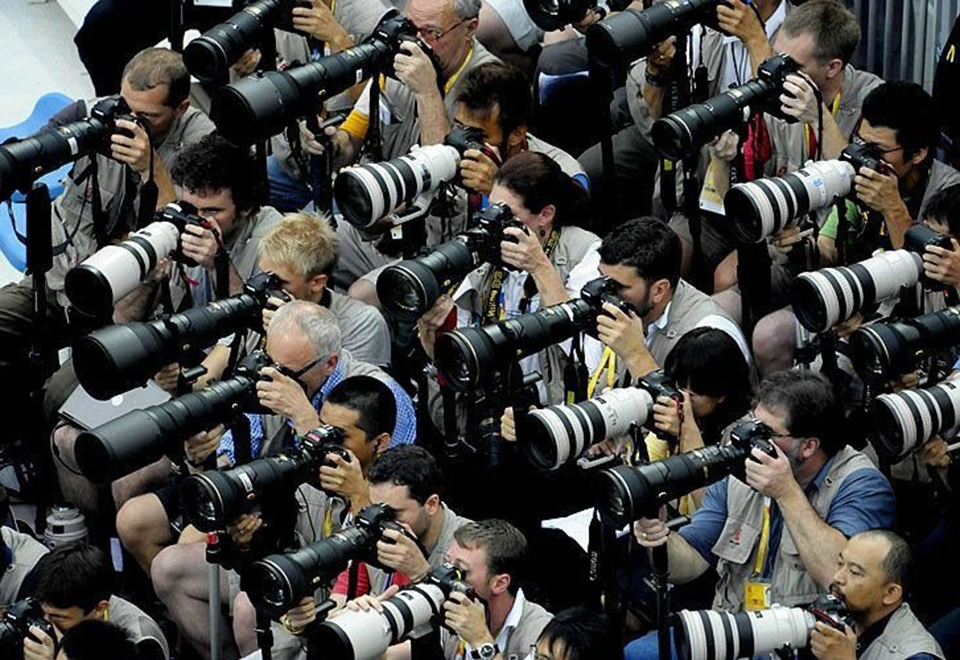
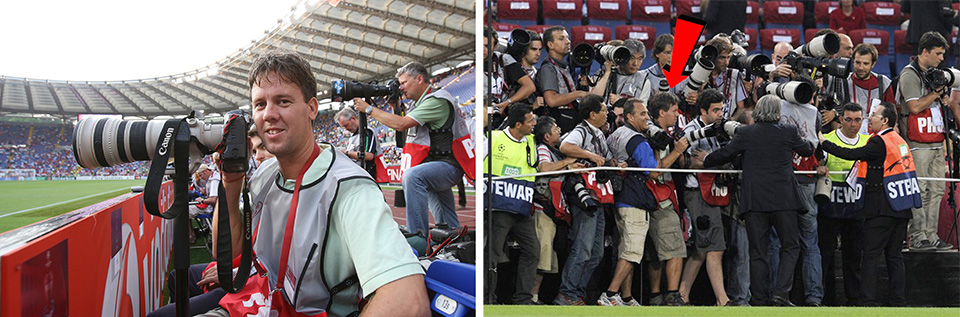
In today's world of rapidly changing technologies, every aspiring photographer faces a huge challenge. You are one of many.
Many years of practice or an expensive camera are no longer necessary to make someone a talented, and in some cases professional, photographer.
Whether you are an aspiring professional or simply enjoy photography as a hobby, this article gives you five ways to stand out in the oversaturated photography market.
1. Keep developing your craft
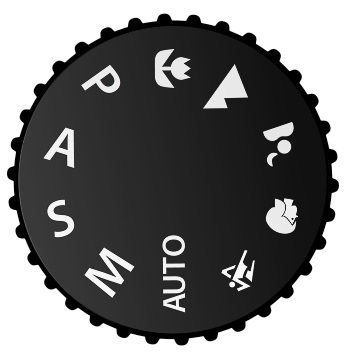
Let's start with the good news. Just because someone has an expensive camera, that does not mean they can take great photos. In fact, very few people want to photograph in anything other than their camera's automatic mode.
Commit yourself fully to mastering every aspect of photography. If you take all your shots fully automatically, first learn how to shoot in semi-automatic mode and finally in fully manual mode.
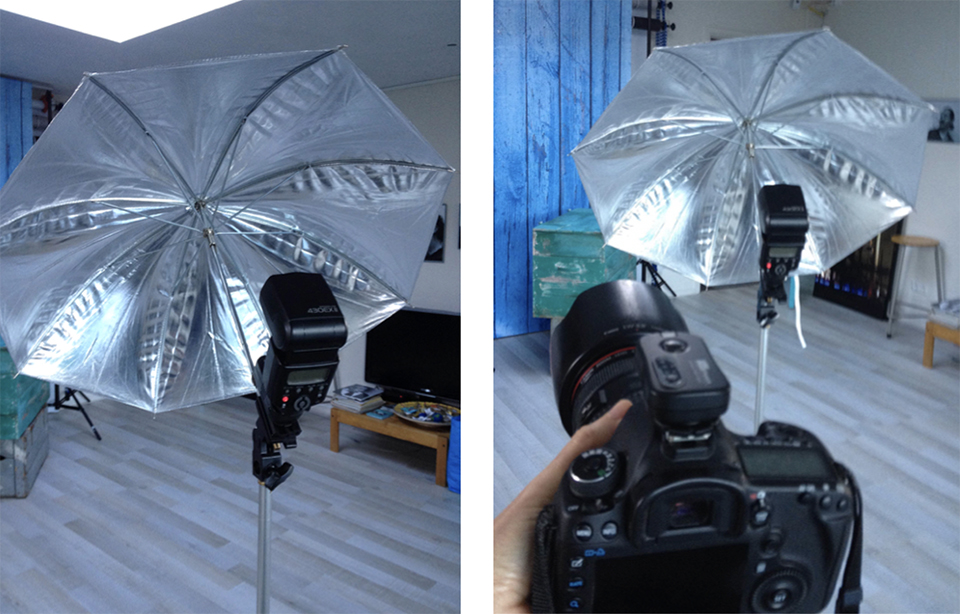
Once you have mastered natural lighting, move on to the flash and other off-camera lighting techniques. Keep developing and challenge yourself to master new aspects of photography. You will always stay one step ahead of the rest.
2. Focus on one specialisation
Just as the photography market has become saturated, the market for photography courses has too. From websites to local and online workshops, there are many ways to learn everything about photography.
To keep developing without becoming overwhelmed by the amount of information available, it helps to focus your attention on just one aspect of photography first. For consistency, limit the resources you use as well.
This same strategy of limiting your areas of expertise also applies if you want to become a professional photographer. Narrowing your focus makes it much easier to grow your skills quickly, and you will also attract clients you genuinely want to work with.
Once you have built up a wealth of experience, you can start expanding your skills and specialisations. Ultimately, it is of course to your advantage to have as broad a range of skills and experience as possible. That means you are versatile and can take on many different jobs.
If you become a professional photographer, even more comes your way and you are expected to learn about all kinds of business skills.
You will need to set up accounts, work on acquiring clients, schedule assignments, sort out tax matters and rules, and get your finances in order. Elja recently wrote a helpful article about the last point.
3. Use only workable new technology
Regardless of how many features your camera has, it ultimately comes down to producing a good photo. Sometimes a new camera packed with features can make your work too complicated.
I remember the time I had to photograph for a business client with my new camera. I had not yet mastered the new feature I wanted to use because I had read positive stories about it.
The fiddling and frustration this caused meant that I never tried the technique again. Of course, I could have thought this through and tried it out earlier. That would also have saved the client a lot of annoyance.
If you invest in new technology, make sure it improves your workflow rather than hindering you. Take the time to practise until it feels like second nature. And always have a backup plan, learn to improvise, because technology can always fail.
4. Develop your social skills
Being a successful photographer does not just mean having good technical skills. Your social skills need to be in order too. You need to be good with people.
As a professional photographer, it is not unusual to be complimented on your work before the client has even looked at your photos. It is mainly about the atmosphere you create, making people feel comfortable before you have even provided them with a service.
Even if you do not photograph people, you have contact with them. For example, to arrange photo shoots or sell your services. Practise your social skills and get good at putting a smile on someone's face. Even when they are not standing in front of your camera.
5. Network and exhibit your work
Another positive aspect of the growing interest in photography is the huge increase in communities for photographers. From Instagram and Facebook groups to local Meetups, there are many places to meet fellow photographers.
Take part in communities and look at the questions and discussions others have. Share your work there to get feedback from others and make improvements accordingly. Do not be afraid to join in and offer your own constructive criticism.

Conclusion
I think it is still possible to stand out in the photography industry and even make a living from it. But it does not happen by itself. You will have to work incredibly hard for it. That applies to many more professions than just photography.
And for a hobby photographer, it is more enjoyable when the photos you take stand out instead of disappearing into the endless mass. Try to give your photos depth by putting a unique piece of yourself into them. Think carefully about what you want to express with your photos and you will see that people immediately look at them differently.
What do you think of today's evolving camera technology? Do you have your own tips and strategies for standing out as a photographer in a saturated market? Let us know in the comments!
About the author
Michelle Peeters is fotografe en oprichter van DeuxBleus Fotografie. Michelle herkent het bijzondere in het gewone en het gewone in het bijzondere. Ze heeft zich nooit willen specialiseren en is daardoor van alle markten thuis.
You might also like
-
 Using social media as a photographer
by Fabian Viester
-
 Technology for colouring black-and-white images
by Michelle Peeters
-
 Review: 85 Photo Challenges (for children)
by Aäron Nasarany
-
 Documentary review: Step into the World of Lars van de Goor
by Michelle Peeters


8 comments
-
 harry wrote on Friday 19 January 2018 at 03:22 | reply
Great article! I'll keep it as a hobby.
Translated from Dutch. -
 Alexander wrote on Friday 19 January 2018 at 07:48 | reply
Try to develop your skills outside of photography as well. What I mean by this is try to set up something that can add value for a client. Example: if you're active in the music industry, see if you can learn the skills to also design covers for a CD or DVD. And look for a good partner to have physical photos, posters, etc. printed. A client is usually happiest when they don't have to do too much themselves. One stop bying! And perhaps the most important tip. Dare to say no to a potential client.
Translated from Dutch. -

 Michelle Peeters wrote on Friday 19 January 2018 at 11:07
| reply
@Alexander: one stop buying; a really good one! And as a photographer, the step to designer (for example for making your own flyers) isn't that big either. Because you often have already started working with the Adobe suite or other graphics applications anyway. The more you can do yourself, the better, is my own experience.
Translated from Dutch.
That 'saying no to a potential client' is a difficult one. Especially when you've just started and are happy with every assignment! I myself have never regretted taking on everything. You do occasionally fall flat on your face spectacularly, but it's enormously educational! -
 Theotje wrote on Tuesday 23 January 2018 at 18:14
| reply
If all talented photographers adopt these tips, the only distinguishing factor left is: Luck.
Translated from Dutch.
As Sting once said in an interview about his early days; one in a million you make it. -
 Jo Daniels wrote on Tuesday 23 January 2018 at 19:09 | reply
For a year now, after a long time, I have been intensively engaged in taking photos again. With my camera and the included KIT lens, 18-55mm, I have explored as broadly as possible.
Translated from Dutch.
After reading this article I realize that I should not only think about a next lens but also, whether, and where I might possibly want to specialize. -
Michelle Peeters wrote on Tuesday 23 January 2018 at 19:13
| reply
@Jo: you don't have to! But it's useful to focus (especially at first) on what you're really interested in. So that you can learn to excel in it.
Translated from Dutch. -
Jo Daniels wrote on Tuesday 23 January 2018 at 19:34 | reply
Thank you Michelle, for your clarifying feedback!
Translated from Dutch. -
 guest wrote on Tuesday 23 January 2018 at 19:49 | reply
For me, it is mainly about the enjoyment I get from photography.
Translated from Dutch.
If my family, friends and acquaintances like my photos, that is more than enough for me. There are so many people walking around who pretend to know what a good or a bad photo is, that I no longer care about it at all. From my own experience, I have experienced that the "connsaisseurs" flatly contradicted each other when assessing my photos. Therefore, in my opinion, this article is intended more for the so-called autodidact who wants to measure himself against the professional photographer than for the well-meaning amateur.
Have your say
Please note: Articles older than a week can only be commented on by signed-in visitors.Would you still like to comment? sign in or create a free account.
Become a better photographer every week
A practical photography tip in your inbox every week.
38,836 photography enthusiasts already receive the tips! More about the weekly mail. Or keep up to date via  Facebook.

Elja Trum
Photofacts; everything to do with photography!
Would you like to take better photos and keep up with what is happening in photography? Photofacts publishes articles that teach you something about photography — from a product announcement to a practical shooting tip or a look at a website. Photofacts covers photography every day and is a hobby project of Elja Trum's that got out of hand. The articles are written by a team of volunteer authors. If you would enjoy writing one or more articles for Photofacts, do get in touch.More about PhotofactsPhotofacts is made possible in part by
