

Photographing the silence during coronavirus
Monday 20 April 2020, 13:13 by Michelle Peeters | 11,203 views | 1 commentThis article was translated from Dutch with the help of AI. Read the original.
The Netherlands is quiet. Due to the coronavirus crisis, we are staying at home en masse, and this is clearly visible in places that are normally very busy. A fun challenge for many photographers, who want to capture this (hopefully) once-in-a-lifetime event for posterity.
This article is a collection of photos by various amateur photographers in different places across the Netherlands.
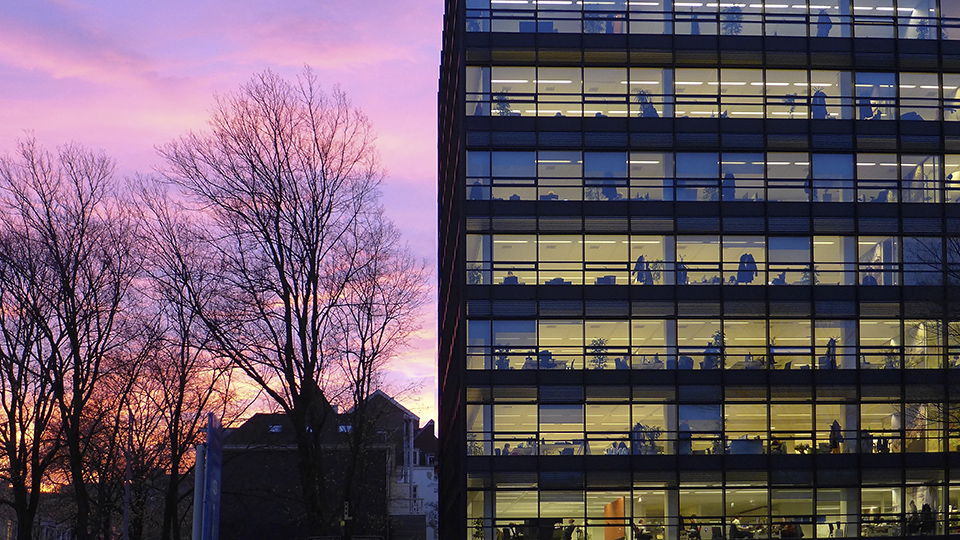
Jacqueline van den Bos, Amsterdam
A piece about photographing in the city. I do that quite often. I made series of the canals when there were still tourists around. The question is then: how do you make original photos of a worn-out subject?
Everyone photographs the same places in Amsterdam. To have a typical memory of it. That means the real Amsterdam elements have to be in the shot, otherwise it could be any city. You cannot go far wrong with the canal houses, the canals...
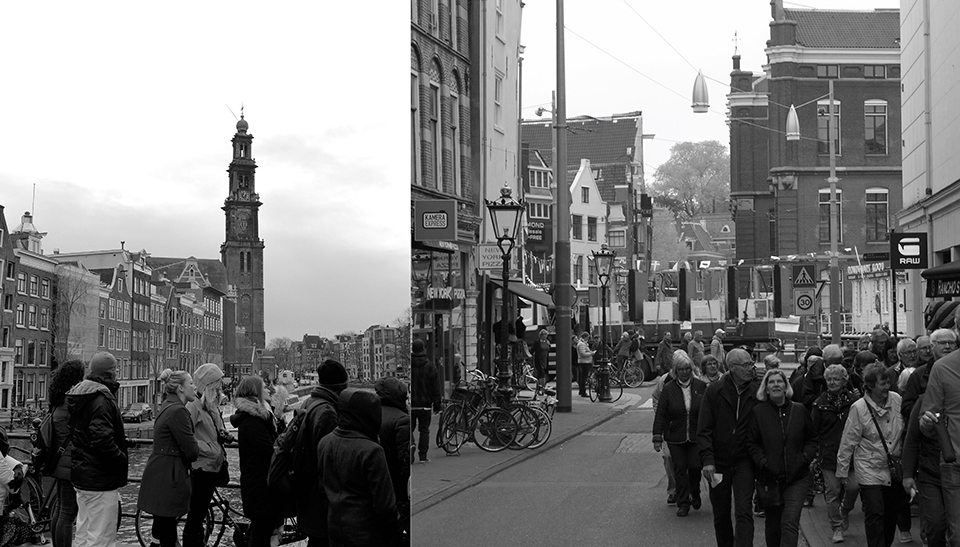
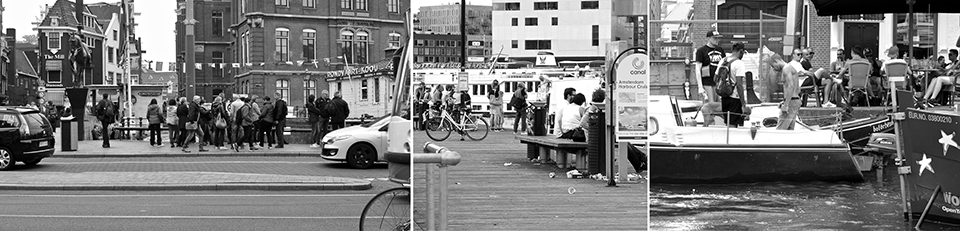
Because it is usually insanely busy, I often started photographing small things in the past. A black-and-white series was the result. I also went out once to photograph the tourist misery. Those were not beautiful photos, but ugly ones.
And now there is the coronavirus crisis. Something you could never have expected has now happened: unique! The city is empty and deserted in the places that are always so busy. Museumplein, Leidsestraat, the canals, the Dam, the Red Light District, the museums: there is not a soul around.
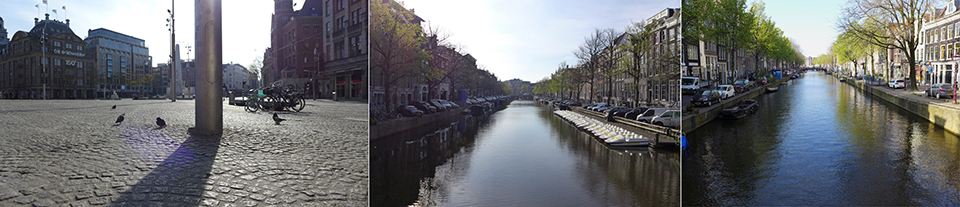
With a bit of sunshine, the buildings seem even larger than before. To emphasise that and the space, I used a low viewpoint a few times.
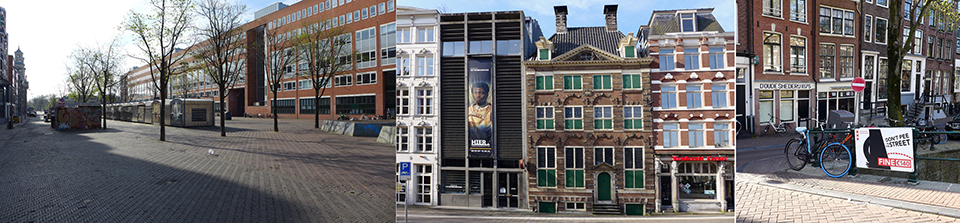
The Red Light District now looks even more like an amusement park whose entrance gates are still closed... Yet it still felt cramped there: the few people who were around moved like ghosts through the narrow streets...
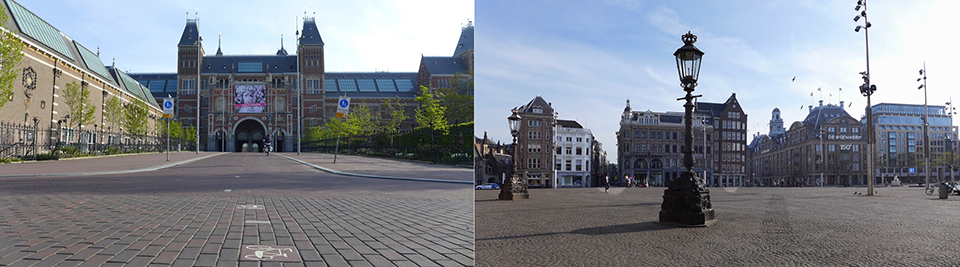
The photos include a few examples from the three series. I have to admit that I always photograph in a hurry, and I am also ashamed of the rough edges, the flares and simply the laziness with which I take photos. It could be better!
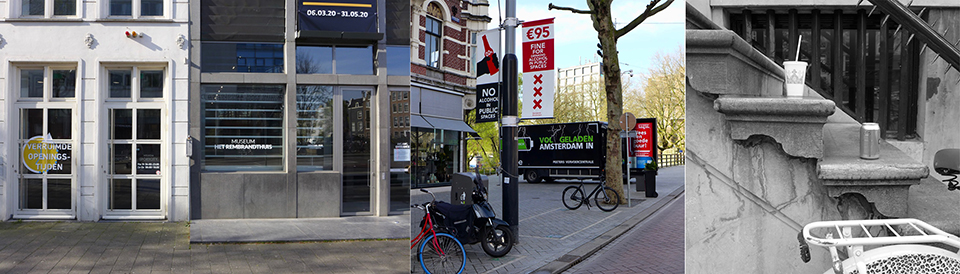
You can say that, because I have no idea, still not. Amsterdam is my city, though, and I move through it like a fish in water. There is still a lot undiscovered, even here! Everything also changes while you are standing there.
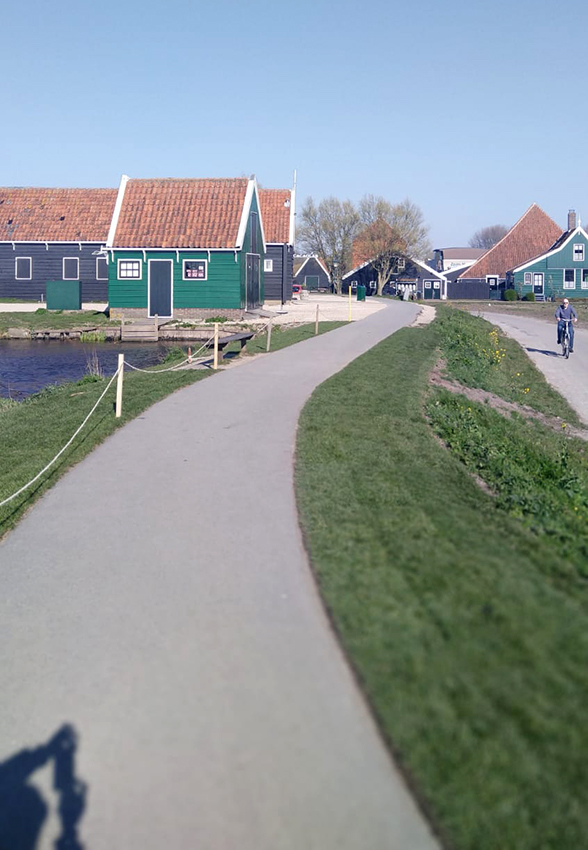
Maureen Linsen, De Zaanse Schans
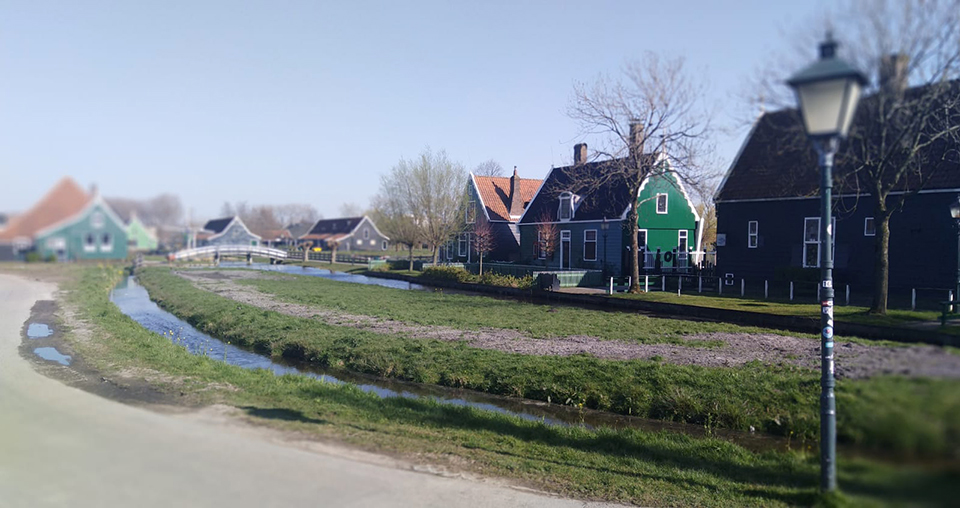
The paradox of coronavirus, Zaanse Schans belongs to the residents again for a while! Zaanse Schans has been deserted by the coronavirus crisis. The windmills still turn for a few hours every day, despite the lack of spectators. Good for the mills, and for the millers. But everything else is closed.
As international tourism dried up in recent weeks, the crowds at Zaanse Schans also disappeared. While a record 2.4 million visitors were counted last year, it is quiet now. The visitors from Asia had already disappeared at the end of January, followed by Italy, Spain and the rest of the world from April onwards.
Sander Peeters, the beaches of Scheveningen
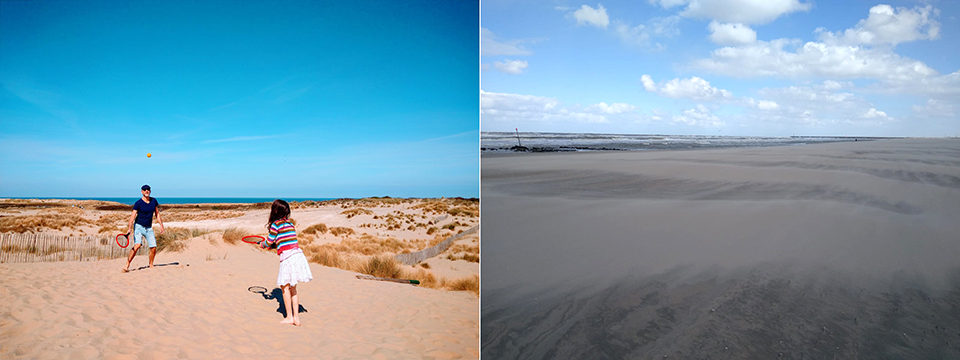
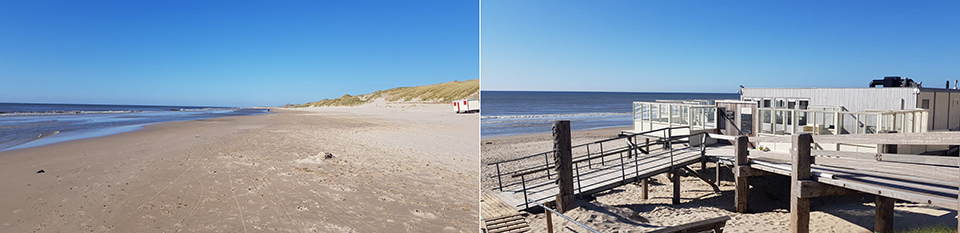
The number of walkers and recreational visitors in Scheveningen is also limited, and they stay well apart. The Scheveningen boulevard remains largely deserted. Despite the fine spring weather, the Dutch appear to be heeding the urgent call not to go to the beach and to stay at home, to prevent the spread of the coronavirus.
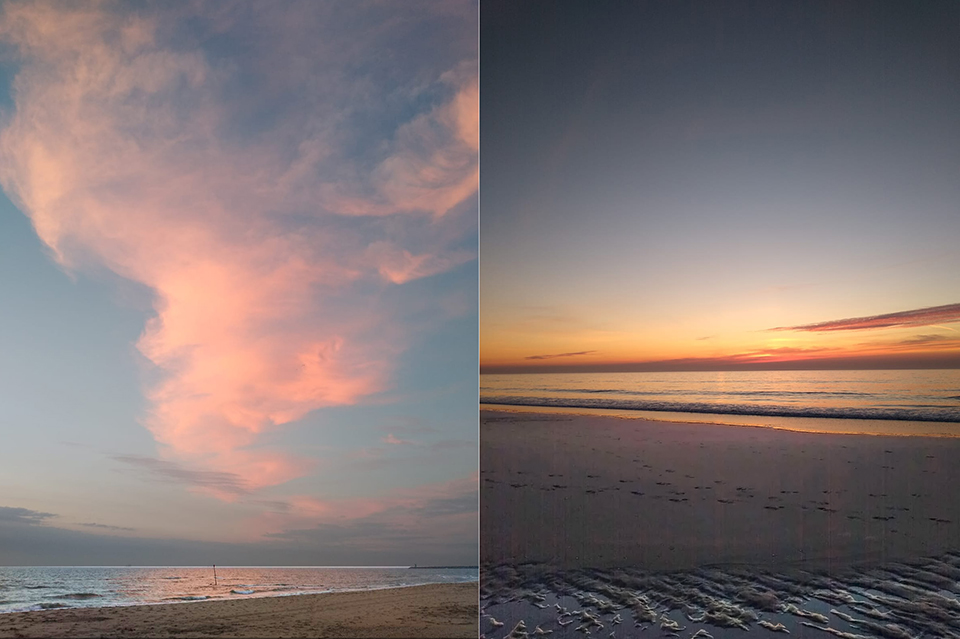
Yet things still go wrong here and there. There are also people here who create crowds. That is why the car parks at the beaches have been closed. Many people refuse to walk, except on the beach, of course, so that already reduces the number of visitors considerably.
Patrick Stassen, Eindhoven
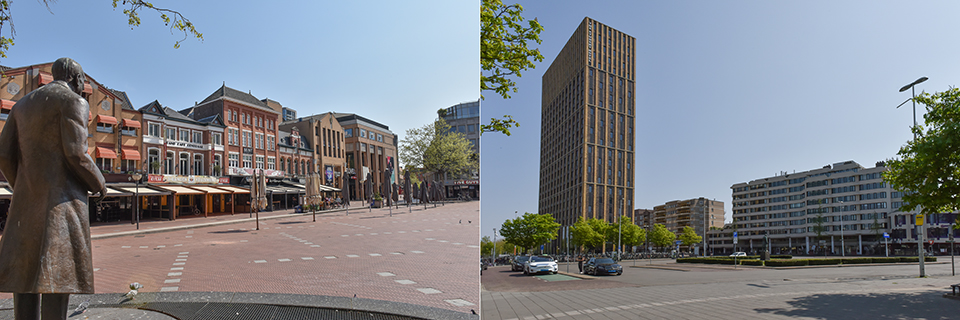
I made my photo series in the centre of Eindhoven. I started in Eindhoven's main nightlife area, Stratumseind. Normally, it is full of outdoor seating, occupied all day long. It leads to one of the busiest junctions in Eindhoven city centre: Kerkstraat, Rechterstraat, Smalle Haven and Stratumseind.
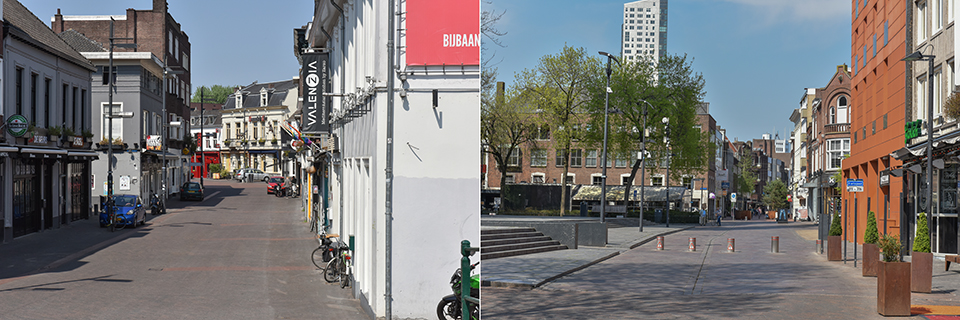
The Catharina Church is to the left here. Eindhoven's Markt is always full of people and pleasant outdoor cafés. The parasols now stand still and deserted. On the Markt, where Frits Philips looks out over the crowd, Frits watches sadly as the normally busy terraces lie quiet, deserted and almost desolate.
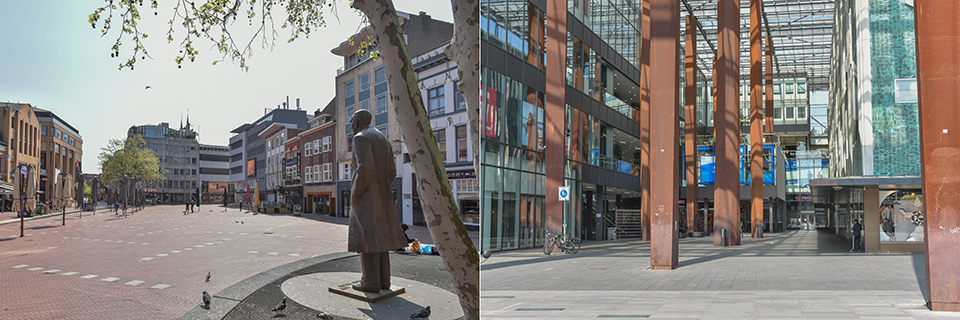
On the almost completely deserted 18 Septemberplein, the few people sitting there seem to have trouble with 150 cm... The deserted Piazza square, where it is normally very busy, is where people enter the city from the various car parks and public transport.
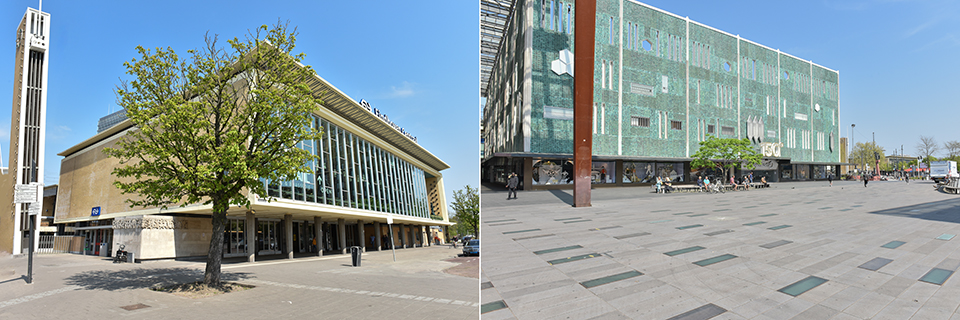
At Eindhoven Central, the square where taxis wait for passengers who do not come. Eindhoven Central, whose name sounds grander than what we see! Nobody there. The Corona City Express has become a ghost train.
Ellen Kok, IJsselmeer, Enkhuizen and Soesterduinen
Dutch still lifes in Enkhuizen. Normally such a lively little town, it is bizarre to see it like this! One sailing ship, our Pinguïn, does not make a summer. Our little sailboat as a lone ranger. Nice to be able to wave from a safe distance to photographers Manuela Paradiek and Mandred.
All harbour facilities are closed, but as long as we stay on and around our boat, our little home, it is allowed. It is lovely to be able to sail!
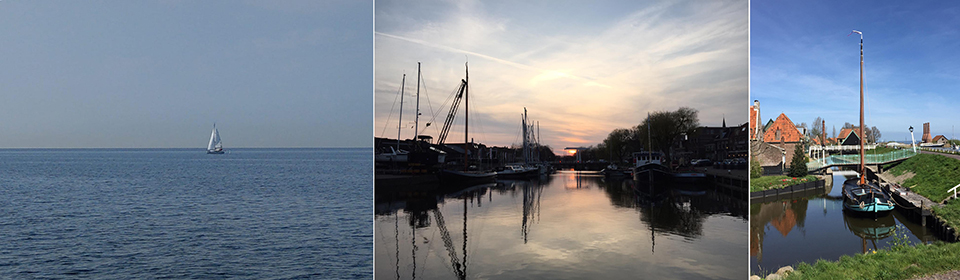
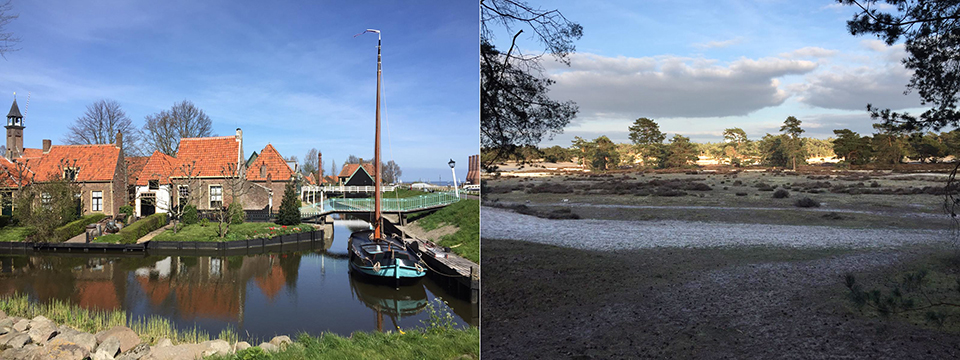
Enkhuizen and the deserted Soesterduinen national park
Casper Nooij, Alkmaar area
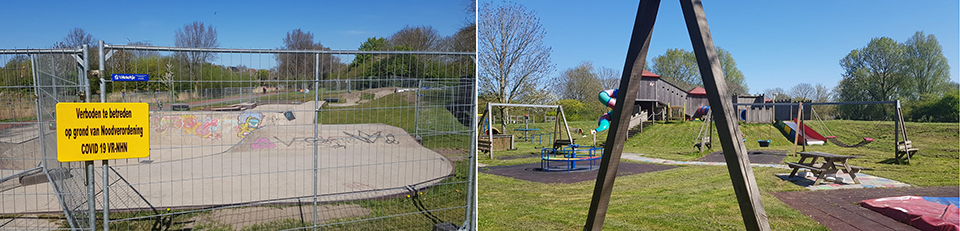
A skate park in the local park was fenced off this week because, after several warnings from police officers, the youngsters would not keep their distance of 1.5 metres. It is of course quite difficult to keep that distance in such a place, so it is good that it has been closed off.
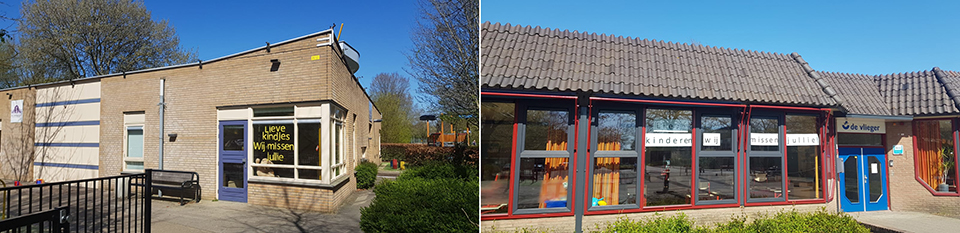
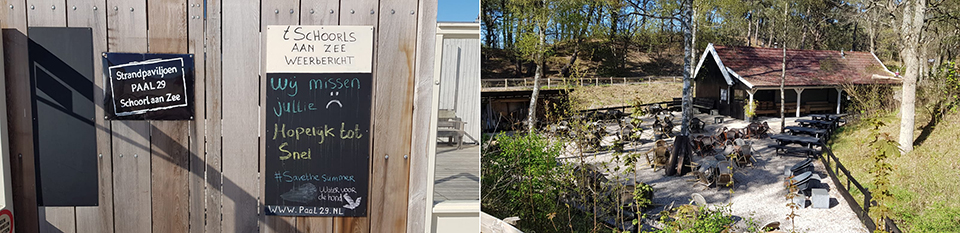
The text on the window of the after-school and pre-school childcare centre also clearly shows how much the children are missed. And that may well be mutual...
Jack Hoenjet, Maastricht
On Sundays, Maastricht normally has many shoppers and walkers. So I was curious to see what city life was like now that many shops and cafés are closed. I went out with my Lumix camera to capture it. The weather was slightly misty, which made the city seem even more bleak.
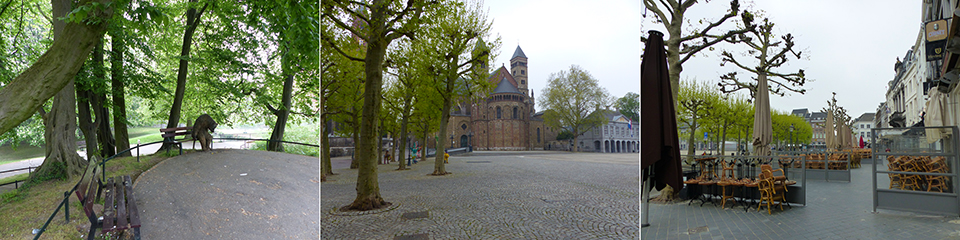
Where had all the walkers in the City Park gone? The fresh spring colours of the trees were faded by the deserted paths. There used to be events in the city every Sunday, but now the Vrijthof, with the stately Basilica of Saint Servatius, looked desolate.
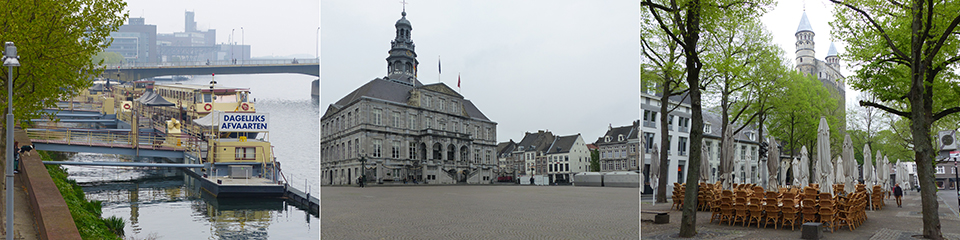
The terraces at the cafés, normally completely full, were now marked by stacked chairs and folded parasols, showing that city life had come to a standstill. I then walk through Wolfstraat, where shoppers are conspicuous by their absence.
Closed shops, some on the verge of bankruptcy or already available to rent. At Onze Lieve Vrouweplein, the same dead view of empty terraces. I make my way via Stokstraat to St Servaasbrug, where a handful of people are walking or cycling.
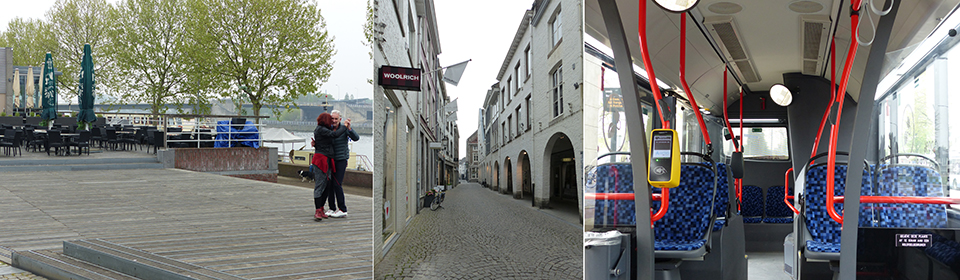
At Kesselskade, I see a couple dancing the tango to music coming from the speaker in their bicycle pannier. People are still trying to have some fun by making use of the empty space around them. The tour boats that normally sail on the Meuse are lying idle.
In the Markt, the sound of the town hall carillon spreads across the empty square. Only the pigeons are pecking at the last scraps of food between the cobblestones. I slowly leave the centre and take an almost empty city bus further on to my neighbourhood.
The lone female bus driver sits behind a chain that passengers are not allowed to pass. As I leave the bus, I wish her a pleasant day, and she wishes me good health.
Bharat Wasti, Kathmandu, Nepal
The Nepalese government has also decided that all schools, sports facilities, cinemas, temples and places where more than 25 people can gather must close. Tourists and passengers are also no longer being allowed into Nepal. Nepal is locked down.
There is no coronavirus according to the government, but they want to prevent it with these measures. There are ten testing kits available for five million people. There are no gloves, no face masks, no ventilators and no hospital beds available. There is nothing, absolutely nothing!
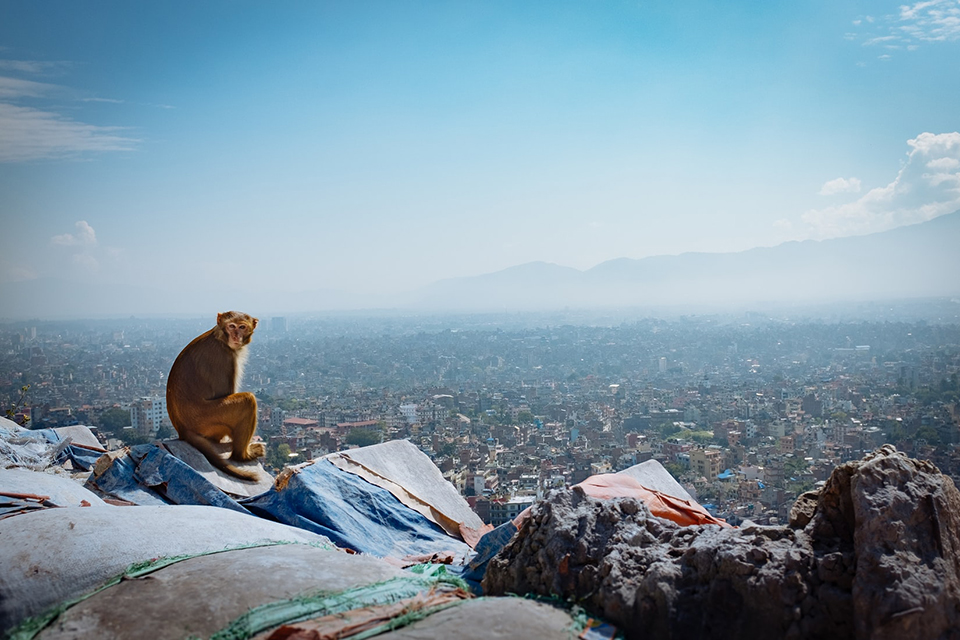
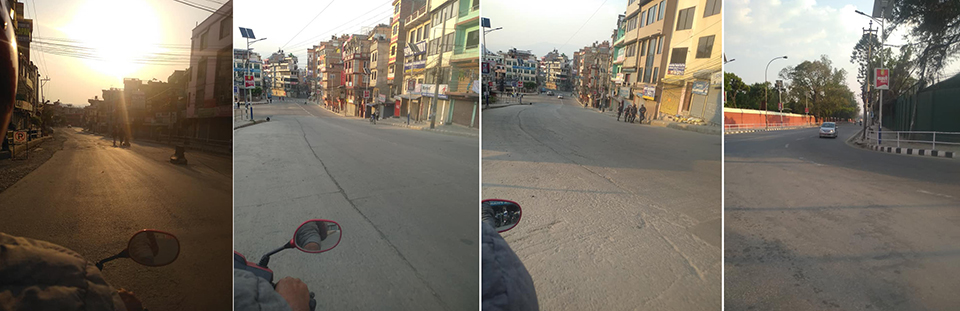
It is not hard to guess how the problem will be solved there... Kathmandu has turned into a ghost town. The squares that are normally completely packed are now deserted. The roads that are normally jammed with traffic day and night, the eternal traffic jams, are now empty.
A historic moment, because the other side of this story is that the air is clean again and you can see the Himalayas now that the smog has cleared.
Send in your own contribution!
Have you taken any good photos of the silence caused by the coronavirus crisis? Send them in, possibly via Wetransfer if they are large files, to michelle@photofacts.nl. The best examples will appear in a future article on this subject. I am very curious!
About the author
Michelle Peeters is fotografe en oprichter van DeuxBleus Fotografie. Michelle herkent het bijzondere in het gewone en het gewone in het bijzondere. Ze heeft zich nooit willen specialiseren en is daardoor van alle markten thuis.
You might also like
-
 The quiet brought by coronavirus, photographic contributions
by Michelle Peeters
-
 Stuck at Home and Back to Basics
by Lorette Janssen
-
 6 tips to get through the pandemic
by Michelle Peeters
-
 Het Perfecte Plaatje; Silence and nude models
by Elja Trum
-
 And 7 more tips to beat pandemic boredom
by Erik van Rosmalen
-
 Creative ideas to try at home
by Michelle Peeters
1 comment
-
 guest wrote on Tuesday 21 April 2020 at 16:22 | reply
Stunning
Translated from Dutch.
Have your say
Please note: Articles older than a week can only be commented on by signed-in visitors.Would you still like to comment? sign in or create a free account.
Become a better photographer every week
A practical photography tip in your inbox every week.
39,027 photography enthusiasts already receive the tips! More about the weekly mail. Or keep up to date via  Facebook.

Elja Trum
Photofacts; everything to do with photography!
Would you like to take better photos and keep up with what is happening in photography? Photofacts publishes articles that teach you something about photography — from a product announcement to a practical shooting tip or a look at a website. Photofacts covers photography every day and is a hobby project of Elja Trum's that got out of hand. The articles are written by a team of volunteer authors. If you would enjoy writing one or more articles for Photofacts, do get in touch.More about PhotofactsPhotofacts is made possible in part by
