

Photographing without light
Monday 23 September 2019, 14:41 by Michelle Peeters | 8,939 views | 6 commentsThis article was translated from Dutch with the help of AI. Read the original.
Photographing seems impossible without light. Yet you can photograph in absolute darkness. You then have to choose the invisible parts of light, such as infrared, or even completely different parts of the spectrum, such as X-rays or radio waves.
'Ordinary light', the light you can see with your eyes, is also the light your camera captures. There is more that is possible, though not for everyone.
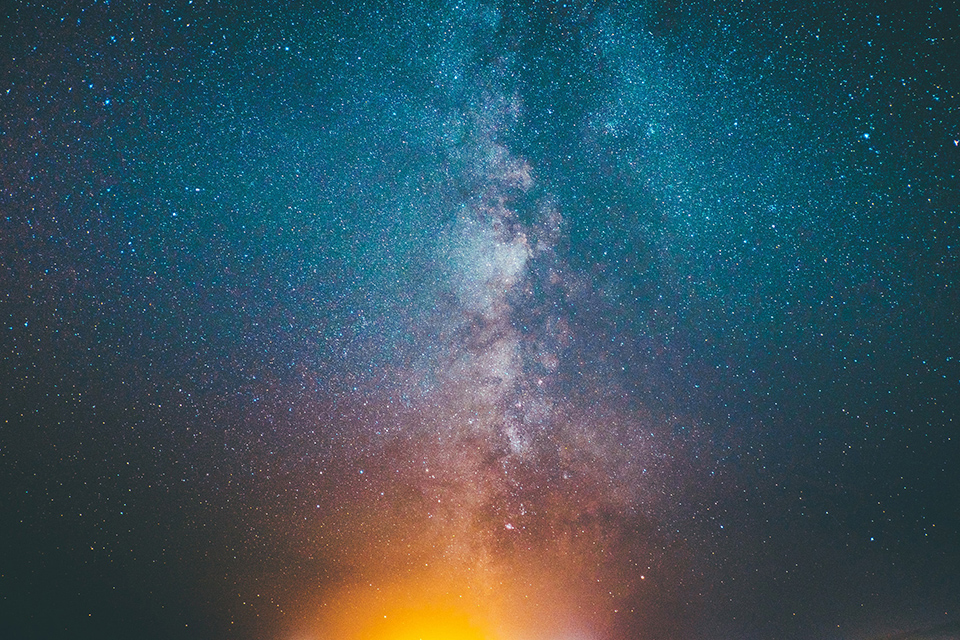
The wavelength of visible light varies roughly between 380 and 780 nanometres. Electromagnetic radiation with shorter wavelengths includes ultraviolet, X-rays and gamma rays, while longer wavelengths include infrared, microwaves and radio waves.
Rainbow
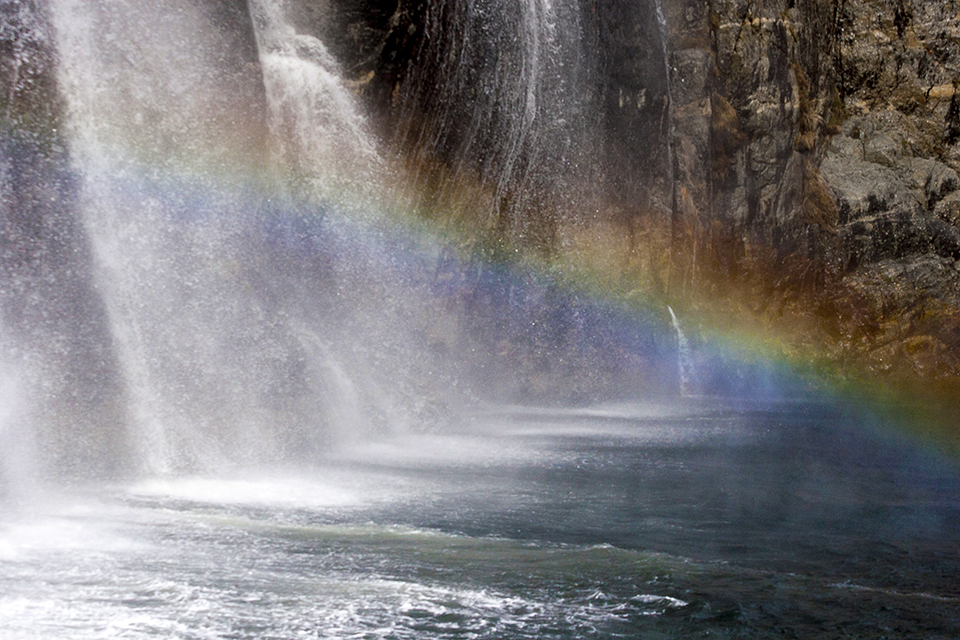
White light, incidentally, contains all the colours of visible light. This becomes clear when it is split by a prism into the different colours, from violet to red. You can also see this phenomenon in a rainbow. With a double rainbow, you can clearly see that the colours in the outer arc appear in reverse order.
Photographing in visible light is difficult enough already, but I will not go into that here. This article focuses on photographing with other wavelengths.
Not really photography
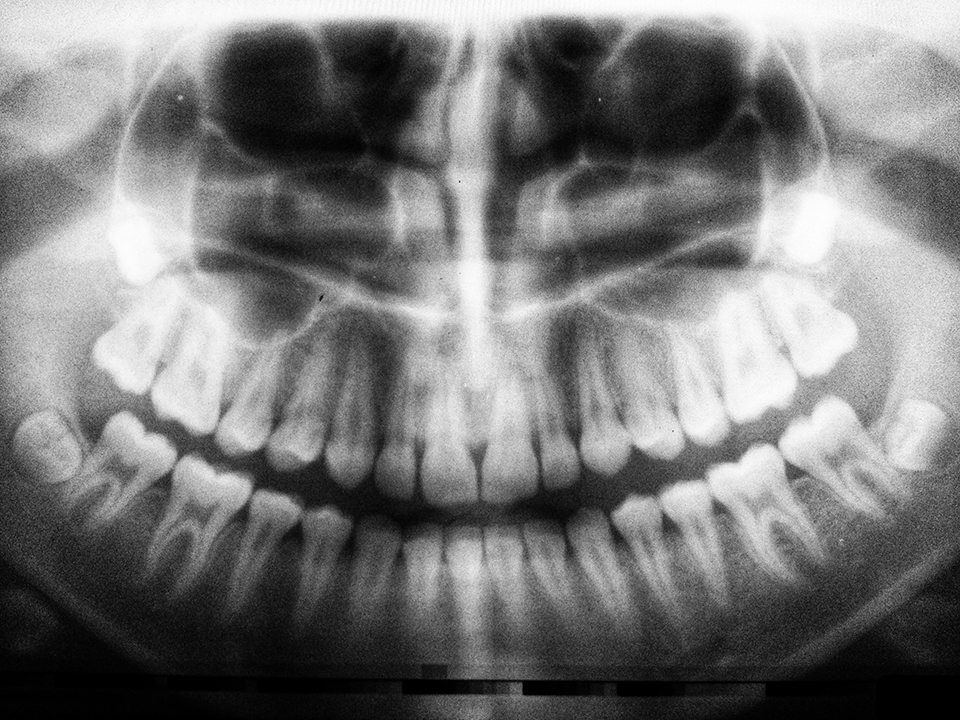
For some images, the term 'photography' is not really correct. You can still refer to an X-ray image as 'photography', especially when it is made using plates or film sensitive to X-rays.
But it becomes more difficult when you are talking about, for example, a PET scan, which uses gamma radiation. A gamma source emits this radiation, and detectors in a ring around the patient receive it after it has travelled through the patient. An image can be formed from the measured values, based on the differences in decay.
Other imaging techniques are also used in medicine: computed tomography (CT scan, using X-rays), isotope scans (using radioactive isotopes), MRI scans (based on magnetic resonance) and SPECT scans (Single Photon Emission Computer Tomography, using radioactively labelled substances).
Visible light is also used, for example during keyhole surgery (endoscopy), while images can also be made using sound. Think of ultrasound scans of unborn babies, for example.
The technique used obviously depends on what the doctor treating you wants to see. The associated costs will also always play a part. In short, a camera is by no means always involved when an image of your body is made.
Astronomy
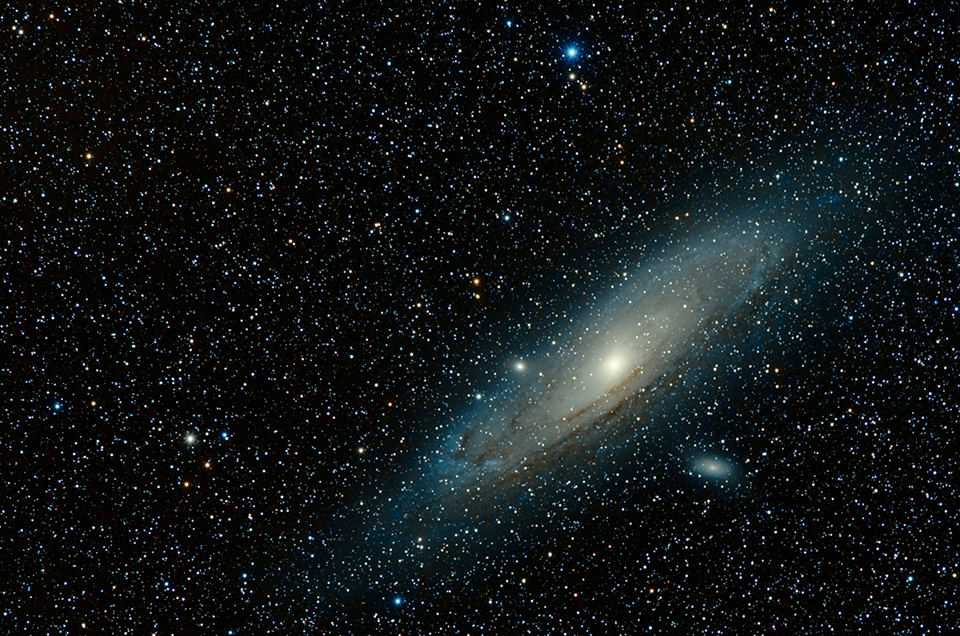
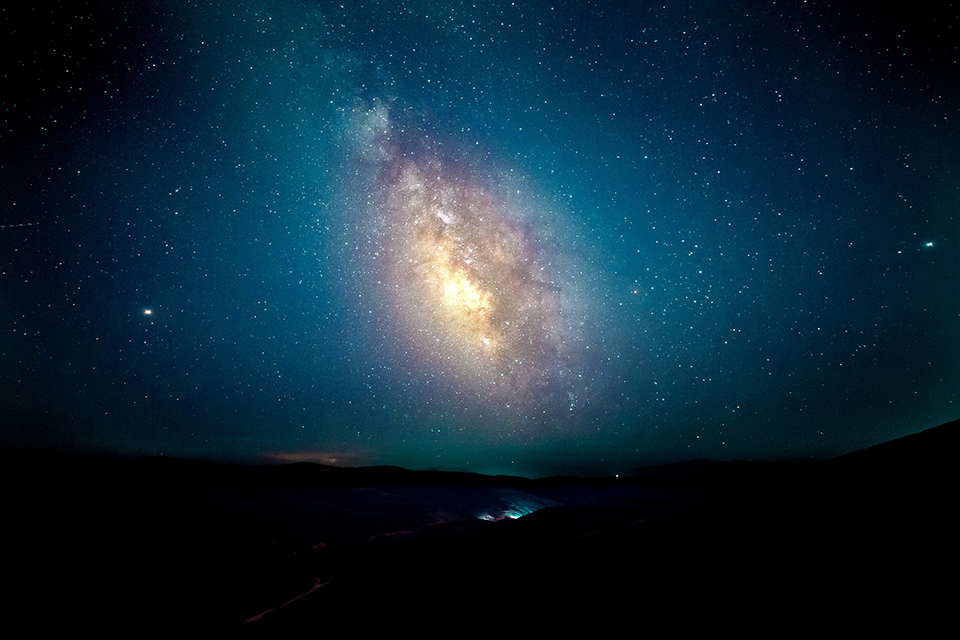
Observations in visible light have long been combined with images from other parts of the spectrum. The information from the separate images complements each other, helping us learn a great deal about the origin and workings of the universe.
An image in visible light can, for example, be combined with images in ultraviolet, infrared, X-rays and /or radio waves, allowing highly complex phenomena such as quasars to be analysed. The only difference between visible light and radio waves is the wavelength, so why could you not make images with them?
The information received in radio waves does of course have to be converted into a visible image for the viewer. But assigning a colour to each radio wavelength solves that problem.
To form images, you do not need to transmit signals at the desired wavelength, as with radar. You need a receiver that is sensitive to the desired wavelength. If you want to capture the infrared light from a galaxy, you need to make sure your telescope is sensitive to it.
The same applies to images made with radio telescopes. They receive the radio radiation emitted by objects in space, such as stars and galaxies.
In the Netherlands, for example, there is a radio telescope in Dwingeloo with a diameter of 25 metres. The Westerbork synthesis radio telescope consists of fourteen linked 25-metre radio telescopes, which together form the images.
Because much radiation does not pass through the Earth's atmosphere, it is a great advantage that quite a few telescopes now orbit the Earth, and the Sun. They can be used to make images in infrared and X-rays, for example. The best-known telescope is Hubble, which takes images in visible light and infrared.
The optical telescopes on Earth have now become so much better that they can compete fairly well with those in space when it comes to images in visible light.
The VST (VLT Survey Telescope) has a 2.6-metre-diameter mirror, with the 268-megapixel OmegaCAM camera attached to it. This is used to take snapshots in visible light of interesting areas that can later be studied in greater detail by the large telescopes.
Infrared
Infrared has become an everyday part of our lives and, unlike space photography, is well within our reach. Every household has at least a handful of remote controls for various devices that emit infrared signals.
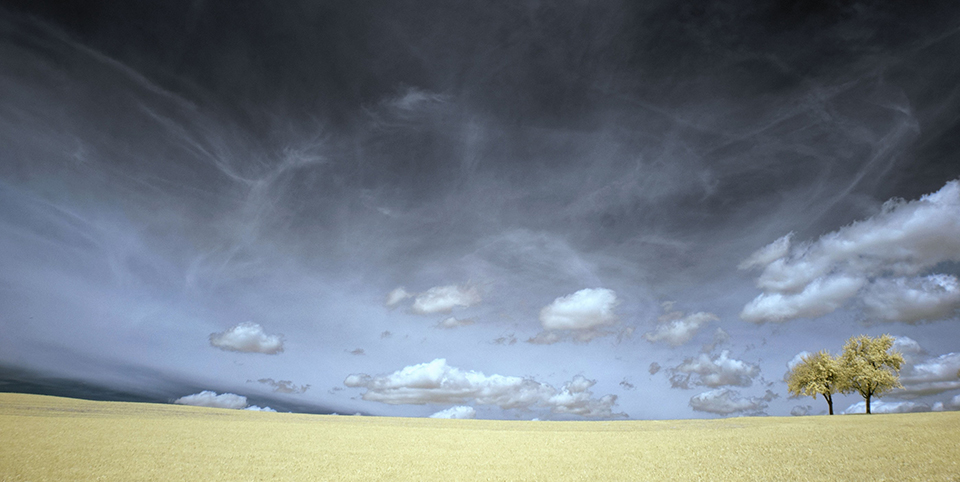
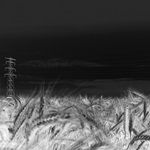
In photography, you can also use infrared light to create different kinds of images of landscapes, for example. In the analogue era, you could simply put infrared film in your camera to capture only that part of the spectrum. The photos then look dramatically different, with white leaves and black skies.
Digital cameras are less suitable for this because most sensors have an IR filter, which prevents infrared light from being captured. Enthusiastic photographers sometimes have this filter removed so that, together with an infrared filter, they can capture only that part of the light.
If you have not had this done, the photos initially look very strange, with only a heavy red haze and deep contrasts. Using this red image as a starting point, you can create all kinds of versions in photo-editing software, making these contrasts stand out even more.
This is really a matter of taste. The image is often converted to black and white, but it does not have to be. You can also add a base colour, such as sepia.
Trail camera
A trail camera is a special type of camera that uses infrared. It contains an infrared sensor that can detect movement in the area and then take a photo or video. These cameras are often used to monitor the presence of wildlife in a particular area.
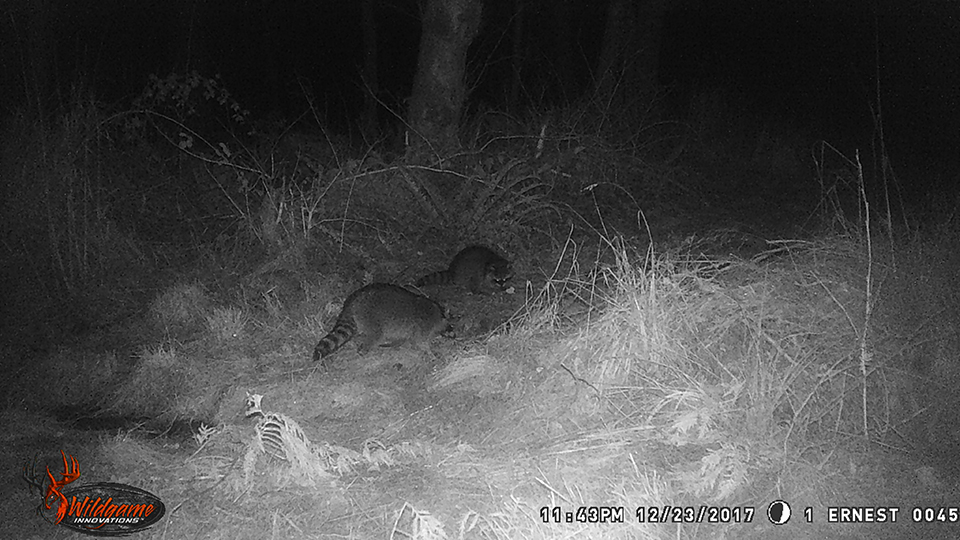
The same technique is also used in security cameras. During the day, the photos are simply captured in visible light, in colour, but at night an infrared flash or light is used to capture wildlife without it noticing.
These flashes come in two types: low-glow and no-glow. Low-glow uses light with a wavelength shorter than 900 nanometres, which some animals may be able to see. No-glow flashes use light with a wavelength longer than 900 nanometres, usually 940, which is completely invisible.
The advantage of low-glow flashes is that they have a greater range, allowing you to monitor a larger area. There are also versions with white-light flashes, so ordinary visible light, but you will not make any friends with those, as they will eventually scare wildlife away.
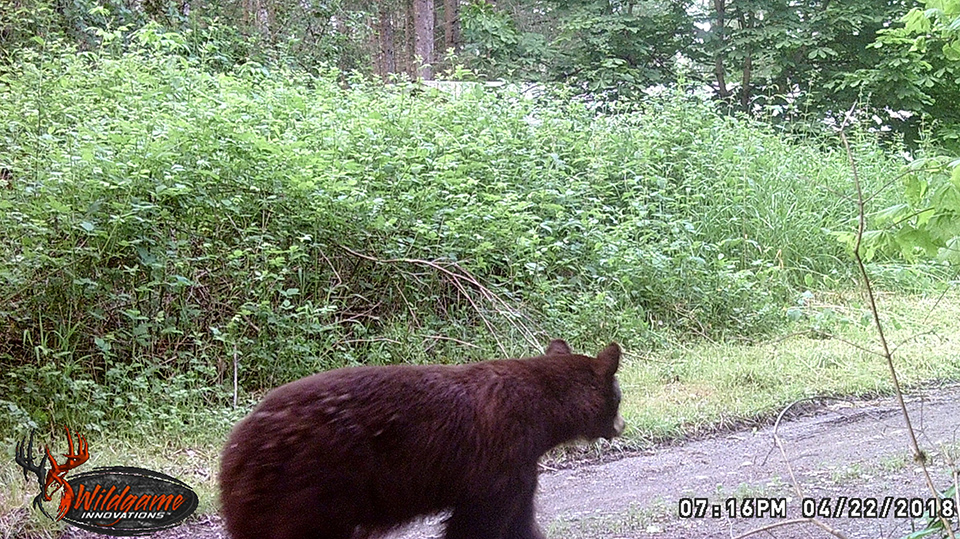
You often hear about photos in which no animal can be seen, or only half an animal. This is probably caused by the camera's reaction time, about 0.3 seconds. Although that seems pretty fast, the animal that triggered the camera has often already disappeared from view.
You should also avoid placing the camera too close to bushes, whose branches move in the wind. The quality of the photos during the day is often quite good, while night photos often suffer from motion blur because a passing animal moves too quickly to be captured sharply.
Personal experiences
If you have had any interesting experiences photographing without light using one of the methods above, or perhaps another method, we would love to hear about them in the comments!
About the author
Michelle Peeters is fotografe en oprichter van DeuxBleus Fotografie. Michelle herkent het bijzondere in het gewone en het gewone in het bijzondere. Ze heeft zich nooit willen specialiseren en is daardoor van alle markten thuis.
You might also like
-
 How do you get started with infrared photography?
by Nando Harmsen
-
 Model shoots in small spaces
by Frank Doorhof
-
 10 tips to save hard drive space
by Nando Harmsen
-
 Optimise the Distribution of Space
by Nando Harmsen
-
 DIY: Taking infrared photos using an old floppy disk
by Elja Trum
6 comments
-
 Nigel wrote on Monday 23 September 2019 at 15:22 | reply
Nice article Michelle!
Translated from Dutch. -

 Tanja Thomas
wrote on Monday 23 September 2019 at 21:21
| reply
Nice article Michelle. I do have to say that the bear passing in front of my wildlife camera is a fairly young Black Bear (black bear) and not a Grizzly. Recognizable by not! having a thick 'bump' in its neck. The quality of wildlife cameras also depends heavily on the weather conditions. Here we are in the Pacific North West, which really has a wet climate. Often the lens is covered with moisture, condensation and /or rain, which also makes the photos blurry.
Translated from Dutch. -
 Michelle Peeters wrote on Tuesday 24 September 2019 at 11:31
| reply
Thanks Tanja! I was already having some doubts, but I’ll adjust it in the article. Do you clean the lens regularly then?
Translated from Dutch. -
 Lauran van Schilt wrote on Tuesday 24 September 2019 at 15:39 | reply
With a real infrared camera you can also photograph models in a very unusual way. Fun to do every now and then.
Translated from Dutch. -
 Ronald wrote on Tuesday 24 September 2019 at 15:59 | reply
I also know a really fun way to take photos don't use a camera!
Translated from Dutch.
What an article who has an infrared camera at their disposal in the Netherlands 500 amateur photographers? -
Michelle Peeters wrote on Tuesday 24 September 2019 at 16:07
| reply
@Ronald: you can get an infrared camera for just a few tens of euros nowadays!
Translated from Dutch.
Have your say
Please note: Articles older than a week can only be commented on by signed-in visitors.Would you still like to comment? sign in or create a free account.
Become a better photographer every week
A practical photography tip in your inbox every week.
38,937 photography enthusiasts already receive the tips! More about the weekly mail. Or keep up to date via  Facebook.

Elja Trum
Photofacts; everything to do with photography!
Would you like to take better photos and keep up with what is happening in photography? Photofacts publishes articles that teach you something about photography — from a product announcement to a practical shooting tip or a look at a website. Photofacts covers photography every day and is a hobby project of Elja Trum's that got out of hand. The articles are written by a team of volunteer authors. If you would enjoy writing one or more articles for Photofacts, do get in touch.More about PhotofactsPhotofacts is made possible in part by
