

The influence of position and perspective on composition
Saturday 26 October 2024, 14:14 by Nando Harmsen | 2,637 views | 8 commentsThis article was translated from Dutch with the help of AI. Read the original.
It is easy to hold the camera up to your eye, point it and take a photo. It is worth thinking about that first. What do you want in the frame, and how should it appear in the frame? Look at lines, the division of areas, and especially the background.
I was recently at the Commanderie des Templiers in France for my masterclass. The participants could get to work photographing this ruin of the Knights Templar. I pointed out the possibilities you have when it comes to composition.
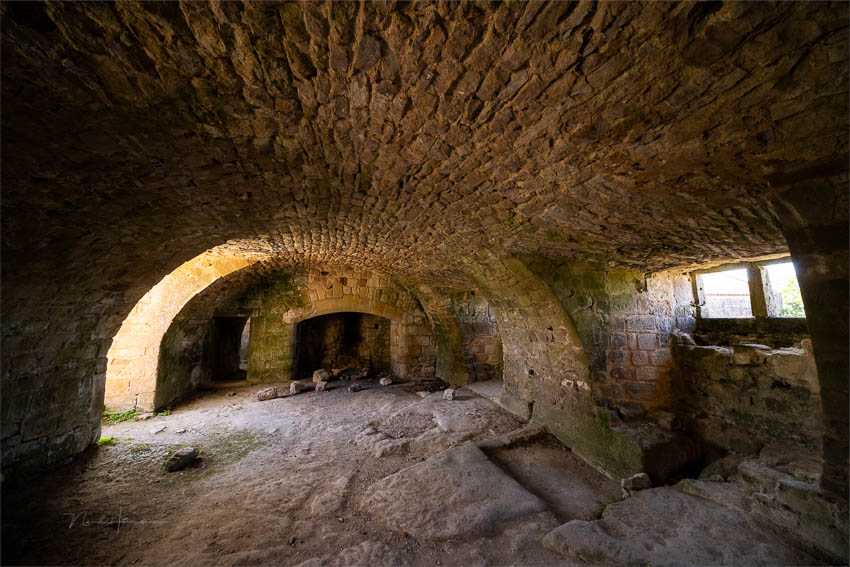
One of the rooms in the ruin has a few beautiful arches and openings through which light falls. Together with the doorway, it is possible to create an unusual composition. How it turns out depends on your position.
The choice of standing further to the left or right determines a few things. First of all, the thickness of the strip of light that falls on the arch. Do you want it to appear as a thick or a thinner arch in the photo?
There is more, because you should also look at the background. More light can be seen through the doorway. The strip of light from the arch curves nicely over this light in the background. It forms a beautiful curve that fills the frame.
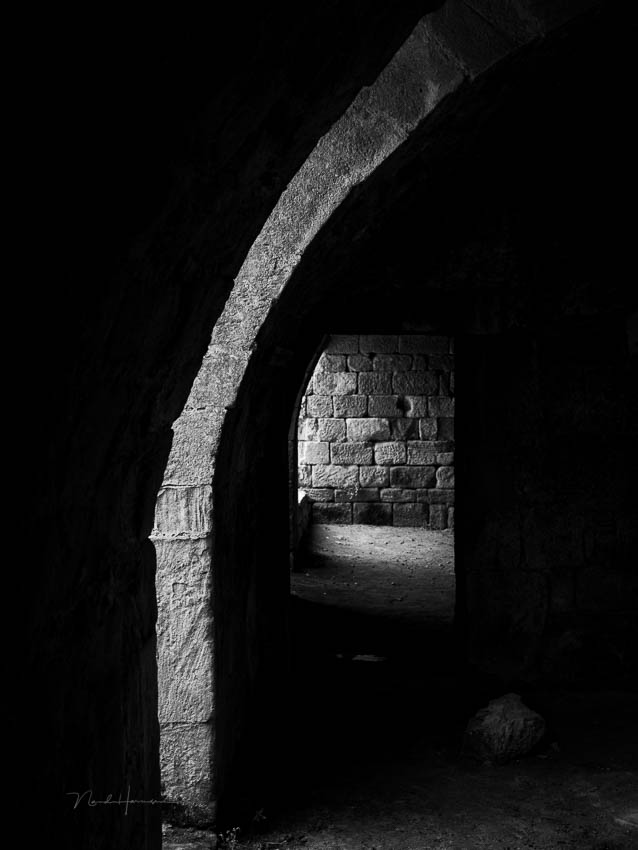
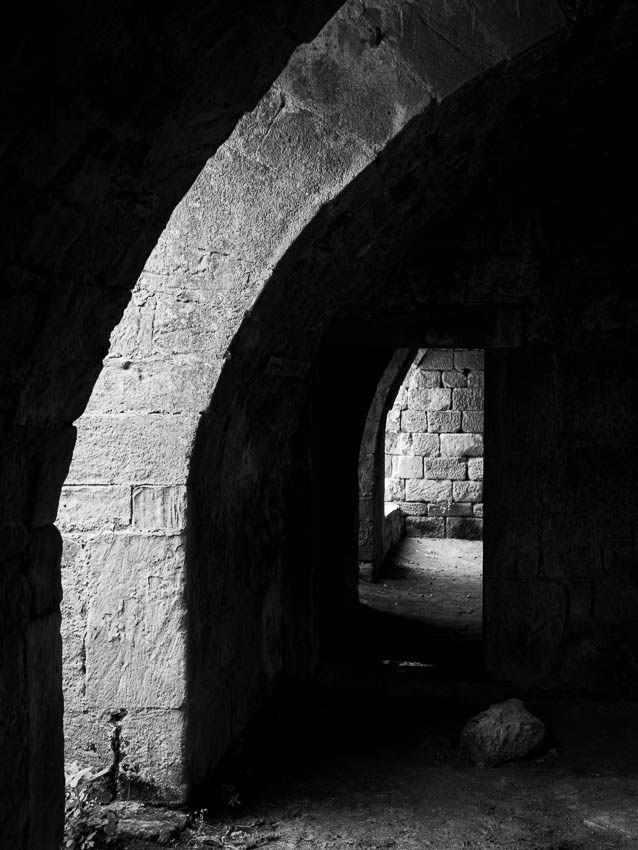
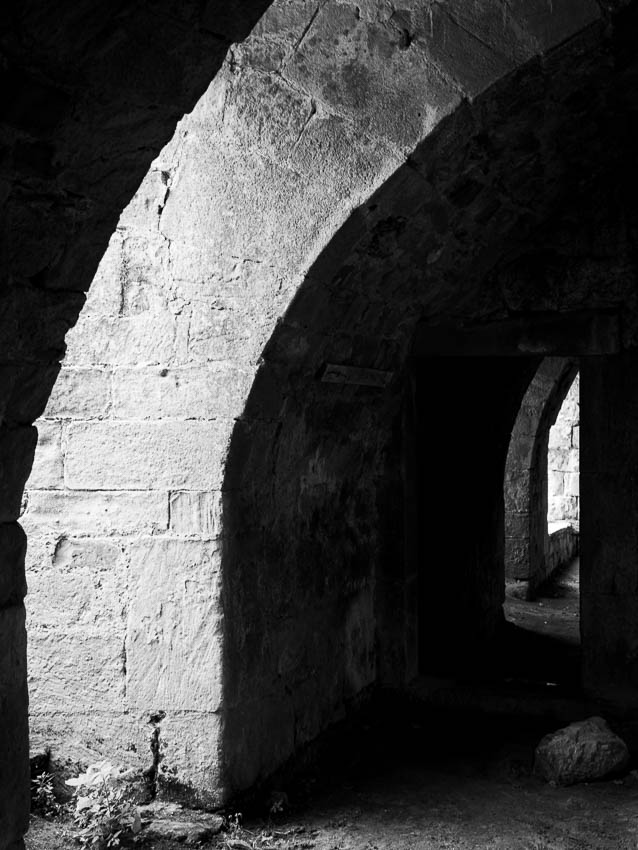
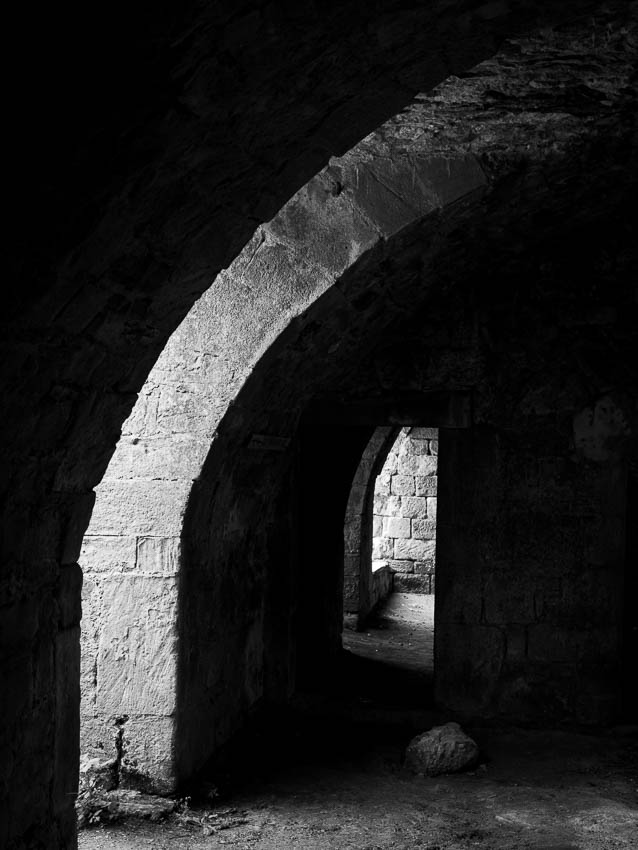
The position you choose therefore has a major influence on how this light appears in the photo. It can make or break the photo. Finding the best balance is a matter of trying things out and looking carefully.
This is a good example of the possibilities available to you when finding and creating a pleasing composition. Always take your time, and do not rush. Otherwise, you will miss the opportunity.
This particular case is a ruin where very few people come. The chances are small that you will ever end up there. But the principle applies to every composition you make. So do not take a photo too quickly, but look at how your subject can appear in the frame.
About the author
Nando Harmsen has been photographing for more than 40 years. He specialises in wedding photography and landscape photography. Nando also gives talks, workshops, masterclasses and photo trips, and regularly reviews new and interesting equipment.
You might also like
-
 Play with perspective to influence lines
by Nando Harmsen
-
 Choose the right perspective
by Nando Harmsen
-
 10 Mistakes When Creating a Composition
by Nando Harmsen
-
 Central composition, or not?
by Nando Harmsen
-
 Try Putting Your Camera in a Different Position
by Nando Harmsen
-
 Composition tip: Creating a sense of urgency
by Elja Trum
8 comments
-
 Donald Willemsen wrote on Tuesday 29 October 2024 at 11:12 | reply
A good story Nando, but I could just as easily copy/paste my response to another, otherwise good story of yours about high/low viewpoints.
Translated from Dutch.
It is sometimes easier said than done. As a viewer, you often don't know the circumstances in which a photo came about. That makes it more difficult to say something about a photo. At least, that's what I think. Those circumstances do influence how a photo was taken and is the way it is. -

 Nando
wrote on Tuesday 29 October 2024 at 17:03
| reply
Nando
wrote on Tuesday 29 October 2024 at 17:03
| reply
With all due respect, the viewer cannot always determine whether a different perspective or position would have worked better. It is therefore your task as a photographer to do that. You as a photographer must find the best place, viewpoint, position and perspective.
Translated from Dutch.
If you have a disability, that can result in limitations to what is possible. You then work within the possibilities that are available to you.
Sometimes something is not possible, sometimes it takes more time and effort. But it should not be an excuse not to achieve the best possible result. -
 Ron wrote on Tuesday 29 October 2024 at 13:09 | reply
Thank you, Nando.<br>Over the past year, similar tips from you have made me photograph differently.<br>I used to quickly take a picture, now I first take in the situation and then take photos from different viewpoints and heights, it is very satisfying when "the" photo is among them.<br>And sometimes I really don't see a nice photo in it and the camera just remains hanging by my side ??<br><br>Regards,<br>Ron.
Translated from Dutch. -
-
 guest wrote on Wednesday 30 October 2024 at 11:29 | reply
That's exactly the point, Nando. The viewer can't determine that, as you say, but the viewer therefore thinks they can determine it when you read the comments people sometimes make along the lines of: wouldn't it have been better to move a bit more to the right or wouldn't it have been better to choose a slightly higher vantage point?
Translated from Dutch. -
-
Donald Willemsen wrote on Wednesday 30 October 2024 at 11:40 | reply
That's exactly the point, Nando. As you say, the viewer can't determine that, but the viewer now does think that they can determine it, as evidenced by comments such as: 'you should have gone a little more to the right/left' or you should have chosen a somewhat higher vantage point' , then you get a better composition' .
Translated from Dutch.
I always get the feeling then that I have to defend myself and give an explanation of what I can and cannot do and/or what the circumstances were. -
Nando
wrote on Wednesday 30 October 2024 at 12:15
| reply
I don't think you need to defend yourself or give reasons. A simple 'thank you for the suggestion' is enough, or possibly: 'that wasn't possible.'
Translated from Dutch.
You don't have to account for the choices you've made, or the limitations you're up against. Let alone that you have to give an excuse.
See it as well-intentioned advice. It's not an attack that you need to parry.
Have your say
Please note: Articles older than a week can only be commented on by signed-in visitors.Would you still like to comment? sign in or create a free account.
Become a better photographer every week
A practical photography tip in your inbox every week.
39,103 photography enthusiasts already receive the tips! More about the weekly mail. Or keep up to date via  Facebook.

Elja Trum
Photofacts; everything to do with photography!
Would you like to take better photos and keep up with what is happening in photography? Photofacts publishes articles that teach you something about photography — from a product announcement to a practical shooting tip or a look at a website. Photofacts covers photography every day and is a hobby project of Elja Trum's that got out of hand. The articles are written by a team of volunteer authors. If you would enjoy writing one or more articles for Photofacts, do get in touch.More about PhotofactsPhotofacts is made possible in part by
