
6 tips for telling stories with your photos
Monday 30 March 2020, 20:10 by Huub Keulers | 21,081 views | 4 commentsThis article was translated from Dutch with the help of AI. Read the original.
Stories are an integral part of human culture, and storytelling is timeless. In photography, this visual concept is often called a 'photo essay' or 'storytelling'.
It is a way for you as a photographer to tell a story with one photo or a series of photos. What few people realise is that there is a difference between photography and visual stories told through photography.
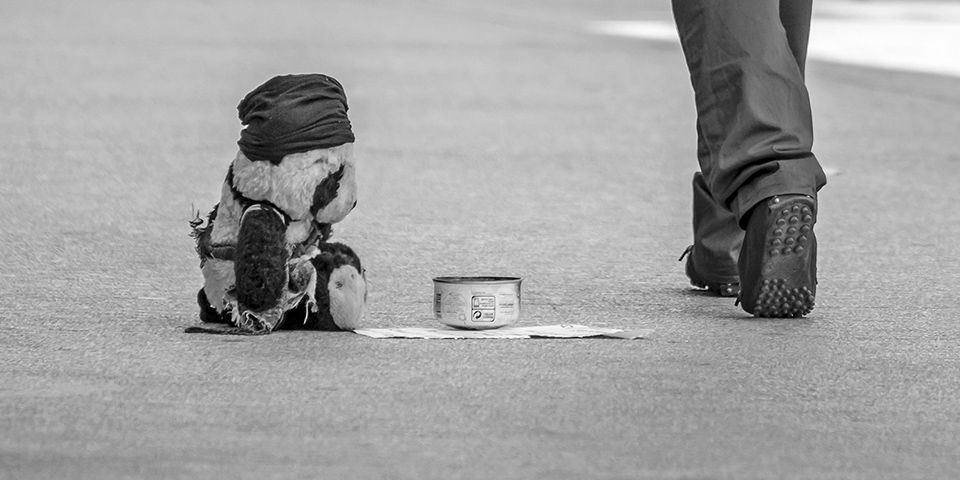
If we consider storytelling an art, then it should actually be contagious, infecting the viewer with feelings they have experienced. The phrase 'a picture is worth a thousand words' justifies the art of visual storytelling, but this of course does not mean that all photos tell a story.
Captions can also be an integral part of a photo story, helping the viewer understand each image. That said, it is important to remember that although captions can increase your understanding of a photo, the photo itself should tell the story, never the other way around.
Below, I describe some tips for your own photo story.
1. Plan, plan and plan some more
Planning is an essential part of the visual storytelling process. Documentary photographer Kaushik Ghosh once said: What your mind does not know, your eyes cannot see.
This is probably most relevant when planning your photo story. You need to plan well in advance to visualise the story. If you carry out these steps beforehand, you will get the photo you need for your story.
Your plan should include selecting the subject, researching the subject, clarifying your subject and finally planning your photos. Think about the type of photos you want to take to convey the message. In a series, your visual story should have an opening shot, a middle section and a closing shot.
Often, during a shoot, you may not be able to capture the photos in the order mentioned above. However, if you keep this order in mind, you can put them in the right order afterwards. Editing your visual story essentially means selecting the photos, not post-processing them in image-editing software, that comes later.
You cannot take your photos without an understanding of the light, composition and choice of camera equipment for your chosen subject. Another important aspect should be the decision to present the story in colour or monochrome.
When editing a series of images, it is good practice to keep your editing process consistent.
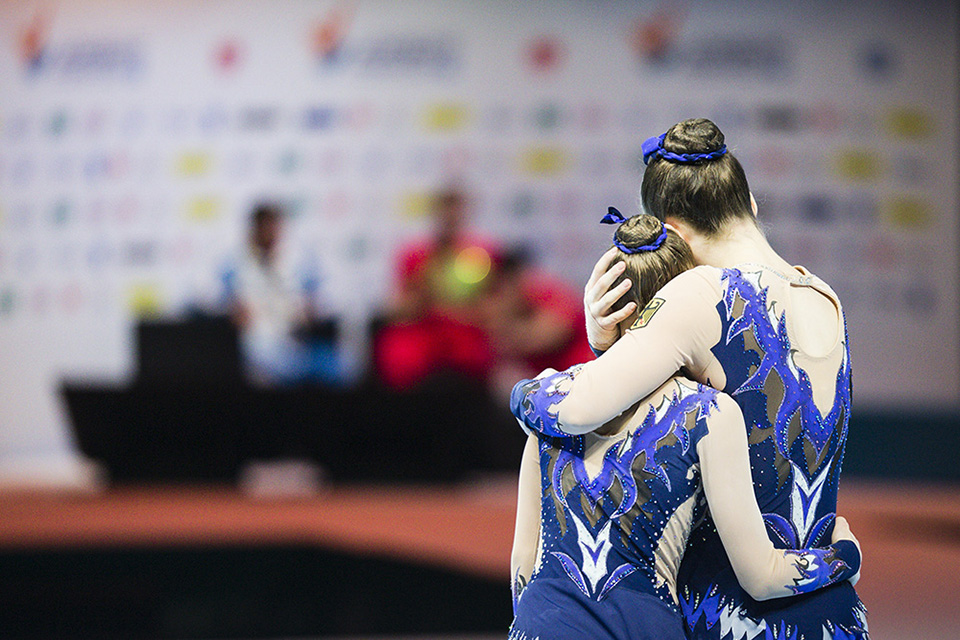
When the youngest member of this trio made a mistake at the end of the routine and was very disappointed, I knew that the shot would not be long in coming.
2. Trust your instinct
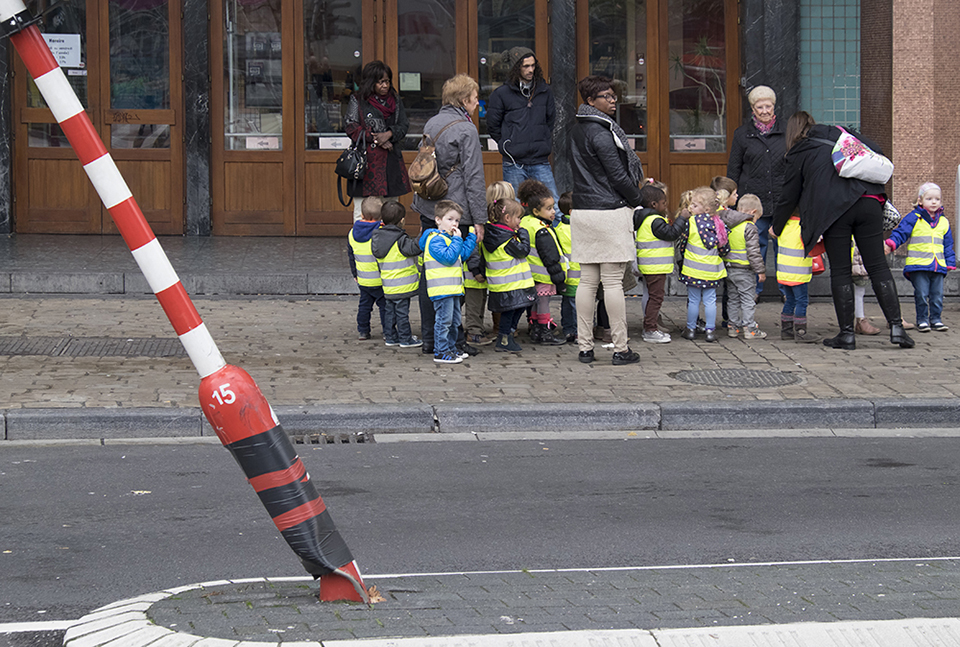
Last year, I walked through the Belgian city of Liège with my camera for a story project about 'Road Safety'. There was a constant sound of car horns as I tried to make my way through the city. My mind was in fifth gear, just like my heart: it was total sensory overload.
In the distance, I saw a small group of children standing still on the pavement. I quickly walked closer because I had a feeling this could be interesting. On the other side of the street, I saw a group of schoolchildren dressed in high-visibility vests amid the chaos.
I tried to find my calm by telling myself 'this is a shot', so I moved closer, raised my camera and pressed the shutter release.
The next moment, however, I saw the bent lamppost that had most likely been hit by a car. I did not hesitate and framed the post, children and supervisors together in one image.
Photography has the ability to capture moments in time that we may never have thought about until we picked up the camera. These are the moments that inspire us as photographers and can help us create our own unique vision.
If you notice something in particular and think it could be a good photo moment, try not to judge the situation too much. Instead, trust your instinct and see how it unfolds before your eyes. But stay safe in the process, common sense and respect should still be on your mind.
3. Make stronger images
You may have some brilliant photos that are technically perfect. However, there are two specific elements that make a strong image even stronger for a photo story.
First, the images must convey a feeling to have an emotional impact on your viewer. Not all photos need to contain a human element to be emotionally moving. It can be anything from a landscape or still life to an animal. The images must evoke a strong emotional feeling in the viewer's psyche.
Second, the images must be carefully 'layered' with meaning. This is how you draw the viewer's attention. This is usually the most difficult part of telling a story with photos.
You may not be able to consciously create images with multiple layers of meaning, but always look out for these layered photos while photographing, selecting and arranging the images for the story.
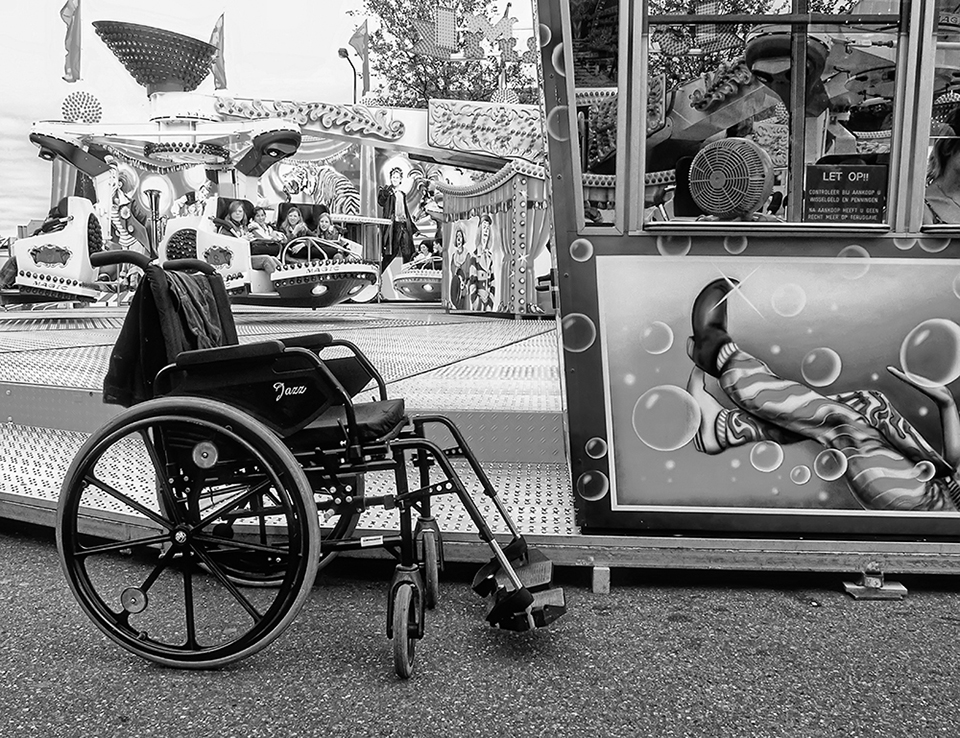
In the background, you can see some young people sitting in the fairground ride. Does the wheelchair belong to one of them? The photo conveys a sense of fun on the one hand, but also has something sad about it.
4. Single shot or a series?
It is often a subject of debate on forums, social media or in photography clubs whether better stories are told with a single photo or a series of photos. In this respect, it is good to remember that a single image is often only a 'half-truth', because it never tells you the basis of a story, namely 'Why?'.
But what does this mean? When we talk about photos, an image may be partly true, but it is only part of the whole truth and a snapshot of the bigger picture. Not all individual images tell a story.
You should not forget that a photo story is nothing more than a compilation of several individual photos, and together they form the visual story. Each individual image is a chapter in the story, and each chapter unfolds towards the climax.
On the other hand, a series of photos allows the brain to process each image as a whole. A series of images emphasises different ideas, while a single image usually emphasises only one idea. Keep in mind that the first and last photos in a series are the most important.
These are called 'target images': the type of photo that opens and closes the series to capture the viewer's attention. It is no different from judging a book by its cover. A strong opening shot will make people stop and hold them in the story from beginning to end.
5. Be original
Originality in photography seems to be becoming secondary for some photographers. It is not always easy to create something unique with the huge number of photos being taken today. However, it is good practice to strive for originality.
Why? Well, it is really not satisfying to copy someone else's work. We have all copied someone else's idea at some point, or been inspired by an image we found online or in a magazine.
It is a human trait, but to stand out from the crowd, you need to bear this in mind when photographing, especially if you want to stand out.
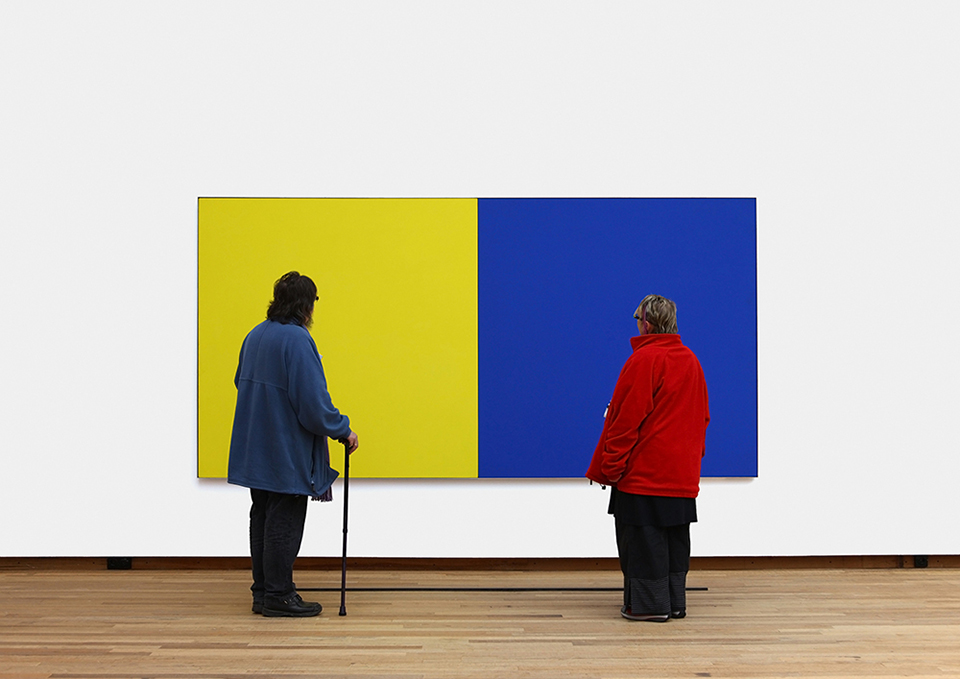
6. Do not be afraid to fail
Fear of failure is linked to fear of rejection and criticism from others, as well as procrastination. Stop thinking that way and free yourself from those negative thoughts. It is completely normal and healthy to fail.
Most successful people experienced failures at first. It is part of improvement and the gateway to success. The same principle applies to photography. Failure will help you understand the formula that suits you best and will ultimately pay off. Go, shoot, fail and grow!
About the author
Huub Keulers is een enthousiasmerende veelzijdige freelance fotograaf woonachtig in Elsloo (Li). Hij is gespecialiseerd in sport-, bedrijfs-, straat-, honden en portretfotografie. Daarnaast is Huub auteur van diverse educatieve fotografieboeken en verzorgt hij allerlei fotoworkshops, masterclasses en lezingen.
You might also like
-
 Visual Storytelling: make an impression with your photos
by Laura van der Burgt
-
 Add More Story to Your Photos with 5 Practical Tips
by Elja Trum
-
 Making Plans, Telling Stories
by Michiel Heijmans
-
 The story behind the photo: a rainbow
by Nando Harmsen
-
 The story behind the photo: Albert van Heugten's rainbow
by Nando Harmsen

4 comments
-
 Patrick wrote on Wednesday 1 April 2020 at 14:08 | reply
Nice article, this brings photography back to the essence of sharing with images📸👍.
Translated from Dutch. -
 guest wrote on Wednesday 1 April 2020 at 15:05 | reply
Beautifully described how I can look differently and be present and what happens then.
Translated from Dutch.
Thank you! -

 Huub Keulers
wrote on Wednesday 1 April 2020 at 16:06
| reply
Huub Keulers
wrote on Wednesday 1 April 2020 at 16:06
| reply
Thank you Patrick for your response. That was exactly what the article was intended for
Translated from Dutch.
-
 Cornel.ph wrote on Wednesday 1 April 2020 at 16:17 | reply
Good story. I kept thinking that as a 'narrative photographer'you depend on the moment, (and then I'm always just too late) but here I learn and see that such a moment can actually be planned very well. Thanks!
Translated from Dutch.
Have your say
Please note: Articles older than a week can only be commented on by signed-in visitors.Would you still like to comment? sign in or create a free account.
Become a better photographer every week
A practical photography tip in your inbox every week.
39,024 photography enthusiasts already receive the tips! More about the weekly mail. Or keep up to date via  Facebook.

Elja Trum
Photofacts; everything to do with photography!
Would you like to take better photos and keep up with what is happening in photography? Photofacts publishes articles that teach you something about photography — from a product announcement to a practical shooting tip or a look at a website. Photofacts covers photography every day and is a hobby project of Elja Trum's that got out of hand. The articles are written by a team of volunteer authors. If you would enjoy writing one or more articles for Photofacts, do get in touch.More about PhotofactsPhotofacts is made possible in part by
