

7 Tips for Unique Wildlife Photos
Monday 22 June 2020, 16:08 by Michelle Peeters | 12,789 views | 5 commentsThis article was translated from Dutch with the help of AI. Read the original.
This article offers seven tips for photographers interested in nature photography and capturing the beauty of nature in their own 'back garden' or further from home. Nature cannot be predicted, which is also the biggest challenge in this genre.
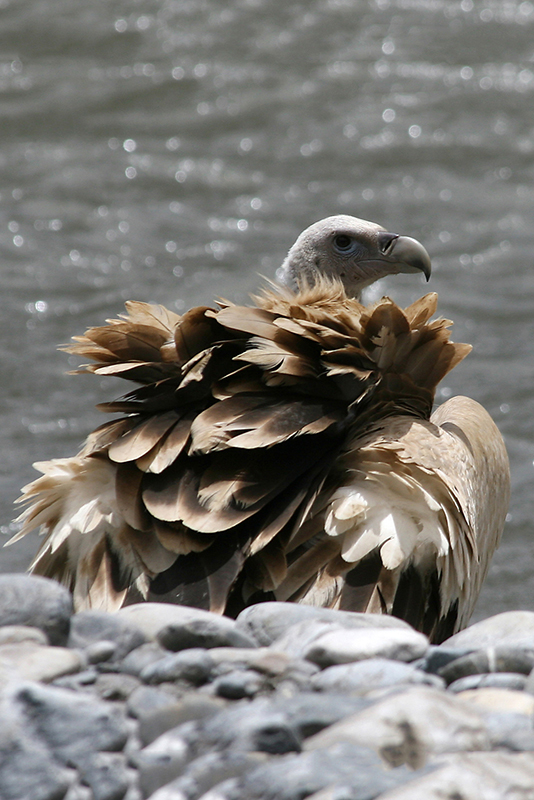
1. No guarantees in the wilderness
Photography is already great and challenging in itself, but combining it with nature certainly doesn't make things easier. You brave the elements outside with just one goal: to take a photo of the wild animal you are looking for. You have prepared well, you know what you are looking for and where you can find it. But there are no guarantees because you are in the wild.
If you're lucky, the animal walks (or flies) perfectly into your line of sight and you capture its stunning, wild beauty. If not, you don't give up, of course. You go home, review and revise your plan and equipment, then head back into the wilderness for a new 'hunt'.
The great thing about 'hunting' with a digital camera ' is that you (hopefully) go home with a beautiful photo and the animal gets to go home too!
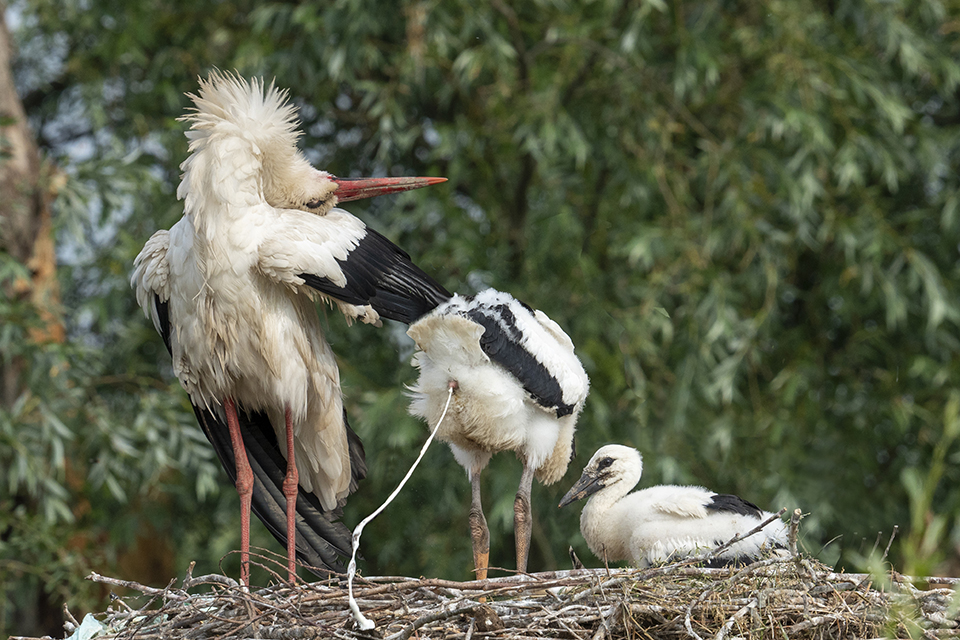
2. Let the animal decide
When I prepare for a wildlife shoot, I first learn everything I can about the behaviour of the animal I am going to photograph. I want to know it all: where I am likely to find them, what they do at different times of the year, what they eat, when they breed, everything.
Only after I fully understand the animal can I start thinking about the equipment I need for it. The animal itself doesn't realise it, but it influences everything about my photography trip.
In 2017, Tanja Thomas wrote the interesting article Wildlife and Nature Photography in Quickdraw, in which she explains how she approaches animals in the wild that are completely unused to people and are therefore very shy.
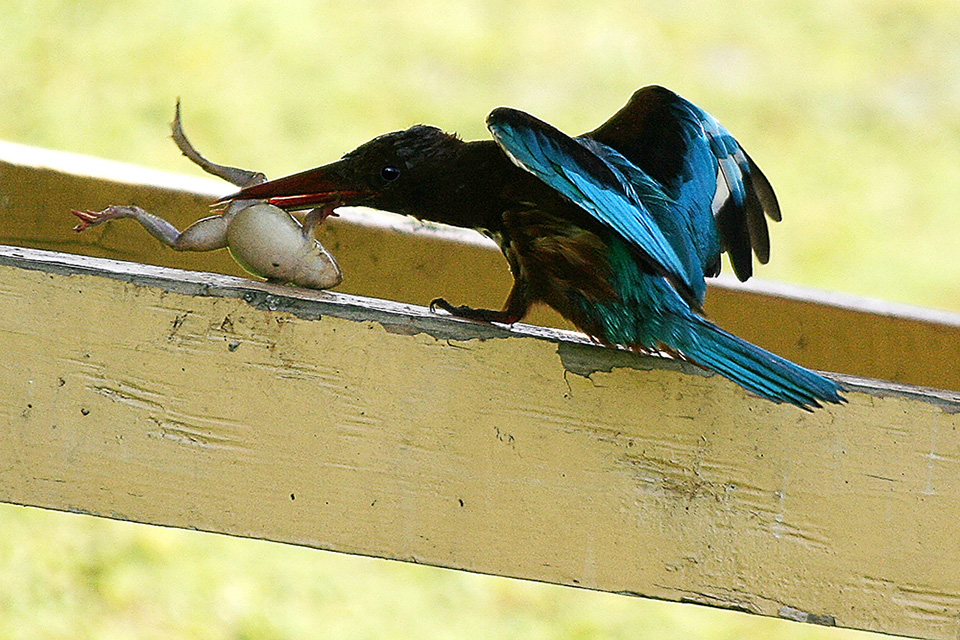
3. The uncontrollability of wildlife
You cannot control nature, nobody can. As a wildlife photographer, your subjects are always moving, which is very different from, for example, posed or architectural photography. Your subjects are wild.
You can't ask the owl to 'please just land on that tree trunk over there for a moment' because the shot would be better that way. You can learn where to find owls and where they like to land.
You can also place a branch perfectly for the photo you want to take, but that doesn't mean you have complete control. Owls are wild, they do exactly what they want.
4. Unpredictable photography
When you photograph in a studio, you can take your time and set everything up as you like. As a wildlife photographer, you have to approach your trips and shoots differently. Because you are outside, the weather conditions and natural light have a huge influence on your photography and the types of photos you take.
That is why bad weather is often preferable, because it is good for your colours. When the sun is gone, the clouds act as a gigantic softbox, similar to what a studio photographer would use to soften the light. This makes the colours of the animals brighter, which of course provides the perfect conditions for portrait photos.
When the sun appears again, you adapt and can use the extra dose of light to photograph animals in the air. You have to learn to accept and constantly adapt to the natural conditions as they come.
It is precisely that wild unpredictability of wildlife photography that often gives you an extra thrill. Wildlife photos don't always work out as you had imagined, but when they do, the feeling is even more intense.
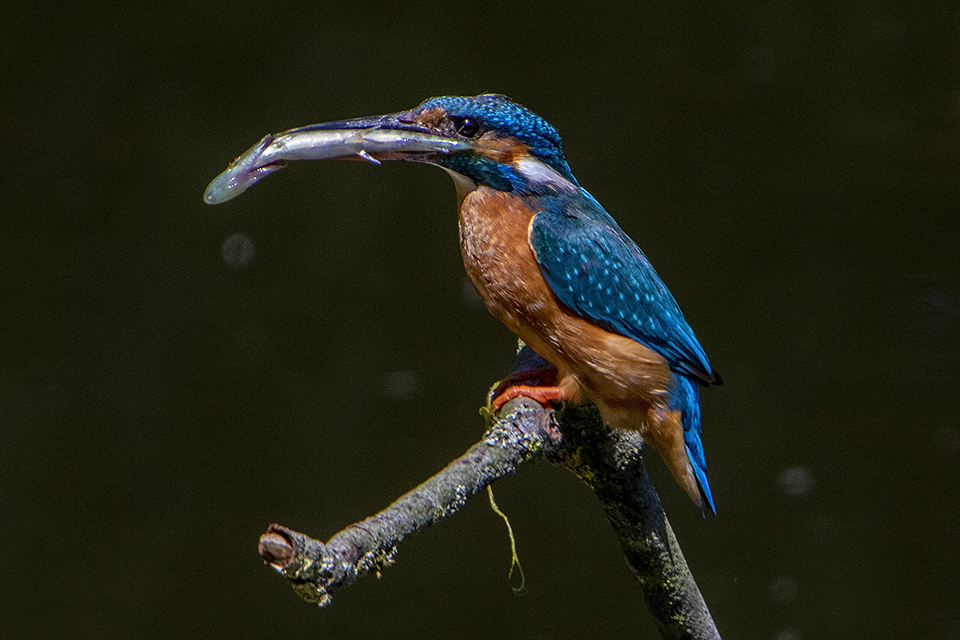
5. Unique shot
In August 2017, I was photographing Northern Gannets on the island of Heligoland in Germany. At that time, they have young to feed constantly, which is a beautiful natural process to watch and photograph.
The nests can be approached from a fairly short distance and the birds fly back and forth with seaweed and other food.
It was incredible to see and capture in a photo. Try to capture a unique moment that has not been done before. Something special is always happening. But first practise getting sharp photos of birds in flight, as that is challenging enough at the beginning!
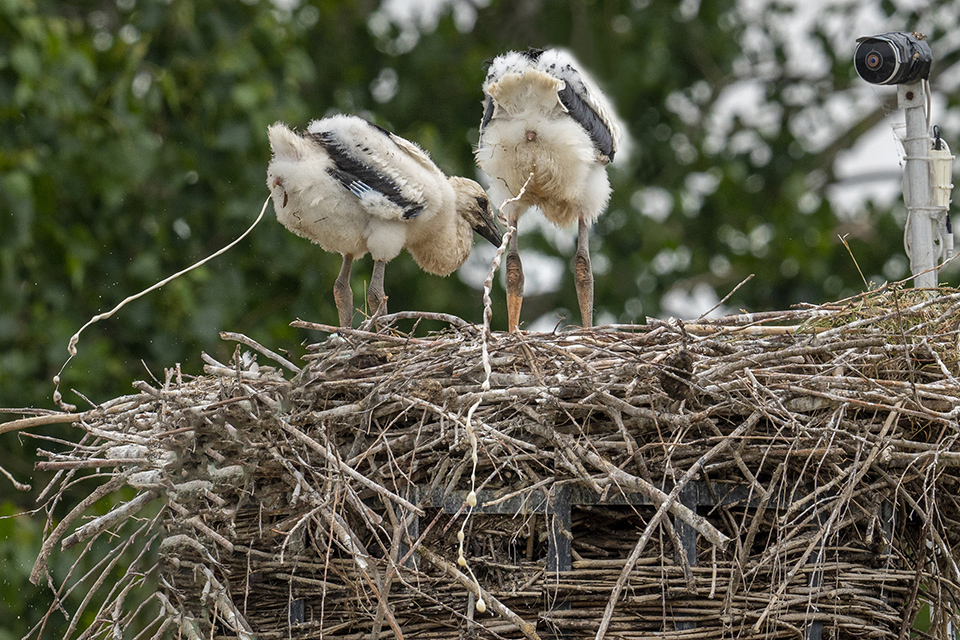
6. Unexpected flight
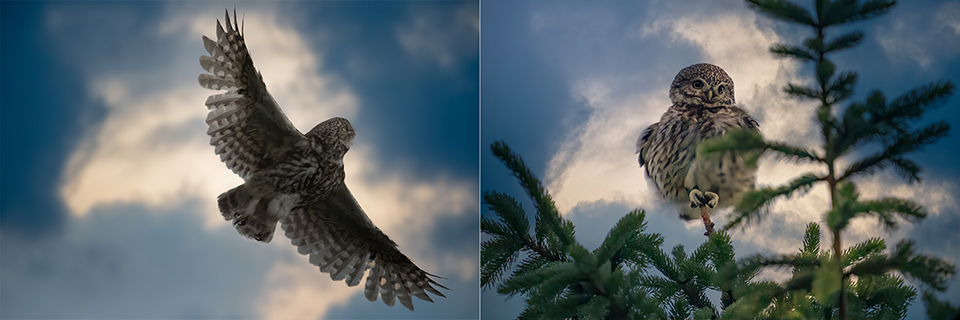
I love owls and went to a farm with a number of them. Little owls are often found on farms because they like to nest in old buildings, as well as in old orchards and in pollarded willows, by the way.
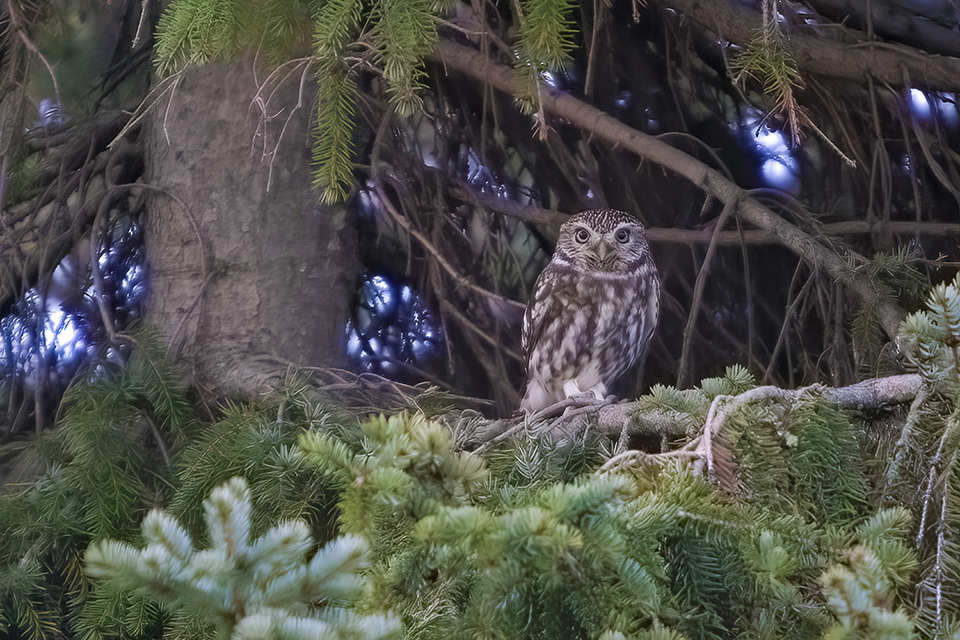
I waited from my self-made hide, with a view of the place where the owls liked to land, a perfect starting point. But this time the owl surprised me. It flew over me into a conifer, choosing a new spot there for the first time.
It sat there as if it was watching how I would react to this change of plans. Its intense stare, combined with the illuminated needles and branches, created a magical photo. It wasn't what I expected, but it was absolutely perfect.
7. The photographer does it, not the equipment
I think the biggest limitation is the photographer themselves, not the camera. You can of course do more with more expensive equipment, but you can also take great photos with cheaper cameras. You just have to prepare and then trust yourself. We are all still developing as photographers.
Years ago, I was so happy with my 'perfect' shot of a white-tailed eagle that I jumped for joy. When I look back at that photo now, I see that it is actually far from great. And that applies to many of the wildlife photos I took in the past.
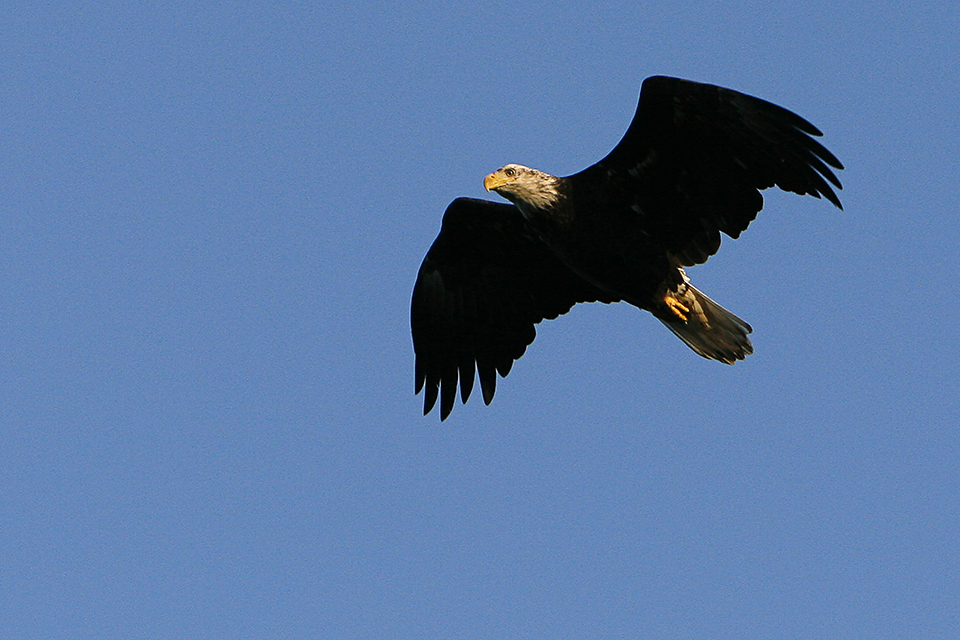
But actually, that is a good thing. It means I am constantly working to improve my craft and I can see my photos getting better and better. If you keep this up and can be critical of yourself, you will see the progress in your photos. With a little time, effort and patience, anyone can do it.
About the author
Michelle Peeters is fotografe en oprichter van DeuxBleus Fotografie. Michelle herkent het bijzondere in het gewone en het gewone in het bijzondere. Ze heeft zich nooit willen specialiseren en is daardoor van alle markten thuis.
You might also like
-
 Wildlife photography and switching to mirrorless
by Evert Doorn
-
 Photographing wildlife in your own back garden
by Elja Trum
-
 Get Low for Wildlife Photos
by Elja Trum
-
 Are you a species hunter or a wildlife photographer?
by Nando Harmsen
-
 7 tips for property photography
by Elja Trum

5 comments
-
 Rob Gipman wrote on Tuesday 23 June 2020 at 13:34 | reply
Much of the time patience is also important, so waiting for the right moment. The advantage I have with my Canon 5D4 is that I can extract an 8MP jpeg from the 4K video. So I can just pick out any position from it if I want to. Kingfisher photos
Translated from Dutch. -

 Michelle Peeters wrote on Tuesday 23 June 2020 at 13:39
| reply
Michelle Peeters wrote on Tuesday 23 June 2020 at 13:39
| reply
@Rob: indeed (and I often lack that, which causes me to miss many moments..). What a nice option, that you can extract a photo from a video (beautiful video of that kingfisher mating by the way!), I've never played around with that myself, good idea! I assume those are 8Mb and not mp photos?
Translated from Dutch. -
 Evert Warrink wrote on Tuesday 23 June 2020 at 15:50 | reply
I photographed various birds, including gulls, from the ground up into the sky and for the first time most of the photos are sharp, nice background, and the depth also turned out well.
Translated from Dutch.
No powerful lens but the result is good.
Nikon D700
Sigma lens 70-200
Among the seals, there were a few playing and I also managed to capture those beautifully in a photo from a shaking and rocking boat. (It was quite windy)
They are not on my website yet but I will definitely be adding them.
Wonderful, that beautiful nature. -
 Matt wrote on Wednesday 24 June 2020 at 12:34 | reply
The zoo is a great place to practice.
Translated from Dutch. -
Michelle Peeters wrote on Wednesday 24 June 2020 at 13:09
| reply
@Evert: I also have a 70-200mm lens (fast throughout the entire range) and I extended it to 400mm with a 2.0 extender. And on top of that I also use an APS-C sensor camera, which brings me to 640mm. I often find 200mm to be too little telephoto zoom range, especially for bird photography. Unless, of course, you're on Heligoland or another beautiful place, where you can get to within a fairly short distance of the birds. You can also use some extra zoom capability with birds in the air. If you have to crop so enormously, it doesn't really make the photo any better either.
Translated from Dutch.
@Matt: absolutely, you can practice very nicely at the zoo! Do work with large apertures to make the mesh or bars disappear into the depth of field.
Have your say
Please note: Articles older than a week can only be commented on by signed-in visitors.Would you still like to comment? sign in or create a free account.
Become a better photographer every week
A practical photography tip in your inbox every week.
39,027 photography enthusiasts already receive the tips! More about the weekly mail. Or keep up to date via  Facebook.

Elja Trum
Photofacts; everything to do with photography!
Would you like to take better photos and keep up with what is happening in photography? Photofacts publishes articles that teach you something about photography — from a product announcement to a practical shooting tip or a look at a website. Photofacts covers photography every day and is a hobby project of Elja Trum's that got out of hand. The articles are written by a team of volunteer authors. If you would enjoy writing one or more articles for Photofacts, do get in touch.More about PhotofactsPhotofacts is made possible in part by
