
7 tips: Wildlife photography for beginners
Monday 3 February 2020, 16:32 by Rob Dijkstra | 9,811 views | 2 commentsThis article was translated from Dutch with the help of AI. Read the original.
Wildlife photography demands quite a lot from a photographer: getting up early, sometimes driving, cycling or walking long distances, and having plenty of patience.
And even then, you will not always come home with beautiful material: sometimes the light simply was not very good, there were distracting factors, such as other photographers disturbing the peace, or the wildlife did not show up.
With good preparation, however, you can avoid a lot of disappointment. That is why I have seven tips to help you.
1. Make sure you stay mobile
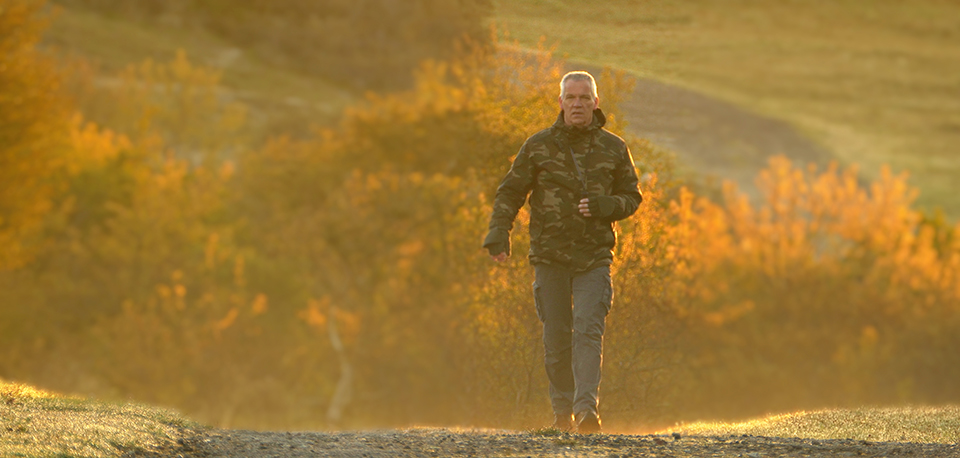
Photographic equipment can grow quite considerably over time. There comes a point when you can no longer take everything with you in your camera bag. At that point, you have to 'go through' your bag before every day of photography, which takes some extra time and attention.
Above all, do not take too much with you and make sure you can carry everything comfortably: a tripod attached to your bag, preferably in the middle of your rucksack so the bag does not hang crooked, and everything in fixed places so you can find it quickly.
If you have a small kit, a shoulder bag is useful. You can then quickly grab your equipment without first having to take your bag off your back. Make sure your bag has some space left for items of clothing you will take off during the day.
2. Make sure you stay warm
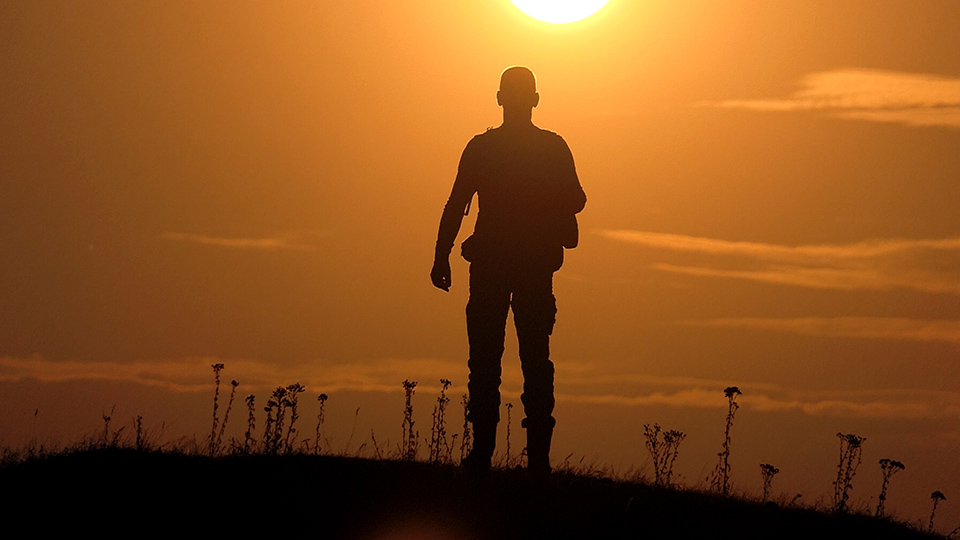
If you head out early, it can be considerably colder than later in the morning. My experience is that you do not get around to creative things if you do not feel comfortable. Preferably wear clothing in layers so you can vary it.
First, a lightweight synthetic-fibre shirt that passes any perspiration on to the second layer, a cotton shirt. The synthetic-fibre shirt keeps you dry. Over that, a warm layer, a jumper or shirt made of Merino wool, and as the outer layer, a windproof and waterproof jacket.
Good waterproof walking shoes, or comfortable boots in wet weather or on soggy ground, complete your clothing. Of course, you can vary this depending on the temperature you expect. I always have a very compact rain jacket in my camera bag.
Ideal if it unexpectedly gets colder than you expected: wearing it under your jacket provides quite a lot of extra warmth. You can also sit on it if the ground is wet, roll your camera in it for extra protection during a heavy shower, and so on.
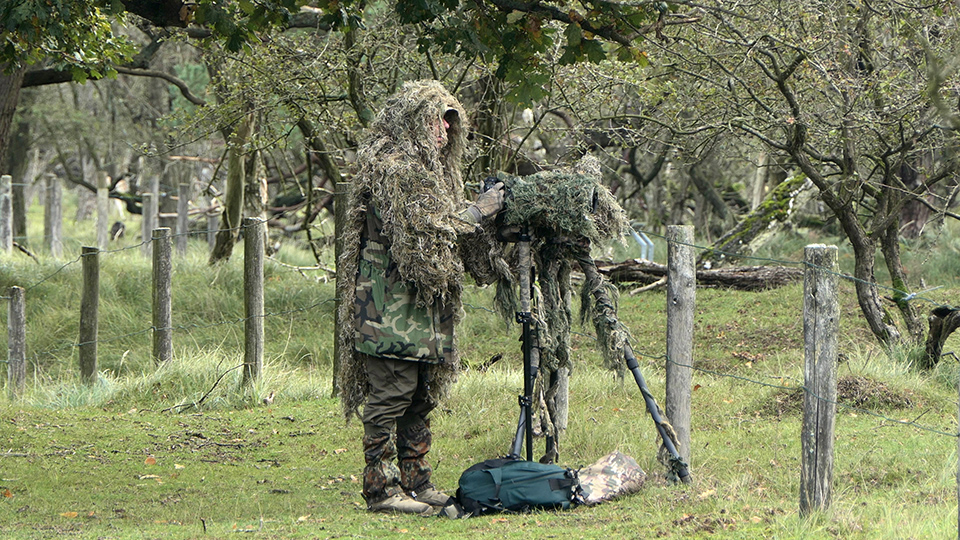
Dark clothing does not stand out in nature. Preferably make sure there are no reflective sections.
3. Use camouflage clothing
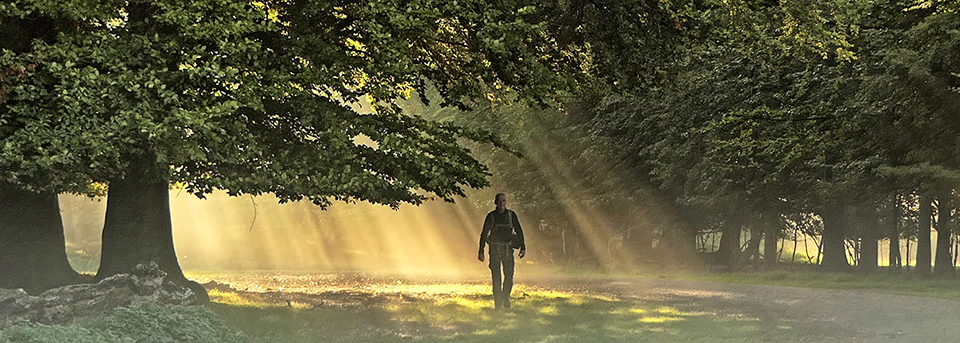
It is wrongly thought that camouflage clothing is essential for wildlife photography. In Photofacts' course Wildlife photography for beginners, I already explain that you are often better off actually being seen by animals.
Still, dark or camouflage clothing is better than light clothing or reflective parts. You do not really want to scare the wildlife away, do you? The animals will see you anyway, but make sure you fit in with your surroundings and do not stand among the trees like some kind of 'flashing light'. Animals certainly do not become calmer because of that.
Photographing in areas where hunting takes place:
Hunters generally have no right to deny you access to public land. The law is clear: hunters must ensure that you, as a photographer or walker, are not in danger during the hunt. But that is no use to you if a hunter mistakes you for a deer.
In the Netherlands, the danger is relatively small because hunting is very well organised. In Belgium, however, things are different: much of the countryside there is privately owned by the former or current nobility.
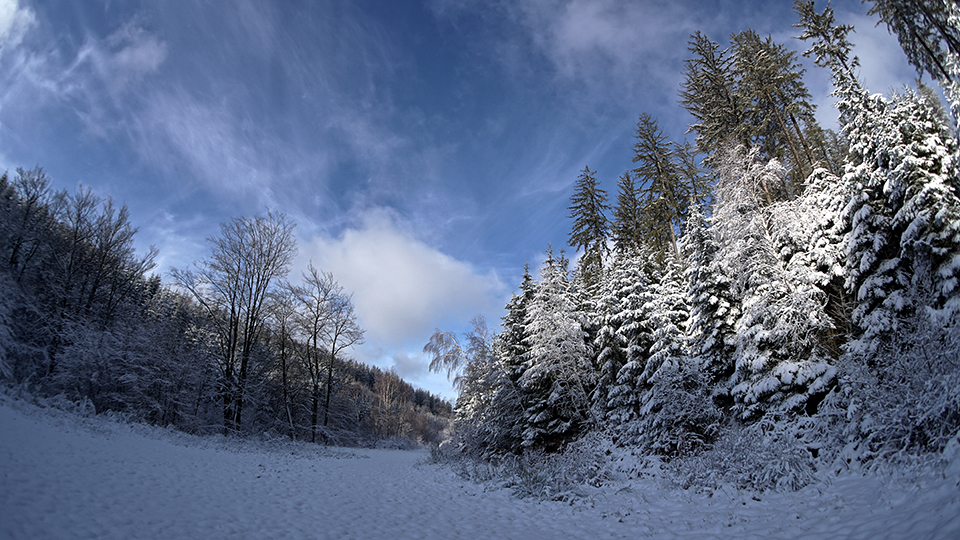
If you regularly visit areas in Belgium where hunting takes place, such as the High Fens or the Ardennes, make sure that you are visible during the hunting season, which is indicated by signs, for example by wearing a reflective safety vest.
If you do not want to scare the animals but still want to be visible to hunters, wear so-called fluorescent camouflage: clothing with camouflage patterns on a fluorescent orange background.
Most animals do not see that orange colour, the camouflage pattern makes you less noticeable and hunters can see you. You can buy such a vest at Decathlon, in the hunting department, for around 10 euros.

4. Consider the 'bag-in-bag' system
I currently use two types of camera: a Sony and a Panasonic camera. I also have an action cam and a drone with a camera. They all have their own batteries. That is inconvenient, because if you forget to bring the right batteries, you carry a camera around all day without being able to use it.
That is why I choose the bag-in-bag system. In my camera rucksack there is a compact bag containing everything that belongs to my Sony system camera: the lenses, filters and batteries. Because everything is in one bag, I do not forget anything when I put my equipment in my bag the evening before.
The same applies to my action cam, with its many accessories. I use a sturdy Decathlon rucksack with a camouflage print as my camera bag, but without any internal compartments. So it is one large compartment, nothing else. There are lots of small loops sewn on to the outside of the bag.
You can buy small bags that you can hang from the loops. This gives you the choice of putting your equipment in the bag, in those small pouches, or, for greater flexibility, hanging them on the outside. That system is called X-Access. Take a look at it on the website: it is worth considering.
4. Use a quick-release plate for your tripod
A tripod can be attached to a camera in two ways, with a screw knob that you have to tighten every time, or with a quick-release plate. A quick-release plate is ideal because it saves a lot of time and prevents delays.
Buy an extra plate for all your camera bodies and telephoto lenses with a tripod connection, so you can always leave it attached. Otherwise, at some point you will realise that you have carried a tripod around all day but forgot the plate, meaning you cannot attach the camera to the tripod.
6. Which camera system is best?
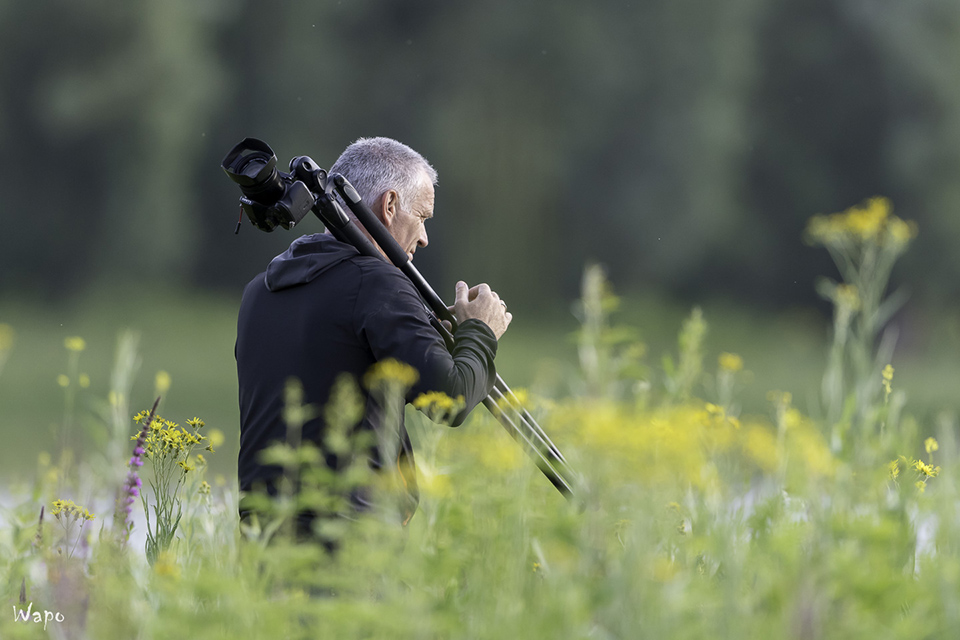
There are essentially three camera systems: DSLR, mirrorless camera and compact camera. Wildlife photography is possible with all three. Your personal choice is determined by your experience, your preference, your budget and your requirements.
Without wanting to do any of the other choices a disservice, I want to tell you what my choice is: I almost always use a bridge camera from Panasonic. In fact, it is an advanced compact camera with a large image sensor.
You will understand that a DSLR with a full-size sensor and a top prime lens offers much better quality, yet I still make this choice. For me personally, mobility and being able to react spontaneously matter more than absolute image quality.
I know from experience that I can walk all day with this camera, never have the wrong lens on the camera, and carry a focal length of 1440 mm with me at a limited weight of just over 900 grams, which is ideal for wildlife, one of my favourite subjects.
Since I started working with this camera, my image quality has decreased somewhat in absolute terms, but my possibilities and creativity have increased enormously. Sometimes it takes a bit of 'out of the box' thinking to arrive at your personal choice.
Anyone who struggles with the weight, handling and complexity of their equipment should consider a top bridge camera.
In terms of possibilities, they are comparable to a DSLR, and in terms of ease of use to a mirrorless camera because of the electronic viewfinder, but their weight and zoom range increase your capabilities in the field without compromising your mobility.
7. Choosing your photography location
Every wildlife photographer would like to photograph somewhere where nobody, or almost nobody, has ever been. If you consider that there are 400,000 people in the Netherlands alone who have wildlife photography as a hobby, you know that this is going to be a little difficult.
Popular destinations such as Iceland, Africa and mountain regions such as the Himalayas are beautiful, but they are not accessible to everyone. And certainly not frequently accessible.
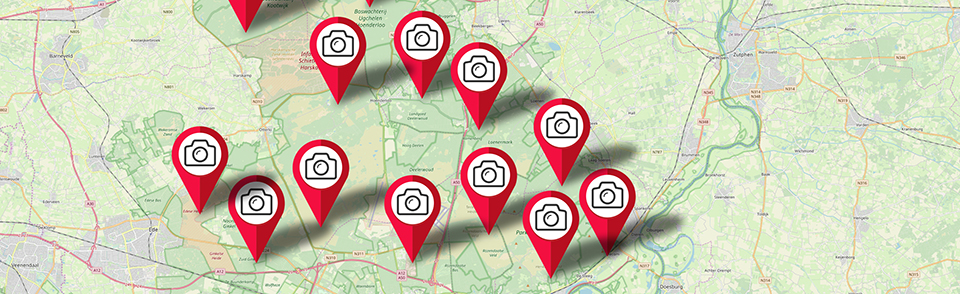
My tip: choose a nature reserve near you and investigate which animal and plant species live there, find out when the light falls beautifully, look for special features, such as a badger sett, a beaver location, a fox den or a rare plant, and make that your project.
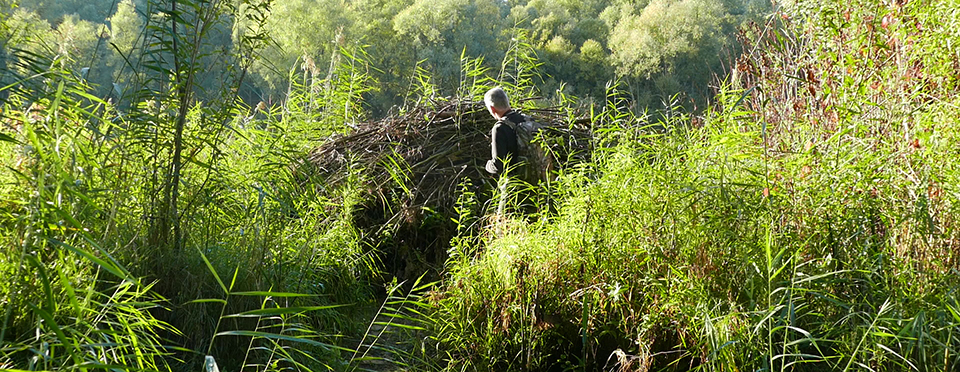
The more often you visit, the greater the chance that you will see the right details. And on one of those visits, that beautiful magical light will be there too. Then you can seize your chance. The closer to home, the better: you can still go and have a look before work, or post up by the badger sett after dinner.
You will discover that nature close to home can be beautiful. And of course, you do not have to cross Iceland off your bucket list…
About the author
Rob is fotograaf, filmer en natuurgids. Onder de naam WILDvanNATUUR organiseert hij een groot aantal excursies en workshops voor hobbyfotografen en natuurliefhebbers in het gebied tussen Zuid-Duitsland, Denemarken en de Franse noordkust, op maximaal een dag autorijden.
You might also like
-
 7 Tips for Unique Wildlife Photos
by Michelle Peeters
-
 Wildlife photography and switching to mirrorless
by Evert Doorn
-
 Are you a species hunter or a wildlife photographer?
by Nando Harmsen
-
 10 Tips for Beginner Photographers
by Elja Trum
-
 The Perfect Picture; wildlife and personal heroes
by Elja Trum
-
 5 Beginner Tips for Better Photos
by Nando Harmsen
2 comments
-
 Matt wrote on Tuesday 4 February 2020 at 19:53 | reply
I can certainly see the appeal of using a bridge camera. Carrying lenses around and constantly changing them is sometimes a real problem.
Translated from Dutch.
So I'm personally considering a Sony RX10IV: 24-600mm F2.8-4.0 Zeiss lens, 1" stacked 20MP sensor, super good AF and 4K video.
The difference in quality between this 1" sensor and a 24MP APS-C sensor isn't that big. It's just that I find the motorized zoom on this kind of camera less appealing; the manual zoom of SLR lenses is faster and nicer to operate. For photos at least. For video, a motorized zoom is nicer again, because it is beautifully smooth. -
 peter wrote on Wednesday 5 February 2020 at 15:31 | reply
I can regularly be found in the woods with a camera in France. On Sundays, people hunt big game. If you know the hunters, it is an experience to go along with the beaters with your camera at the ready. The hunters themselves also make a great subject for photos. The hunt is indicated by a sign along the road so as not to run over the hunting dogs when they cross. In the village, a discussion soon arises upon departure about whether, as a photographer, you also need to be insured... An orange vest and cap are mandatory. Especially if you know that someone once shot a cow in the corn.
Translated from Dutch.
Have your say
Please note: Articles older than a week can only be commented on by signed-in visitors.Would you still like to comment? sign in or create a free account.
Become a better photographer every week
A practical photography tip in your inbox every week.
39,024 photography enthusiasts already receive the tips! More about the weekly mail. Or keep up to date via  Facebook.

Elja Trum
Photofacts; everything to do with photography!
Would you like to take better photos and keep up with what is happening in photography? Photofacts publishes articles that teach you something about photography — from a product announcement to a practical shooting tip or a look at a website. Photofacts covers photography every day and is a hobby project of Elja Trum's that got out of hand. The articles are written by a team of volunteer authors. If you would enjoy writing one or more articles for Photofacts, do get in touch.More about PhotofactsPhotofacts is made possible in part by
